

Reviewed August 2026 against ABC News, IBISWorld, and Ken Research.
Agriculture funds in Australia now span three distinct pools: government R&D programmes, private agtech venture capital, and sector-specific funds like the AUD 60 million horticulture startup fund launched in Q4 2024. Australia’s AI-in-agriculture and agritech market was valued at USD 305 million in 2024, while the organic farming industry alone generated AUD 3.8 billion in revenue for FY 2024-25. This article maps where the money actually sits, what it funds, and how to check whether a given programme still exists before you apply.
Table of Contents
- Introduction: The Funding Landscape
- Agriculture Land in Australia: Opportunities and Challenges
- Agriculture Funds and Venture Funds Australia: Who’s Actually Investing
- Organic Farming Australia: Market Size and Growth
- Comparative Table: Fund Types and What They Back
- AI in Agriculture Australia: Where the Technology Stands
- Funding-Fit Calculator
- Farmonaut Apps & Solutions for Agriculture in Australia
- Farming Australia: Sustainability and Funding Pathways
- FAQ: Agriculture Funds, Venture Capital, and AI in Australia
- Conclusion
- Jump to the calculator
Agriculture in Australia: Funds, Venture Capital, and the Role of AI
Australian agriculture spans arid interiors, temperate coasts, and sub-tropical belts, and it draws capital from equally varied sources. On the venture side, global agriculture venture capital reached $15.6 billion in 2023, according to industry data compiled via Ellty — a figure that gives Australian founders a sense of the pool they are competing against internationally, even though Australia’s own agtech VC allocation is not broken out separately in that dataset. Locally, the clearest recent signal is the AUD 60 million horticulture-specific venture fund that launched in Q4 2024, reported as the world’s first VC fund dedicated exclusively to fruit, vegetable, and nut agritech startups.
This article covers four things people search for separately but that overlap in practice: agriculture funds broadly, agriculture venture funds specifically, organic farming in Australia, and AI adoption in Australian agriculture. Each section names its source and the period the figure applies to, so you can verify whether it has moved before you rely on it.
Agriculture Land in Australia: Opportunities and Challenges
Australian farmland covers roughly 385 million hectares across climatic zones from the Outback’s arid interior to temperate coastal belts and Mediterranean-style regions in the south. That land supports wheat, barley, fruit, wine grapes, and vegetables, alongside cattle and sheep grazing. Funding decisions — whether government grants or private equity — are shaped by this diversity, since a drought-resilience programme suited to the Wheatbelt looks nothing like the horticulture-specific capital a Riverina fruit grower needs.
Where the Opportunities Sit
- Export earnings: Wheat, beef, wool, and wine remain the core export categories underpinning the sector’s economic weight.
- Sensor and AI adoption: Australia’s agricultural sensor technology market is projected to reach USD 254 million by 2026, with sensor adoption on farms projected to hit 35.7% by the same year.
- Carbon and biodiversity programmes: Carbon sequestration and biodiversity funding streams are growing alongside conventional production grants.
Key Challenges
- Climate variability: Rainfall unpredictability and temperature extremes affect yield planning across most cropping regions.
- Soil health: Salinity, erosion, and nutrient depletion remain long-term threats to farmland productivity.
- Water scarcity: Arid and semi-arid zones face ongoing allocation and management pressure.
- Sustainability balance: Operators must weigh sustainable land management practices against short-term production targets.
None of these challenges are solved by funding alone — but funding determines which farms can afford the monitoring and management tools that make solving them tractable.

Agriculture Funds and Agriculture Venture Funds Australia: Who’s Actually Investing
“Agriculture funds” and “agriculture venture funds” describe different capital pools, and conflating them is why a lot of searches land on generic pages. Government agriculture funds — R&D programmes, Landcare-style grants, drought-resilience schemes — disburse public money against policy objectives like productivity or environmental outcomes. Venture funds are private capital chasing equity returns from agtech startups. Australia’s clearest recent venture-fund event is the AUD 60 million horticulture-specific fund that launched in Q4 2024, reported by ABC News as the first VC vehicle worldwide built exclusively around fruit, vegetable, and nut agritech founders.
What This Means If You’re Looking for Capital
- If you’re a horticulture agtech founder: the AUD 60 million fund is the named, citable vehicle to research directly — check its current deployment status and application criteria with the fund manager rather than assuming the original AUD 60 million figure still reflects uncommitted capital.
- If you’re a broader-acre or livestock operator: government programmes (R&D grants, drought and Landcare-style funding) are typically the more accessible route, since dedicated venture capital for those categories is thinner.
- If you’re benchmarking against global venture flows: the $15.6 billion figure for global agriculture VC in 2023 gives useful context for how competitive international capital-raising is, but it is not an Australia-specific figure and should not be quoted as such.
A durable way to track this space: agriculture venture funds are announced individually, not published as a running national registry. Set a search alert for “Australia agtech venture fund” plus the current year, and check ABARES’s ABC News rural coverage and AgriFutures Australia announcements quarterly — new funds tend to be reported individually as they launch rather than tallied centrally.
Organic Farming Australia: Market Size and Growth
Australia’s organic farming industry generated AUD 3.8 billion in revenue in FY 2024-25, according to IBISWorld’s industry analysis, with growth projected at 11.4% annually into FY 2025-26. That growth rate is a forecast specific to that period and that source — it is not a guarantee, and IBISWorld revises these projections as new industry data comes in, so anyone citing this figure a year from now should pull the current edition rather than reuse FY 2024-25’s number.
For funding purposes, organic operators sit at an intersection: they can draw on general agriculture R&D and sustainability grants, plus increasingly on ESG-oriented private capital that specifically seeks certified-organic or regenerative operations. There is no dedicated “organic farming Australia” venture fund identified in current reporting comparable to the horticulture-specific AUD 60 million vehicle — if one exists or launches, it would most plausibly surface through the same channels (ABARES sector updates, AgriFutures Australia) referenced above.
How to Verify This Figure Going Forward
IBISWorld republishes its Australian organic farming industry report annually (subscription required), with updated revenue, employment, and growth figures. Before quoting AUD 3.8 billion or 11.4% beyond FY 2025-26, check the current IBISWorld edition at ibisworld.com/au/industry/organic-farming/1912 for the latest release.
Farmonaut Apps & API for Smart Farming in Australia
Alongside funding and venture capital, the practical question for most farms is which monitoring tools their budget can actually stretch to. Farmonaut provides satellite-based crop monitoring, AI advisory, and resource-management tools across Android, iOS, web, and API — built to be accessible whether you’re running a smallholding or managing thousands of hectares.



Explore our API – unlock satellite and AI insights for your own agricultural applications.
API Developer Docs
- Large-Scale Farm Management Solutions: satellite imagery and AI for remote monitoring, operational planning, and yield tracking.
- Fleet Management: optimize vehicle and machinery usage, reduce operational costs, and enhance farm logistics for both small and large Australian farms.
- Carbon Footprinting Tools: monitor environmental impact and support carbon farming initiatives that increasingly matter to ESG-linked capital.
- Product Traceability: blockchain-integrated traceability for transparency across the supply chain.
- Crop Loan and Insurance Verification: satellite-based monitoring for streamlined financial support and fraud reduction.
- Product Traceability Platform: supply chain visibility built for export-oriented producers.

Comparative Table: Fund Types and What They Actually Back
This is not a ranked “top funds” list — several of the government programme figures commonly cited for Australian agriculture funding are not independently verified in current public data. Instead, here is what’s confirmed, sourced, and dated, next to what remains a documented gap so you don’t mistake absence of data for absence of funding.
| Fund / Market Segment | Verified Figure | Period | Source |
|---|---|---|---|
| Horticulture-specific VC fund (Australia) | AUD 60 million | Launched Q4 2024 | ABC News |
| Organic farming industry revenue (Australia) | AUD 3.8 billion | FY 2024-25 | IBISWorld |
| Organic industry growth forecast (Australia) | 11.4% annual growth | Forecast for 2025-26 | IBISWorld |
| AI-in-agriculture / agritech market (Australia) | USD 305 million | 2024 | Ken Research |
| Agricultural sensor technology market (Australia) | USD 254 million | Projected for 2026 | Agriculture market research |
| Farm-level sensor adoption (Australia) | 35.7% of farms | Projected for 2026 | Agriculture market research |
| Queensland AI-enabled crop monitoring adoption | 75% of surveyed farmers | 2024 | Industry adoption data |
| Global agriculture venture capital | $15.6 billion | 2023 | Ellty |
| Dedicated Australian agtech VC fund count / AUM | Not published as a consolidated figure | — | Gap — track individual fund announcements via ABARES and AgriFutures Australia |
Where the table says “not published,” that’s a genuine gap in current public reporting, not an oversight on our part — there is no consolidated tally of agtech-focused VC funds and their combined assets under management specific to Australia in the sources reviewed for this piece.

AI in Agriculture Australia: Where the Technology Stands
Australia’s AI-in-agriculture and agritech market was valued at USD 305 million in 2024, per Ken Research’s market analysis. That figure covers software, sensor integration, and analytics platforms sold into the sector — it does not include the value of the crops or land those tools manage. Adoption is uneven by region and function: 75% of surveyed Queensland farmers reported using AI-enabled crop monitoring tools in 2024, a notably high figure that likely reflects Queensland’s concentration of horticulture and sugarcane operations where remote sensing has clear per-hectare payback.
Where AI Is Actually Being Used
- Satellite Imagery & Remote Sensing: Multispectral imaging tracks vegetation health (NDVI), soil moisture, and crop performance for targeted intervention. Farmonaut delivers these insights through its AI-based crop advisory on web and mobile.
- Machine Learning for Crop Management: Predictive models for weather, pest, and disease risk help growers plan harvests and allocate labour and inputs more precisely.
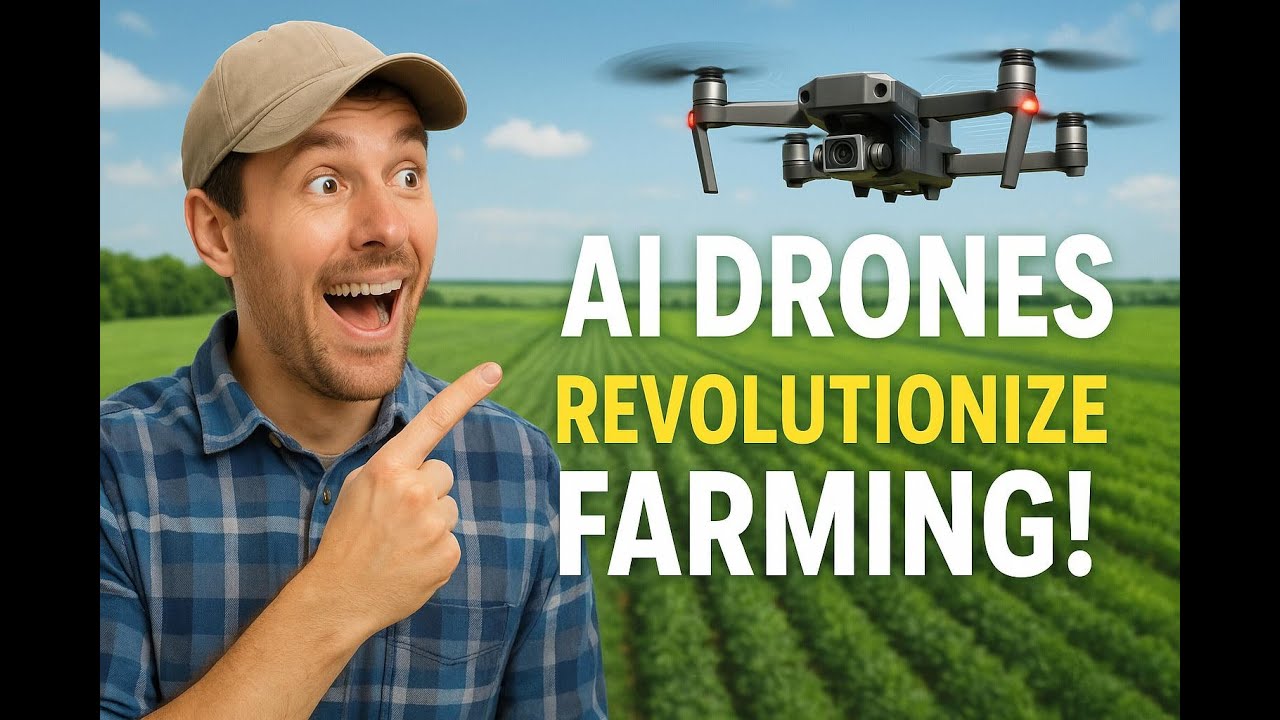
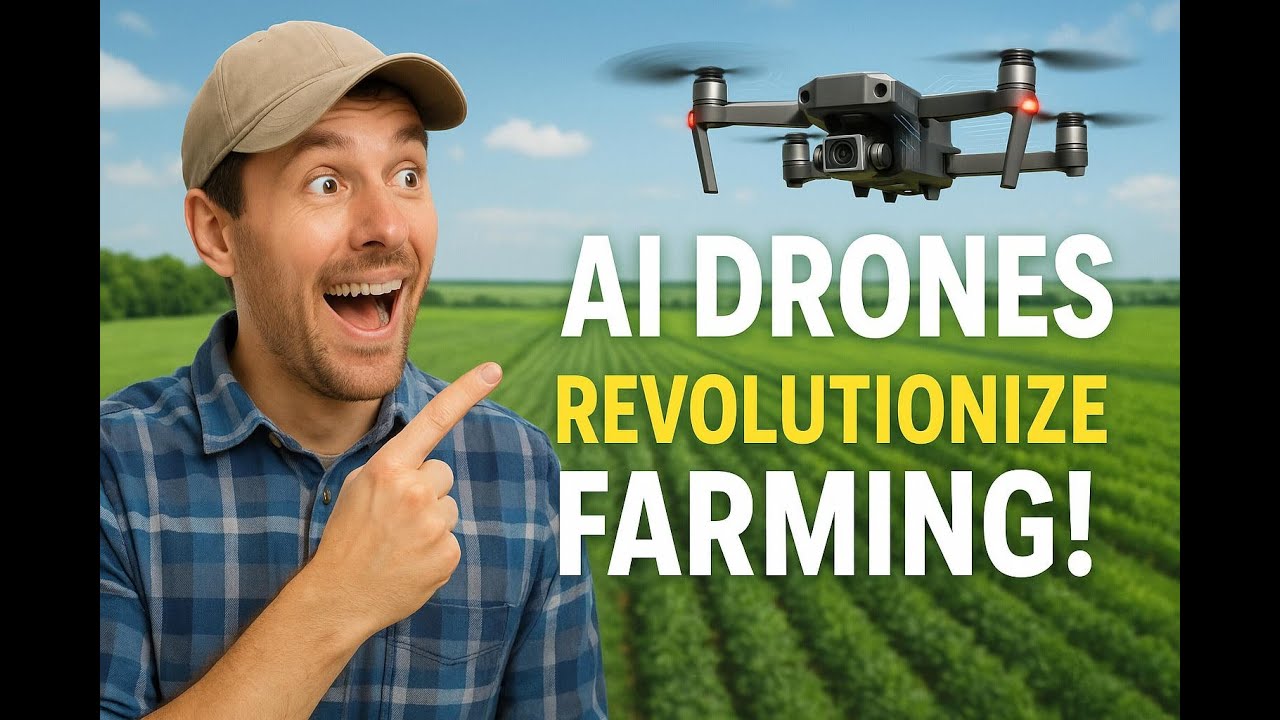
- AI-Powered Drones & Equipment: Automated spraying and variable-rate irrigation reduce labour hours and input waste on properties that have adopted the hardware.
- Blockchain & Traceability: Supply-chain traceability tools, including Farmonaut’s traceability solution, give export buyers verifiable provenance data.
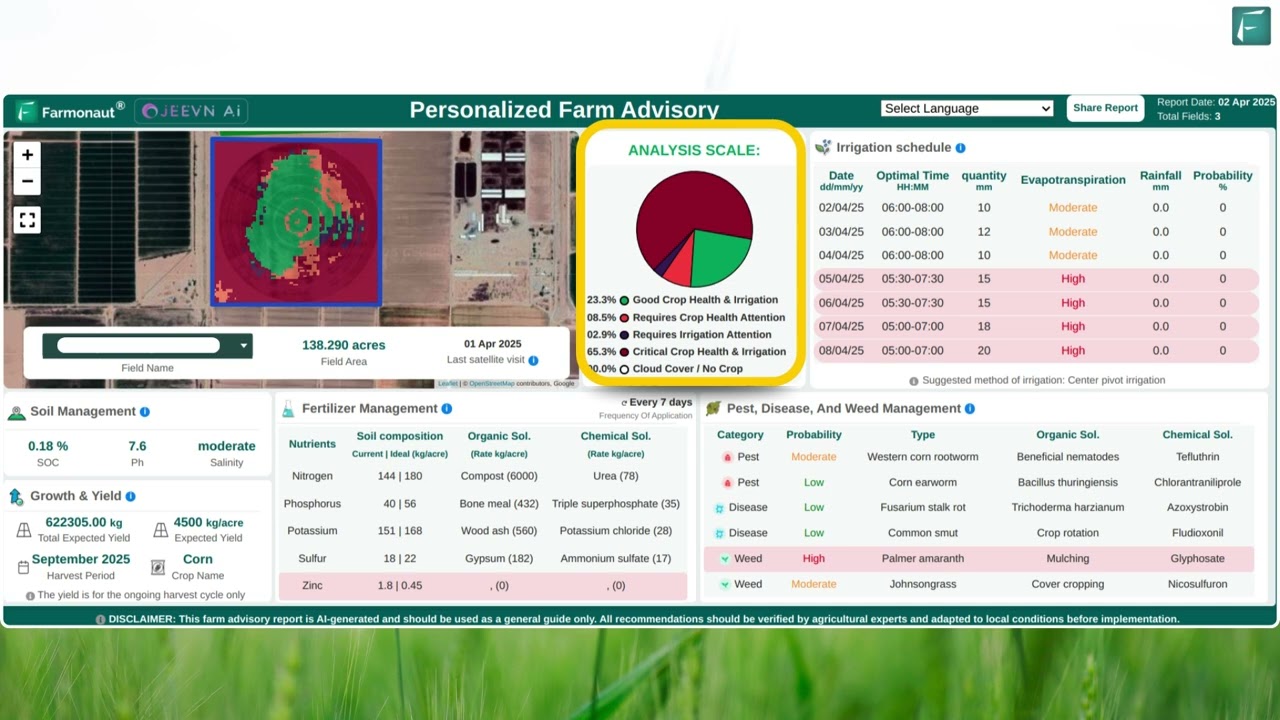
- AI Advisory Systems: Tools like Jeevn AI combine satellite and field data into recommendations for irrigation timing, soil health, and climate-resilient cropping choices.
The sensor technology side of this market is projected to reach USD 254 million by 2026, with 35.7% of Australian farms projected to have adopted some form of sensor technology by the same year. Both figures are projections tied to a specific research date, not confirmed 2026 outcomes — check the original market sizing report for methodology and any subsequent revision before using them in a funding application or investor deck.
For US-market readers benchmarking against a comparable economy: USDA disbursed more than $40 billion in agricultural loans and grants in 2025, and average US cropland values were estimated at $5,830 per acre in 2025 per USDA and Purdue University’s farm balance sheet analysis — figures useful for comparing capital intensity and public support levels across the two markets, though the programmes themselves are not interchangeable.
Funding-Fit Calculator: Where Your Farm Sits in the AI-Adoption Curve
This tool estimates how your farm’s current technology spend compares to Australia’s projected 2026 sensor-adoption benchmarks, so you can gauge whether AI/sensor investment now would put you ahead of or behind the projected curve.
Assumptions: benchmarks farm-level AI/sensor spend per hectare against the projected national 35.7% adoption rate for 2026 and Queensland’s 75% AI crop-monitoring adoption figure for 2024. It does not calculate ROI, yield impact, or eligibility for any specific fund — those depend on your crop type, location, and the individual programme’s criteria.
Farmonaut Subscription Plans
Farmonaut operates on a subscription-based model tailored for farmers, businesses, and government users seeking cost-effective access to satellite, AI, and blockchain-powered insights. The platform is accessible via Android, iOS, Web, and API for flexible and scalable farm management.

Farming Australia: Sustainability and Funding Pathways
The overlap between funding availability and sustainability outcomes is where most of the near-term movement is happening. Organic farming's AUD 3.8 billion FY 2024-25 revenue base, growing at a projected 11.4% annually into FY 2025-26 per IBISWorld, is attracting capital specifically because certified-organic and regenerative operations increasingly qualify for ESG-linked private funding that conventional operations cannot access.
Practical Steps for Sourcing Funds
- Carbon and environmental tracking: Programmes increasingly require documented carbon or environmental data before releasing funds — Farmonaut's carbon footprinting tools generate that documentation.
- Resource conservation records: Soil health and water-use data support applications to conservation-linked grants across varied climatic zones.
- Market positioning: Operators adapting to organic and ethically-produced food demand are positioned to access both the AUD 3.8 billion organic market and adjacent ESG capital pools.
Where to Check for Current Programme Status
ABARES publishes its Agricultural Outlook and Snapshot of Australian Agriculture reports annually every September, with updated production, pricing, and government programme data — this is the first place to check whether a government fund referenced anywhere in this article is still active. USDA's NASS QuickStats database updates farm economics and land-value data quarterly for US-market comparisons. Neither government programme names nor fund sizes should be treated as permanent; programmes are renewed, renamed, or discontinued on budget cycles that don't align with any article's publish date.


FAQ: Agriculture Funds, Venture Capital, and AI in Australia
1. What's the difference between agriculture funds and agriculture venture funds in Australia?
Agriculture funds is the broad term covering government grants, R&D allocations, and subsidies. Agriculture venture funds specifically refers to private equity capital chasing returns from agtech startups — the clearest current example being the AUD 60 million horticulture-specific fund that launched in Q4 2024, per ABC News.
2. Are there dedicated agricultural investment funds in Australia?
Yes, though a consolidated count and total assets under management specific to agriculture-focused funds in Australia is not published in a single source. The AUD 60 million horticulture fund is the most specifically documented example. For fund-by-fund tracking, monitor AgriFutures Australia and ABARES sector announcements, which report new fund launches individually as they occur.
3. How big is organic farming in Australia?
The organic farming industry generated AUD 3.8 billion in revenue in FY 2024-25, with IBISWorld projecting 11.4% annual growth into FY 2025-26. Check the current IBISWorld report before citing this beyond that period, since the figure is refreshed annually.
4. How is AI actually being used in Australian agriculture right now?
Australia's AI-in-agriculture and agritech market was valued at USD 305 million in 2024. Adoption varies sharply by region: 75% of surveyed Queensland farmers reported using AI-enabled crop monitoring in 2024, while sensor technology adoption nationally is projected at 35.7% of farms by 2026. Applications span satellite-based soil and water management, predictive pest and disease modelling, and automated equipment.
5. Can small farms access the same funding and technology as large agribusinesses?
Government programmes and platforms like Farmonaut are built to be accessible via Android, iOS, web, or API regardless of farm size, which lowers the entry cost for AI-based monitoring. Venture capital, by contrast, tends to target startups and scalable agtech products rather than individual farm operations directly — an operator seeking capital for their own farm is a different applicant than a startup building tools for many farms, and funds are typically structured around one or the other.
6. Where can I find current, verified numbers instead of relying on this article a year from now?
ABARES releases its Agricultural Outlook every September; USDA's NASS QuickStats updates quarterly; IBISWorld refreshes its Australian organic farming industry report annually. Cross-check any figure above against these sources' current editions, and treat farming innovation discussions as a starting point for context, not a substitute for primary data.





Conclusion: Matching Your Farm to the Right Fund
The practical takeaway: agriculture funds and agriculture venture funds in Australia are not one pool but several, each with different eligibility and different data sources to verify. Horticulture agtech founders have a named AUD 60 million vehicle to research. Organic operators sit inside a AUD 3.8 billion, 11.4%-growth-forecast sector attracting ESG capital. AI and sensor adopters are tracking toward a USD 254 million sensor market and 35.7% national adoption rate by 2026, with Queensland already at 75% adoption for crop-monitoring tools as of 2024.
Before applying to any programme named here, verify its current status directly with ABARES, AgriFutures Australia, or the fund manager — programme details shift on budget and fundraising cycles this article cannot track in real time.
Discover the Farmonaut App and put satellite-based monitoring and AI advisory to work on your own operation, whatever scale it runs at.

 Kisanwala
 Agro La Gándara
 Global Agrifood
 HIPSAC
 ZOL Zimbabwe
 Juligerm
 AdBio
AdBio MISE Maroc
 NWNS
NWNS Red August Group
 Farm Inc
 WeMe Global
 Agrotoken
 Blue BearX
 Insignito
 Croptimum
 DnCubed
 Field Capacity
 Indosistim Teknologi
