

Can You Make Money Farming 100 Acres in Australia?
“100 acres in Australia can generate up to $150,000 annually with diversified crops and efficient management.”



Overview: Can You Make Money Farming 100 Acres?
Can you make money farming 100 acres in Australia? The answer is a confident yes. However, success lies in how strategic, diversified, and disciplined your enterprise, market, and management choices are. Australia’s 100-acre farms can underpin robust incomes—provided you align your farm’s climate, soil, water access, and labor to meet local demand and optimize every aspect of farming.
Key income streams span traditional crops, livestock, niche value-added products, agri-tourism, and the growing field of carbon credits. Each farm’s pathway will be unique, but by combining careful planning, high-value outputs, and smart risk management, even a medium-sized farm parcel can thrive.
What Makes a Farm Profitable?
- ✔ Smart Diversification: Mix cash crops with livestock, carbon farming, and agri-tourism for consistent revenue streams.
- 💡 Precise Management: Use data and technology for soil health, input allocation, irrigation, and labor efficiency.
- 📊 Market Alignment: Grow what sells—choose products and services with stable local demand and favorable prices.
- ⚠ Risk Management: Combine insurance, crop rotation, and water security to protect profit and ensure resilience.
- 💰 Value Addition: Process or brand farm goods for local or premium markets to increase profitability per acre.
Key Insight
Profitability is less about farm acreage, and more about regular adaptation to climate, consumer, and regulatory changes. A disciplined approach to enterprise selection and diversification is central for thriving on 100 acres in Australia.

Estimated Income Streams from 100 Acres in Australia
To illustrate the income potential and strategies for making money from farming in Australia, consider the following comparative table. Each row details a distinct enterprise or revenue opportunity, so you can judge which combination best matches your goals, skills, local conditions, and resources.
| Income Source | Estimated Annual Income (AUD) | Labor Requirement (man-hours/year) | Start-Up Costs (AUD) | Risk Level |
|---|---|---|---|---|
| Crop Farming (broadacre grains/pulses) | $35,000 – $55,000 | 600–900 | $80,000 – $180,000 | Medium |
| Intensive Horticulture (vegetables, berries, mushrooms) | $60,000 – $120,000 | 1,500–2,500 | $120,000 – $250,000 | High |
| Livestock (beef, sheep, poultry) | $30,000 – $80,000 | 800–1,200 | $50,000 – $160,000 | Medium |
| Agri-Tourism & On-Farm Activities | $15,000 – $70,000 | 350–700 | $40,000 – $120,000 | Low |
| Value-Added Processing (sauces, jams, dried foods) | $20,000 – $80,000 | 500–1,200 | $20,000 – $60,000 | Medium |
| Carbon Credits & Environmental Services | $5,000 – $25,000 | 50–150 | $8,000 – $40,000 | Low |
| Farm Rentals / Leasing | $10,000 – $30,000 | 50–200 | $0 – $10,000 | Low |
Investor Note
Combining 2–3 income streams (such as core crops, livestock, and carbon credits) typically offers more stability and revenue than relying on a single enterprise. Always customize to your region, climate, and access to markets for best results.
Income Strategy & Diversification: Core Ideas for Profitable Farms
To answer, “Can you make money farming 100 acres?” focus on aligning enterprises with what your land and climate can best produce, and what your local market demand is for crops, livestock, and value-added products. The most consistently profitable Australian farms show these features:
- 🍇 Diversification: Combine two or more core income streams, e.g. grains & sheep, intensive vegetables & farm stays, or regenerative grazing with carbon credits.
- 💡 Intensive Management: Boost yields with data-driven decisions on inputs, labor, and irrigation using solutions like Farmonaut’s real-time advisory platform.
- 📈 Precise Cost Control: Track every input, optimize labor, and invest in efficiency tools to maximize profit per acre.
- 💦 Smart Water & Soil Practices: As climate change intensifies, staying on top of water management, soil health, and irrigation efficiency is more important than ever.
- 🛡 Agility & Risk Hedging: Quickly pivoting with market changes, and carrying insurance/support for weather, prices, or disease outbreaks is essential.
Pro Tip
Use seasonal structures like high tunnels for vegetables or berries to lengthen production, optimize labor rotations, and capture premium prices in shoulder seasons.

How Much Money Can You Make from Carbon Farming Australia?
“Carbon credits can add $10,000+ per year to a 100-acre Australian farm’s income with sustainable practices.”
How much money can you make from carbon farming Australia? The evolving carbon market gives Australian farmers dynamic opportunities to supplement income through greenhouse gas sequestration and emissions reduction. Here’s how it works:
- 🌍 Carbon Farming Centers on earning credits by sequestering CO2 (e.g. via reforestation, agroforestry, improved soil management) or reducing emissions (e.g. rotational grazing, avoided clearing).
- 💸 Earnings Vary Widely: On a 100-acre parcel, annual net revenue typically ranges from AUD $5,000 to AUD $25,000, depending on the practice, carbon price, and region.
- ⏳ Projects May Be Permanent or Time-Bound: Permanent tree plantings often earn more, while annual or ‘improved practice’ credits can help with yearly cash flow.
- ⚠ Costs and Risks: Factor in up-front establishment, yearly monitoring and maintenance, as well as risks like bushfire, drought, or shifting government programs.
Common methods for carbon credits include:
- 🌱 Revegetation & Agroforestry: Planting native trees or integrating trees into pastures for consistent sequestration.
- 🌾 Soil Carbon Practices: Cover cropping, reduced tillage, and organic matter increases, measured via accredited soil testing and monitoring programs.
- ⛔ Avoided Emissions: Improved livestock management, reduced burning, or conservation of native vegetation.
Common Mistake
Assuming carbon credits can become a sole revenue stream is risky. They are best used as a supplement, paired with core farm enterprises for improved resilience.
Before starting, it’s important to conduct a rigorous feasibility study using accredited measure and monitoring tools, and consider:
- Certificate validity requirements
- Government incentives or region-based programs
- Maintenance and reporting costs
Farmonaut’s carbon footprint monitoring solution
can automate much of the tracking, help with compliance, and provide real-time monitoring of emissions and sequestration projects in Australia.

Visual List: Carbon Farming in Practice
- 🌳 Agroforestry: Planting fast-growing trees on fallow or marginal areas
- 🌾 Cover Crops: Boost soil carbon and capture atmospheric CO2
- 🌱 Managed Grazing: Restore pasture health, reduce bare soil, and capture additional carbon
- 💧 Irrigation Efficiency: Minimize water usage and emissions while supporting sequestration
- 📋 Data & Reporting: Leverage tools (like Farmonaut) to meet program measurement requirements
Key Insight
Land suitable for revegetation or improved soil carbon can generate consistent, supplementary returns—especially if carbon prices rise over time or government incentives expand in Australia.
How to Make $100,000 Farming 25 Acres: High-Value, High-Margin Paths
How to make $100,000 farming 25 acres? The path to six-figure revenue on a small base hinges on focusing on high-value, high-margin enterprises with proven demand in your local market. The most resilient and profitable small farm approaches in Australia combine several of these viable paths:
- Intensive horticulture: High-value vegetables, berries, mushrooms, or medicinal herbs under tunnels or controlled environment structures.
- Niche livestock & poultry: Grass-fed beef, specialty sheep, rare poultry breeds, and value-added products like cured meats, eggs, and dairy.
- Direct-to-consumer & Agri-tourism: Farm shops, pick-your-own, farm stays, and on-farm workshops maximizing existing infrastructure.
- Value-added Processing: Turning raw crops into sauces, jams, dried items, or prepacked goods to command higher unit prices.
- Carbon and Sustainability Services: Short-term carbon-offset partnerships or consulting in soil health and agroforestry set up.
Essential steps to reach your first $100,000:
- 📊 Develop a business plan: Map out yield per acre, costs, price points, and cash flow.
- ✅ Choose 1–2 core enterprises proven in your region and with stable markets.
- ⚡ Invest in efficiency: Use mechanization, precision irrigation, and optimize labor for maximum output.
- 💸 Sell direct-to-consumer or premium wholesale: Build trust and capture premium pricing locally.
- 📝 Maintain strict financial discipline: Monitor cash flow, control inputs, and stick to realistic growth timelines.

Sample Calculation: Intensive Strawberry Farming, 25 Acres
- Yield per acre/year: up to 15 tonnes
- Price: AUD $6–8/kg (direct sales or pick-your-own in peak)
- Gross revenue: up to 25 acres × 15,000kg × $7 = $2,625,000 (before costs)
- Net Margin: after labor, water, inputs, land management, and retail, net earnings $100,000+ is achievable on efficient, well-managed operation
Margins will vary widely by crop/livestock, region, enterprise, and management skill, but such returns are feasible with disciplined systems—and the right market demand.
Making Money from Farming: Key Levers for Success
There’s no single ‘magic crop’—it’s about smart management and continuous adjustment for climate, market, and soil variables. Here’s what sets top-performing Australian farms apart:
- ✔ Market Alignment: Grow what is in demand regionally with good price resilience
- 📈 Yield & Quality: Healthy soil, best-practice pest and irrigation management, and careful variety selection
- ⚡ Input Management: Source inputs cost-effectively and use precision farming (e.g., Farmonaut data) for maximum returns
- 🤝 Labor Efficiency: Hire skilled labor for key tasks, automate where possible, streamline labor rotations
- 🏞 Diversification: Layer multiple streams—crops, livestock, value-added, agri-tourism, and carbon credits
- 🛡 Risk Management: Mix insurance, crop rotation, contract sales, and sustainable water management
- 📜 Regulations & Incentives: Stay informed on evolving programs—carbon, water rights, government support
Key Benefit
Diversified farms see more consistent returns even during market or climate shocks.
Data Insight
Australian farm input costs have risen steadily—precision management and soil health investments can boost profit margins per acre.

Modern Tools & Precision Management
Precision tools and satellite data offer a transformative edge. For instance, Farmonaut’s satellite imagery and AI-based insights provide actionable data on:
- 📷 Crop Health Monitoring: Spot trouble early and intervene to reduce loss and optimize production.
- 🌱 Soil & Water Mapping: Match crop to soil zones; optimize irrigation and fertilizer for less waste, more yield.
- 🚜 Resource Management: Reduce input costs & labor using fleet and resource management with real-time tracking. Learn more about this on our Fleet Management Product Page.
- 🔗 Supply Chain Traceability: Access blockchain technology to secure product traceability for premium market access. Get details at our Traceability Page.
- ⚡ API and Integration: Automate insights across large-scale or multi-site operations with our API and integrate with your farm’s digital toolbox. Check out our API Developer Docs.
Pro Tip
Automate farm monitoring for any size land via Farmonaut’s Android, iOS, or web apps. Real-time alerts reduce costly delays and maximize efficiency per labor hour or dollar spent.

Resilient Farming and Risk Management Practices
Is there money in farming? Absolutely, but profitability can swing widely from year to year without a disciplined focus on risk management and resilience-building. Here’s how farms can build resilience into their operation:
- 🟢 Enterprise Diversification: A stable mix of crops, livestock, and off-farm business (on a 100-acre farm, up to 3–5 revenue streams is optimal).
- 💧 Water Security: Invest in tanks, dams, and efficient irrigation. Check water rights and comply with regional regs.
- 🌾 Soil & Biodiversity: Focus on regenerative practices—reduce tillage, increase biodiversity, and build organic matter year on year.
- 🛡 Insurance: Weather, crop, and livestock cover can protect against market or natural disasters.
- 📈 Forward Sales & Contracts: Lock in favorable prices with wholesalers or processors where possible to reduce price risk.
- 💸 Monitoring Profitability: Routinely revisit margins and let go of unprofitable enterprises.
Common Mistake
Expanding acreage without first optimizing efficiency, market access, and cost structure often reduces profit per acre rather than increasing total income.

Visual List: Top 5 Actions for Resilient, Profitable Farming (Australia)
- 📝 Audit Your Main Income Streams annually—cut underperformers, reinvest in best.
- 💦 Rainwater Harvesting & Drip Irrigation to reduce drought risk.
- 🌳 Agroforestry for Buffer & Carbon—build new native windbreaks or silvopasture.
- 🚚 Reduce Transport Costs by focusing on what sells locally.
- 🔄 Pivot Quickly as market prices shift or weather disrupts plans.
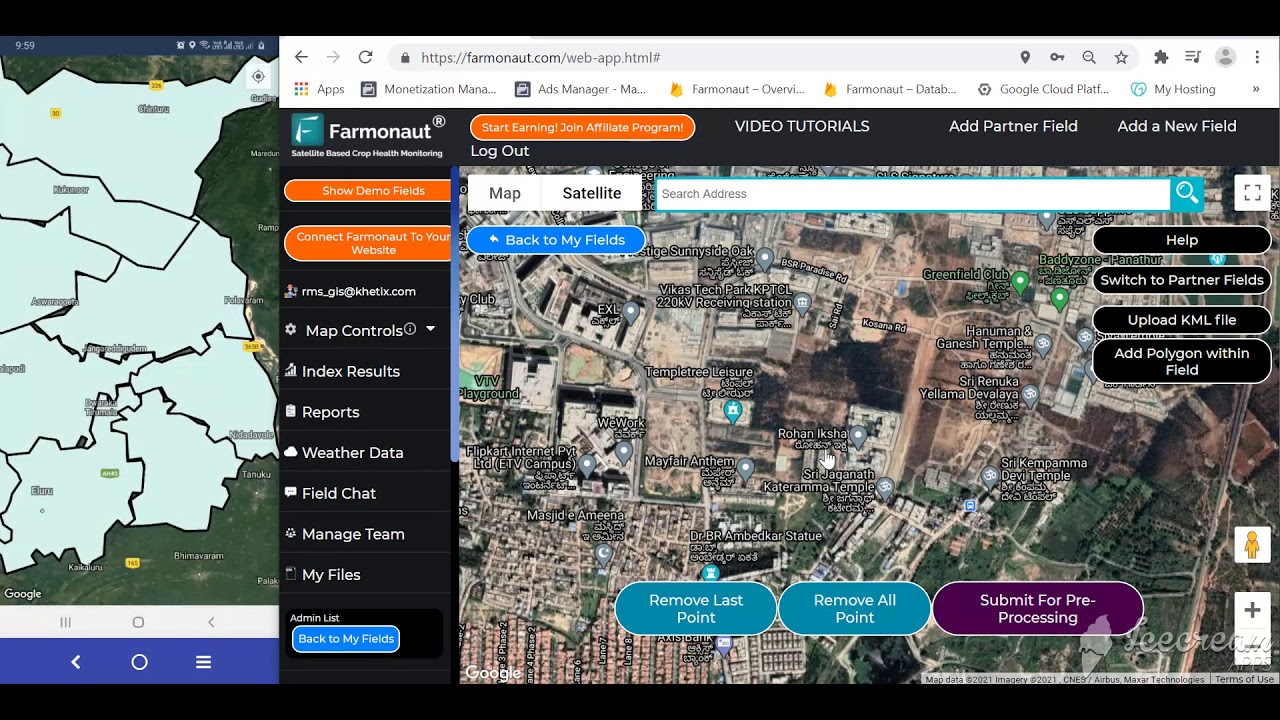
Investor Note
If you own diversified land—including ag, mining, or infrastructure—geospatial monitoring technology ensures legal compliance, maximized production, and lower labor costs for all sectors on your estate.
FAQ: Farming Profitability in Australia
Q: Can you make money farming 100 acres in Australia?
Yes. With the right management, diversified enterprises, and tech-driven decisions, 100 acres can consistently generate $50,000–$150,000/year in net income after costs, depending on enterprise mix, labor, pricing, and region.
Q: How much money can you make from carbon farming Australia?
Most 100-acre carbon farming projects supplement income, averaging $5,000–$25,000/year per parcel, depending on local carbon programs, sequestration, and government incentives.
Q: What’s the fastest path to six figures on a small acreage (e.g. 25 acres)?
High-margin crops, livestock, or vertically integrated enterprises directed toward local demand (like direct-market vegetables, berries, mushrooms, or value-added products) combined with labor efficiency, smart technology, and disciplined planning. See our detailed section above for planning tips!
Q: Is there money in farming in Australia?
With careful selection of profitable enterprises, strict cost control, and access to reliable markets and technology, yes. The most successful farms combine production with value-add and, where feasible, carbon and sustainability-oriented income streams.
Q: What tools can improve efficiency and reduce risk?
Use satellite and AI tools (like those on the Farmonaut large-scale farm management platform) for ongoing crop and resource monitoring, soil mapping, and advisory—minimizing input waste, labor costs, and environmental risk.
Conclusion & Getting Started with Farmonaut
Making money from farming in Australia, especially on 100 acres, is not only possible—it’s highly achievable with evidence-based practices, diversified income streams, and agile business planning. The central idea: don’t just ‘farm the land’—farm intelligently, aligning enterprise choices to your unique climate, soil, water access, and local market demand. Optimize every input and labor hour, and integrate technology for maximum efficiency and minimum risk.
For best results, combine:
- Traditional crops and livestock for bulk income and stability
- Carbon credits, sustainability services, or eco-tourism for risk management and new market access
- Value-added processing and direct-to-consumer sales for higher average prices
- Cost-saving satellite and digital advisory solutions (see Farmonaut App) to inform decision-making, monitor environmental performance, and streamline records.
Ready to explore resilient, profitable farming in Australia? Our satellite-based platforms deliver precision insights in real-time—supporting farmers, agribusinesses, and landowners throughout their journey.
Next Steps: Farm Smarter
- Download the Farmonaut App for satellite agronomy tools and AI-based monitoring.
- Access advanced carbon tracking and traceability solutions.
- Check our fleet management offer for cost-saving resource allocation.
- Integrate our API into your existing systems for seamless digital transformation.
Discussion
Questions, corrections or field experience? Share them below. First-time comments are reviewed before they appear, and your email is never published.
No comments yet. Be the first to add a question or your experience.

 Clubhouse OS
 John Deere
 Progenseed
 SkyHarvest
 Polaris Digitech
 Teledarbas
 Wild Oak Farm
 SFX
SFX BACF Africa
 Doodlakine
 Exurbia Geospatial
 FieldZero
 Indico Company
 Kubota
 Licence holder · Niger · Gold










