

Reviewed August 2026 against University of Illinois farmdoc daily and market-sizing research from DataMintelligence and MarketIntelo.
Try it: Run your own numbers →
An agricultural commodity trading platform is software that lets producers, buyers, and brokers price, hedge, and settle deals in grains, oilseeds, livestock, and other farm commodities without relying solely on phone calls to a local elevator or broker. The US market for these platforms was valued at $3.1 billion in 2025 and is projected to reach $6.2 billion by 2033, per DataMintelligence — but most American farmers still are not using the hedging tools these platforms are built around. Only 12% of US corn farms used futures or options contracts in 2024, according to University of Illinois farmdoc daily research, which is the gap this article is actually about: not whether the technology exists, but why adoption still lags so far behind the tools available.
Table of Contents
- What Is Agricultural Commodity Trading, and What Do Platforms Actually Do?
- Market Size: How Big Is the Agricultural Commodity Trading Platform Sector?
- The Adoption Gap: Why Most US Farms Still Don’t Hedge
- Trading Commodities Based on Weather Patterns
- Types of Agricultural Commodity Trading Platforms
- Risk Management: Futures, Options, and Data-Driven Alternatives
- Traceability and Sustainability in Modern Ag Trading
- Where Farmonaut Fits: Data Infrastructure Behind the Trade
- Choosing an Agricultural Commodity Trading Solution: A Checklist
- Hedge Coverage Calculator
- On “Best Brokers” Rankings
- FAQ



What Is Agricultural Commodity Trading, and What Do Platforms Actually Do?
Agricultural commodity trading is the buying, selling, and hedging of raw farm products — corn, wheat, soybeans, cotton, livestock, coffee, and forestry goods like timber and pulp — between producers, processors, and buyers. An agricultural commodities trading platform is the software layer that makes this happen digitally: price discovery, contract execution, futures and options access, and increasingly, supply-chain traceability, bundled into one system instead of a patchwork of phone calls, paper contracts, and separate broker relationships.
A platform in this category typically bundles four functions:
- Price discovery and market data — real-time and historical pricing for the commodities a user trades.
- Execution — the ability to place, confirm, and settle a trade, cash or futures, without a phone call.
- Risk management tools — futures, options, or forward contracts to lock in price ahead of harvest or delivery.
- Traceability and compliance — origin verification, certification records, and audit trails increasingly required by buyers and regulators.
- Try it: Run your own numbers
Not every platform does all four. Some are narrow execution tools; others, like full agribusiness management systems, wrap trading functions around a broader farm-management or supply-chain product. This is worth knowing before you buy: the “trading platform” category actually spans pure brokerage front-ends, exchange-connected execution systems, and data/traceability platforms that support trading decisions without executing trades themselves.
Market Size: How Big Is the Agricultural Commodity Trading Platform Sector?
Two independent size estimates give a consistent picture of fast growth from a small base. DataMintelligence puts the US agricultural e-commerce trading platform market at $3.1 billion in 2025, projected to reach $6.2 billion by 2033 — a doubling over eight years. Separately, MarketIntelo’s global agri commodity trading platforms market report sizes the worldwide market at $2.4 billion in 2024, growing to a projected $8.3 billion by 2033.
Read those two numbers together and the US alone is expected to represent a large share of global platform spending by the early 2030s — consistent with the US having the deepest futures and options infrastructure (CME Group’s grain and oilseed complex) of any single national market. Neither report publishes a granular breakdown by platform type (execution vs. data vs. traceability), so if you need that split for a specific vendor evaluation, the two report pages above are the primary sources to query directly — this article won’t invent a number a published report doesn’t provide.
2025 Tech Comparison: What Platforms Offer vs. What It Costs to Get Wrong
| Platform Function | What It Solves | Where It Falls Short | Farmonaut Tool |
|---|---|---|---|
| Traceability / blockchain records | Immutable origin and certification records buyers now require for premium contracts | Depends on accurate data entry at every handoff; doesn’t fix a bad harvest estimate | Farmonaut Traceability |
| Satellite crop monitoring | Independent yield and crop-health signal ahead of futures decisions | Cloud cover and resolution limits on very small parcels | Farmonaut Large Scale Farm Management |
| Crop loan / insurance verification | Faster, evidence-based claims and loan approval tied to actual field condition | Still requires an underwriting relationship; the platform verifies, it doesn’t underwrite | Farmonaut Crop Loan & Insurance |
| Fleet and logistics management | Tracks the physical movement side of a trade — harvest to storage to delivery | Doesn’t touch price risk; a logistics tool, not a hedging tool | Farmonaut Fleet Management |
| Carbon footprint tracking | Documentation for sustainability-linked contracts and buyer scorecards | Doesn’t set price; it’s a compliance and market-access input, not a trading tool | Farmonaut Carbon Footprinting |
The Adoption Gap: Why Most US Farms Still Don’t Hedge
This is the number that should reframe how you think about this category: only 12% of US corn farms used futures or options contracts in 2024, per University of Illinois farmdoc daily’s analysis of farmer risk-management behavior. Among Illinois grain farmers specifically, 15% held futures accounts in 2023. But adoption is heavily concentrated by farm size — 40% of US farms with more than $5 million in gross crop sales used futures or options in 2024, compared to the 12% figure across corn farms overall.
That gap — large operations hedging at more than three times the rate of the average farm — is the real story behind every “agricultural commodity trading platform” search. It isn’t that the technology doesn’t exist. Free and low-cost data, mobile trading apps, and broker platforms are more available than ever. What’s missing for most mid-size and small operations is the combination of trading volume large enough to justify the time cost of active hedging, and confidence in the underlying yield and price data to act on.
Agricultural commodities trading platforms that pair execution with independent crop-condition data — rather than pricing data alone — are the ones best positioned to close that gap, because they give a mid-size operation the confidence signal that large trading desks already get from in-house agronomists and analysts.
Trading Commodities Based on Weather Patterns
Weather-linked trading in agriculture takes two distinct forms, and it matters which one you mean. The first is directional trading: using weather forecasts and drought, frost, or excess-moisture data to anticipate crop supply shocks and take positions in futures or options ahead of a price move — a practice as old as the futures pits themselves, now sped up by satellite and reanalysis weather data. The second is weather derivatives: contracts that pay out based on a defined weather index (rainfall total, growing degree days, frost days) rather than a commodity price, used to hedge yield risk directly instead of proxying it through price.
Agriculture accounts for 18.7% of the global weather derivatives market as of 2025, and that agricultural segment is growing at a projected 11.8% CAGR from 2025 to 2034, per MarketIntelo’s weather derivatives market report. That’s a meaningfully faster growth rate than the broader ag-platform market’s implied CAGR, which suggests weather-indexed instruments are moving from a niche institutional tool toward broader use — though the report does not break out a US-specific penetration rate among farm operators, and no such figure has been published elsewhere that we could verify; if you need adoption data specific to US row-crop operations, USDA’s Risk Management Agency and NASS survey programs are the primary sources to check for updated figures.
Practically, for a US grain or livestock operation, weather-pattern trading shows up in three ways: (1) using NOAA and USDA NASS crop-progress and drought-monitor data alongside futures charts to time hedges, (2) buying weather-indexed crop insurance products through USDA’s Risk Management Agency rather than pure price insurance, and (3) for larger operations and grain merchandisers, direct weather-derivative contracts through commodity exchanges or specialized brokers. None of these require abandoning a standard futures/options strategy — they’re additive tools for timing and for hedging the yield side that price-only futures contracts don’t cover.
Types of Agricultural Commodity Trading Platforms
“Agriculture trading platform” and “agri trading platform” searches tend to surface a mix of very different products. It’s worth separating them before comparing any two by feature list:
- Exchange-connected brokerage platforms — give direct access to futures and options on exchanges like CME Group’s grain, oilseed, and livestock complex. Built for execution speed and margin management.
- Cash-market and forward-contract marketplaces — connect producers directly to elevators, processors, or export buyers for physical (not futures) delivery, often cutting out one layer of intermediary.
- Data and decision-support platforms — don’t execute trades themselves but supply the crop-condition, yield-estimate, or weather data that informs when and how much to hedge.
- Traceability and compliance platforms — track a commodity’s chain of custody for certification and buyer-scorecard purposes; increasingly bundled into the trading relationship itself as buyers demand documented origin.
Most “ag trading tools” searches are really looking for the second and third categories — tools that inform a decision rather than execute one — because execution is already commoditized among major brokers. The differentiator now is data quality feeding the decision, not the order-entry screen.

Satellite and AI monitoring applied to a bulk commodity supply chain — the data layer behind a trading decision.
Risk Management: Futures, Options, and Data-Driven Alternatives
Price volatility is the core problem every agricultural commodity trading solution is built to manage, and the tools fall into a few tiers:
- Futures contracts — lock in a sale or purchase price for future delivery. The farmdoc daily research cited above shows these remain concentrated among the largest operations, at 40% adoption for farms above $5 million in gross crop sales versus 12% for corn farms overall.
- Options contracts — provide price protection while preserving upside, at the cost of an upfront premium; adoption tracks alongside futures use in the same farmdoc daily data since the two are usually used together.
- Forward and cash contracts — simpler agreements directly with a buyer or elevator, without exchange margin requirements; the entry point for operations too small to justify a futures account.
- Data-driven timing tools — satellite crop monitoring, soil and weather data, and AI-based yield forecasting don’t replace futures or options, but they inform when to use them by reducing uncertainty about your own supply position ahead of a hedge decision.
Satellite-based field verification is a practical example of the fourth category: it doesn’t execute a trade, but it gives a lender or insurer — and by extension a farmer negotiating a forward contract — a documented, third-party record of crop condition rather than a self-reported estimate.

Traceability infrastructure reduces the documentation risk that sits alongside price risk in any commodity contract.
Traceability and Sustainability in Modern Ag Trading
Buyers increasingly require documented origin and certification alongside a competitive price — a shift that turns traceability from a compliance cost into a market-access requirement. Blockchain-based record-keeping creates a tamper-resistant log of a commodity’s path from farm to buyer, which matters for three practical reasons: it shortens the audit process for certifications like Rainforest Alliance (coffee, cocoa) or FSC (timber), it reduces disputes over quality or origin claims at the point of sale, and it’s increasingly a prerequisite buyers write into forward contracts rather than a nice-to-have.
Farmonaut’s blockchain traceability solution applies this at the transaction level — every traded batch carries a verifiable record — while carbon footprint tracking addresses the adjacent and increasingly linked requirement of documented emissions data for sustainability-linked contracts.
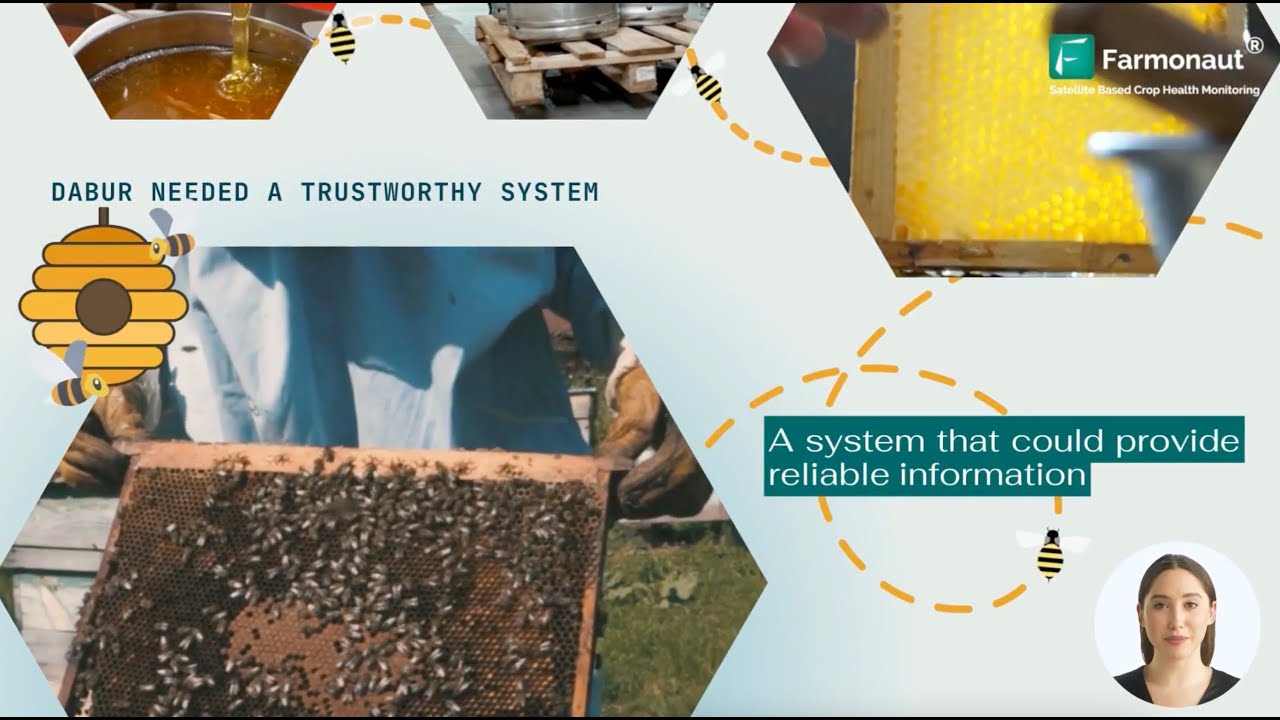
A live blockchain traceability deployment tracking a food commodity from source to buyer.
Where Farmonaut Fits: Data Infrastructure Behind the Trade
Farmonaut doesn’t operate as a futures brokerage or an exchange — it supplies the crop-condition, traceability, and logistics data that feeds a trading or lending decision made elsewhere. That distinction matters for how to use it inside a trading workflow:
- Satellite crop health monitoring: multi-spectral imagery for vegetation health (NDVI) and soil moisture, giving an independent read on supply ahead of a hedge decision.
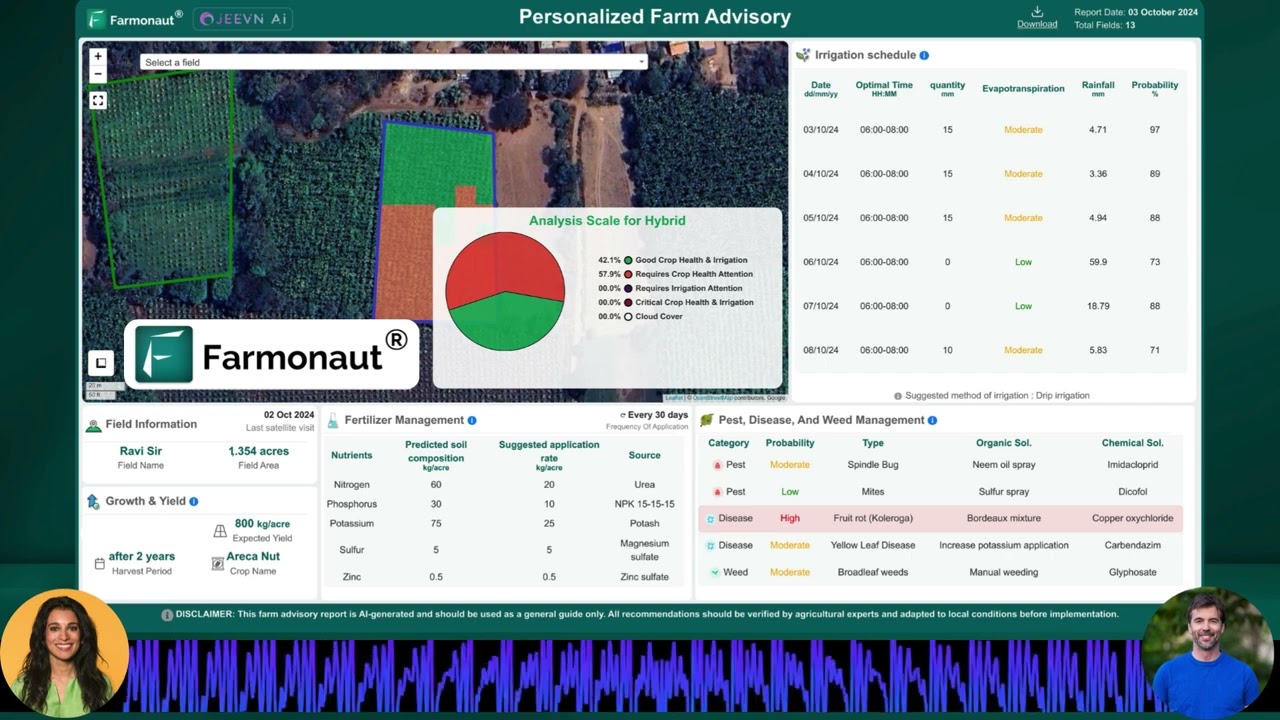
- Personalized AI advisory: Jeevn AI delivers weather forecasts and crop-specific guidance that feed into yield-enhancement decisions affecting the volume a producer ultimately has to sell or hedge.
- Blockchain traceability: documented chain-of-custody for buyers requiring origin verification as a contract condition.
- Fleet and resource management: logistics tracking from harvest through delivery, the physical side of contract fulfillment.
- Carbon footprinting: emissions tracking for sustainability-linked contract terms.
- API and mobile access: available via web, Android, and iOS, plus an open API for integrating crop data directly into a trading or ERP system.
- Large-scale farm management: multi-region oversight tools for agribusinesses and cooperatives coordinating supply across many growers ahead of a bulk sale.
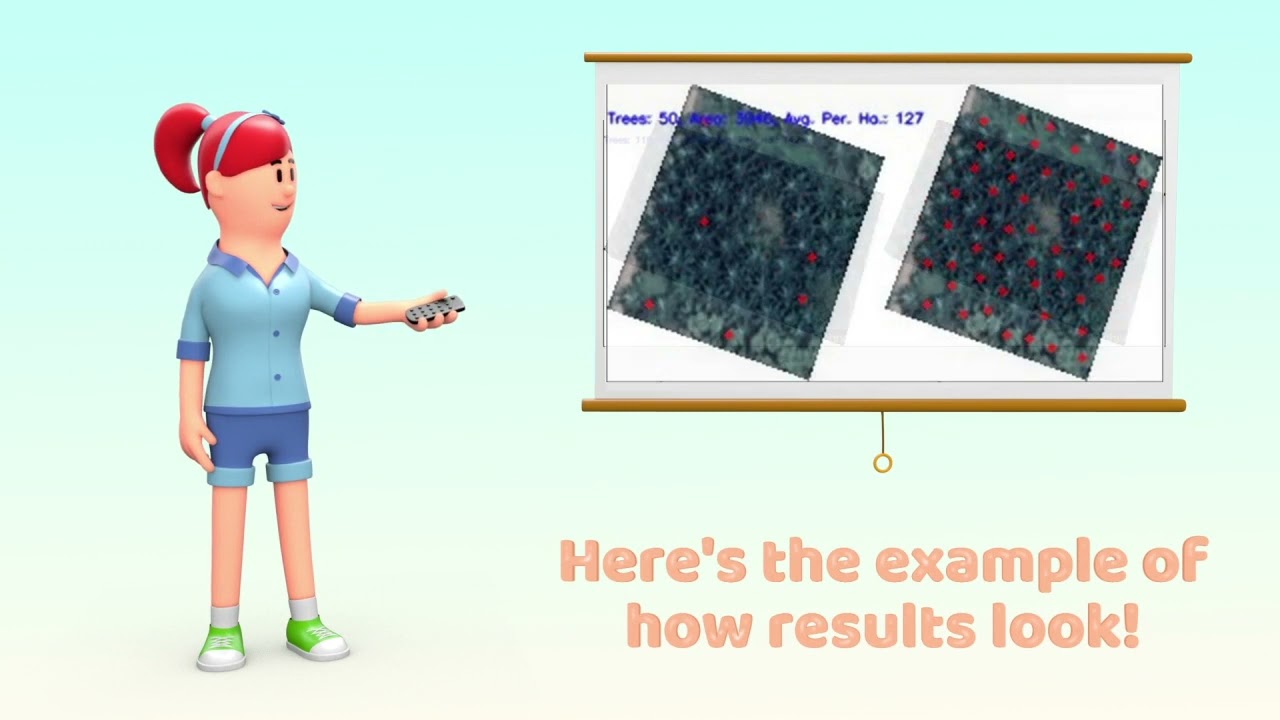
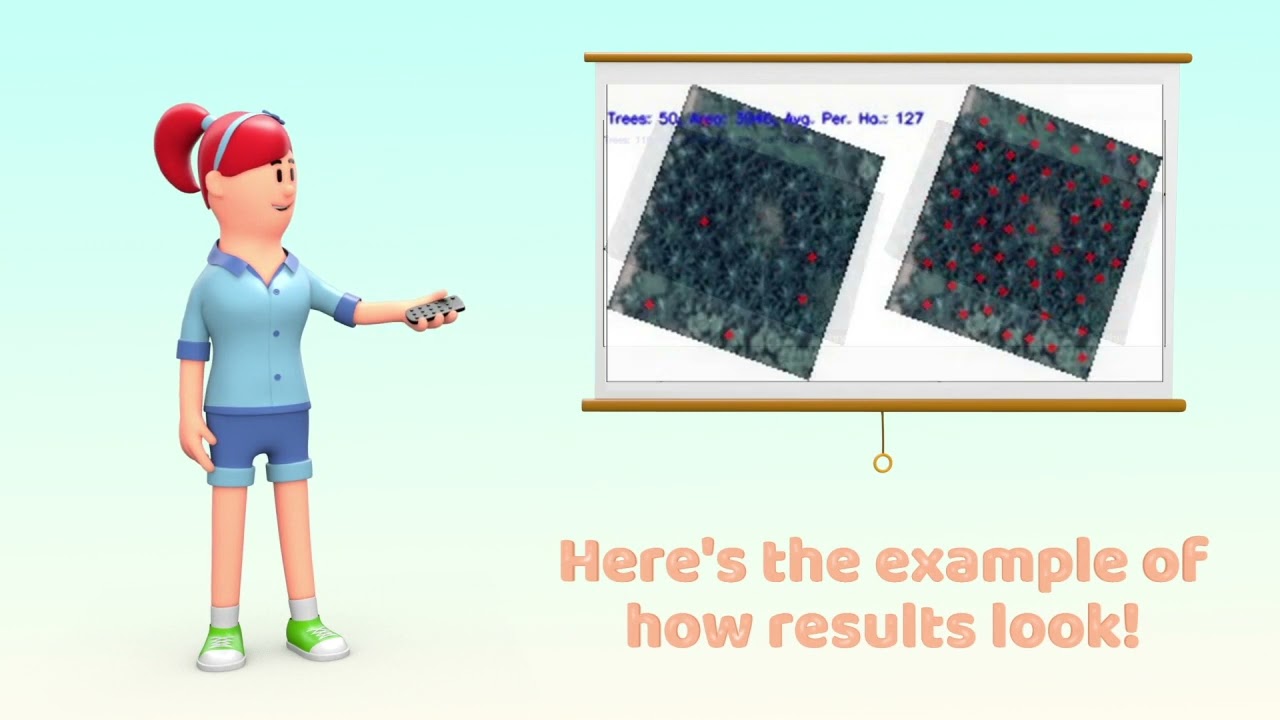
Large-scale plantation monitoring supporting bulk commodity supply decisions, from oil palm to forestry.
For grain-specific market context, see our corn futures market analysis covering price volatility and export trends. For developers integrating crop and weather data directly into a trading system, the API documentation covers available endpoints.
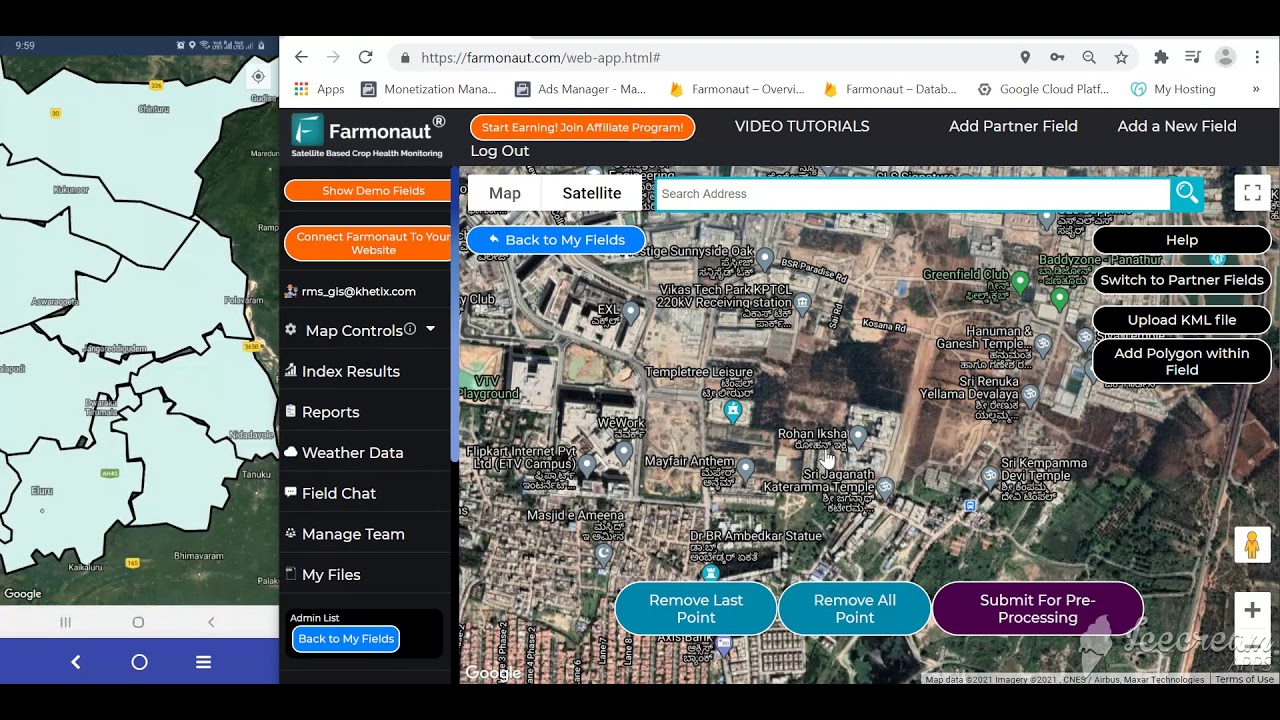
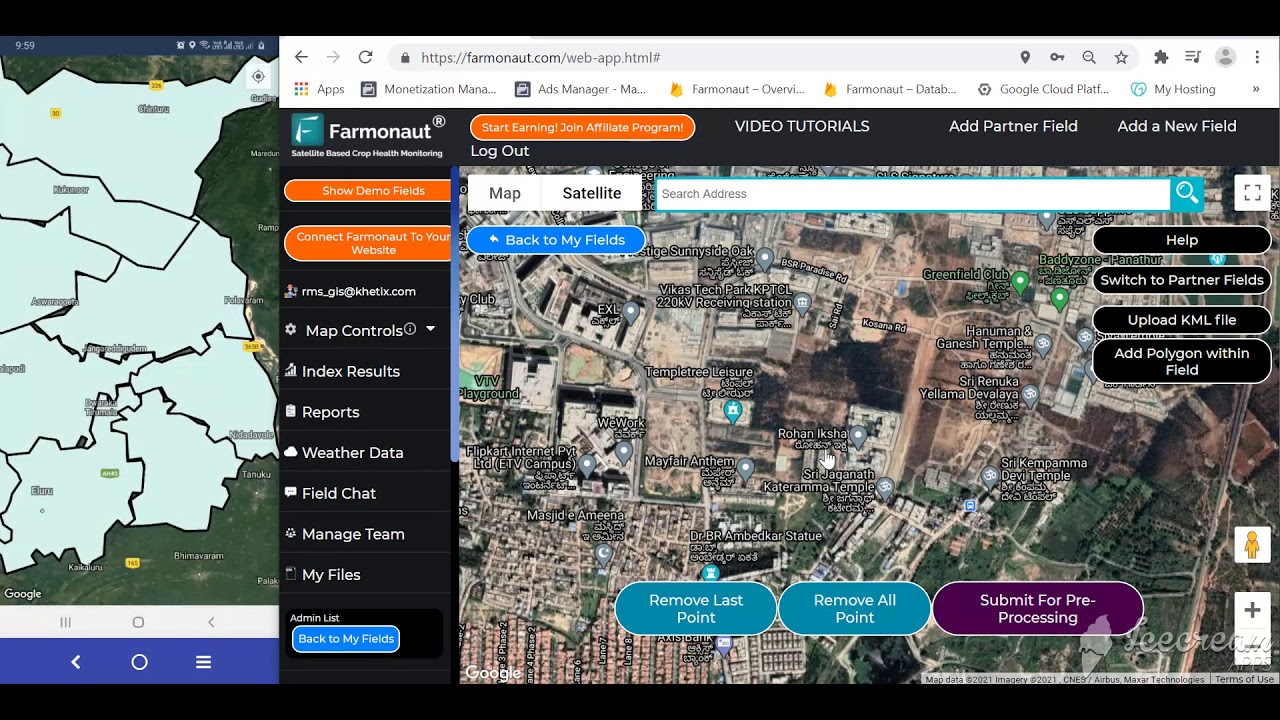
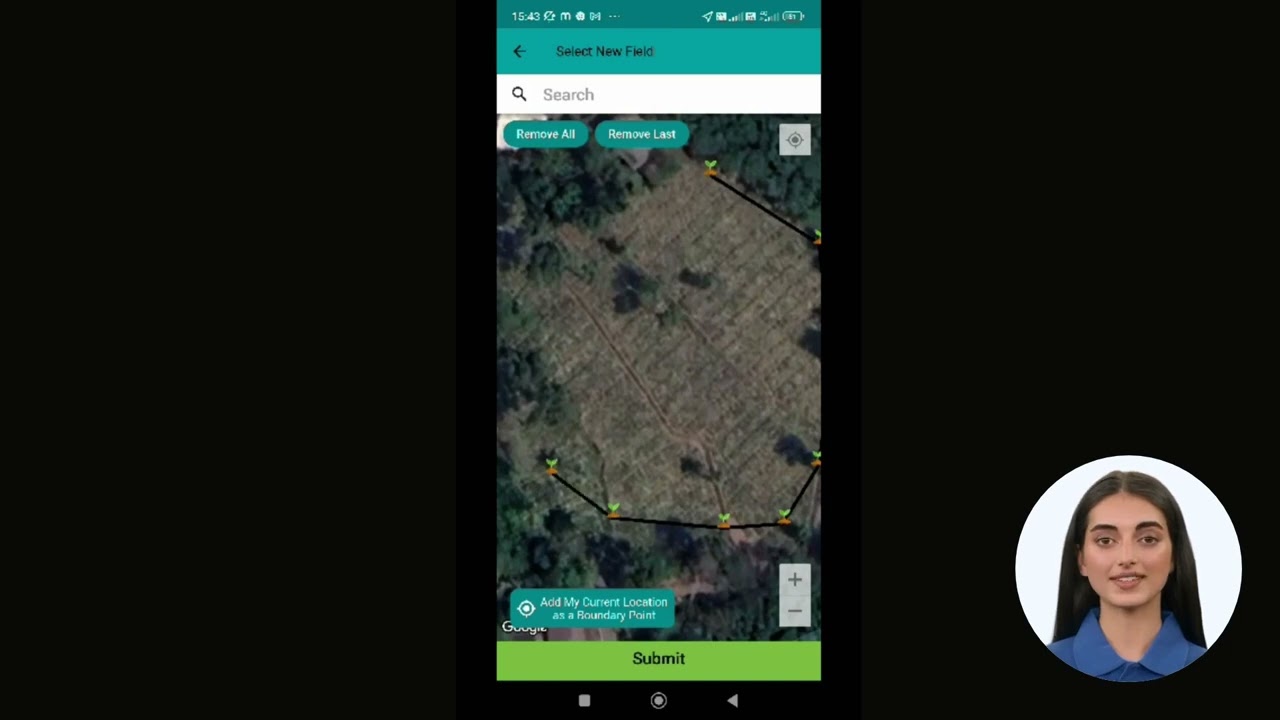
Field mapping and monitoring workflow supporting large-scale commodity operations.
Choosing an Agricultural Commodity Trading Solution: A Checklist
Because “platform” covers such different products — brokerage, cash marketplace, data layer, traceability system — the right evaluation checklist depends on which one you’re actually shopping for. Use this regardless of category, and revisit it whenever you re-evaluate a vendor, since the underlying questions don’t expire even as specific vendors and prices change:
- What does it actually execute? Confirm whether the platform places exchange trades, facilitates cash/forward contracts, or only supplies data — don’t assume “trading platform” branding means order execution.
- What’s the minimum viable volume? Futures accounts carry margin requirements that make sense only above a certain trading volume; below that, a forward-contract marketplace or simple cash sale may cost less in time and fees.
- Where does its price data come from, and how often is it refreshed? Ask for the specific exchange feed and latency — a platform quoting delayed data isn’t suitable for active hedging decisions.
- Does it integrate independent crop-condition data? A platform that only shows price, with no link to your own yield or crop-health data, leaves you hedging blind on the supply side.
- What traceability and certification support does it offer, and does that satisfy the specific buyer or certification body you sell to (Rainforest Alliance, FSC, or a specific buyer’s own scorecard)?
- What does it cost relative to your trading volume? Compare subscription or per-trade fees against a full season’s expected trading activity, not a single transaction.
Hedge Coverage Calculator
This calculator estimates what share of your expected crop volume a given futures or options position would cover, based on your own bushels or hectares and contract size — use it to size a hedge decision before calling a broker, not as a substitute for one.
Run your own numbers
Assumes uniform contract size and does not account for basis risk, margin calls, option premiums, or partial-contract positions. Standard CME grain contract sizes vary by commodity — confirm current specifications with your broker or exchange before sizing an actual hedge.
On "Best Brokers" Rankings
Searches for the best brokers for agricultural commodity trading commonly look for a ranked list with named firms and fee comparisons. That isn't something this article — or Farmonaut, which isn't a brokerage — can responsibly provide: broker rankings depend on your account size, commodities traded, margin requirements, and regulatory jurisdiction, and a generic ranking published without those specifics is exactly the kind of low-value content this rewrite is trying to avoid producing. If you're evaluating brokers, start with a firm's registration status with the CFTC and NFA (for US futures brokers), and compare commission structures against your expected trading volume using the checklist above rather than a third-party "best of" list.
FAQ
What is an agricultural commodity trading platform?
Software connecting producers, buyers, and traders to price, execute, and hedge trades in raw agricultural products, ranging from exchange-connected brokerage tools to data and traceability platforms that inform trading decisions without executing them directly.
How many US farmers actually use futures or options?
12% of US corn farms used futures or options contracts in 2024, per University of Illinois farmdoc daily. Adoption rises sharply with farm size: 40% among US farms with more than $5 million in gross crop sales, versus 15% among Illinois grain farmers with futures accounts in 2023.
What's the difference between an agricultural commodity trading platform and a broker?
A broker executes trades on your behalf and is regulated as such (in the US, registered with the CFTC/NFA). A trading platform may be the broker's own software, a third-party execution tool connected to a broker, or a data/traceability system with no execution function at all — confirm which one you're evaluating before comparing fees.
Is trading commodities based on weather patterns a real strategy?
Yes, in two forms: directional trading using weather forecasts to anticipate supply shocks, and weather derivatives — contracts paying out on a weather index rather than a price. Agriculture makes up 18.7% of the global weather derivatives market as of 2025, growing at a projected 11.8% CAGR through 2034, per MarketIntelo.
How big is the agricultural commodity trading platform market?
The US market was valued at $3.1 billion in 2025, projected to reach $6.2 billion by 2033 (DataMintelligence). The global market was valued at $2.4 billion in 2024, projected to reach $8.3 billion by 2033 (MarketIntelo).
Where can I access Farmonaut's data tools for trading decisions?
Via web, Android, and iOS apps, and an open API for system integration.


Conclusion
The technology gap in agricultural commodity trading closed years ago — futures, options, weather data, and traceability tools are all available today to operations of nearly any size. The adoption gap is what remains: 12% of US corn farms hedge with futures or options, and that rate more than triples for operations above $5 million in gross crop sales, per University of Illinois farmdoc daily. Closing that gap for mid-size operations depends less on new trading features and more on pairing execution tools with independent, trustworthy crop-condition data — which is where satellite monitoring, AI advisory, and verified traceability records earn their place in the workflow rather than sitting alongside it as an add-on.
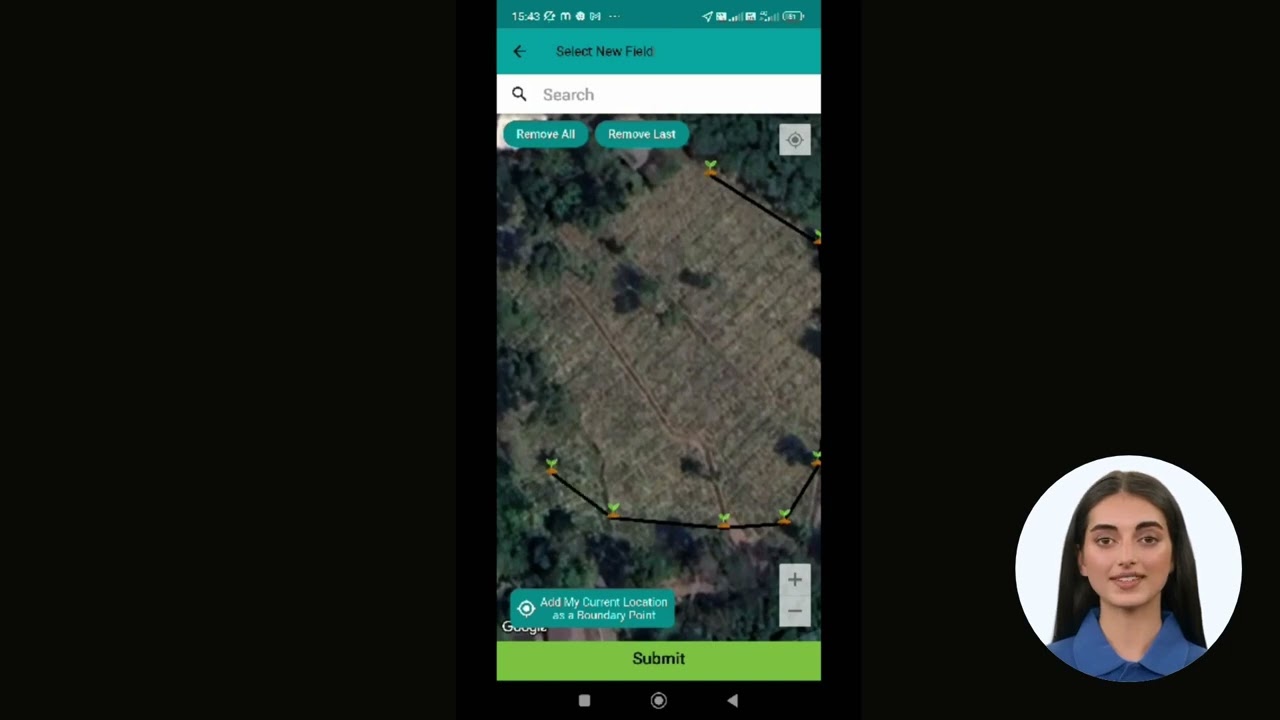
Mobile field mapping supporting the crop-condition data layer behind a hedging or contract decision.

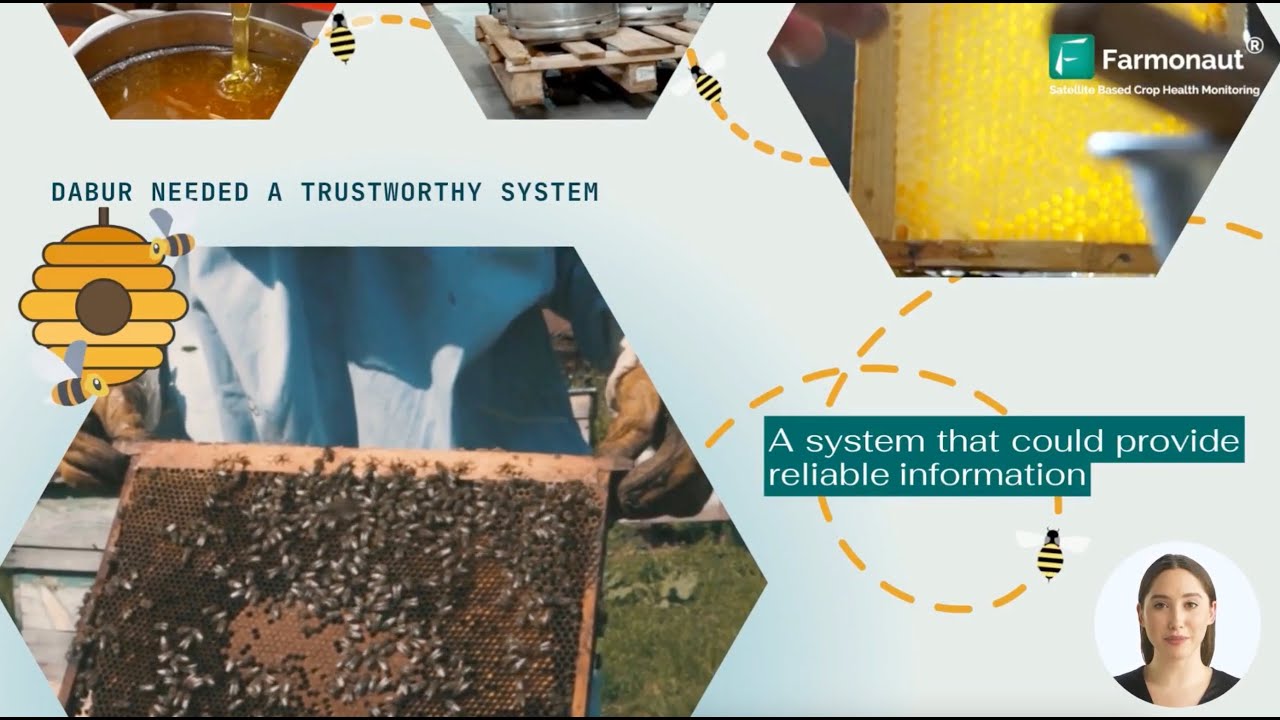
AI and blockchain applied to coffee and forest commodity supply chains — the traceability layer increasingly required in trading contracts.

AI-based analytics supporting the crop advisory layer that feeds trading and hedging decisions.

 Saraswati Agro
 Geno
Geno Hayleys Agriculture
 Linx Agritech
 Adinet
 Save Your Soils
 Grandstream Algérie
 XOS Realty
 Geospatial Lab Africa
 Agro La Gándara
 HIPSAC
 ZOL Zimbabwe
 Juligerm
 AdBio
AdBio MISE Maroc
 NWNS
NWNS
