

Agriculture in Desert Areas: 7 Powerful Innovations for 2025
- Summary
- Trivia
- Introduction to Agriculture in Desert Areas
- Unique Challenges of Agriculture in Deserts
- 7 Powerful Innovations Transforming Desert Agriculture in 2025
- 1. Advanced Drip and Subsurface Irrigation
- 2. Solar-Powered Desalination & Renewable Water Solutions
- 3. Precision Agriculture with Sensors & Automation
- 4. Biochar & Organic Soil Amendments
- 5. Drought-Resistant & Salt-Tolerant Crop Varieties
- 6. Controlled Environment Agriculture (CEA): Greenhouses & Vertical Farming
- 7. Agroforestry and Native Vegetation Integration
- Desert Agriculture Innovations: A Comparative Table
- Unlocking Desert Agriculture with Farmonaut’s Satellite Solutions
- FAQ: Agriculture in Desert Areas, 2025
- Conclusion
Summary: Agriculture in Desert Areas—Innovations and Challenges in 2025
Agriculture in desert areas has historically faced formidable challenges—water scarcity, extreme weather, poor soil fertility—but as the global population grows and arable land becomes increasingly limited, these arid regions are gaining vital importance for food security. By 2025, a suite of innovations—including sustainable irrigation, renewable energy-powered desalination, precision agriculture technologies, and the use of salt-tolerant crops—is transforming desert farming into a viable, scalable solution for sustainable production. This post explores the challenges and the seven most powerful innovations revolutionizing desert agriculture for the future.
Introduction to Agriculture in Desert Areas
Agriculture is the backbone of global food security, but with arable land becoming scarcer due to urbanization, climate change, and population growth, the quest for new solutions has led the world’s attention toward desert areas. Agriculture in deserts—once seen as a precarious venture—is being transformed through technology, sustainable practices, and resilient crop varieties.
In this comprehensive guide, we explore the critical obstacles and the top 7 innovations propelling desert agriculture into the future, specifically as it applies to 2025 and beyond. Whether you’re a farmer, policymaker, AgTech professional, or simply curious about how deserts could become tomorrow’s breadbasket, this post offers the insights you need.
Unique Challenges of Agriculture in Desert Areas
Agriculture in desert areas is characterized by its formidable challenges, rooted in both natural and human-driven constraints. Understanding these is vital before addressing the innovations that are making farming in deserts increasingly viable.
- Water Scarcity: Deserts receive minimal rainfall; groundwater is often saline and of low volume.
- Soil Fertility Constraints: Most arid regions are marked by poor soil, low organic matter, and severe nutrient deficiencies.
- Extreme Climatic Conditions: High diurnal temperature variations, scorching heat, and strong winds cause erosion, crop stress, and rapid evaporation losses.
- Limited Arable Land: Only small pockets are cultivable, and expansion is restricted by environmental and sustainability concerns.
- Resource Constraints: Desert farming faces difficulties accessing traditional irrigation infrastructure and fertile soils.
- Population Pressures: Global population growth is intensifying the search for alternative food production regions, increasing the need for innovation.
- Salinity Stress: Saline water is a dominant feature in many desert areas, impeding crop growth.
Even with these obstacles, 2025 marks an era where technology and sustainable practices are unlocking the potential of agriculture in deserts.
7 Powerful Innovations Transforming Agriculture in Desert Areas in 2025
Below, we dive into the most powerful, keyword-rich innovations propelling desert farming forward, explaining each solution with detailed context and real-world relevance.
1. Advanced Drip and Subsurface Irrigation: Precision Water Delivery in Arid Environments
The paradigm shift toward advanced irrigation techniques—specifically drip and subsurface irrigation—stands at the forefront of desert agriculture. These systems deliver water directly to the plant roots through a network of tubes or emitters laid on or below the soil surface. This dramatically reduces evaporation losses, with some estimates citing water savings up to 50-70% over traditional methods.
- Optimal Usage: Drip systems are increasingly mainstream in desert regions due to their ability to tailor water use to crop needs.
- Integrative Precision: The addition of soil moisture sensors and automated irrigation controllers ensures water usage is dynamic and responsive to environmental conditions and crop demand.
As more farmers adopt these innovative techniques, agriculture in deserts becomes both economically attractive and environmentally sustainable.

Want to monitor soil moisture and water needs remotely? Our Large Scale Farm Management tools let managers and agronomists access satellite-driven data, spot irrigation gaps, and improve resource allocation via farm maps, all accessible on web, Android, and iOS.



2. Solar-Powered Desalination & Renewable Water Solutions
Water scarcity is the number one threat to agriculture in deserts. By 2025, solar-powered desalination plants and renewable energy-driven water systems have become critical. These facilities combine abundant solar and wind energy sources to purify saline groundwater or coastal seawater, delivering vital irrigation supplies.
- Desalinated Water Use: Formerly expensive, desalination is now cost-effective for irrigating high-value crops in locations such as the Middle East, North Africa, and western coastal desert areas.
- Carbon Footprint Reductions: Using renewables makes these systems environmentally friendly, supporting sustainable agriculture.
- Volume Security: Consistent and scalable water supply is now possible, making desert farming viable where previously impossible.

Measure and minimize your farm’s carbon emissions using remote data!
Discover
Farmonaut’s Carbon Footprint Monitoring Platform—track carbon savings and support sustainability reporting for your agricultural operations.
3. Precision Agriculture with Sensors & Automation
Precision agriculture harnesses technology to precisely manage resources such as water, soil nutrients, and fertilizer. In desert farming for 2025, soil moisture sensors, remote monitoring, and automated irrigation controllers ensure that resources are distributed efficiently.
- Real-Time Data: Sensors and satellite-based platforms track soil conditions, weather, crop health, and resource use.
- AI and Automation: Artificial Intelligence is increasingly used to tailor inputs based on real-time data, saving water and maximizing productivity.
- Blockchain Traceability: Blockchain systems now track every agricultural process, strengthening transparency and food security.
Leverage satellite-based precision for field scouting and management. Visit
Farmonaut’s Fleet Management and Monitoring Suite for enterprise-level coordination of agricultural vehicles and assets using near real-time data—reduces operational waste, boosts safety, and supports sustainable growth.
Want to build custom integrations? Farmonaut’s API gives you direct access to remote-sensing data, NDVI, and field analytics; see developer guidance here.
4. Biochar & Organic Soil Amendments: Improving Desert Soil Quality
In desert areas, soil is often poor in organic matter and nutrient availability, which are vital for plant growth. As a sustainable solution, biochar application and compost derived from municipal or agricultural waste have become mainstream practices by 2025.
- Biochar Benefits: This carbon-rich amendment improves soil retention capacity, supports soil biology, and enhances nutrient retention.
- Compost Application: Recycles local waste, building organic content and providing slow-release nutrients for sustainable farming.
- Erosion Control: Increased soil stability and fertility reduce erosion risk in hostile environments.

Curious about remote diagnostics for soil health and salinity?
Monitor NDVI, nutrient deficiencies, and stress areas with ease through Farmonaut’s satellite imagery tools on any device—enabling smarter amendment applications and real-time problem solving for desert agriculture.
5. Drought-Resistant & Salt-Tolerant Crop Varieties
The selection of crop varieties that can withstand salinity and water deficit is a game-changer for agriculture in desert areas.
- Advanced Breeding: Genetic research has accelerated the launch of heat-tolerant, drought-resistant, and salt-tolerant crops by 2025.
- Productivity Gains: These varieties unlock higher yield per drop of water, broadening the selection of viable crops for arid regions.
- Food Security: Enhanced crop portfolio means greater food production and increased resilience against climatic extremes.
Explore satellite-powered advisory for variety selection, stress detection, and growth monitoring on a single dashboard.
Visit Farmonaut Crop Plantation & Forest Advisory to maximize desert farming potential—backed by AI-driven satellite insights.
“Heat-resistant crop varieties may boost desert farm yields by 30% compared to traditional crops by 2025.”
6. Controlled Environment Agriculture (CEA): Greenhouses & Vertical Farming
Controlled environment agriculture (CEA) represents the next evolution in desert agriculture, allowing crops to thrive regardless of harsh external conditions. Greenhouses and vertical farms use insulated walls, advanced climate control, and efficient hydroponic or aeroponic systems to
- Reduce evaporation losses by up to 90%
- Precisely deliver nutrients and water
- Enable year-round production
- Utilize solar energy for supplemental lighting (LEDs tuned for plant growth)
- Expand viable land use within arid regions
Remotely monitor temperature, humidity, and LDVI with Farmonaut satellite technology, even for controlled facilities.
Our platform provides CEA operators timely advice for water-savings, resource allocation, and crop cycle optimization.
7. Agroforestry and Native Vegetation Integration
Agroforestry practices—integrating trees with crops—are increasingly mainstream in sustainable desert farming. The benefits are profound:
- Mitigate wind erosion, stabilize sand dunes, and protect fields from desertification
- Boost biodiversity and create microclimates beneficial to crop growth
- Recycle organic matter and enhance water retention
- Native vegetation restoration supports ecosystem services for resilient landscapes
By 2025, these systems are especially vital for arid and semi-arid regions in the Middle East, North Africa, and parts of Australia, providing nature-based climate adaptation.

Monitor vegetation health and land restoration progress from above—use Farmonaut’s blockchain-based traceability for agricultural and forestry projects to prove sustainability and authenticity.
Learn more about Product Traceability and its application for food security and ecosystem credits.
Desert Agriculture Innovations: A Comparative Table
| Innovation Name | Brief Description | Purpose/Benefit | Estimated Implementation Cost in 2025 (USD/acre) | Water Savings (% Estimated) | Increase in Crop Yield (% Estimated) | Adoption Level (2025 Forecast) |
|---|---|---|---|---|---|---|
| Drip & Subsurface Irrigation | Water delivered directly to plant roots via emitters below/at soil surface | Reduces evaporation; efficient water & nutrient use | $1,000 – $2,500 | Up to 70% | 20–45% | High |
| Solar-Powered Desalination | Using renewable energy to desalinate saline/coastal water for irrigation | Secures water supply, lowers carbon footprint | $2,500 – $10,000 | Up to 40% | 15–35% | Medium |
| Precision Ag with Sensors & AI | Soil, moisture, and crop sensors with smart AI/automation | Optimizes input usage, real-time field monitoring | $800 – $2,000 | 20–40% | 20–30% | High |
| Biochar & Compost Amendments | Biochar and compost to build soil organic matter | Improves water retention, nutrient availability | $350 – $1,200 | 10–25% | 10–25% | Medium |
| Drought/Salt-Tolerant Varieties | Genetically bred or engineered crops for arid/saline environments | Sustains yields & expands crop options | $40 – $140 (seed premium) | 15–35% | 20–30% | High |
| Controlled Environment Agriculture (CEA) | Greenhouses, vertical farming with advanced controls & hydroponics | Year-round production, up to 90% water-efficient | $5,000 – $20,000 | Up to 90% | 40–150% | Medium |
| Agroforestry & Native Integration | Combining trees, shrubs, and crops for ecosystem services | Reduces erosion, enhances biodiversity & soil stability | $350 – $700 | 10–20% | 5–15% | Medium |

Unlocking Desert Agriculture with Farmonaut’s Satellite Solutions
Pushing the boundaries of agriculture in desert areas demands affordable, cutting-edge technology for vast and remote landscapes. We at Farmonaut are dedicated to making satellite-driven insights accessible, scalable, and actionable for all players—farmers, businesses, governments—looking to optimize production in arid environments.
-
Satellite-Based Multi-Spectral Monitoring:
Monitor soil health, irrigation coverage, and crop growth using NDVI, EVI, and more. Receive near real-time alerts for water stress, nutrient deficiencies, or erosion risk from anywhere, any device. -
AI-driven Jeevn Advisory:
On-demand, actionable recommendations for resource usage, soil amendments, seeding, and disease mitigation—optimized for desert agriculture. -
Blockchain-Based Traceability:
End-to-end transparency for food safety and supply chain credibility in regions where authenticity is essential. -
Environmental & Carbon Monitoring:
Track your carbon reductions, compare innovations (carbon footprinting for agriculture), and align with sustainability targets. -
Resource & Fleet Management:
Coordinate logistics, minimize downtime, and enhance safety for large-scale desert land operations (Fleet Management for Agriculture). -
Insurance & Financing Operations:
Satellite-based verification make crop loan and insurance processes smooth, transparent, and fraud-resistant in remote or arid areas.
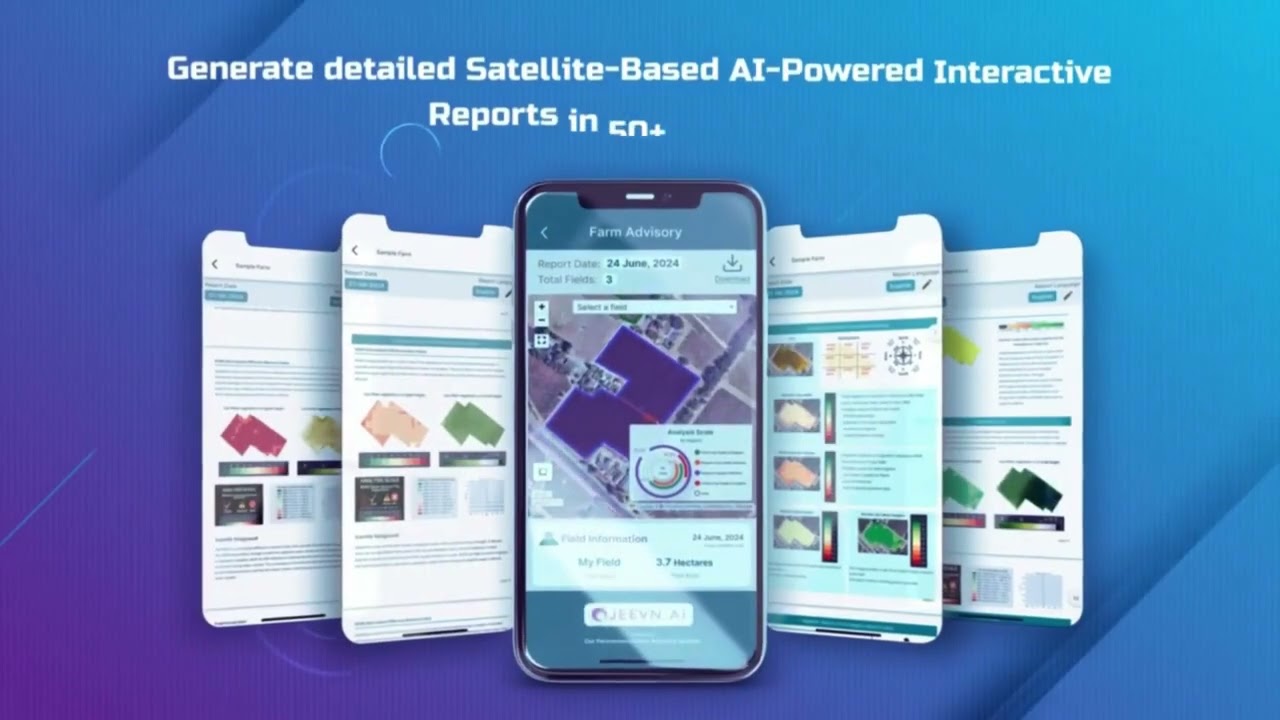
Ready to make your farm smart, resilient, and sustainable in 2025?
Explore our all-in-one Farmonaut app—the hub for real-time monitoring, advisory, compliance, and sustainability solutions for agriculture in deserts and beyond.
FAQ: Agriculture in Desert Areas, 2025
Why is agriculture in desert areas important for global food security?
As population grows and suitable arable land becomes limited, desert areas are increasingly important new frontiers for expanding food production. Innovations make these regions viable for sustainable agriculture, boosting food security worldwide.
What is the main challenge facing agriculture in deserts?
Water scarcity is the primary obstacle, followed by poor soil fertility and climate extremes. Addressing these requires innovative irrigation, soil management, and resilient crop varieties.
How does precision agriculture help in arid and semi-arid regions?
Precision agriculture uses satellite data, soil moisture sensors, and automation to optimize the application of water, fertilizers, and pesticides, reducing waste and improving yields, especially where resources are scarce.
Can farmers in desert regions access satellite-based farming solutions?
Absolutely. Farmonaut offers affordable, satellite-driven solutions for desert agriculture—covering everything from real-time monitoring to AI-powered advisory—via web and mobile apps.
What is the role of desalination in supporting agriculture in desert areas?
Desalination is essential in converting saline groundwater or coastal water into usable irrigation water, especially when powered by solar or wind energy, making desert farming more sustainable and scalable.
Are there innovative crop varieties suitable for sand, heat, and salinity?
Yes. Advanced breeding techniques have produced salt-tolerant, drought-resistant, and heat-robust crops. These are boosting yields by as much as 30% compared to traditional varieties by 2025.
Which Farmonaut product can help track carbon and sustainability for desert farms?
Our Carbon Footprinting solution provides detailed emissions monitoring and supports sustainability certifications for farms and agribusinesses working in arid environments.
Conclusion: Desert Agriculture 2025—A New Dawn for Innovation and Food Security
Agriculture in desert areas—once a formidable challenge due to water scarcity, poor soils, and climatic extremes—is being transformed in 2025. With innovative irrigation, precision agriculture, biochar and compost amendments, and salinity/drought-tolerant crops, desert farming is no longer a precarious venture but a scalable solution for global food security. Add to this the power of blockchain traceability, satellite monitoring, and controlled environment agriculture, and the world’s arid regions emerge as surprisingly productive landscapes.
With satellite-driven decision support and data-driven insights, we at Farmonaut empower every stakeholder to cultivate, restore, and safeguard our most challenging environments—creating a sustainable and resilient food system for the future.
For more on satellite-powered solutions for sustainable agriculture in desert areas, visit Farmonaut.
Discussion
Questions, corrections or field experience? Share them below. First-time comments are reviewed before they appear, and your email is never published.
No comments yet. Be the first to add a question or your experience.

 Sarvome
 Polaris Digitech
 Teledarbas
 Wild Oak Farm
 SFX
SFX BACF Africa
 Doodlakine
 Exurbia Geospatial
 FieldZero
 Indico Company
 Kubota
 FFBS
FFBS Jontra
