

Agriculture Insurance: Top Companies & Brokers 2026
Summary: Agricultural Insurance: A Vital Safety Net for Sustainable Farming in 2025
“By 2026, over 70% of top agri-insurance firms will use AI and remote sensing for claim assessments.”
“Pasture insurance adoption is projected to rise 45% globally by 2025, driven by digital policy platforms and precision data.”
- Introduction: The Backbone of Sustainable Farming
- The Growing Importance of Agriculture Insurance in 2026
- Essential Types of Agricultural Insurance Products
- Technology & Innovation: The New Era of Insurance
- Key Players: Top Agriculture Insurance Companies & Brokers 2026
- Comparative Feature Table: Leading Companies & Brokers
- How Farmonaut Empowers Insurance & Risk Management
- Benefits, Insights, and Limitations: Visual Highlights
- Expert Callouts: Insights for Farmers & Investors
- The Future: Challenges & Strategies for 2026 and Beyond
- FAQ: Agriculture Insurance in 2026
- Conclusion: Resilient Farming with Modern Insurance
Introduction: The Backbone of Sustainable Farming
Agriculture remains the backbone of economies worldwide, providing essential food security, raw materials, and livelihoods to millions. However, as we look to 2026, it is evident that farming is inherently risky. Unpredictable weather patterns, pest outbreaks, market fluctuations, and natural disasters increasingly threaten farm incomes and national supplies.
Agriculture insurance—and its specialized branches like pasture insurance and ranch insurance—continues to play a pivotal role in protecting farmers, ranchers, and related stakeholders against these uncertainties. Not just a safety net, agricultural insurance companies and brokers are now vital enablers of stability and sustainable farming practices across the globe.
The Growing Importance of Agriculture Insurance in 2026
Climate Change, Risk, and the Rising Need
In 2026, the effects of climate change are causing increasingly erratic weather patterns, making comprehensive agriculture insurance more acute and vital than ever. Farmers face rising uncertainty due to drought, floods, pests, disease, and market volatility—all of which can drastically impact crop yield, livestock health, and rural livelihoods.
Insurance remains a critical tool for mitigating financial risks and ensuring production continuity. Its role—protecting incomes and enabling rapid recovery from losses—also acts as a catalyst for investment in modern technologies, sustainable practices, and risk-saving innovations.
- 🌍 Enables sustainable practices by providing compensation and stability
- ⚠️ Protects against market fluctuations, disease outbreaks, and natural disasters
- 📊 Supports data-driven decision making in crop and livestock management
- 📈 Encourages investment in advanced farming and resilience practices
- 🏞️ Expands the reach of pasture and ranch insurance for livestock-based economies

According to recent projections, the market for pasture insurance and ranch insurance is set to experience unprecedented growth, with adoption rising by 45% globally by 2025 alone, thanks to digital policy platforms and precision data.
How Agriculture Insurance Supports National & Rural Stability
- Safeguards national food supplies by ensuring rapid recovery from crop failures
- Reduces rural poverty and aids rural development by stabilizing farmer incomes
- Cushions against environmental and market volatility, protecting the most vulnerable communities
Essential Types of Agricultural Insurance Products
The agriculture sector in 2026 offers comprehensive, specialized insurance products designed to address every conceivable risk, loss, and disaster. Here are the vital insurance types every farmer should know:
-
Crop Insurance:
- Protects against losses due to natural disasters such as drought, floods, and pest infestations
- Increasingly uses satellite data and AI for quick damage assessment and claim processing
-
Pasture & Ranch Insurance:
- Coverage for grazing land and livestock against disease, climatic events, and market shifts
- Gaining traction due to precision digital policies and remote sensing technology
-
Weather-Indexed Insurance:
- Payouts linked to specific weather indices (e.g., rainfall levels, temperature)
- Removes the need for traditional, time-consuming loss assessments
- Highly relevant for increasingly erratic weather patterns
-
Revenue Insurance:
- Combines protection for yield and market price drops
- Ensures a minimum income floor for farmers and ranchers
Example: Use Case for Pasture Insurance
Imagine a livestock farmer in rural India facing an unexpected drought. With pasture insurance, loss of grazing land triggers a quick, data-driven payout, letting the farmer buy alternative feed or recover livestock investments swiftly.

Key Insurance Products are now proactively tailored to the diverse needs of farmers, ranchers, and stakeholders across economies, and the insurance market continues to innovate new schemes by 2026.
Technology & Innovation: The New Era of Agricultural Insurance
AI, Remote Sensing, and Digital Platforms Revolutionize the Sector
In 2026, agricultural insurance companies and brokers lead the charge in technological advancements. Digitization, remote sensing, drones, blockchain, and AI are now intrinsic to effective claim assessment, risk profiling, and rapid payouts.
- 🛰️ Satellite Monitoring: Enables real-time crop health checks, detecting pest outbreaks and assessing disaster damage instantly
- 🤖 AI-Based Analytics: Streamlines risk calculations and automates claim processes, boosting efficiency
- 📱 Mobile-First Platforms: Allow farmers to buy policies and file claims remotely, even in rural areas
- 🔎 Blockchain Traceability: Improves fraud prevention and transparency in insurance contracts
- 🌦️ Weather Data Integration: Drives precision in weather-indexed and parametric insurance models
Looking ahead, insurance remains inseparable from technological investments and data-driven models. The most secure and sustainable farms, ranches, and businesses in 2026 will be those who actively embrace these innovations.



Pro Tip: Insurance companies are now integrating carbon tracking and traceability powered by blockchain to enable more transparent, data-backed risk management. Learn more about carbon footprinting and traceability services here.

Quick Facts on Technological Impact
- 📱 75% of new insurance claims in 2025-2026 will be processed via digital platforms and apps
- 🌩️ AI-powered risk models reduce claim processing time by up to 60%
- 🌾 Remote sensing enables instant assessment of pasture and crop health for rapid disaster response
Key Players: Top Agriculture Insurance Companies & Brokers 2026
Market Leaders and Innovators to Watch
The insurance landscape in 2026 is led by specialized agricultural insurance companies and dynamic agricultural insurance brokers. These entities offer tailored insurance products—from the Agriculture Insurance Company of India Ltd (AICIL) to new-age digital brokers—leveraging state-of-the-art tech for coverage and claims.
-
Agriculture Insurance Company of India Ltd (AICIL):
Government-backed leader operating across India, providing extensive crop, pasture, and weather-indexed insurance. Established to promote adoption and protect rural livelihoods. -
Munich Re:
Global reinsurer offering advanced risk assessment, reinsurance, and climate-driven insurance products for large producers and brokers worldwide. -
Swiss Re:
Renowned for capacity in weather-indexed, parametric insurance, and rapid payout mechanisms using AI and digital systems. -
HDFC ERGO General Insurance:
Key player in India’s private sector, specializing in digitized solutions and comprehensive farm, crop, and livestock coverage. -
Lion Rock Brokers:
Asia-Pacific focused agricultural insurance broker, innovating with digital onboarding and custom loss assessment tools. -
AgroProtect Digital (Projected):
Global, digital-first broker leveraging AI, mobile claims, and blockchain traceability for real-time risk management in 2026.
Agricultural Insurance Brokers: Bridging the Gap
Insurance brokers in agriculture are critical intermediaries, guiding farmers and ranchers through policy options, customizing risk solutions, and expediting claims—especially as insurance products become more complex and data-driven.

Comparative Feature Table: Leading Agriculture Insurance Companies & Brokers 2026
To help readers compare innovation and coverage options, explore this detailed feature table. Estimated coverage values are based on public sources and industry projections for 2026.

How Farmonaut Empowers Insurance & Risk Management
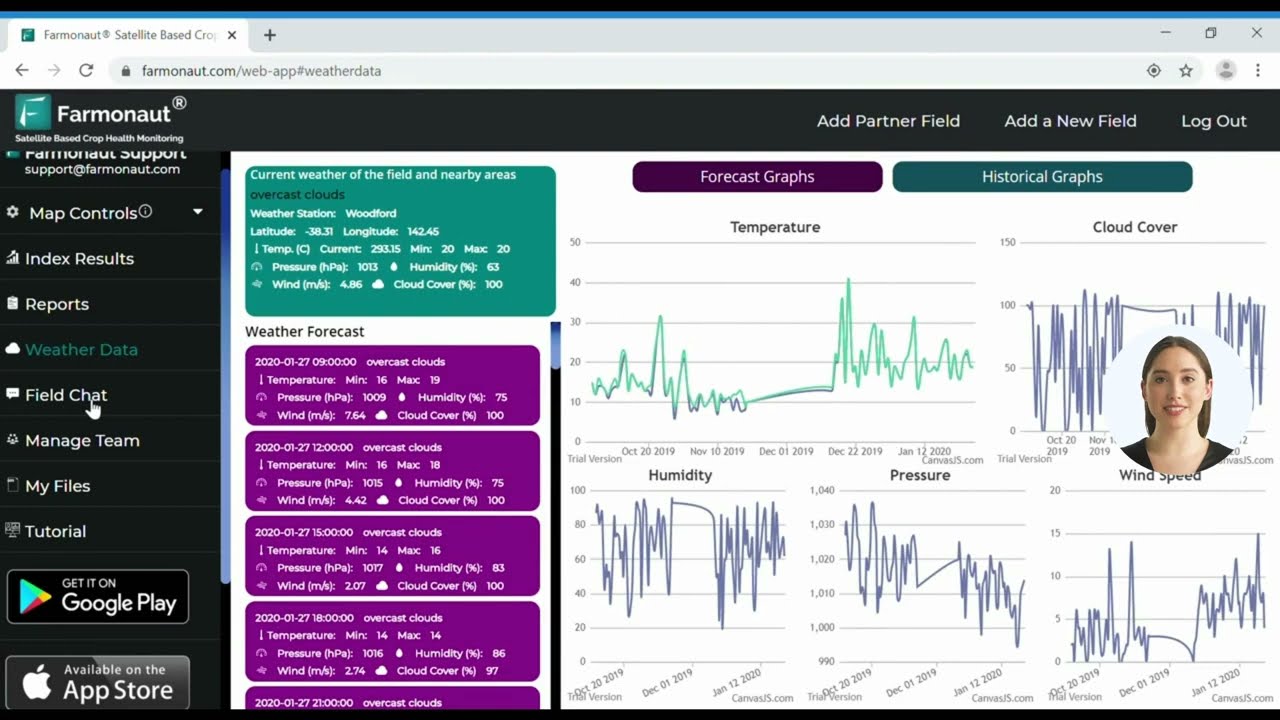
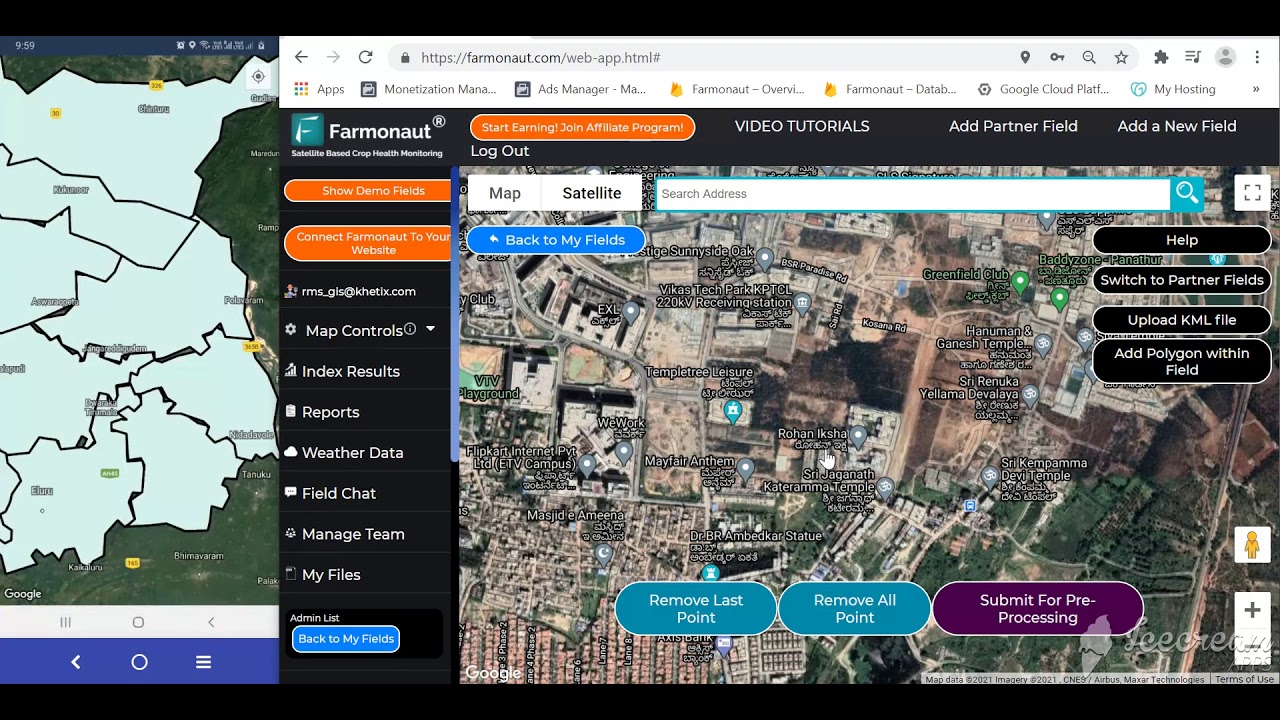
As we push into a new decade, satellite-based solutions are the anchor of modern insurance coverage. At Farmonaut, we offer advanced, satellite-driven technologies via Android, iOS, web apps, and APIs—giving farmers, brokers, companies, and governments the tools for real-time risk assessment and claim verification.
- 🛰️ Satellite Monitoring: Our platform delivers real-time monitoring of crops and pastures using multispectral data—enabling agricultural insurance companies to rapidly verify claims and assess losses.
- 🤖 AI Advisory: Our Jeevn AI system provides custom, weather-driven advice—empowering farmers and insurance providers to manage uncertainty and maximize returns.
-
🔗 Blockchain Traceability: Ensures transparency and fraud reduction for insurance contracts and product supply chains.
Explore more at Farmonaut Product Traceability -
📊 Environmental Impact Monitoring: Track and manage carbon footprint, supporting both sustainability and insurance claims.
See details on carbon footprinting for agriculture. -
🌱 Crop Loan & Insurance Data Verification: Our platform offers satellite-based verification to streamline crop loan and insurance claims, reducing risk and fraud for both financial institutions and farmers.
Discover how this works.

Why Satellite-Based Data Makes a Difference in Insurance
- 📈 Claim processes accelerated by remote, verifiable data
- ✔ Reduces loss of livelihoods by supporting direct, evidence-backed compensation
- ⚡ Reduces fraud and delays in insurance claims, thanks to blockchain and digitized monitoring
- 🌏 Improves risk modeling as insurers can access historic, current, and predictive climate, crop, and soil data
Benefits, Insights, and Limitations: Visual Lists
Top 5 Advantages for Farmers & Insurers
- ✔ Financial Stability: Insurance provides a vital safety net against crop failure, disease, and disasters.
- 🚀 Technology-Driven Precision: AI & satellite tech optimize claim processes and risk evaluation.
- 🔄 Rapid Recovery: Digital claim systems enable quick access to compensation and business continuity.
- 🌱 Sustainability: Environmental monitoring drives better practices and mitigates climate risk.
- ♻️ Data-Driven Transparency: Blockchain and traceability ensure policyholder confidence and market trust.
Visual List: How Technology Enhances Agriculture Insurance
-
🛰️
Remote Sensing for faster damage assessment -
🤖
AI Models to calculate risk and optimize premiums -
📱
Mobile Apps for policy purchase and claims filing -
🔗
Blockchain for tamper-proof contract management
Visual List: Key Use Cases for Digital Insurance Services
-
💧
Weather-Indexed Insurance pays out instantly after erratic rainfall or drought -
🌾
Pasture Insurance secures ranchers against animal loss during climate events -
📉
Revenue Insurance guarantees a minimum income despite market volatility -
🏭
Carbon Footprint Monitoring supports sustainable insurance products
Expert Callouts: Insights for Farmers & Investors
The next wave of insurance companies will rely on AI-driven risk models and real-time satellite verification—enabling both insurers and farmers to adapt to climate uncertainty.
Farmers seeking pasture insurance and ranch insurance should look for policies with app-based damage filings and weather-indexed payouts for maximum agility.
Avoid underinsuring high-value crops or livestock. Select comprehensive coverage that adapts to market price fluctuations and local weather patterns.
The agriculture insurance sector in India, especially through leaders like AICIL and rapidly digitalizing brokers, is primed for disruptive growth fueled by AI and remote sensing adoption.
By 2026, over 90% of digital insurance products will include climate adaptation add-ons or sustainability-focused policy clauses.
The Future: Challenges & Strategies for 2026 and Beyond
Despite enormous progress, significant challenges remain for agricultural insurance globally:
- 💸 Affordability: Premiums still out of reach for some smallholder farmers; subsidies and micro-insurance models are vital.
- 📚 Lack of Awareness: Many rural communities are unaware of relevant solutions, products, and claim processes.
- ⏳ Administrative Complexity: Manual systems or slow bureaucracy can delay payouts and market confidence.
- 🌪️ Climate Change Acceleration: Risks are increasingly systemic, demanding adaptive, AI-powered models and flexible policies.
- 🔒 Data Privacy & Trust: The need for secure, tamper-proof records places blockchain and digital traceability at the fore.
Winning Strategies for Tomorrow’s Insurance Market
- Education: Ongoing awareness campaigns and digital literacy training for rural populations
- Technological Investment: Continued adoption of remote sensing, AI, and blockchain for all insurance processes
- Policy Simplification: Simple, one-click claims and transparent, app-driven onboarding for faster adoption
- Integration with National Schemes: Cooperation between government-backed and private insurers to build resilience across the sector
- Flexible Products: Custom policies for micro-farming, precision-based, and climate-adaptive risk
Learn more about how satellite-based monitoring, risk analytics, and digitized claims streamline insurance for farmers at Farmonaut’s Large Scale Farm Management.
“Pasture insurance adoption is projected to rise 45% globally by 2025, driven by digital policy platforms and precision data.”
FAQ: Agriculture Insurance in 2026
- What is agriculture insurance and why is it essential in 2026?
- Agriculture insurance is a policy protecting farmers, ranchers, and stakeholders against the risk of crop loss, livestock disease, disasters, and market volatility. In 2026, it’s indispensable due to climate change, erratic weather, and evolving market risks.
- Who are the leading agricultural insurance companies and brokers?
- Market leaders include Agriculture Insurance Company of India Ltd (AICIL), Munich Re, Swiss Re, HDFC ERGO, Lion Rock Brokers, and digital-first organizations like AgroProtect Digital.
- What insurance types are available for farmers and ranchers?
- Key products include crop insurance, pasture insurance, ranch insurance, weather-indexed insurance, and revenue insurance, each tailored for specific risks.
- How does technology improve agricultural insurance outcomes?
- AI, remote sensing, digitization, blockchain, and mobile platforms vastly improve risk modeling, accelerate claim processes, and increase transparency.
- How can farmers use satellite data and digital tools for claims?
- Platforms like Farmonaut allow for real-time monitoring, AI-based guidance, blockchain traceability, and instant environmental impact reporting, supporting faster claims and better farm decisions.
Conclusion: Resilient Farming with Modern Insurance
Agriculture insurance, including pasture and ranch insurance, remains the vital safety net for food security, rural livelihoods, and stability in 2026 and beyond. Underpinned by technological innovation—AI, remote sensing, blockchain, and app-based digital platforms—insurance empowers farmers, brokers, and companies to thrive, adapt, and recover in a world of climate and market uncertainty.
As the role of agricultural insurance companies and agricultural insurance brokers grows, so does their responsibility to provide transparent, efficient, and accessible products. The road ahead is paved with challenges, but also immense opportunity for those embracing technology-driven solutions, sustainability, and data-powered strategies.
For insurers and agri-businesses alike, investment in risk management tools, climate adaptation, and digital insurance products is no longer optional—it’s imperative. The future belongs to resilient, sustainable farming communities powered by innovation, proactive insurance solutions, and continually evolving best practices.
- ✔ Comprehensive Coverage: Modern insurance guards against losses caused by natural disasters, pests, disease, and price volatility.
- 📊 Data-Empowered Claims: Satellite and AI solutions provide rapid, evidence-based damage assessment for fast recovery.
- ⚠ Climate-Smart Innovation: Climate adaptation products and sustainability clauses are the new norm in home-grown and global insurance policies.
- 🌏 Broader Reach: Digital insurance platforms expand access and inclusion for smallholders and remote communities.
- ⏱ Rapid Digital Onboarding: Mobile-first, app-driven experiences simplify policy purchase and claim filing for all.
Ready to create a more resilient and sustainable farm?
Leverage the tools and insights outlined here—embrace modern technology, choose the best insurance coverage for your needs, and thrive amidst uncertainty in the evolving agricultural landscape of 2026 and beyond.

 Godrej Agrovet
 Hayleys Agriculture
 Linx Agritech
 Adinet
 Save Your Soils
 GalaxEye Space
 Grandstream Algérie
 XOS Realty
 Geospatial Lab Africa
 Agro La Gándara
 HIPSAC
 ZOL Zimbabwe
 Juligerm
 AdBio
AdBio MISE Maroc
 NWNS
NWNS Red August Group
 Farm Inc
 WeMe Global
 Agrotoken
 Blue BearX
 Insignito
 DnCubed
 Indosistim Teknologi
 Liquify Digital
 CU Foods
 BeyondTech Global
 Rouge VC
 AgroRisk
 Oath Inc
 Esri North East Africa
 MDCV UK
 Etech Consulting Madagascar
 Vestlandsforsking
 WB Dev
 Sama Premium
 Tres Valles
 Blickwinkel
 Agricultural Credit Policy Council
 eKGIS
eKGIS Mostas Tech
 Andex
Andex Deluxe Conseil
 WICO
WICO Chimera Innovation
 SkyHarvest
 Teledarbas
 Exurbia Geospatial
 FieldZero
