

Reviewed August 2026 against USDA Risk Management Agency (RMA), USDA Economic Research Service, and farmdoc daily (University of Illinois).
Try it: Run your own numbers →
A basic agricultural vehicle policy for a single tractor starts around $300 a year, according to USAA’s September 2025 farm tractor pricing; a full fleet of machinery insured for $1.5 million in equipment value runs closer to $4,600 a year, per 2025 figures from Hitchings Insurance Agency. Add a farm semi-truck and liability coverage up to $1 million costs another $950–$1,050 a year for older trucks. Meanwhile, ag crop insurance operates on an entirely separate track — a federally subsidized program where USDA covers 56–80% of premiums on some policy types. This guide breaks down both systems so you can price your own agricultural vehicle insurance and understand what federal crop insurance actually pays for.

Table of Contents
- Agricultural Vehicle Insurance: What It Actually Costs
- Tractors, Trucks & Agricultural Utility Vehicles: Coverage Differences
- Agricultural Vehicle Tracking and Why Insurers Ask for It
- Agricultural Insurance Solutions: Comparing Your Options
- Ag Crop Insurance: The Federal Safety Net
- Fleet Insurance Cost Estimator
- Agricultural Aircraft Insurance
- How Satellite and Fleet Data Support Insurance Verification
- FAQ
- Farmonaut Satellite Solutions: Subscription Pricing
- Try it: Run your own numbers
Agricultural Vehicle Insurance: What It Actually Costs
94% of US farms rely on mechanized equipment, according to a 2026 USDA-referenced estimate cited by Verizon Connect — which is why agricultural vehicle insurance and agricultural vehicle insurance pricing questions come up constantly among US operators. But the cost varies enormously depending on what you’re insuring and how much coverage you carry:
- Minimum personal tractor insurance: from $300 per year (USAA, September 2025)
- Blanket farm machinery coverage for $1.5 million in equipment: about $4,600 per year (Hitchings Insurance Agency, 2025)
- Farm semi-truck liability, up to $1 million coverage, for older trucks: $950–$1,050 per year (Hitchings Insurance Agency, 2025)
Those three numbers alone show why “agricultural vehicle insurance” searches so often lead to disappointment: a single flat quote doesn’t exist. Insurers price by vehicle age, declared value, on-road versus off-road use, liability limits, and whether the vehicle is titled as farm-use or commercial. A farm-use pickup insured only for field and short-road trips costs less than the same truck titled for interstate hauling.
For a full breakdown of how state rules classify farm vehicles for registration and insurance purposes — a distinction that directly affects premiums — see Farmonaut’s guide to limited-use agricultural vehicle rules, which covers how states like Wisconsin define limited-use status and why it matters for coverage requirements.
Tractors, Trucks & Agricultural Utility Vehicles: Coverage Differences
An agricultural utility vehicle (UTVs and side-by-sides used for field inspection, spraying, and light hauling) is underwritten differently from a full-size tractor or semi-truck. Insurers typically split farm vehicle risk into three tiers:
- Field-only equipment (tractors, combines, sprayers): lower liability exposure since they rarely travel public roads at speed; USAA’s $300/year minimum tractor rate reflects this lower-risk profile.
- Agricultural utility vehicles (UTVs, ATVs used operationally): priced closer to personal recreational vehicles unless a farm umbrella policy specifically extends to them — check your policy schedule, since many standard farm liability policies exclude UTVs by default.
- On-road farm trucks and semis: the highest-liability tier, at $950–$1,050 per year for up to $1 million in liability on older trucks (Hitchings Insurance Agency, 2025), because these vehicles share public roads with other traffic.
The specific published figure for a mid-value UTV or side-by-side wasn’t available in the sources reviewed for this article. If you’re pricing an agricultural utility vehicle policy, ask your agent for a quote itemized separately from your tractor and truck lines — bundling all three into one number makes it impossible to see which vehicle is driving your premium.
Agricultural Vehicle Tracking and Why Insurers Ask for It
“Agricultural vehicle tracking” shows up as a search term because insurers and lenders increasingly ask whether fleet vehicles carry GPS or telematics tracking — both for theft recovery and for usage-based underwriting. The specific adoption rate for tracking systems among US farm operations is not published in the sources available for this review; USDA’s NASS Census of Agriculture, last completed in 2022 with the next full census due in 2027, does not break out telematics adoption as a standalone figure, and interim NASS QuickStats releases don’t currently report it either.
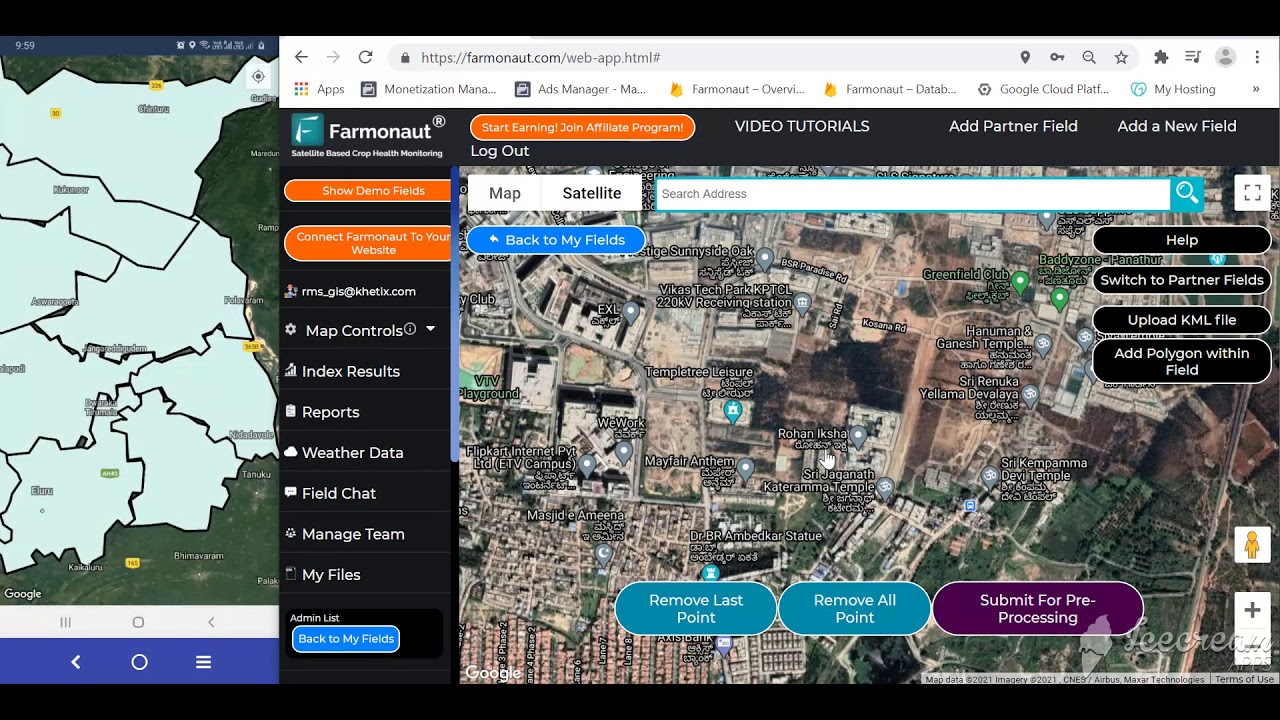
What tracking does concretely affect: theft-recovery clauses (some insurers reduce theft-related deductibles when a vehicle has active GPS tracking) and fleet-wide risk scoring for operations running multiple vehicles. If you manage several vehicles across fields, a system like Farmonaut Fleet Management centralizes location, maintenance scheduling, and usage logs — records that are useful both for your own operations and for supporting a claim or underwriting review when your insurer asks for usage history.
Agricultural Insurance Solutions: Comparing Your Options
“Agricultural insurance solutions,” “agri insurance,” “farm vehicle insurance,” and “farm use vehicle insurance” all describe the same shopping problem from different angles: farmers trying to figure out which policy structure fits a specific vehicle or operation. The table below separates the two fundamentally different insurance categories a US farm typically needs.
| Insurance Category | What It Covers | Typical Cost Basis | Who Provides It |
|---|---|---|---|
| Single tractor / equipment policy | Accident, theft, fire, mechanical breakdown on one machine | From $300/year minimum (USAA, Sept. 2025) | Private insurers (USAA, Nationwide, Progressive, farm mutuals) |
| Blanket farm machinery / fleet policy | All scheduled equipment under one liability and physical-damage policy | ~$4,600/year for $1.5M in equipment (Hitchings, 2025) | Commercial farm insurers |
| Farm truck / semi liability | On-road liability, cargo, physical damage for hauling vehicles | $950–$1,050/year for up to $1M coverage, older trucks (Hitchings, 2025) | Commercial trucking or farm insurers |
| Federal crop insurance (yield/revenue) | Crop loss from weather, pests, or price decline | Premium subsidized 56–80% depending on plan (USDA RMA, 2026) | USDA RMA-approved private carriers |
| Whole-Farm Revenue Protection (WFRP) | Whole-operation revenue, up to $17M total coverage | Coverage levels 50–90%; subsidy 56–80% | USDA RMA |
For “insurance for agricultural vehicles” and “agriculture vehicle insurance” specifically — as opposed to crop insurance — the practical shopping list is: get separate line-item quotes for field equipment, on-road trucks, and any UTVs; confirm whether your state’s farm-use vehicle registration (see the Wisconsin rules referenced above) affects your premium; and ask whether a blanket fleet policy is cheaper than insuring each vehicle individually once you own more than two or three pieces of equipment.
Ag Crop Insurance: The Federal Safety Net
Unlike vehicle insurance, ag crop insurance in the US runs primarily through USDA’s Risk Management Agency, which sets subsidy rates and coverage rules nationally. Three figures define the current program:
- $3 billion increase in federal crop insurance premium subsidies between the 2024 and 2026 crop years, per USDA RMA figures reported by Farm Credit East.
- 146 million acres — the net increase in area add-on insurance purchases by US farmers between the 2024 and 2026 crop years, according to farmdoc daily (University of Illinois), published August 2026.
- 56–80% — the federal premium subsidy range for Whole-Farm Revenue Protection (WFRP) policies in the 2026 crop year, per USDA RMA.
WFRP is the broadest policy type RMA offers: it insures an entire farm’s revenue rather than a single crop, at coverage levels selectable between 50% and 90% of insurable revenue. The subsidy on that coverage runs 56–80% depending on the level chosen, and total farm coverage under WFRP is capped at $17 million at sales closing, with a separate $2 million sub-limit for animals and animal products, per USDA RMA’s 2026 WFRP FAQ page.
These figures come directly from USDA RMA’s Whole-Farm Revenue Protection FAQ, which RMA updates for each crop year — check that page directly each fall for the subsidy and coverage figures that apply to the next crop year, since these numbers are set annually and this article’s figures are specific to 2026. For area add-on purchase trends and how they’re shifting acre by acre, farmdoc daily’s August 2026 analysis is the most current public breakdown available.
What isn’t published: the total number of farms currently enrolled in WFRP versus total US farm count, or total annual premium volume across all US agricultural vehicle and equipment insurance combined. Both are reasonable numbers to want, but the sources reviewed for this article don’t report them. For enrollment figures specific to your county and crop, contact your local USDA Farm Service Agency office or an RMA-approved crop insurance agent directly — county-level data isn’t aggregated into a single public national figure.
Many farms combine crop insurance with operating credit; Farmonaut’s crop loan and insurance overview covers how the two are frequently packaged together.

Fleet Insurance Cost Estimator
Use the figures above to estimate your own farm’s likely annual insurance spend before you call an agent for quotes.
Run your own numbers
Assumptions: figures scale linearly from two published 2025 benchmarks (USAA minimum tractor rate; Hitchings Insurance Agency blanket and truck-liability rates) and do not account for vehicle age, driving record, claims history, deductible choice, or state-specific rules. This is a starting estimate for comparing policy structures, not a quote — get an itemized quote from a licensed agent for actual pricing.
Agricultural Aircraft Insurance
Agricultural aircraft insurance is a distinct product from ground-vehicle coverage, built around aerial application risk rather than road or field liability. It typically covers:
- Physical damage to the aircraft from crashes, hail, or ground incidents
- Liability for chemical drift and application errors during spraying or seeding
- Pilot and operator liability during aerial surveillance or crop-monitoring flights
As aerial application techniques and drone-based spraying expand, more policies now include specific compliance riders confirming chemical-label adherence — a growing underwriting requirement as aerial applicators face tighter state-level spray-drift regulation.

How Satellite and Fleet Data Support Insurance Verification
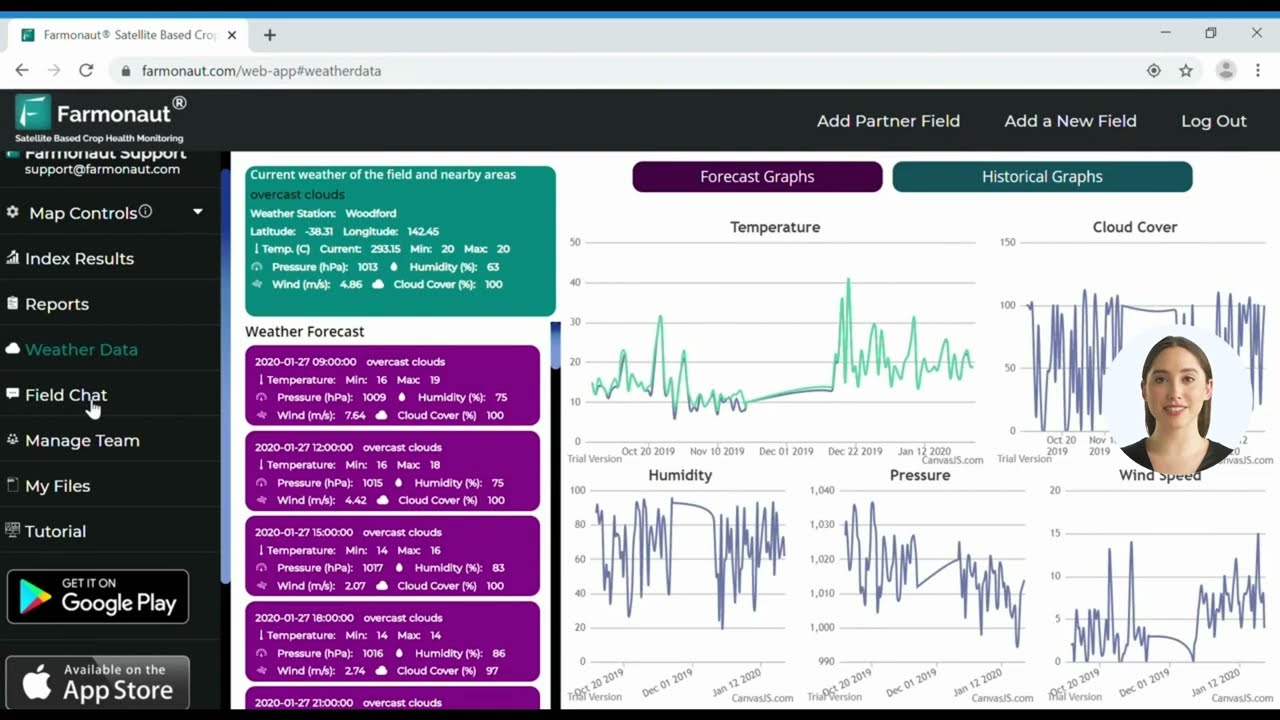
Whether you’re filing a crop insurance claim or documenting vehicle usage for an underwriter, having a verifiable record matters. Farmonaut’s satellite monitoring and fleet tools support both sides of that documentation need:
- Multispectral crop monitoring: NDVI-based vegetation health and soil moisture data that can support loss documentation for crop insurance claims.
- Blockchain-based product traceability: a verifiable chain of custody that can simplify claims documentation.
- Fleet management: vehicle location, usage, and maintenance logs — the kind of usage record insurers increasingly ask for on commercial farm vehicle policies.
- Carbon footprinting: environmental impact tracking relevant to sustainability-linked underwriting criteria some insurers are starting to apply.

Developers integrating this data directly can use the Farmonaut API with the full developer documentation, and operations managing multiple sites can use the large-scale farm management platform for multi-site monitoring and reporting.




FAQ
How much does agricultural vehicle insurance cost?
A single tractor can be insured from about $300 per year at minimum (USAA, September 2025). A blanket policy covering $1.5 million in farm machinery runs about $4,600 per year (Hitchings Insurance Agency, 2025). A farm semi-truck with up to $1 million in liability coverage costs $950–$1,050 per year for older trucks (Hitchings Insurance Agency, 2025). Get itemized quotes for each vehicle type rather than one blended number.
What’s the difference between agricultural vehicle insurance and ag crop insurance?
Vehicle insurance covers physical machinery — tractors, trucks, and agricultural utility vehicles — against accident, theft, and breakdown, priced by private and farm-mutual insurers. Crop insurance covers yield or revenue loss from weather, pests, or price decline, run primarily through USDA’s Risk Management Agency with federal premium subsidies of 56–80% on plans like Whole-Farm Revenue Protection (2026 figures, USDA RMA).
Does insurance cover agricultural utility vehicles like UTVs?
Not automatically. Many standard farm liability policies exclude UTVs and side-by-sides unless specifically scheduled or covered by a farm umbrella endorsement. Confirm UTV coverage as a separate line item when reviewing your policy.
What is Whole-Farm Revenue Protection and who qualifies?
WFRP is a USDA RMA policy that insures a farm’s total revenue rather than a single crop, at coverage levels of 50–90% with a 56–80% federal subsidy, up to $17 million in total farm coverage (and a $2 million sub-limit for animal products) for the 2026 crop year. Check the USDA RMA WFRP FAQ for current-year eligibility rules, since RMA revises terms annually.
How do I lower my agricultural vehicle insurance premium?
Confirm your vehicle’s farm-use registration status (see Farmonaut’s limited-use agricultural vehicle rules guide), compare individual versus blanket fleet policies once you own several machines, and ask whether GPS tracking on your vehicles qualifies for a theft-recovery discount.
Are crop insurance subsidies increasing?
Yes — federal crop insurance premium subsidies rose by $3 billion between the 2024 and 2026 crop years, and area add-on insurance purchases increased by 146 million acres over the same period, according to USDA RMA data reported by Farm Credit East and farmdoc daily (August 2026). Check USDA RMA’s site each fall for the subsidy rates set for the next crop year.
How can Farmonaut support my insurance documentation?
Farmonaut’s satellite crop monitoring, fleet management, and blockchain-based traceability tools generate the usage and condition records that insurers and adjusters ask for when verifying claims or underwriting a policy — see Fleet Management and Product Traceability.
Where to Get Current Numbers
Insurance pricing and subsidy rates change every year — treat every figure above as a snapshot with a known expiration date. For farm vehicle insurance costs, request quarterly-refreshed quotes from major commercial insurers (Progressive, Nationwide, USAA), since rates adjust with commodity prices and farm profitability. For crop insurance subsidy rates and coverage limits, check USDA RMA’s website each fall when next-year policy terms are published. For farm equipment and vehicle counts, USDA NASS runs a full Census of Agriculture every five years — the next is due in 2027 — with interim annual snapshots available through the NASS QuickStats database. None of these figures should be trusted past their stated vintage; always check the source link before budgeting against them. If you’re evaluating whether to expand your equipment fleet at all, Farmonaut’s guide to smart farm investment strategies covers the broader capital-allocation question.

Farmonaut Satellite Solutions: Subscription Pricing
Access advanced satellite insights, precision farm advisory, and climate risk monitoring with Farmonaut’s cost-effective solutions. Available on all devices. Download the app or explore our API today!

 MISE Maroc
 Drift-Sense
 NWNS
NWNS Hydenmet
 Dirks Bros Farms
 Red August Group
 Farm Inc
 WeMe Global
 Agrotoken
 Blue BearX
 Insignito
 Croptimum
 DnCubed
 Field Capacity
 Indosistim Teknologi
 Liquify Digital
 CU Foods
 BeyondTech Global
