

Manganese · South Africa
Kudumane Manganese Resources: York Mine, Owners, Output
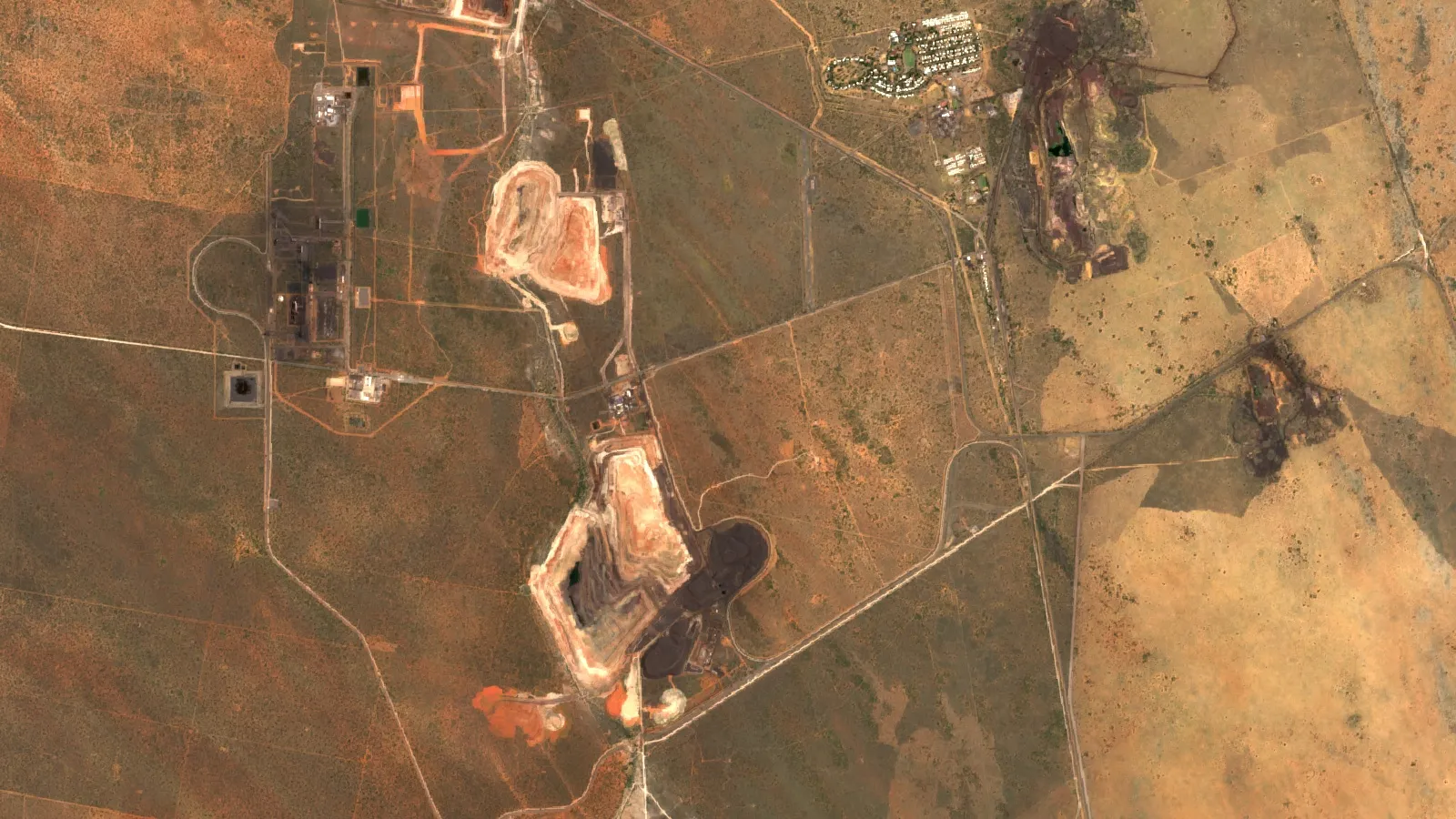
Kudumane Manganese Resources (KMR) mines about 2 million tonnes of 36% to 43% manganese ore a year from the York pit near Hotazel, Northern Cape (IMnI, 2025). Its Hotazel pit closed at the end of March 2026.
Key takeaways
- KMR started mining in 2012 and produces about 2 Mt of ore a year at 36% to 43% Mn (IMnI, 2025).
- Asia Minerals Limited of Hong Kong reported a 49% stake; Black-owned BEE companies held 51% (INN, 2012).
- Mining at the Hotazel pit ended in March 2026; York remains in production (company notice via MiningDataOnline, 2026).
- South Africa mined an estimated 7.6 Mt of manganese content in 2025, the most of any country (USGS, 2026).
- A 2015 closure table lists the York mine’s planned life to 2053 (Heinrich Böll Foundation, 2026).
In this article
- Kudumane Manganese Resources at a glance
- Who owns Kudumane Manganese Resources
- The York and Hotazel pits
- Geology: what ore Kudumane mines
- How Kudumane compares with other manganese mines in South Africa
- Rail, ports and logistics
- Manganese price and what Kudumane ore is worth
- Kudumane in South Africa's mineral economy
- Community and environmental work
- What changed recently and what to watch
- Frequently asked questions
Kudumane Manganese Resources (KMR) is a South African manganese miner that runs the Kudumane mine about 3 km south-west of Hotazel in the Northern Cape. It started mining in 2012 and, according to the International Manganese Institute (IMnI) member profile, produces about 2 million tonnes of ore a year at grades of 36% to 43% manganese (Mn), which it calls the fifth-largest manganese mine in South Africa.
This page sets out what a consultant or analyst usually needs before a meeting or a desk study: who owns KMR, which pits it mines, the ore it sells, how it reaches port, how it compares with its Kalahari neighbours, and what changed in 2026. Every changeable figure carries its date and source. A calculator near the end turns tonnage, grade and a price you enter into an ore value.
Kudumane Manganese Resources at a glance
| Item | What the sources show |
|---|---|
| Operator | Kudumane Manganese Resources (Pty) Ltd, head office in Johannesburg (IMnI, 2025) |
| Location | Farm York, about 3 km south-west of Hotazel, John Taolo Gaetsewe district, Northern Cape |
| Ore field | Kalahari Manganese Field, Hotazel Formation (Transvaal Supergroup) |
| Mining method | Open pit; York pit active; Hotazel pit closed end of March 2026 |
| First production | 2012 |
| Output | About 2 million tonnes of ore a year (IMnI, 2025); about 1.8 Mt in 2022 (USGS) |
| Grades sold | 36% to 43% Mn |
| Rail loading | Rail loadout facility rated at more than 4 million tonnes a year |
| Main partner | Asia Minerals Limited (AML), Hong Kong, about 49% via holding companies |
| Chief executive | Thembelani Gantsho (Africa Outlook, 2025) |
Who owns Kudumane Manganese Resources
KMR is a South African company with Black-owned (BEE) shareholders and a foreign technical and marketing partner. When the project was being financed in 2012, Asia Minerals Limited reported a 49% shareholding, with two Black-owned BEE companies, Dirleton Minerals & Energy and Northern Cape Manganese, holding the other 51%.
The USGS Minerals Yearbook for South Africa (2022) lists AML of Hong Kong as the operator of the Kudumane mine at Farm York, with about 1.8 Mt of ore produced in 2022 and capacity of about 1.9 Mt a year. Current mine databases still show AML’s interest at 49%. In 2025 the KMR chief executive described AML as an integral part of the company’s mine-to-market chain, which points to AML’s role in selling the ore as well as holding equity.
Two points matter for anyone doing due diligence. First, ownership of South African mining rights is set under the Mineral and Petroleum Resources Development Act, so the BEE holding is a licence condition, not a side detail. Second, shareholdings above the mine company can change without the mine’s name changing. Check the current company register and the mining right holder with the Department of Mineral Resources before relying on any split.
Is Kudumane owned by a listed company?
Neither KMR nor AML trades on a major stock exchange. Readers sometimes confuse Kudumane with neighbouring listed operations: Tshipi Borwa, part-owned by Jupiter Mines (ASX: JMS), and the Hotazel Manganese Mines of South32 (Mamatwan and Wessels). Those are separate mines with separate owners. There is no public share price for Kudumane itself.
The York and Hotazel pits
Kudumane is authorised to mine through two open pits, York and Hotazel, with a processing plant, workshops and a rail loadout on site. According to a company notice reported by MiningDataOnline, mining at the Hotazel pit ended at the end of March 2026 once its economic reserves were used up. KMR said it remained fully operational, with mining continuing at the York pit and its other areas.
Chart
Planned end of mine life, Kalahari manganese mines
Year listed in 2015 closure-provision table
For a consultant this changes the questions to ask. With one active pit, output depends on how fast York can be pushed back and how much waste must be moved per tonne of ore. The strip ratio (tonnes of waste rock moved for each tonne of ore) rises as an open pit deepens along a dipping ore bed. The same database notes earlier plans for an underground mine, but KMR’s 2026 notice says the company is not focused on underground operations.
A 2015 summary of mine closure guarantees, republished in a 2026 Heinrich Böll Foundation report on rehabilitation provisions, lists the York mine with a planned life to 2053 and a bank guarantee of R60 million for rehabilitation. The chart in this section sets that planned life against neighbouring Kalahari mines in the same table.
Fleet tracking matters on a single-pit operation where trucks and loaders set the pace. Tools such as fleet management help a mine see idle time and haul distances as the pit gets deeper.

▶ How open-pit and strip mining work, with their pros and cons. · 4:37
Geology: what ore Kudumane mines
Kudumane sits in the Kalahari Manganese Field, the district that holds most of South Africa’s manganese ore; the USGS estimates that South Africa has about 70% of world manganese resources. The ore is in the Hotazel Formation of the Transvaal Supergroup, where three layers of manganese ore lie inside banded iron formation (BIF, a rock made of thin bands of iron oxide and chert). The lower body is the main ore bed, between 5 m and 45 m thick at Kudumane; the upper body is 5 m to 20 m thick; the middle body is thin and uneconomic. The beds dip gently west at about eight degrees.
A north-east trending dolerite dyke cuts the mining right. The main resource lies north of it on York. South of the dyke the ore has been dropped 30 m to 60 m by faults and partly eroded by glaciers of the Dwyka period. Test work on the ore showed bixbyite (a manganese iron oxide) as the main mineral with calcite and kutnahorite, a calcium manganese carbonate. This is the semi-carbonate ore type that South Africa ships in volume.
Grade here means the percentage of manganese metal in the ore. Ore at 36% to 38% Mn is the common semi-carbonate product; ore above 44% is called high grade and earns a higher price per unit. KMR’s stated range of 36% to 43% Mn places it in the middle of the market. For more on how bedded ores like this form, see our guide to types of ore deposits.
How Kudumane compares with other manganese mines in South Africa
South Africa is the world’s largest manganese miner. The USGS Mineral Commodity Summaries 2026 estimates 7.6 million tonnes of manganese content mined in South Africa in 2025, out of a world total of 20 million tonnes, and reserves of 550 million tonnes. The same report says South Africa holds an estimated 70% of the world’s manganese resources.
Chart
Manganese mine production by country
2025 estimate, thousand tonnes of manganese content
Production numbers for mines are usually given as tonnes of ore, not tonnes of manganese content, so the two cannot be compared directly. A tonne of 37% ore holds about 0.37 tonnes of manganese.
| Mine (operator) | Pits | Ore output (source, year) |
|---|---|---|
| Tshipi Borwa (Tshipi é Ntle; Jupiter Mines 49.9%) | One open pit | 3.49 Mt sold, year to June 2026 (Jupiter Mines) |
| Kudumane (KMR) | York (Hotazel closed March 2026) | About 2 Mt a year (IMnI, 2025) |
| Mamatwan and Wessels (Hotazel Manganese Mines, South32 and partners) | Open pit and underground | See South32 reports |
| Black Rock (Assmang) | Underground | See Assmang reports |
| Mokala (Glencore and Ntsimbintle) | Open pit | About 1.6 Mt capacity (USGS, 2022) |
| Lomoteng (Guangxi N&H) | Open pit | About 0.6 Mt capacity (USGS, 2022) |
For context on Tshipi, Jupiter Mines reported 3,488,925 tonnes sold in the year to June 2026, above its historical average of 3.4 Mt. That makes Kudumane roughly half of Tshipi’s size, and puts both well ahead of the small Kalahari pits. For a wider view of where the metal is mined, see where manganese is found in the world.
Rail, ports and logistics
Manganese from the Kalahari field moves by rail to the coast. KMR loads at its own rail loadout facility, which the IMnI profile rates at more than 4 million tonnes a year, roughly twice the mine’s output. The company has named Transnet, the state rail and port operator, as a key logistics partner and said in 2025 that it had improved train loading speeds.
Chart
Ore output vs rail loading capacity
Million tonnes of ore a year
Rail capacity is the most common limit on Northern Cape manganese exports. The KMR chief executive told Africa Outlook in 2025 that logistics limits, power outages and steep tariff increases had hurt production and raised costs across the industry.
For a consultant, the question is not only whether ore can be mined, but whether it can be railed and shipped at a cost that leaves a margin. Ore price, grade and the cost of rail and port per tonne are the three numbers that set the result, and the calculator below uses them. Buyers who ask where a cargo came from also expect chain-of-custody records; product traceability systems are one way to keep those records from pit to port.
Manganese price and what Kudumane ore is worth
Manganese ore is priced per dry metric tonne unit (dmtu). One dmtu is 1% manganese in one dry tonne of ore, or 10 kg of manganese. So a tonne of 37% ore contains 37 dmtu. If the price is US$4.50 per dmtu, that tonne is worth about US$166 before freight and costs.
Chart
Average manganese ore price, CIF China
US$ per metric ton unit of manganese content; 2025 estimate
The USGS gives the average cost, insurance and freight (CIF) price in China as US$4.50 per metric ton unit for 2025 (estimate), down from US$5.53 in 2024 and US$5.97 in 2022 (USGS, 2026). Spot prices move weekly; Jupiter Mines publishes a manganese ore index for 36% to 37% ore based on Shanghai Metals Market data. Use the current figure, not the annual average, when you price a cargo.
Most of the ore goes into steel. Manganese is added as ferromanganese or silicomanganese to remove oxygen and sulfur and to make steel stronger. A smaller but growing share goes into battery-grade manganese sulfate, which needs high-purity processing that KMR does not report doing on site. Our overview of manganese production covers these uses in more detail.
Calculator
What is a parcel of manganese ore worth?
Enter tonnes, grade, a price per dmtu and your rail and port cost.
- Gross value (US$): $8,325,000
- Contained manganese (t): 18,500
- Value per tonne of ore (US$): 166.50
Example values only, not a benchmark. One dry metric tonne unit (dmtu) is 1% Mn in one dry tonne. Price is an input: example, use today’s price (US$4.50 per unit was the USGS 2025 average CIF China estimate). Rail, port and moisture costs are your own inputs. Not investment advice.
Kudumane in South Africa’s mineral economy
Manganese is one of South Africa’s main export minerals. The USGS yearbook for 2022 put South Africa’s share of world mined manganese at 37% and the value of manganese ore exports at US$2.83 billion that year. Most Northern Cape output is exported as ore rather than smelted at home; the USGS notes that domestic ferromanganese output fell sharply over the decade to 2022 as power costs rose. For how manganese and iron ore mining are linked in the Northern Cape, see manganese ore mining trends.
Mines such as Kudumane are the main private employers in the John Taolo Gaetsewe district. KMR reports that most of its staff come from the local area and that it supports around 30 small and medium-sized firms through its procurement and supplier development programme. Questions on the economic side of mining in general are covered in our post on mining profitability.
▶ How mining feeds exports, jobs and government revenue. · 5:03
Community and environmental work
KMR’s published community work, as described by its chief executive in 2025, includes:
- Three early childhood development centres and a clinic under construction in the villages of Mosekeng and Glenred, for about 100 pre-school children.
- A livestock handling facility at Skerma village used by more than 80 households to vaccinate cattle and prepare them for auction.
- Refurbished community halls, upgraded water supply, and new and repaired streetlights.
- Yearly school shoe drives, sanitary product drives with health education, and food and blanket support for elderly residents.
- A procurement model that favours local, women-owned and youth-owned suppliers.
On the environmental side, open-pit manganese mining moves large volumes of waste rock and creates dust in a dry area. Rehabilitation is backed by a financial provision held for the regulator; the 2015 figure for York was R60 million. Mines in the Kalahari also report greenhouse gas emissions from diesel fleets and grid power, and many now use carbon footprinting tools to track them. Rainfall and wind data feed dust and water planning; a satellite weather API is one way to pull those records for a site.

▶ The main environmental impacts of mining, explained in plain words. · 2:31
What changed recently and what to watch
- Hotazel pit closed (March 2026). York is now the active pit, so watch whether annual output stays near 2 Mt.
- Underground option. KMR said in 2026 that it is not focused on underground mining; any change in that stance would show first in an environmental authorisation or mining work programme.
- Prices. The USGS average CIF price fell to US$4.50 per unit in 2025 (estimate). Lower prices squeeze margins on 36% to 38% ore more than on high-grade ore.
- Rail and ports. Transnet performance and alternative routes such as Lüderitz decide how much Kalahari ore can be sold.
- Ownership changes nearby. Deals around neighbouring mines can shift who buys and markets Kalahari ore; check filings rather than older news.
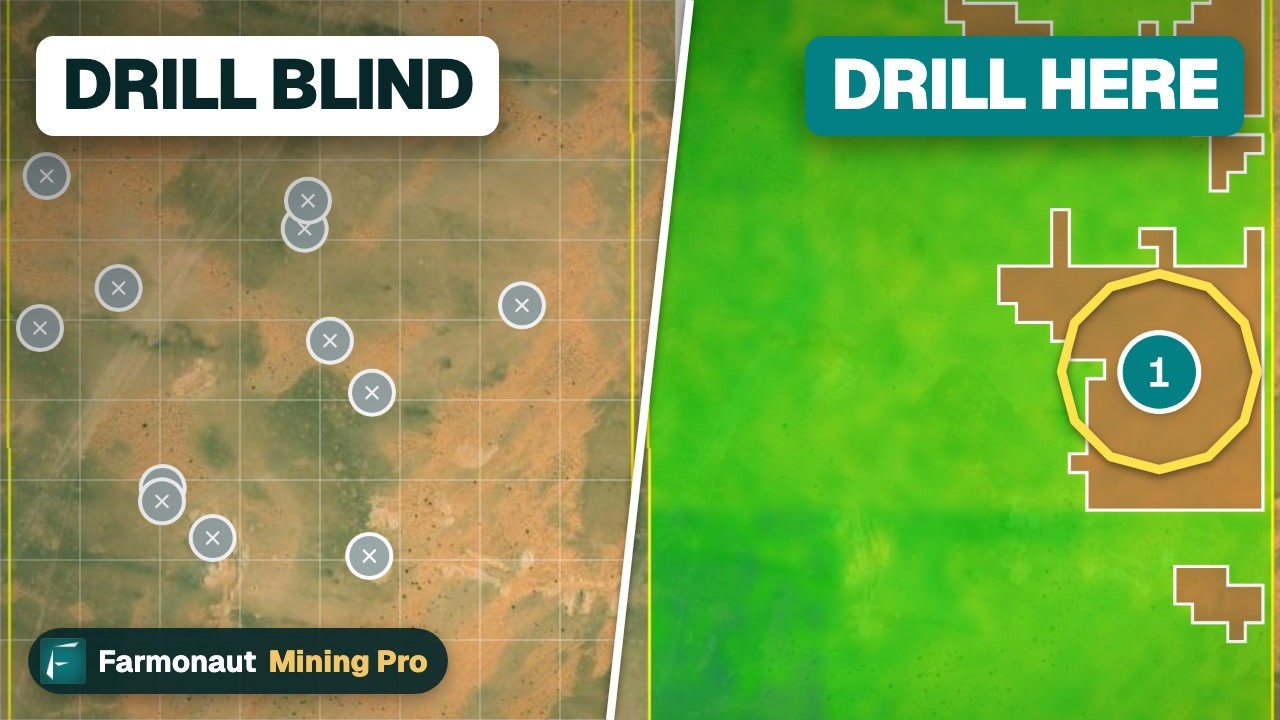
Satellite imagery is a practical check for analysts who cannot visit site: pit outlines, waste dumps and stockpiles show up clearly on Sentinel-2 images, so a reader can see where a pit has stopped advancing and where a new one is opening. Farmonaut uses the same kind of imagery to map exploration targets from a licence boundary.
Frequently asked questions
Who owns Kudumane Manganese Resources?
KMR is a South African company. Asia Minerals Limited of Hong Kong reported a 49% shareholding when the mine was financed in 2012, with Black-owned BEE companies holding 51%. Confirm the current split with the company register before relying on it.
Where is the Kudumane manganese mine?
On Farm York, about 3 km south-west of Hotazel in the John Taolo Gaetsewe district of the Northern Cape, inside the Kalahari Manganese Field.
How much manganese does Kudumane produce?
About 2 million tonnes of ore a year at 36% to 43% Mn, according to the IMnI’s 2025 member profile. The USGS reported about 1.8 Mt in 2022.
Is the Kudumane mine still operating?
Yes. The Hotazel pit stopped at the end of March 2026 when its economic reserves ran out, but KMR said mining continues at the York pit.
When did Kudumane start mining?
Mining began in 2012.
What type of manganese ore does Kudumane mine?
Semi-carbonate ore from the Hotazel Formation, mainly bixbyite with calcite and kutnahorite, sold in grades from 36% to 43% Mn.
Is Kudumane Manganese listed on the stock exchange?
No. Neither KMR nor Asia Minerals Limited is listed on a major exchange. Nearby Tshipi is part-owned by ASX-listed Jupiter Mines, and Mamatwan and Wessels by South32.
How long will the Kudumane mine last?
A 2015 closure-provision table lists the York mine’s planned life to 2053. KMR said in 2026 that it is not focused on underground mining, so the planned life rests on the York pit.
Who is the CEO of Kudumane Manganese Resources?
Thembelani Gantsho was named as chief executive in a 2025 company interview.
What are the largest manganese mines in South Africa?
Tshipi Borwa, Black Rock, Mamatwan and Wessels, United Manganese of Kalahari, Kudumane and Mokala are among the main ones, all in the Kalahari Manganese Field of the Northern Cape.
How is manganese ore priced?
Per dry metric tonne unit (dmtu): 1% manganese in one dry tonne. Price indices are published for 36% to 37% and 44% ore, usually for delivery to China.
This page is for information only. It is not investment advice. Confirm ownership and mining-right details with the company and the Department of Mineral Resources.
Farmonaut mining
Map your mining site from space
Send a licence or claim boundary as KML, KMZ or a polygon to get satellite maps of pits, dumps and exploration targets for your desk study.

Mining Pro sample view, synthetic data
Keep reading
Sources
- International Manganese Institute, Kudumane Manganese Resources (KMR) member profile (2025): manganese.org
- USGS, Mineral Commodity Summaries 2026: Manganese: pubs.usgs.gov
- USGS, 2022 Minerals Yearbook: South Africa: pubs.usgs.gov
- Investing News Network, Asia Minerals funding Northern Cape manganese projects (2012): investingnews.com
- MiningDataOnline, Kudumane Mine profile (2026): miningdataonline.com
- Africa Outlook, Kudumane Manganese Resources: stewards of manganese communities (2025): africaoutlookmag.com
- Heinrich Böll Foundation, Financial provisions for mine rehabilitation (2026): za.boell.org
- Kalkine Media, Jupiter Mines reports FY2026 Tshipi sales of 3.49 Mt (2026): kalkinemedia.com
- Jupiter Mines, Tshipi manganese mine and manganese price information: jupitermines.com
- Shanghai Metals Market, Jupiter highlights FY2026 performance at Tshipi (2026): news.metal.com
Discussion (2)
Questions, corrections or field experience? Share them below. First-time comments are reviewed before they appear, and your email is never published.
Raphuti Mocheko Basma would like to request an opportunity to discuss an interesting manganise project for one of our members situated in NC, with a 20 years mining right for a 3000 hectares farm with section 54 having been applied for to expand the mine to 9000 hectares. Please your support and assistance will be appreciated. We are available on [email protected] and our website is http://www.basma.org.za
No comments yet. Be the first to add a question or your experience.

 CIMISCO SARL
 Mining SARL
 SenGold Invest SAS
 Sania Corporation
 Sean Mining Limited
 NTS Group (Pty) Ltd
 Mine4Africa
 Lithspo Minerals Limited
 Tintina Mining Group
 Dalgety Minerals Pty Ltd
 Faith At Work (Pty) Ltd
 Geotech Mining Solutions plc
 Vulcan International Limited
 Kidepo Associates
 GKY Mining
 Alkimy SARL
 Double A Trading
 GemSprout Metals Limited
 Qader Group
 Ileys General Trading
 SG Gold Mining LLC
 VRV Global Pte Ltd
 Omsri International FZE
 G.I.T.T.

 Client · Tanzania · Gold
 Client & affiliate partner · Ghana · Gold










