

Edge AI in Agriculture 2025: Trends & Eco Advancements
“By 2025, over 60% of precision farming operations will utilize edge AI for real-time crop monitoring and analysis.”
“Eco-friendly edge AI tech is projected to reduce agricultural data processing energy use by up to 40% in 2025.”
Table of Contents
- Introduction: 2025—A Transformative Year for Edge AI in Agriculture
- What Is Edge AI Processing in Agriculture?
- Edge AI Precision Farming: The New Standard in 2025
- Eco-Friendly Advancements: Driving Sustainable Agriculture
- Farmonaut’s Role in Empowering Eco Agriculture with Edge AI & Satellite Tech
- Comparative Trends Table: Edge AI Innovations, Market Adoption & Eco Impacts
- AI in Agriculture Market 2025: Growth, Accessibility & Integration
- Field Applications of Edge AI: Drones, Sensors & Autonomous Equipment
- Impact Beyond the Farm: Supply Chain & Food Security
- The Expanding Reach: AI Algorithms, Military Drone Navigation, and Future Trends
- Farmonaut’s Satellite Platform: Real-Time Monitoring, APIs, and On-the-Go Insights
- Frequently Asked Questions (FAQ)
- Conclusion: Shaping the Future of Sustainable, High-Tech Farming
Introduction: 2025—A Transformative Year for Edge AI in Agriculture
As global populations soar and climate change imposes unprecedented challenges, the agriculture sector in 2025 has arrived at a pivotal juncture. The demand for sustainable solutions has never been more urgent. Enter advancements in edge AI processing in agriculture 2025: a transformative force propelling a new era in precision farming, resource efficiency, and advanced eco agriculture.
The integration of edge AI—the practice of performing AI-driven computations locally at the device level, rather than relying exclusively on cloud-based systems—has revolutionized farming practices. It empowers farmers, agribusinesses, and governments with real-time insights, data-driven decisions, and a future shaped by eco-friendly, technologically advanced agricultural practices.
In this comprehensive blog, we will explore:
- How edge AI and precision farming work together to solve modern agricultural challenges in 2025;
- The latest eco-advancements in edge AI processing;
- Market trends, implications, and future directions for the AI in agriculture market 2025;
- The role of Farmonaut in delivering next-gen satellite-driven agriculture solutions;
- Field applications, supply chain implications, and frequently asked questions to guide stakeholders through the future of farming.
What Is Edge AI Processing in Agriculture?
Edge AI refers to deploying intelligent algorithms and data processing capabilities directly within devices at the site of data generation, such as in autonomous tractors, drones, or in-field sensors. In the context of agriculture in 2025:
- AI computations are performed locally (on the edge) rather than sending massive datasets to the cloud for processing.
- This localized approach solves traditional latency, connectivity, and data privacy issues—especially problematic in remote or rural areas where farming is most common.
- By embedding AI capabilities within field devices, farmers receive instantaneous responses to changes in soil health, moisture levels, pest infestations, and more.
- 2025’s edge AI agricultural technologies are equipped with enhanced computational power and optimized algorithms tailored to agricultural contexts.
Key Benefits:
- Instant feedback loops—eliminating delays associated with cloud communication.
- Greater accuracy and reliability in micro-level monitoring and data analytics.
- Enabling advanced tasks such as image analysis (detecting plant disease), soil composition assessment, or microclimate monitoring right on the spot.
- Ensuring data privacy with localized edge processing—sensitive agricultural data doesn’t need to leave the farm.
Watch how this shift is transforming agriculture in 2025:

Edge AI Precision Farming: The New Standard in 2025
Precision farming has become mainstream in 2025, powered by ongoing advancements in edge AI processing in agriculture and the integration of smart devices in the field. Here’s how these technologies are reshaping farming practices:
Real-Time Insights at Plant and Plot Level
- Edge-enabled sensors monitor soil moisture, temperature, and nutrient levels at micro-zones within fields.
- Farmers can apply precision irrigation and fertilizer treatments on a “zone-of-need” basis—reducing resource consumption and maximizing crop output.
- Vehicles such as autonomous tractors process crop canopy image data in real-time to adjust application rates of fertilizers and pesticides instantly and only when necessary.
Edge AI Devices & Autonomous Machinery
- Modern farm equipment is equipped with embedded AI chips, capable of multi-task operations—planting, weeding, grid mapping, and harvesting—with minimal human intervention.
- These edge AI-driven machines produce data that feed advanced analytics on crop health and field performance.
Key Focus Areas
- Soil health optimization
- Water use efficiency (reducing waste by up to 35% in some studies)
- Early detection of disease or pest outbreaks using AI-enabled image analysis
- Real-time microclimate monitoring for climate-adaptive practices
See how the market is adopting these advancements across the globe in 2025:

Eco-Friendly Advancements: Driving Sustainable Agriculture
Advanced eco agriculture is at the heart of the edge AI revolution in 2025, emphasizing sustainability and resource conservation across all agricultural practices. Here’s how edge AI technology is making a measurable eco-impact:
Reducing Inputs & Chemical Usage
- AI-integrated sensors monitor plant clusters and soil zones, enabling precise targeted application of water, nutrients, and pesticides.
- This reduces resource consumption and chemical runoff into the environment—helping protect biodiversity in and around farms.
Early Detection of Pest & Disease Outbreaks
- AI-driven image recognition systems identify symptoms of disease or pest infestations at an early stage.
- This enables interventions with targeted, often biological treatments, minimizing the reliance on broad-spectrum chemicals and supporting eco-friendly and organic farming.
Enhancing Biodiversity & Soil Health
- Localized management of microclimates and resource allocation creates conditions that enhance soil biology and support beneficial insects.
- By overhauling traditional “one-size-fits-all” approaches, edge AI solutions support healthy, resilient farm ecosystems.
Driving Sustainability & Lower Carbon Footprint
- With optimized field operations, reduced passes with heavy equipment, and data-driven decision-making, the carbon footprint of agriculture drops significantly.
- Farmers and stakeholders can now track sustainability metrics (like carbon footprinting), making compliance and environmental stewardship part of everyday agricultural management.
Learn more about precision, AI, and sustainability with this video:

Farmonaut’s Role in Empowering Eco Agriculture with Edge AI & Satellite Tech
At Farmonaut, we are at the forefront of making satellite-driven, AI-enabled insights accessible for farmers, businesses, governments, and industry stakeholders globally in 2025 and beyond.
-
Satellite Monitoring & Real-Time Insights:
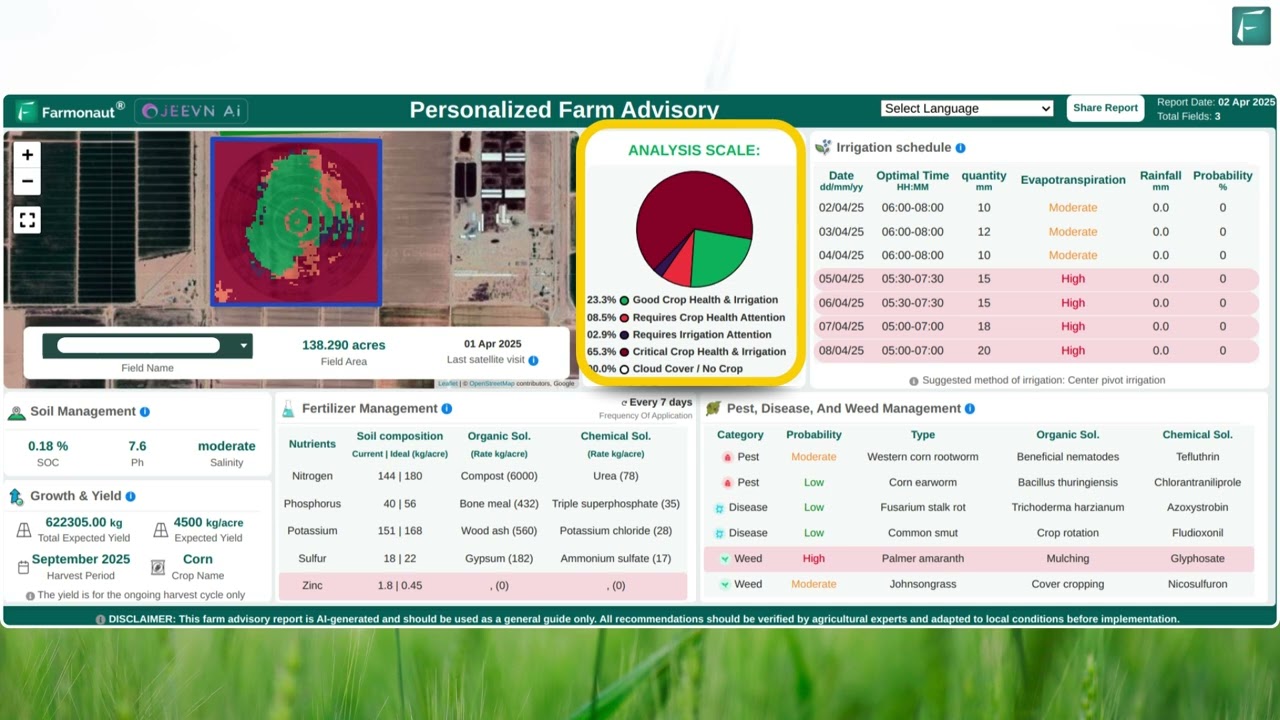
Our platform leverages advanced multispectral satellite images to track vegetation health, soil composition, and crop status. We use AI-driven analytics to help users make informed decisions about planting, input applications, and resource management. -
AI-Based Advisory Systems (Jeevn AI):
This system delivers custom, actionable recommendations based on continuous data feeds, satellite imagery, and AI-powered analysis. Our AI systems support farmers at the plot level, helping them adapt to climate variability and optimize yields using edge and cloud AI working together. -
Blockchain-Based Traceability:
We support transparency in the food chain with blockchain-driven traceability solutions. Our systems enable users to authenticate the complete journey of farm products—this is a game changer for food security, quality assurance, and trust. See details: Farmonaut Traceability -
Fleet and Resource Management:
We offer digital tools for optimizing equipment uses, logistics, and farm fleet operations, reducing costs and environmental impact. Discover more: Fleet Management Solutions -
Environmental Impact Monitoring:
Users can monitor the carbon footprint of their fields or operations in real time—vital for sustainability compliance and ecosystem health. More on this: Learn about Carbon Footprinting -
Financing Support for Farmers:
Our technology offers banks and insurers risk-reducing crop monitoring for loans and insurance verification—find details here: Crop Loan & Insurance Verification
See Jeevn AI in action:
Comparative Trends Table: Edge AI Innovations, Market Adoption & Eco Impacts
| Edge AI Technology | Primary Application | Estimated Adoption Rate in 2025 | Eco-Friendly Benefit (Estimated) |
|---|---|---|---|
| AI-Driven Drones | Real-Time Crop Health & Pest Detection | 45% | Pesticide Use Reduced by 30%, Early Detection Prevents Yield Loss |
| Edge Machine Vision Sensors | Image-Based Plant Disease Identification | 32% | Timely Treatment, Reducing Chemical Overuse by 25% |
| Autonomous Tractors with Edge AI | Precision Planting, Weeding & Harvesting | 28% | Fuel Use Reduced by 15%, Soil Compaction Mitigated |
| In-Field Edge Sensors | Microclimate & Soil Nutrient Monitoring | 40% | Water Use Reduced by 35%, Enhanced Soil Health |
| Edge IoT-Linked Spray Systems | Targeted Application of Inputs | 25% | Fertilizer Use Reduced by 20%, Chemical Runoff Minimized |
| AI-Enabled Harvest Bots | High-Precision Fruit & Vegetable Harvesting | 18% | Food Waste Reduced by 10–15% |
| AI-Linked Blockchain Traceability | Product Authentication & Supply Chain Integrity | 20% | Reduces Counterfeit Incidents, Ensures Sustainable Sourcing |
AI in Agriculture Market 2025: Growth, Accessibility & Integration
The AI in agriculture market 2025 is seeing robust double-digit growth driven by:
- Declining hardware costs for edge devices, making tech more accessible for small and medium-scale farms worldwide
- Government and institutional investments in digital and eco-conscious agriculture
- Surging demand for sustainable food production and traceability across the global agricultural sector
- Wider integration of Internet of Things (IoT)-enabled sensors with embedded AI for uninterrupted, real-time monitoring, especially in remote areas
The trend towards interconnected smart farms has arrived, with farmers deploying networks of edge AI-powered devices ensuring uninterrupted operations—even when internet or cellular connectivity dips.
Key Market Insights:
- Market research suggests over $2.3B invested in edge AI agricultural technologies by 2025.
- Some solutions, like AI-powered drones and autonomous tractors, are becoming the standard on large farms and rapidly trickling down to smaller operations.
- Growing demand for API-based connectivity—like our Farmonaut API for integrating satellite monitoring and AI analysis directly into farm management systems—is helping digitize the sector for scalability.
Watch this video for a visual deep dive into AI-enabled field scouting and advanced crop monitoring:

Field Applications of Edge AI: Drones, Sensors & Autonomous Equipment
AI-Driven Drones & Aerial Imagery
- Drones equipped with onboard edge AI chips perform real-time analysis of vegetative health, pest infestations, and water stress over large swathes of farmland within minutes—without cloud reliance, crucial for latency-sensitive tasks.
- This enables farmers to instantly identify problems, intervene early, and customize treatments—leading to higher yields, reduced resource wastage, and eco-friendly operations.
Smart Edge Sensors & IoT Integration
- Soil probes and in-field sensors process data on-site, identifying nutrient imbalances, moisture deficits, and microclimate anomalies.
- Actions can be triggered instantly—like opening irrigation valves only for zones requiring water, or enabling fertilizer micro-dosing where needed.
Autonomous Tractors & Edge Robotics
- In 2025, autonomous drones and tractors with edge AI capabilities plant, weed, or harvest with precision—guided by onboard, real-time image analysis.
- This drastically cuts labor costs, reduces soil compaction, and boosts operational efficiency across farms.
Watch edge AI in precision farming action:

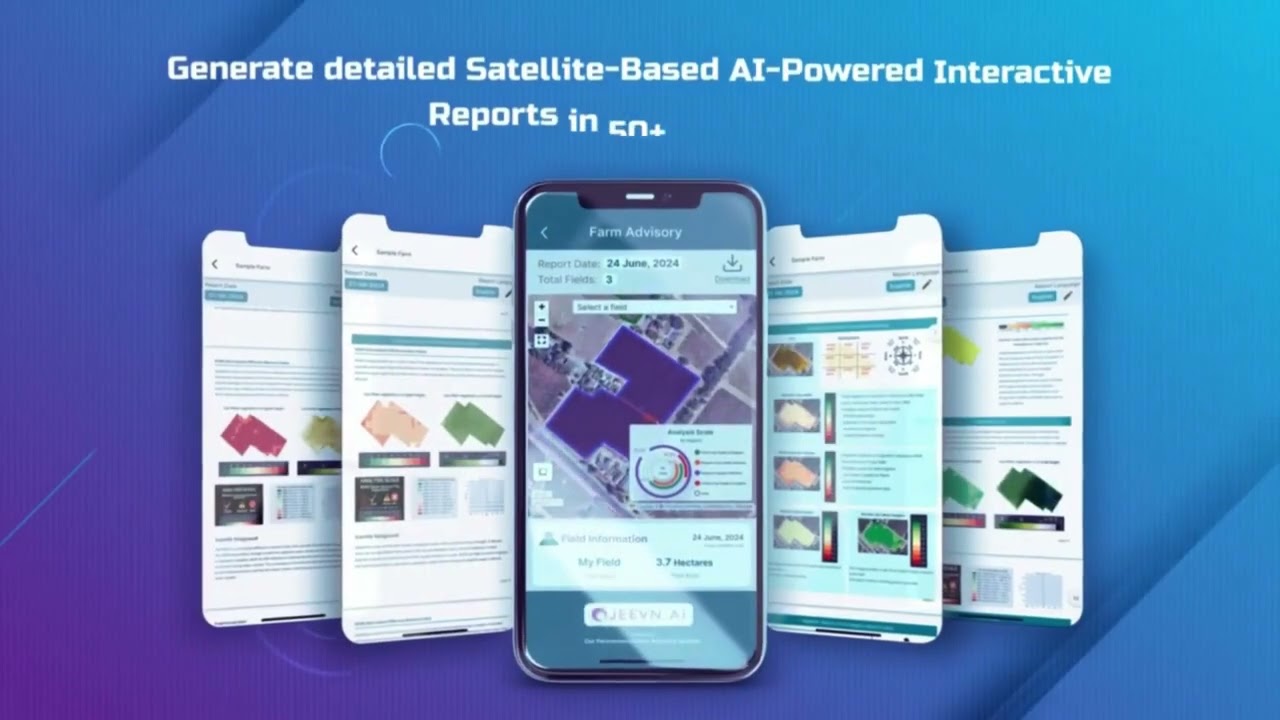
Explore satellite-based crop health monitoring with Farmonaut, and see how it enables real-time edge AI applications for your fields:
Impact Beyond the Farm: Supply Chain & Food Security
Predictive Analytics & Yield Forecasting
- Edge AI analytics allow stakeholders to anticipate crop performance under shifting climate patterns, adjust planting and harvesting schedules, and improve overall yield predictability.
- This reduces food waste by aligning supply with anticipated demand and market conditions.
Supply Chain Traceability
- By combining edge AI processing with blockchain-based traceability, the origin, quality, and handling of crops can be tracked from farm to fork.
- This is vital for food security, brand reputation, and reducing fraud in global agricultural supply chains.
Reducing Carbon Footprint Across Operations
- Edge AI enables resource conservation and emission tracking at every link in the agricultural value chain, meeting regulatory and consumer demand for sustainable practices.
- Tools that quantify carbon/greenhouse gas reductions—like the Farmonaut Carbon Footprinting solution—are central to this trend.
The Expanding Reach: AI Algorithms, Military Drone Navigation, and Future Trends
Advancements in edge AI processing in agriculture 2025 echo global trends in AI algorithm development, sensor miniaturization, and autonomous navigation. Similar AI-powered navigation breakthroughs are shaping military drone navigation, and these cross-sector advancements feed innovations in civil, environmental, and agricultural applications.
- Military-grade AI navigation (once exclusive) is inspiring highly reliable, real-time field mapping and obstacle detection for farm drones and robots.
- Edge AI is being tailored for the unique operational and environmental challenges in agriculture—wind, dust, crop density, unstructured terrain.
- Edge analytics will continue to benefit from breakthroughs in AI, autonomous robotics, real-time image analysis, and privacy-first data architectures.
For developers and businesses, our API Developer Docs offer access to satellite and AI data streams—enabling the next generation of edge-powered agriculture tools for custom use cases.
Farmonaut’s Satellite Platform: Real-Time Monitoring, APIs, and On-the-Go Insights
We at Farmonaut provide a modular, scalable platform for desktop and mobile users in agriculture, mining, infrastructure, and allied sectors, supporting the digital transformation of field operations.
-
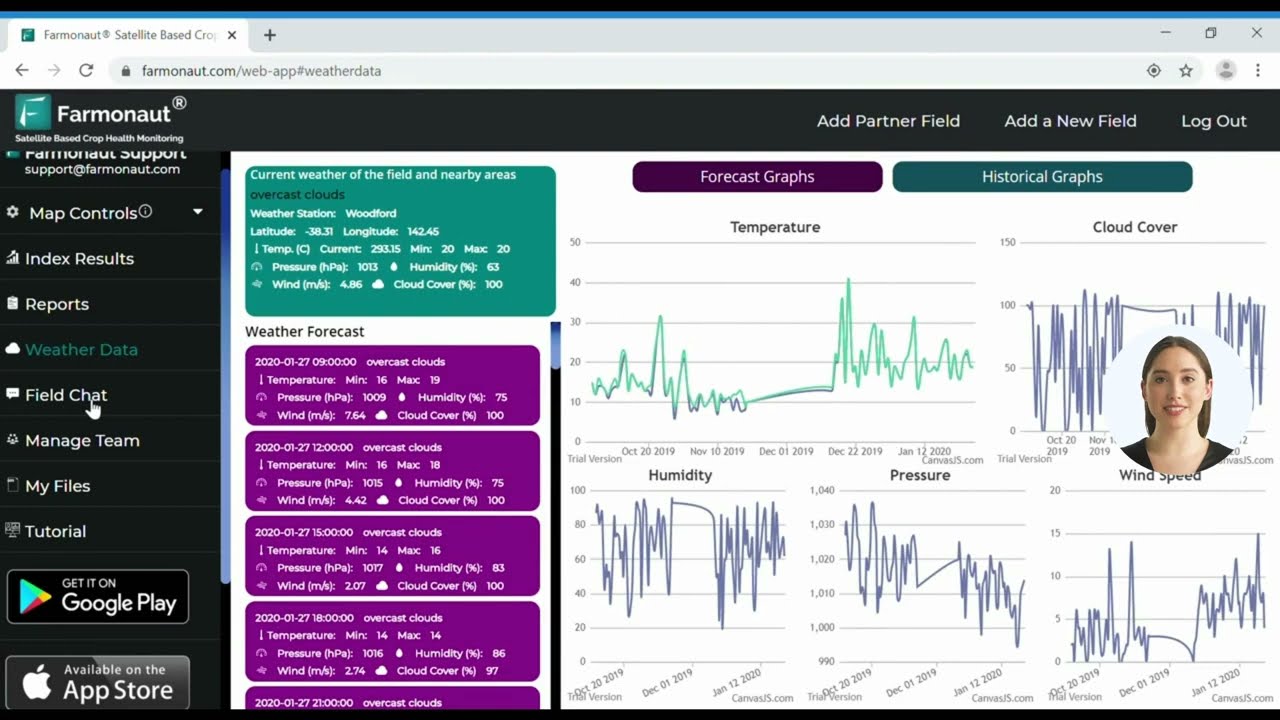
Web Application: Monitor vegetation, soil, and crop performance with multispectral satellite data and advanced AI-driven analytics. Try our app here:

-
Android and iOS Apps: Manage farm data, receive alerts, and monitor fields on the go—anytime, anywhere.


- For large-scale operations and advanced advisory: Our Farmonaut Agro Admin solution enables multi-user farm management, complex analytics, and integration with business processes.
-
Edge AI Field Crops Monitoring: See how satellite-driven monitoring links with edge AI on your fields:
Explore Farmonaut’s API for advanced integration—empowering you to add satellite, edge AI, and remote-sensing-driven insights into any platform, device, or digital tool. Farmonaut API Access
Ready to experience the future? Subscribe to Farmonaut’s platform and discover edge-powered agriculture for your fields, business, or government agency:
Frequently Asked Questions (FAQ)
What is edge AI and how does it differ from traditional cloud AI in agriculture?
Edge AI processes data locally, on the device or equipment at the farm, without sending data to the cloud. This offers quick responses, solves bandwidth/latency problems, and keeps critical data private—especially important for remote and rural farms.
How does edge AI contribute to sustainability and eco-friendly agriculture in 2025?
Edge AI enables granular resource management, applying water, fertilizers, and pesticides only where truly needed, based on real-time data. This significantly reduces chemical inputs, resource waste, and environmental impact.
Can small and medium-sized farms adopt edge AI technology in 2025?
Yes, the cost of edge AI devices has dropped, making these technologies widely accessible. Platforms like Farmonaut provide affordable, subscription-based models and mobile apps to ensure even small farms can benefit from edge-driven monitoring and insights.
How is edge AI integrated with satellite technologies?
Satellite imagery provides macro-level monitoring (field health, soil composition, microclimate), feeding data to on-the-ground edge AI devices for micro-level decision-making. The synergy increases accuracy, speed, and actionable outcomes.
What are the main challenges facing edge AI deployment in agriculture?
The biggest challenges are: ensuring device durability in harsh environments, standardizing data protocols, training the workforce for advanced tech, and integrating diverse systems (satellite, sensors, AI, machinery) seamlessly.
Can edge AI be used for supply chain transparency and food security?
Yes, edge AI paired with blockchain traceability (details here) allows real-time, verifiable tracking of food products from farm to consumer, enhancing food safety, reducing fraud, and meeting regulatory standards.
How does Farmonaut enable advanced eco agriculture in 2025?
We provide real-time satellite monitoring, AI-driven advisory, environmental impact tracking, traceability, and digital farm/asset management. Our tools empower users to adopt precision, sustainable practices, and optimize every operation for efficiency and eco-stewardship.
Conclusion: Shaping the Future of Sustainable, High-Tech Farming
In 2025, advancements in edge AI processing in agriculture are fundamentally transforming the industry—delivering instant, hyper-local insights that boost precision, resource efficiency, and sustainability. As global populations continue to rise and climate change challenges intensify, edge AI is set to:
- Drive growth in the AI in agriculture market 2025, enabling new capabilities and empowering farmers of all scales;
- Support advanced eco agriculture by minimizing environmental impact and maximizing yields sustainably;
- Lead the sector in adopting cutting-edge analytics, autonomous equipment, field sensors, and next-gen monitoring tools—all performed efficiently and securely at the edge;
- Transform agriculture into a resilient, data-driven domain—capable of meeting future food security needs while fostering a healthier planet.
Edge AI’s journey is just beginning, but its impact on agriculture in 2025 and beyond is already reshaping the sector—propelling us into an era where technology and ecology unite for a smarter, more sustainable world.
Start your edge AI agriculture journey with Farmonaut:
API Access: https://sat.farmonaut.com/api
Developer Documentation: https://farmonaut.com/farmonaut-satellite-weather-api-developer-docs/
Discussion
Questions, corrections or field experience? Share them below. First-time comments are reviewed before they appear, and your email is never published.
No comments yet. Be the first to add a question or your experience.

 Unnati Agri
 Geno
Geno Hayleys Agriculture
 Linx Agritech
 Adinet
 Save Your Soils
 Grandstream Algérie
 XOS Realty
 Geospatial Lab Africa
 Agro La Gándara
 HIPSAC
 ZOL Zimbabwe
 Juligerm
 AdBio
AdBio MISE Maroc
 NWNS
NWNS Red August Group
 Farm Inc
