

Blueberries · Buyer guide
Blueberry Plants for Sale: How to Pick the Right Type
Match the type to your winter: northern highbush for cold sites, southern highbush or rabbiteye for mild winters, half-high or dwarf for very cold sites and pots. Mature northern highbush yields 9 to 15 lb per bush (Oregon State); rabbiteye 12 to 25 lb (Clemson).
Key takeaways
- Chill hours decide the type: Clemson lists needs from about 150 hours (‘Blueberry Sunshine’) to 650-700 hours (‘Ochlockonee’).
- Mature northern highbush bushes yield 9 to 15 lb each (Oregon State); rabbiteye 12 to 25 lb and southern highbush more than 8 lb (Clemson).
- Buy at least two cultivars of the same type that bloom together; Ohio State says cross-pollination raises yields.
- Clemson suggests 2- or 3-year-old plants 1 to 3 feet tall; first fruit comes one or two years after planting (Oregon State).
- Soil must be acidic; test it before you buy plants.
In this article
- Quick answer: which blueberry plant should you buy?
- How we chose and ranked these types
- The 5 types of blueberry plants for sale, ranked
- Chill hours: match the plant to your winter
- Yield by type: what a mature bush can give
- How to choose blueberry plants for sale: a buyer checklist
- Where to buy blueberry plants
- Cost and payback: plan your planting
- Blueberry plant care in the first three years
- Pests and diseases to watch for
- Bloom and pollination
- Harvest: by hand or by machine
- Blueberry markets: why demand keeps growing
- FAQ
When you shop for blueberry plants for sale, the type matters more than the price tag. Pick northern highbush for cold winters, southern highbush or rabbiteye for mild winters, and half-high or dwarf plants for very cold sites or pots. Oregon State University says mature northern highbush bushes yield 9 to 15 pounds each, and Clemson puts mature rabbiteye at 12 to 25 pounds.
This buyer guide ranks the five main types, explains how to read a nursery label, and shows what to do in the first three years after planting. It also has a chill-hour chart, a yield chart and a calculator for plant numbers, cost and the years it takes for the crop to pay back the plants.
Quick answer: which blueberry plant should you buy?
Start with your winter. Blueberries need a set number of cold hours each winter to flower well. Clemson’s Home and Garden Information Center defines this as hours below 45 °F and lists the need for each cultivar. A plant with a chill need far above what your site gets will flower weakly. A plant with a need far below it may bloom too early and lose flowers to frost.
- Cold winters (US North, Canada, UK, Northern Europe): northern highbush, or half-high where it is very cold.
- Mild winters (US South, coastal California, much of Australia): southern highbush or rabbiteye.
- Small gardens, patios and pots: dwarf hybrids or half-high plants.
- Wild-type or native plants: lowbush and native species, for cover and flavor rather than big yields.
Then plan for at least two cultivars of the same type. Ohio State University Extension notes that higher yields come from cross-pollination between two different cultivars, even when a cultivar can set some fruit alone.
How we chose and ranked these types
We ranked the five types by how well they suit the largest number of home and small-farm growers in our readers’ regions, then by yield at maturity. We used only figures from university extension services and the Royal Horticultural Society. We did not use nursery claims. Yields are per mature bush in good conditions. Your yield will depend on care, weather, pruning and pests.
The older version of this page had a variety table with yield numbers and technology tags that had no source. We removed it. The ranking below uses only numbers we could check.
The 5 types of blueberry plants for sale, ranked
1. Northern highbush (Vaccinium corymbosum)
Best for: cold-winter gardens and farms in the northern US, Canada, the UK and Northern Europe.
This is the classic garden blueberry. Oregon State University Extension says plants reach 6 to 7 feet at maturity and that all northern highbush cultivars are winter-hardy anywhere in Oregon. Mature bushes yield 9 to 15 pounds each, depending on the cultivar. The same guide names the hybrid ‘Legacy’ as an outlier at about 21 pounds per mature bush, but it is less cold-hardy and suits milder western valleys.
Ohio State notes that flower buds can suffer winter injury below about -20 °F. If your winters get colder than that, look at half-high types instead.
- Pros: high yields, large fruit, wide choice of early, mid and late cultivars.
- Cons: needs real winter chill; tall bushes need netting for birds.
- Common cultivars sold: ‘Duke’, ‘Bluecrop’, ‘Draper’, ‘Legacy’, ‘Blueray’, ‘Elliott’.
2. Southern highbush (hybrids)
Best for: mild-winter areas such as the US Southeast, Gulf Coast, coastal California and warm parts of Australia.
Southern highbush plants are crosses of northern highbush with native southern species. Clemson says this gives them a lower chill need and more tolerance of heat. The University of Florida’s cultivar guide describes very low-chill releases such as ‘Arcadia’ and ‘Avanti’, bred for an early, high-value market window. Some, such as ‘Optimus’, are bred for machine harvest.
Clemson says a mature southern highbush plant can produce more than 8 pounds of fruit a year. It suggests spacing of 4 to 5 feet in the row and 8 to 10 feet between rows.
- Pros: early fruit; fits warm winters; many patented cultivars with good flavor.
- Cons: early bloom risks frost; less cold-hardy; often sold under patents, so you cannot propagate them yourself.
- Common cultivars sold: ‘Emerald’, ‘Jewel’, ‘Star’, ‘O’Neal’, ‘Misty’, ‘Suziblue’, ‘Rebel’, ‘Palmetto’.
3. Rabbiteye (Vaccinium virgatum)
Best for: the US South and other places with long, hot summers and mild winters.
Rabbiteye bushes are large and vigorous. Clemson’s blueberry factsheet says mature plants can produce 12 to 25 pounds each. It suggests 6 feet between plants and 10 to 12 feet between rows. Chill needs for the cultivars it lists run from about 400 hours (‘Brightwell’) to 650 to 700 hours (‘Ochlockonee’).
Rabbiteye cultivars need a partner. Clemson pairs most of them with a named pollinizer, for example ‘Powderblue’ with ‘Tifblue’ or ‘Brightwell’.
- Pros: heavy crops; tolerant of heat; long-lived.
- Cons: must have a second cultivar; some fruit cracks in wet weather; slow to start bearing.
- Common cultivars sold: ‘Powderblue’, ‘Tifblue’, ‘Climax’, ‘Premier’, ‘Austin’, ‘Titan’, ‘Ochlockonee’.
4. Half-high (northern highbush x lowbush)
Best for: very cold sites, such as the upper Midwest, the Prairies and mountain areas.
Oregon State says half-high plants are 2 to 4 feet tall and very cold-hardy, in part because snow often covers and insulates them. Ohio State University Extension recommends them for extremely cold winters such as those in Minnesota and Wisconsin, and notes they may not be as productive as highbush.
- Pros: survives harsh winters; small enough for borders and large pots.
- Cons: smaller crop and often smaller fruit.
- Common cultivars sold: ‘Northblue’, ‘Northcountry’, ‘Chippewa’, ‘Polaris’.
5. Dwarf and container hybrids
Best for: patios, balconies and gardens where the soil is wrong for blueberries.
Clemson lists several dwarf hybrids. ‘Blueberry Sunshine’ needs about 150 chill hours, grows to 3 to 4 feet and suits USDA zones 5 to 10. ‘BerryBux’ grows to 2 to 3 feet. Clemson says these dwarfs are self-pollinating but give more and larger fruit when another cultivar is near.
The Royal Horticultural Society says that if your garden soil is unsuitable, you can grow blueberries in large pots of peat-free ericaceous compost. This is the simplest path for UK and European gardeners on chalky or alkaline soil.
- Pros: small; ornamental; you control the soil.
- Cons: small crops; pots dry out fast and need regular watering.
- Common cultivars sold: ‘Blueberry Sunshine’, ‘Pink Icing’, ‘BerryBux’, ‘Top Hat’.
Pink-fruited ‘Pink Lemonade’ is also sold widely. It is a novelty plant. Grow it for color and taste, not for bulk.
Chill hours: match the plant to your winter
Chill hours are the main reason a healthy plant fails to fruit. Clemson notes that chill hours in South Carolina alone range from 1,000 to 1,200 in the upper Piedmont down to far fewer on the coast. So two buyers in the same state may need different plants.
To find your number, ask your local extension office or a local fruit nursery. Then pick cultivars whose listed need is close to, and not above, what your site gets. The chart shows the spread among a few cultivars in Clemson’s list.
Chart
Chill hours needed by selected cultivars
Hours below 45 °F; lower figure where Clemson gives a range
Yield by type: what a mature bush can give
Yield builds over several years. Clemson says plants should give about half a pound per bush in the third year and 1 to 2 pounds in the fourth. Oregon State expects northern highbush plants to give 0.5 to 1.5 pounds each in the second year and 2 to 4 pounds in the third. Full yields come later. The ranges below are for mature bushes.
These are garden and small-farm figures from extension guides. Commercial yields per acre depend on spacing and management and are not the same thing.
Chart
Mature yield per bush by type
Pounds of fruit per mature bush, range given by each extension guide
How to choose blueberry plants for sale: a buyer checklist
Use this list at the nursery or when you read an online listing.
- Type and chill hours on the label. If the listing does not give the type (northern, southern, rabbiteye, half-high), ask. If it gives no chill need, check the cultivar in an extension list.
- Plant age and size. Ohio State says container plants may be 2 to 3 years old and may bear fruit in the year you plant them. Clemson suggests 2- or 3-year-old plants 1 to 3 feet tall. Very small plants are cheaper but take longer to crop.
- Two or more cultivars. Buy at least two cultivars of the same type that bloom at the same time. Clemson’s list names suitable partners for each one.
- Bare-root or potted. Clemson says bare-root plants go in during late winter or early spring, and potted plants can also be planted in fall. Keep bare roots moist at all times.
- Healthy roots and stems. Look for firm, white or light-brown roots and no dead tips. Avoid plants with cankers, galls or leaf spots. Ohio State lists crown gall and twig blights among blueberry diseases.
- Certified stock where it exists. Some states and provinces run clean-plant or nursery certification. Ask the seller what inspection the plants passed.
- Patents. Many newer cultivars carry a plant patent (marked “PP”). You may grow them, but you may not take cuttings to sell or plant more.
- Your soil. Blueberries need acidic, well-drained soil with plenty of organic matter. Test before you buy. Our guide to acidic soil for blueberries covers pH targets, sulfur rates and soil mixes in detail, so we do not repeat them here.
Where to buy blueberry plants
Oregon State notes that you can buy nursery plants from online catalogs and retail outlets, but not all types suit every region. Here is how the main sources compare.
| Source | Good points | Watch for |
|---|---|---|
| Local fruit nursery | Cultivars chosen for your climate; advice on partners | Smaller range; may sell out by spring |
| Garden center | Easy to see the plant before you buy | Some stock is grown far away and may not suit your winter |
| Online nursery | Wide range of cultivars; bare-root options | Shipping stress; check type and chill hours on the listing |
| Wholesale grower | Lower unit price for large orders | Minimum orders; you may need plug or liner plants |
| Extension plant sale | Locally tested cultivars | Held only once or twice a year |
Plant prices change with size, age, patent fees and season, so we do not quote them. Use the calculator below with prices from your own quotes.
Cost and payback: plan your planting
Before you order, work out how many plants fit your space and how long the crop takes to cover what you pay. The calculator uses your row length, spacing, price per plant, expected mature yield and what a pound of berries is worth to you (at the store or at market).
The default values are round examples only; the 9 lb yield is the low end of the mature range cited above. Replace them with your own numbers.
Try the numbers for your own farm below.
Calculator
How many plants, and how fast do they pay back?
Enter your own row length, spacing, prices and expected yield.
- Plants needed: 20
- Plant cost: $600
- Mature crop per year: 180 lb
- Crop value per year: $540
Example values only, not a benchmark or a forecast; plant prices and berry values are your own quotes. Yield is the mature yield you expect per bush (extension guides give 9 to 15 lb for northern highbush, Oregon State; 12 to 25 lb for rabbiteye, Clemson). Years to pay back assumes the mature yield every year and ignores water, mulch, netting and labor.
Blueberry plant care in the first three years
Good care in the first years shapes the bush for decades. These steps come from university guides.
Planting
Ohio State says highbush plants are often spaced 3 to 4 feet apart in rows 10 feet apart, with early cultivars closer and late cultivars further apart. It suggests adding about one gallon of peat or sphagnum moss to each planting hole. Oregon State suggests testing soil a year before planting, so there is time to adjust it. Where the soil is poor, Oregon State describes raised beds, with mounded beds at least 1 to 1.5 feet high.
Pruning
Oregon State says plants should be pruned at planting and each winter. They will fruit for the first time one or two years after planting. Removing flower buds on young plants lets them put energy into growth. Later, winter pruning removes old, weak and low canes so light reaches the center of the bush.
Water and mulch
Blueberries have shallow, fine roots. They need steady moisture but not wet feet. Drip lines and a thick organic mulch help hold moisture and keep weeds down. Pots need more frequent watering than beds.
Feeding
Feed lightly and only after a soil test. Blueberries are sensitive to too much fertilizer and to some forms of nitrogen. Check the label and follow your local extension guide for rates. Our acidic soil guide covers how fertilizer choice affects soil pH.
Birds
Oregon State lists bird damage as a common problem and suggests netting to protect the crop. The RHS also advises protecting the fruit from birds.

▶ Seven simple ways to protect soil and water, including mulch and cover crops, that also suit a blueberry planting. · 4:34
Pests and diseases to watch for
Ohio State lists insect pests that include blueberry maggot fly, spotted wing drosophila, Japanese beetle, plum curculio, cranberry fruitworm and cherry fruitworm. It lists diseases that include mummy berry, powdery mildew, botrytis blossom blight, leaf spots and phytophthora root rot.
On commercial farms, spraying is common. The USDA NASS fruit chemical use highlights for the 2023 crop year report that growers applied fungicides to 82% of blueberry acres and insecticides to 80%. For a home garden, start with clean plants, good spacing, pruning for airflow and picking fruit promptly. If you use any pesticide, check the label and local rules, and ask your extension office for advice.
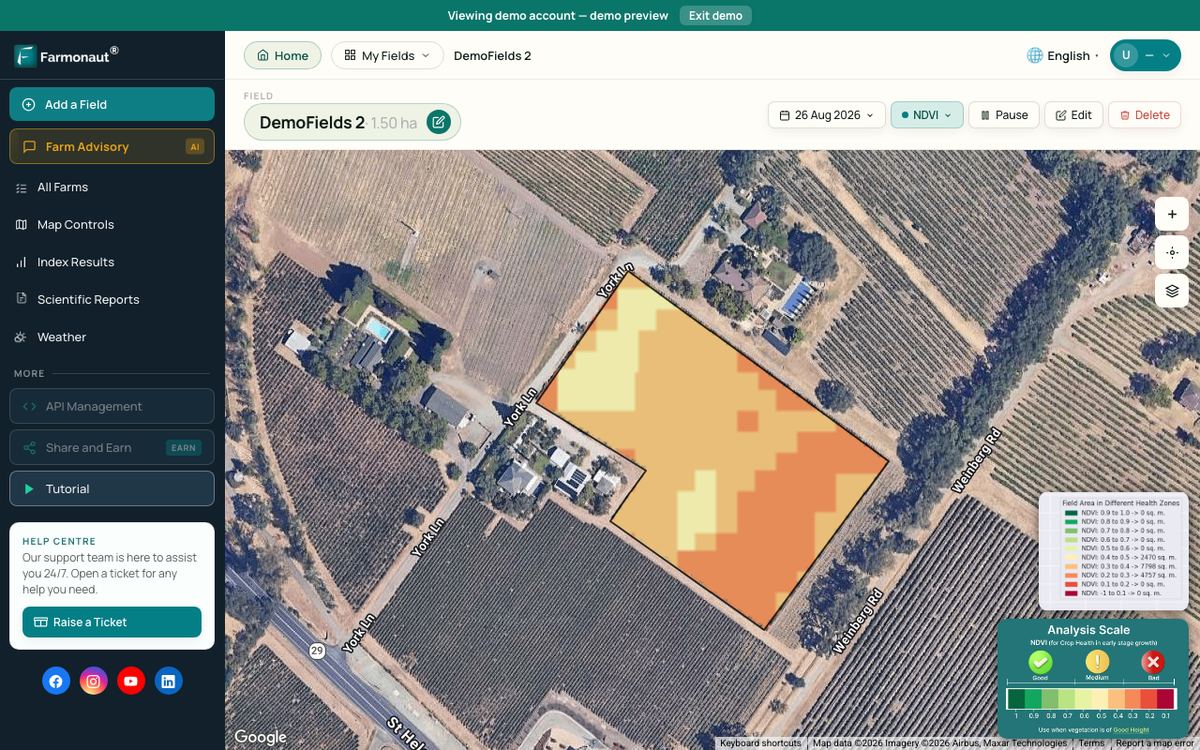
On larger plantings, a satellite view of plant vigor can show which blocks are falling behind, so you know where to walk and check first. Satellites show a change in the canopy, not the cause, so a field check is still needed.

▶ How satellite NDVI maps show crop stress across a large planting before it is easy to see on foot. · 4:09
Bloom and pollination
Blueberry flowers need bees to set a full crop. Bumblebees and many wild bees work blueberry flowers well. Larger plantings often rent honeybee hives during bloom.
If you rent hives, check them. University of New Hampshire Extension says a healthy hive has frames 70% to 80% covered in bees. It suggests asking the beekeeper to open a hive on delivery and agreeing on terms in a written contract.
Planting two cultivars that bloom together also helps. This is why the partner lists in extension guides matter when you buy.
Can you sell blueberry honey?
Bees that forage mostly on blueberry bloom can make a honey that beekeepers sell as blueberry honey. For a grower, the simplest path is a deal with a local beekeeper: the hives pollinate your crop and the beekeeper sells the honey. Labelling and food-safety rules for honey differ by country and state, so check local rules before you sell any yourself.
Harvest: by hand or by machine
Clemson says the fruit ripens over about two months after bloom, depending on cultivar and weather. Pick every few days and taste before you pick a whole bush. Berries that turn blue are not always fully sweet yet.
Home growers and pick-your-own farms pick by hand. Large farms use over-the-row harvesters, which shake the bushes and catch the falling fruit. Some newer cultivars are bred for this. The University of Florida describes ‘Optimus’ as suited to machine harvest for the fresh market. Machine-picked fruit often goes to processing, and fresh-market machine picking needs firm cultivars and careful handling.
Before you buy a used harvester, check that your row spacing, bush height and cultivars suit the machine. Ask the dealer about servicing near you.

▶ Six plain steps to start precision farming without buying a robot. · 4:18
Blueberry markets: why demand keeps growing
Blueberries are a growing crop in several of our readers’ countries. In Australia, Hort Innovation’s statistics handbook reports fresh blueberry production of 19,608 tonnes in the year to June 2022, 20,211 tonnes in 2023 and 27,540 tonnes in 2024. It also reports that 47% of Australian households bought blueberries in 2023/24.
Chart
Australian fresh blueberry production
Tonnes, years ending June
In Canada, Agriculture and Agri-Food Canada reports that highbush blueberry production rose 38.8% in 2024, while lowbush (wild) blueberry production fell 10.4%. British Columbia grew 94% of Canada’s highbush crop, and Quebec stayed the top lowbush province with 43,997 tonnes.
For a new grower, these figures mean one thing: there is a market, but also strong competition from large, experienced farms. A small grower often does better with pick-your-own, farm stands and local stores than with wholesale sales.
Related pages on our site: large-farm management app, agriculture monitoring systems, fleet management, carbon footprinting, product traceability, crop loan and insurance verification, API developer docs, satellite API, web app, mobile apps.
FAQ
What is the easiest blueberry plant to grow?
For cold winters, a northern highbush cultivar such as ‘Duke’ or ‘Bluecrop’ is a common start. For mild winters, try a southern highbush or rabbiteye pair. In pots, a dwarf hybrid in ericaceous compost is simplest. Always match the type to your chill hours.
Do I need two blueberry plants to get fruit?
Some cultivars set fruit alone, but Ohio State says yields are higher with two different cultivars. Rabbiteye types need a partner. Buy two cultivars of the same type that bloom at the same time.
How long until a new blueberry plant fruits?
Oregon State says plants fruit first one or two years after planting. Clemson expects about half a pound per bush in year three and 1 to 2 pounds in year four. Full yields take several more years.
When is the best time to plant blueberries?
Clemson says bare-root plants go in during late winter or early spring, and potted plants can also go in during fall. In cold regions, spring planting is safer.
How much fruit does one bush give?
Oregon State gives 9 to 15 pounds for mature northern highbush. Clemson gives more than 8 pounds for southern highbush and 12 to 25 pounds for rabbiteye. Half-high and dwarf plants give less.
Can blueberries grow in alkaline soil?
Not well. Grow them in pots or raised beds of acidic mix, as the RHS suggests, or adjust the soil first. See our acidic soil guide for the details.
Farmonaut crop monitoring
See your blueberry blocks from space
Draw your blocks once and Farmonaut shows satellite vegetation maps for them through the season, on web, Android or iOS.



Keep reading


Sources
- Oregon State University Extension, Growing blueberries in your home garden (EC 1304): catalog.extension.oregonstate.edu
- Ohio State University Extension, Growing Blueberries in the Home Garden (HYG-1422): ohioline.osu.edu
- Clemson University HGIC, Blueberry factsheet: hgic.clemson.edu
- University of Florida IFAS, Southern Highbush Blueberry Cultivars from the University of Florida (HS1245): edis.ifas.ufl.edu
- Royal Horticultural Society, How to grow blueberries: rhs.org.uk
- Agriculture and Agri-Food Canada, Statistical overview of the Canadian fruit industry, 2024: agriculture.canada.ca
- USDA NASS, 2023 Fruit Chemical Use Highlights (2024): nass.usda.gov
- University of New Hampshire Extension, What the Grower Should Expect in Colonies Rented for Pollination: extension.unh.edu
- Hort Innovation, Australian Horticulture Statistics Handbook 2023/24, Fruit: edge.sitecorecloud.io
- Oregon State University Extension, Acidifying soil for blueberries and ornamental plants (EC 1560): catalog.extension.oregonstate.edu
Discussion
Questions, corrections or field experience? Share them below. First-time comments are reviewed before they appear, and your email is never published.
No comments yet. Be the first to add a question or your experience.

 Agreeta Solutions
 Agricultural Credit Policy Council
 BayWa
BayWa MCSOD
MCSOD Marei Nursery
 eKGIS
eKGIS Mostas Tech
 Native Seeds
 Andex
Andex FCF India
 Unifrutti Gulf
 Deluxe Conseil
 TVS Electronics
 WICO
WICO Chimera Innovation
 SkyHarvest
 Licence holder · Niger · Gold
 Licence holder · Nigeria · Gold + lithium










