

Cow per Acre, Farm Rent, Yield & Planting Costs: 2026 Guide
Unlock higher yields per acre in 2025 and 2026—discover hay per acre yield, farm rent per acre, cow per acre, and advanced crop management for sustainable profitability.
“On average, innovative crop management in 2025 boosts hay yield to 3.5 tons per acre using data-driven techniques.”
Introduction: Maximizing Land Productivity in Modern Farming
Modern agriculture, fueled by technology and innovation, is increasingly defined by a quest for efficiency and sustainability per acre. Across diverse regions and markets, the optimization of land use—whether for crop farming, livestock grazing, or mixed systems—remains a critical factor underpinning profitability and environmental responsibility. As we move from 2025 into 2026 and beyond, the stakes grow higher. Farm input prices continue to fluctuate, market demands become more sophisticated, and the impact of climate change requires smarter, more resilient approaches.
With this comprehensive guide, we delve into the latest on cow per acre, farm rent per acre, hay per acre yield, rice per acre yield, price to plant corn per acre, and oat yield per acre—all central metrics for today’s farm business. We’ll explore not only average yields and input costs but also examine the interrelationship between these factors, the influence of new technologies, and strategies for maximizing productivity.
Growers producing alfalfa for hay or pellets can check alfalfa yield per acre and the price forecast for the crop.



Get Farmonaut’s real-time, AI-powered insights for large-scale farm management, monitor crop health, analyze farm rent parameters, and optimize livestock-crop integration on any device.
“Precision farming reduces planting costs by 18% per acre while optimizing cow-per-acre ratios for sustainable farm rent returns.”
Key Metrics for Modern Farm Productivity
The most successful farms in regions such as the Midwest United States, Canada, Australia, and Europe focus on metrics per acre to inform decision-making. The cow per acre stocking rate, farm rent per acre, and hay per acre yield are especially important.
- 🐄 Cow per Acre: Influences pasture sustainability, hay requirements, and long-term soil health
- 💵 Farm Rent per Acre: Directly impacts profit margins and business viability, especially under rising costs
- 🌾 Yield Metrics: Includes hay per acre yield, rice per acre yield, and oat yield per acre—all crucial for returns
- 🌱 Planting Costs: The price to plant corn per acre is a benchmark for cropping investments
- 📊 Integrated Data: Understanding the interrelationship between these metrics enables data-driven optimization

Why Are These Parameters So Critical?
- ✔ Yield per Acre drives overall food and fiber output
- 💲 Rent per Acre is often the largest single recurring expense
- 🚜 Livestock Density per Acre (i.e., cow per acre) shapes carrying capacity, pasture recovery, and feed requirements
- ⚖ Cropping and Grazing Systems interrelate—changing stocking rates may influence hay demand and crop choices
- ⏳ Long-Term Viability depends on maintaining soil and pasture health alongside economic profitability
Cow per Acre: Livestock Density and Pasture Management
Determining the optimal cow per acre stocking rate is a pivotal decision that affects not only livestock production but also overall farm profitability, soil health, and forage utilization. Stocking at unsustainable densities can overgraze grasslands, leading to pasture degradation, lower yields, and even a decline in land rental value over the long term.
Defining Optimal Stocking Rates (2026 Outlook)
The ideal cows per acre figure varies by region, soil fertility, forage species, rainfall, and overall pasture management practices. In physiologically-rich, temperate zones (e.g., Midwest USA and parts of Europe), sustainable rates typically range from 1 to 2 cows per acre. In drier or less fertile regions, that number may drop significantly.
- ⚖ 1 Cow per Acre: Typical for average pastures with moderate fertility, seasonal rainfall, and cool-season grasses.
- ⚖ 2 Cows per Acre: Achievable only in intensively-managed, irrigated, high-fertility pastures.
Advanced precision management technologies (satellites, soil sensors, grazing apps) enable today’s farmers to monitor pasture productivity in real-time. This allows dynamically adjusting stocking density, minimizing overgrazing, and maintaining resource resilience.
- 📊 Data insight: “Many regions using satellite-based monitoring for large-scale farm management have reported improved pasture health and optimized livestock-crop rotations.”

Key Factors Influencing Cow per Acre
- 🌧 Rainfall patterns (seasonality, drought incidence)
- 🌱 Paddock rotational practices: and rest periods for recovery
- 🧬 Pasture species selection (mix of grasses and legumes)
- 🚜 Fertilization and irrigation (nutrient and water management)
- 🛰 Real-time monitoring using satellite imagery and AI-based analytics
Farm Rent per Acre: Economic Considerations for 2026
The farm rent per acre remains a significant cost and a critical determinant of farm profitability. As land values and commodity prices continue to fluctuate due to urban expansion, climate impacts, and evolving market demands, both landlords and renting farmers must focus on transparent and data-driven rental agreements.
- 💲 Average farm rent per acre in major agricultural regions typically reflects a share of potential crop yield per acre (corn, soybeans, wheat, hay, or pasture revenue).
- 🌐 Digital platforms and satellite-powered analytics are now common in setting fair rents and tracking compliance with agronomic best practices, which helps sustain land value and viability.
2026 Trends in Land Leasing and Farm Rent per Acre
- 📈 Lease agreements increasingly rely on:
- historic yield data per acre
- soil health indices
- local crop and cattle market projections
- 🔒 Blockchain-based traceability for farm product traceability ensures transparent farm rent negotiations and compliance monitoring.
- 💼 Dynamic pricing: Short-term leases now common—especially where livestock density and market returns are volatile. Data-driven seasonal rent models offer flexibility to both tenants and landlords.
Average farm rent per acre in the Midwest US, a benchmark region, can range from $150 to $350 per acre annually (2026 forecast), with higher values for premium irrigated or specialty-crop land. Flexible value-lease models indexed on actual output (i.e., bushels or tons per acre) can help reduce risks.

Crop Yields per Acre: Hay, Rice, Oats & More
Yield per acre—as measured for key crops like hay, rice, oats, and corn—remains the most influential metric for land utilization and profit maximization. Innovations in seed genetics, precision irrigation, and satellite-driven management are pushing average yields to new highs each year.
- 🌾 Hay per Acre Yield: 2.5–4.0 tons—with 3.5 tons per acre becoming increasingly common (2026)
- 🍚 Rice per Acre Yield: 6,000–7,000 lbs, sometimes reaching 8,000 lbs in high-tech systems
- 🌱 Oat Yield per Acre: 3,000–4,000 lbs depending on region and management
- 🌽 Corn Yield per Acre: 180+ bushels in optimal environments
Breakdown: Hay, Rice, and Oat Yields
| Crop Type | Avg Yield/ Acre | Comments (2026) |
|---|---|---|
| Hay | 3.5 tons | Modern data-driven management; more drought-tolerant species; reduced fertilizer input needed |
| Rice | 7,000–8,000 lbs | Efficient irrigation; AI pest monitoring; increased water conservation |
| Oats | 3,500 lbs | Resilient to climate stress, supports rotation and soil health |
| Corn | 180–200 bushels | Precision planting; variable rate fertilization; optimized water use |
- 📈 Improved seed varieties and optimized fertilization boost yields consistently
- 🔥 Technologies like NDVI (vegetation biomass index) from Farmonaut’s carbon footprinting tools inform input decisions and maximize sustainable output
- 🔂 Rotational cropping with oats or cover crops improves nutrient cycling and protects against yield loss from climate events

Price to Plant Corn per Acre: 2026 Input Costs
The price to plant corn per acre is a foundational budgeting figure for modern cropping. In 2026, costs are influenced by both rising input prices and new efficiencies from precision agriculture.
- 💰 Planting cost: $400–$600 per acre (2026)
- 📉 Precision farming reduces average planting costs per acre by 15–20% over conventional methods, thanks to lower wastage on seed, fertilizer, and pesticide inputs.
- ⚡ Energy costs remain volatile; embrace techniques like no-till, zone tillage, and fuel-efficient tractors for cost savings.
Major Planting Cost Breakdown (Per Acre, 2026 Average)
- 🌱 Hybrid seed: $100–$150
- 🌿 Fertilizer: $110–$160
- 🦠 Pesticides: $30–$70
- ⛽ Fuel & irrigation: $20–$50
- 🤝 Labor: $25–$60
- 🚜 Machinery (planting + harvest): $70–$120
Planting costs can be further offset by fleet and resource management solutions—optimizing machinery usage, input delivery, and operational timing.


Integrating Technology & Precision for Sustainable Returns
The future of farm productivity lies in integrated, data-driven decision-making at the acre level. Technologies in satellite imaging, AI, and blockchain now provide a virtual dashboard—turning every acre into a unit of optimized value, whether for crops or grazing livestock.
- 🌎 Satellite & AI analytics detect real-time soil health trends across large holdings
- 🚜 Resource management apps coordinate planting, harvesting, and logistics fleet scheduling
- 💡 Blockchain-powered traceability secures output value (essential for specialty hay, rice, or export oats)
- 🛡 Environmental impact tools track carbon footprint, helping meet sustainability targets and carbon footprinting compliance
AI-powered insights—like those delivered on Farmonaut’s crop plantation and forest advisory platform—enable smarter rotation planning, nitrogen management, and risk alerts for every acre.
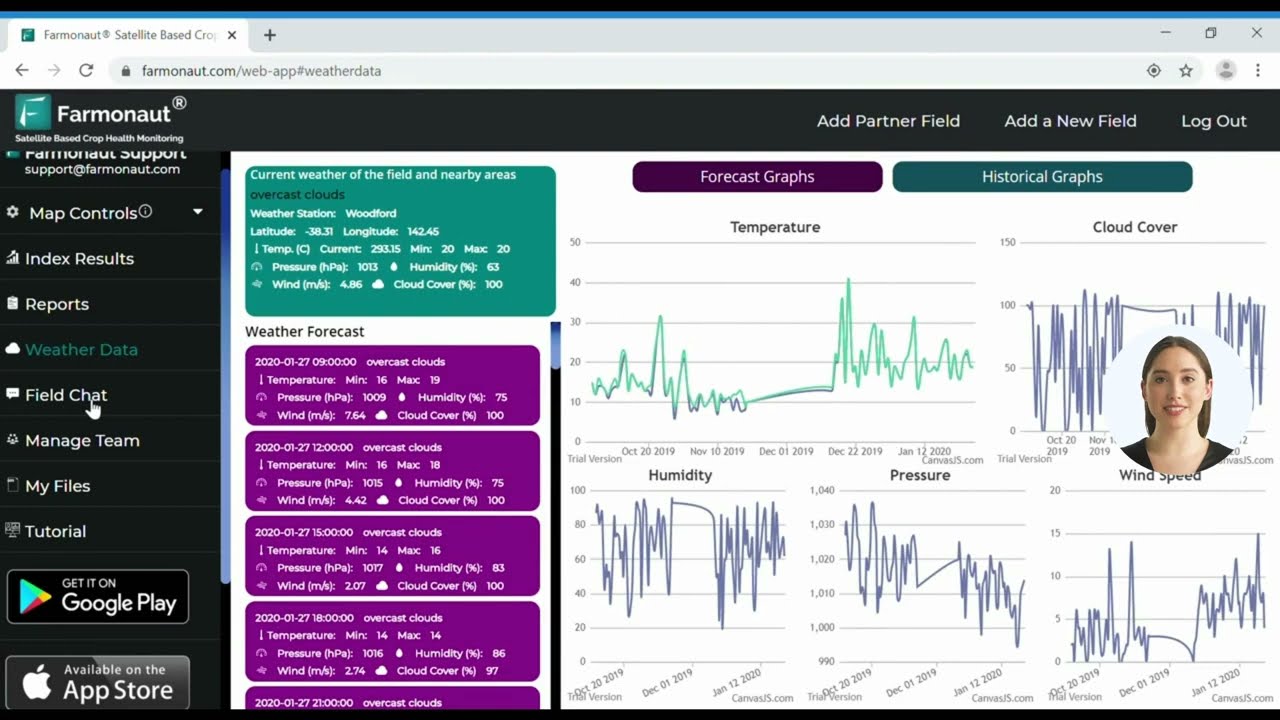
How Farmonaut Empowers Data-Driven Agriculture
At Farmonaut, our mission is to make satellite-driven insights both affordable and accessible to farmers, businesses, and governments worldwide. Our solutions empower users to maximize every acre’s yield potential—whether optimizing cow per acre stocking rates, tracking farm rent per acre, or adjusting crop inputs and rotations based on AI-driven forecasts.
- 🛰 Multispectral satellite images: Real-time vegetation health and soil status updates at acre-scale
- 🌦 Jeevn AI Advisory: Turn-by-turn strategies for grazing optimization, drought response, and yield improvement
- 🔒 Blockchain traceability: Secures the value of farm outputs, supporting higher-category farm rent and contractual leasing
- 🚚 Fleet/resource management: Reduces operating costs across large acreages—optimize logistics & input delivery
Our diverse platform suits everyone: from farmers needing affordable crop monitoring, to businesses managing hundreds of acres with complex input matrices (hay, oats, pasture), to institutions focused on sustainability and compliance.
Start using Farmonaut’s API for direct, seamless agri-data integration—discover our API here, and access all developer resources at Farmonaut API Developer Docs.

Estimated Farm Inputs & Yields per Acre (2026 Forecast)
| Crop Type / System | Avg Yield per Acre (tons/bushels) |
Farm Rent per Acre ($) | Cow per Acre (head/acre) |
Planting Cost per Acre ($) | Projected Revenue per Acre ($) |
|---|---|---|---|---|---|
| Hay | 3.5 tons | $180 | 0.5 (as feed support) | $220 | $560 |
| Corn | 190 bushels | $230 | 0 (annual row crop) | $575 | $950 |
| Soybean | 58 bushels | $210 | 0 | $350 | $680 |
| Oats | 3,500 lbs | $170 | 0 | $185 | $410 |
| Rice | 7,000 lbs | $340 | 0 | $475 | $1050 |
| Pasture (Cow Grazing) | (forage equivalent) | $120 | 1–2 | $85 | $370 |
Note: All values are estimates for 2026. Projected revenue per acre assumes average market prices and may vary by region and year. “Cow per acre” for pasture = sustainable stocking rate; for hay = supportable cows per acre of hay produced.
Essential Callouts and Pro Tips for Acre-Level Optimization
📊 Technology-Driven Farm Optimization Checklist
- ✔ Monitor real-time vegetation health per acre
- 🔒 Use blockchain traceability for lease proof
- 🌱 Rotate crops and grazing to improve yield
- 💧 Optimize irrigation by satellite water stress index
- 🚜 Automate fleet for reduced input costs
🌎 Benefits of Data-Driven Management Systems
- ✔ Increased yield per acre via targeted fertilization
- 📈 Supports higher farm rent per acre via improved compliance
- ⚡ Faster ROI by reducing cost per planted acre
- 💡 Early risk alerts for pest, water and market stress
- ♻ Enhanced environmental sustainability & carbon valuation
🔑 5 Must-Know Fast Facts
- ✔ Average cow per acre for sustainable grazing = 1 in moderately fertile, well-managed pasture zones.
- ✔ Hay per acre yield with technology: 3.5+ tons on improved, data-monitored fields (2026).
- ✔ Price to plant corn per acre is reduced ~18% by full adoption of variable-rate seeding and precise input application.
- ✔ Farm rent per acre aligns more closely with verified, blockchain-proved output on top-performing units.
- ✔ Diversified rotations (corn, oats, hay, pasture) maximize both revenue and resilience per acre.
Top Takeaways for 2026 Farm Productivity
- Always benchmark your cow per acre, farm rent per acre, and yield outcomes to region-specific data for sustainable profitability.
- Embrace digital tools—satellite, AI, blockchain—for superior decision support at every stage, from planting to harvest to livestock management.
- Use crop rotation and integrated grazing to improve soil health, increase output, and optimize land use per acre.
- Compare projected revenue, input costs, and rent side-by-side using data tables (like above) to select the best crop or pasture mix for each block.
- Frequently monitor and refine operational strategy for each field or paddock to keep up with climate trends and market shifts—technology makes this affordable and actionable.
Frequently Asked Questions (FAQs) on Cow per Acre, Farm Rent & Crop Yields (2026)
Q1: What is the average cow per acre rate for sustainable pasture management in 2026?
A1: In temperate, well-managed zones, sustainable rates remain between 1 and 2 cows per acre, with 1.2 cows per acre as a balanced benchmark. Adjustments depend on soil health, rainfall, and available forage species.
Q2: How does farm rent per acre typically relate to expected crop yields?
A2: Farm rent per acre is increasingly tied to potential or actual average yield per acre for each region/crop type. Landlords and tenants use satellite and yield-monitoring data to set fair values reflective of market and productivity trends.
Q3: What’s the best way to reduce planting costs without lowering yield?
A3: Use precision farming tech—variable-rate seeding, AI-advised NPK dosing, real-time soil moisture analysis—which can reduce per-acre planting cost by 15–20% while optimizing yield.
Q4: Why should I use satellite and blockchain tools for farm management?
A4: These tools enable transparency, compliance, and resource optimization—helping increase yield per acre, justify higher farm rent, and support traceable, high-value marketing of crops and livestock products.
Q5: How should I track carbon or environmental metrics for my land?
A5: Use satellite-backed, field-level environmental monitoring systems—see Farmonaut’s carbon footprinting tools for automated, regulatory-grade tracking.
Farmonaut Subscription Plans
Ready to optimize your farm, ranch, or agribusiness with satellite and AI-powered insight?
Choose the best plan, start tracking every acre’s health, yield, and compliance from any device. Join the data-driven agriculture revolution!
Conclusion: Sustainable, Profitable Farming Starts Per Acre
Optimizing cow per acre, farm rent per acre, hay per acre yield, rice per acre yield, price to plant corn per acre, and oat yield per acre are now central to both profitability and sustainable resource stewardship in agriculture. With the advent of satellite analytics, AI, blockchain, and fleet management tools, every farm—large or small—can base critical management decisions on real-time, field-level data. The 2026 outlook points squarely at integrated, technology-driven systems as the foundation for higher yields, lower costs, sustainable stocking rates, and fair market rents across all regions.
By leveraging advanced, affordable solutions like those we provide through Farmonaut, users can unify their management of farm rent per acre, optimize yield per acre for hay, rice, oats, or corn, and sustain soil and pasture health—securing both economic and environmental benefits for the long term.
Monitor. Analyze. Optimize—per acre, every season, with Farmonaut’s cutting-edge intelligence platform.

 Mobitech Wireless
 FCF India
 Unifrutti Gulf
 Deluxe Conseil
 TVS Electronics
 BW Pipelines
 WICO
WICO Gen Chayat
 Chimera Innovation
 SkyHarvest
 Polaris Digitech
 Teledarbas
 Wild Oak Farm
 SFX
SFX Doodlakine
 Exurbia Geospatial
