

Grain storage · Buyer guide
Grain Bins for Sale: Cost per Bushel and Buyer Guide
New on-farm steel bins cost about $4.00 to $4.50 per bushel of capacity, before drying, in builder and producer estimates from fall 2024 (Mississippi State University Extension). This guide compares bin types, sizes, used bins, loans and monitoring tools.
Key takeaways
- Builders and producers put new metal bin construction at $4.00 to $4.50 per bushel in fall 2024, excluding drying, up from about $2.50 in 2022 Tennessee data (MSU Extension).
- Cost per bushel falls with size: MSU’s examples use $4.50 for 60,000 bushels and $4.10 for 120,000 bushels.
- Commercial storage averaged about $0.33 per bushel a year plus in and out fees in a survey cited by MSU.
- USDA’s Farm Storage Facility Loan lists a $500,000 maximum for storage facilities, with terms up to 12 years.
- On 1 September 2026, 787 million bushels of US corn were stored on farms, out of 2.10 billion in all positions (USDA NASS).
In this article
- Grain bins for sale: cost at a glance
- Why farms buy grain bins
- Types of grain bins for sale
- What grain bins cost and why prices rose
- How to choose a grain bin size
- Owning a bin vs paying for elevator storage
- Paying for a bin: loans and finance
- Grain prices: what you are protecting
- Smart grain bin monitoring tools
- Safety around grain bins
- Storing barley and other small grains
- How we checked the numbers
- FAQ
New steel grain bins for sale in the US cost about $4.00 to $4.50 per bushel of capacity to build, before any dryer, according to producers and builders surveyed by Mississippi State University Extension in fall 2024. That is an estimate from builders and recent buyers, not a list price from one dealer. A 60,000-bushel bin at the top of that range comes to roughly $270,000.
This buyer guide covers the main types of grain bins for sale, what each costs, how to pick a size, what to check on a used bin, and the monitoring tools worth adding. It ends with a calculator that compares owning a bin with paying a commercial elevator to store your grain. Grain moths and other storage insects are covered in a separate guide.
Grain bins for sale: cost at a glance
The table below sums up the main cost numbers on this page. Every figure has a date and a basis, because bin quotes, grain prices and loan rates move every year.
| Item | Figure | Basis and date |
|---|---|---|
| New steel bin | $4.00 to $4.50 per bu | Builder and producer estimates, fall 2024, excludes drying (MSU Extension) |
| Same, 2022 | About $2.50 per bu | Tennessee data, 2022, as cited by MSU Extension |
| 60,000 bu bin | $270,000 | MSU worked example at $4.50 per bu |
| 120,000 bu bin | $490,000 | MSU worked example at $4.10 per bu |
| Elevator storage | About $0.33 per bu a year | Survey average cited by MSU, plus in and out fees |
| Ownership costs | 4% to 10% of build cost a year | MSU estimate: depreciation, tax, insurance, power, repairs |
| FSA loan cap | $500,000 | Farm Storage Facility Loan, storage structures |
Use these as planning numbers. Your own quote depends on the site, the power supply and what equipment you already have.
Why farms buy grain bins
A grain bin lets you hold the crop after harvest instead of selling it at the busiest, often cheapest, time of year. It also keeps the grain dry, cool and away from pests, so quality holds until you sell or feed it.
On-farm storage is a big share of US grain. On 1 September 2026, US farms held 787 million bushels of old-crop corn on the farm, out of 2.10 billion bushels in all positions, according to the USDA NASS Grain Stocks report of 30 September 2026. For wheat, 547 million of 1.85 billion bushels were on farms. The rest sat in elevators, terminals and processors.
The main reasons to own a bin are:
- Marketing time. You choose when to sell, and can wait for a better local price or basis.
- Harvest speed. Trucks unload in the yard instead of queueing at the elevator.
- Feed supply. Livestock farms keep their own feed grain close to the barn.
- Quality control. You manage drying, aeration and cleaning yourself.
The trade-off is money tied up in steel and concrete, plus the work and risk of looking after stored grain.
Chart
US grain stocks on and off the farm
Million bushels, old-crop stocks on 1 September 2026
Types of grain bins for sale
Most farm grain bins sold in North America, the UK and Australia fall into a few types. Each one fits a different job.
1. Flat-bottom steel bins
Best for: large volumes of corn, wheat or soybeans kept for months.
Corrugated galvanized steel bins on a concrete slab are the standard farm bin. Common brands include GSI, Sukup, Brock and Behlen. Sizes run from a few thousand bushels to well over 100,000. They pair well with full-floor aeration and a sweep auger to empty the last grain. The downside is that the last part of the grain must be swept out, which is slow and is a safety risk if someone enters the bin.
Pros: lowest cost per bushel at large sizes; long life; easy to add aeration fans and cables. Cons: needs a foundation; emptying the floor takes time.
2. Hopper-bottom bins
Best for: feed grain, seed and grain that moves in and out often.
A cone-shaped bottom on legs lets grain empty by gravity. Hopper bins are smaller, often under 10,000 bushels, and cost more per bushel stored. They suit livestock farms and seed dealers who load out many small batches.
Pros: fast, clean emptying; no need to enter the bin to sweep. Cons: higher price per bushel; limited capacity.
3. Poly and fibreglass bins
Best for: small feed bins, pellets and wet areas where rust is a problem.
Polyethylene and fibreglass bins resist corrosion and let you see the grain level through the wall. They are light and simple to install, but are made in small sizes and are used mostly for feed rather than bulk crop storage.
Pros: no rust; visible fill level. Cons: small sizes; UV ageing over time.
4. Drying bins
Best for: farms that harvest grain wetter than safe storage moisture.
A drying bin has a perforated floor, large fans and a heater, and may have stirring augers. It dries grain in place, in layers or in batches. Purdue University notes that shelled corn must be dried to around 15% moisture and cooled with aeration to prevent spoilage. A drying bin costs more than a plain storage bin, and the MSU cost range above does not include drying.
Pros: one structure for drying and storage. Cons: high fuel and power use; slower than a tower dryer at large volume.
5. Grain bags and temporary storage
Best for: extra space in a big harvest year.
Silo bags, bunkers and covered ground piles hold grain for a season at low capital cost. They need dry grain, a level site and close watching for damage from wildlife and weather. They are a short-term option, not a replacement for a bin.
Pros: low upfront cost; flexible. Cons: higher loss risk; mostly one-season use.
For a UK view of steel silos and storage choices, see our guide to grain silos in the UK.
What grain bins cost and why prices rose
Builder and producer contacts surveyed by Mississippi State University Extension in fall 2024 put the construction of on-farm metal bins at $4.00 to $4.50 per bushel. The same publication cites Tennessee data from 2022 at about $2.50 per bushel. These are estimates for complete bins, not dealer list prices or auction results.
Price per bushel falls as capacity grows. The MSU authors explain that the same loading and unloading equipment can serve more bushels, and electrical work costs less per bushel in a bigger system. Their worked examples use $4.50 for 60,000 bushels, $4.25 for 80,000 and $4.10 for 120,000.
What a quote usually includes, and what it often leaves out:
- Usually in: bin shell, roof, door, floor, foundation, basic aeration fan and erection labour.
- Often extra: site work and gravel, the power line, a dryer, the leg or augers, wet holding tanks, a sweep auger, ladders and cables.
- Local factors: soil and slab design, distance from the dealer, crane hire and permits.
Ask every dealer to itemise the same list so you can compare like with like.
Used grain bins for sale
Used bins sell through farm auctions, classified ads and dealers who take them down and rebuild them. A used bin can save money on the shell, but moving it costs labour, a crane, new bolts and seals, and a new foundation. Check these points before you bid:
- Rust at the bottom ring and around bolts, where moisture sits.
- Bent or torn sheets from wind or a past collapse.
- Roof condition and the state of the vents.
- Whether parts are still sold for that brand and model.
- Who will take the bin down, move it and put it up, and at what price.
Auction results show what a bin sold for on the day, often with the buyer paying to remove it. Treat them as a starting point, not a full cost.
Chart
Example build cost per bushel by system size
US dollars per bushel of capacity, MSU worked examples using fall 2024 builder estimates, excludes drying
How to choose a grain bin size
Start from how much grain you want to hold and for how long. Follow these steps:
- Estimate your crop. Multiply your acres by your usual yield for each crop you plan to store.
- Decide what share to keep. Some farms store everything; others hold only part of the crop for later sale or feed.
- Separate crops. Corn, soybeans and wheat need separate bins, and so may seed or specialty grain.
- Match harvest speed. Your dryer and handling must keep up with the combine, or bins will sit half full while trucks wait.
- Plan for growth. Leave room on the site, and in the power supply, for another bin later.
A larger bin costs less per bushel, but only if you fill it. Space that stays empty most years still costs money every year.
Owning a bin vs paying for elevator storage
The MSU publication compares owning a bin with paying for storage. It cites a survey that puts commercial storage at around $0.05 per bushel per month, or $0.33 per bushel a year, with extra fees for moving grain in and out. In its worked example, the yearly loan payment on an owned bin is about $0.42 to $0.46 per bushel, before ownership costs. Those ownership costs, from depreciation to repairs, run at 4% to 10% of the build cost each year in the MSU estimate.
So ownership only pays if the bin also earns something extra: a better sale price later in the year, less waiting at harvest, or feed you would otherwise buy. Use the calculator below with your own numbers. The defaults are examples set close to break-even, not benchmarks.
Try the numbers for your own farm below.
Calculator
Is owning a grain bin cheaper than elevator storage?
Enter your own bin size, build cost, rates and fees.
- Owning cost per bushel a year: 0.43 $/bu
- Elevator cost per bushel a year: 0.43 $/bu
- Total build cost: $255,000
- Break-even build cost: 4.30 $/bu
Example values only, set near break-even; they are not benchmarks or quotes. Ownership cost per bushel = build cost x (1/years + interest/2 + upkeep), a simple average-interest method. The $4.25 build cost and $0.33 storage rate come from Mississippi State University Extension (fall 2024 estimates, survey average); the 4% upkeep default is an example for taxes, insurance, power and repairs only (MSU’s 4% to 10% ownership-cost range already includes depreciation, which the calculator adds separately as 1/years). Elevator handling fees and the interest rate are inputs: check them with your elevator and lender. This is not financial advice.
Paying for a bin: loans and finance
In the US, the USDA Farm Service Agency runs the Farm Storage Facility Loan program, which finances on-farm storage and handling. FSA states a maximum loan of $500,000 for storage facilities, with terms of up to 12 years, and a smaller microloan option. The MSU example assumes FSA covers 85% of the cost, at the 3.875% rate in force when it was written. Rates change monthly, so check the current rate with your county FSA office.
Commercial bank rates were around 8% in the same MSU example, which raises the yearly cost per bushel. Outside the US, farmers in Canada, the UK and Australia usually finance bins through their bank, equipment dealer or a lease. This is general information, not financial advice: get a written quote and talk to your lender or adviser before you sign.
Grain prices: what you are protecting
The value of the grain in the bin is what makes storage worth paying for. In its October 2026 outlook, USDA projects the 2026/27 season-average farm price at $4.70 per bushel for corn, $12.00 for soybeans and $6.30 for wheat, according to the World Agricultural Supply and Demand Estimates of October 2026. These are national projections of the average price farmers receive across the marketing year, not today’s cash bid.
Actual monthly prices are lower or higher. USDA NASS reported that farmers received $4.45 per bushel for corn and $6.23 for all wheat in August 2026. Your local cash price is the futures price plus your local basis, which the CFTC glossary defines as the difference between the cash price and the futures price. Storage pays when the price gain from holding, including a firmer basis, beats your cost per bushel.
Chart
Projected season-average farm prices, 2026/27
US dollars per bushel, USDA projection of October 2026, national average across the marketing year
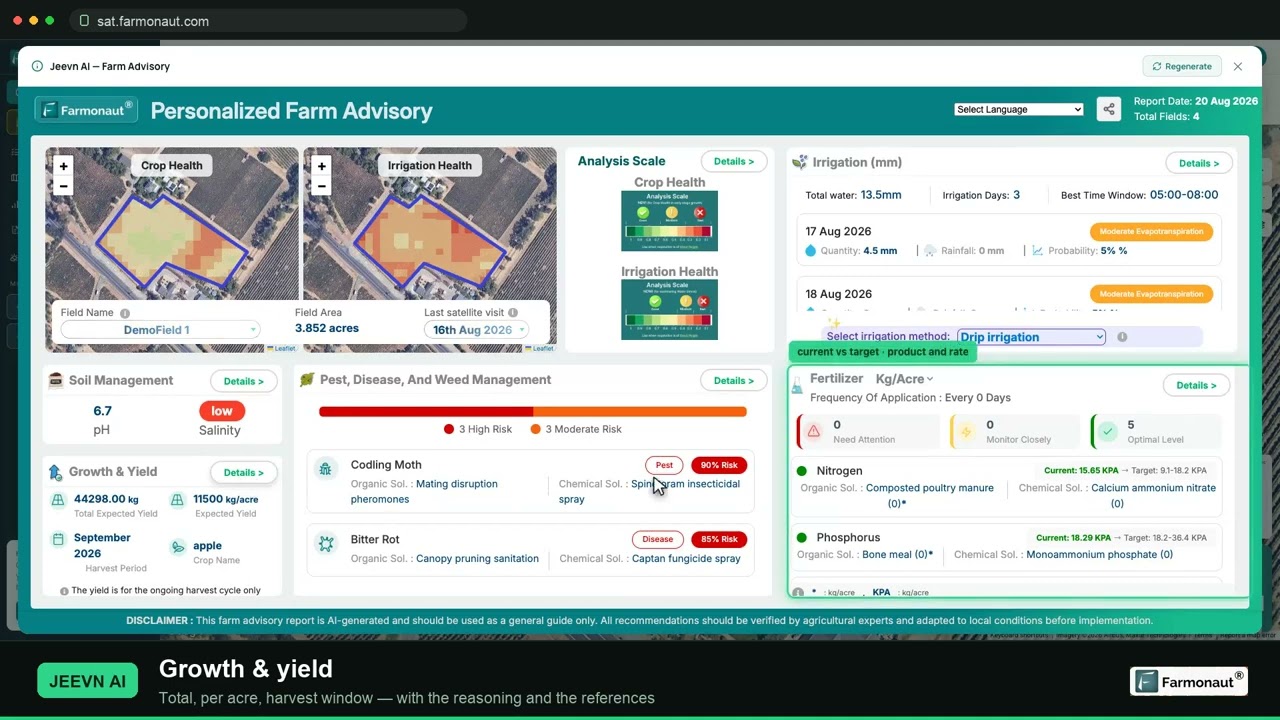
▶ A tutorial on reading satellite crop-stress maps, so you know what is coming before the grain reaches the bin. · 19:36
Smart grain bin monitoring tools
Bins hold value, and stored grain can go out of condition without warning. These tools help you keep watch.
Temperature cables
Cables hung from the roof carry sensors at set heights. A rising reading in one spot points to a hot spot from moisture or insects. Oklahoma State University advises managers to keep aerating and monitoring temperatures until a hot spot moves out of storage.
Moisture sensors
Moisture cables add a moisture estimate at each sensor. They help decide when to run fans and when grain is dry enough to stop. Check them against a hand-held meter on samples.
Automatic fan controllers
A controller turns aeration fans on only when outside air will cool or dry the grain, not wet it. This cuts power use and avoids adding moisture on humid nights.
Level sensors and remote alerts
Radar or cable level sensors show how full each bin is, which helps sales planning. Many monitoring systems can send phone alerts when a reading crosses a limit.
Coring and cleaning
Coring removes fines from the centre of a newly filled bin, where they block airflow. The Oklahoma State fact sheet says coring during filling removes most fines and improves aeration; coring after filling removes less.
Satellite crop monitoring before harvest
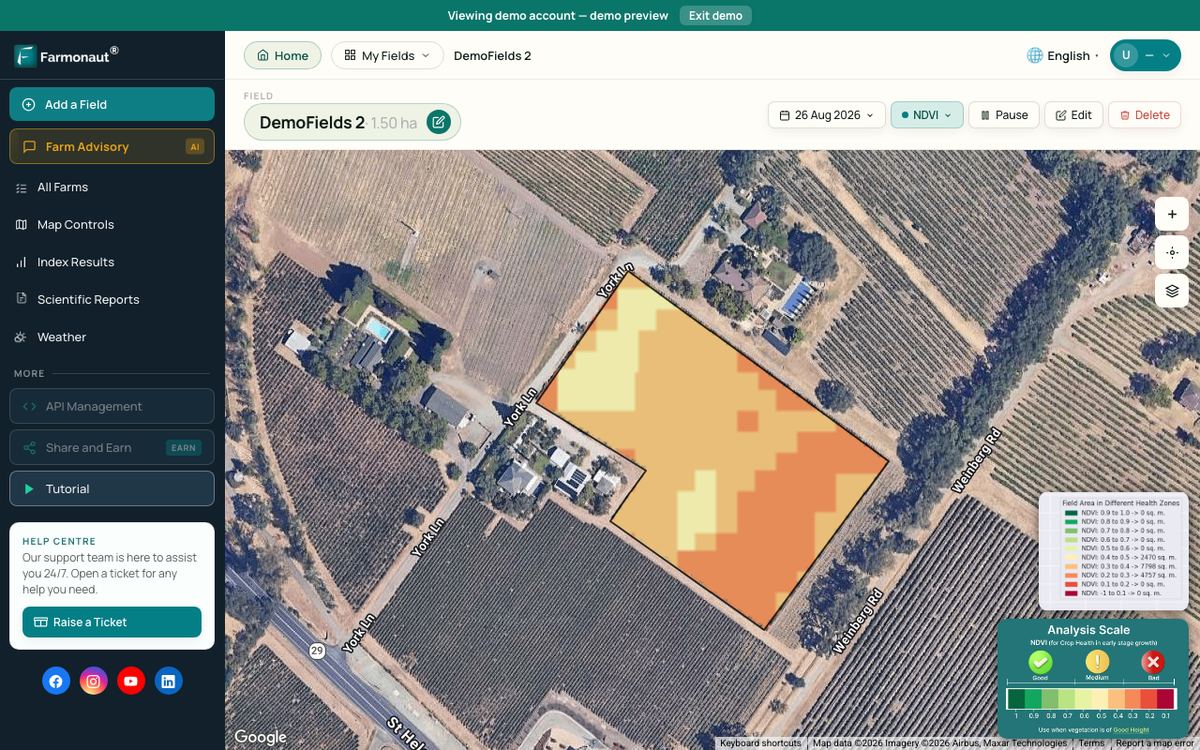
Knowing your likely yield helps you plan bin space early. Satellite crop maps show which fields are strong or stressed during the season. The Farmonaut Satellite + AI Farm Monitoring System gives vegetation maps for each field from Sentinel-2 imagery, which can help you judge which fields may need bin space first. Developers can pull the same field data through an API.

▶ How satellite NDVI maps show crop stress across a large farm before harvest. · 4:09
Safety around grain bins
Grain bins are dangerous places to work. The US Occupational Safety and Health Administration says suffocation is a leading cause of death in grain storage bins. Workers can be buried when they walk on moving grain or stand under bridged grain. Grain dust can also cause fires and explosions.
Basic rules from OSHA’s grain handling guidance:
- Do not enter a bin while unloading equipment runs. Lock out power first.
- Never walk on grain to make it flow.
- Use a body harness, a lifeline and an observer outside the bin.
- Test the air for low oxygen and gases before entry.
- Keep dust levels down around legs and dryers.
Rules differ by country. Check your local workplace safety rules before anyone enters a bin.
Storing barley and other small grains
Barley, oats and wheat store in the same bins as corn, but small grains pack more tightly and resist airflow more, so fans may need more power per bushel. USDA NASS counted 84.7 million bushels of barley on US farms on 1 September 2026, more than the 46.0 million held off the farm. Malting barley buyers look for high germination, so cool, dry storage matters for its sale value.
How we checked the numbers
Costs come from a university extension publication that surveyed builders and producers, and we state its date and what it leaves out. Grain prices and stocks come from USDA reports released in September and October 2026. We did not use dealer price lists, because they change often and rarely include the foundation, power and handling work. Brand names are examples of common makers, not a ranking.
We cover a connected topic in Silage in Bags: Top Benefits & Maize Silage Storage.
FAQ
How much does a new grain bin cost per bushel?
Mississippi State University Extension put on-farm metal bin construction at $4.00 to $4.50 per bushel in fall 2024, not counting drying equipment. Bigger systems cost less per bushel.
Is it cheaper to store grain on the farm or at the elevator?
It depends on your build cost, loan rate, upkeep and how full the bin is. MSU cites commercial storage at about $0.33 per bushel a year plus handling fees. The calculator on this page compares both with your numbers.
What should I check on a used grain bin?
Look for rust at the bottom ring, bent sheets, roof damage and missing parts. Add the cost of taking it down, moving it, new hardware and a new foundation.
Can I get a loan for a grain bin?
US farms can apply to the USDA Farm Storage Facility Loan program, which lists a maximum of $500,000 for storage facilities and terms of up to 12 years. Check current rates with your FSA office or lender.
What moisture should grain be for storage?
Purdue University says shelled corn should be dried to around 15% moisture and cooled. Safe levels differ by crop, season and how long you plan to store.
Do I need monitoring cables in my bins?
They are not required, but temperature and moisture cables give early warning of hot spots, which saves grain and reduces the need to enter the bin.
Related pages on our site: farm admin app, Farmonaut apps, farm fleet management, product traceability, farm-to-fork traceability, carbon footprinting, crop loan and insurance tools, satellite and weather API docs, rodent and pest tips for farm buildings.
Farmonaut agriculture API
Add satellite field data to your storage software
Developers can pull field-level vegetation and weather data from the Farmonaut agriculture API into grain planning and storage tools.



Sources
- Mississippi State University Extension, Economic Considerations of Grain Bin Ownership (Publication 4124): extension.msstate.edu
- USDA Farm Service Agency, Farm Storage Facility Loan (FSFL) Program: fsa.usda.gov
- USDA NASS, Grain Stocks, released 30 September 2026: nass.usda.gov
- USDA NASS, Agricultural Prices, September 2026 (August prices): release.nass.usda.gov
- USDA, World Agricultural Supply and Demand Estimates, October 2026: usda.gov
- Purdue University Extension, Grain Quality Fact Sheet #3: Costs of Drying High-Moisture Corn: extension.purdue.edu
- Oklahoma State University Extension, fact sheet CR-1741 on stored grain management: pods.okstate.edu
- OSHA, Grain Handling safety topic page: osha.gov
- CFTC, Futures Glossary (basis): cftc.gov
- Kansas State University, AgManager.info grain marketing publications: agmanager.info
- FAO, Grain storage techniques: harvesting, threshing and cleaning: fao.org
Discussion
Questions, corrections or field experience? Share them below. First-time comments are reviewed before they appear, and your email is never published.
No comments yet. Be the first to add a question or your experience.

 Raintree Computing
 Agricultural Credit Policy Council
 BayWa
BayWa MCSOD
MCSOD Marei Nursery
 eKGIS
eKGIS Mostas Tech
 Native Seeds
 Andex
Andex FCF India
 Unifrutti Gulf
 Deluxe Conseil
 TVS Electronics
 WICO
WICO Chimera Innovation
 SkyHarvest
 Licence holder · Niger · Gold
 Licence holder · Nigeria · Gold + lithium










