

Tractors Working on the Farm: 7 2026 Innovations Powering World Agriculture
“By 2025, over 65% of global farms are projected to use technologically advanced tractors for daily operations.”
Introduction: Evolution of Tractors Working on the Farm
Tractors working on the farm have long served as the heartbeat of agricultural operations, from mechanized fields in the American Midwest to family-run plots across Asia and Africa. As we navigate through 2025 into 2026, the role of farm tractors working in the field—modern and old alike—has transitioned dramatically. No longer simple machines, tractors have evolved into sophisticated, data-driven powerhouses supporting the fusion of traditional agricultural practices with advanced technology.
Whether you observe working tractors on a farm tilling soil, planting seeds, or participating in harvesting cycles, their presence embodies the cornerstone of agricultural productivity. This transition is shaped by robust technological integration, sustainability mandates, and the global need to optimize food production in an economically viable and environmentally sound manner.
Modern advancements in tractors working on the farm—including GPS-guided navigation, AI-driven telematics, and real-time fleet management—are projected to increase farm efficiency by up to 30% by 2026.
Modern Tractors Working in the Field: Features & Impact in 2025–2026
In 2025, tractors working in the field have become sophisticated agricultural powerhouses. Their transformation from simple workhorses into smart, data-driven assets has altered the landscape of farming worldwide. Modern models come equipped with:
- ✔ GPS-Guided Auto-Steering: Allows tractors to follow precise paths for optimized plowing, planting, and harvesting, reducing overlap and minimizing soil compaction.
- ✔ Precision Farming Tools: Enable precise application of seeds, fertilizers, and pesticides, reducing waste and ensuring consistent crop growth.
- ✔ Telematics and Real-Time Systems: Let farmers monitor fuel consumption, soil health, and machine performance remotely, maximizing operational efficiency.
- ✔ Autonomous Operation: Some units can operate entirely without human intervention, guided by sensors and satellite-based inputs.
- ✔ Environmental Monitoring: Real-time measurement of emissions, soil conditions, and moisture levels helps reduce the environmental impact and support sustainability.
The technological integration in farm tractors working across global regions enables farmers to monitor parameters such as soil health, moisture levels, and crop growth in real time. This capability is crucial for optimizing the use of fertilizers and pesticides, which directly translates to higher yields while minimizing environmental harm. Such tractors remain indispensable—driving efficiency and minimizing costs for large and small farming operations alike.

📊 Top Modern Tractor Features Driving Productivity
- AI-Powered Telemetry – Intelligent diagnostics and predictive maintenance
- Real-Time Fleet Management – Automated scheduling, route planning, and resource allocation
- Hybrid/Electric Power Trains – Reduced fuel use, emissions, and total costs
- Autonomous Navigation – 24/7 operation with minimal oversight
- Satellite Connectivity – Seamless integration with remote monitoring platforms
Farmers can optimize tractor efficiency by combining GPS-guidance with data-driven resource management tools, reducing overlaps in field operations and saving fuel.
Old Tractors Working on the Farm: Heritage Meets Modern Needs
While new tractor models continue to revolutionize agriculture, old tractors working on the farm maintain a profound, essential role. These classic machines—often seen as vintage or retro units—are treasured for their durability, mechanical simplicity, and ease of repair. Especially in developing regions and smaller farms worldwide, the value of old tractors has endured for generations.
- ✔ Lower Operational Costs: Compared to purchasing modern tractors, maintaining old tractors is often far less expensive.
- ✔ Ease of Repair: Classic designs allow local mechanics and owners to keep machines running with adaptable parts and time-tested knowledge.
- ✔ Preserving Heritage: Many communities view old tractors as a bridge between generations, honoring farming traditions while addressing current needs.
- ✔ Continuous Use: Smart adaptations and upgrades, such as bolt-on telematics, allow some classic tractors to meet modern demands without heavy capital investment.
In the field today, we see old tractors working alongside the latest high-tech models. Remarkably, this duality ensures that agricultural productivity and resilience remain high, regardless of a farm’s scale or economic capacity. Old machines support core operations—plowing, harrowing, planting—demonstrating that their value in global agriculture remains indispensable in 2025 and beyond.

Neglecting preventive maintenance on old tractors working on the farm can result in higher long-term costs, especially during peak agricultural seasons.
🌾 Why Old Tractors Working on the Farm Still Matter
- 🌱 Support diverse scales of agriculture, from small plots to vast mechanized farms
- 🛠️ Encourage local adaptation and ingenuity using accessible parts and skills
- 🔄 Bridge technological gaps without heavy capital requirements
- 🏆 Preserve generational knowledge, fostering continuity in traditional farming practices
“In 2026, seven new tractor innovations could boost farm productivity by up to 30% through automation and efficiency.”
Seven 2026 Innovations in Tractors Working on the Farm
Driven by the evolving needs of agriculture, sustainability pressures, and the increasing demand for food production, tractor manufacturers and tech companies are introducing breakthroughs poised to transform tractors working on the farm. Here are the top seven innovations forecasted to dominate 2026 and beyond:
-
Autonomous & Robotic Tractors
Self-driving models capable of performing complex field operations without human intervention. Combining sensors, AI, and satellite-based guidance, they reduce labor needs, improve safety, and increase operational hours (24/7). -
All-Electric and Hybrid Drive Systems
Electric tractors and hybrid models cut emissions and operational costs. They minimize fuel use, operate quietly, and are ideally suited to farms seeking to reduce their carbon footprint and dependence on fossil fuels. -
Advanced AI-Powered Telemetry & Diagnostics
Machine learning algorithms process data from tractors working in the field, predicting breakdowns before they occur and advising on optimal usage for parts, fuel, and attachments. -
Connected Fleet Management & Telematics
Integration of real-time fleet management tools facilitates asset tracking, predictive maintenance, and route planning for farm tractors working across vast tracts. -
GPS-Guided Precision Agriculture Systems
Sophisticated field mapping combined with variable-rate technology allows for precision planting, fertilizing, and pesticide application, maximizing yields while minimizing waste and soil compaction. -
Hydrogen Fuel Cell Tractors
Emerging models powered by hydrogen offer zero direct emissions and the ability to operate for extended periods with rapid refueling—an ideal sustainable technology for large farms working towards net-zero targets. -
Modular & Adaptive Tractor Interfaces
The ability to rapidly swap attachments and digital control modules, making tractors highly versatile for diverse tasks such as spraying, plowing, and threshing—without lengthy setup times.

Comparative Feature and Impact Table: The Innovations at a Glance
| Innovation Name | Description | Estimated Year of Widespread Adoption | Productivity Impact (% Increase) | Sustainability Benefit | Technology Type |
|---|---|---|---|---|---|
| Autonomous & Robotic Tractors | Self-driving, sensor-guided tractors optimize fieldwork without human oversight. | 2026 | 20–30% | Reduces fuel waste, soil compaction, and labor inputs by up to 40%. | AI, Autonomous |
| All-Electric & Hybrid Drive | Electric or hybrid tractors cut both emissions and fuel costs. | 2025–2026 | 15–20% | Cuts CO2 emissions by 60–100% (for electric models). | Electric, Hybrid |
| AI-Powered Telemetry & Diagnostics | Predicts maintenance, reduces breakdowns, and optimizes performance via real-time analysis. | 2025 | 10–15% | Decreases unscheduled downtime; extends machine lifespan, saves resources. | AI, IoT |
| Connected Fleet Management & Telematics | Links multiple units for centralized control, scheduling, and optimization. | 2025 | 10–18% | Minimizes fuel use and emissions through route and usage optimization. | IoT, SaaS |
| GPS-Guided Precision Ag Systems | Utilizes GPS + variable-rate tech for laser-accurate field operations. | 2025–2026 | 18–25% | Reduces input waste and lowering pesticide/fertilizer use by 40–50%. | GPS, VRT |
| Hydrogen Fuel Cell Tractors | Zero-emission power for heavy-duty fieldwork, rapid refueling. | 2026–2027 | 12–18% | Eliminates direct GHG emissions, renewable H2 minimizes lifecycle footprint. | Hydrogen |
| Modular & Adaptive Interfaces | Quick-change tools/attachments for multi-functionality and rapid task switching. | 2025–2026 | 8–15% | Limits idle time; optimizes machine use; less waste. | Modular Mechatronics |
With farm equipment markets forecasted to exceed $250 billion globally by 2026, investors should focus on companies supporting AI-driven, emission-reducing tractor technology—key trends shaping the sustainable agri-tech ecosystem.
Sustainability, Fuel Innovations, and the Future of Farm Tractors Working on the Farm
As the world pushes towards net-zero goals, the future of tractors working on the farm is defined by their capacity for sustainability. Innovations such as all-electric, hybrid, and hydrogen fuel cell models are transforming how farm tractors operate in the field. These models do not only reduce dependence on fossil fuels—they substantially lower greenhouse gas emissions, improve air quality around farms, and contribute to quieter, less disruptive rural environments.
Moreover, advanced telemetry and monitoring empower farmers to adjust operations instantly in response to changing soil and weather conditions. These systems ensure resources are used efficiently, input waste is minimized, and yields are maximized without extra strain on the environment.
Farmonaut’s Role: Real-Time Monitoring, Fleet, and Resource Management
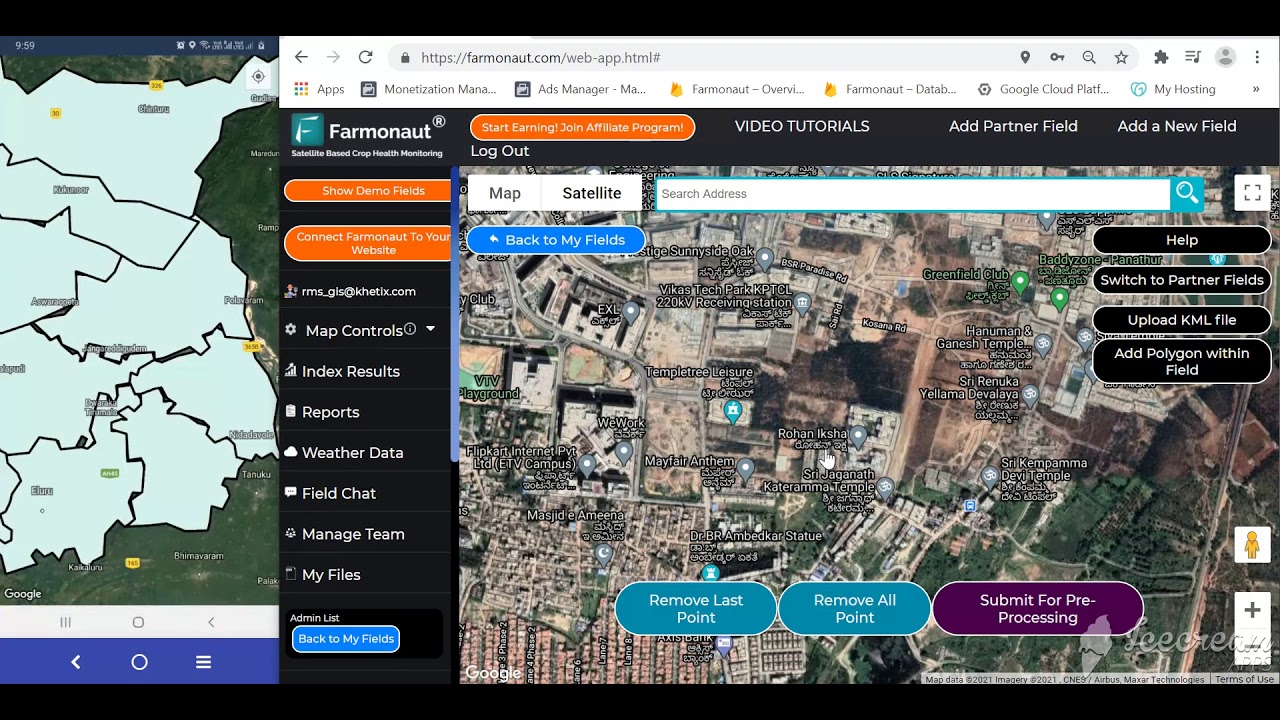
At Farmonaut, we recognize that integrating advanced technology with agricultural machinery is essential for productivity, sustainability, and resilience. Our Android, iOS, and Web App brings satellite-driven insights directly into the hands of agricultural professionals. We’ll highlight how our solutions support both old and modern tractors working on the farm:
- 🛰️ Satellite-Based Monitoring: We enable real-time monitoring of crop health, soil conditions, and field activities. Tractors working in the field can be efficiently deployed by analyzing NDVI (Normalized Difference Vegetation Index) maps and moisture level overlays, optimizing when and where operations occur.
- 🧠 AI Advisory (Jeevn): Our Jeevn AI System analyzes satellite and local sensor data for tailored, real-time advice—from ideal planting times to preventive actions against pests or adverse weather.
- 🔗 Blockchain Traceability: We empower farms to transparently record and trace every step of crop production, validated by robust satellite data. Learn more about product traceability benefits here.
- 🚛 Fleet & Resource Management: Our platform supports fleet tracking, predictive maintenance, and safety alerts for tractors and machinery, enhancing operational efficiency and reducing downtime. Explore fleet management solutions.
- 🌱 Carbon Footprinting: For organizations aiming to evaluate environmental impact, our tools quantify carbon emissions from tractor operations. Read about carbon footprinting in agriculture.
We also provide a feature-rich public API (see API documentation) enabling developers and businesses to integrate satellite-driven data and analytics directly into their own farm management platforms or applications—critical for supporting diverse farm tractors working across regions.




Our large-scale farm management solution supports efficient deployment of tractors working across multiple plots, integrates with agro-admin tools for oversight, and improves both traceability and resource optimization.

Unlock the Full Potential of Precision Agriculture
Enhance your farm’s efficiency with affordable satellite, AI, and blockchain solutions for tractors working in the field.


For crop loans and insurance validation, satellite monitoring is transforming risk assessment for tractors and farm operations. Read more about crop loans and insurance with Farmonaut.
📝 Five Key Takeaways for Tractors Working on the Farm in 2026
- 🚜 Tractors are no longer simple machines—they are sophisticated, data-driven assets driving global food production.
- 🌍 Modern and old tractors working on the farm continue to coexist, bridging innovation and tradition for sustainable, inclusive agricultural growth.
- 💡 Seven core innovations—from autonomous navigation to hydrogen fuel cells—are transforming productivity and environmental outcomes worldwide.
- 📲 Real-time monitoring, AI advice, and satellite data (like those from Farmonaut) enable precise, efficient farm management and cost control.
- ⚡ Sustainability is now core to tractor design, with electric and hybrid drives becoming industry standards by 2026.
Expert Insights, Pro Tips, and Key Callouts
No matter where you farm—in the developing world with classic tractors or in mechanized regions with fully autonomous fleets—the future of tractors working on the farm is defined by smart integration, sustainability, and resilience.
Tractor telematics can cut annual fuel bills by up to 20% on large farms.
Blockchain traceability gives every farm operation timestamped authenticity, reducing food fraud and increasing trust.
Without preventive maintenance and digital diagnostics, old tractors risk more breakdowns during peak harvest periods.
Hybrid and electric tractors enjoy supportive policy incentives and lower lifetime operational costs.
Integrating satellite analytics with tractor management systems can maximize crop yields and reduce input waste.
FAQ: Tractors Working on the Farm in 2026
1. What are the main tasks performed by tractors on a modern farm?
Tractors on a modern farm handle plowing, harrowing, planting, spraying, harvesting, as well as irrigation and produce transport. Their versatility is extended by quick-attach implements.
2. How are old tractors working on farms still relevant in 2026?
Old tractors are valued for their durability, mechanical simplicity, lower repair costs, and ability to be maintained with local skills. Many are retrofitted with basic telematics or emissions upgrades, allowing them to fulfill current needs cost-effectively.
3. How do autonomous tractors work?
Autonomous tractors use a combination of GPS, sensors, AI, and satellite connectivity to navigate fields and perform tasks with minimal or no human intervention, enabling 24/7 operations and improving safety.
4. What are the advantages of electric tractors over diesel models?
Electric tractors offer lower emissions, quieter operation, reduced fuel costs, and fewer moving parts (which means less maintenance). They are increasingly favored for sustainable agriculture.
5. Can satellite data improve tractor operations?
Absolutely. Satellite data can guide precise planting, monitor soil moisture, track machinery, and enable real-time decision-making for peak operational efficiency. Explore our API for more details.
6. How do tractors contribute to the sustainability of global food supply?
Tractors—with precision ag tech, efficient engines, and sustainable fuel options—reduce waste, lower GHG emissions, and ensure economical and environmentally sound food production at scale.
7. What mobile apps and digital tools support tractor management?
Farmonaut’s mobile and web platforms provide satellite monitoring, AI advisories, large scale farm management, and fleet management tools for efficient tractor operations and resource optimization.
Conclusion: Tractors, Tech, and a Sustainable Agricultural Future
Tractors working on the farm—whether equipped with cutting-edge AI or sustained through heritage and ingenuity—will remain the cornerstone of agriculture in 2026 and well beyond. By uniting modern innovations with time-tested practices, farmers worldwide can meet rising food demand in a sustainable, economically viable fashion.
As agricultural challenges intensify across the globe, the journey towards smart, connected, and environmentally responsible working tractors on a farm is gathering momentum. At Farmonaut, our mission is to support this journey—democratizing satellite-driven technology, improving yield, and ensuring long-term farm prosperity. From real-time monitoring to resource management, our affordable technologies help farmers, businesses, and governments optimize every operational aspect—keeping tractors working in the field for generations to come.

 MapMyCrop
 Cresol
 Atur Kuliner
 MDCV UK
 Zerella Group
 Etech Consulting Madagascar
 Vestlandsforsking
 Agritein
 Delicio
 WB Dev
 Sama Premium
 Prochecker
 Tres Valles
 LACOS Geoinformation
 Magrifly
 LatConnect 60
 Blickwinkel
 Agricultural Credit Policy Council
 Marei Nursery
 eKGIS
eKGIS Mostas Tech
