

Table of Contents
- Introduction: What Equipment Is Needed for Hay Farming?
- Trivia: Machinery Essentials
- Concise Overview: Equipment for Small to Medium Hay Operations
- 1. Mowing and Harvesting Equipment
- 2. Drying and Curing Essentials
- 3. Baling Tools and Storage Solutions
- 4. Hay Handling and Transport Gear
- 5. Tractors, Power, and Compatibility
- 6. Maintenance & Organic Farming Equipment
- 7. Practical Planning: Economics, Durability & Farm Suitability
- Essential Hay Farming Tools: Equipment Overview Table
- Farmonaut Technology: Enhancing Hay Farm Operations
- Trivia: Balers for Medium Farms
- Frequently Asked Questions
- Summary: Hay Farm Equipment Essentials
- Farmonaut Subscription Options
- Free Tools, Downloads & More
What Equipment Is Needed for Hay Farming: Top Tools
“A typical small hay farm uses at least 4 main machines: mower, rake, baler, and tractor for efficiency.”
Welcome to our in-depth guide exploring what equipment is needed for hay farming. For farmers producing hay for cattle, horses, or sheep—whether your operation is small, medium, organic, or conventional—the right hay farming equipment determines efficiency, forage quality, and long-term success.
In this comprehensive resource, we’ll detail every piece of equipment from mowers and rakes to balers and storage solutions, highlight organic and small-farm practices, and offer actionable advice on durability, maintenance, and economic considerations. Expect clear definitions, visual guides, functional comparisons, and pro tips—everything required for choosing and using the right tools on your fields!
Efficient hay farming is built on a foundation of reliable, multi-use equipment tailored to your field size, climate, and operational goals—balancing cost, quality, and manpower.
Concise Overview: Hay Farming Equipment Essentials
Hay farming relies on a core set of durable machines for harvesting, processing, and storing quality forage efficiently across varied farm sizes and climates. Understanding what equipment is needed for hay farming allows you to select the right tools for mowing, drying, baling, and storage, while adapting to local climates and organic requirements.
Those following prices and demand can read about the haying machinery market and the trends shaping it.
- ✔ Mower: Cuts standing grass for initial harvest
- ✔ Rake: Gathers and arranges hay for even drying
- ✔ Baler: Compresses and forms hay into square or round bales
- ✔ Storage solutions: Protects bales from moisture and spoilage
- ✔ Handling/Transport: Moves bales from fields to storage & market
- 📊 Data Insight: Farms prioritizing multi-use machines reduce overall investment and maximize operational uptime.
- ⚠ Risk: Inadequate maintenance of equipment can triple downtime during peak harvest season.
- 💡 Tip: Organic systems often benefit from equipment with lower soil compaction and minimal disturbance.
- 🛠 Essential: Keeping spare parts and basic repair tools on hand reduces seasonal delays.
- 🔄 Efficiency: PTO-powered implements streamline transitions between mowing, raking, and baling.



1. Mowing and Harvesting Equipment for Hay Farming
Harvesting is the most critical phase of hay farming. Selecting a sturdy mower designed for your field size and forage type is the first step towards ensuring clean cuts, timely harvests, and high yields.
Mower: Essential Tool for All Farms
- Sicklebar Mowers — Economical, lightweight, and ideal for small farms. They are easy to maintain and perfect for organic or minimal-disturbance systems.
- Rotary Mowers — Versatile, with adjustable heights, suited for medium-sized hay operations. They can handle uneven ground and varied forage densities.
- Disc Mowers (Mounted/Three-Point Hitch) — Preferred for larger fields and faster mowing. They may use higher horsepower but deliver cleaner cuts and greater efficiency on tough stems.
Choosing a mower with quick-change blades and easy-access maintenance points can dramatically reduce downtime during peak harvesting.
Mower Conditioners and Crimpers (Optional)
- Used to crush and bend forage stems, speeds drying by reducing wilt time. In damp climates or when quick turnaround is needed, a conditioner or crimper can reduce spoilage.
- Particularly valuable in regions with unpredictable weather patterns or heavy morning dew.
Hay Rakes: Gathering and Windrowing
- Wheel Rakes / Towed V-Rakes — Common for gathering mowed hay into rows called windrows, these are efficient for medium and larger operations but are available in portable models for small acreage.
- Organic farming equipment should prioritize models with adjustable ground pressure to minimize soil disturbance, straw breakage, and nutrient loss.
- Choose rakes that provide good alignment and evenly spaced windrows for maximized drying.
Windrow Turners (Optional, but Helpful for Humid/Slow-Drying Areas)
- Specific turner machines help expose hay to sun and air by flipping windrows, promoting even drying and reducing spoilage.
- Ideal for farms in regions with slower drying times or frequent rainfall.

Investing in multi-purpose equipment (e.g., mowers that support both direct cutting and conditioning) optimizes capital for small and medium hay operations.
2. Drying and Curing: Key Implements to Prevent Spoilage
Once the hay is cut, effective drying is critical to prevent spoilage and ensure high-nutrient bales. The right farming equipment for small farms promotes efficient drying and minimizes labor and time investment.
Tedders and Swath Rakes: Maximizing Dry Down
- Hay Tedders—Spread and gently flip hay for quicker drying. Available as tractor-mounted (two to four-wheel) for medium/larger operations, or as manual/PTO-driven tedders for smaller fields.
- By maintaining fluffy swaths, tedders improve air exposure and drying uniformity across windrows.
Moisture Meters and Dew Point Measurement
- Modern hay farms often use meters to monitor moisture levels before baling—helping to prevent baling at unsafe moisture and reduce spoilage. Invest in a reliable hay moisture meter and consider an optional dew point device if your region has high humidity.
Rushing to bale before hay is dry enough leads to serious losses from mold growth and nutrient breakdown. Always test for moisture!

Key Accessories
- 🔧 Bale Drying Racks—Stack bales for maximum airflow if barn or covered space is limited. This can be critical for small farms to prevent spoilage in humid climates.
- ⌛ Tarp Covers—Protect hay during outdoor drying or unexpected storms, minimizing moisture exposure.
- ✔ Essential: Reliable moisture testing tools
- ✔ Optional: Swath turners for uniform curing
- ✔ Efficient: PTO-driven tedders reduce manual labor
3. Baling and Storage: Keeping Hay Safe and Market-Ready
When hay is properly dried, baling compresses it into manageable units for storage and transport. The selection between square balers and round balers depends on your labor resources, equipment compatibility, and farm size.
Square vs Round Balers—Core Differences
- ✔ Square Balers — Classic choice for ease of manual handling, stacking, and feeding. Popular among smaller farms and those selling high-quality forage to equine or specialty markets.
- ✔ Round Balers — Efficient for large fields, high yields, or minimal labor. Produce compact bales that resist moisture when stored outside. Modern round balers can produce up to 100 bales/hour, drastically increasing productivity.
Bale Wrappers & Net Wraps
- For organic hay or high-moisture bales, wrappers and net wrap protect hay from weather exposure, pests, and mold. Choose breathable or UV-resistant wraps for best results.
Loading, Handling, and Bale Processors
- Bale Spears, Unrollers, and Bale Processors—Attach to a loader, tractor, or skid-steer. These tools streamline handling, feeding, and reduce risks to workers during peak seasons.
- For small farms, a bale spear attachment on a compact loader is cost-effective and increases safety.
Storage Facilities and Shelters
- Bale Sheds/Barns — Essential for reducing moisture exposure and preserving bale quality throughout the season.
- When indoor storage is unavailable, use raised pallets or drying racks, spacing bales for air circulation. Consider adding side openings for ventilation.

Stack bales in a crisscross pattern with 12–18″ clearance from barn walls and roof for improved ventilation and moisture prevention!
- ✔ Main Choice: Square vs Round Balers (labor vs efficiency)
- ✔ Critical: Covered or elevated storage
- ✔ Optional: Wrappers and net wraps
- ✔ Convenient: Loader attachments for fast handling
4. Handling and Transport for Hay Bales
Moving massive hay bales efficiently keeps labor and time in check. Modern heavy equipment for farming improves safety and reduces risk of spoilage during transport.
Loader Attachments: Bale Spears, Pallet Forks & More
- ✔ Enable quick lifting and stacking of round or square bales to field edges, storage, or transport trailers.
- ✔ Adaptable to tractors, skid-steers, or compact loaders.
Trailers, Wagons & Hay Carts
- ✔ Gravity wagons or tilt-bed trailers boost transport speed for medium and larger fields.
- ✔ For small farms, a flatbed hay wagon pulled by your tractor is usually enough for internal field transport.
5. Tractors, PTO Systems & Hydraulic Compatibility
Every piece of hay farming equipment relies on a central engine: your tractor. The trick is matching equipment to tractor horsepower (HP), PTO output, and hydraulic flow.
- ✔ Small/Organic Farming: A compact utility tractor (25–50 HP) fits most fields, rakes, tedders, and small square balers. Minimal soil compaction keeps your organic practices intact.
- ✔ Medium/Large Operations: Larger tractors (upwards of 80 HP) are needed for disc mowers, round balers, large wagons, and multi-bale loaders.
- ✔ PTO & Hydraulic Compatibility: Ensure shafts, extension arms, and hydraulic hoses are compatible with your implements for safe and smooth operation.

Spare Parts and Safety Equipment
- ✔ Spare blades, drive belts, tines—Keep these ready for fast in-field repairs.
- ✔ Fire extinguishers, first-aid kits, and PPE—Non-negotiable for safety in all farming operations.
6. Maintenance, Organic Practices & Tool Durability
Well-maintained equipment reduces downtime and protects your investment, whether you operate conventionally or follow organic farming equipment standards.
Regular Maintenance
- ✔ Clean and lubricate blades and moving parts after each use to prevent rust and wear.
- ✔ Replace belts, tines, and bearing as needed to avoid breakdowns mid-season.
Organic Farming & Soil Protection
- ✔ Choose implements that minimize soil compaction and preserve field structure—important for organic certification.
- ✔ Select tools with robust straw handling for residue management, and with durable coatings to resist corrosion from fields and moisture exposure.
Keep a dedicated spare-parts kit for each piece of hay equipment to reduce costly field downtime during peak harvesting and baling windows!
7. Economics & Planning: Practical Decisions for Hay Farmers
When evaluating what equipment is needed for hay farming, several key factors guide a successful, profitable operation:
- 📏 Farm Size & Field Structure: Match machinery to acreage and field accessibility. For small and medium farms, prioritize implements that offer multiple functions.
- 🌦 Climate & Forage Type: Wet areas may need conditioners, tedders, and extra drying equipment. Drier climates can prioritize rapid baling.
- 👨🌾 Labor Availability: The less manpower, the more you’ll benefit from PTO-driven or automated balers and handlers.
- 💸 Cost-to-Benefit: Assess whether to lease, share, or buy high-cost implements to manage seasonal demand spikes.
- 🔄 Durability & Ease of Maintenance: Invest in durable models with clear access points for routine maintenance.
Essential Hay Farming Tools: Equipment Overview Table
| Equipment Name | Purpose/Function | Estimated Cost (USD) | Suitable Farm Size (acres) | Organic/Conventional Use | Maintenance Tip |
|---|---|---|---|---|---|
| Mower (Sicklebar/Rotary/Disc) | Cuts standing forage for initial harvest | $1,500 – $18,000 | 5 – 150+ | Both (choose low-compaction wheels for organic) | Clean blades, lubricate drive after each use |
| Mower Conditioner/Crimper | Crushes stems, speeds hay drying | $3,000 – $25,000 | 20 – 150+ | Both | Check roller wear; adjust tension pre-season |
| Rake (Wheel/V-Rake) | Gathers and aligns hay into windrows | $1,000 – $9,000 | 5 – 150+ | Both (wheel rakes preferred for organic) | Grease axles; replace bent tines as needed |
| Tedder/Swath Turner | Spreads and flips hay for faster drying | $900 – $12,000 | 5 – 120 | Both (important in humid climates) | Tighten belts, check “fluffers” regularly |
| Moisture Meter | Measures hay moisture before baling | $70 – $600 | All farms | Both | Calibrate each season; store dry |
| Baler (Square/Round) | Compresses hay into bales for storage | $2,500 – $60,000 | 5 – 200+ | Both (manual balers for small/organic farms) | Clean pickup, check knotters after use |
| Bale Wrapper/Net Wrap | Protects bales from moisture/exposure | $2,000 – $14,000 | 20+ | Both (more frequent for organics) | Inspect wrap tension; store wrapper out of weather |
| Loader (with Bale Spear/Fork) | Handles and stacks bales | $6,000 – $45,000 | 10 – 200+ | Both | Check hydraulics, bleed lines, tighten bolts |
| Field Trailer/Wagon | Transports bales to shed/storage | $1,000 – $8,000 | 5 – 200+ | Both | Inspect wheels pre- and post-harvest |
| Storage Sheds/Barns | Protects and ventilates stored bales | $3,000 – $40,000 | 10 – 300+ | Both | Maintain ventilation; control rodents and leaks |
Farmonaut Technology: Enabling Efficient Hay Farming Operations
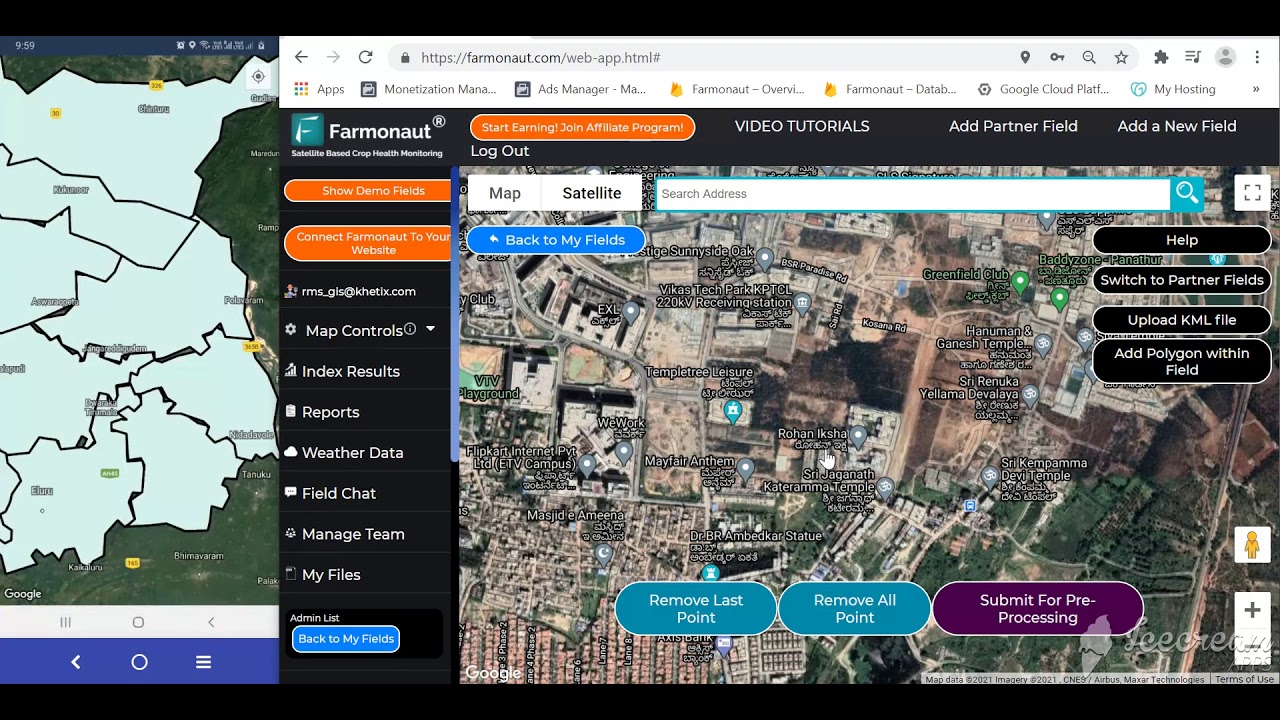
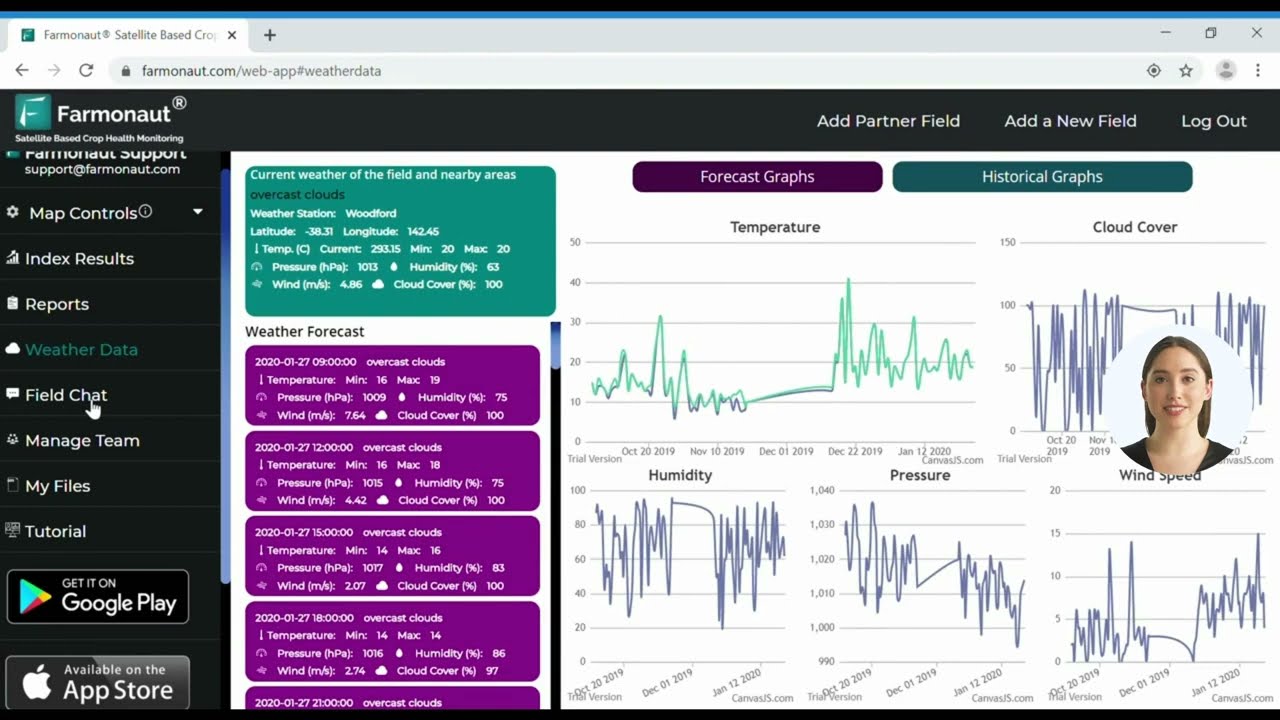
At Farmonaut, we empower hay farmers with affordable, satellite-driven insights to optimize each stage of the haymaking process—from monitoring field conditions and weather to tracking hay moisture and predicting yields.
- 🌱 Real-time field & moisture monitoring: Our platform, accessible via Android app, iOS app, and web portal, analyzes multispectral imagery for NDVI health, soil conditions, and weather forecasts—perfect for making day-by-day decisions during mowing, drying, and baling operations.
- 🤖 Jeevn AI advisory system: Delivers actionable, AI-based recommendations for hay crop management, supporting efficiency and sustainable organic farming practices.
- 🔄 Fleet and resource management: For medium hay farms using multiple machines, our fleet management solution (view details) helps optimize tractor and baler usage, reducing downtime and ensuring safety compliance across your operations.
- 🔗 Blockchain-based traceability: For organic hay certification and export, traceability solutions (see how) ensure transparency from field to market.
- 🌏 Environmental compliance: Carbon footprinting (learn more) empowers your farm to meet regulatory requirements and practice climate-smart hay production.
— Integrate satellite-based crop and moisture monitoring into your custom farm dashboard:
API Developer Documentation


“Modern balers can produce up to 100 hay bales per hour, streamlining medium-sized farm operations significantly.”
Frequently Asked Questions: Hay Farming Equipment
1. What equipment is needed for hay farming on a small farm?
For efficient hay farming, small operations typically need: a sturdy mower (sicklebar or rotary), a hay rake, a baler (manual or PTO-driven), a tractor, and a barn or covered storage area. Optional add-ons for better results include a tedder, hay moisture meter, and loader for bale handling.
2. How do I select equipment for organic hay farming?
Organic farming equipment should minimize soil disturbance, preserve microbial health, and reduce compaction. Choose lighter implements, adjustable rakes/tedders for minimal ground contact, and avoid chemically-coated machinery parts. Monitoring field health with satellite insights from Farmonaut helps refine organic haymaking.
3. Should I choose a square or round baler?
Square balers suit farms prioritizing manual handling, easy stacking, and high-quality forage—common in small or equestrian operations. Round balers deliver higher efficiency for large fields and require less labor, as bales are easier to move with machinery and withstand outdoor storage.
4. What are common mistakes when selecting hay farming equipment?
Overlooking equipment compatibility (tractor HP vs implement needs), underestimating maintenance costs, ignoring moisture testing, and failing to account for storage/ventilation all increase spoilage risks and reduce yields.
5. How does Farmonaut add value to hay farms?
Farmonaut offers satellite-based tools to monitor hay crop health, soil moisture, and field productivity—enabling timely decisions on mowing, baling, and resource allocation. Its AI advisory and resource management features help maximize hay yields and operational efficiency.
The best hay farming equipment is not always the biggest or most expensive—it’s what fits your fields, labor, and goals best.
Summary: Hay Farming Equipment Essentials for Small & Medium Operations
Understanding what equipment is needed for hay farming ensures successful harvests, minimal losses, and strong returns across small and medium hay operations. A typical toolkit includes a mower, hay rake, baler, and tractor—supported by tedders, loaders, and storage solutions for quality preservation. For organic and sustainable farming, select machines that minimize soil impact and support fast, even drying.
For all farmers, prioritizing maintenance, field compatibility, and economic choices—such as leasing heavy equipment for farming or using multipurpose implements—maximizes yields and operational resilience across each season.
At Farmonaut, we’re committed to providing real-time, satellite-powered tools to further enhance your hay farm operations—helping you make informed decisions that optimize productivity and promote sustainability, no matter the size or style of your farm.
Invest in maintained, compatible equipment and leverage modern monitoring technologies like Farmonaut to keep your hay fields yielding season after season.
Farmonaut Subscription Options
Ready to take your hay operation to the next level? Discover how Farmonaut’s affordable satellite subscriptions empower real-time monitoring, AI-driven insights, and efficient resource management for hay farmers of any size.
Free Tools, Downloads & More
- Farmonaut Web Platform — Monitor your hay fields from anywhere, anytime.
- Farmonaut Android App — Crop and hay field tracking on mobile.
- Farmonaut iOS App — Satellite-driven advisory for hay and forage management.
- API Access — Power your custom dashboards with real-time crop data.
- Developer Docs — Integrate weather, soil, and field insights seamlessly.
- Fleet Management — Streamline all your farm equipment operation and usage.
- Carbon Footprinting — Ensure your hay farm stays sustainable and compliant.
- Product Traceability — Create traceable organic hay for local and export markets.
- Satellite-based Crop Loan and Insurance Verification — Secure financing and reduce risk for your hay investments.
- Large Scale Farm Management — Ideal for estates with extensive hay and forage production.
- Crop Plantation & Forest Advisory — Optimize your hay and multi-crop land use.

 Godrej Agrovet
 Hayleys Agriculture
 Linx Agritech
 Adinet
 Save Your Soils
 GalaxEye Space
 Grandstream Algérie
 XOS Realty
 Geospatial Lab Africa
 Agro La Gándara
 HIPSAC
 ZOL Zimbabwe
 Juligerm
 AdBio
AdBio MISE Maroc
 NWNS
NWNS Red August Group
 Farm Inc
 WeMe Global
 Agrotoken
 Blue BearX
 Insignito
 DnCubed
 Indosistim Teknologi
 Liquify Digital
 CU Foods
 BeyondTech Global
 Rouge VC
 AgroRisk
 Oath Inc
 Esri North East Africa
 MDCV UK
 Etech Consulting Madagascar
 Vestlandsforsking
 WB Dev
 Sama Premium
 Tres Valles
 Blickwinkel
 Agricultural Credit Policy Council
 eKGIS
eKGIS Mostas Tech
 Andex
Andex Deluxe Conseil
 WICO
WICO Chimera Innovation
 SkyHarvest
 Teledarbas
 Exurbia Geospatial
 FieldZero
