

Automated ERT for Tailings Dams: 2025 Safety Trends
Summary:
Automated ERT for Tailings Dams: Revolutionizing Safety and Monitoring in Mining
Tailings dams, vital infrastructures in the mining industry, store large volumes of waste byproducts, often mixed with water and potentially hazardous materials left after the extraction of valuable minerals. Failures of these dams have historically caused environmental disasters, human injuries or fatalities, and significant economic damage. In 2025 and beyond, industry advances and regulatory pressure drive mining companies to adopt state-of-the-art safety monitoring. Automated Electrical Resistivity Tomography (ERT) leads this revolution—offering real-time, reliable dam monitoring, advanced early warning risk detection, and actionable geophysical analytics. In this comprehensive guide, we explore the evolving landscape of automated ERT for tailings dams, pivotal 2025 safety trends, operational benefits, technology advancements, challenges, and practical steps for adoption.
“Over 70% of new mining projects in 2025 will implement automated ERT systems for tailings dam monitoring.”
Why Automated ERT is Revolutionizing Tailings Dam Safety in 2025
Mining has always faced the twin challenges of efficiency and safety. With tailings dams—massive earth structures designed to store waste materials left after the extraction of valuable minerals—the stakes are especially high. These dams often contain large volumes of fine tailings, mixed with water, creating potentially hazardous zones prone to changes in moisture and stability.
A dam failure can result in catastrophic disasters: environmental devastation, loss of lives, and severe economic consequences. In 2025, global regulations, public expectations, and operational demands are higher than ever—putting risk mitigation and early warning systems at the core of sustainable mining practices.
- Growing need for real-time detection: Manual inspections and infrequent traditional surveys are simply not enough to prevent failures or detect risks early.
- Regulation pressures: New governmental mandates require regular and transparent tailings dam safety reporting—preferably automated and cloud-connected.
- Technological innovation: Automated ERT for tailings dams is the game-changer, using geophysical insights, AI-driven analytics, and continuous data feeds to transform dam monitoring.
- Sustainability focus: The industry is prioritizing long-term environmental stewardship, ecosystem protection, and social responsibility—where smarter dam management is critical.
Enterprising mining operators in 2025 and beyond increasingly deploy automated ERT (Electrical Resistivity Tomography) systems to future-proof tailings dam safety, compliance, and efficiency.
ERT for Tailings Dams – How Electrical Resistivity Tomography Works
At its core, Electrical Resistivity Tomography (ERT) is a geophysical imaging technique used to map subsurface distribution of electrical resistivity. Because different materials—such as saturated tailings, compacted soils, and bedrock—have distinct resistivity signatures, ERT provides a dynamic, non-intrusive snapshot into the internal condition of earth structures like tailings dams.
- Key concept: Electrical resistivity is a material’s resistance to electrical current flow. Higher resistivity generally means drier, less conductive material; lower resistivity suggests increased water content or developing seepage paths.
- Imaging process: Arrays of electrodes are embedded along and within the dam structure. Small, controlled currents are injected and voltages measured. An advanced tomography algorithm reconstructs the subsurface resistivity profile.
- What does ERT reveal? It detects variations in moisture content, seepage flows, internal erosion zones, and saturation levels—critical for assessing stability and detecting early signs of distress.
Traditionally, ERT surveys involved:
- Manual deployment of portable electrodes,
- Periodic field visits and data gathering,
- Offline processing of collected information,
- Limited snapshot frequency and delayed risk detection.
With substantial advances by 2025, automated ERT now enables continuous, high-resolution, real-time monitoring of tailings dams—making it an industry mainstay for risk management.

Impact of Automated ERT for Tailings Dams: Benefits and Innovations
By 2025, the integration of automation in ERT systems has transformed tailings dam monitoring from labor-intensive, periodic snapshots to always-on digital guardians. Let’s delve into how automated ERT for tailings dams delivers powerful, measurable safety and operational benefits:
1. Real-Time Monitoring and Early Warning Capabilities
- Continuous data collection: Permanent arrays of electrodes are installed both within the tailings and around the dam structure, connected to programmable resistivity meters operating 24/7.
- Immediate insight into change: Real-time data on moisture, seepage, and internal zones allows operators to instantly detect abnormal patterns—like sudden increases in moisture levels or the development of new seepage paths—which can signal developing failures or risks far in advance.
- Automated alerts driven by AI/ML: Sophisticated algorithms trained to recognize critical resistivity changes can automatically alert safety teams, triggering fast inspection, intervention, or evacuation as warranted.
2. Superior Spatial and Temporal Resolution
- Automated ERT provides high-resolution, time-lapse imaging that captures rapid internal changes during events like storms or seismic activity.
- Higher frequency vs. manual surveys: Instead of quarterly or monthly manual data snapshots, systems conduct measurements multiple times per day—or even hour—offering a living map of dam health and structure.
3. Lower Human Risk and Operational Costs
- Enhanced safety: Automated installations reduce the need for personnel entry into potentially hazardous zones—helping avoid accidents that can occur during manual data collection.
- Cost-effective, scalable management: By minimizing field visits and streamlining monitoring, automation enhances workforce efficiency and allows monitoring of larger or geographically dispersed mining sites with smaller teams.
4. Seamless Integration with Other Sensors and Data Sources
- Modern automated ERT can be networked with piezometers (measuring pore pressure), inclinometers (tracking structural movement), and satellite remote sensing feeds (for ground movement, vegetation stress, etc.), giving stakeholders a holistic, multi-parameter perspective on dam health and environmental risks.

5. Advanced Predictive Analytics
- Continuous data streams analyzed by AI models unlock predictive maintenance—flagging developing risks before they become emergencies, enabling proactive repairs and budget planning.
- This data-driven approach supports compliance and transparent reporting for community and regulatory trust.
“Automated ERT systems reduce potential dam failure risks by up to 60% through advanced real-time geophysical analytics.”
Key Automated ERT Technology Advances Shaping 2025
The adoption of automated ERT for tailings dams in 2025 is propelled by critical breakthroughs and industry trends:
- Miniaturized permanent sensors: Longer-lasting, robust electrodes—less maintenance, greater installation flexibility.
- Wireless sensor arrays: Networked wireless communication removes the challenge of running extensive cabling—key for remote, sprawling dam sites.
- AI-driven algorithms: Modern data analytics sift through terabytes of resistivity records in real time, recognizing patterns humans might miss and adjusting monitoring intervals based on risk levels.
- Cloud-based data management: Secure, scalable cloud infrastructure centralizes monitoring across many sites, complies with international security protocols, and supports global management teams.
Farmonaut’s fleet management tools enhance logistics and operations with satellite-linked vehicle and machinery analytics—integral to site resource optimization. - Sustainable, energy-efficient systems: Solar-powered or energy-harvesting modules enable continuous monitoring, even in remote areas lacking power infrastructure.

Regulatory Momentum in 2025
- Authorities in major mining regions are now recommending or requiring automated ERT as part of comprehensive tailings dam safety frameworks—further accelerating adoption.
- Automated data acquisition and reporting meet stringent transparency and safety standards across North America, Australia, South America, Central Asia, and Africa.
Comparative Benefits Table: Automated ERT vs. Traditional Monitoring
A direct comparison underscores how automated ERT is revolutionizing mining safety, risk detection, and tailings dam management:
| Monitoring Method | Response Time | Risk Detection Rate (est. %) | Data Collection Frequency | Predictive Analytics Capability | Maintenance Requirement | Estimated Incident Reduction (%) |
|---|---|---|---|---|---|---|
| Automated ERT | Minutes (Real-time) | 90-97% | Continuous, Real-time | Yes | Low | Up to 60% |
| Traditional Methods | Hours to Days | 50-65% | Periodic (manual surveys) | No | High | 15-25% |
Conclusion: The shift from periodic, manual surveys to integrated, automated ERT systems marks a fundamental leap in dam safety, predictive risk detection, and operational efficiency.

Implementation and Best Practices for Automated ERT in Mining
Adopting automated ERT for tailings dams demands strategic planning and adherence to best practices:
-
Assessment & Planning
- Survey dam geometry, history, and mining context to identify critical zones for sensor placement.
- Work with geotechnical experts to calibrate ERT algorithms for local tailings composition and expected changes.
-
System Design
- Install permanent electrode arrays within, beneath, and around key structures—especially along known seepage pathways and potential failure zones.
- Use programmable resistivity meters capable of remote configuration and rapid, high-resolution scanning.
- Integrate power supply solutions (solar, battery) and wireless or fiber-optic communication as suited to site remoteness.
-
Data Integration & Analytics
- Feed ERT and other sensor data to cloud platforms for unified monitoring and advanced analytics.
- Develop AI models to learn baseline resistivity signatures and provide anomaly detection with minimal false alarms.
-
Choose platforms with robust reporting, role-based alerts, and API integrations.
Example: Our blockchain-based traceability module ensures transparent record-keeping and safety record validation for audit and compliance.
-
Operations & Training
- Establish monitoring routines—review live dashboards, schedule AI-driven reports, and conduct regular staff training on protocols in case of anomalies.
-
Integrate with broader resource and fleet management tools.
Tip: Our large-scale management solutions optimize allocation and real-time status tracking for equipment, vehicles, and personnel across mining and infrastructure operations.
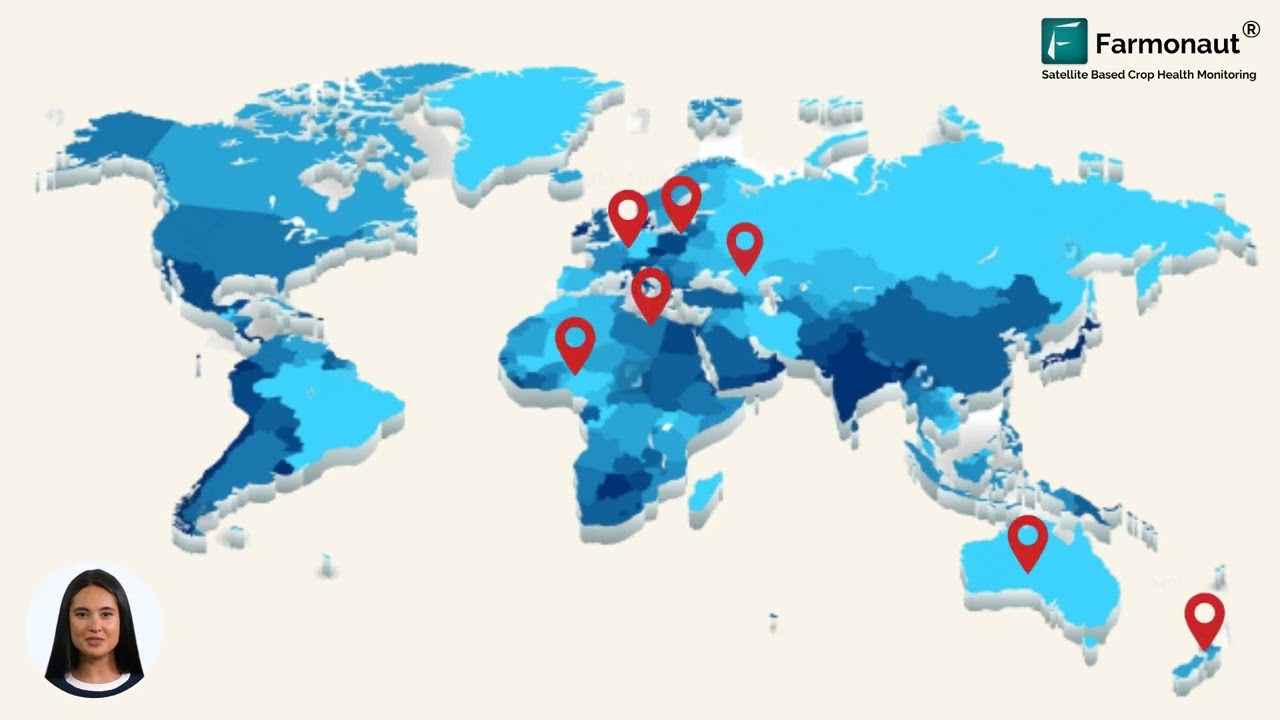

How Farmonaut Supports Automated ERT and Mining Safety
At Farmonaut, we empower mining operators, governments, and businesses worldwide to capitalize on the latest innovations in automated ERT for tailings dams and geospatial monitoring. Our mission is to deliver cost-effective, advanced satellite-based solutions for sustainable, safe, and efficient mining operations in 2025 and beyond.
-
End-to-end data integration: Our platform streamlines inputs from in-field ERT sensors, piezometers, satellite feeds, and other IoT devices into unified dashboards accessible via Web, Android, or iOS apps.



- Customizable dashboards & remote analytics: Unlock advanced visualization tools, set up AI-driven risk alerts, and always stay ahead with predictive analytics tailored for tailings dam and mining safety needs.
- APIs for developers: Whether you’re integrating ERT feeds, climate forecasting, or satellite maps, leverage our robust API and developer documentation for custom business intelligence or compliance reporting tools.
- Environmental impact tracking: Meet global sustainability standards by monitoring emissions and resource footprints through modules like carbon footprinting and environmental advisory—integral to responsible mining in 2025.
- Blockchain-based traceability for mining: Increase transparency and auditability all along your supply chain with Farmonaut traceability solutions—ensuring regulatory compliance and consumer trust.
- Subscription and scalability: Our flexible SaaS model allows mining operators of any size to start small and scale up as needed—making next-gen ERT analytics accessible and affordable.
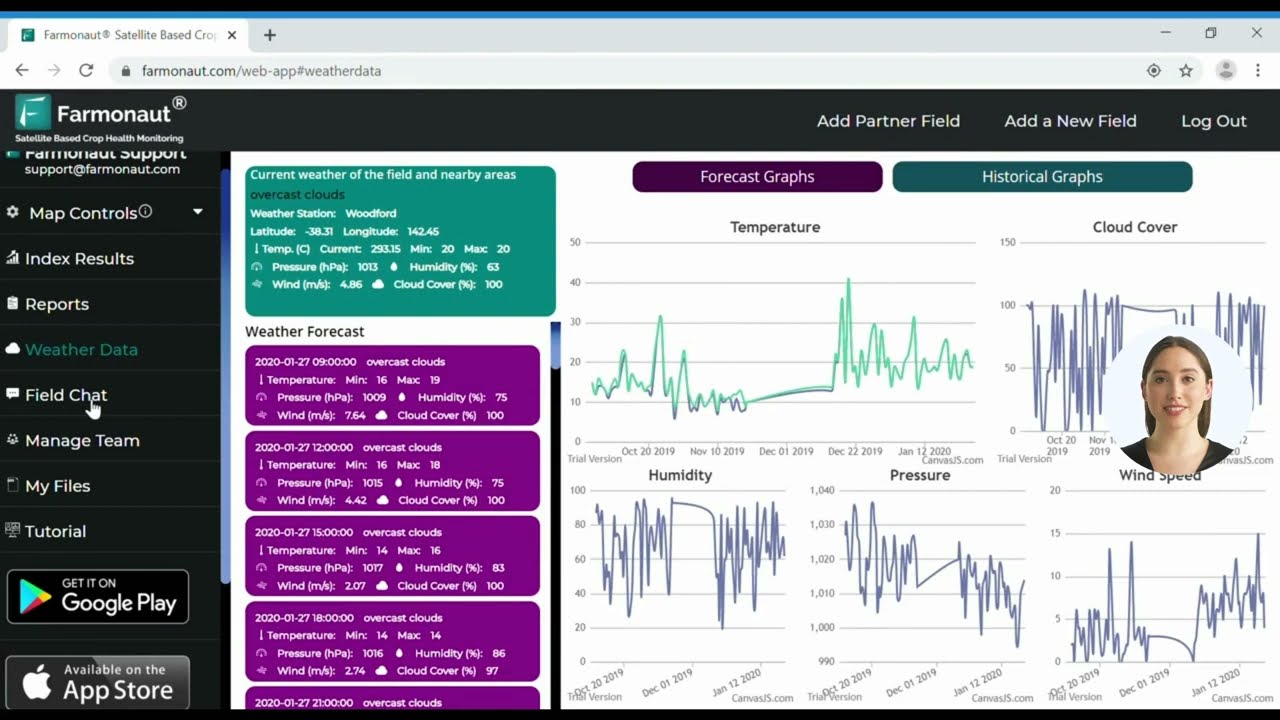
Essential Video Resources: Mining Technology in 2025
-
Rare Earth Boom 2025 ? AI, Satellites & Metagenomics Redefine Canadian Critical Minerals
Watch Now -
Satellite Mineral Exploration 2025 | AI Soil Geochemistry Uncover Copper & Gold in British Columbia!
Watch Now -
Arizona Copper Boom 2025 ? AI Drones, Hyperspectral & ESG Tech Triple Porphyry Finds
Watch Now -
1.5 M-oz Gold Find 2025 ? Diamond Drilling, AI Satellite Mapping & ESG Mining in Oko, Guyana
Watch Now -
Farmonaut Satellite Monitoring Whitelabel Solutions
Watch Now -
Farmonaut For Admins Tutorial Video
Watch Now -
Farmonaut Web app | Satellite Based Crop monitoring
Watch Now -
Farmonaut Large Scale Field Mapping & Satellite Based Farm Monitoring | How To Get Started
Watch Now
Addressing Challenges in Automated ERT for Tailings Dams
Despite the remarkable promise of automated ERT for tailings dams, specific challenges must be managed for sustainable, reliable deployment:
- Installation costs: Upfront investment for permanent electrodes, robust meters, and communication systems can be significant—especially for extensive or legion remote locations. Modular deployments and cost-effective SaaS models (like Farmonaut offers) help spread and manage budgeting.
- Power supply in remote sites: Some mining dams are off-grid. Solar panels, battery packs, and energy-harvesting technology are increasingly feasible, but require site-specific planning.
- Data management complexities: Automated ERT generates very large volumes of geophysical and environmental data. Efficient analytics and cloud platforms are required to distinguish meaningful signals from noise and manage alert fatigue.
- Interpreting in heterogeneous tailings: Tailings materials can vary considerably in composition and moisture sensitivity, sometimes resulting in ambiguous resistivity readings. Continuous AI training and sensor calibration are essential.
- Regulatory alignment: As governments recognize the value of automated monitoring, new rules often necessitate periodic technology upgrades. Engaging early with robust, upgradable systems ensures ongoing compliance.
Ongoing research continues to enhance sensor robustness, optimize energy efficiency, and streamline automated analytics—ensuring that automated ERT for tailings dams remains effective far into the future.
Get Started with Farmonaut Satellite Technology
Implement world-class automated ERT and satellite-driven mining safety solutions in your organization. Our pricing is transparent and scales with your business.
Future Prospects for ERT, Mining Safety, and Environmental Stewardship
- Industry-wide digitization: Automated ERT is a key pillar in the digitization of mining operations—which will only accelerate as AI, machine learning, and IoT become more deeply intertwined with operational and resource management.
- Regulatory normalization: Expect more jurisdictions to adopt automated, real-time monitoring for tailings dams as standard—the benefits to safety, transparency, and environmental protection are too significant to ignore.
- Integration with satellite and drone monitoring: Cross-referencing ERT data with satellite-derived imagery, terrain models, and climate models (available from platforms like Farmonaut) builds a holistic risk detection ecosystem.
- Sustainable practices: Automated ERT, when paired with carbon monitoring and resource traceability tools, supports not only operational safety, but long-term environmental responsibility.
-
Data-driven financing and insurance: The shift to real-time, trustworthy, historical performance data supports better access to crop loans and insurance for operators.
Explore satellite-based loan and insurance verification for mining and agri-infrastructure.
Frequently Asked Questions (FAQ)
Automated ERT (Electrical Resistivity Tomography) involves the permanent installation of sensor arrays within and around a tailings dam to provide continuous, real-time geophysical monitoring of subsurface conditions. It integrates advanced resistivity measurement, data analytics, and automated alerts to detect risks early and enhance dam safety.
Automated ERT provides real-time, high-resolution monitoring—enabling immediate detection of moisture changes, seepage, and internal erosion. Manual surveys are less frequent and may miss rapidly developing issues, increasing the risk of catastrophic failures. Automated systems also lower human exposure to potentially hazardous sites and allow predictive maintenance.
ERT detects rising moisture content, forming seepage zones, newly developing internal erosion, increased saturation levels, and other subsurface changes indicative of declining dam integrity.
Yes. With the evolution of sensor miniaturization and SaaS-based data platforms, automated ERT is accessible and scalable for all mine sizes. Flexible subscription models like ours at Farmonaut ensure that smaller operators can implement state-of-the-art monitoring within budget.
Absolutely. Automated ERT can connect with satellite imagery, piezometers, inclinometers, and environmental sensors for a comprehensive monitoring and early-warning ecosystem.
We offer unified dashboards integrating ERT, satellite, and other sensor data; predictive analytics; blockchain traceability; environmental impact tools; API access; and scalable plans to fit any mining operation’s needs for real-time, reliable dam monitoring and compliance management.
Explore our web and mobile platforms, review pricing above, and contact our team for tailored deployment and onboarding.
Conclusion: Automated ERT—A 2025 Cornerstone for Mining Safety and Sustainability
The automated ERT for tailings dams revolution is here. As the mining sector stands on the cusp of a new era of safety, compliance, and environmental stewardship, ERT and advanced geophysical analytics provide operators with the tools to protect their communities, assets, and legacy.
- Automated, real-time monitoring outclasses periodic manual methods for detecting, managing, and mitigating failure risks.
- Advanced AI-powered analytics reduce downtime, lower costs, and save lives by delivering actionable early warnings.
- Farmonaut makes world-class satellite and ERT data solutions accessible and affordable—for everyone, everywhere.
Invest in the safety, sustainability, and operational excellence of your mining and tailings dam projects in 2025 and beyond—leverage the proven advantages of automated ERT and partner with technology leaders to stay ahead in a dynamic industry.

 GemSprout Metals Limited
 Qader Group
 Ileys General Trading
 SG Gold Mining LLC
 VRV Global Pte Ltd
 Omsri International FZE
 G.I.T.T.
 Jaunita Erss Ltd
 Almosi SARL
 SRK Consulting
 Berks Gold Limited
 Mwerezi Minerals Company Limited
 Mining SARL
 SenGold Invest SAS
 Sean Mining Limited
 NTS Group (Pty) Ltd
 Mine4Africa
 Lithspo Minerals Limited
