

Bauxite Alumina and Aluminum Processing Upgrades 2025: Technology Advancements & Sustainability Milestones
“By 2025, advanced upgrades are expected to boost global aluminum processing efficiency by over 15%.”
“Over 60% of bauxite alumina facilities will adopt smart automation technologies by 2025.”
Industry Overview: The Importance of Bauxite Alumina and Aluminum Processing Upgrades in 2025
The bauxite alumina and aluminum processing upgrades of 2025 are revolutionizing the global metals industry. These advancements are not only making production more efficient but are also supporting sustainability, reducing environmental impact, and offering significant benefits to infrastructure and defense sectors worldwide. The confluence of technological innovation, rising global demand for lightweight materials, and increasingly stringent environmental and climate regulations have reshaped methodologies throughout the bauxite-to-aluminum supply chain.
To stay ahead, industries are rapidly adopting AI-powered systems, autonomous machinery, and real-time monitoring. The result is an enhanced resource recovery, minimized ecological disturbance, and a reduction in energy consumption and carbon emissions. Additionally, these upgrades ensure a continuous supply of high-quality aluminum products, critical for the evolving needs of infrastructure, transportation, and defense markets.
Below, we explore the most significant upgrades and innovations shaping the global bauxite alumina and aluminum processing landscape in 2025 and beyond.

Bauxite Mining Upgrades: Accelerating Efficiency & Sustainability
Bauxite remains the primary ore for all aluminum production, making upgrades in its mining methods critical for the global industry value chain. The drive for efficiency, sustainability, and reduced environmental impact is leading to the adoption of advanced autonomous machinery, precision-driven techniques for resource extraction, and innovative reclamation practices.
Key Technologies in Bauxite Mining (2025)
- Autonomous Machinery Integration: Automated drilling and hauling equipment use AI and IoT sensors to optimize ore recovery rates and minimize waste and land disturbance.
- Real-time Monitoring Systems: Continuous monitoring powered by satellite and IoT-based networks, providing insights into extraction rates, environmental impact, and operational safety.
- Precision Extraction Techniques: Geologically guided mining, using AI-driven data analytics and satellite mapping to target high-grade bauxite deposits, reduce unnecessary land disruption, and improve overall resource efficiency.
Reducing Environmental Impact and Supporting Ecosystem Recovery
- Introduction of standardized reclamation and land rehabilitation practices: Immediate post-mining efforts using native plant species for reforestation and advanced soil stabilization techniques to support biodiversity and restore mining sites.
- Application of satellite-based ecological monitoring: This allows the ongoing evaluation of reclamation success, ensuring long-term environmental recovery and providing compliance data for regulatory authorities.

By 2025, over 60% of bauxite alumina facilities are set to adopt these smart automation technologies, boosting productivity and reducing carbon footprints across the industry. These upgrades are particularly critical for resource-rich regions in Australia, Brazil, and Guinea, which supply the bulk of global bauxite.
Alumina Refining Innovations: Transforming the Bayer Process
A crucial link in the bauxite alumina and aluminum processing upgrades chain, alumina refining converts bauxite into alumina (aluminum oxide) via the time-honored Bayer process. In 2025, worldwide refineries are undergoing transformational shifts, driven by modernization, new energy solutions, and advanced waste management systems.
Process Upgrades in Alumina Refining
- Advanced Heat Exchangers and Enhanced Digestion Processes: State-of-the-art exchangers recover more heat from each cycle, enabling up to 15% reduced energy consumption compared to traditional methods. Improved digestion and crystallization control further enhance material yields and product quality.
- Alternative Energy Sources: The adoption of solar, wind, and waste heat recovery means a significant reduction in greenhouse gas emissions, bringing operations in line with global climate targets.
- Real-time Process Optimization: IoT sensors and AI-driven analytics continuously optimize reagent dosage, reactant temperatures, and separation processes, improving resource utilization and reducing waste.

Red Mud Management and the Circular Economy
- Red Mud Treatment: Innovative treatments convert highly alkaline red mud waste into neutralized, non-toxic by-products. Re-engineered chemical processes enable its beneficial use in construction materials (cement and bricks), dramatically reducing environmental hazards.
- Circular Resource Flows: Alumina refineries are embedding circular economy principles by continually seeking new value streams from by-products and minimizing primary resource demands.

These upgrades are not simply about compliance—they reshape global refining methodologies, significantly limiting environmental impact while delivering higher yields and consistent product quality.
Aluminum Smelting & Processing Upgrades
In 2025, smelting and downstream processing are entering a new era, defined by the push for low-carbon production, enhanced product quality, and highly adaptive manufacturing systems for applications in infrastructure, transportation, and defense.
Green Metallurgy & Inert Anodes
- Inert Anode Technology: New anodes, made from advanced ceramic composites, replace traditional carbon-based anodes. This upgrade can cut direct CO2 emissions by up to 90%, since inert anodes do not consume themselves during electrolysis, unlike carbon anodes. Plants see reduced maintenance and greater operating uptime.
- Smelter Process Automation: Smelters now employ AI-driven control systems to optimize electrolytic parameters, reduce unwanted reactions, and enhance product purity across every batch.

Advanced Rolling, Casting, and High-Strength Alloys
- Lightweight, High-Performance Alloys: Innovations in alloy formulation allow for thinner, stronger, and more corrosion-resistant products. This is critical for infrastructure (bridges, high-rise frameworks) and defense applications (vehicle armor, aerospace structures).
- Precision Casting and Rolling: Computerized casting lines and rolling mills employ predictive analytics to reduce defects and maximize strength-to-weight ratios in final products.
Process Optimization, Waste Reduction, & Product Traceability
These upgrades foster improved energy efficiency (often 10–20% reductions), reduced by-product waste, and an improved ability to track product provenance. The integration of blockchain traceability systems also ensures that product journeys align with responsible sourcing standards—important for end-users in infrastructure, transportation, and high-risk defense sectors.
“By 2025, advanced upgrades are expected to boost global aluminum processing efficiency by over 15%.”
“Over 60% of bauxite alumina facilities will adopt smart automation technologies by 2025.”
Sustainability and Circular Economy in the Aluminum Industry
Sustainability is now the organizing principle of aluminum production. Circular economy thinking is embedded throughout— with recycling, recovery, and reuse strategies spanning the value chain from mining to product end-of-life.
Key Sustainability Upgrades (2025 and beyond)
- Enhanced Aluminum Recycling: New sorting and separation technologies combined with high-efficiency re-melting, enable secondary aluminum production with up to 95% less energy consumption than primary. Material purity and traceability are preserved, ensuring high-grade, low-energy alloys for infrastructure and defense.
- Supply Chain Decarbonization: Integrating real-time carbon footprint monitoring provides measurable insight into emissions at each supply chain step. These tools enable industries to demonstrate climate alignment and respond to investor and regulatory scrutiny.
- Red Mud Valorization: The conversion of waste into valuable construction materials is expanding, turning disposal challenges into business opportunities and reducing landfills.

Sustainability upgrades are not only regulatory requirements—they are also prerequisites for accessing global export markets and for meeting rising consumer expectations in all sectors.
Impact on Infrastructure and Defense Sectors
Aluminum’s unique combination of light weight, strength, corrosion resistance, and recyclability marks it as a critical material for global infrastructure and defense. The 2025 upgrades in bauxite alumina and aluminum processing directly enable the following sectoral advances:
Benefits to Infrastructure
- Bridges & Transportation: Stronger, lightweight alloys allow for more durable, climate-adapted bridges, railways, and road systems.
- Energy Grids: Aluminum’s high conductivity and corrosion resistance support next-generation, resilient energy transmission lines and grid structures.
Benefits to Defense
- Armored Vehicles & Aircraft: Optimized alloys enhance mobility, efficiency, and survivability for defense platforms, while maintaining high strength-to-weight ratios.
- Lightweight Portable Structures: Developments in material design allow rapid deployment and improved logistics for field operations.
Rising Global Demand and Strategic Importance
Bauxite alumina and aluminum processing upgrades underpin the world’s strategic material reserves, enabling countries to meet rising defense, transportation, and infrastructure demands with greater speed, efficiency, and visibility.
Comparative Features & Estimated Impact Table: Bauxite Alumina and Aluminum Processing Upgrades 2025
| Upgrade / Technology | Estimated Efficiency Improvement (%) | Estimated Emissions Reduction (%) | Application Stage | Expected Industry Adoption (Year) |
|---|---|---|---|---|
| AI-Powered Drilling & Hauling Automation | 10-20 | 5-10 | Mining | 2025 |
| Precision Resource Extraction (AI+Satellite) | 12-18 | 7-12 | Mining | 2025 |
| Automated Quality Control & Ore Sorting | 10-15 | 3-8 | Mining/Refining | 2025-2026 |
| Advanced Heat Exchange in Bayer Process | 13-15 | 10-12 | Refining | 2025 |
| Alternative Energy (e.g., Solar-Waste Heat Recovery) | 11-16 | 15-22 | Refining/Smelting | 2025-2027 |
| Inert Anode Electrolysis | 8-12 | Up to 90 | Smelting | 2025 |
| Red Mud Neutralization & Reuse | Up to 10 | 20-30 | Refining | 2025-2026 |
| Automated Smelter Process Control (AI/IoT) | 11-18 | 12-20 | Smelting | 2025 |
| High-Efficiency Aluminum Alloy Casting | 15-20 | 8-13 | Processing | 2025-2027 |
| Closed-Loop Aluminum Recycling | Up to 95 vs. primary | Up to 90 vs. primary | Processing | 2025 |
| Blockchain-Based Traceability | 7-10 | 2-5 | Supply Chain | 2025-2026 |
Farmonaut Technology: Supporting Mining, Infrastructure, and Defense Operations
As the industry evolves, high-quality data, automation, and actionable insights are increasingly valuable. We at Farmonaut bring affordable and advanced satellite technology solutions that align closely with the bauxite alumina and aluminum processing upgrades of 2025, offering unique support for mining, infrastructure, and defense stakeholders worldwide.
- Satellite-Based Monitoring: Our satellite imagery and analysis platform delivers actionable insights for mining operations, infrastructure project monitoring, and land resource management, promoting safety, cost-efficiency, and ecological stewardship.
- AI-Based Advisory Systems: The Jeevn AI Advisory System provides real-time recommendations and operational support for resource optimization in mine planning and infrastructure oversight, increasing productivity and reducing wastage.
- Blockchain-Based Traceability: Our traceability solutions secure and authenticate the movement of materials across the supply chain, catering to growing global requirements for responsibly sourced aluminum and related products. Learn how blockchain traceability works for mining & metal supply chains.
- Fleet & Resource Management: Optimize logistics, usage, and maintenance of mining & infrastructure machinery using our satellite-integrated fleet management platform. This enhances on-site safety and resource utilization (see Farmonaut Fleet Management solutions).
- Environmental Impact Monitoring: Track and mitigate carbon footprint, dust, vegetation loss, and other environmental concerns at mining/refining/smelting sites in real time. Data-driven compliance enables sustainable operations. Get details on our carbon footprinting solutions here.
- Scalability & Accessibility: Our platform, accessible via web, Android, and iOS apps as well as robust API (API Developer Docs), works for individual operators through to governments and enterprises in the bauxite, alumina, and aluminum value chain.

For large-scale site and resource oversight across mining or forest plantation regions, our Large Scale Farm Management solution is invaluable to both industrial users and government agencies.
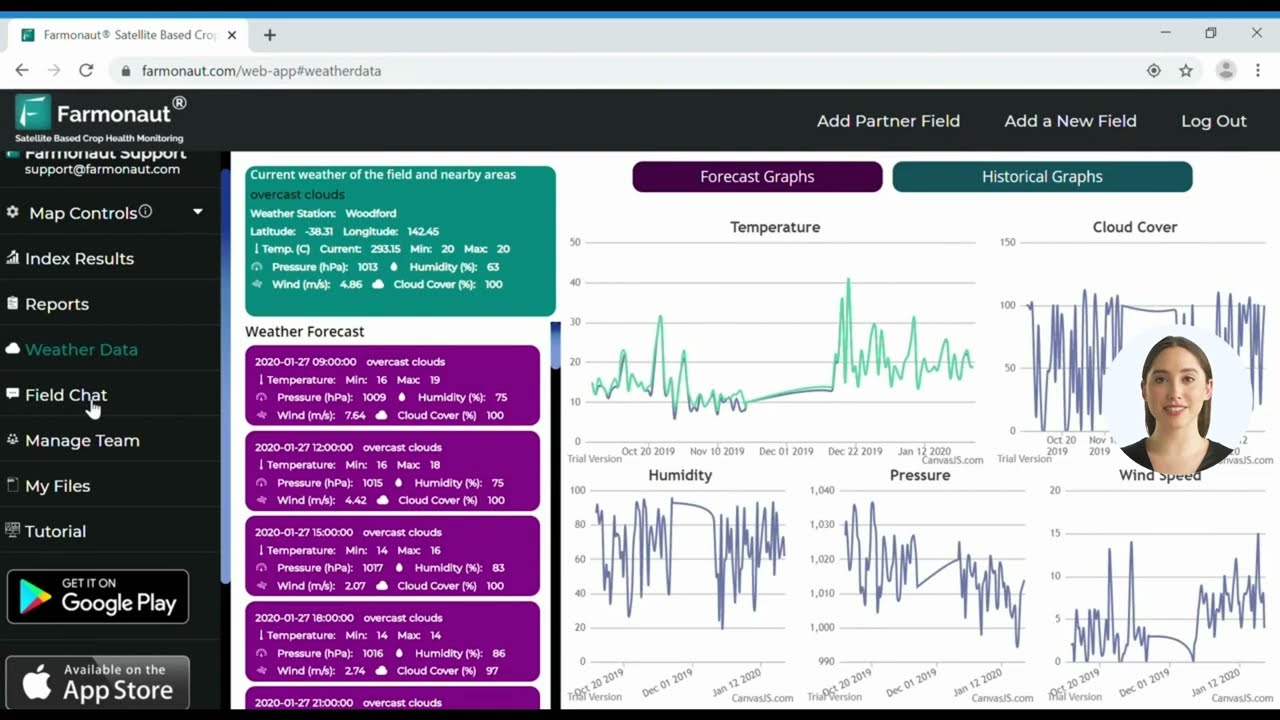
For mining, plantations, or forest recovery, the Crop Plantation & Forest Advisory service delivers in-depth monitoring, sustainability tracking, and compliance reporting.
We are dedicated to making satellite-driven insights accessible for the entire bauxite, alumina, and aluminum processing industry and its supply chain partners in 2025 and beyond.



Useful Links and Satellite Solutions for Bauxite Alumina and Aluminum Processing Upgrades
- Farmonaut Satellite Data API – Integrate our monitoring & analytics in your own digital mining/infrastructure/operations platforms.
- Farmonaut API Developer Documentation – Technical guidelines for seamless integration.
- Carbon Footprinting Solutions – Automatically track emissions and performance vs. global climate targets.
- Blockchain Product Traceability Platform – Connect every step in the metal supply chain for authenticity and compliance.
- Fleet Management Solutions – Optimize heavy equipment and logistics for mining/infrastructure.
- Large Scale Site Management System – Industrial-scale, satellite-powered management for mining zones and land recovery.
- Loan/Insurance Verification Platform – Facilitate financial access and fraud prevention using satellite-based verification.
For ongoing upgrades and industrial intelligence, these links are crucial for future-forward organizations engaged in bauxite and aluminum supply chains.
Frequently Asked Questions (FAQ): Bauxite Alumina and Aluminum Processing Upgrades 2025
-
Q: What are the key bauxite alumina and aluminum processing upgrades in 2025?
A: The most significant upgrades include the integration of AI-driven autonomous machinery in mining, precision geological mapping, advanced heat recycling in alumina refining, inert anode technology in smelting, enhanced recycling systems, and real-time monitoring and blockchain traceability along the supply chain. -
Q: How do these upgrades improve environmental sustainability?
A: They bring major reductions in energy consumption and direct CO2 emissions, minimize land and ecosystem disturbances, convert industrial waste into useful products, and maximize resource recovery throughout the aluminum lifecycle. -
Q: Why is inert anode technology considered transformative?
A: Inert anodes eliminate carbon anode consumption during electrolysis, drastically reducing smelting emissions—by up to 90% versus traditional methods—while improving operational reliability and product purity. -
Q: How do upgrades impact the infrastructure and defense sectors?
A: Upgrades enable the manufacture of stronger, lighter, more corrosion-resistant aluminum alloys essential for the next generation of infrastructure, transportation networks, energy grids, and advanced defense assets such as vehicles and aerospace parts. -
Q: What is the role of AI and satellite technology in this transition?
A: AI and satellite technology enable precision mining, real-time environmental monitoring, process optimization, and data-driven management, making operations more efficient, sustainable, and compliant with global standards. -
Q: How does Farmonaut support the bauxite alumina and aluminum processing industries?
A: Farmonaut offers affordable satellite-driven platforms for remote monitoring, advisory support (through AI), environmental impact tracking, blockchain traceability, and resource management, making it easier for businesses and governments to implement technical upgrades and sustainability practices.
Conclusion: The Future of Bauxite Alumina and Aluminum Processing Upgrades
The bauxite alumina and aluminum processing upgrades taking place in 2025 represent a pivotal transformation for the global metals, infrastructure, and defense sectors. Technological innovation—from AI-powered mining automation and resource mapping to low-carbon smelting and smart recycling—delivers greater efficiency, environmental stewardship, and product quality than ever before. These upgrades not only ensure industries can meet increasing worldwide demand, but that they do so in a manner aligned with strict sustainability and climate goals.
The impact of these changes is being felt across supply chains, from better land management at remote bauxite mines to real-time carbon tracking in urban infrastructure. As we move further into 2025 and beyond, it is crucial for industry stakeholders to leverage the latest technologies and data-driven solutions—like those offered by Farmonaut—to remain efficient, competitive, and sustainable in a rapidly evolving landscape.
Stay tuned as the aluminum industry continues to lead the way in advanced material production, responsible resource use, and climate-aligned innovation worldwide.

 Berks Gold Limited
 Mwerezi Minerals Company Limited
 Congo Mining Solutions
 Mining SARL
 SenGold Invest SAS
 Sania Corporation
 Sean Mining Limited
 NTS Group (Pty) Ltd
 Mine4Africa
 Lithspo Minerals Limited
 Tintina Mining Group
 Dalgety Minerals Pty Ltd
 Vortex Minerals Pty Ltd
 Faith At Work (Pty) Ltd
 Geotech Mining Solutions plc
 Vulcan International Limited
 Kidepo Associates
 GKY Mining
 Alkimy SARL
 Double A Trading
 GemSprout Metals Limited
 Qader Group
 Ileys General Trading
 SG Gold Mining LLC
 VRV Global Pte Ltd
 Omsri International FZE
 G.I.T.T.
 Jaunita Erss Ltd
