

“Global bauxite demand is projected to reach over 400 million metric tons by 2025, driving aluminum industry growth.”
Table of Contents
- Introduction: The Evolving Bauxite Market
- Properties of Bauxite: Foundations of Aluminum and Industry
- Bauxite Mining Problems in 2025: Environmental, Social, & Technical Challenges
- Bauxite Mines in USA: Strategic Context, Reserves, and Production Outlook
- 2025 Market Outlook: Trends, Bauxite Price 2025 and Global Forecasts
- Innovations, Sustainability, and Satellite Technology for Mining
- Outlook Comparison Table: 2024 vs. 2025 Bauxite Mining
- FAQ: Bauxite Mining Challenges & 2025 Insights
- Conclusion: Meeting the Bauxite Challenge in 2025 and Beyond
- Farmonaut: Satellite Solutions for Mining, Sustainability, & Resource Management
Bauxite Mining Problems, Properties & USA 2025 Forecasts
Bauxite mining plays a pivotal role in supporting the global supply of aluminum—the primary lightweight metal for sectors such as infrastructure, manufacturing, aerospace, automotive, appliances, and defense. Amid a landscape of escalating demand for aluminum, industry players in 2025 face significant bauxite mining problems: environmental concerns, complex social and geopolitical challenges, price volatility, and a strategic focus on sustainable growth.
This comprehensive guide unpacks bauxite’s properties, 2025 mining trends, USA context—including bauxite mines in USA—, global forecasts, bauxite price 2025 projections, and the environmental and market challenges that shape the future of this critical ore. It also examines innovative solutions—like satellite-driven mining insights—to help overcome the sector’s present crossroads and nurture a resilient and sustainable future.

Properties of Bauxite: Foundations of Aluminum and Industry
Understanding bauxite properties is the foundation for recognizing why it remains the primary ore for alumina and, by extension, aluminum production worldwide. The physical and chemical characteristics of bauxite—along with its economic viability and geographic composition—dictate everything, from mining and processing methods to pricing and strategic importance.
What is Bauxite?
- Primarily Consists: Hydrated aluminum oxides—notably gibbsite (Al(OH)3), boehmite (γ-AlO(OH)), and diaspore (α-AlO(OH)).
- Impurities: Silica, iron oxides (Fe2O3), titanium dioxide (TiO2), and other minerals that influence the refining process and cost.
- Alumina Content: Economically-mined bauxite typically contains 30-60% Al2O3. The rest comprises impurities.
- Physical Characteristics: Earthy texture, variable particle size, softness, variable color (pale or deep red, brown, yellow, or gray)—all impacting extraction and processing.
- Composition Varies by Region: Limits or enhances aluminum yield and dictates whether deposits are viable for mining at scale.
Why Bauxite Properties Matter for Strategic Industries
- Aerospace & Defense: High-purity alumina from bauxite is essential for lightweight, durable aircraft, vehicles, and weaponry. Consistent purity and particle size are crucial.
- Automotive & Lightweight Metals: Rising demand for electric vehicles (EVs) and fuel-efficient cars is driven by aluminum’s superior properties.
- Infrastructure: Large construction and public works rely on high-strength aluminum alloys, requiring bauxite of reliable composition and low silica content.

Key Takeaway: Bauxite Properties Influence Price and Processing Strategies
The nuanced composition—not just alumina content, but also impurities like silica and iron—directly affects refining costs, environmental impact, and for key markets like the United States, overall strategic value in critical applications.
Bauxite Mining Problems in 2025: Environmental, Social, & Technical Challenges
Although bauxite is indispensable for global aluminum supply chains, the sector faces prominent bauxite mining problems that are intensifying in 2025. These challenges—environmental impact, waste management, social resistance, rising costs, and supply chain fragilities—shape industry outlooks, especially in regions like the USA where supply security is a strategic priority.
Environmental Problems: Degradation, Waste, and Red Mud
- Open-pit Mining: The dominant extraction method, open-pit mining, disrupts land on a broad scale, destroys ecosystems, and leads to large-scale deforestation. This is a prime issue for biodiversity and soil stability in major producing countries.
- Red Mud (Bauxite Residue): A toxic byproduct generated during alumina refining, red mud contains hazardous oxides and can pollute water sources if not properly managed.
- Water Pollution: Both red mud leakage and runoff from tailings can contaminate local water tables and ecosystems. The rest of the mining site can also contribute to sedimentation problems downstream.
- Carbon Emissions and Energy Use: Bauxite refining is energy-intensive, adding CO2 and greenhouse gases to the atmosphere—an acute concern amid stricter emission mandates.
- Stricter Regulations: In 2025, stricter environmental rules are forcing companies to adopt sustainable practices, invest in improved waste management, land rehabilitation, and environmental monitoring. This increases operational costs.

Social and Geopolitical Factors in Bauxite Mining Problems
- Social Conflicts: Mining operations often intersect with indigenous lands, local agriculture, and sensitive habitats, bleeding into social issues of displacement and loss of livelihoods.
- Geopolitical Tensions: A handful of major producers—namely Australia, Guinea, China, Brazil—control global supply. Export restrictions or political unrest can quickly disrupt supply chains.
- Vulnerability of Importing Countries: The United States and European nations are increasingly aware of their supply security risk, especially in defense and infrastructure supply chains.
“U.S. bauxite prices may rise by 8% in 2025 due to supply constraints and environmental regulations.”
Technological Challenges: Processing, Carbon, and Costs
- Energy Consumption: The Bayer Process, still the global standard for alumina extraction, is energy- and heat-intensive. Reducing energy and carbon footprint is a major R&D priority.
- Processing Impurities: Bauxite with high silica creates scaling and increases caustic soda use, raising costs.
- Innovations: Industry advances in dry processing, AI-driven ore sorting, and carbon capture are gradually being implemented, but require significant capital and operational changes to scale.

Summary of Main Bauxite Mining Problems in 2025
- Large-scale environmental degradation from open-pit mining; persistent red mud and waste management headaches
- Social confrontations with local and indigenous groups
- Geopolitical risks from supply chain concentration in a few countries
- Rising carbon and energy costs; push for decarbonization and sustainable supply chains
- Pervasive need for cost control and technological innovation in refining and waste reuse
Sustainable Mining: Roadmap to Resiliency
The future of bauxite lies in sustainable mining practices—energy-efficient processing, robust environmental impact monitoring, innovative red mud utilization, stakeholder management, and supply chain diversification. Solutions such as carbon footprint monitoring, real-time environmental analytics, and land rehabilitation technologies are transforming how companies meet stricter 2025 regulations.
For mining operators, Farmonaut Carbon Footprinting enables accurate tracking and reduction of carbon emissions across bauxite operations, supporting sustainability and compliance with global environmental mandates.

Bauxite Mines in USA: Strategic Context, Reserves, and Production Outlook
The United States has a unique position in the bauxite and aluminum market. Once a significant producer, especially from the Arkansas region, US bauxite mines today are in sharp decline, reflecting resource depletion and the economic inaccessibility of lower-grade deposits.
Current State of Bauxite Mines in USA
- Historic Bauxite Region: Arkansas, notably near Bauxite, AR, supplied the majority of US bauxite until the late 20th century.
- Declining Domestic Production: Diminished reserves and high extraction costs have largely halted new large-scale bauxite mining operations.
- Reliance on Imports: By 2025, the USA is import-dependent for raw bauxite, sourcing mainly from Jamaica, Brazil, Guinea, and other countries.
- Strategic Concerns: High import reliance poses risks for infrastructure and defense—two sectors for which aluminum is mission-critical.
- Domestic Alternatives & Recycling: Exploration of alternative sources such as red mud tailings and increased aluminum recycling are rising trends to reduce dependency and risk.
Strategic Importance: Aluminum for US Defense and Infrastructure
- Aircraft, Vehicles, Weaponry: Secure and high-quality aluminum is critical for defense applications, aerospace manufacturing, and advanced infrastructure assets.
- Supply Chain Security: Any disruption—be it geopolitical events in supplier countries or export controls—can affect national defense and major infrastructure projects.
- Governmental Response: Policy measures to encourage aluminum recycling and evaluate domestic resources are central to US strategy in the bauxite sector.
Recycling and secondary sourcing not only reduce strategic risk but also lower energy use and minimize environmental impact compared to primary bauxite mining.
Explore how Farmonaut’s Product Traceability solutions bring transparency and authenticity to bauxite and aluminum supply chains in the USA and globally.
Bauxite Mines in Arkansas: From Industry Powerhouse to Legacy
- Legacy: Production from central Arkansas once supplied over 90% of US bauxite.
- Present: Very limited mining; sites are monitored for environmental reclamation and legacy contamination.

2025 Market Outlook: Trends, Bauxite Price 2025 and Global Forecasts
The future of the sector is being shaped by a complex interplay of global demand, supply chain shifts, environmental regulations, and the bauxite mining problems outlined thus far. For industry professionals and investors, tracking the bauxite price 2025 outlook and production forecasts is critical to strategic planning.
Key Bauxite Trends Shaping 2025
- Rising Demand: Projection—global bauxite consumption will exceed 400 million metric tons by 2025, keyed by surging aluminum requirements for infrastructure, green technology, vehicles, and aerospace.
- Shifting Supply Chains: Increased concentration of supply in Guinea and Australia, while some traditional producers face regulatory or geopolitical disruptions.
- Sustainable & ESG Mining: ESG (Environment, Social, Governance) performance is now core to bauxite mining company valuations and project approvals, especially in Europe, North America, and Asia-Pacific.
- Technological Evolution: The adoption of AI, drones, blockchain, satellite monitoring, and real-time data will be essential to maintaining competitive advantage and ensuring sustainable management.
- Recycling Surge: Aluminum recycling is an escalating trend, driven by both economics and policies to reduce carbon impact and material dependency.

Bauxite Price 2025: Forecasts & Influencing Factors
- Stable-to-Bullish Price Outlook: Price forecasts for 2025 suggest moderate growth, potentially 8% higher year-on-year in the USA. Key driver: supply constraints and new environmental compliance costs.
- Volatility Risks: Export curbs, weather events, or sudden regulatory shifts may cause temporary price spikes.
- Long-term Stabilization: Investments in sustainable mining, low-impact refining, and recycling are likely to help balance longer-term supply-demand and price fluctuations.
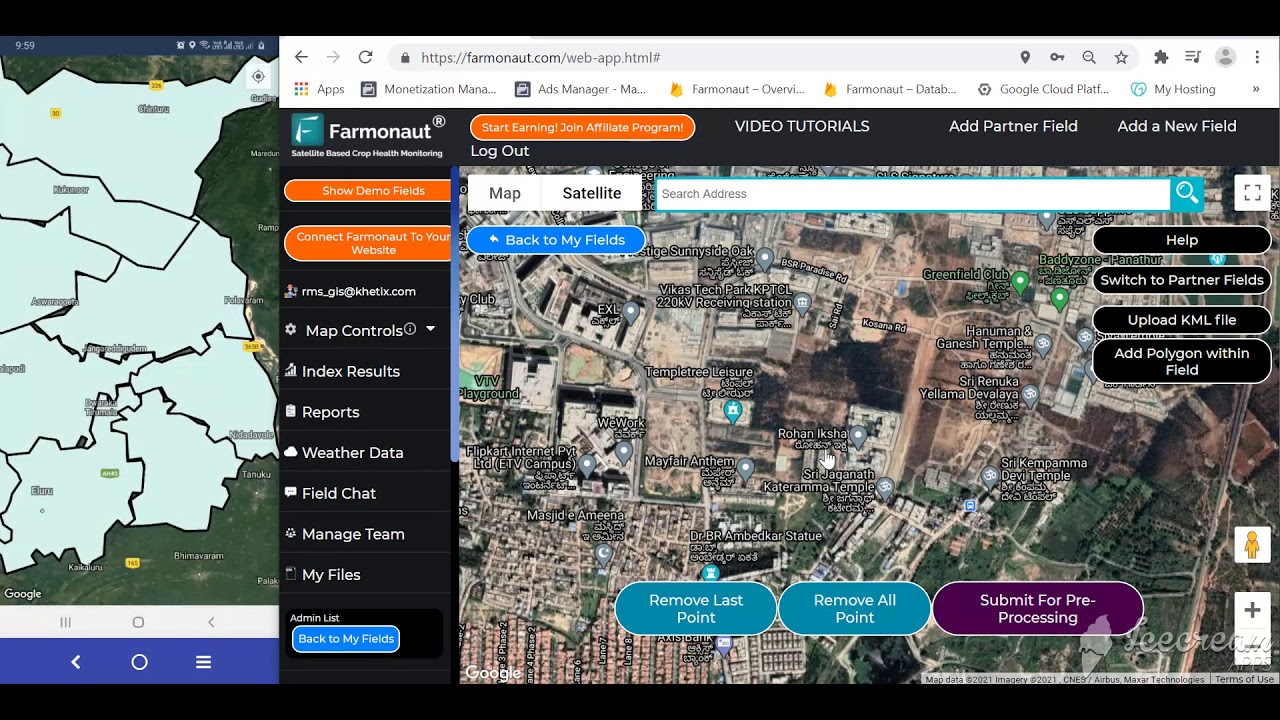



Experience near real-time satellite monitoring and analytics for mining, infrastructure, and environmental management via the Farmonaut app (available for Android and iOS), and API for seamless integration!
Outlook Comparison Table: 2024 vs 2025 Bauxite Mining
For quick decision-making, review our Outlook Comparison Table—contrasting 2024 data versus bauxite forecasts for 2025 in terms of global production, price, environmental impact, and supply regions.
Innovations, Sustainability, and Satellite Technology for Mining
The crossroads of bauxite mining problems and 2025 market trends is spurring a wave of innovation—from advanced recycling techniques to AI- and satellite-powered monitoring. Sustainability is no longer optional, but an operational imperative and market differentiator.
- Satellite Monitoring: The use of near real-time multispectral imagery allows for oversight of land disturbance, red mud containment, reclamation progress, and detection of illegal or high-impact operations.
- AI-Based Advisory: Customizable insights for fleet, resource planning, and efficient waste management are increasingly accessible through mobile and web-based solutions.
- Blockchain Traceability: From ore extraction to aluminum applications, blockchain ensures chain of custody, compliance and boosts investor and customer trust.
- Environmental Compliance: Automated impact tracking (including carbon, water use, and biodiversity) improves permitting outcomes and supports sustainable reporting.
- Fleet and Resource Management: Advanced satellite-driven platforms help mining businesses optimize field activity, reduce costs, and improve asset utilization.
Discover the benefits of centralized, digital fleet monitoring and logistics optimization for mining conversion projects with Farmonaut Fleet Management.
For those looking to fully integrate their data pipelines for mining or agricultural resource management, access Farmonaut’s
Satellite Data API
and developer resources here:
API Docs for Satellite & Weather Tracking
Farmonaut: Satellite Solutions for Mining, Sustainability, & Resource Management
As a global satellite technology provider, Farmonaut delivers real-time mining monitoring, advanced environmental traceability, AI-powered resource management, and blockchain-enabled supply chain analytics. Accessible via app or API, our platform empowers companies to monitor bauxite mining disturbances, optimize red mud tailings management, scale environmental compliance, and track carbon across mining and infrastructure.
Whether optimizing bauxite site planning, monitoring environmental impact in Arkansas, or digitally transforming your logistics—from small operations to government scale—Farmonaut’s modular and scalable tools fuel efficiency, lower costs, and drive sustainability for 2025 and beyond.
Start your journey to sustainable mining—learn more about Farmonaut’s Large Scale Field & Resource Management platform here
FAQ: Bauxite Mining Challenges & 2025 Insights
-
What are the main bauxite mining problems in 2025?
- Environmental degradation (land, water, biodiversity), red mud waste, and high energy use.
- Social resistance in mining regions and supply chain concentration in a few countries, raising geopolitical and export risk.
- Rising processing costs from managing impurities (especially silica) and stricter ESG compliance.
-
How do bauxite properties affect refining costs and yield?
- High alumina and low silica content lower refining costs and produce higher aluminum yields.
- Bauxites rich in gibbsite are less energy-intensive to refine compared to those dominated by boehmite/diaspore.
-
What is the current state of bauxite mines in USA?
- Very limited domestic production (mainly historic mines in Arkansas); the USA now relies on imports for nearly all primary bauxite needs.
- The focus is shifting to recycling and secondary sources to strengthen supply security for defense and infrastructure.
-
What is the bauxite price forecast for 2025?
- Forecasts indicate moderate growth, with average spot prices in the USA potentially rising by 8% owing to global supply constraints and environmental costs.
-
How can mining companies address ESG and sustainability?
- Invest in environmental monitoring, advanced waste management (such as red mud handling), land rehabilitation, digital traceability, and carbon monitoring technologies.
- Adopt policies for community engagement and fair compensation on affected lands.
-
How are satellite technologies revolutionizing mining?
- Satellite imaging, AI advisory, and blockchain traceability simplify compliance, environmental oversight, and large-scale operations management for bauxite, aluminum, and broader sectors.
Conclusion: Meeting the Bauxite Challenge in 2025 and Beyond
In summary, bauxite mining remains a cornerstone of the global aluminum supply chain, empowering key industries including aerospace, infrastructure, and defense. As we approach 2025, the sector is poised at a crossroads, navigating intensifying bauxite mining problems: environmental pressures, strategic supply concerns for nations like the United States, social and geopolitical turbulence, and increasing sophistication in technology and regulatory demands.
Industry resilience and growth will depend on innovation—sustainable mining, advanced monitoring, blockchain-enabled traceability, recycling, and the adoption of digital tools. For stakeholders across the bauxite and aluminum market, understanding evolving trends, global forecasts, and regional production dynamics is crucial for making informed business, policy, and investment decisions in 2025 and into the future.
To empower this transformation, solutions like Farmonaut Large Scale Management deliver actionable insights for sustainable mining, resource optimization, and environmental compliance—fueling the next era of responsible mineral extraction and industrial growth.
Discussion
Questions, corrections or field experience? Share them below. First-time comments are reviewed before they appear, and your email is never published.
No comments yet. Be the first to add a question or your experience.

 Riverside Resources Limited
 Congo Mining Solutions
 Mining SARL
 SenGold Invest SAS
 Sania Corporation
 Sean Mining Limited
 NTS Group (Pty) Ltd
 Mine4Africa
 Lithspo Minerals Limited
 Tintina Mining Group
 Dalgety Minerals Pty Ltd
 Vortex Minerals Pty Ltd
 Faith At Work (Pty) Ltd
 Geotech Mining Solutions plc
 Vulcan International Limited
 Kidepo Associates
 GKY Mining
 Alkimy SARL
 Double A Trading
