

Biggest Mining Companies: Top Copper, Africa Gold 2026
Meta Description:
Discover the biggest mining companies in the world, the best copper mines, and leading Africa gold mining companies. Explore the global mining sector’s 2025–2026 trends—production, technology, and sustainability shaping the industry’s future.
- Introduction
- Trivia: Global Copper & African Gold Impact
- Global Mining Industry Trends 2025–2026
- Biggest Mining Companies in the World
- Best Copper Mines in the World
- Must-Watch Videos: Copper Mining Innovations
- Africa Gold Mining Companies
- Must-Watch Videos: Africa Gold Mining in Action
- Satellite Tech in Mining: The Farmonaut Advantage
- Comparative Company Overview Table
- Frequently Asked Questions
- Conclusion
Introduction: The Bedrock of the Global Economy—Mining in 2026
The mining industry continues to stand as a cornerstone of the global economy. From raw materials supplying essential infrastructure for cities to the copper and gold underpinning technological advancements, mining is the heartbeat that drives global development. As we analyze trends moving into 2025 and beyond, the world’s leading mining companies remain integral to transforming economies, supporting green energy transitions, and meeting evolving demands in a dynamic, geopolitically-influenced sector.
This article explores in-depth:
- The biggest mining companies in the world and how they shape the sector
- The best copper mines in the world, including those critical to the green economy
- Africa gold mining companies and their growing role in the global marketplace
- Key trends, innovations, and the influence of technology—especially satellite-powered platforms like Farmonaut



Global Mining Industry Trends 2025–2026
Entering 2026, the global mining industry remains a vibrant sector, shaped by:
- Technological advancements—from digital twin modeling to AI and real-time monitoring
- Sustainable practices—minimizing environmental footprint and integrating green technologies
- Shifting geopolitics—resource nationalism, regulatory changes, supply chain security
- Green economy boom—increased demand for copper, nickel, lithium, and other minerals essential for renewable energy and electric vehicles
Across continents, the sector is marked by the biggest mining companies in the world aggressively pursuing best practices and digital innovations to remain competitive. Environmental, social, and governance (ESG) benchmarks increasingly guide operational strategies, especially for companies operating in sensitive regions like South America and Africa.
Biggest Mining Companies in the World
Corporations like BHP Group, Rio Tinto, Glencore, Vale, and Anglo American wield tremendous influence. These giants command vast portfolios and help shape the landscape of copper, gold, iron ore, nickel, and other commodities crucial to infrastructure and economic development.
BHP Group
Headquartered in Australia, BHP Group remains the world’s largest mining company by both market capitalization and revenue. Its diversified assets include dominant iron ore operations in Western Australia and significant copper extraction from Chile and America. BHP’s strength lies in:
- Proactive integration of sustainable mining practices
- The use of AI, automation, and real-time satellite monitoring APIs for operational efficiency
- Ongoing investments in water conservation, energy efficiency, and emissions reduction
Rio Tinto
With a significant presence across multiple continents, Rio Tinto is another industry powerhouse, especially renowned for:
- Highly productive iron ore mines in Western Australia
- Major aluminum operations
- The world’s largest copper operations via Escondida mine in Chile (joint venture with BHP)
Rio Tinto’s technologically advanced mine sites leverage machine learning and digital twin simulation to enhance safety, processing, and output. This approach continues to set benchmarks for best practices in the mining sector.
Glencore
The Swiss-based Glencore stands out due to its unique combination of mining and commodity trading operations. This gives the company a strategic edge in volatile and fluctuating global markets.
- Among the world’s leading copper, zinc, coal, and nickel producers
- Ownership stakes in multiple high-grade copper mines (notably Collahuasi in Chile)
- Critical supplier for Europe’s steel and EV battery manufacturers
Vale
Brazil’s Vale remains a major supplier of iron ore and nickel, instrumental in the global steel industry and the transition to electric vehicles.
- Dominates iron ore exports from South America
- Investing in nickel supply chain sustainability
- Focuses on rehabilitation and restoration of former mine sites to comply with environmental standards
Anglo American
London-based, Anglo American has continued expanding its global footprint, most notably by:
- Prioritizing sustainable extraction practices and minimizing its environmental footprint
- Operating globally, with a growing presence in copper (especially in Chile and Peru), diamonds (via De Beers), and iron ore
- Pioneering blockchain-based traceability for minerals to boost consumer trust and supply chain transparency
Best Copper Mines in the World: Central Role in 2025–2026
The demand for copper remains robust due to its central role in electric wiring, electric vehicles, green infrastructure, and technological advancement. The best copper mines in the world are typically those combining massive ore deposits with cutting-edge, sustainable extraction technologies.
Escondida, Chile
The Escondida mine in Chile—jointly operated by BHP and Rio Tinto—remains the planet’s leading copper producer, accounting for about 5% of global output. What sets Escondida apart:
- High-grade ore and advanced operational practices
- Integration of carbon footprint monitoring to support sustainable development
- Ongoing investment in water-efficient processing and energy-saving technology
Collahuasi, Chile
One of the highest-grade copper mines worldwide, Collahuasi (co-owned by Glencore) stands as a pillar for green technology, thanks to its:
- Massive ore reserves
- Ongoing output growth to keep pace with electric vehicle battery demand
- Adoption of AI and satellite monitoring systems to optimize extraction
Grasberg, Indonesia
Located outside South America, the Grasberg mine (operated by Freeport-McMoRan) is also a vital player:
- Hosting both copper and gold reserves in vast quantities
- Faced with environmental and social challenges—necessitating innovation in operational practices
- Driving new models for stakeholder engagement and sustainable production
Konkola Copper Mines, Zambia
In Africa, the Konkola Copper Mines of Zambia have become critical to both the local and global copper supply. The growing emphasis on efficient fleet management in mining logistics has provided vital efficiency improvements, while:
- Zambia’s copper sector is now a central growth driver for the continent’s economy
- Ongoing exploration and modern extraction techniques are expanding reserves
- Efforts to further integrate sustainable mining practices across the sector
Must-Watch Videos: Copper Mining Innovations Around the World


Discover real-time mining site monitoring with powerful satellite data:
Try Farmonaut Web App
Streamline your operations using satellite data APIs—integrate today:
Explore Farmonaut API &
Developer Documentation
Africa Gold Mining Companies: The Continent’s Golden Future
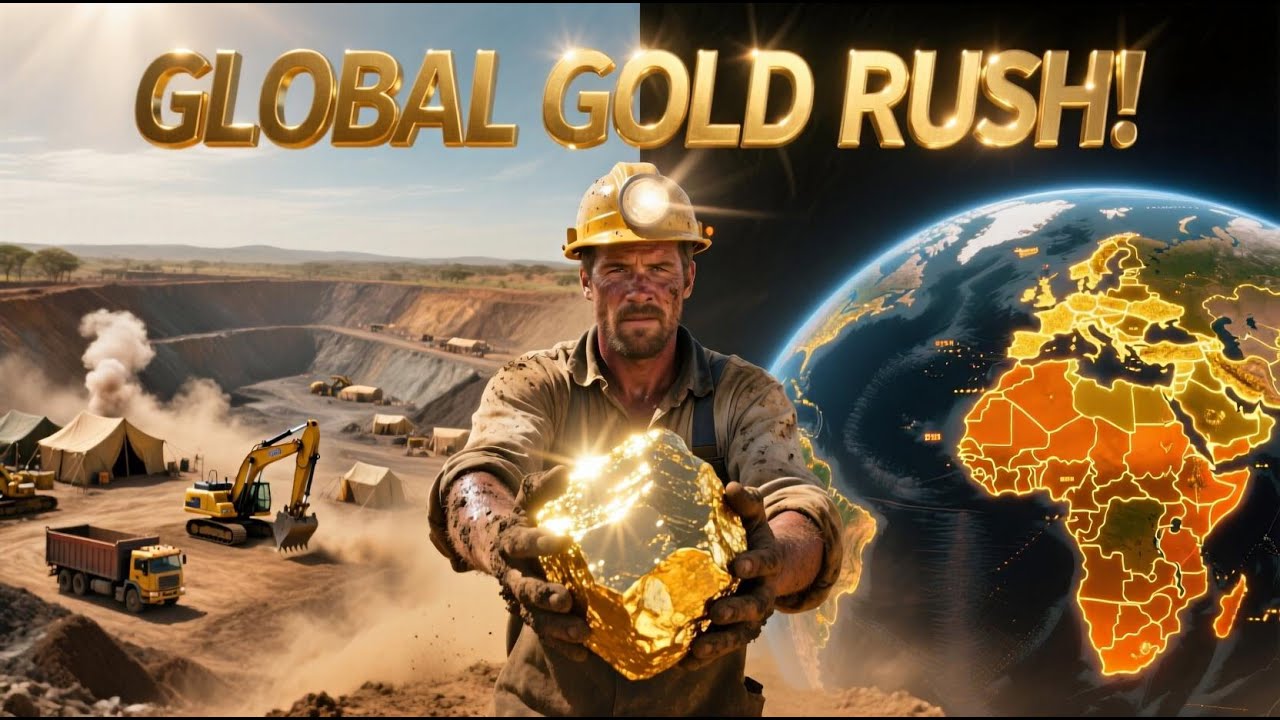
Africa is renowned for its rich deposit of precious metals, especially gold. The region’s significance has only expanded, with Africa gold mining companies expected to account for a remarkable share of global gold output by 2026. Several countries are leading this charge:
- South Africa: Industry veterans like AngloGold Ashanti and Gold Fields
- Ghana: Known as “the gold coast of Africa,” with dynamic companies such as Newcrest Mining, Asanko Gold, and Gold Fields
- Mali and Burkina Faso: High-grade, efficiently-run mines fueling regional growth
AngloGold Ashanti
AngloGold Ashanti, headquartered in South Africa, is a dominant player with operations spanning multiple African countries. Their ongoing transformation:
- Increased integration of best-in-class processing technologies
- A focus on minimizing the environmental and social impact of mining
- Prioritizing community engagement and local development as part of ESG responsibilities
Gold Fields
Another staple of the South African mining sector, Gold Fields, has expanded its operational footprint:
- Running productive gold mines in Ghana and across West Africa
- Utilizing digital and satellite-based ore monitoring to maximize efficiency and traceability (learn how traceability works)
- Committed to integrating sustainable mining practices and supporting local communities
Newmont Corporation
As a leading global gold mining company, Newmont maintains significant assets in Africa:
- Large-scale operations in Ghana, driving technological advancement, output, and employment
- Continued investments in local training, environmental monitoring, and ESG compliance
- Championing modernization with data-driven approaches to resource extraction
Emerging Gold Mining Hubs in Africa
Beyond Ghana and South Africa, new exploration and investment are transforming regions like Tanzania, Kenya, and Mauritania into vital gold mining hubs. Central to this evolution is the use of next-gen technologies, including satellite-based resource detection and environmental monitoring.
Must-Watch Videos: Africa’s Gold Rush & Satellite-Powered Discovery




Satellite Tech in Mining: The Farmonaut Advantage
With the mining industry’s shift to digital and sustainable operations, advanced satellite technology is advancing how companies oversee production, compliance, and organizational growth. At Farmonaut, we offer a comprehensive suite of satellite-driven solutions for the mining sector and beyond:
- Site Monitoring & Resource Management: Real-time satellite data optimize operational efficiency and safety in mines
- AI Advisory (Jeevn): Decision-support on weather, extraction, and logistics for boosting output and resilience—ideal for mining companies operating in Africa, Asia, and America
- Blockchain-Based Traceability: End-to-end traceability for minerals from ore extraction to shipment, enhancing supply chain transparency
- Carbon Footprint Monitoring: Track and manage environmental impact for regulatory compliance and green credentials
- Fleet and Equipment Tracking: Advanced tools for efficient fleet management in extensive mining or gold extraction operations
Ready to unlock the potential of satellite agriculture and mining management? Large-scale resource management is now accessible and cost-effective.
- Carbon Footprinting Service: Essential for companies striving to meet emissions standards in mining and extraction.
- Product Traceability Platform: Ensure transparency and compliance for international minerals supply chains.
- Satellite-Based Verification for Crop Loans and Mining Insurance: Streamline and secure financing in high-value, high-risk operations.
If your operations span into environmental restoration, afforestation, or large-scale plantation management—explore our plantation and forestry advisory solutions powered by satellite AI.
Comparative Company Overview Table: Biggest Mining Companies, Copper & Africa Gold 2025–2026
| Company Name | Headquarters Location | Primary Mineral | 2025 Estimated Annual Production | Estimated Revenue (2025, USD billion) | Main Mines Owned | Global Market Share (%) |
|---|---|---|---|---|---|---|
| BHP Group | Australia | Iron Ore, Copper | Iron Ore: 280 Mt Copper: 1.2 Mt |
~$68 | Escondida, Olympic Dam | 5.5 (Iron Ore), 7 (Copper) |
| Rio Tinto | UK/Australia | Iron Ore, Copper, Aluminum | Iron Ore: 245 Mt Copper: 650 Kt |
~$60 | Escondida, Oyu Tolgoi, Pilbara | 4.8 (Iron Ore), 3.3 (Copper) |
| Glencore | Switzerland | Copper, Coal, Nickel | Copper: 1.0 Mt Coal: 110 Mt |
~$69 | Collahuasi, Katanga, Mopani | 6.0 (Copper) |
| Vale | Brazil | Iron Ore, Nickel | Iron Ore: 315 Mt Nickel: 180 Kt |
~$48 | Carajás, Sudbury | 7 (Iron Ore), 7.5 (Nickel) |
| Anglo American | UK | Copper, Diamonds, Iron Ore | Copper: 650 Kt Iron Ore: 62 Mt |
~$35 | Collahuasi, Los Bronces, Sishen | 3.3 (Copper) |
| AngloGold Ashanti | South Africa | Gold | Gold: 2.5 Moz | ~$5.2 | Obuasi, Geita, Iduapriem | 4 (Gold) |
| Gold Fields | South Africa | Gold | Gold: 2.2 Moz | ~$4.6 | South Deep, Tarkwa, Damang | 3.3 (Gold) |
| Newmont Corporation | USA | Gold | Gold: 5.9 Moz | ~$11 | Ahafo, Akyem (Ghana); Carlin | 9 (Gold, includes non-Africa) |
| Konkola Copper Mines | Zambia | Copper | Copper: 220 Kt | ~$1.2 | Konkola, Nchanga | 1.1 (Copper) |
| Asanko Gold | Ghana | Gold | Gold: 210 Koz | ~$0.33 | Asanko Gold Mine | 0.3 (Gold) |
Note: All 2025/2026 figures are estimates from industry consensus and public reports. “Mt” = million tonnes, “Kt” = thousand tonnes, “Moz” = million ounces, “Koz” = thousand ounces.
Frequently Asked Questions (FAQ)
1. Which company leads copper production globally in 2026?
The Escondida mine in Chile, operated by BHP and Rio Tinto, remains the world’s largest copper mine—accounting for nearly 5% of global output. Both BHP and Rio Tinto are among the biggest mining companies in the world for copper production.
2. What makes African gold mining companies so important for global supply?
African gold mining companies are critical due to the continent’s vast gold deposits. By 2026, they are expected to supply up to 21% of the world’s gold, driven by booming mines in Ghana, South Africa, Mali, and emerging hotspots like Tanzania and Mauritania.
3. How is the mining sector integrating sustainability in 2025–2026?
Mining companies are deploying advanced technologies—like carbon footprint monitoring, water-saving ore processing, and AI-based waste reduction—to minimize environmental impact. Many also leverage blockchain for mineral traceability and satellite data for resource management.
4. How do satellite technologies (like Farmonaut) benefit the mining industry?
Satellite technology providers such as Farmonaut help monitor sites remotely, optimize extraction, track environmental changes, ensure regulatory compliance, and power data-driven decisions throughout mining operations—across continents and at every scale of operation.
5. Are there tools available for smaller mining companies needing affordable monitoring?
Yes, platforms like Farmonaut offer modular subscription-based satellite solutions, accessible both to small operators and large corporations. The system supports real-time environmental, logistical, and production insights.
6. Where can I access documentation or APIs for integrating satellite data into my mining business?
You can find all API services and developer documentation for satellite-driven solutions at Farmonaut API and Developer Docs.
Conclusion: Charting the Path Forward for Global Mining Companies
As we look ahead into 2026, the mining industry continues to be a vital pillar of the global economy, with the biggest mining companies in the world setting the pace through diversified asset portfolios and technology-driven practices. Copper mines across Chile, Zambia, and new frontiers are central to the electric and green economy, while africa gold mining companies play a critical role in meeting global gold demand.
Sustainability, transparency, and digital innovation will define future success. Whether through AI, satellite insights, or blockchain solutions, the sector’s transformation is underway—ensuring the world’s essential raw materials are extracted efficiently, sustainably, and ethically.
To stay at the forefront, operators, governments, and stakeholders must embrace these shifts—leveraging tools like satellite-driven resource management, product traceability, and environmental impact monitoring.
Empowering your mining operations for a sustainable, productive future—Explore satellite solutions and monitoring with Farmonaut.
Discussion
Questions, corrections or field experience? Share them below. First-time comments are reviewed before they appear, and your email is never published.
No comments yet. Be the first to add a question or your experience.

 Southbridge & Wess PDC Ltd
 Qader Group
 Ileys General Trading
 SG Gold Mining LLC
 VRV Global Pte Ltd
 Omsri International FZE
 G.I.T.T.
 Jaunita Erss Ltd
 Almosi SARL
 SRK Consulting
 Berks Gold Limited
 Mwerezi Minerals Company Limited
 Mining SARL
 SenGold Invest SAS
 Sean Mining Limited
 NTS Group (Pty) Ltd
 Mine4Africa
 Lithspo Minerals Limited










