

- Introduction
- Understanding Bioleaching of Rare Earth Elements (REEs)
- Mechanism of Bioleaching Rare Earth Elements
- Advantages: Bioleaching vs. Traditional Extraction Methods
- Key Trends in Bioleaching of Rare Earth Elements for 2025
- Farmonaut Satellite Solutions for Mining Sustainability
- Challenges and Ongoing Research in Bioleaching
- Bioleaching of REE: Outlook for 2025 and Beyond
- FAQ – Bioleaching of Rare Earth Elements
- Conclusion
“**Bioleaching can recover up to 90% of rare earth elements from ores, reducing mining waste significantly by 2025.**”
Bioleaching of Rare Earth Elements: 5 Trends for 2025
Bioleaching of Rare Earth Elements is poised to revolutionize mining and extraction practices in 2025 as global demand for rare earths intensifies, fueled by modern technology, clean energy, and the quest for environmental sustainability. Rare earth elements (REEs) — indispensable in electric vehicle batteries, wind turbines, advanced electronics, and defense systems — underpin a wide spectrum of critical applications. As the world embraces greener practices, harnessing the power of bioleaching offers a sustainable, efficient alternative to conventional extraction methods, presenting a paradigm shift in mining and resource recovery for 2025 and beyond.
This comprehensive guide will equip you with an in-depth understanding of bioleaching of rare earth elements, unveil current and future trends, and explore how Farmonaut satellite-based solutions empower sustainability in the mining sector. Dive in to discover the techniques, environmental benefits, challenges, and the future landscape of rare earth extraction!

“**Global demand for sustainably sourced rare earth elements is projected to rise by 12% annually through 2025.**”
Understanding Bioleaching of Rare Earth Elements (REEs)
Bioleaching is the process of using specially selected microorganisms — including certain bacteria and fungi — to biooxidize minerals in ores, breaking down complex mineral matrices and releasing valuable metals like rare earth elements. This approach stands as an alternative, complementing or even replacing traditional extraction methods (such as solvent extraction and pyrometallurgical techniques), which are typically energy intensive and environmentally hazardous.
- Modern Technology Meets Tradition: Historically, bioleaching has been utilized for copper and gold extraction, but its extension to rare earths is a frontier driven by growing scientific and industrial interest.
- Environmental and Economic Promise: Unlike conventional methods, bioleaching operates in ambient conditions, reducing carbon footprints and minimizing toxic waste generation.
- Global Significance: As geopolitical risks intensify around REE supply chains, bioleaching emerges as a sustainable, economically viable solution.
Mechanism of Bioleaching Rare Earth Elements
The mechanism of bioleaching rare earth elements (REEs) typically involves the synergistic action of acidophilic and biooxidative microorganisms capable of acting on complex mineral surfaces or generating chemical leachants via their metabolism.
Key Players: The Microbes
-
Acidithiobacillus ferrooxidans and Acidithiobacillus thiooxidans:
– Facilitate oxidation of sulfide minerals, producing acids and ferric ions that solubilize REEs. -
Other Acidophilic Bacteria & Fungi:
– Act either directly (biooxidation at mineral surfaces) or indirectly (producing metabolites/organic acids).
Bioleaching Process Steps
- Microbial Colonization: Microbes adhere to and colonize the surface of mineral ores.
- Biooxidation & Acid Production: Through metabolism, they produce acids (e.g., sulfuric acid) and oxidizing agents that break down the mineral matrix.
- Leaching: REEs are solubilized and released into solution.
- Recovery: Rare earth-containing solutions are treated to isolate and recover valuable elements.
Recent scientific advances now demonstrate the power of engineered microbial consortia and synthetic biology, enhancing the efficiency and selectivity of bioleaching of rare earth elements. Custom microbes can target specific minerals, reducing unwanted metal release and making the process cleaner and more effective.

Advantages: Bioleaching vs. Traditional Extraction Methods
In the context of sustainable mining and responsible resource stewardship, bioleaching of rare earth elements offers transformative advantages over traditional extraction methods.
- Environmental Sustainability: Bioleaching operates at ambient temperatures and pressures, avoids hazardous chemicals, reduces carbon footprint and toxic waste generation, and minimizes the ecological impact on soil and water systems.
- Lower Operational Costs: By leveraging microbial processes rather than high-temperature furnaces or aggressive chemicals, bioleaching can be more economically viable for low-grade ores and mining tailings.
- Enhanced Recovery Rates: Microbial communities can penetrate and break down complex mineral matrices inaccessible to conventional techniques, resulting in higher resource efficiency.
- Waste Minimization & Rehabilitation: Bioleaching stabilizes toxic elements in tailings and can be paired with bioremediation, supporting environmental recovery and safer land reclamation.
- Strategic Security: By enabling the utilization of previously uneconomic ore deposits and mining tailings, bioleaching helps secure critical metals supply without escalating geopolitical risks.

Key Trends in Bioleaching of Rare Earth Elements for 2025
As we approach 2025, several powerful trends are shaping the field of bioleaching of rare earth elements — each offering new opportunities for sustainability, efficiency, and responsible extraction. Let’s examine the top five:
| Trend Name | Estimated 2025 Impact | Brief Description | Sustainability Relevance |
|---|---|---|---|
| Improved Efficiency | Up to 35% increase in extraction rates | Enhanced microbial consortia and optimized process conditions are projected to boost REE recovery efficiency. | Higher yields from the same resource base reduce mining intensity and waste. |
| Cost Reduction | 15–30% operational cost savings | Bioleaching at ambient conditions cuts energy and reagent costs, making low-grade ores more economical. | Democratizes access to REEs and incentivizes resource efficiency. |
| Lower Environmental Impact | Up to 40% decrease in carbon emissions/waste | Reduction in toxic by-products and mitigation of soil and water degradation via eco-friendly bioprocesses. | Protects ecosystems and aligns with climate goals. |
| Adoption Rate | Over 20 new industrial pilot projects globally | Accelerated deployment of bioleaching plants, especially in Asia, Europe, and North America. | Supports the scaling of sustainable mining practices worldwide. |
| Commercialization Scale | REE bioleaching projected to reach 10% of global REE production | Transition from laboratory & pilot scales to commercial bioleaching operations for rare earths. | Promotes a market shift toward green extraction technologies. |

1. Improved Efficiency Via Engineered Microbial Consortia
Advanced synthetic biology enables us to design, adapt, and optimize microbial consortia for superior extraction rates. Such custom microbes can selectively target rare earth-bearing minerals, minimizing the release of toxic metals and improving overall process efficiency.
2. Operational Cost Reduction and Resource Circularity
Bioleaching operates at ambient conditions and can extract REEs from mining tailings and previously uneconomical ores. This not only reduces mining costs but also extends the life of existing resources — a key step towards a circular economy.
3. Environmental Impact: Lower Carbon & Waste Generation
Environmental sustainability is at the heart of bioleaching. By eliminating hazardous solvents, lowering energy consumption, and stabilizing tailings, the process reduces the overall environmental footprint of rare earth extraction — vital for global climate goals.
4. Adoption Rate and Industrial Scale-up
The growing number of bioleaching pilot and semi-commercial projects in key jurisdictions signals the mainstreaming of these sustainable mining technologies. As adoption accelerates, best practices and regulatory frameworks are rapidly evolving.
5. Commercialization & the Green Mining Shift
Bioleaching is expected to represent a significant portion of REE production by 2025. Commercial-scale operations bring down costs, increase supply chain security, and reduce geopolitical risks.
Farmonaut Satellite Solutions for Mining Sustainability
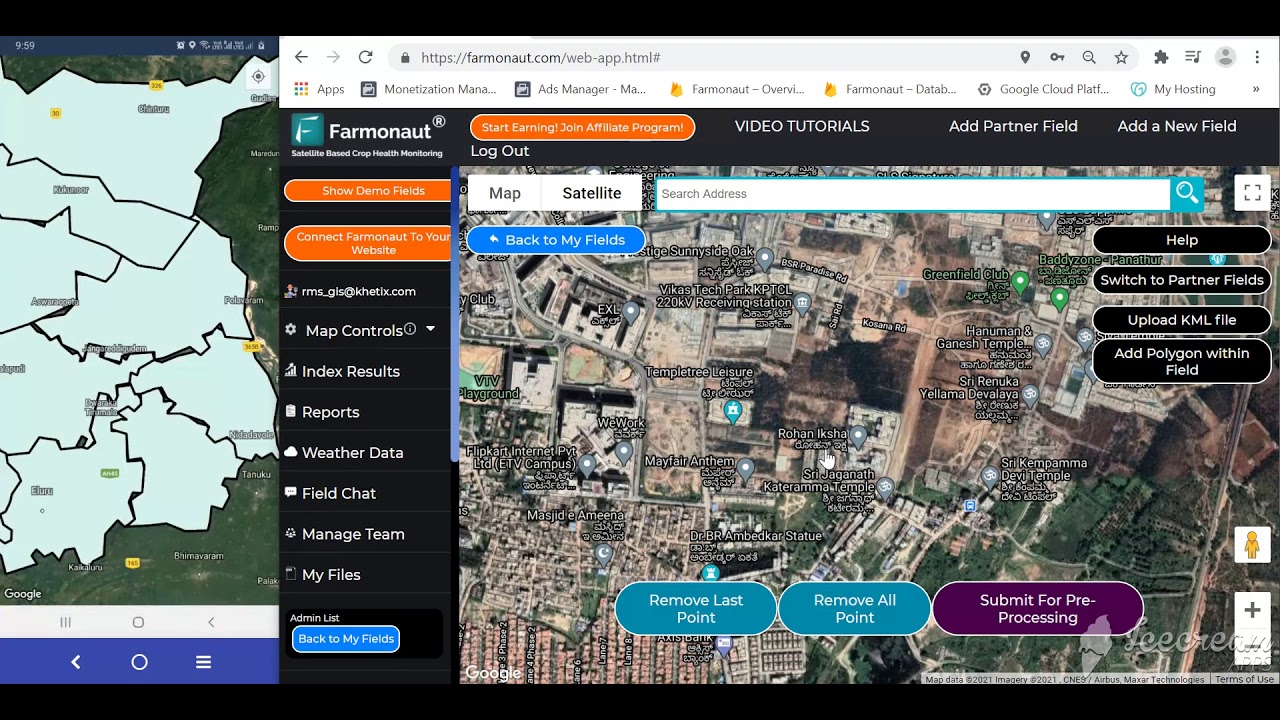
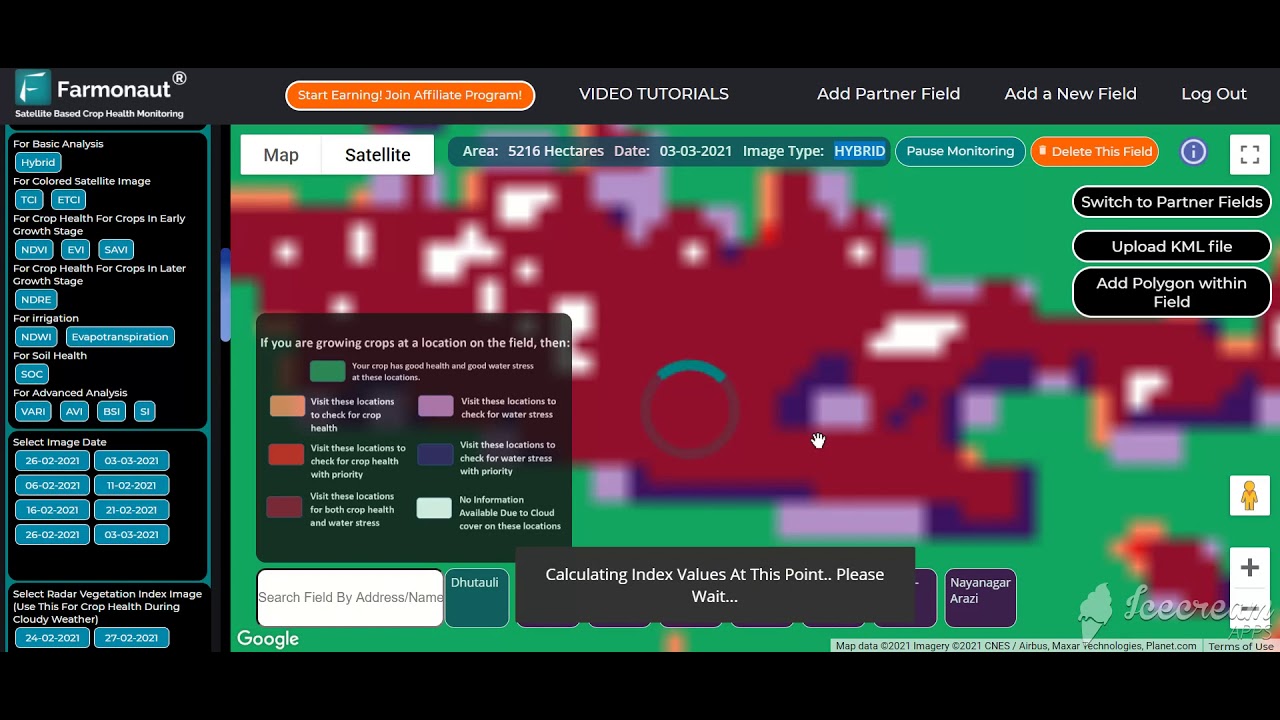
At Farmonaut, we recognize the pivotal role of satellite-powered technology in augmenting bioleaching of rare earth elements for a more sustainable mining sector. Our platform delivers advanced, real-time remote monitoring and AI-driven advisory systems that empower mining operations seeking to reduce environmental impact and optimize efficiencies.
- Satellite-Based Environmental Impact Tracking: Our carbon footprinting solution enables mining and extraction enterprises to monitor, quantify, and reduce their carbon emissions in real time, supporting compliance and eco-friendly goals.
- AI-Powered Operational Insights: The Jeevn AI advisory system provides actionable recommendations on resource management, aligning mining practices with the latest sustainability and efficiency standards.
- Blockchain Traceability: With Farmonaut’s traceability product, rare earth extraction and supply chains can ensure transparency and regulatory compliance from source to finished product.
- Fleet and Resource Optimization: Adopting our fleet management tools reduces operational wastage, improves vehicle and machinery utilization, and ensures safer resource movements across mining sites.
We also support developers and businesses with robust APIs for advanced data integration. Check the API and leverage the API Developer Docs for seamless platform integration and to enable smarter mining insights!




Challenges and Ongoing Research in Bioleaching
- Slower Extraction Rates: Compared to chemical leaching, bioleaching processes can be slower, requiring extended residence times for optimal recovery — though innovations in synthetic biology are steadily accelerating these rates.
- Microbial Sensitivity to Ore Composition: Certain ore types may contain toxic metals (arsenic, lead, etc.) that inhibit microbial activity. Research is exploring **adaptive microbial consortia** and protective biofilm formation to overcome these hurdles.
- Pilot to Industrial Scale Challenges: Ensuring stable microbial populations, managing waste streams, and integrating with downstream REE recovery units require sophisticated engineering.
- Regulatory and Social Acceptance: As with all new extraction technologies, public understanding and robust regulatory frameworks must be evolved in parallel to ensure safety and transparency.
The research community is focusing on optimizing reactor design, catalyzing bio-stimulation, and genetically enhancing microbial strains for robust, selective, scalable rare earth extraction — ensuring this technology is fit for global deployment.
Bioleaching of REE: Outlook for 2025 and Beyond
The synergy of bioleaching, digital monitoring, and AI-driven management portends a new era for REE mining — one poised to deliver on both economic and environmental goals. As global demand for sustainable rare earth elements is projected to surge by 12% annually through 2025, industrial bioleaching will play a pivotal role in minimizing geopolitical risks, safeguarding ecosystems, and ensuring responsible stewardship of critical resources.
Pioneering mining companies, research labs, and policy makers are rapidly evolving best practices. From digitally tracked carbon emissions and blockchain-driven supply chain traceability to AI-optimized bioprocesses, the next evolution in mining is both green and data-driven. Leveraging powerful platforms like Farmonaut’s, adopting closed-loop resource management, and adhering to the highest sustainability standards, 2025 is set to mark a fundamental transformation in rare earth mining approaches.

FAQ – Bioleaching of Rare Earth Elements
-
Q: What are rare earth elements (REEs) and why are they critical?
A: Rare earth elements are a group of 17 metals essential to modern technology and clean energy applications, including electric vehicles, wind turbines, defense systems, and more. Their criticality stems from their indispensability and the geopolitical risks involved in sourcing them. -
Q: How does bioleaching differ from traditional extraction methods?
A: Bioleaching uses microorganisms to extract metals from ores under ambient conditions, reducing energy consumption, toxic waste production, and environmental harm—unlike high-temperature, chemical-intensive traditional methods. -
Q: What microbes are involved in rare earth bioleaching?
A: Key microbes include Acidithiobacillus ferrooxidans, Acidithiobacillus thiooxidans (bacteria that facilitate the oxidation and acidification of minerals), and certain acidophilic fungi. -
Q: Is bioleaching economically viable at large scale?
A: Yes – especially for low-grade ores and mining tailings, as bioleaching lowers operational costs and enhances recovery rates versus legacy extraction techniques. -
Q: How does Farmonaut support sustainable mining operations?
A: Through real-time satellite monitoring, AI-advisory, blockchain traceability, and carbon footprinting, Farmonaut empowers operators to optimize resource management, ensure regulatory compliance, and minimize environmental impact.
Conclusion: Bioleaching of Rare Earth Elements as a Sustainable Approach for 2025
Bioleaching of rare earth elements is not just a technological innovation — it is a fundamental shift towards sustainable, environmentally friendly mining. As global demand for REEs surges, bioleaching offers a clean, efficient alternative to traditional extraction methods. Through the leveraging of advanced microbial techniques, satellite monitoring, AI, and blockchain traceability, mining is evolving to meet the needs of a rapidly changing technological landscape.
Sustainability will define the future of mining: integrating bioleaching with digital stewardship is essential for ensuring supply security, reducing carbon emissions, and protecting ecosystems. At Farmonaut, we remain committed to providing affordable, accessible, and innovative satellite-driven solutions, enabling smarter decision-making for the entire mining value chain.
For those seeking to optimize their operations and embrace the future of green extraction, explore Farmonaut’s comprehensive products — including carbon footprinting, fleet management, and traceability — and join us in building a data-driven, sustainable mining ecosystem for 2025 and beyond.

 Swati Minerals
 Faith At Work (Pty) Ltd
 Geotech Mining Solutions plc
 Vulcan International Limited
 Kidepo Associates
 GKY Mining
 Alkimy SARL
 Double A Trading
 GemSprout Metals Limited
 Qader Group
 Ileys General Trading
 SG Gold Mining LLC
 VRV Global Pte Ltd
 Omsri International FZE
 G.I.T.T.
 Jaunita Erss Ltd
 Almosi SARL
 SRK Consulting
 Berks Gold Limited
 Mwerezi Minerals Company Limited
 Mining SARL
 SenGold Invest SAS
