

Canada diamond mines · Status guide
Diamond Mines in Canada: Locations and Status
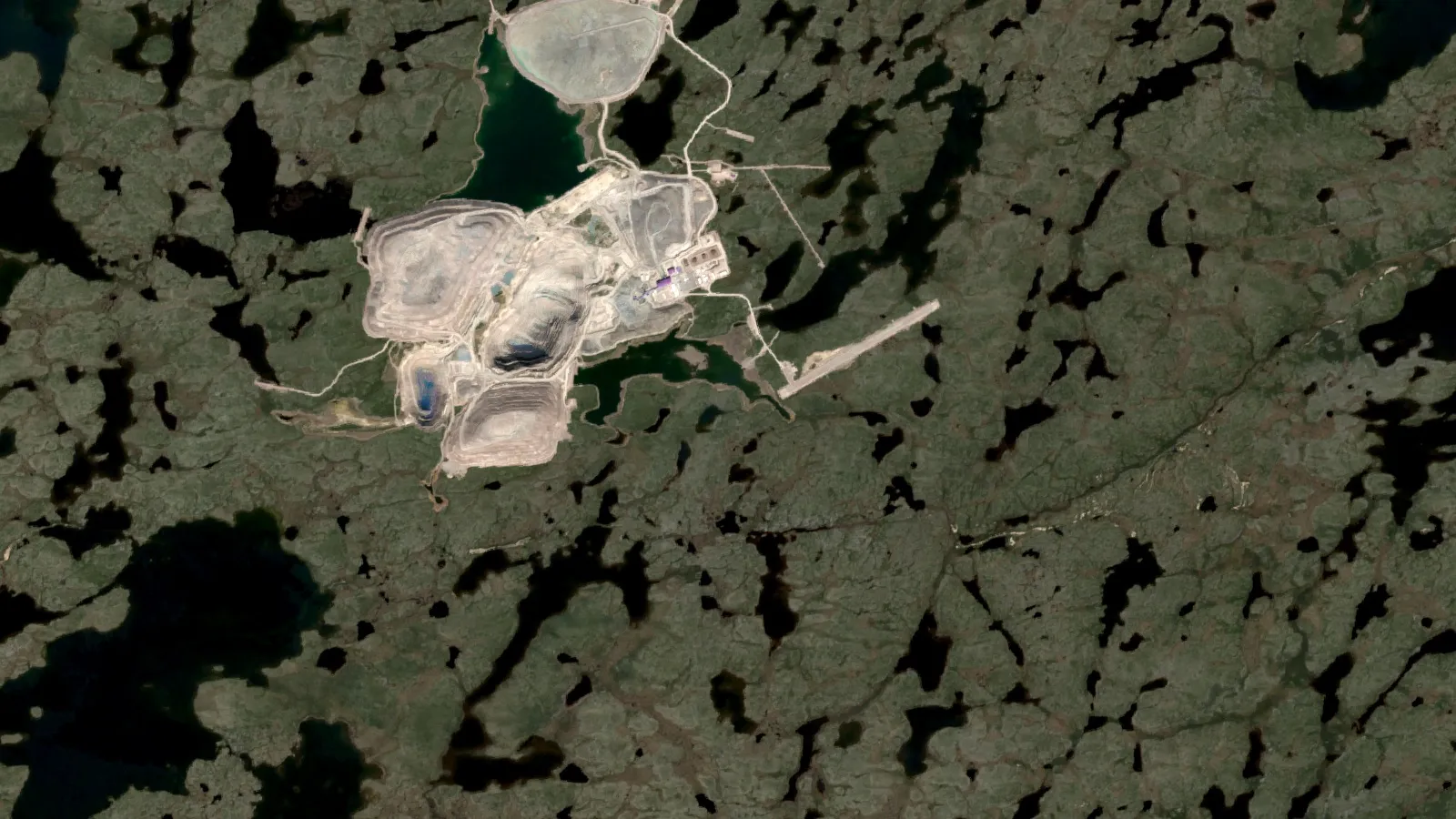
Canada has one working diamond mine left: Gahcho Kué in the Northwest Territories. Diavik stopped in March 2026, Ekati is in receivership, and Renard, Victor and Snap Lake are idle or closed. Status, owners and output below.
Key takeaways
- Gahcho Kué (Northwest Territories) is the only producing diamond mine in Canada; De Beers agreed on 1 October 2026 to take full ownership (CBC News, Mountain Province).
- Diavik delivered its final production on 26 March 2026 after more than 150 million carats in 23 years (Rio Tinto).
- Ekati entered receivership on 14 July 2026; Renard has been on care and maintenance since October 2023 (CBC News, CIM Magazine).
- Canada produced 13.3 million carats worth C$1.47 billion in 2024, fourth in the world by volume and value (Natural Resources Canada).
- Canada ranked 12th for copper in 2024 at 514,582 tonnes, with British Columbia supplying about 48% (Natural Resources Canada).
In this article
- How many diamond mines are in Canada?
- Diamond mines in Canada: locations and status of each site
- Gahcho Kué: the last producing diamond mine
- What happened at Diavik and Ekati
- Renard, Victor and Snap Lake: idle or closed
- What closure of an Arctic mine involves
- How much do Canada's diamond mines produce, and where does Canada rank?
- Diamond mine revenue calculator
- Copper mines in Canada in brief
- How to read a mine map and check a claim area yourself
- Frequently asked questions
How many diamond mines are in Canada?
One. As of 16 October 2026, Gahcho Kué in the Northwest Territories is the only Canadian diamond mine still producing. Rio Tinto’s Diavik mine delivered its final production on 26 March 2026, the Ekati mine went into receivership on 14 July 2026, and the older Renard, Victor and Snap Lake mines are idle or closed. Canada still ranked fourth in the world for rough diamond output in 2024, at 13.3 million carats worth C$1.47 billion (Natural Resources Canada), so the country is a big producer that is shrinking fast.
A carat is 0.2 grams, the unit used to weigh rough and polished diamonds. A kimberlite is the volcanic rock pipe that carries diamonds up from the mantle, and every Canadian diamond mine has been built on one or more of these pipes. This page gives the status of each mine, the latest production numbers, a chart set on Canadian output and a calculator for the revenue side of a diamond mine. A short section at the end covers the largest copper mines, because copper is Canada’s other big mining story.
Diamond mines in Canada: locations and status of each site
Four of the six sites below are in the Northwest Territories (NWT), and the other two are in Quebec and Ontario. The table lists what owners, regulators and news reports have said in 2026. For a drawn map of producing mines, Natural Resources Canada publishes one on its diamond facts page.
| Mine | Where | Owner or operator | Status (October 2026) | Latest figure |
|---|---|---|---|---|
| Gahcho Kué | NWT, about 280 km northeast of Yellowknife | De Beers (51%) and Mountain Province (49%); De Beers to take 100% under a 1 October agreement | Operating | 1.03 million carats in Q2 2026 (De Beers share) |
| Ekati | NWT, about 300 km northeast of Yellowknife | Arctic Canadian Diamond Company, a Burgundy Diamond Mines subsidiary | In receivership since 14 July 2026; closing under PwC | Opened in 1998 |
| Diavik | NWT, beneath Lac de Gras | Rio Tinto | Final production 26 March 2026; closure works run to 2029 | More than 150 million carats in 23 years |
| Renard | Quebec, James Bay region | Stornoway Diamonds, former operator | Care and maintenance since October 2023 | Commercial production began in 2017 |
| Victor | Ontario, near Attawapiskat | De Beers | Ore plant closed in 2019; closure essentially complete | Pit restored to a lake |
| Snap Lake | NWT | De Beers | On care and maintenance since December 2015 | Not producing |
Sources for each row are given in the sections below. “Care and maintenance” means the owner keeps the site safe and the equipment in place but does not mine or process ore. A receiver is a court-appointed manager who takes control of a company’s assets when it cannot pay its debts.
Gahcho Kué: the last producing diamond mine
Gahcho Kué opened in 2016 as a joint venture between De Beers Canada, the majority owner and operator, and Mountain Province Diamonds (CBC News, 1 October 2026). It sits about 280 km northeast of Yellowknife. A technical update in August 2024 put probable reserves at 23.6 million tonnes grading 1.47 carats per tonne, holding 34.6 million carats, and planned diamond recovery into 2031 (Canadian Mining Journal, August 2024). Grade here means carats of diamond per tonne of ore.
The mine is producing far more than it did a year ago because it moved into a higher-grade area. De Beers reports Gahcho Kué on its 51% attributable basis: 1.02 million carats in the first quarter of 2026, 1.03 million in the second, and 2.05 million for the half year against 0.75 million in the first half of 2025 (De Beers, Q2 2026 production report).
On 1 October 2026 Mountain Province announced a restructuring agreement. De Beers will take the 49% interest held by Mountain Province’s subsidiary, in exchange for the remaining reclamation payments and other debts owed to De Beers. Mountain Province keeps a right of first offer and first refusal if De Beers sells, and an option to buy the interest back before 31 December 2029 at a price equal to its share of decommissioning costs (Mountain Province release). Its chief executive blamed a sharp fall in diamond prices over the past year, tied to tariff uncertainty and the conflict in the Middle East.
CBC reported that an expansion was delayed earlier in 2026 and that the mine is on a timeline for planned closure by 2028, which is earlier than the 2031 recovery date in the 2024 plan. De Beers told CBC it is focused on running the mine safely through its remaining life and eventual closure. An independent analyst told CBC the decision could still turn on whether the mine loses too much money for its owner.
What happened at Diavik and Ekati
Diavik was discovered in 1991 beneath Lac de Gras, 220 km south of the Arctic Circle, and mining began in 2003 using open pit and underground methods. Rio Tinto says the mine exhausted its economic reserves and celebrated its final day of production after 23 years and more than 150 million carats (Rio Tinto, 26 March 2026). Closure activities run to 2029, followed by monitoring, and lake water is being returned to the mine pits and tested before it is reconnected with Lac de Gras (Rio Tinto, Diavik page). Diavik was Rio Tinto’s last diamond deposit, after it closed Argyle in Australia in November 2020 (IDEX Online). For the gem side of the story, see our note on Diavik diamonds for sale.
Ekati, which opened in 1998, had been slated to close in 2029. Its operator, Arctic Canadian Diamond Company, a subsidiary of the Australian company Burgundy Diamond Mines, filed for creditor protection in May 2026. No buyer came forward, and the Supreme Court of British Columbia put the mine into receivership on 14 July 2026, with PricewaterhouseCoopers as receiver for site operations, care and maintenance, and eventual reclamation (CBC News, 14 July 2026). Court filings put the workforce at about 340 people on 31 March. On 18 August CBC reported that the Wek’èezhìi Land and Water Board was threatening to suspend the site’s water licence over the disposal of blasting emulsion into the Long Lake containment facility (CBC News, 18 August 2026).
Renard, Victor and Snap Lake: idle or closed
Renard in northern Quebec was built from 2014 and began commercial production in 2017. Stornoway suspended operations in October 2023 and the mine has been on care and maintenance since. In 2024 Winsome Resources took an option to buy the site for $52 million to turn the plant into a lithium processing site, and it withdrew from that option in late July 2025, citing lower lithium prices (CIM Magazine, August 2025).
Victor, in the James Bay Lowlands of Ontario, was De Beers’ open-pit mine near Attawapiskat. The ore-processing plant closed in 2019. The pit, once 280 m deep, has been restored to a lake, more than 1.4 million native trees and shrubs have been planted, and the closure contract with WSP has ended, with a small camp left for final restoration and long-term monitoring (Canadian Consulting Engineer).
Snap Lake in the NWT was placed on care and maintenance by De Beers in December 2015, with about 25 million carats of resource remaining at that time (Northwest Territories Geological Survey overview). Earlier overviews from that survey also record that diamonds were discovered at Lac de Gras in 1991, which started the whole northern diamond industry.
What closure of an Arctic mine involves
A diamond mine does not simply stop. Buildings are removed or salvaged, pits are flooded or backfilled, tailings (the crushed waste rock left after diamonds are recovered) are capped, and the water is tested for years. Diavik’s own plan runs to 2029, and Victor’s monitoring is planned long after its plant closed. The video below explains the general environmental effects of mining and why closure plans exist.

▶ The environmental effects of mining, explained in clay animation, with satellite maps · 2:31
How much do Canada’s diamond mines produce, and where does Canada rank?
Natural Resources Canada says production peaked at 23.2 million carats in 2017 and 2018 within its 2015 to 2024 series and has been trending lower because of mine closures, high-capacity sections running out, falling ore grades, weaker demand and competition from lab-grown stones. It expects the decline to continue as mines approach the end of their lives (NRCan diamond facts). Output in 2024 was 13.3 million carats, 17% less than in 2023, and value fell 30% to C$1.47 billion. Exports of diamonds and diamond products were worth C$1.52 billion.
Chart
Share of world rough diamond carats by country
Percent of world production by volume, 2024 (preliminary), eight largest producers
Chart
Canadian rough diamond production
Million carats, selected years 2015 to 2024 (2016 not shown); 2024 preliminary
Because Diavik has now stopped and Ekati is closing, 2026 totals will look very different from 2024. The only current public figure is De Beers’ Gahcho Kué number given above. No official 2025 or 2026 national total had been published as of 16 October 2026.
The second chart puts Canada in context. By volume it was fourth in 2024 with 12.3% of world carats, behind Russia, Botswana and Angola. By value, Canada held 11.3% of world output and was also fourth, behind Russia, Angola and Botswana.
Diamond mine revenue calculator
Revenue depends on three things: how much ore is processed, how many carats each tonne holds, and what each carat sells for. Gahcho Kué’s reserve grade of 1.47 carats per tonne is a useful reference for the middle input, though your own deposit may differ widely. Rough diamond prices have no single quoted market, because producers sell at regular sales events, and the average value per carat differs by mine and by year. The calculator below also shows the price per carat at which operating cost and revenue break even. The third chart shows why this matters: the value of Canadian output fell from C$2.44 billion in 2022 to C$1.47 billion in 2024, a much steeper drop than the fall in carats.
Chart
Value of Canadian rough diamond production
C$ billion, selected years (2017, 2018 not shown)
Calculator
What does a diamond mine earn per year?
Enter your own ore tonnage, grade, price and cost.
- Revenue (US$ million): 450.0
- Operating cost (US$ million): 180.0
- Operating margin (US$ million): 270.0
- Break-even price (US$ per carat): 40.0
Example values only, not a benchmark. The 1.5 carats per tonne default is close to the Gahcho Kué reserve grade of 1.47 carats per tonne (Canadian Mining Journal, August 2024). Prices are inputs: example, use today’s price. The break-even price is operating cost per tonne divided by grade, before tax, royalties and capital.
Copper mines in Canada in brief
Canadian mines produced 514,582 tonnes of copper in concentrate in 2024, about 48% of it from British Columbia, and Canada ranked 12th in the world (NRCan copper facts). Highland Valley Copper is the largest mine; Teck reported 127,100 tonnes from it for 2025 (Teck, Q4 2025 news release). See our pages on Highland Valley Copper, Mount Milligan, the Canadian copper mines map and copper demand.
How to read a mine map and check a claim area yourself
A map of mines shows where companies have proved something. It does not show where the next one is. Public geoscience databases give the starting evidence: provincial geological surveys publish mineral occurrence records, drill logs and claim maps, and our guide to the Ontario Geological Survey, MINFILE and SIGÉOM explains how to use them before staking. Our review of mineral exploration spending in Canada shows where the exploration money has been going.
Satellites cannot see a kimberlite under lake water, ice or glacial cover, and Diavik was mined beneath Lac de Gras. What satellites can do is map surface geology, structure, vegetation stress and landforms over a licence area, which narrows where a field team should go first. Farmonaut’s satellite mineral detection platform lists diamonds among the minerals it screens, and its output is an exploration target, not a resource estimate. A licence owner can send a boundary through the mining query form, read about the satellite-based mineral detection service, or contact the team.
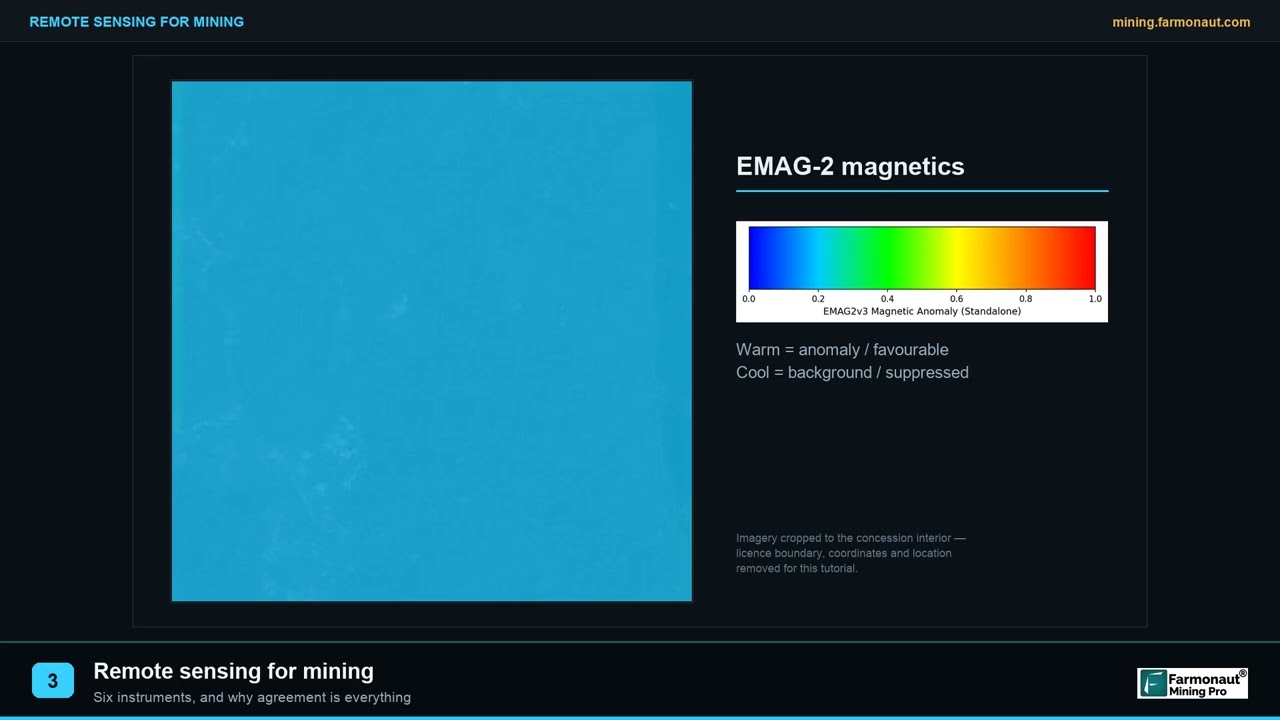
▶ Remote sensing for mining explained without jargon · 2:01
We cover a connected topic in World Lithium Deposits Map: Top Countries and Key Mines.
Frequently asked questions
How many diamond mines are in Canada?
One is producing: Gahcho Kué in the Northwest Territories, according to CBC News on 1 October 2026. Diavik ended production in March 2026, Ekati is in receivership, Renard is on care and maintenance, and Victor and Snap Lake are closed or idle.
Where are the diamond mines in Canada?
Most are in the Northwest Territories: Gahcho Kué, Ekati, Diavik and Snap Lake, all north-east of Yellowknife. Renard is in northern Quebec, and Victor was in the James Bay Lowlands of Ontario.
Which province or territory produces the most diamonds?
The Northwest Territories. Diavik, Ekati and Gahcho Kué are all there, and an NWT Geological Survey overview recorded that diamonds were 97% of the territory’s mineral production value in 2015.
Is Canada still a major diamond producer?
It was fourth in the world by both volume and value in 2024, according to Natural Resources Canada. With Diavik stopped and Ekati closing, that position is likely to change when 2026 figures are published.
Which is the biggest diamond mine in Canada?
Over its life, Diavik produced more than either of the other two NWT mines, with more than 150 million carats, as IDEX Online noted. Today the only operating mine, Gahcho Kué, is the largest by default.
Are there diamond mines in Ontario or Quebec?
There were. Victor in Ontario stopped processing ore in 2019 and has been restored, and Renard in Quebec has been on care and maintenance since October 2023.
Why has Canadian diamond output fallen?
Natural Resources Canada points to mine closures, high-capacity sections running out, lower ore grades, weaker demand and lab-grown competition. Mountain Province’s chief executive also cited tariff uncertainty and the conflict in the Middle East in October 2026.
What happens to a diamond mine after it closes?
The owner dismantles or salvages infrastructure, restores the land and monitors water and vegetation. Diavik’s closure activities run to 2029, and Victor has been restored with long-term monitoring.
Which is the largest copper mine in Canada?
Highland Valley Copper in British Columbia, according to Natural Resources Canada. Teck reported 127,100 tonnes of copper from it for 2025.
How much copper does Canada mine?
514,582 tonnes in 2024, about 2% of world mined copper and 12th place globally, per Natural Resources Canada.
Can satellite data find a diamond deposit?
Not by itself. Satellites help screen terrain, structures and surface clues across a large licence, but confirming a kimberlite needs geophysics, sampling and drilling on the ground.
This page is for information only. It is not investment or legal advice, and mine status can change quickly. Check the owner’s filings and the receiver’s notices before acting.
This page is for information only. It is not investment advice. Mine status and ownership can change; confirm with the owner’s filings.
Farmonaut mining
Screen a licence area from space
Send a boundary and the minerals you are targeting, and receive a satellite exploration screening for your area.

Mining Pro sample view, synthetic data
Keep reading
Sources
- Natural Resources Canada, Diamond facts: natural-resources.canada.ca
- Natural Resources Canada, Copper facts: natural-resources.canada.ca
- USGS, Mineral Commodity Summaries 2026: Copper (February 2026): pubs.usgs.gov
- Rio Tinto, Diavik diamond mine delivers its final production (26 March 2026): riotinto.com
- Rio Tinto, Diavik operation page: riotinto.com
- IDEX Online, Production ends at Diavik (29 March 2026): idexonline.com
- CBC News, Ekati mine set to shut down as it enters receivership (14 July 2026): cbc.ca
- CBC News, Regulator accuses Ekati mine receiver of dumping waste (18 August 2026): cbc.ca
- CBC News, Mountain Province announces exit from Gahcho Kué (1 October 2026): cbc.ca
- Mountain Province Diamonds, Restructuring Agreement release (1 October 2026): mountainprovince.com
- De Beers Group, Production Report for the Second Quarter of 2026: debeersgroup.com
- Canadian Mining Journal, Gahcho Kué mine life extended (August 2024): mining.com
- CIM Magazine, Renard mine option terminated by Winsome Resources (August 2025): magazine.cim.org
- Canadian Consulting Engineer, WSP concludes closure contract for Victor diamond mine: canadianconsultingengineer.com
- Northwest Territories Geological Survey, Mineral Exploration Overview (2017): nwtgeoscience.ca
- Teck Resources, 2025 fourth quarter news release: teck.com
- Taseko Mines, fourth quarter results and Florence production (February 2026): investegate.co.uk
- Newmont, Q4 2025 operating statistics: s24.q4cdn.com
- Centerra Gold, Q4 2025 management’s discussion and analysis: s205.q4cdn.com
Discussion
Questions, corrections or field experience? Share them below. First-time comments are reviewed before they appear, and your email is never published.
No comments yet. Be the first to add a question or your experience.

 African Venture Partners Holding
 Congo Mining Solutions
 Mining SARL
 SenGold Invest SAS
 Sania Corporation
 Sean Mining Limited
 NTS Group (Pty) Ltd
 Mine4Africa
 Lithspo Minerals Limited
 Tintina Mining Group
 Dalgety Minerals Pty Ltd
 Vortex Minerals Pty Ltd
 Faith At Work (Pty) Ltd
 Geotech Mining Solutions plc
 Vulcan International Limited
 Kidepo Associates
 GKY Mining
 Alkimy SARL
 Double A Trading
 GemSprout Metals Limited











