

Tailings Management and Reprocessing: Top 2025 Innovations
Tailings Management and Reprocessing in Mining: A Sustainable Imperative for 2025



Introduction: Rising Demand and the Tailings Challenge
As the demand for minerals and metals continues to rise globally in 2025, propelled by rapid technological advancements and the shift toward greener economies, the mining sector faces a critical crossroad. The necessity to fuel our digital world, build renewable energy infrastructures, and supply electric transportation, has increased reliance on effective tailings management and reprocessing. These strategies are now central to sustainable mining practices, enabling more efficient utilization of resources, shrinking environmental footprints, and fostering a circular economy within mining.

A deeper understanding of tailings—the byproducts left after ore has been processed—reveals just how intertwined environmental, operational, and economic risks have become within modern mining. In 2025, complacency is not an option: robust tailings management and reprocessing solutions must underpin every responsible mining operation.
Understanding Tailings and Their Impact
Tailings typically consist of finely ground rock particles, water, and chemicals used during ore processing. These waste materials are the result of extracting valuable metals and minerals from ore at mining sites. Historically, tailings were stored in large impoundments or dams, often as a slurry. However, improper management posed significant environmental and safety risks.
- Tailings Dams Failures: Catastrophic events caused by dam failures have led to loss of life, substantial environmental contamination, and economic losses.
- Water Consumption: Conventional tailings storage consumes large volumes of water, a precious resource in many mining regions.
- Environmental Contamination: Residual chemicals can seep into groundwater and nearby ecosystems, causing long-term environmental damage.
Consequently, effective tailings management and reprocessing is not just an operational necessity—it’s a powerful social and environmental obligation for companies, regulators, and the global community.

Why Tailings Management and Reprocessing Are Critical in 2025
As we enter 2025, several key trends make tailings management and reprocessing a critical focus:
- Increasing Demand for Metals and Minerals: Renewed interest in green infrastructure and electric vehicles accelerates demand for resources like lithium, copper, nickel, and rare earth elements.
- Regulatory Changes: Stricter regulatory frameworks worldwide require companies to improve tailings safety, transparency, and environmental responsibility.
- Stakeholder Expectations: Local communities, investors, and NGOs are pressuring the industry to prioritize sustainable practices and risk mitigation.
- Technology Advancements: New technologies allow the sector to recover more residual value, reduce environmental impact, and decrease water consumption.
“Modern tailings management innovations are projected to cut mining-related water usage by nearly 30% by 2025.”
The catalyst for all these factors is the imperative to operate within a safe, sustainable, and circular economy—making advanced management and reprocessing techniques no longer optional, but essential to the future of mining operations worldwide.

Comparative Table: Tailings Management & Reprocessing – 2025 Innovations
To help visualize the leading innovations in tailings management and reprocessing for 2025, the following table summarizes each approach’s environmental impact reduction, cost savings, implementation level, and contribution to the circular economy.
| Innovation Name | Description | Est. Environmental Impact Reduction (%) | Est. Cost Savings (%) | Implementation Level (2025) |
Circular Economy Contribution |
|---|---|---|---|---|---|
| Dry Stack Tailings | Dewatering to create stable, compacted dry stacks instead of slurry impoundments; easier reclamation, lower water use. | 30–40% | 15–20% | Commercial | Facilitates repurposing of land and reduces long-term contamination risk. |
| Paste Backfill | Mixing tailings with binders to create a paste for filling underground mine voids; increased structural stability. | 20–30% | 10–18% | Commercial | Reduces surface storage needs; supports underground environments. |
| Real-Time Monitoring & AI Integration | Use of sensors, drones, and AI to monitor facility stability and detect potential failures in real-time. | 15–25% | 10–15% | Pilot/Commercial | Improved management; faster response; supports risk reduction. |
| Enhanced Separation Technologies | Advanced flotation, gravity separation, and other mineral recovery methods for tailings reprocessing. | 25–30% | 18–25% | Pilot/Commercial | Raises secondary resource recovery, reducing new ore demand. |
| Hydrometallurgical Processes | Greener leaching agents and low-impact hydrometallurgy for extracting valuable metals from tailings. | 20–28% | 12–22% | Pilot | Minimizes chemical contamination; retrieves critical materials. |
| Blockchain Traceability in Tailings | Transaction-level tracking of resources and waste, increasing transparency and accountability in waste management. | 10–15% | 8–14% | Pilot | Supports circular economy through cradle-to-grave documentation. |
Top 2025 Innovations in Tailings Management and Reprocessing
Moving beyond legacy strategies, tailings management and reprocessing innovations are reshaping industry practices globally in 2025. Below, we detail the most pivotal techniques and technologies—with a special focus on how these reduce environmental risks, create value from residual materials, and further the circular economy.

1. Dry Stack Tailings: Lowering Risks and Water Consumption
Dry stack tailings is a technique that involves dewatering tailings to create a dry, compacted form—which is then stacked, rather than pumped as a slurry into impoundments. This innovation:
- Significantly reduces water consumption, as water is recovered and reused in processing.
- Lowers risks of catastrophic dam failures, as there is no massive stored water/slurry to be released in collapse scenarios.
- Enables easier reclamation of storage sites once operations end, promoting circular economy principles by returning land to productive use faster.
- Reduces the environmental footprint associated with traditional tailings dams.
As global emphasis on sustainable practices intensifies, dry stacking (and similar methods) is quickly becoming a critical standard in new projects and leading retrofits worldwide.
2. Paste Backfill and Underground Storage
Paste backfill is a process where tailings are mixed with binders (like cement or fly ash) to create a thick, stable paste. This material is then used to fill underground mine voids:
- Minimizes surface tailings storage volume, reducing the area and risk exposure at the surface.
- Enhances underground support, preventing possible subsidence and strengthening mine structures.
- Promotes circularity by utilizing waste within existing infrastructure.
The dual benefit to both tailings management and mine safety makes paste backfill a pivotal strategy as we move into 2025.

3. Real-Time Monitoring & AI Integration
Advances in satellite technology, sensors, autonomous drones, and artificial intelligence are powering a paradigm shift in tailings facility monitoring:
- Deploying networks of sensors and drones for continuous assessments of dam stability, water content, and ground movement.
- Using AI algorithms to quickly identify anomalies or subtle indicators of risk—enabling earlier interventions and safer management.
- Empowering companies to meet stricter regulatory and community expectations on transparency.
AI-driven monitoring not only improves operational safety but is foundational for responsible tailings management and reprocessing across global mining operations.
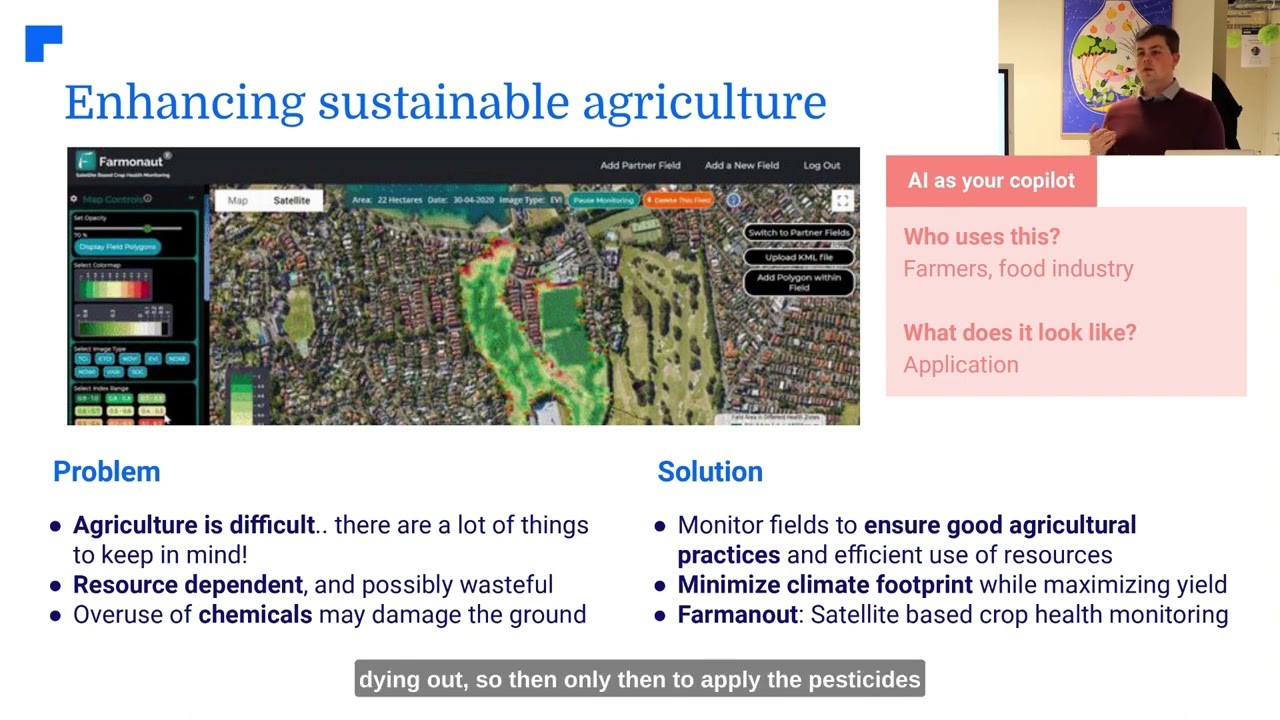
Discover how platforms like Farmonaut integrate real-time satellite monitoring and AI-based advisory for sustainable mining on the Farmonaut app.
4. Enhanced Reprocessing Technologies
Many stored or legacy tailings still contain significant quantities of valuable metals (e.g., gold, copper, nickel, rare earth elements) that were uneconomical to extract with previous technologies. 2025 reprocessing innovations include:
- Advanced flotation and enhanced gravity separation: Target residual materials with greater precision, increasing overall recovery from mining wastes.
- Bioleaching: Uses microorganisms to mobilize and extract metals from tailings with fewer environmental impacts than chemical leaching.
- Automated mineralogy and AI-driven sorting: Boosts efficiency and enables companies to recover valuable elements from old and new impoundments.
Modern reprocessing strategies are at the heart of a circular mining economy: instead of letting valuable resources remain in waste, they are used to reduce the need for new extraction—helping mitigate further environmental impact.

5. Hydrometallurgical Processes and Green Chemistry
The development of environmentally-friendly hydrometallurgical techniques is another major leap in 2025:
- Novel leaching agents: These processes offer high selectivity and recover rates while minimizing chemical contamination.
- Closed-loop systems: Allow for recycling of reagents and water, lowering both consumption and discharge volumes.
- Essential for critical minerals supply, supporting a greener economy and energy transition.
Such techniques enable mining companies to reclaim valuable materials and metals from stored tailings while supporting sustainable development goals.
6. Circular Economy Integration & Blockchain Traceability
A true circular economy requires transparent, traceable, and verifiable supply chains—including the management of tailings and other residual wastes. Leading innovations in 2025 focus on:
- Blockchain traceability: Documenting the entire lifecycle of minerals and tailings to mitigate risks of illegal dumping, fraud, or unreported contamination.
- Integrated platforms: Allow companies to demonstrate responsible management to consumers, investors, and regulators.
We offer blockchain-based traceability services for the mining sector, increasing transparency in tailings management and reprocessing.

Farmonaut’s Technology and Sustainable Tailings Management
As a pioneering satellite technology company, Farmonaut empowers the mining sector with advanced, real-time monitoring and AI-driven advisory tools. Our platform brings unique advantages to tailings management and reprocessing:
- Satellite-Based Monitoring: Receive continuous, multispectral insights into mine sites and tailings storage impoundments to quickly identify risks of surface movement, seepage, or contamination.
- AI-Based Advisory (Jeevn AI): Our AI system analyzes vast satellite data to provide recommendations for improved management, safety, and resource utilization.
- Blockchain Traceability: Secure end-to-end tracking for minerals and tailings flows, enhancing responsible sourcing and regulatory compliance. Learn more about our traceability product.
- Environmental Impact Monitoring: Access carbon footprint and eco-compliance data. Discover our carbon footprinting solutions.
Access our smart web application or API for seamless integration with your mining operations:
• Farmonaut App
• Mining API and Developer Docs
Environmental and Social Benefits of 2025 Tailings Innovations
The widespread deployment of advanced tailings management and reprocessing technologies delivers far-reaching benefits:
- Risk Mitigation: Modern methods dramatically reduce the risk of catastrophic failures, safeguarding both workers and communities near mining sites.
- Lower Environmental Impact: Decreases in water consumption, land disturbance, and chemical pollution directly improve ecological outcomes.
- Resource Efficiency: By recovering more valuable metals and minerals from legacy tailings, companies optimize resource utilization and reduce the need for new extraction.
- Carbon Footprint Reduction: Modern management techniques often demand less energy, further supporting sustainability and the circular economy.
- Regulatory Compliance and Social License: Adopting best practices earns public trust and approval needed for ongoing operations.
Mining leaders are using platform solutions to easily monitor, report, and improve their environmental and social performance. Discover how fleet and resource management tools can enhance operational efficiency and risk mitigation.
Challenges and Opportunities: Implementing Innovations Worldwide
Despite significant advancements and clear benefits, implementing these innovations in tailings management and reprocessing across all mining operations is not without challenges:
- Infrastructure Gaps: Older mines and those in developing regions may lack the infrastructure to retrofit or adopt new systems quickly.
- Cost Barriers: Initial investments for advanced technologies—especially for dry stacking or real-time monitoring—can be substantial, though long-term savings are significant.
- Regulatory Hurdles: Fragmented regulations or slow adoption in some countries can hinder uniform global progress.
- Data Management: Handling large volumes of monitoring and reporting data requires robust, integrated systems—such as those provided by Farmonaut’s platform.
- Workforce Upskilling: Mining personnel require training to manage new technologies and interpret analytic results correctly.
However, with broadening social awareness, regulatory pressure, and stakeholder activism, the mining industry is primed to embed sustainable tailings management and reprocessing as a global standard by 2025 and beyond.
Explore more about satellite-powered crop loan and insurance verification for the mining sector here.
FAQ – Tailings Management and Reprocessing in Mining
What are tailings, and why do they need special management?
Tailings are finely ground residual materials left after valuable minerals or metals are extracted from ore during mining. They need special management due to potential environmental, safety, and social risks—such as dam failures, water contamination, and habitat loss.
What is the difference between dry stacking and paste backfill?
Dry stacking involves dewatering tailings to form dry, stackable material for surface storage, reducing water consumption and failure risks. Paste backfill mixes tailings with binders for underground mine voids, supporting mine stability and minimizing surface storage.
How does reprocessing tailings support the circular economy?
Reprocessing tailings extracts residual metals and minerals, reducing the need for new mining. This aligns with circular economy principles—turning waste into new resources, minimizing landfill, and supporting sustainability goals.
How do technologies like AI and satellites transform tailings management?
AI and satellite technologies enable real-time monitoring, early detection of risks, predictive maintenance, and better regulatory compliance. These solutions give companies deeper insight and speed responses to potential issues.
What regulatory trends shape tailings management in 2025?
Regulators worldwide are demanding stricter standards for tailings monitoring, transparency in management plans, reduction in water use, and demonstration of circular economy impacts.
How can mining companies ensure community safety and well-being?
By implementing advanced tailings technologies, engaging in transparent reporting, and continuously monitoring environmental impacts, companies can minimize hazards and gain community trust.
How does Farmonaut’s platform help in sustainable tailings management?
Our platform delivers satellite-driven real-time monitoring, AI advisories, blockchain traceability, and environmental impact metrics—ensuring effective resource utilization and risk management for the industry.
Conclusion: A Circular and Sustainable Mining Imperative
Tailings management and reprocessing will define the sustainability trajectory of mining in 2025 and beyond. By embracing dry stack tailings, paste backfill, real-time monitoring, AI, and blockchain traceability, the mining sector can reduce environmental risks, recover valuable resources, and power a new era of circular economy operations.
Sustainable tailings management and reprocessing is an imperative, not a choice—vital for gross resource optimization, community safety, social license, and long-term economic value. The sector is poised for transformation.
Ready to make your mining operation smarter and more sustainable?
- Monitor tailings storage safety and regulatory compliance in real-time.
- Leverage data-driven advisories for risk mitigation and operational efficiency.
- Enable a fully transparent, circular mining supply chain with blockchain and AI technologies.
Get started today with Farmonaut’s tools:
For API integration, analytics, and AI monitoring, explore the Farmonaut Mining API and check the developer docs.
Together, let’s build a mining future that is not just more productive—but genuinely sustainable, circular, and resilient for communities and the environment worldwide.
Discussion
Questions, corrections or field experience? Share them below. First-time comments are reviewed before they appear, and your email is never published.
No comments yet. Be the first to add a question or your experience.

 Vortex Minerals Pty Ltd
 Faith At Work (Pty) Ltd
 Geotech Mining Solutions plc
 Vulcan International Limited
 Kidepo Associates
 GKY Mining
 Alkimy SARL
 Double A Trading
 GemSprout Metals Limited
 Qader Group
 Ileys General Trading
 SG Gold Mining LLC
 VRV Global Pte Ltd
 Omsri International FZE
 G.I.T.T.
 Jaunita Erss Ltd
 Almosi SARL
 SRK Consulting
 Berks Gold Limited
 Mwerezi Minerals Company Limited
 Mining SARL
 SenGold Invest SAS
 Exploration consultancy · South Africa · Gold










