

January Birth Gemstone: Stunning Garnet Mining Insights 2026
Introduction: Enduring Appeal of the January Birth Gemstone
January birth gemstone—the iconic and stunning garnet—holds a timeless place not just in jewelry, but in the world of mining, industrial applications, and cutting-edge geological research. As 2025 unfolds and we head toward 2026, the enduring importance of garnet is being redefined through evolving technologies and rising global demand.
This blog explores every facet of garnet’s journey: from its origins in metamorphic rocks to its transformation into sparkling gems and its vital role as an industrial abrasive. We unveil insights on how advanced resource management, sustainable methods, AI, satellite monitoring, and data-driven innovations brought by companies like Farmonaut are changing the landscape of mineral exploration and extraction. Join us in understanding why garnet continues to captivate the world—within and beyond its classic role as January’s birthstone.

Garnet Mineral Origins and Geological Context
The january birth gemstone, garnet, is a multifaceted mineral group found worldwide. Garnets comprise a group of silicate minerals with a shared crystal structure but varying chemical compositions, giving rise to their broad range of colors and properties. Typically found in metamorphic rocks—such as schists and gneisses—these deposits form under high pressure and temperature, resulting in preserved, high-quality crystals.
Significant production occurs in countries like India, Sri Lanka, the United States, and parts of Africa, where ancient tectonic activity gifted the Earth with abundant garnet reserves. Today, advances in technology enable precise extraction while minimizing environmental impact: remote sensing and AI-driven drone surveillance help identify and map rich garnet deposits, dramatically reducing unnecessary excavation and habitat disruption.
In alluvial settings—created through erosion and sedimentation—garnet grains often accumulate as dense layers, making secondary recovery a valuable industrial pursuit. The geological context, then, not only enriches our understanding of garnet’s significance as the january birth gemstone, but also highlights the need for sustainable mining methods as we progress through 2025 and onward.

Types, Colors & Compositions of Garnet: Beyond Red
Although garnet is commonly recognized as a rich red stone, within the garnet group exist multiple stones with unique colors and compositions. Chemically, all garnets are silicate minerals with a shared crystal structure, but with diverse elements occupying the crystal lattice:
- Almandine: The most commercially significant, prized for its deep red-violet color and utility in both jewelry and industrial applications.
- Pyrope: Known for its intense, rich red hues—often called the “anthill garnet” due to its natural exhumation by ants in the southwestern United States.
- Spessartine: Orange to reddish-brown, popular in both gemstone markets and geological study.
- Grossular: Ranges from green to yellow to colorless; tsavorite (vivid green) and hessonite (cinnamon brown) are prized varieties.
- Andradite: Spanning from green (demantoid) to yellow, and occasionally black.
- Uvarovite: A rare emerald green variety, rich in chromium.
This range of colors—from green, orange, red, even purple—captures the imagination of both gemstone aficionados and mineralogists. Each type has distinct physical and chemical properties, influencing its industrial uses, hardness (typically Mohs 6.5–7.5), and resistance to chemical weathering. In 2025, ongoing exploration and mining bring new discoveries of unique garnet varieties and hues onto the global stage, further fueling demand in both the jewelry and industrial sectors.

Mining Technologies of Garnet: How 2026 is Shaping Extraction
Driven by rising industry and environmental expectations, garnet mining has experienced a technological renaissance heading into 2026. The integration of remote sensing, AI, geospatial analysis, and hybrid drone surveillance allows operators to:
- Identify and map garnet deposits with high precision, optimizing site selection and reducing waste
- Monitor mining operations in real-time, tracking resource flows and environmental indicators
- Utilize advanced sorting—from sensor-based separators to AI-driven ore processing lines—enhancing recovery rates and minimizing energy use
Our modern focus is not only on maximizing output but also on implementing sustainable, low-impact extraction methods. Automated sorting systems, now common in leading operations, reduce reliance on chemical inputs and minimize disturbance to both ecological systems and neighboring soils. Sophisticated fleet and resource management—enabled by platforms like those developed by Farmonaut—translates operational insights into cost, safety, and throughput gains.
Additive to these advances, blockchain technologies now enable immutable traceability in the mining and supply chain, supporting trust, regulatory compliance, and market appeal by certifying the provenance of garnet extracts—from mine to final use.

Comparative Table of Garnet Mining Technologies (2020 vs. 2025 Estimated)
| Technology/Method | Efficiency (%) | Environmental Impact (Relative Scale) | Production Capacity (tons/year, estimated) | Application Areas |
|---|---|---|---|---|
| Traditional Surface Mining (2020) | 60–70 | High | 40,000 | Industrial abrasives, gemstones |
| Automated Sorting (2020) | 72–78 | Medium | 45,000 | Water jet cutting, sandblasting, jewelry |
| Advanced Sensor-Based Sorting (2025 est.) | 85–92 | Low-Medium | 58,000 | Precision abrasives, filtration media, premium gemstones |
| AI-Driven Ore Processing (2025 est.) | 93–97 | Very Low | 70,000 | High-purity garnet powders, advanced industrial roles, eco-certified jewelry |
Industrial Applications: Garnet’s Role Beyond Jewelry
While garnets dazzle with their beauty in personal jewelry and collections, their value is increasingly felt in the backbone of modern industries. The abrasive properties of garnet—derived from its high mohs hardness and chemical stability—make it the material of choice for demanding industrial processes, including:
- Waterjet Cutting: Garnet is essential in precision cutting of metals, ceramics, and stones, supporting construction, electronics, and aerospace infrastructure.
- Sandblasting: Preferred for surface cleaning due to its hardness and minimal dust generation, reducing environmental hazards compared to silica.
- Filtration: Used as a key layer in water filtration systems for its chemically inert nature—ideal for potable water and industrial filtration, especially in regions where infrastructure upgrades demand reliable, sustainable solutions.
- Infrastructure & Construction: Garnet’s critical role in manufacturing, ensuring components and surfaces meet demanding quality and safety standards.
With 2025 and 2026’s push toward sustainable infrastructure, demand for industrial garnet continues to grow, balancing gemstone use with high-volume, critical material needs across the globe.
Global Garnet Markets in 2025–2026: Value, Demand & Opportunities
The global garnet market is on a steady climb, projected to reach an impressive value of $742 million by the end of 2026. Factors driving this surge are closely tied to:
- Tech-driven innovations: In mining and processing, technologies like advanced AI, satellite mapping, and automated sorting boost efficiency and open new reservoirs of previously inaccessible garnet deposits.
- Environmental mandates: Societal and regulatory pressure creates opportunities for sustainable extraction and certified supply chains linking mines, consumers, and green infrastructure projects.
- Diversification of uses: As infrastructure and precision manufacturing sectors expand (notably in Asia-Pacific and Africa), demand for high-purity industrial garnet is eclipsing that for gemstones alone.
The market is also seeing growth in collector circles for rare colors—including green grossular and tsavorite, as well as star garnet specimens featuring unique optical effects.

January Star Stone & Star Topaz Gemstone: Rarity and Appeal
The january star stone—sometimes referenced as the star topaz gemstone—adds a layer of fascination to the conversation. While garnet is the official birthstone for January, star topaz garners admiration for its beautiful asterism effect (star-like ray patterns visible on the gem’s surface). This rarity is created by needle-like inclusions that reflect and refract light in a unique way.
Although topaz more commonly appears as the November stone, star topaz exemplifies the mineralogical wonders available to collectors in 2025 and beyond. Their geological formation requires specific conditions, resulting in low supply but high demand on specialized markets.
- Collectors’ Gems: Star topaz and star garnets—coveted for visual appeal—stand apart in mineralogical collections and high-end auctions.
- Geological Curiosities: Their formation stories intrigue geologists, adding scientific value and historical context to these stones.
Sustainable Mining & Environmental Impact
With rising awareness and regulations, sustainable mining has become fundamental to the modern extraction of the january birth gemstone. Environmental impact minimization is woven into every facet of contemporary operations, especially through:
- Remote sensing and drone surveillance: Reduce environmental footprint by targeting only the most viable deposits and monitoring rehabilitation of worked sites.
- Reduced chemical use: Automated and sensor-based sorting eliminates or lessens chemical dependency in ore processing.
- Water conservation: Closed-loop filtration and water recycling minimize waste and protect local watersheds.
- Restoration practices: Post-extraction management now includes rapid re-soiling and native species propagation, especially critical where soil fertility is at risk due to previous high-impact methods.
Our satellite-driven environmental monitoring and carbon footprinting solutions (see Farmonaut product page) further support compliant and responsible mining operations, supplying actionable insights for regulators and industry leaders alike.
Farmonaut in Garnet Mining, Geology, and Resource Management
At Farmonaut, we provide advanced, satellite-based tools that empower mining operators, infrastructure managers, and policymakers. Our platform uniquely supports the garnet industry by delivering:
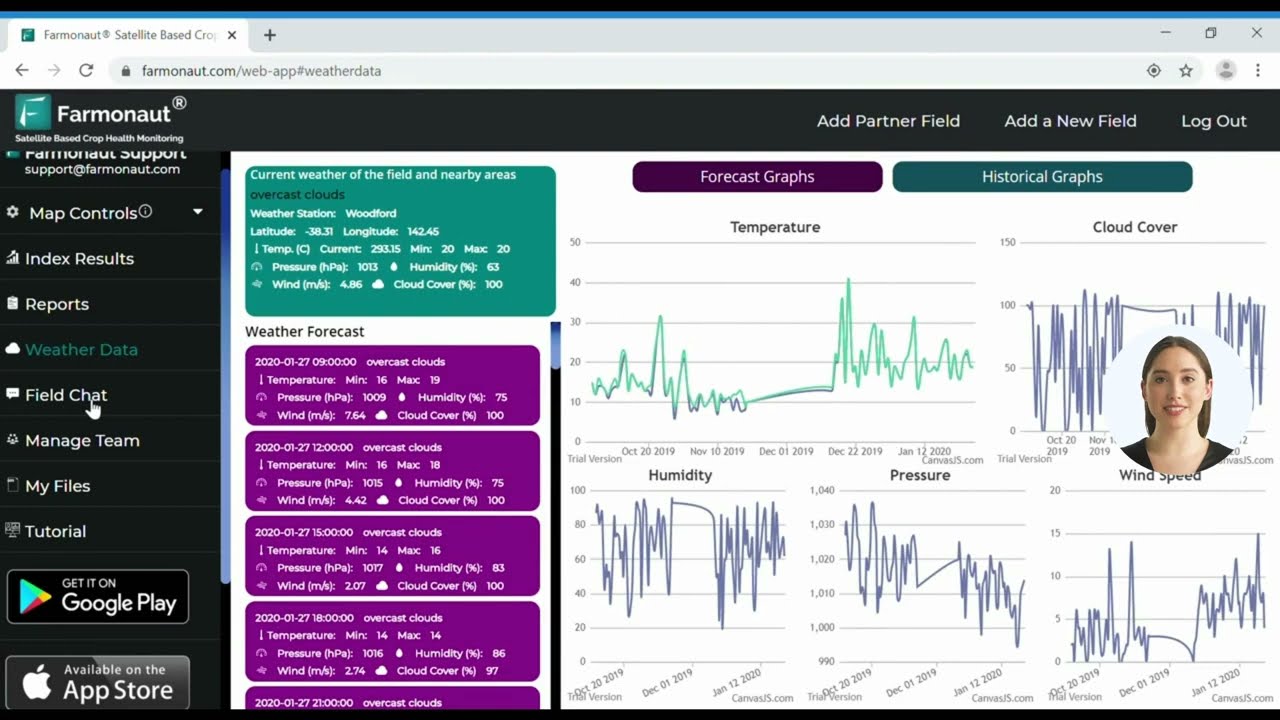
- Multispectral satellite monitoring: Real-time insights into garnet deposits and mining activity, enhancing resource management and operational efficiency with precision.
- AI-powered advisory systems: Our proprietary Jeevn AI analyses geology, soil, and operational data to recommend optimal extraction strategies, reducing cost, energy use, and environmental impact.
- Blockchain traceability: Seamlessly enables traceability and transparency across the supply chain, securing market trust for ethically sourced garnet and related minerals.
- Fleet & equipment management: Optimize vehicle and resource allocation with data-driven tracking and logistics tools, boosting productivity and reducing emissions.
- Environmental monitoring: Monitor air, water, and soil health to comply with evolving regulations and proactively manage land restoration efforts.
All Farmonaut solutions are accessible via web, Android, and iOS:



Our API for developers:
Farmonaut Satellite Monitoring API
(API Developer Docs)
enables custom integration into large mining operations, supporting expansion and data interoperability.
Farmonaut also offers web-based solutions for streamlining crop and mining loan insurance verification, as well as large-scale project management, making regulatory compliance and risk minimization easier for mining enterprises.
Future Prospects: Garnet Industry in 2026 & Beyond
Heading into 2026, the future of the january birth gemstone rests on the shoulders of technology, sustainability, and market diversification. Forecasts predict:
- Continued growth in industrial demand for high purity garnet—outpacing gem-only markets due to expansion in aerospace, electrical, and infrastructure sectors
- Greater use of synthetic garnet variants for specialized applications, easing pressure on natural deposits without sacrificing performance
- Rapid evolution of AI-driven ore processing, which improves efficiency, lowers cost, and virtually eliminates secondary waste
- Increasing regulatory focus on full traceability and carbon footprinting across mineral supply chains
- Enhanced geological understanding, thanks to satellite monitoring, revealing the soil and fertility implications of garnet mineralization for land managers and agricultural scientists
Ultimately, as the garnet sector leverages innovative extraction technologies and green practices, it remains a pillar of the modern resource economy and a beacon of progress in mining, environmental responsibility, and science.
FAQ: January Birth Gemstone & Garnet Mining
A: Garnet, with its stunning hues, has been traditionally recognized as the birthstone for January due to ancient beliefs in its protective qualities.
Q2: What countries are leading in garnet mining currently?
A: Major global deposits are found in India, Sri Lanka, the United States (notably Idaho and Alaska), and Africa (notably Tanzania, Madagascar, and Nigeria).
Q3: What industrial applications make garnet so important?
A: Industrial uses include waterjet cutting, sandblasting, filtration, and as a non-toxic substitute in abrasive processes within infrastructure, manufacturing, and high-precision sectors.
Q4: Are there sustainable options to natural garnet mining?
A: Yes! In addition to advances in sustainable extraction methods, research into high-quality synthetic garnets is reducing the environmental and supply impacts.
Q5: What is the difference between garnet and the January star stone (star topaz)?
A: Garnet is the official January birthstone with a broad range of colors and critical roles in mining and industry. The star topaz gemstone, although more associated with November, is prized for its rarity and unique visual star effect (asterism).
Q6: How does Farmonaut support sustainable, efficient garnet mining?
A: Farmonaut’s satellite-based monitoring, AI advisories, blockchain traceability, and fleet management tools offer mining companies real-time insights for resource optimization, regulatory compliance, and environmental stewardship.
Conclusion: Enduring Value & Timeless Significance
The January birth gemstone—garnet—continues to captivate and hold enduring significance as both a symbol of beauty and a backbone of modern industry. Its move beyond jewelry into industrial applications, supported by state-of-the-art mining and monitoring techniques, marks garnet’s contribution to the infrastructure and technologies shaping our world in 2026 and beyond.
As we look ahead, innovation and sustainability will continue to steer garnet’s journey—from its place amongst cherished stones to its critical roles within manufacturing, environmental management, and resource industries. The story of the January birthstone is one of timeless appeal and ever-evolving value—a perfect reflection of our changing times and the possibilities that lie ahead.
Farmonaut Subscription Plans
Choose the right plan to access satellite-driven insights and solutions for agriculture, mining, infrastructure, and environmental management:
Carbon Footprinting | Traceability | Crop Loan & Mining Insurance | Fleet Management | Large-scale Project Management
Discussion
Questions, corrections or field experience? Share them below. First-time comments are reviewed before they appear, and your email is never published.
No comments yet. Be the first to add a question or your experience.

 GemSprout Metals Limited
 Qader Group
 Ileys General Trading
 SG Gold Mining LLC
 VRV Global Pte Ltd
 Omsri International FZE
 G.I.T.T.
 Jaunita Erss Ltd
 Almosi SARL
 SRK Consulting
 Berks Gold Limited
 Mwerezi Minerals Company Limited
 Mining SARL
 SenGold Invest SAS
 Sean Mining Limited
 NTS Group (Pty) Ltd
 Mine4Africa
 Lithspo Minerals Limited
