

Middle Rare Earth Elements & Moon REEs: 2026 Prospects
Introduction: The Age of Middle Rare Earth Elements
In 2026, middle rare earth elements (MREEs) secure an unparalleled position in strategic industries and green infrastructure development. From powering the magnets in electric vehicles to enabling advanced defense systems and modern digital display technologies, MREEs are essential building blocks within the global resource landscape.
As the world transitions toward renewable energy and sustainable manufacturing, the spotlight has shifted to not only terrestrial REE mining but also the promising frontiers of moon rare earth elements (lunar mining). These emerging opportunities widen resource horizons and reframe the way industries approach supply security, environmental stewardship, and technological advancement.
This comprehensive guide explores the strategic significance, technological innovations, sustainable practices, and future prospects shaping the extraction and application of middle rare earth elements—with a special focus on the 2026 outlook and beyond.

Understanding Middle Rare Earth Elements (MREEs)
Rare earth elements (REEs) are a group of 17 chemically similar metallic elements that are essential to modern technology. REEs are typically divided into light rare earth elements (LREEs), middle rare earth elements (MREEs), and heavy rare earth elements (HREEs).
Middle rare earth elements mainly consist of:
- Samarium (Sm)
- Europium (Eu)
- Gadolinium (Gd)
- Terbium (Tb)
- Dysprosium (Dy)
MREEs occupy a unique position in the periodic classification of REEs due to their atomic numbers, chemical properties, and specialized applications.
- LREEs (Light REEs): Include elements like Lanthanum, Cerium, Praseodymium, Neodymium—generally more abundant and accessible.
- MREEs (Middle REEs): Sm, Eu, Gd, Tb, Dy—gaining heightened attention for their critical roles in advanced sectors.
- HREEs (Heavy REEs): Holmium, Erbium, Thulium, Ytterbium, Lutetium—typically rarer and present unique extraction challenges.
In 2026, the pivotal importance of middle rare earth elements manifests through their distinctive magnetic, luminescent, and catalytic properties—characteristics that make them indispensable for green energy, electronics, and strategic technologies.

Properties and Specialized Applications of Middle Rare Earth Elements
The unique chemical, magnetic, and luminescent properties of MREEs set them apart from other metallic elements and dictate their role in an array of specialized industrial and technological applications.
Distinctive Physical and Chemical Properties
- Magnetic Attraction: Samarium (Sm), terbium (Tb), and dysprosium (Dy) are vital in magnets boasting superlative strength and high-temperature stability.
- Luminescence: Europium (Eu) is a cornerstone in the vibrant red phosphors used in television screens, smartphones, and LED lighting.
- Catalytic Efficiency: Gadolinium (Gd) and samarium are leveraged as catalysts in petrochemical processing and as neutron absorbers in nuclear control rods.
Indispensable Roles in Modern Technologies
- NdFeB Magnets: Terbium and dysprosium toughen neodymium-iron-boron (NdFeB) magnets found in EV motors, wind turbines, and robotics.
- Phosphors: Europium and gadolinium provide high-efficiency lighting for smart grids, displays, and medical imaging equipment.
- Nuclear Reactors: Samarium and gadolinium’s neutron-absorbing capacity stabilizes reactor operations and reinforces safety.
- Specialty Glass and Lasers: MREE-doped materials enhance performance in advanced optics, fiber lasers, and space communication technologies.
As the march toward renewable energy and decarbonization accelerates, these applications render MREEs almost irreplaceable in the infrastructure powering the global shift to a cleaner, connected future.

Mining and Extraction: Challenges and Technological Advances
Mining middle rare earth elements is a complex, multi-stage process, often fraught with unique challenges due to geochemical properties and environmental considerations. In 2026, innovation is reshaping both traditional and next-generation extraction.
Mining Complexities and Extraction Barriers
- Geochemical Occurrence: MREEs are often found as by-products within LREE or HREE deposits, making the concentration and separation process particularly challenging.
- Mineralogy: Most REE mining globally focuses on bastnäsite and monazite. However, in Southeast Asia’s ion-adsorption clays and Africa’s carbonatite complexes, new projects are increasingly targeting MREE-rich deposits.
- Lower Recovery Rates: The extraction efficiencies of MREEs typically lag behind LREEs, limiting raw output and supply availability.
- Environmental Impact: Waste management, water contamination, and radioactive by-products present major environmental and regulatory hurdles.
Technological Innovations Transforming Extraction
- Hydrometallurgical Processing: Enhanced leaching and solvent extraction techniques are being optimized to increase selectivity and efficiency for MREEs.
- Selective Beneficiation: Advances in ore sorting, AI-driven ore characterization, and precision flotation improve separation from gangue minerals.
- Waste Management: Modern mining projects now integrate carbon footprint monitoring and environmental controls to reduce disruption, aligning with global sustainable practices.
- Recycling and Secondary Resources: New processes target REE recovery from spent magnets, electronic waste, and phosphor-containing materials.
Emerging mining projects in Southeast Asia and Africa are setting new benchmarks by prioritizing sustainability with improved waste management and minimum environmental disruption, as underscored by 2026 industry standards.

MREE Demand, Supply, and Global Distribution
As we approach 2026, the demand for middle rare earth elements continues to escalate, driven primarily by the expansion of electric vehicles, renewable energy infrastructure, and defense technologies.
Supply Chain Dynamics
- Concentrated Production: A significant share of global MREE production is concentrated in China, creating upstream supply chain vulnerabilities and geopolitical risks.
- Emerging Sources: New resource development in Southeast Asia and Africa seeks to diversify global supply chains and reduce overreliance on a single supplier.
- Recycling: Secondary sources are increasingly important in stabilizing supply and meeting surging demand.
2026 Supply & Demand Indicators
- EV Boom: Demand for dysprosium and terbium is forecast to rise by over 60% by 2026 due to electric vehicle proliferation.
- Wind Energy: Expansion of offshore and onshore wind farms continues to drive gadolinium and samarium consumption for high-efficiency magnets.
- Defense Investments: Increased attention to national security elevates demand for REEs in radar, sonar, and missile guidance systems.
Supply disruptions, sustainable mining practices, and geopolitical tensions remain prominent challenges, underscoring the need for strategic investment and technology-driven efficiency.
Benefits of Resource Traceability
Ensuring transparent tracking of rare earth material flows is vital. Blockchain-enabled traceability systems, such as those linked to Farmonaut’s Product Traceability, help authenticate supply chains, combat fraud, and enhance sustainability for mining operators and buyers worldwide.
Role of Middle Rare Earth Elements in Infrastructure and Green Technologies (2026)
The expansion of infrastructure for electric vehicles (EVs), renewable energy grids, and energy-efficient systems directly amplifies demand for middle rare earth elements.
Powering Renewable Energy Infrastructure
- Wind Turbines: Terbium and dysprosium are essential for NdFeB magnets that drive energy generation across global wind farms.
- Energy-Efficient Grids: Europium- and gadolinium-based phosphors improve energy conversion and transmission in modern, smart power grids.
Driving Electric Mobility
- Electric Vehicles: Dysprosium and terbium fortify high-strength magnets that deliver torque and reliability in EV motors.
- Battery Technology: Samarium- and gadolinium-compound batteries are emerging contenders for next-generation, high-capacity energy storage.
Modern Displays and Lighting
- Smartphones and LED Displays: Europium imparts bright reds and brilliant color fidelity in devices; gadolinium supports high-brightness displays and X-ray imaging.
- Energy-Saving Lighting: MREE-enhanced phosphors reduce energy consumption in residential, commercial, and industrial sectors.
These transformative technologies highlight the strategic and indispensable role of MREEs in innovating for a sustainable, low-carbon future.
Sustainable Practices and Environmental Impact Monitoring
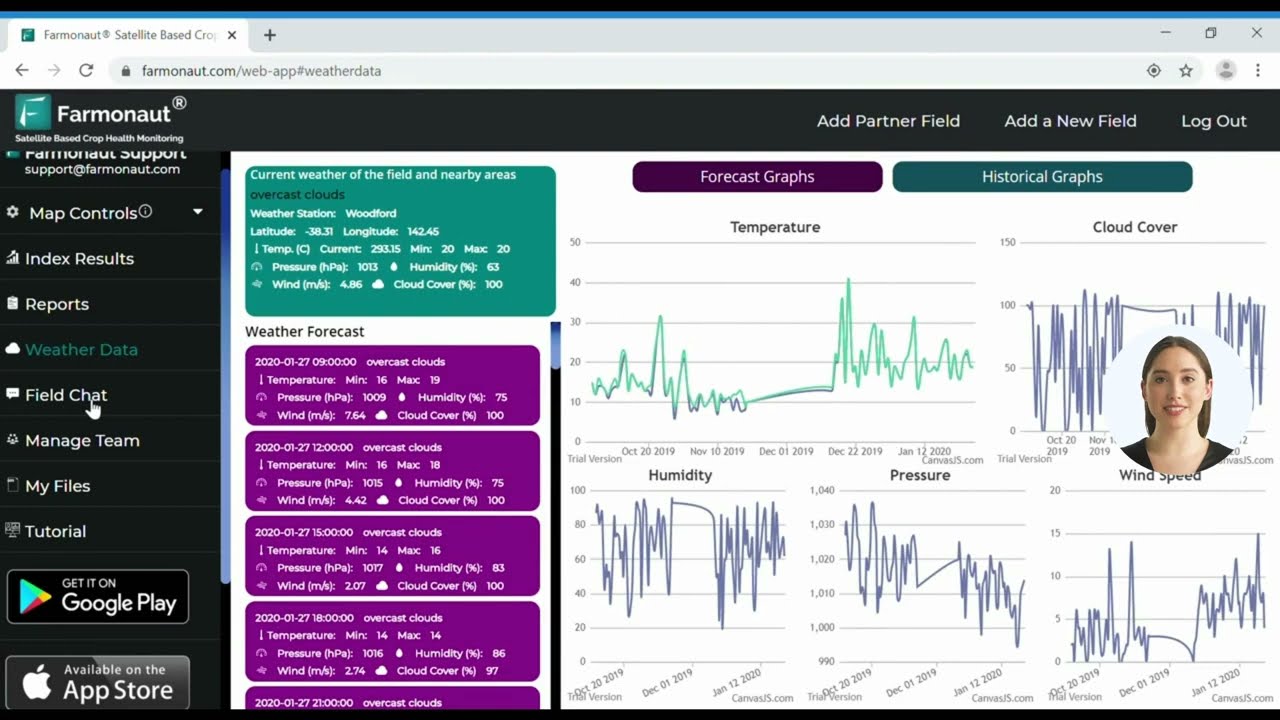
Cutting-edge environmental monitoring tools are needed to assess and minimize the impact of REE mining. Solutions like Farmonaut’s Carbon Footprinting provide mining companies with actionable data on emissions and resource use, driving regulatory compliance and sustainable extraction.
Strategic Significance: Defense and National Security
Middle rare earth elements are at the heart of high-value defense technologies, playing a critical role in ensuring national security and technological sovereignty.
Key Defense Applications
- Precision-Guided Munitions: Terbium and dysprosium are used in the magnets that guide missile systems and smart munitions.
- Advanced Sensors: Europium and gadolinium are pivotal in high-sensitivity sensors for aviation, spacecraft, and battlefield detection systems.
- Jet Engines and Stealth: Samarium and gadolinium improve the performance and heat resistance of high-tech alloys in jet propulsion and stealth technologies.
Mitigating Supply Risks
With global MREE production concentrated in a handful of countries, governments in Europe, North America, and Asia are investing in domestic mining and recycling programs to bolster national security and safeguard defense infrastructure against supply disruptions.
The Next Frontier: Moon Rare Earth Elements and Lunar Mining Prospects
In 2026 and beyond, the moon emerges as a strategically significant domain for the future of rare earth elements. Lunar regolith is known to contain trace but valuable rare earth resources, offering the prospect of extra-terrestrial mining on an industrial scale.
Why Lunar Mining Now?
- Huge Resource Potential: By 2026, lunar mining could unlock over 1 million tons of rare earth elements, including vital MREEs like samarium, gadolinium, terbium, and dysprosium.
- Alleviating Terrestrial Constraints: Moon-sourced REEs promise to relieve supply bottlenecks, lower geopolitical risks, and reduce the burden on Earth’s ecosystems.
- Geopolitical Implications: Early movers in lunar exploration and mining (e.g., via NASA Artemis and commercial lunar ventures) may set the future rules for spaced-based resource extraction.
Technological Barriers and Emerging Innovations
- Robotics and Automation: Robotic rigs, tele-operated vehicles, and autonomous prospectors are in development for remote-controlled lunar mining.
- AI-Powered Exploration: Advanced imaging, geophysical mapping, and AI-driven data analytics guide resource location and extraction efficiency.
- Resource Processing: On-site beneficiation using solar energy and low-gravity adapted hydrometallurgy are in pilot stages.
While moon rare earth elements extraction remains in early stages, ongoing exploration and advancements in mining technologies signal a paradigm shift in future resource security—potentially establishing the Moon as an off-Earth strategic supply hub.

Comparison of Middle Rare Earth Elements: Terrestrial vs Moon Sources (2026 Outlook)
| REE Name | Major Terrestrial Sources (2026 prod., MT) | Key Moon Prospect Sites (Resource Potential, MT) | Strategic Applications | Current Extraction Technology | Projected Technological Advancement by 2026 |
|---|---|---|---|---|---|
| Samarium (Sm) | China (1500), Africa (300), SE Asia (100) | Lunar Highlands (~200,000+) | Magnets, battery alloys, nuclear rods | Solvent extraction, ion-exchange | AI-guided ore sorting, robotic mining |
| Gadolinium (Gd) | China (1000), Africa (200), SE Asia (100) | Regolith Basins (~130,000+) | MRI, phosphors, wind turbines | Solvent extraction | On-site lunar processing, AI-mapping |
| Terbium (Tb) | China (650), Africa (90), SE Asia (60) | Lunar Maria (~90,000+) | Magnets for EVs, displays, defense | Hydrometallurgy, flotation | Robotic extraction, in-situ leaching |
| Dysprosium (Dy) | China (750), Africa (175), SE Asia (60) | Polar Craters (~110,000+) | Magnets, sensors, aerospace | Leaching, solvent extraction | Autonomous mining, advanced separation |
| Europium (Eu) | China (310), Africa (45), SE Asia (20) | Lunar Regolith (~60,000+) | Phosphors, lighting, nuclear | Solvent extraction | Remote AI monitoring, lunar beneficiation |
Note: All values are best estimates for 2026 and are subject to change based on ongoing exploration, extraction technology, and resource assessment.
Satellite-Driven Innovation: Farmonaut’s Role in Mining and Rare Earth Infrastructure
In the high-stakes world of middle rare earth elements mining and infrastructure, satellite-based data, AI, and blockchain technology offer game-changing benefits for resource optimization, environmental compliance, and supply chain transparency.
How Farmonaut Supports Mining Operators, Governments, and Industry Stakeholders
-
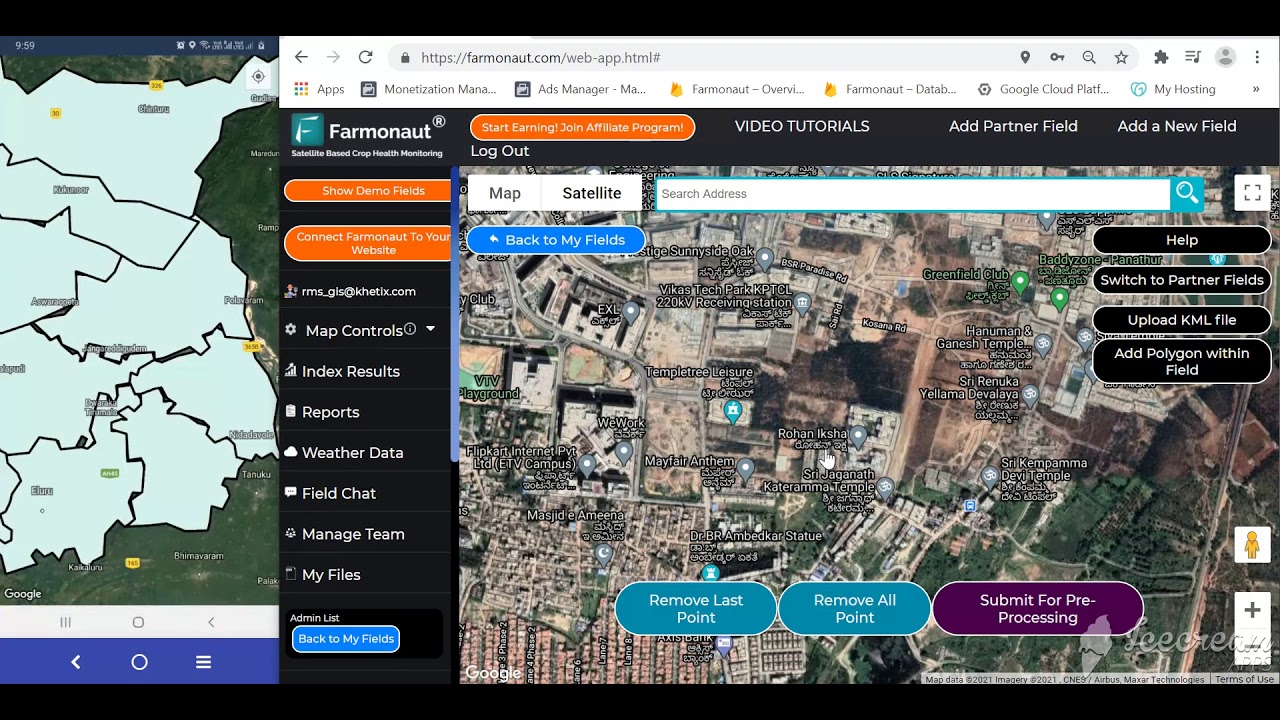
Real-Time Satellite-Based Monitoring: We empower mining companies to continuously monitor extraction sites, waste management zones, and infrastructure via our multispectral satellite imagery.
- Assessing vegetation impact around mines
- Surface anomaly detection for new deposits
- Enhanced resource management and compliance auditing
- AI Advisory for Operations: Our Jeevn AI-based Agri & Mining Advisory Platform is designed to deliver predictive insights, weather analytics, and operational efficiency recommendations to mining and energy sector clients.
- Blockchain Traceability: We offer blockchain-enabled tracking of rare earth elements for robust, tamper-proof sourcing records—proving essential for supply chain trust and ESG goals.
- Environmental Impact and Carbon Tracking: Through our environmental monitoring tools, mining clients gain actionable insights for reduced emissions and compliance reporting.
- Fleet & Resource Management: With fleet management solutions, mining and infrastructure enterprises can optimize vehicle routing, reduce costs, and streamline on-site operations.
- Integrated APIs: Developers and corporate users can incorporate our satellite insights directly into their business platforms via our secure API. Technical documentation for developers is available at Farmonaut API Developer Docs.
- Subscription Access: Our tiered subscription model is designed to meet varied business needs, from individual mining operators to multi-site conglomerates and governmental agencies.



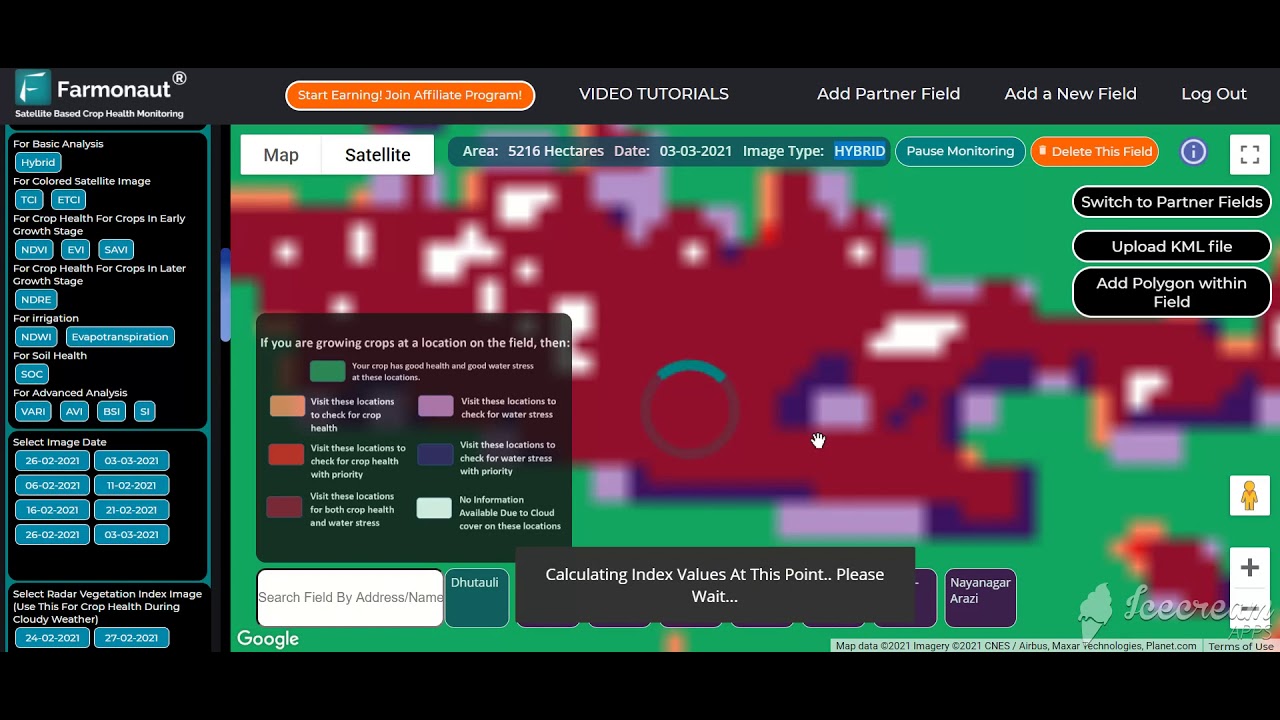
Why Satellite-Driven Mining Intelligence?
- Reduce operational risk and environmental harm.
- Accelerate discovery of new REE deposits.
- Enable transparent and secure traceability from mine to market.
These integrated technologies reinforce sustainable, efficient, and future-ready mining practices for the global REE sector.
Future Prospects: MREEs, Green Energy, and Lunar Mining Beyond 2026
Looking beyond 2026, the prospects for middle rare earth elements and moon rare earth elements appear increasingly central to humanity’s advancement.
Key Trends Shaping the MREE Ecosystem
- Sustainable Mining Expansion: With ongoing resource depletion, new sustainable practices—including AI-based precision monitoring and blockchain traceability—will become the industry norm.
- Moon Mining Commercialization: As technologies mature and feasibility improves, lunar REE mining could move from pilot programs to full-scale operations, delivering strategic materials for the global economy.
- Policy and Investment: Accelerated investment in strategic mining projects, recycling programs, and supply chain security will continue across all major industrialized regions.
- Technological Leapfrog: Rapid innovation in extraction, processing, and remote resource management will further reduce costs, improve yields, and minimize ecological disruption.
Farmonaut’s Commitment to the Future of Rare Earths
We are dedicated to enabling the sustainable, efficient, and secure extraction and management of rare earth elements—whether on Earth or on the Moon. Our suite of satellite-based services, AI tools, and blockchain systems ensures that operators, governments, and industry partners are fully equipped for the challenges and opportunities of tomorrow’s REE landscape.
Frequently Asked Questions (FAQ)
What are middle rare earth elements (mrees), and why are they so important?
Middle rare earth elements (MREEs) primarily include samarium, europium, gadolinium, terbium, and dysprosium. Their unique magnetic, luminescent, and catalytic properties make them vital in renewable energy (wind turbines, EVs), advanced electronics, and defense technologies.
How are MREEs different from light (LREEs) and heavy (HREEs) rare earth elements?
LREEs are generally abundant and easier to extract, while MREEs occupy a unique position in the periodic table with specialized industrial uses. HREEs, although rare, come with their own technological challenges and applications.
What are the main environmental challenges from MREE mining?
Challenges include radioactive waste, water and soil contamination, and ecological disruption. Advanced monitoring tools, such as satellite-based carbon footprint solutions, aid in reducing these impacts by supporting more sustainable mining practices.
How could lunar mining impact the global supply of rare earth elements?
Moon rare earth elements mining could potentially unlock over 1 million tons of REEs, diversifying and expanding global supply, reducing geopolitical tensions, and establishing the Moon as a future resource hub.
What is Farmonaut’s role in supporting mining and REE supply chains?
We provide satellite-based monitoring, AI advisory, traceability (blockchain), fleet/resource management, and environmental impact tools. These innovations help reduce risk, support sustainable extraction, improve traceability, and empower global resource management.
How do I start using Farmonaut’s platform for rare earth mining or environmental monitoring?
You can start by visiting our web application or download the Android app or iOS app. API solutions for developers are available at API and API Docs.
Conclusion: MREEs at the Heart of Technological and Cosmic Evolution
Middle rare earth elements are the linchpins of technological innovation, green infrastructure, and strategic security in 2026 and beyond. Their distinctive properties and interconnected roles in modern industry, defense, and sustainable energy underscore their growing strategic significance.
As mining advances and lunar resources become more accessible, the convergence of Earth-based and moon rare earth elements will shape the resource landscape of the future. Regional expansion in Southeast Asia and Africa, coupled with the emergence of blockchain-enabled traceability and AI-driven exploration, will further enhance the efficiency and sustainability of MREE supply chains.
We at Farmonaut remain committed to supporting this dynamic sector through satellite-powered insights, AI advisory, blockchain traceability, and environmental impact monitoring. Our platform ensures that mining operators, industries, and governments are fully equipped to harness the promise of rare earth elements—both on Earth and beyond.

 Huckleberry Garnet LLC
 Dalgety Minerals Pty Ltd
 Vortex Minerals Pty Ltd
 Faith At Work (Pty) Ltd
 Geotech Mining Solutions plc
 Vulcan International Limited
 Kidepo Associates
 GKY Mining
 Alkimy SARL
 Double A Trading
 GemSprout Metals Limited
 Qader Group
 Ileys General Trading
 SG Gold Mining LLC
 VRV Global Pte Ltd
 Omsri International FZE
 G.I.T.T.
 Jaunita Erss Ltd
 Almosi SARL
 SRK Consulting
 Berks Gold Limited
 Mwerezi Minerals Company Limited
