

Top Lithium and Cobalt Mining Companies 2025 Guide
“Over 60% of the world’s cobalt comes from companies in the Democratic Republic of Congo, fueling EV battery production.”
Introduction: The Pivotal Role of Lithium and Cobalt Mining Companies
Lithium and cobalt mining companies stand at the forefront of a global revolution in energy, transportation, and technology as we enter 2025. Their operations are the backbone of modern battery production, vital to electric vehicles (EVs), grid-scale energy storage, and the billions of portable electronic devices we rely on daily. The critical minerals these firms extract underpin the global transition to clean, sustainable energy solutions, shaping economies, supply chains, and technological innovation worldwide.
The surge in demand for reliable, high-density rechargeable batteries continues to accelerate, prompting intensified investment, operational expansion, and significant advancements in the sector. Yet, alongside these opportunities, the industry faces ongoing challenges in responsible sourcing, environmental management, and social governance—placing an ever-higher bar for industry leaders to meet 2025’s expectations for sustainability and ethical practices.
2025 Market Overview: Regions, Demand & Strategic Developments
The world’s major lithium and cobalt mining companies primarily operate in regions uniquely rich in these critical minerals. Lithium is mainly produced in South America’s “Lithium Triangle”—encompassing Chile, Argentina, and Bolivia—and in Australia, the globe’s current top lithium producer. Cobalt, meanwhile, is predominantly sourced from the Democratic Republic of Congo (DRC), a nation whose production supports well over half the world’s cobalt supply.
The strategic importance of these locations has led to increased investment and technological innovation aimed at maximizing extraction efficiency while reducing ecological and social impacts. In 2025 and beyond, the supply chain of these essential components is evolving rapidly, driven by both rising demand and more rigorous regulations for clean, sustainable mining operations.
“In 2025, lithium demand for batteries is projected to surge by 33% as sustainable mining practices become industry standard.”
Focus on Lithium and Cobalt Mining Companies: Their Expanding Role in Battery Supply
As global battery production surges for EVs, stationary energy storage solutions, and consumer electronics, lithium and cobalt mining companies are at the center of this energy paradigm shift. Lithium plays a key role in battery chemistry, with an evolving market experimenting with lithium iron phosphate (LFP) and high-nickel cathode materials for improved performance and cost. Yet, cobalt remains crucial to battery energy density, thermal stability, and circularity—especially for electric vehicles requiring long-range capabilities.
Their role is not limited to raw extraction. Many leading companies are now investing in downstream processing, battery recycling, and even cathode material production, creating vertically integrated supply chains that better align with the demands of rapidly changing battery technologies and market expectations.
The Global Map: Key Regions in Lithium and Cobalt Mining
- South America’s Lithium Triangle: Chile, Argentina, Bolivia – brine extraction from vast salt flats.
- Australia: Hard-rock (spodumene) lithium mining—world’s largest annual lithium producer.
- Democratic Republic of Congo (DRC): Primary supplier of cobalt, but faces significant social and environmental challenges.
- Emerging Regions: Canada, China, Russia, Zimbabwe, and select EU countries are increasing their stakes in both lithium and cobalt extraction and processing.

2025: Rising Demand and Market Shifts
Rising demand for rechargeable batteries is pushing lithium and cobalt production to new highs. Industry analysts forecast a 33% YoY increase in lithium demand, while cobalt demand is also expected to intensify as battery manufacturing scales up to meet clean energy transition goals worldwide. This puts more pressure on mining companies to maximize output without compromising on ethical or environmental standards.
The Global Supply Chain: Ethics, Challenges, and Solutions
The chain from raw resource to finished battery is extraordinarily complex. Lithium and cobalt mining companies must navigate a tangle of logistics, processing steps, and international regulations, managing everything from brine extraction or hard-rock mining, through refining and chemical conversion, to supply agreements with battery and EV manufacturers.
- Supply Chain Transparency: Traceability is now paramount. Battery manufacturers and automakers require strict documentation to ensure supplies are ethically sourced, especially from regions with known human rights concerns like the DRC.
- Ethical Sourcing Initiatives: Certification schemes such as the Initiative for Responsible Mining Assurance (IRMA), Cobalt Refinery Supply Chain Due Diligence Standard, blockchain ledger tracking, and digital supply platforms are increasingly the norm.
- Challenges for Cobalt Producers: The DRC is both a blessing and a challenge, as the region’s primarily artisanal mining sector can be linked to child labor risks and unsafe conditions, compelling global industry leaders to adopt robust auditing and management systems.
- Geopolitical Pressures: Countries with major reserves—South America, Australia, DRC—seek to expand their influence and benefit from value-added stages like refining or battery precursor production locally, minimizing raw mineral exports and intensifying competition within the sector.

Key Initiatives Enhancing Supply Chain Ethics
- Blockchain-Based Traceability: Technologies like those available with traceability solutions (e.g., Farmonaut’s blockchain integration) are setting new benchmarks for documenting an unbroken chain from mine to battery manufacturer.
- On-Site Auditing and Certification: Regular audits, community engagement, and certification by IRMA or ICMM (International Council on Mining & Metals) help assure that minerals are ethically sourced and that social as well as environmental standards are upheld throughout the supply chain.

Driving Sustainability and Technological Innovation in Lithium and Cobalt Mining Companies
The dominant theme for lithium and cobalt mining companies in 2025 is a fundamental shift toward sustainability—prompted by regulatory pressures, investor expectations, and the global need for sustainable energy solutions. Industry leaders are implementing a raft of new practices and technologies aimed at reducing their footprint and mitigating ecological damage.
Key Initiatives in Environmental Management, Recycling & Water Usage
- Utilizing Renewable Energy: Many sites are being powered with solar, wind, or hydroelectric sources, dramatically cutting operational carbon footprints.
- Improving Water Management: In arid regions like Chile or Australia, advanced water recycling and brine management systems help conserve vital resources and protect downstream ecosystems.
- Advancing Battery Recycling: Leading companies are investing in closed-loop battery recycling technologies to recover lithium, cobalt, and other valuable components from used batteries, reducing dependence on newly-mined minerals.
- Advanced Extraction and Processing: New techniques—such as Direct Lithium Extraction (DLE) and hydrometallurgical cobalt processing—enhance recovery rates and energy efficiency, with a dramatically lower environmental footprint.
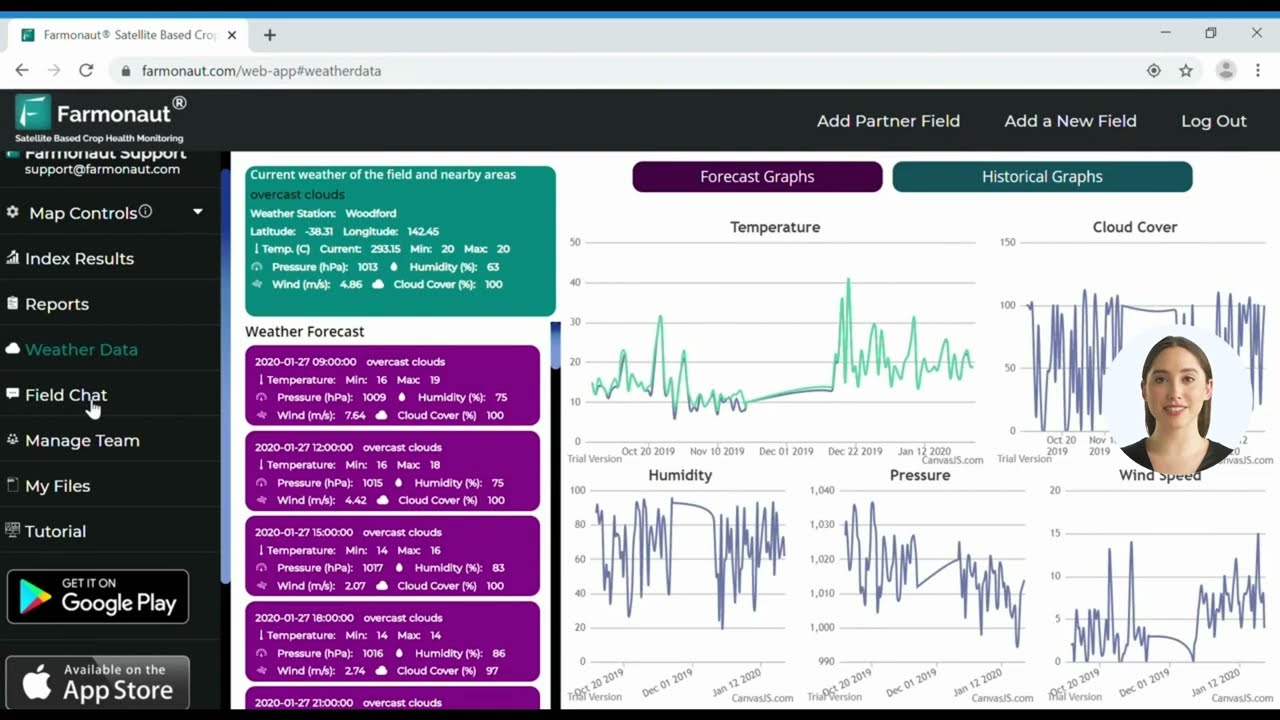
Farmonaut’s carbon footprinting (learn more here) helps companies in the mining sector monitor and minimize their emissions, staying compliant with tightening global standards and consumer expectations.

Social Responsibility & Ethical Management
- Community Engagement: Companies are investing in local development—schools, healthcare, infrastructure—to ensure their presence delivers positive social outcomes alongside economic benefits.
- Eliminating Child Labor: Strict supplier screening, on-the-ground auditing, and close collaboration with NGOs are being implemented to address one of the biggest challenges in places like the DRC.
- Diversity, Equity and Inclusion: Workforce training and inclusive employment practices further support the sector’s positive social impact.
Reducing Environmental Footprint & Responsible Mining Practices
Modern lithium cobalt mining companies are actively working to reduce their footprint and mitigate impact on local environments. Here are some of the best practices and emerging technologies shaping responsible mining:
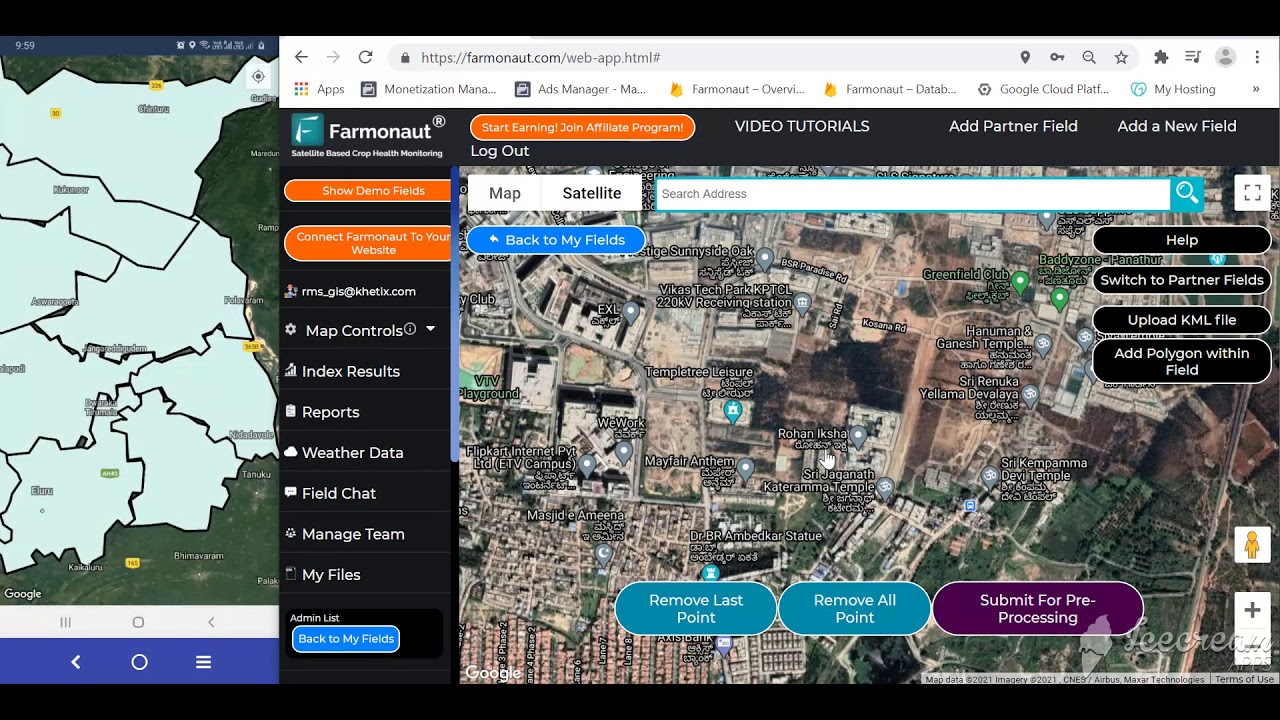
- Site Selection: Enhanced satellite-based risk assessments and environmental studies—like those facilitated by advanced platforms such as Farmonaut—help identify viable sites with the least environmental and social disturbance.
Fleet and Resource Management can further optimize operations and reduce unnecessary travel, fuel use, and ecological impact through real-time monitoring. - Direct Lithium Extraction (DLE): A transformative approach, DLE can recover up to 80-90% of lithium from brine, using less water and leaving behind fewer contaminants than traditional evaporation ponds.
- Hydrometallurgical Cobalt Processing: Produces higher-purity cobalt and generates less hazardous waste, accelerating the transition to greener battery materials.
- Mine Rehabilitation: Post-mining, companies replant, reforest, and restore habitats, often exceeding regulatory requirements for environmental stewardship.



Access real-time satellite monitoring and traceability solutions for lithium cobalt mining companies with Farmonaut’s platform and APIs (Live API | API Developer Docs).


Comparison Table of Leading Lithium and Cobalt Mining Companies (2025) with Sustainability and Innovation Metrics
| Company Name | Country/Region | Est. Annual Lithium Production (tonnes) | Est. Annual Cobalt Production (tonnes) | Sustainability Certification | Ethical Sourcing Commitment | Notable Green Technologies Adopted | Partnerships with Battery/Energy Firms | Environmental Impact Score (2025 est.) |
|---|---|---|---|---|---|---|---|---|
| Albemarle Corporation | USA, Chile, Australia | 100,000 | N/A | IRMA | Yes | Brine recycling, solar energy use, advanced DLE | Tesla, Panasonic | 8.5 / 10 |
| SQM (Sociedad Química y Minera) | Chile | 110,000 | N/A | ICMM, IRMA | Yes | Water reclamation, solar energy, brine optimization | LG Energy Solution | 8.3 / 10 |
| Ganfeng Lithium | China, Argentina, Australia | 85,000 | N/A | IRMA | Yes | DLE, battery recycling plants, solar/wind power | CATL, Volkswagen | 8.0 / 10 |
| Tianqi Lithium | China, Australia | 80,000 | N/A | IRMA | Yes | Hydro/solar power integration, chemical recycling | BYD Batteries | 7.9 / 10 |
| Glencore | DRC, Australia, Canada | N/A | 32,000 | ICMM | Yes | Cobalt hydrometallurgy, rainwater harvesting | General Motors | 7.5 / 10 |
| China Molybdenum Co., Ltd. (CMOC) | DRC, China | N/A | 29,000 | ICMM | Yes | Automation, tailings recapture, on-site renewables | Contemporary Amperex Technology (CATL) | 7.2 / 10 |
| Jervois Global | Australia, USA, DRC | N/A | 7,000 | IRMA | Yes | Blockchain traceability, solar power operations | Battery materials consortia | 7.8 / 10 |
| Vale S.A. | Brazil, Canada | N/A | 5,000 | IRMA | Yes | Water management, forest offset programs | Tesla | 8.1 / 10 |
| Pilbara Minerals | Australia | 65,000 | N/A | IRMA | Yes | Solar energy, brine optimization | Northvolt | 8.0 / 10 |
| Norilsk Nickel | Russia | N/A | 5,500 | ICMM | Yes | Green smelting, online emissions tracking | BYD | 6.7 / 10 |
*All data are industry estimates for 2025, subject to operational changes and market reporting. Table provides an SEO-focused snapshot of the best-known lithium and cobalt mining companies, their sustainability efforts, and partnerships.
Future Trends: Technological Innovation, Processing, and Vertical Integration
Looking to the years ahead, lithium and cobalt mining companies are not only expanding their extraction capabilities but also becoming significant contributors to advanced battery materials processing and recycling. As new technologies emerge, industry leaders are seeking to move beyond raw resource extraction:
- Direct-to-Battery Partnerships: Increasingly, mining companies are forming direct contracts with battery manufacturers and EV companies to ensure supply chain security, innovation in materials, and joint investment in greener production lines.
- Battery Recycling Expansion: Firms are rapidly adopting recycling technologies to recover lithium and cobalt from end-of-life batteries—reducing both mining requirements and waste.
- Global Policy and Investment: Both resource-rich and importing countries are investing heavily in domestic processing and refining capacity. This not only captures more economic value but also provides resilience in critical minerals supply chains against global disruptions.
- Vertical Integration: Many top lithium and cobalt mining companies are producing pre-cursor materials (like lithium carbonate, hydroxide, NMC cathode mixes) for direct delivery to the rapidly expanding gigafactory network.
- AI, Satellite, and Digital Innovations: Data intelligence, machine learning, and satellite monitoring—such as systems we offer at Farmonaut—enable more efficient prospecting, extraction, site management, and regulatory compliance.
Mining companies also explore advanced environmental services and compliance to meet new international policy frameworks, such as the European Battery Regulation and evolving ESG standards.
For companies and governments seeking actionable insights and trustworthy compliance, advanced resource management tools and satellite-based verification (for loan/insurance purposes) are increasingly sought out due to their cost efficiency—empowering data-driven decisions at every level of the value chain.
How Farmonaut Empowers Mining Sustainability & Traceability
At Farmonaut, we have developed a comprehensive suite of satellite AI-platforms and APIs empowering the mining sector with real-time monitoring, blockchain traceability, and resource management—all critical for lithium and cobalt mining companies aiming to meet 2025’s high ethical and sustainability standards.
- Satellite-Based Site Monitoring: Our technologies utilize high-resolution multispectral imagery to monitor extraction, reclamation, and operational footprints at lithium and cobalt mines worldwide.
- Blockchain Traceability: We integrate blockchain technology into mining and supply chains to ensure every gram of mineral is tracked from mine to manufacturer in a tamper-proof, auditable record. (Explore our traceability features)
- Carbon Footprint Analysis: Our real-time emission monitoring allows mining companies to comply with international environmental regulations, optimize resource use, and minimize impact.
- AI-Based Advisory Systems: With our unique Jeevn AI module, clients receive tailored operational and environmental guidance based on live satellite statistics and weather trends, supporting both daily decisions and strategic planning.
- Fleet & Resource Optimization: Our digital fleet management tools enable efficient deployment of machinery, reducing fuel use and emissions across vast sites.
Through our carbon footprinting and large-scale site management technologies, we help lithium and cobalt mining companies drive true value from compliance and efficiency to sustainability and transparency—delivering actionable insights you can trust.
Frequently Asked Questions (FAQ)
-
Q: Why are lithium and cobalt critical minerals?
A: Lithium and cobalt are essential components for rechargeable batteries that power electric vehicles, renewable energy storage systems, and portable electronic devices. Their unique chemical properties enable high energy density, rapid charging, and long lifecycle performance. -
Q: Where do lithium and cobalt mainly come from in 2025?
A: Lithium mainly comes from Chile, Argentina, Bolivia (“Lithium Triangle”), and Australia. Cobalt is predominantly sourced from the Democratic Republic of Congo (DRC), which supplies over half of the global cobalt demand. -
Q: What are the biggest challenges facing lithium and cobalt mining companies?
A: The top challenges include environmental impacts (water use, emissions, biodiversity), social issues (human rights, community disruption), supply chain transparency, and geopolitical risks. Companies are also under pressure to adopt ethical sourcing and innovative, greener technologies. -
Q: How are companies addressing environmental concerns?
A: By utilizing renewable energy, improving water management, adopting direct lithium extraction, advancing battery recycling, and monitoring their footprint with tools that include satellite/AI platforms like those from Farmonaut. -
Q: What role does blockchain play in mining supply chains?
A: Blockchain ensures traceability for minerals, creates a transparent audit trail from mine to battery, reduces fraud, and guarantees ethical sourcing, as seen in traceability platforms developed by firms like Farmonaut. -
Q: Is battery recycling significant for sustainability?
A: Yes, battery recycling is increasingly crucial to recover lithium, cobalt, and nickel, reducing the need for new mining and minimizing waste and environmental impact. -
Q: How can mining companies optimize their operations for sustainability?
A: By leveraging real-time monitoring, AI-based analytics, and blockchain traceability—such as those offered by Farmonaut—to enhance efficiency, transparency, and compliance with international environmental standards.
Conclusion: Shaping the Clean Energy Transition
In 2025, lithium and cobalt mining companies retain a pivotal, ever-evolving role in our collective push for clean energy, advanced technologies, and a sustainable future. Their efforts to balance production demands with environmental stewardship, social responsibility, and technological innovation will determine both their success and the pace at which the globe transitions to net-zero.
As critical minerals remain the cornerstone of battery technology, EVs, and renewable energy storage, continuous advancements in extraction, processing, blockchain traceability, and satellite monitoring will be the hallmarks of sustainable progress. The industry’s ongoing pursuit of supply chain transparency, ethical leadership, and environmental integrity underscores its enduring impact on global sustainability.
Innovations in mining, recycling, and digital resource management—backed by platforms like Farmonaut—are proof that a cleaner, more sustainable future is not only possible but within reach. Stakeholders, from investors to communities and regulators, will continue challenging lithium and cobalt mining companies to innovate, evolve, and lead responsibly in building tomorrow’s energy ecosystem.
Explore the latest in satellite-powered mining sustainability, transparent traceability, and carbon management with Farmonaut today!
For API integrations for mining monitoring or environmental compliance: Farmonaut Mining API
Read our API developer documentation
For lithium and cobalt mining companies aiming to lead in 2025, the journey towards excellence in sustainability, supply chain integrity, and technological innovation is ongoing—powered by solutions that are as advanced as the challenges they address.
Discussion
Questions, corrections or field experience? Share them below. First-time comments are reviewed before they appear, and your email is never published.
No comments yet. Be the first to add a question or your experience.

 Nanita Company Limited
 Mwerezi Minerals Company Limited
 Congo Mining Solutions
 Mining SARL
 SenGold Invest SAS
 Sania Corporation
 Sean Mining Limited
 NTS Group (Pty) Ltd
 Mine4Africa
 Lithspo Minerals Limited
 Tintina Mining Group
 Dalgety Minerals Pty Ltd
 Vortex Minerals Pty Ltd
 Faith At Work (Pty) Ltd
 Geotech Mining Solutions plc
 Vulcan International Limited
 Kidepo Associates
 GKY Mining
 Licence holder · Nigeria · Gold + lithium










