

South Africa gold · Mine profile
Blyvoor Gold Mine: Owner, Output, Reserves and Mine Life
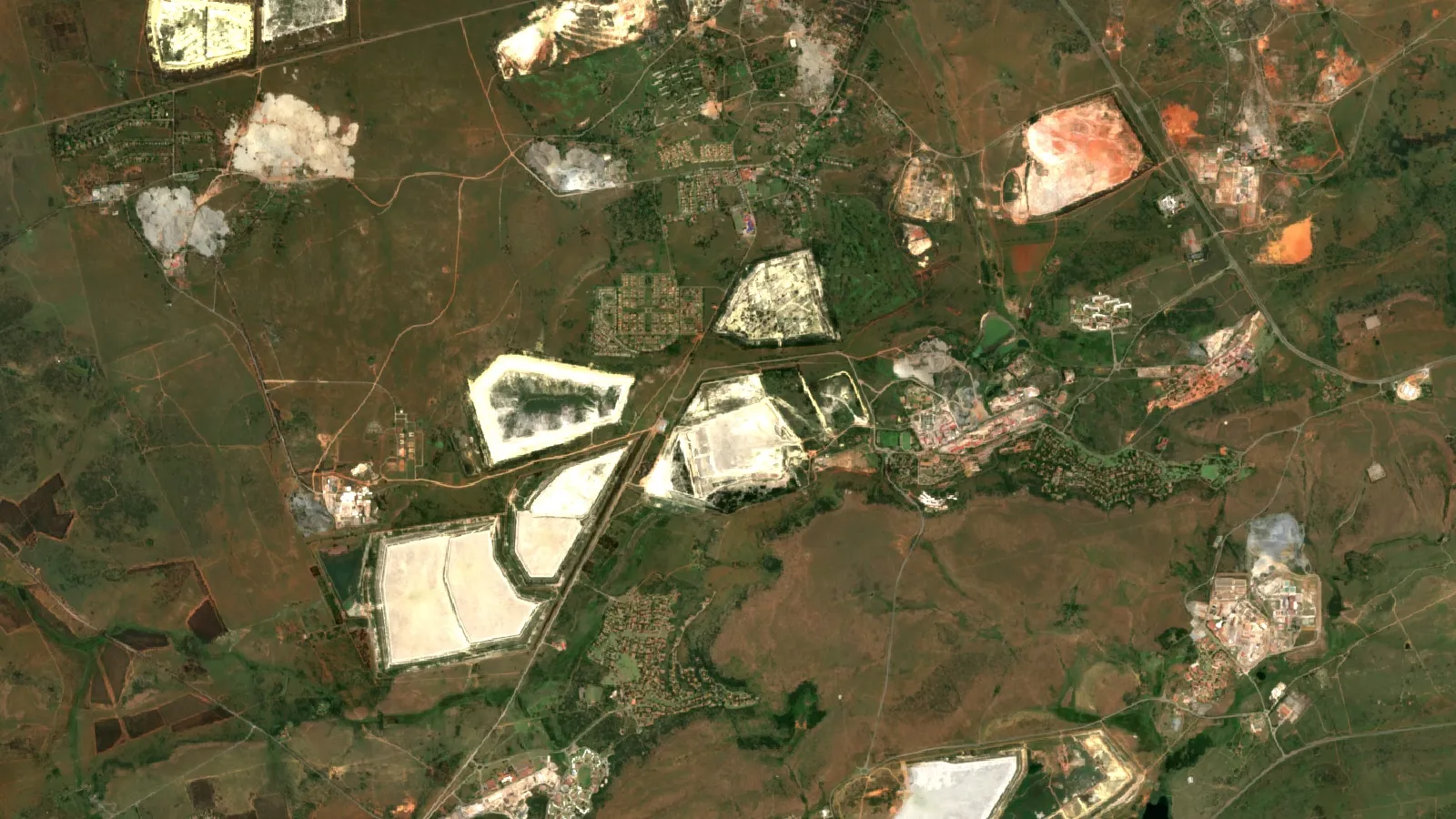
Blyvoor Gold Mine is a 74% Aurous Gold underground mine near Carletonville. It reported 3.80 Moz of reserves and 22,155 oz of output for the year to February 2024, against a plan averaging about 142,000 oz a year.
Key takeaways
- Ownership: Aurous Gold 74%, BEE holders 26% (SEC filing, 2025).
- Output was 22,155 oz in the year to February 2024, against a planned average of about 142,000 oz a year.
- Reserves were 21.33 Mt at 5.54 g/t for 3.80 Moz at 29 February 2024, using US$1,900/oz.
- The Rigel merger and Nasdaq listing ended by mutual consent on 7 November 2025 (SEC 8-K).
- A 34-year plan runs past the mining right’s 2047 expiry, so it assumes renewal.
In this article
- Blyvoor gold mine at a glance
- Who owns Blyvoor Gold
- Blyvoor gold mine history: from richest reef to liquidation
- Blyvoor gold production compared with the mine plan
- Blyvoor reserves, resources and grade
- Mine life compared with the mining right
- How Blyvoor compares with South African gold output
- Sustainability and environmental risks at Blyvoor
- Gauta Tailings Project
- What consultants should check on Blyvoor
- Where satellite imagery fits on a legacy goldfield
- Frequently asked questions
Blyvoor Gold Mine is an underground gold mine in the Carletonville goldfield of South Africa, 14 km southwest of Carletonville and 80 km southwest of Johannesburg. Blyvoor Gold Capital holds the mine, and Aurous Gold holds 74% of that company, according to a January 2025 SEC proxy filing. The filing reports 3.80 million ounces (Moz) of mineral reserves at 5.54 g/t, a 34-year mine plan and 22,155 ounces produced in the year to February 2024.
This page is a working profile for mining consultants and other professionals. It sets out who owns what, what the mine has produced against its plan, what the reserve figures mean, and where the technical risks sit. It also corrects a common error: older web pages describe Blyvoor as a large modern employer with thousands of jobs, when the filing shows a much smaller operation still rebuilding.
Blyvoor gold mine at a glance
| Item | Reported figure | Date and source |
|---|---|---|
| Location | 14 km southwest of Carletonville, Gauteng | SEC filing, 2025 |
| Mine type | Underground, conventional methods, narrow reefs | SEC filing, 2025 |
| Reefs mined | Carbon Leader Reef and Middelvlei Reef | SEC filing, 2025 |
| Ownership | Aurous Gold 74%; Black economic empowerment (BEE) holders 26% | SEC filing, 2025 |
| Mineral reserves | 21.33 Mt at 5.54 g/t for 3.80 Moz | 29 February 2024 |
| Production | 22,155 oz | Year to 29 February 2024 |
| Permanent staff | 1,324 | 29 February 2024 |
| Mining right | GP 30/5/1/2/2/143 MR, runs to 16 February 2047 | SEC filing, 2025 |
| Planned average output | About 142,000 oz a year over 34 years | Mine plan, February 2024 |
Two terms recur on this page. Grade in g/t means grams of gold per tonne of rock. A reef is a thin, gold-bearing layer of conglomerate, the pebbly rock that hosts Witwatersrand gold.
▶ How gold is mined and refined, step by step · 5:27
Who owns Blyvoor Gold
The ownership chain has two layers. Aurous Gold holds 74% of the mine through Blyvoor Capital. The other 26% is a BEE stake, split into 20% for the Blyvoor Workers Trust, 3% for the Blyvoor Community Trust and 3% for a vehicle focused on black entrepreneurs. A sister company in the same group, Gauta Tailings, holds 100% of the Gauta Tailings Project next door.
Orion Resource Partners, a US fund manager, has backed Aurous, as Miningmx reported in 2024. The same report names Richard Floyd as chief executive, and says Aurous had spent US$125 million on the revival by then. Peter Skeat, the late gold entrepreneur who bought the mine out of liquidation, is remembered in the name of the main shaft.
The Nasdaq listing that did not close
In March 2024 the group agreed to merge with Rigel Resource Acquisition Corp, a blank-cheque company, in a deal law firm Milbank valued at US$362 million. The combined company was to be called Aurous Resources and list on Nasdaq. It did not happen. On 7 November 2025 Rigel told the SEC that the parties had ended the agreement by mutual consent and that it would not complete a business combination before its 9 November 2025 deadline.
Anyone reading older articles should keep this in mind: they may describe Aurous Resources as a soon-to-be listed company. Blyvoor has no stock ticker from that deal. This page is for information only and is not investment advice.
Blyvoor gold mine history: from richest reef to liquidation
The mine dates from 1937 and was the first on the West Wits line, the western extension of the Witwatersrand gold belt. Production began in 1942 under Rand Mines. The name is not a phrase meaning better conditions, as some web pages say. The farm name Blyvooruitzicht is of Dutch origin and means happy prospect.
Infographic
Blyvoor in 5 stages
- 1FoundingEstablished in 1937, first gold in 1942.
- 2PeakWorld’s highest gold output reported for 1951.
- 3DeclineLosses under later owners, closed in 2013.
- 4RebuildAssets bought from 2014, refurbished 2019-2021.
- 5RestartProduction resumes in fiscal 2022.
The early results were remarkable. The SEC filing says Blyvooruitzicht was declared South Africa’s most profitable mine in 1950, built its first uranium plant that year, and had the highest gold output in the world in 1951. It puts cumulative output from the current mining right area, which includes the old Doornfontein mine, at over 50 Moz between 1942 and 2021.
Ownership then changed hands several times, and the decline after 2010 was fast.
- 1995: Blyvooruitzicht and Doornfontein merge under Rand Mines.
- 1997: DRD (now DRDGOLD) buys the merged company.
- 2009: DRDGOLD plans a court order to avoid liquidation, with monthly losses of almost US$3.62 million by October.
- 2011-2012: Village Main Reef buys the mine. The filing dates the purchase to 2011 and the Mail & Guardian to 2012.
- 2013: Production stops and the operating company enters provisional liquidation.
- 2014-2016: The present owners buy the plant, then the main shaft complex and the mining right.
- 2015: Gauta Tailings buys six tailings dams.
- 2017: The mining right moves to the new owner.
- 2019-2021: The main shaft complex is refurbished and a new treatment plant is built.
- Fiscal 2022: Production restarts.
The gap between closure and restart left deep damage. In 2014 the Mail & Guardian described a town being stripped of pipes and metal, illegal miners working the site, and dust blowing off the tailings. The paper reported that dozens of illegal miners had died. A R37 million rehabilitation fund was tied up in the liquidation.
During the liquidation AngloGold Ashanti bought No. 4 and No. 6 shafts, later passing them to Harmony Gold, and took over pumping through them to protect its own neighbouring mines. That split still matters: water control on this ground depends partly on third parties.
Blyvoor gold production compared with the mine plan
Production since the restart has been small. The filing gives these unreviewed figures: 5,154 oz in the year to February 2022, 27,071 oz in the year to February 2023 and 22,155 oz in the year to February 2024. The six months to August 2024 added 10,934 oz. That is well short of the plan average of about 142,000 oz a year.
Chart
Recovered grade from reported output
g/t, our calculation: ounces converted to grams, divided by tonnes milled
Chart
Blyvoor gold produced by fiscal year
Troy ounces, years ending February
The plan expects output to pass 80,000 oz in plan year 3 and 87,000 oz in year 4. To get there, the filing lists opening up level 15, recommissioning the sub-vertical shaft, and dewatering flooded workings. In 2024 Richard Floyd spoke of growing from about 30,000 oz a year to 150,000 oz or more, with about US$50 million expected from the listing. That listing money did not arrive through the Rigel deal.
| Period | Gold produced (oz) | Tonnes milled | Recovered grade (g/t, our calculation) | Permanent staff at period end |
|---|---|---|---|---|
| Year to Feb 2022 | 5,154 | 77,828 | 2.06 | 694 |
| Year to Feb 2023 | 27,071 | 189,926 | 4.43 | 1,279 |
| Year to Feb 2024 | 22,155 | 198,895 | 3.46 | 1,324 |
| Six months to Aug 2024 | 10,934 | 93,513 | 3.64 | Not given in this table |
We calculated recovered grade by converting ounces to grams and dividing by tonnes milled. It is a rough check on what reached the gold room, not a reported head grade, so it does not compare directly with the 5.54 g/t reserve grade. Even so, a consultant would want to know why it sits below the reserve figure, and whether dilution, waste or low-grade feed explains the gap.
Blyvoor reserves, resources and grade
The figures below date from 29 February 2024 and come from technical report summaries prepared under the US SEC’s S-K 1300 mining rules. Reserves are stated as delivered to the plant, while resources are stated in place and exclude reserves, so never add the two without adjustment.
Chart
Blyvoor gold by category
Million ounces at 29 February 2024; categories are on different bases, do not add
| Category | Tonnes (Mt) | Grade (g/t) | Gold (Moz) |
|---|---|---|---|
| Proven reserves | 5.88 | 5.69 | 1.07 |
| Probable reserves | 15.46 | 5.49 | 2.73 |
| Total reserves | 21.33 | 5.54 | 3.80 |
| Measured and Indicated resources | 14.00 | 4.50 | 2.02 |
| Inferred resources | 58.81 | 4.40 | 8.32 |
Reserves assumed a long-term gold price of US$1,900/oz, R19.15 to the US dollar and a cut-off of 496 cm.g/t. That cut-off unit multiplies reef width in centimetres by grade, because narrow reefs are judged by the gold per unit of area, not by grade alone. Inferred resources carry high uncertainty, and the filing itself warns that resources outside reserves have no demonstrated economic value. Readers can compare this with other deposit styles in our guides to types of ore deposits and gold deposit types.
Reef thickness shapes everything here. Mining Technology describes the Carbon Leader and Main Reef horizons as only 5 cm to 20 cm thick. The filing says Middelvlei Reef grades have averaged around half those of the Carbon Leader. Note that the older mine profile’s 25.85 Mt of reserves and DRDGOLD ownership predate the 2013 closure and should not be quoted as current.
Cost figures
The plan’s average all-in sustaining cost (AISC) is US$905/oz over the mine life. AISC adds sustaining capital and overheads to direct cash costs. In 2024 Miningmx reported a then-current AISC of about US$1,100/oz. One veteran, Harmony founder Bernard Swanepoel, called the listing speculative in that same article. Treat US$905/oz as a plan target, not a result.
Gold stream
Reported revenue overstates what the owner keeps. A stream agreement with Sandstorm Gold, brought in a US$37 million prepayment. In return the mine must sell 10% of annual production at the lower of US$572/oz and the LBMA afternoon price, capped at 16,000 oz a year, until 300,000 oz are delivered. Until then it must also sell 5% of any output above 160,000 oz a year. After that the share falls to 0.5%, capped at 500 oz a year. A stream is a sale of future metal at a fixed low price, so any valuation has to take it out.
Calculator
How much gold and margin does a reef block hold?
Enter your own tonnes, grade, recovery, price, cost and stream share.
- Contained gold (oz): 16,075
- Revenue with stream (US$): $39,786,519
- Margin after AISC (US$): $18,084,781
Example values only, not Blyvoor data or a forecast. Gold price is an example, use today’s price. All money is in US$. Ounces use 31.1035 g per troy ounce. The stream line treats the share as sold at your stream price.
Mine life compared with the mining right
The 34-year plan runs longer than the current title. The mining right started on 17 February 2017 and runs to 16 February 2047, which leaves about 23 years from the plan date. The right can be renewed if the holder applies at least 60 working days before expiry. It also covers about 6,708 ha, and it can be suspended or cancelled if the holder breaches its conditions. A 34-year number therefore assumes a renewal, plus funding and ramp-up on schedule.
How Blyvoor compares with South African gold output
South Africa is no longer the leader it once was. USGS estimates put its 2025 mine output at about 90 tonnes, out of a world total of about 3,300 tonnes, with reserves of 5,000 tonnes. In tonnes, the 22,155 oz Blyvoor produced in the year to February 2024 equals about 0.69 t, under 1% of that national output. For wider context see our list of major gold-producing countries and our ranking of the largest gold mining companies.
Chart
Gold mine output in selected countries
Tonnes, 2025 estimates
The geology is still world class. The Witwatersrand Basin has produced over 40,000 tonnes of gold. Blyvoor’s neighbours include Harmony’s Mponeng mine, which works to about 3.8 km depth, plus Sibanye-Stillwater’s Driefontein. Those neighbours are one reason the Blyvoor case attracts attention, since Harmony has been investing to extend Mponeng in the same area.
Small-scale gold work elsewhere is a very different business. Hobby prospecting, as in our guide to gold panning locations in US rivers, needs permission, safe methods and no mercury, while deep-level work needs shafts, cooling and pumping at industrial scale. For a US contrast in old district revival, see Goldfield, Nevada.
Sustainability and environmental risks at Blyvoor
The public record points to six practical risk areas for anyone assessing this ground.
- Sinkholes: Large parts of the mine sit under dolomite, a soluble rock, and the filing records surface instability linked to dewatering. In 1964 a sinkhole at Westdene in the mine village killed a family and their domestic worker.
- Acid mine drainage: Old Witwatersrand workings can release acidic, metal-rich water once flooded, as EARTH Magazine explains for the wider region. Dewatering flooded levels is also part of Blyvoor’s plan.
- Dust: Tailings dust was a leading complaint in 2014. It remains the kind of issue that surface retreatment can reduce or worsen, depending on the method.
- Health and safety: The filing names silica dust, noise and heat as the main occupational exposures, and silicosis and tuberculosis among the significant diseases. It also notes methane intersections.
- Security: The filing lists artisanal and illegal mining as an operating risk.
- Environmental authorisation: The filing says the mine received authorisation for underground operations in February 2020.
▶ The seven main environmental impacts of mining, explained · 2:31
Gauta Tailings Project
Gauta aims to reprocess old tailings dams, the fine waste left after earlier gold recovery. The filing lists 84.27 Mt of probable reserves at 0.30 g/t for 0.82 Moz, plus inferred resources of 58.32 Mt at 0.28 g/t for 0.53 Moz. It is a prefeasibility-stage project with minor uranium and sulfide content. At the time of the filing the feasibility study had not started and was not expected before fiscal 2026. Richard Floyd said in 2024 it could add about 30,000 oz a year.
What consultants should check on Blyvoor
If you are reviewing this asset for a client, a lender or a neighbouring operator, these are the checks that matter most.
- Latest output: ask for monthly tonnes, grade and ounces after August 2024.
- Funding: confirm what replaced the Rigel money and which projects it covers.
- Reconciliation: compare mined, milled and reserve grade, using reef width and dilution.
- Water: review pumping duties, third-party dependence and costs for dewatering.
- Ground and surface stability: review dolomite risk maps and seismic records.
- Stream: model Sandstorm deliveries against planned ounces, and confirm the current holder.
- Rehabilitation: confirm liabilities, including historic areas now owned by third parties.
- Assays: use an independent lab where possible. Our guide to assay services outlines the options.
Where satellite imagery fits on a legacy goldfield
Satellites cannot see a reef at depth, so they will not replace underground sampling or the technical reports above. They can show surface change over time on the same ground: tailings footprints, vegetation on rehabilitated areas and new surface disturbance. Farmonaut’s satellite mineral screening produces exploration targets ahead of any resource estimate, not a JORC or NI 43-101 result, and takes coordinates or a KML file as input.
Separate Farmonaut pages cover carbon footprinting, fleet management, product traceability, satellite verification for lenders and the API documentation. Farmonaut has no stated link with Blyvoor Gold or Aurous.
▶ What a satellite can and cannot detect when looking for gold · 2:00
Frequently asked questions
Who owns Blyvoor Gold Mine?
Aurous Gold holds 74% through Blyvoor Capital, and BEE holders hold 26%, including worker and community trusts (SEC filing, 2025). Orion Resource Partners, a US fund manager, has backed Aurous.
Where is Blyvoor gold mine in Carletonville?
It lies 14 km southwest of Carletonville and 80 km southwest of Johannesburg, in Gauteng province. The old Blyvooruitzicht village is about 5 km south of the town centre.
What is the Blyvoor gold mine address and contact?
The January 2025 filing gives the group’s head office as Inanda Greens Business Park, Block A Wierda Gables, 54 Wierda Rd West, Wierda Valley, Sandton 2196, and lists blyvoorgold.com among its domain names. Job and contractor enquiries should go through the company’s own channels.
Is Blyvoor gold mine still operating?
The most recent filing with production data shows it producing through August 2024, after restarting in fiscal 2022. Check the company for later figures.
How much gold does Blyvoor produce?
It produced 22,155 oz in the year to February 2024 and 27,071 oz in the prior year. The mine plan averages about 142,000 oz a year.
Why did Blyvoor gold mine close?
Production stopped under Village Main Reef after the 2012 gold price downturn, and the operating company went into provisional liquidation in 2013. The site was then stripped and illegal miners moved in.
Is Blyvoor Gold listed on the stock exchange?
The planned Nasdaq listing through Rigel ended when the parties terminated their agreement on 7 November 2025.
How deep and how rich is the mine?
The reserves average 5.54 g/t on narrow reefs reported as only 5 cm to 20 cm thick by Mining Technology. Depth varies by shaft and level.
What does Blyvoor mean?
It is short for Blyvooruitzicht, a farm name of Dutch origin that means happy prospect.
Does Blyvoor mine coal?
No. It is a gold mine, and the Gauta tailings also contain minor uranium and sulfide.
How many people work at Blyvoor?
The filing shows 1,324 permanent employees on 29 February 2024, up from 694 two years earlier. Contractors are separate.
This page is for information only. It is not investment advice.
Farmonaut mining
Map your mining site from space
Consultants can screen a licence area with satellite data before planning field work. Results are exploration targets, not a resource estimate.

Mining Pro sample view, synthetic data
Keep reading
Sources
- Aurous Resources, Form 424B3 proxy statement/prospectus (2025): sec.gov
- Rigel Resource Acquisition Corp, Form 8-K (7 November 2025): sec.gov
- USGS, Mineral Commodity Summaries: Gold (2026): pubs.usgs.gov
- Miningmx, How SA plans to profit from sky-high gold prices (2024): miningmx.com
- Mail & Guardian, Blyvoor mine joins the Aurora strip club (2014): mg.co.za
- Mining Technology, Blyvoor Gold Mine profile: mining-technology.com
- Mining Technology, Aurous to merge with Rigel (2024): mining-technology.com
- Milbank, Aurous business combination with Rigel (2024): milbank.com
- Wikipedia, Blyvooruitzicht: en.wikipedia.org
- Wikipedia, Witwatersrand: en.wikipedia.org
- Wikipedia, Mponeng Gold Mine: en.wikipedia.org
- EARTH Magazine, Acid mine drainage in South Africa: earthmagazine.org
Discussion
Questions, corrections or field experience? Share them below. First-time comments are reviewed before they appear, and your email is never published.
No comments yet. Be the first to add a question or your experience.

 Geoticgy
 GemSprout Metals Limited
 Qader Group
 Ileys General Trading
 SG Gold Mining LLC
 VRV Global Pte Ltd
 Omsri International FZE
 G.I.T.T.
 Jaunita Erss Ltd
 Almosi SARL
 SRK Consulting
 Berks Gold Limited
 Mwerezi Minerals Company Limited
 Mining SARL
 SenGold Invest SAS
 Sean Mining Limited
 NTS Group (Pty) Ltd
 Mine4Africa
 Lithspo Minerals Limited











