

Geology guide · Paterson Province
Winu Copper Project: Paterson Province Geology Guide
Winu is a copper-gold deposit under up to 100 m of cover in Western Australia. Rio Tinto owns 70%, Sumitomo Metal Mining 30%, with a published resource of 741 Mt at 0.40% Cu. See how it compares with Havieron, Telfer and Nifty.
Key takeaways
- Winu: 741 Mt at 0.40% Cu, 0.33 g/t Au (464 Mt Indicated, 277 Mt Inferred), Rio Tinto notice of 19 February 2025, repeated unchanged at 31 December 2025; no Ore Reserve declared yet.
- Rio Tinto holds 70% and Sumitomo Metal Mining 30%; the Nyangumarta project agreement was signed on 10 September 2026 and first copper is targeted by 2030, subject to approvals.
- Winu lies under up to 100 m of cover; Havieron lies under 420 m of Permian rock (SEG Discovery, 2026), so the two finds need different search methods.
- Greatland’s Havieron has a June 2026 investment decision and an Ore Reserve of 38.5 Mt at 2.63 g/t Au; Telfer produced 328,987 oz of gold in the year to 30 June 2026.
- Public studies from Geoscience Australia point to granites, anticlines and thin cover north and east of Telfer as the most studied targets.
In this article
- What is Winu copper and where is it?
- How was Winu found under cover?
- Paterson Province geology in plain words
- How deep is the cover over Winu and Havieron?
- Winu and Rio Tinto: ownership, approvals and timeline
- Winu copper resource: how much metal
- Telfer, Havieron and the Paterson Province: one mill, two orebodies
- What is Havieron made of?
- Nifty and sediment-hosted copper in the Paterson Province
- Winu vs Havieron vs Telfer vs Nifty compared
- Paterson Province exploration: where drilling is happening
- Recent studies on mineral prospectivity in the Paterson Province
- Where to look next: signals for covered ground
- What Winu means for copper supply
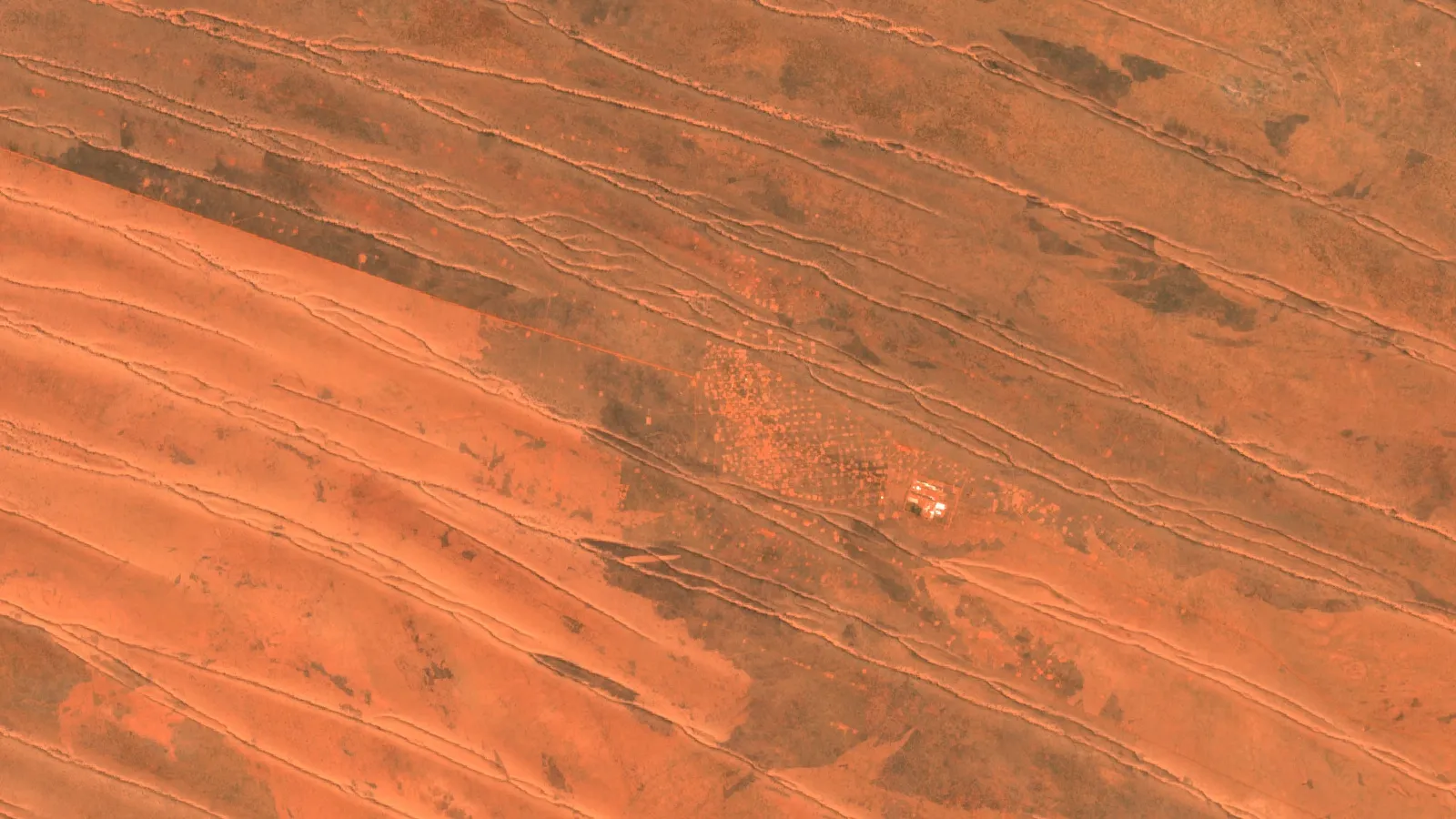
Winu is a large copper-gold deposit in the Paterson Province of Western Australia, found by Rio Tinto Exploration in late 2017 under a thin skin of younger sediment. Rio Tinto holds 70% and runs the project, and Sumitomo Metal Mining holds 30%. On 10 September 2026 the Nyangumarta people signed a project agreement and gave their consent for the proposed mine. Rio calls Winu its most advanced near-term greenfield copper project and talks of first copper by 2030, subject to approvals and a final investment decision (Rio Tinto, 10 September 2026). This guide covers what the rocks are, how the deposit was found, what Rio has published about size and status, and how Winu compares with its neighbours Havieron, Telfer and Nifty.
What is Winu copper and where is it?
The Winu-Ngapakarra deposit sits on the western edge of the Great Sandy Desert, roughly 320 km east of Port Hedland and about 125 km north-north-west of the Telfer mine (Rio Tinto, Winu project page; PorterGeo database). Its main metals are copper, gold and silver. Ngapakarra is a gold-rich satellite about 2 km to the east. The Paterson Province is a belt of old rocks that covers about 30,000 km2, and Geoscience Australia lists Telfer, Magnum, Nifty, Maroochydore and Kintyre among its main deposits (Geoscience Australia, Paterson Project). Winu and Havieron, found in 2017 and 2018, are the two newest names and are described by Rio Tinto and Greatland Resources respectively.
A few terms first. A greenfield project is a new site with no existing mine. Grade is the amount of metal in each tonne of rock, given here as per cent copper (% Cu) and grams per tonne of gold (g/t Au). A Mineral Resource is a company estimate of mineralised rock with reasonable prospects of being mined, and an Ore Reserve is the part of it that has passed mining, processing and cost tests. JORC is the Australian code that sets the rules for reporting both.
Rio’s website says it plans to power the operation largely from solar and wind with battery storage, and that mining will not go ahead without the informed consent of Traditional Owners. The airstrip that serves the site lies on Martu land, while the planned mine sits on Nyangumarta Country, so the project has two Traditional Owner relationships to settle, not one.
▶ Why copper demand is rising and where the metal comes from, in plain words. · 6:03
How was Winu found under cover?
Winu is a blind deposit: nothing of it shows at the surface. Rio’s 2019 drill report says the Yeneena Basin rocks here are entirely covered by younger sediment that is up to 100 m thick in the Winu area, with cover of 50 to 100 m over the early intersections (Rio Tinto, ASX exploration update, June 2019). The PorterGeo database, which summarises the company releases and papers, gives the sequence of the discovery:
- From October 2015 Rio worked in joint venture with Antipa Minerals to learn from the modest Calibre and Magnum gold-copper deposits, which were themselves fully concealed.
- Rio then built its own model of a large copper-gold system tied to a hidden granite, using deep granite signatures in regional geophysics near favourable rock layers and structures.
- Tenement applications went in during July to September 2016 along the western edge of the Anketell Shelf, a buried basement high.
- Two small airborne electromagnetic surveys flown in July 2017 showed a shallow late-time conductor over the Winu target.
- Two reverse circulation holes drilled in December 2017 both hit visible copper. The best interval was just over 100 m at 0.8% Cu and 0.28 g/t Au, under less than 50 m of Permian cover.
Rio made the discovery public in February 2019. Its first 28 holes, 8 reverse circulation and 20 diamond holes drilled from December 2017 to the end of 2018, added up to 13,286 m (The Assay, summarising Rio Tinto’s 2019 update). The 2019 report lists the other tools used around the deposit: airborne electromagnetics, ground gravity, induced polarisation and resistivity, passive seismic, and a long list of downhole logs, plus WorldView-2 satellite images to plan the work on the ground.
The lesson for explorers is that a thin, young cover does not hide a deposit from electrical methods. Copper sulphides conduct electricity, so a shallow conductor stands out against dry sand and sandstone. Cover of 100 m is far easier to work through than the 420 m that sits over Havieron, which is why the same belt has produced two very different search problems.
Paterson Province geology in plain words
The Paterson Orogen is a north-north-west trending belt of folded and heated Proterozoic rock. Its older core is the Rudall Complex. Wrapped around it is the Yeneena Basin, filled with the Yeneena Supergroup, which formed in a stretching basin between about 850 and 800 million years ago and is more than 9 km thick (PorterGeo database, citing Huston and others, 2010). The Yeneena rocks host most of the large deposits in the province.
Three events shaped the ground that explorers now drill:
- Basin growth and mafic intrusion. Sandstone, siltstone, shale and carbonate piled up in the Yeneena Basin while basalt and related magmas rose through it.
- The Miles Orogeny (about 820 to 810 million years ago) squeezed and folded the basin. It made the domes and anticlines that later focused hot fluids, including the Telfer Dome.
- Granite intrusion and the Paterson Orogeny. Granites were intruded roughly 645 to 605 million years ago, and the Paterson Orogeny at about 550 million years ago added late folds and faults (PorterGeo database, citing Maidment and others, 2010).
Much of the belt is hidden. Permian to Cretaceous sediment of the Canning Basin lies on top. Geoscience Australia’s solid-geology interpretation found that most of the Paterson area has only thin cover, typically less than 300 m, while a steep-sided trough called the Waukarlycarly Embayment holds more than 3,000 m of younger sediment in a graben 30 to 40 km wide (Geoscience Australia Record 2009/16). So the practical question is rarely whether there is rock under the sand. It is how far down it is, and which geophysical method can see it.
Geoscience Australia dates the Telfer gold-copper deposit at 850 to 840 million years, using monazite and xenotime that form part of the ore assemblage. It dates the Kintyre uranium deposit at 840 to 830 million years, which seems to coincide with basin inversion during the Miles Orogeny (Geoscience Australia, Paterson Project). Winu is younger: molybdenite intergrown with chalcopyrite gave Re-Os ages of 658 to 655 million years (Dalstra and others, Economic Geology, 2023).
How deep is the cover over Winu and Havieron?
The two discoveries sit in the same province but under very different blankets. Winu has cover of up to 100 m in the Rio drill report. Havieron lies below 420 m of post-mineral Permian rock, according to the 2026 SEG Discovery paper by Newmont, University of Tasmania and consulting geologists (Finn and others, SEG Discovery, 2026). Geoscience Australia’s wider map says typical cover across the area is under 300 m, with a deep trough in the north-west that exceeds 3,000 m.
Depth matters for cost and for method. Shallow cover can be tested with air-core or reverse circulation drilling and electromagnetic surveys. Cover of several hundred metres usually needs deep-penetrating geophysics and diamond drilling before a company can say anything about the rock. Cover is also an age marker: material laid down after the ore formed is called post-mineral cover, and it protects the deposit from erosion while hiding it from surface sampling.
Two more lessons follow. Satellites map the surface and near-surface, so over covered ground they help with landforms, drainage, access and the outline of the licence rather than with the buried rock itself. Sampling and drilling confirm what any remote data suggest. Geophysics from aircraft and from the ground fills the gap between the two.
Chart
Depth of younger cover over Paterson targets
Metres; Winu is the maximum quoted, region is the typical upper bound
▶ Remote sensing for mining explained in three minutes: what each instrument can and cannot measure. · 2:01
Winu and Rio Tinto: ownership, approvals and timeline
Winu has moved from a drill result to a joint venture with a development timetable. The dated steps below come from Rio Tinto’s own releases and results.
| Step | What happened | Source |
|---|---|---|
| Late 2017 | Rio Tinto Exploration discovers copper-gold mineralisation at Winu | Rio Tinto, 2026 half-year results |
| February 2022 | First Indicated Mineral Resource reported, after a maiden Inferred Resource in July 2020 | Rio Tinto, Annual Report 2025 |
| 2023 | Initial agreements signed with Nyangumarta and Martu Traditional Owners to allow planning to continue | Rio Tinto, Winu project page |
| December 2024 | Term sheet with Sumitomo Metal Mining for a joint venture | Rio Tinto release, 12 May 2025 |
| 8 May 2025 | Binding joint venture agreement; Sumitomo to pay up to US$430.4 million for 30%, of which US$195 million up front and up to US$235.4 million deferred against milestones | Rio Tinto release, 12 May 2025 |
| 31 October 2025 | Joint venture completed; Rio received the initial US$195 million | Rio Tinto, Annual Report 2025 |
| 10 September 2026 | Project agreement signed with the Nyangumarta Warrarn Aboriginal Corporation, with consent for the mine and its infrastructure on Nyangumarta Country | Rio Tinto release, 10 September 2026 |
| Around the end of 2026 | Feasibility study on track for completion; working toward declaring an Ore Reserve. The Environmental Review Document has been published and its public comment period closed on 22 October 2026 | Rio Tinto, 2026 half-year results; Rio Tinto, Winu project page |
The Rio half-year report (Rio Tinto, 2026 half year results, 29 July 2026) lists agreements with both the Nyangumarta and the Martu as a 2026 priority, and the September release covers the Nyangumarta only. The final investment decision and regulatory approvals are still ahead. Under the joint venture, Rio develops and operates Winu.
The 2025 joint venture release described the project as a low-risk, long-life copper-gold deposit that Rio considers highly prospective for expansion, and said an initial development with processing capacity of up to 10 million tonnes a year was the planning case (Rio Tinto, 12 May 2025). Companies change these figures between studies, so treat the feasibility study, expected around the end of 2026, as the next real checkpoint. This page is not investment advice and does not forecast anyone’s shares.
Winu copper resource: how much metal
Rio Tinto’s published Mineral Resource for Winu is 741 million tonnes at 0.40% copper, 0.33 g/t gold and 2.20 g/t silver. Of that, 464 Mt is Indicated and 277 Mt is Inferred. The figures are as at 31 December 2024 (February 2025 notice) and were repeated unchanged as at 31 December 2025 in Rio’s Annual Report 2025. The February 2025 notice says the Indicated share rose from 31% to 63% of tonnage because of a new classification method that uses drill spacing and conditional simulation of copper grades, and that no resource drilling took place in 2024 (Rio Tinto, Mineral Resources and Ore Reserves updates, 19 February 2025).
Chart
Winu Mineral Resource by category
Million tonnes, as at 31 December 2024 (Rio Tinto notice of February 2025); unchanged at 31 December 2025
| Category | Tonnes (Mt) | Copper (%) | Gold (g/t) | Silver (g/t) |
|---|---|---|---|---|
| Indicated | 464 | 0.39 | 0.32 | 2.24 |
| Inferred | 277 | 0.41 | 0.36 | 2.12 |
| Total Mineral Resource | 741 | 0.40 | 0.33 | 2.20 |
The likely mining method in that notice is open pit. The notice also says the mineralisation is open in several directions, and that drilling in the past year had gone into infrastructure sites, water and exploration. Rio has not declared an Ore Reserve for Winu; its 2026 half-year report says the project is progressing towards one.
These grades are modest. Copper at 0.40% means about 4 kg of copper in each tonne of rock, which is typical of a large, low-grade open-pit system rather than a high-grade underground one. The gold adds value, and Winu also has a supergene chalcocite blanket above the primary ore. Supergene means copper that weathering has dissolved and re-deposited in a richer layer near the top of the deposit (Dalstra and others, 2023).
The figures in this guide are Rio Tinto’s and Greatland’s own estimates under JORC. Farmonaut satellite work produces exploration targets, not resources or reserves. Use the calculator below to turn any published tonnage and grade into contained metal and a copper-equivalent grade at prices you choose.
Calculator
How much copper and gold is in a resource?
Enter any published tonnage and grade, for example Winu Indicated, to get contained metal and a copper-equivalent grade.
- Contained gold (million ounces): 4.77
- Copper-equivalent grade (% CuEq): 0.69
- Gold share of in-situ metal value (%): 43.7
Example values only: tonnes and grades are Rio Tinto’s Winu Indicated figures (February 2025 notice). Price defaults are rounded from Kitco gold spot of US$3,667 per ounce (bid, 19 November 2026) and a COMEX-based copper price of about US$12,372 per tonne on the same date (MetalCharts, not an LME settlement). They are examples, use today’s price. Assumes 100% recovery and ignores payability, costs and royalties, so it shows grade arithmetic, not a deposit value.
Telfer, Havieron and the Paterson Province: one mill, two orebodies
Telfer and Havieron belong to Greatland Resources (ASX: GGP; also listed on the London AIM market). Greatland bought 100% of Telfer and Newmont’s 70% joint venture interest in Havieron in December 2024, which gave it 100% of both (Greatland Resources, Annual Report, 2026). Our guide to Telfer mine in Western Australia covers the mine’s history in more detail.
Telfer is the operating base. Greatland reports that in the year to 30 June 2026 it produced 328,987 oz of gold and 14,594 t of copper at an all-in sustaining cost of A$2,179 per ounce, from 19.2 Mt of ore at 0.58 g/t gold and 0.09% copper. Gold recovery averaged 88.0%. Realised prices for sales in the year averaged A$6,223 per ounce of gold and A$14,895 per tonne of copper after treatment and refining deductions. (All Greatland money figures are in Australian dollars.)
Telfer’s reported resources have grown. The company’s table, with new estimates as at 31 March 2026, shows the Mineral Resource rising from 154 Mt at 0.64 g/t gold (3.2 Moz) to 417 Mt at 0.59 g/t (7.9 Moz), and the Ore Reserve rising from 46 Mt at 0.48 g/t (0.7 Moz) to 119 Mt at 0.46 g/t (1.8 Moz). Across both projects, Greatland’s group Mineral Resource stands at 14.9 Moz of gold and 644 kt of copper.
Havieron is the high-grade project. Greatland completed a feasibility study on 1 December 2025 and its board approved the final investment decision on 1 June 2026. The study’s Ore Reserve is 38.5 Mt at 2.63 g/t gold and 0.33% copper for 3.3 Moz of gold and 128 kt of copper. The life-of-mine plan covers 50.3 Mt at 2.52 g/t gold and 0.30% copper, with a pre-production capital cost of A$1,065 million, a 17-year initial mine life and first gold targeted in the 2029 financial year (the year to 30 June 2029). Havieron lies about 45 km east of Telfer, and its ore is planned to be processed in the Telfer plant. Greatland says Telfer is the only operating processing plant in the Paterson region.
The company’s study says about 80% of the contained gold in the life-of-mine plan is in Probable Ore Reserves, 2% in Indicated resources, 13% in Inferred resources and 5% in an Exploration Target, so part of the plan rests on lower-confidence material. This is a company plan, not a guarantee, and not investment advice.
Chart
Telfer gold estimates before and after FY26 drilling
Million ounces of gold, Greatland Resources; new estimates as at 31 March 2026
What is Havieron made of?
The 2026 SEG Discovery paper describes Havieron as a blind polymetallic breccia with a horizontal footprint of about 800 by 500 m that extends more than 1.2 km vertically below the base of the Permian cover. The breccia is hosted in thinly laminated clastic and calcareous sedimentary rocks of the Neoproterozoic Malu Formation, on the south-west dipping limb of a north-east verging anticline, and sits close to high-magnesium basalt and minor granite intrusions (Finn and others, 2026). The metals are tied to bismuth, tungsten, tin, nickel and cobalt, which the authors read as a sign of a magmatic link and a place in the family of reduced intrusion-related gold systems seen in the province.
Winu has a different recipe. Its host rocks are metamorphosed sandstone and siltstone, possible distal and deep-water correlatives of the Malu Formation, and the copper-gold sits in thin brittle veins and breccias arranged in en echelon lodes 350 to 750 m long, with vertical depths over 750 m. Dalstra and co-authors rate it as an intrusion-related copper-gold deposit that shares features with reduced porphyry systems but has more of the pyrite-dominated, sulphate-bearing character of oxidised ones, and say it preserves an early reduced gold system overprinted by a later, more oxidised copper system.
Nifty and sediment-hosted copper in the Paterson Province
Winu is not the only copper deposit in the province. Nifty and Maroochydore are stratabound copper deposits, meaning the copper lies in particular layers of sedimentary rock. They sit in interbedded black shale and carbonate in the Broadhurst Formation. Geoscience Australia’s 2009 notes give resources of 99 Mt at 1.7% Cu for Nifty and 51 Mt at 1.0% Cu for Maroochydore, and note two competing models for the copper: one during basin formation and one during the Miles Orogeny (Geoscience Australia Record 2009/16). Those are historical figures, and the deposit type differs from Winu: see our guide to sediment-hosted copper deposits.
Nifty is being brought back into production. Cyprium Metals (ASX: CYM) reported on 25 June 2026 that sulphuric acid deliveries had resumed in late May, that heap pads were being prepared for acid commissioning and that the Phase 1 target is about 6,000 t of copper cathode a year, with plans to study an expansion to about 20,000 t a year (Proactive Investors, 25 June 2026). On 9 October 2026 Proactive Investors reported that Cyprium had prepared about 1.7 million tonnes of material for leaching and that first copper cathode was still targeted for the fourth quarter of 2026 (Proactive Investors, 9 October 2026).
Chart
Copper grade against tonnage, Paterson projects
Different dates and resource classes; not a like-for-like ranking
Winu vs Havieron vs Telfer vs Nifty compared
| Feature | Winu | Havieron | Telfer | Nifty |
|---|---|---|---|---|
| Main metals | Copper, gold, silver | Gold, copper | Gold, copper | Copper |
| Owner or operator | Rio Tinto 70%, Sumitomo Metal Mining 30% | Greatland Resources 100% | Greatland Resources 100% | Cyprium Metals |
| Deposit style | Intrusion-related copper-gold veins and breccias | Polymetallic breccia, magmatic link | Bedding-parallel reefs plus breccia and sheeted veins | Stratabound, shale and carbonate hosted |
| Cover over ore | Up to 100 m | 420 m of Permian rock | Open pit and underground workings | Surface heaps being re-leached |
| Status from the latest filings | Feasibility study due around the end of 2026; first copper targeted by 2030 | Construction started in September 2026 after a June 2026 investment decision; first gold targeted in the 2029 financial year | Operating; 328,987 oz gold in the year to 30 June 2026 | Restart under way; first copper cathode targeted for the fourth quarter of 2026; Phase 1 target about 6,000 t Cu a year |
Telfer is described by Geoscience Australia as hosted by siltstone and quartzite of the Malu Formation, with strong stratigraphic control in bedding-parallel quartz reefs within the Telfer Dome and cross-cutting breccia and sheeted veins at depth. That mix of styles explains why the province attracts different search models, from granite-related to stratabound.
Paterson Province exploration: where drilling is happening
Winu’s discovery triggered a land rush, and Havieron added to it. In the year to 30 June 2026, Greatland’s annual report lists these Paterson-area programmes:
- Telfer near mine: 100% of tenements covering more than 927 km2 within 30 km of the Telfer plant, with over 7,500 m of drilling on extensions along the Telfer trend and at the South East Hub, about 25 km south-east of the mine.
- Paterson South: seven tenements covering 965 km2, in which Greatland holds 51% and can earn up to 75% under a farm-in with a Rio Tinto subsidiary. Drilling tested targets within about 15 km of Havieron and a Telfer-lookalike dome, with about 5,800 m of reverse circulation and diamond drilling. One green-fields hole at the Teague prospect, 16 km south-west of Havieron, returned 3 m at 3.11 g/t gold from 241 m.
- Kidson: eight tenement applications for 770 km2 in the northern Paterson over shallow cover; they are applications, not yet granted, and sit outside the Telfer Indigenous Land Use Agreement area.
- O’Callaghans: a tungsten-copper-zinc-lead deposit 10 km south of Telfer, with a first Mineral Resource of 70 Mt announced in March 2026.
Other ASX explorers also hold ground in the belt. Our overview of Australian mining exploration companies lists the main ASX names, and biggest mining companies in Western Australia places Rio Tinto and Greatland in the wider state picture. The comparison of copper and gold exploration in Australia shows where Paterson sits against other provinces.
Recent studies on mineral prospectivity in the Paterson Province
The Paterson Province is one of the better-documented covered terrains in Australia, with public geophysics, state and federal syntheses and a growing set of deposit papers. The table lists the studies that matter most for a targeting exercise and what each says about where to look.
| Study | Who and when | What it says about prospectivity |
|---|---|---|
| Paterson area 1:250,000 solid geology and depth-to-basement model (Record 2009/16) | Geoscience Australia with the Geological Survey of Western Australia, 2009 | Cover is typically under 300 m. Many granites north and east of Telfer, intruding a pre-deformed Neoproterozoic sequence, suggest that shallowly covered area is prospective for Telfer-style gold-copper. Southern Yeneena rocks lack Neoproterozoic granites, so they favour base metals and unconformity uranium instead. |
| Paterson airborne electromagnetic survey (Record 2010/12) | Geoscience Australia, 2007 to 2010 | Time-domain AEM flown on lines mostly one to six kilometres apart, covering the province except Rudall River National Park; a drill-hole database of more than 4,300 historic public holes accompanies it. |
| Geology of Winu-Ngapakarra | Dalstra, Black and Mudrovska, Economic Geology, 2023 | Describes the veins, ages and alteration of an intrusion-related copper-gold system that sits in Malu-Formation correlatives, a model that explorers can apply to other covered anticlines. |
| The Neoproterozoic Havieron Au-Cu Breccia | Finn and co-authors, SEG Discovery, 2026 | Shows a blind breccia under 420 m of Permian rock, linked to mafic and granitic intrusions and anticlinal structure, which supports searching for magnetic and electrical anomalies near folds. |
| Greatland Resources annual report, exploration review | Greatland Resources, 2026 | Reports drilling at Paterson South and Telfer-trend targets, showing which concepts companies currently test: Telfer lookalike domes, targets near Havieron and extensions along the Telfer trend. |
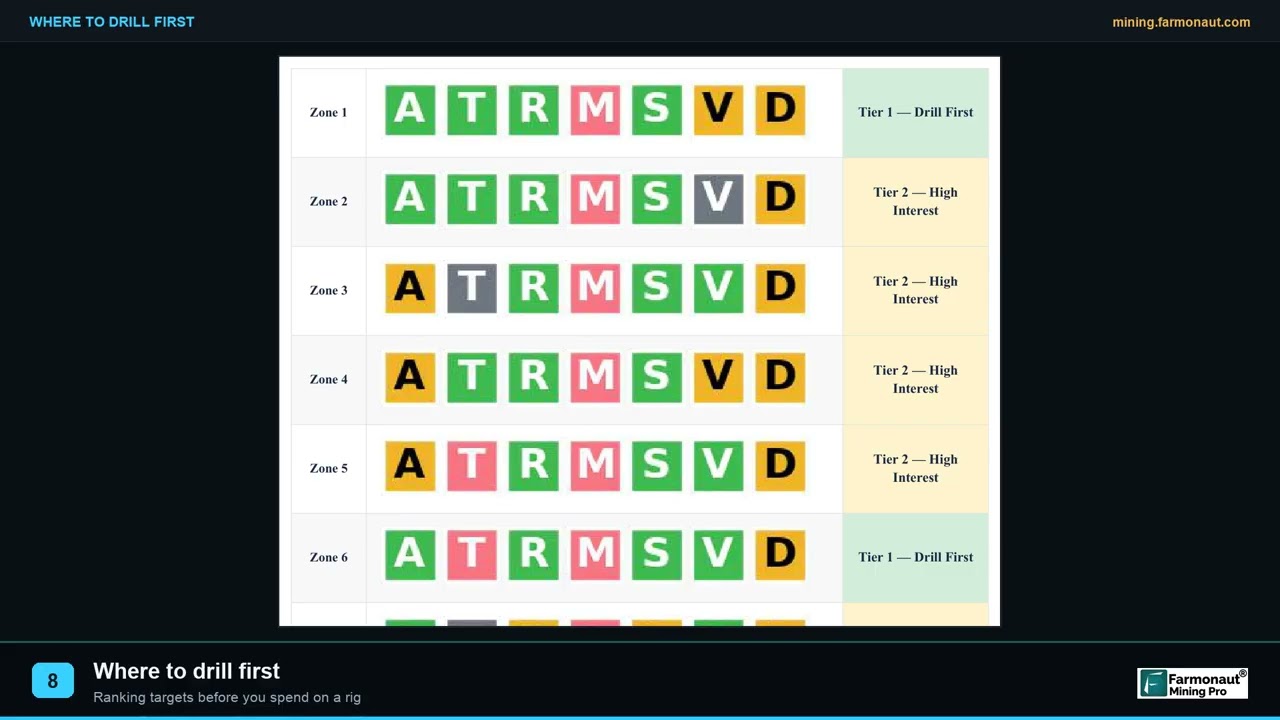
The common thread in these studies is the same set of ingredients. Geoscience Australia lists four for Telfer-style systems under cover: a suitably aged sedimentary succession, granites that intruded a previously deformed succession, anticlinal structures that focus fluids, and interbedded fine and coarse layers that break differently under stress. For wider method background, see our explainers on mineral prospectivity mapping and how drill targets get ranked.
Where to look next: signals for covered ground
If you hold or are weighing ground in a covered belt like this, the published work points to a short checklist.
- Depth to bedrock. Start with the depth-to-basement model and public drill holes. Under about 100 m, air-core drilling and electromagnetics are affordable. Under several hundred metres, the budget changes.
- Granites and magnetic highs. Both Winu and Havieron sit near intrusions. Regional magnetics and gravity show buried granites and mafic bodies. Rio’s team used deep granite signatures to choose its tenements.
- Fold hinges. Telfer, Winu and Havieron are all tied to domes or anticlines. Mapped structure on public datasets is a ranking tool.
- Conductors. Copper and iron sulphides conduct electricity. A late-time AEM anomaly was the first clue at Winu. Graphitic shale is a false positive, so follow up with drilling.
- Surface clues. Soil, landform, drainage and thin regolith can hint at what lies below, but over 50 to 100 m of cover they often show nothing. Do not rely on them alone.
Where a licence is open or lightly covered, satellite imagery supports the first screen: mapping surface rock and regolith, locating structure and drainage, and planning access before field costs begin. Farmonaut satellite mineral reports map surface and near-surface signatures from imagery in 5 to 20 business days, and sampling and drilling confirm any target. Farmonaut reports give exploration targets, not a JORC resource.
▶ How exploration targets are ranked into a drill order. · 2:19
What Winu means for copper supply
Copper is a mined metal that every grid, motor and cable needs. Rio Tinto says Winu is part of its plan to grow its copper portfolio, and in its half-year report it names the project beside Resolution in Arizona as a next-generation growth option. The pace depends on approvals, the final investment decision and the construction timetable. If the first-copper target of 2030 holds, Winu would be the first mine developed on Nyangumarta Country, a point Rio makes in its September release.
Frequently asked questions
What is Winu copper?
Winu is a copper-gold-silver deposit in the Paterson Province of Western Australia, discovered by Rio Tinto Exploration in late 2017. Rio holds 70% and Sumitomo Metal Mining holds 30%. It is a greenfield project and has not been built.
Who owns the Winu project?
Rio Tinto owns 70% and develops and operates the project. Sumitomo Metal Mining owns 30% after a joint venture agreed on 8 May 2025 and completed on 31 October 2025, according to Rio’s filings.
When will Winu produce copper?
Rio’s chief executive of copper said the 10 September 2026 Nyangumarta agreement advances Winu towards first copper by 2030. That date still depends on regulatory approvals and a final investment decision, and a feasibility study is expected around the end of 2026.
How much copper is in Winu?
Rio’s Mineral Resource is 741 Mt at 0.40% Cu, 0.33 g/t Au and 2.20 g/t Ag (464 Mt Indicated and 277 Mt Inferred). Multiplying tonnes by grade gives roughly 3 million tonnes of contained copper and about 7.9 million ounces of gold. That is our arithmetic, not a figure that Rio states.
Where is the Paterson Province?
It lies in the east Pilbara region of Western Australia, east of the Hamersley Basin and south-west of the Canning Basin, and covers about 30,000 km2. Winu is on its north-west side at the edge of the Great Sandy Desert.
What rocks make up the Paterson Province?
Older high-grade metamorphic rocks of the Rudall Complex, intrusive rocks, and the sandstone, siltstone, shale and carbonate of the Yeneena Supergroup. Younger Permian to Cretaceous sediment covers much of it.
How was Winu discovered?
Rio chose tenements using a model of a granite-related copper-gold system and then flew airborne electromagnetic surveys in July 2017. A shallow late-time conductor was drilled in December 2017, and both holes hit visible copper under less than 50 m of cover.
How deep is the cover over Winu and Havieron?
Winu has up to 100 m of Phanerozoic cover in the Rio drill report. Havieron lies under 420 m of post-mineral Permian rock, according to a 2026 SEG Discovery paper.
Is Havieron in production?
No. Greatland’s board approved the final investment decision on 1 June 2026, construction formally started in September 2026 after all secondary approvals were received (Greatland September 2026 quarterly report, 26 October 2026), and first gold is targeted in the 2029 financial year. Telfer, 45 km to the west, is the operating mine and mill.
What is the difference between Winu, Havieron and Telfer?
Winu is a large low-grade copper-gold system for open-pit mining. Havieron is a smaller, high-grade gold-copper breccia for underground mining. Telfer is an operating gold-copper mine with open pit and underground workings and a mill.
Is Winu a porphyry copper deposit?
Not exactly. Its 2023 description calls it an intrusion-related copper-gold deposit. It shares features with reduced porphyry systems but also has traits of oxidised intrusion-related systems.
Can satellites find deposits under cover like Winu?
Satellites see the surface and the first few metres of ground, so under 50 to 100 m of cover they do not show the deposit itself. They help with regolith, structure, drainage and access, while electromagnetic surveys and drilling find buried sulphides.
This page is for information only. It is not investment advice. Resource, reserve and production figures are the companies’ own estimates; check the latest filings before relying on them. Confirm tenure and approvals with the Western Australian regulator.
Farmonaut mining
Screen your own ground from space
Licence holders and consultants can request a Farmonaut satellite mineral report to map surface signatures before they plan sampling.

Mining Pro sample view, synthetic data
Sources
- Rio Tinto, Nyangumarta Warrarn Aboriginal Corporation and Rio Tinto sign milestone agreement for Winu (10 September 2026): riotinto.com
- Rio Tinto, Rio Tinto and Sumitomo Metal Mining sign Definitive Agreement for Winu (12 May 2025): riotinto.com
- Rio Tinto, Winu project page: riotinto.com
- Rio Tinto, 2026 half year results (29 July 2026): announcements.asx.com.au
- Rio Tinto, Mineral Resources and Ore Reserves updates (19 February 2025): sec.gov
- Rio Tinto, Exploration Update (ASX, June 2019): announcements.asx.com.au
- Geoscience Australia, Paterson Project: ga.gov.au
- Geoscience Australia, Record 2009/16: Paterson area solid geology interpretation and depth to basement model: d28rz98at9flks.cloudfront.net
- Dalstra, Black and Mudrovska, Geology of Winu-Ngapakarra, Economic Geology 118 (2023): doi.org
- Finn and others, The Neoproterozoic Havieron Au-Cu Breccia, SEG Discovery (2026): doi.org
- Greatland Resources, Annual Report 2026: announcements.asx.com.au
- PorterGeo database, Winu and Ngapakarra: portergeo.com.au
- The Assay, The Two Discoveries that Led to a Major Copper-Gold Rush in Australia: theassay.com
- Proactive Investors, Cyprium moves Nifty closer to restart (25 June 2026): proactiveinvestors.com.au
- Rio Tinto, Annual Report 2025 (Mineral Resources): sec.gov
- Greatland Resources, September 2026 quarterly activities report (26 October 2026): announcements.asx.com.au
- Kitco, gold spot (19 November 2026): kitco.com
- MetalCharts, copper price converted from COMEX (19 November 2026): metalcharts.org
- Proactive Investors, Cyprium advances Nifty copper restart, first production on track for Q4: proactiveinvestors.com
Discussion
Questions, corrections or field experience? Share them below. First-time comments are reviewed before they appear, and your email is never published.
No comments yet. Be the first to add a question or your experience.

 WSP Investment Company
 Dalgety Minerals Pty Ltd
 Faith At Work (Pty) Ltd
 Geotech Mining Solutions plc
 Vulcan International Limited
 Kidepo Associates
 GKY Mining
 Alkimy SARL
 Double A Trading
 GemSprout Metals Limited
 Qader Group
 Ileys General Trading
 SG Gold Mining LLC
 VRV Global Pte Ltd
 Omsri International FZE
 G.I.T.T.
 Jaunita Erss Ltd
 Almosi SARL
 SRK Consulting
 Berks Gold Limited
 Mwerezi Minerals Company Limited
 Mining SARL
 SenGold Invest SAS

 Exploration consultancy · South Africa · Gold










