

Advantages of Aquaponics, Aeroponics & Hydroponics 2026: Sustainable Solutions for Modern Agriculture
Innovative Soil-less Cultivation Techniques: Aquaponics, Aeroponics, and Hydroponics in Modern Agriculture
As global agricultural challenges intensify by 2026 due to climate change, soil degradation, and a rapidly increasing demand for food, sustainable solutions for efficient farming are more critical than ever. Soil-less cultivation methods such as aquaponics, aeroponics, and hydroponics are at the forefront of this agricultural revolution, offering innovative techniques that optimize plant growth with minimal resource inputs. These advanced systems not only address global food security but also provide scalable, highly sustainable options that can thrive even in urban and resource-limited regions.
This blog dives deep into the advantages of aquaponics, explores the advantages and disadvantages of aeroponics, and provides a practical perspective on aeroponics and hydroponics advantages and disadvantages. Understanding the differences and their strategic adoption is indispensable for farmers, agribusinesses, and policy-makers in the horticulture sectors navigating a rapidly evolving agricultural landscape.
“Aquaponics systems use up to 90% less water than traditional soil farming, revolutionizing sustainable agriculture by 2026.”
What Are Aquaponics, Aeroponics, and Hydroponics? Understanding the Techniques
Aquaponics, aeroponics, and hydroponics are all soilless cultivation methods transforming agriculture in 2026 and beyond. They share the goal of optimizing plant growth by efficiently delivering nutrients and providing the ideal environment for roots, while using less water and resource inputs compared to conventional systems. Here’s a quick primer:
- Aquaponics: Combines aquaculture (raising fish) with hydroponics. Fish waste naturally fertilizes the plants, which in turn helps purify water for the fish—a self-sustaining ecosystem.
- Aeroponics: Plant roots hang in the air and are periodically misted with a nutrient-rich solution. This maximizes root oxygenation and nutrient uptake, fostering rapid growth.
- Hydroponics: Plants’ roots are submerged (or supported in an inert medium) and bathed in a circulating nutrient solution. This method ensures consistent nutrition and is highly adaptable for different crops and scales.
These innovative techniques are not just theoretical—they are actively being deployed to counter global challenges in soil degradation, climate variability, and urban expansion, thereby reshaping cultivation for the future.

Comparison of Advantages: Aquaponics vs. Aeroponics vs. Hydroponics (2026)
| Advantage Category | Aquaponics | Aeroponics | Hydroponics |
|---|---|---|---|
| Water Usage (L/kg produce) | ~20-30 (up to 90% less vs. soil) |
~10-15 (up to 95% less vs. soil) |
~40-50 (~80-90% less vs. soil) |
| Nutrient Efficiency (%) | 85-90 | 90-95 | 80-90 |
| Yield Increase (% vs. soil) | +20-24% | +28-35% | +25-30% |
| Energy Consumption (kWh/kg) | 1.2-2.0 | 2.2-3.0 | 1.8-2.5 |
| Space Efficiency (plants/m²) | 30-45 | 38-55 | 32-48 |
| Environmental Impact (rating) | Excellent (low emissions, dual production) |
Excellent (ultra-low water, minimal waste) |
Very Good (low inputs, scalable) |
| Initial Setup Cost (USD/100m², estimated) | $7,000 – $10,500 | $8,500 – $14,000 | $6,500 – $9,000 |
These quantitative comparisons reveal the resource efficiency and sustainability edge of these soilless systems, particularly crucial as agriculture strives for high yields with lower environmental impact in 2026 and beyond.

Advantages of Aquaponics: Sustainable Dual-Crop Systems for 2026
Aquaponics stands out among soil-less cultivation methods for its unique integration of aquaculture (fish-raising) and plant cultivation. The system creates a symbiotic ecosystem that leverages the strengths of both approaches, achieving high sustainability and resource efficiency. Here are the most significant advantages of aquaponics as we move into 2026:
-
1. Exceptional Water Conservation
Aquaponic systems are incredibly water-efficient, using up to 90% less water than traditional farming. The recirculation of water drastically reduces resource use and makes aquaponics ideal in arid regions or for urban setups.
-
2. Reduced Chemical Dependency
Aquaponics thrives on natural nutrient cycling. Since fish waste provides plant nutrients, there’s less need for synthetic fertilizers and pesticides. This promotes organic farming practices and creates healthier produce.
-
3. Dual Crop Production & Diversification
One of the most compelling advantages: Output is twofold. Farmers simultaneously harvest vegetables and fish protein. This diversifies income streams and enhances food security.
-
4. Space and Land Utilization
Because aquaponics is well-suited to vertical farming setups and can be deployed in non-arable or urban land, it maximizes space efficiency—yielding more per square meter than soil-based cultivation.
-
5. Low Waste, Closed-Loop Ecosystems
Waste reduction is inherent to aquaponics, as plant roots absorb fish byproducts, purifying water for reuse. This closed-loop cycle is highly sustainable, helping reduce runoff and environmental contamination.
-
6. Integration with Digital & AI Monitoring
Modern aquaponics leverages digital monitoring platforms and satellite-driven insights (such as through Farmonaut) for precision resource management, further boosting system efficiency and yield consistency.
The sustainability of aquaponics aligns perfectly with both small-scale urban farmers and large commercial agribusinesses, especially as reliable production becomes mission-critical in the face of climate change and soils degradation.

Advantages and Disadvantages of Aeroponics in 2026
Aeroponics presents a revolutionary technique for plant cultivation, especially as digital systems and automation achieve prominence in modern agriculture. Here, roots hang suspended in air and are periodically misted with a precisely tailored nutrient solution. Let’s explore the advantages and disadvantages of aeroponics as of 2026:
Aeroponics: Key Advantages
-
Maximized Oxygenation
Root exposure to air ensures exceptional oxygen availability, which improves nutrient absorption and promotes accelerating plant growth.
-
Unrivaled Water Use Efficiency
Aeroponic systems use up to 95% less water due to efficient misting and recycling. This feature is crucial for water-scarce regions and sustainable farming solutions.
-
Lower Disease Incidence
By eliminating the soil, soil-borne diseases are virtually eradicated. This enables reduced dependence on pesticides and supports cleaner production practices.
-
Faster Crop Cycles and Higher Yields
Controlled environmental factors, rapid root uptake, and minimized stress allow for shorter crop cycles and several harvests per year—paving the way for higher profitability.
-
Scalability for Urban and Vertical Farms
Aeroponics lends itself well to dense, urban farming and vertical setups, maximizing space efficiency and supporting local food production.
Aeroponics: Disadvantages and Limitations
-
Higher System Complexity
Aeroponics systems require advanced equipment—including misting pumps, sensors, and climate controls. This increases initial capital costs and technical requirements.
-
Labor and Technical Skill Requirements
Maintenance and constant monitoring demand skilled labor for troubleshooting and ensuring uninterrupted nutrient delivery.
-
Power Dependency and System Risk
Power outages or equipment malfunctions (e.g., pump failure) quickly stress or even kill plants, as their roots can dry out in minutes without misting.
-
High Initial Investment
For many small-scale farmers, the upfront costs are prohibitive versus simpler soil or hydroponic systems.
Farmonaut’s blockchain-based Product Traceability
further enhances quality assurance and supply chain transparency for high-value aeroponic crops, building trust from farm to table.

Aeroponics and Hydroponics: Advantages and Disadvantages for Strategic Adoption
Both aeroponics and hydroponics are essential soil-less cultivation methods as we look ahead to 2026, but each brings unique balances of strengths and limitations. Let’s compare their advantages and disadvantages:
Hydroponics: Advantages in Modern Agriculture
-
Lower System Complexity
Most hydroponic setups are easier to construct and maintain compared to aeroponics, making them accessible for farmers and agribusinesses with varying resources. -
Stable, Consistent Nutrient Delivery
Constant submersion or exposure to nutrient solution reduces the risk of sudden deficiencies or plant stress, even with simple monitoring. -
Wide Crop Versatility
Hydroponic systems cater to a broad spectrum of crops—from leafy greens to fruiting vegetables and specialty herbs—empowering both urban and rural farms. -
Incremental Scalability
Hydroponics is highly modular for scaling from home units to extensive commercial farms.
Hydroponics: Disadvantages and Challenges
-
Lower Oxygen Exposure
While efficient, roots are submerged in water, limiting oxygen availability compared to aeroponics. This can limit maximum growth rates. -
Higher Water Use
Hydroponics, while efficient, typically uses more water than aeroponics—though still far less than conventional soil-based farming. -
Disease Transmission Risk
Pathogens can spread quickly through shared water systems, necessitating vigilant monitoring and sanitation practices.
Farmonaut’s Carbon Footprinting solution
helps farmers, agribusinesses, and system operators assess and reduce the environmental impact associated with all hydroponic and aeroponic activities. This tool is indispensable for sustainable farming in 2026.

Strategic Adoption: Choosing Soil-less Farming Systems in 2026
Aquaponics, aeroponics, and hydroponics will continue to gain prominence among modern agricultural and horticulture sectors, but making the right choice requires careful consideration of local environmental factors, investment capacity, available labor, and technological skill.
When to Choose Aquaponics:
- Goal: Dual production of fish (protein) + vegetables.
- Best for: Communities needing diversified food security and income streams, organic practices, and arid environments.
- Setups: Urban vertical farms, peri-urban enterprises, and sustainability-focused agri-startups.
When to Choose Aeroponics:
- Goal: Highly efficient resource use, rapid crop turnover, and high-value specialty crops.
- Best for: Tech-driven urban farms, research facilities, and advanced agribusinesses aiming for maximum yield per square foot.
- Requires: Skilled labor, robust equipment, and a reliable power infrastructure.
When to Choose Hydroponics:
- Goal: Versatility, wider crop selection, and graduated scaling.
- Best for: Both home growers and large commercial farms desiring proven, reliable performance.
- Suitable: For resource-limited environments with moderate technical skills.
Combining these techniques via hybrid models can unlock even more advantages, making the future of sustainable agriculture both resilient and responsive to global challenges in 2026 and beyond.
Farmonaut’s Crop Loan and Insurance Verification
supports farmers and agritech companies by providing satellite-driven data to verify and secure financial products for all types of cultivation—including soil-less systems. This security accelerates responsible investment and growth.

How Farmonaut Empowers Soil-less Farming and Sustainability
At Farmonaut, we are dedicated to empowering all stakeholders in the agriculture and horticulture sectors—including practitioners of aquaponics, aeroponics, and hydroponics—with advanced satellite-driven technologies. Our ecosystem synergizes with innovative farming methods, offering the following benefits:
-
1. Real-Time Monitoring & AI-Based Advisory
Our satellite-based monitoring delivers live visualization of field conditions, crop health (NDVI), soil moisture (relevant for water management in soil-based and soilless systems alike), and environmental stressors. -
2. Environmental Impact & Resource Management
We provide actionable data for resource optimization and environmental impact tracking—crucial for systems aiming to minimize emissions, enhance water efficiency, and adapt to evolving regulations. -
3. Blockchain-Based Traceability
From greenhouse produce to aquaponically grown leafy greens, trace every step for transparency, authenticity, and global food trade compliance. -
4. Fleet & Operational Management
Farmonaut’s Fleet Management
module supports large-scale soil-less operations by optimizing logistics—decreasing input costs, improving machinery usage, and ensuring timely crop delivery. -
5. Customized Insights & Scalability
By integrating satellite imagery, AI, and real-time analytics, our platform meets the growing need for scalable solutions in the agriculture industry, from local urban farms to large agri-enterprises.
Explore more or start with Farmonaut through our web app, Android, or iOS platforms below.



Need to automate your satellite-driven agricultural insights?
Discover the Farmonaut API (see developer docs).
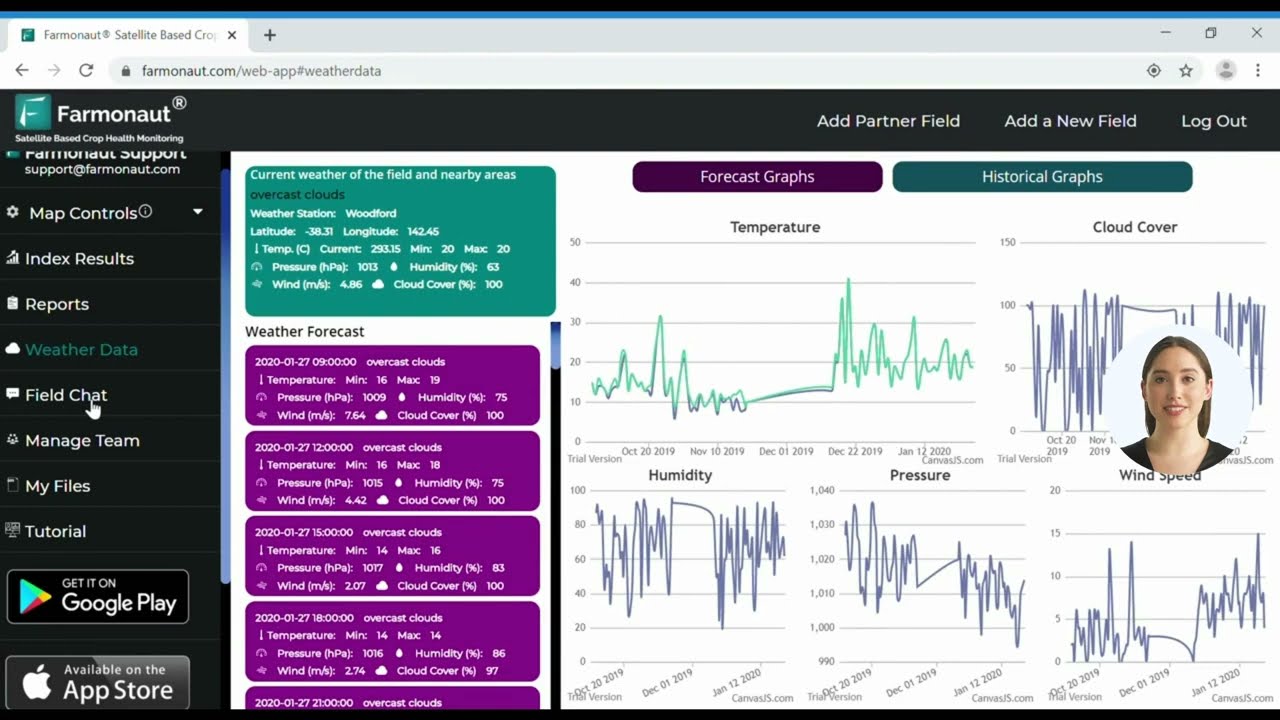
For commercial farms and enterprises, Farmonaut’s Large Scale Farm Management platform streamlines field oversight, integrates satellite data, and supports informed, data-driven strategic decisions across conventional, hydroponic, aeroponic, and aquaponic farming operations.
Those engaged in reforestation, plantation, or need advisory for new crops can benefit from our AI-driven Crop & Plantation Forest Advisory service—a boon for cultivating underutilized spaces and maximizing ecosystem benefits.

“Hydroponics can increase crop yields by up to 30% compared to conventional methods, advancing food production efficiency.”
Frequently Asked Questions
What is the main difference between aquaponics, aeroponics, and hydroponics?
Aquaponics combines aquaculture and hydroponics—using fish waste to provide organic nutrients to plants in a symbiotic system. Aeroponics leaves plant roots hanging in air and delivers nutrients through periodic misting. Hydroponics keeps roots submerged or supported in a nutrient solution, providing a stable growing environment.
Which soil-less method is best for water conservation?
Aeroponics is the most efficient in water use, consuming up to 95% less water than traditional soil farming. Aquaponics closely follows with up to 90% water savings due to its recirculating closed-loop system.
Are aeroponic and hydroponic systems suitable for large commercial farms?
Yes. Both aeroponics and hydroponics are scalable, but hydroponics is generally preferred for broader crop diversification and lower system complexity. Aeroponics excels with high-value, fast-growing crops in controlled urban or vertical farms.
What are the main risks or challenges with aeroponics?
The main risks include high system complexity, dependence on reliable power, and the need for skilled labor. Equipment or power failures can rapidly harm crops due to roots drying out.
How do Farmonaut’s solutions benefit soil-less farming systems?
Our suite of satellite-based monitoring tools, AI advisory systems, and blockchain traceability provide critical insights for maximizing efficiency, reducing resource waste, and ensuring sustainability—whether for aquaponics, aeroponics, or hydroponics.
How do I monitor environmental impact in a hydroponic/aeroponic setup?
Farmonaut’s Carbon Footprinting platform allows you to track emissions, water use, and sustainability metrics, thereby helping you meet modern regulatory and corporate responsibility standards.
Conclusion: The Future of Innovative Soil-less Agriculture
In summary, advancing beyond 2026, aquaponics, aeroponics, and hydroponics represent the vanguard of modern agriculture, supporting efficient, resilient, and sustainable food production systems. Their distinct advantages—from water conservation to accelerated plant growth and dual protein/vegetable outputs—provide farmers, agribusinesses, and urban cultivators with dynamic solutions to global agricultural challenges.
By harnessing the power of digital platforms and actionable data, such as those offered by Farmonaut, the adoption of advanced soil-less techniques can be tailored, monitored, and scaled for any environment. The strategic combination of these methods—augmented by real-time monitoring, environmental tracking, and transparent supply chain management—paves the way for a more secure and sustainable agricultural future.
Embracing innovative solutions and technology-driven insights will be the cornerstone of success in food security, resource management, and sustainability for years to come.
Interested in transforming your approach to soil-less farming? Start with Farmonaut’s platform today to unlock a future of productivity, sustainability, and agricultural innovation.
Discussion
Questions, corrections or field experience? Share them below. First-time comments are reviewed before they appear, and your email is never published.
No comments yet. Be the first to add a question or your experience.

 UCAL Fuel Systems
 Kubota
 FFBS
FFBS Jontra
 Kalustyan
 Tucor
Tucor Geno
Geno Hayleys Agriculture
 Linx Agritech
 Adinet
 Save Your Soils
 Grandstream Algérie
 XOS Realty
 Geospatial Lab Africa
 Agro La Gándara
 Licence holder · Niger · Gold










