

Artificial Intelligence Environmental Impact: Ontologies Boost Smart Farming 2025
In 2025, the artificial intelligence environmental impact is more prominent than ever as sustainable agriculture undergoes a digital revolution. The symbiosis of ontologies and artificial intelligence systems for the cooperative smart farming ecosystem is transforming how we approach farming, resource management, and environmental stewardship. As we face mounting global challenges such as climate change, resource scarcity, and biodiversity loss, only transformative and intelligent agricultural practices can balance productivity with sustainability.
In this comprehensive blog, we’ll explore how integrating ontologies and artificial intelligence (AI) into smart agriculture powers a new wave of precision farming, dramatically reduces the sector’s carbon footprint, and optimizes both resource usage and ecosystem health. With data-driven, collaborative, and contextualized insights, 2025 marks a critical inflection point: farms worldwide can now achieve previously unattainable efficiency and environmental benefits by leveraging the synergy of AI and ontological frameworks.
Global Environmental Challenges in Modern Agriculture: Why 2025 Demands a Transformative Approach
The agricultural sphere in 2025 faces unprecedented global challenges, from climate change that disrupts weather patterns, to growing resource scarcity and ever-increasing instances of biodiversity loss. These forces intensify the need for smarter, more adaptive practices. Traditional farming methods—often reliant on uniform input application and unsophisticated data analysis—are insufficient to sustainably feed a growing population while safeguarding our ecosystems.
- Water consumption: Agriculture accounts for nearly 70% of global freshwater withdrawals. Outdated irrigation and imprecise scheduling cause widespread waste.
- Greenhouse Gas Emissions: Overuse of fertilizers and inefficient pest management practices significantly contribute to emissions.
- Soil Health & Degradation: Intensive monoculture, over-tilling, and heavy agrochemical usage degrade soil conditions and threaten productivity.
- Biodiversity Loss: Landscapes dominated by single crop types and lack of ecological knowledge decrease ecosystem resilience and natural pest resistance.
These background impacts highlight the urgency for precision, data-driven decision making, and integrated approaches that the union of AI and ontologies in smart, sustainable farming now provides.
The Pivotal Role of Ontologies & Artificial Intelligence Systems for the Cooperative Smart Farming Ecosystem
At the heart of the 2025 smart farming revolution lies the fusion of ontologies—formal, semantically rich representations of knowledge domains—with advanced AI systems. Ontologies structure complex agricultural data by defining relationships and categories among entities like crop types, soil health, weather, and agronomic practices, enabling AI to interpret, reason over, share, and utilize diverse datasets effectively across cooperative ecosystems.
Within cooperative smart farming systems, ontologies enable:
- Seamless communication among heterogeneous devices—from soil sensors to drones and mobile weather stations—by providing a unified understanding of data.
- Collaborative data sharing and collective reasoning between multiple stakeholders—farmers, agronomists, environmental managers—bypassing data silos.
- Contextualization, so that AI-powered insights account for local conditions, historical performance, and broader ecosystem impacts.
By embedding ontological frameworks into AI solutions, we foster a new era of precision, sustainability, and actionable insights for agriculture.
Structuring Complex Agricultural Data: Ontologies Explained
Ontologies are not just abstract technical constructs; they are the scaffolding on which AI-powered smart farming builds real, measurable improvements. In essence, an ontology formally defines entities (such as soil, crop, pest, weather event) and the relationships among them, representing domain knowledge in a machine-readable way.
For example, a farming ontology could include:
- Crop “has” Required Nutrient Levels
- Soil “monitors” Moisture Content
- Pest “impacts” Crop Yield
- Weather Pattern “affects” Irrigation Scheduling
With such ontologies, AI can reason: If soil moisture falls below a threshold and the weather forecast predicts heat, then recommend a specific irrigation schedule.
The integration of ontologies and artificial intelligence systems for the cooperative smart farming ecosystem (date of publication: 2025) enables all field and digital devices within farms to interpret, reason, and share data using a “common language”—unlocking true interoperability, precision, and environmental stewardship.

How Cooperative Smart Farming Ecosystems Enhance Productivity & Stewardship
Unlike isolated farming operation models, a cooperative smart farming ecosystem is built around data sharing, collaborative management, and integration of technologies across multiple farms and regions. Ontologies are key to facilitating seamless communication among heterogeneous systems and stakeholders. This allows for:
- Collective intelligence: Farmers within the network can benchmark practices, share knowledge, and coordinate pest management or climate adaptation strategies.
- Environmental collaboration: Coordinated use of cover crops, reduced monoculture, or shared integrated pest management increases biodiversity and landscape resilience.
- Distributed risk management: Pooling and contextualizing data mitigates risks from unpredictable weather or emerging pest outbreaks.
Such collaborative frameworks amplify environmental benefits and productivity far beyond what any single farm can achieve in isolation.

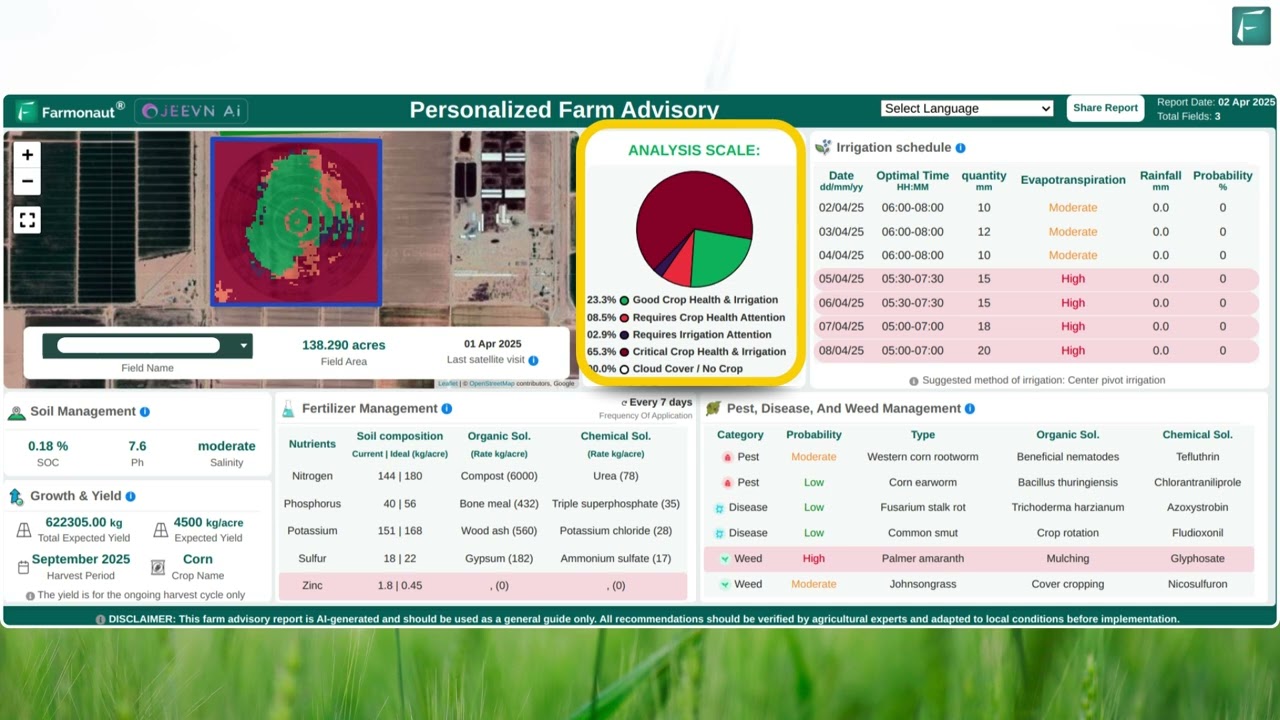
Modeling Farm Ecosystem Relationships with Ontological Frameworks
By embedding ontologies into AI-based agricultural systems, we model intricate relationships among environmental variables (like soil moisture, nutrient content, pest activity, and weather forecasts) and farming activities (like irrigation, fertilization, or tillage). The result is dynamic, contextualized reasoning that provides actionable insights for every farm management decision.
Consider this practical example:
- Sensor reads soil moisture at 23% in a wheat field (low for crop health).
- Ontology-driven AI cross-references historical yield performance, current weather forecasts (predicting warm, dry days), and nutrient content.
- The AI system recommends a precise irrigation schedule and targeted fertilization—neither more nor less than needed—avoiding both over-irrigation (wasted water) and overuse of fertilizers (which can lead to runoff and emissions).
- Integrated pest activity monitoring allows the system to suggest the optimal window for integrated pest management—minimizing chemical pesticide use.
By minimizing input waste (water, fertilizers, pesticides), these AI-ontological approaches also curb greenhouse gas emissions, reduce agrochemical runoff, and foster healthier soils.

Precision Farming: How Ontologies & AI Optimize Resource Usage
The cornerstone of smart, sustainable agriculture today is precision farming powered by AI and ontological frameworks. By contextualizing live field data with historical insights and sophisticated reasoning, farms can:
- Reduce water consumption by matching irrigation schedules to current soil moisture levels and up-to-date weather patterns.
- Minimize fertilizer and pesticide waste by targeted application, preventing overuse and runoff.
- Detect disease, pest, and crop stress early, allowing timely, integrated management.
- Boost yields and ecosystem health through informed crop rotation, conservation tillage, and cover cropping—all mapped, modeled, and monitored by AI-enabled ontologies.
The result? Improved productivity, resilience, lower emissions, and measurable environmental impact—changing the very definition of farming in 2025.
Comparative Impact Table: AI-Powered Ontologies vs Traditional Farming
This table illustrates the tangible environmental and sustainability benefits provided by AI-driven ontologies compared to traditional farming methodologies in 2025:
| Farming Method | Estimated Water Savings (%) | Estimated Yield Improvement (%) | Resource Optimization Level | Ecosystem Health Impact | Carbon Footprint Reduction (%) |
|---|---|---|---|---|---|
|
AI-Powered Ontologies (Smart Farming 2025) |
25–35% | 10–17% | High (real-time, adaptive) | Strong improvement (soil, water, biodiversity) | 15–25% |
|
Traditional Farming (Pre-AI/Manual) |
0–5% | 1–4% | Low (uniform, guess-based) | Marginal or negative (runoff, monoculture) | 0–5% |
Key Takeaway: Adoption of AI-powered ontologies in precision agriculture is estimated to save up to a third of water inputs, increase yields, optimize resource use, enhance ecosystem health, and dramatically cut carbon emissions versus conventional systems.
Fostering Collaboration & Knowledge Sharing Among Farmers
The true environmental impact of ontologies and artificial intelligence systems for the cooperative smart farming ecosystem is greatest when multiple farms and regions coordinate their actions. AI-driven platforms enable:
- Benchmarking sustainable practices—allowing farmers to share, compare, and adopt best practices proven in similar ecologies.
- Early detection of pest outbreaks and coordinated response, reducing chemical input needs.
- Adapting to climatic variability with collective intelligence—for example, exchanging data on planting dates, water management under new weather patterns, or drought-resilient seed varieties.
- Integrating ecosystem health metrics (biodiversity, soil organic matter, etc.) into collective decision-making at the landscape scale.
This collaborative approach amplifies environmental benefits at landscape scales, supporting sustainable intensification and reducing the need for agricultural expansion into natural habitats.

Artificial Intelligence Environmental Impact: Tangible Benefits in 2025 & Beyond
As we intensify efforts to mitigate the environmental footprint of agriculture, AI-driven smart farming stands out as a transformative approach. The environmental impact of these systems, all powered by ontological frameworks and collaborative ecosystems, includes:
- Markedly improved resource efficiency—with optimized irrigation, fertilizer, and pesticide usage based on actionable, continuous data.
- Lower carbon emissions by reducing overuse of fertilizers and inputs, often the main sources of agricultural greenhouse gases.
- Enhanced soil health and biodiversity, as AI-ontologies drive documentation and promotion of conservation practices (crop rotation, cover crops, minimal disturbance).
- Prevention of land and water degradation via precision input management and runoff minimization.
- Resilience: Dynamic, networked adaptation to climatic change, resource scarcity, and evolving pest outbreaks.
Together, these benefits embody the balancing of productivity with environmental stewardship—showcasing the far-reaching artificial intelligence environmental impact possible only with ontologies and intelligent technologies in 2025.
Farmonaut: Satellite Technology Empowering Smart, Sustainable Agriculture
At Farmonaut, we believe that accessible technology is the foundation of the next era of sustainable agriculture. Our satellite-based solutions deliver high-resolution insights on crop health, soil conditions, water consumption, and more—bridging the physical and digital worlds within farming. Here’s how our approach empowers farms and advances the artificial intelligence environmental impact movement:
Core Features & Technologies
- Satellite Monitoring: We use multispectral satellite imagery to evaluate vegetation (NDVI), soil moisture, and ecosystem health at scale—facilitating real-time management and automatic benchmarking.
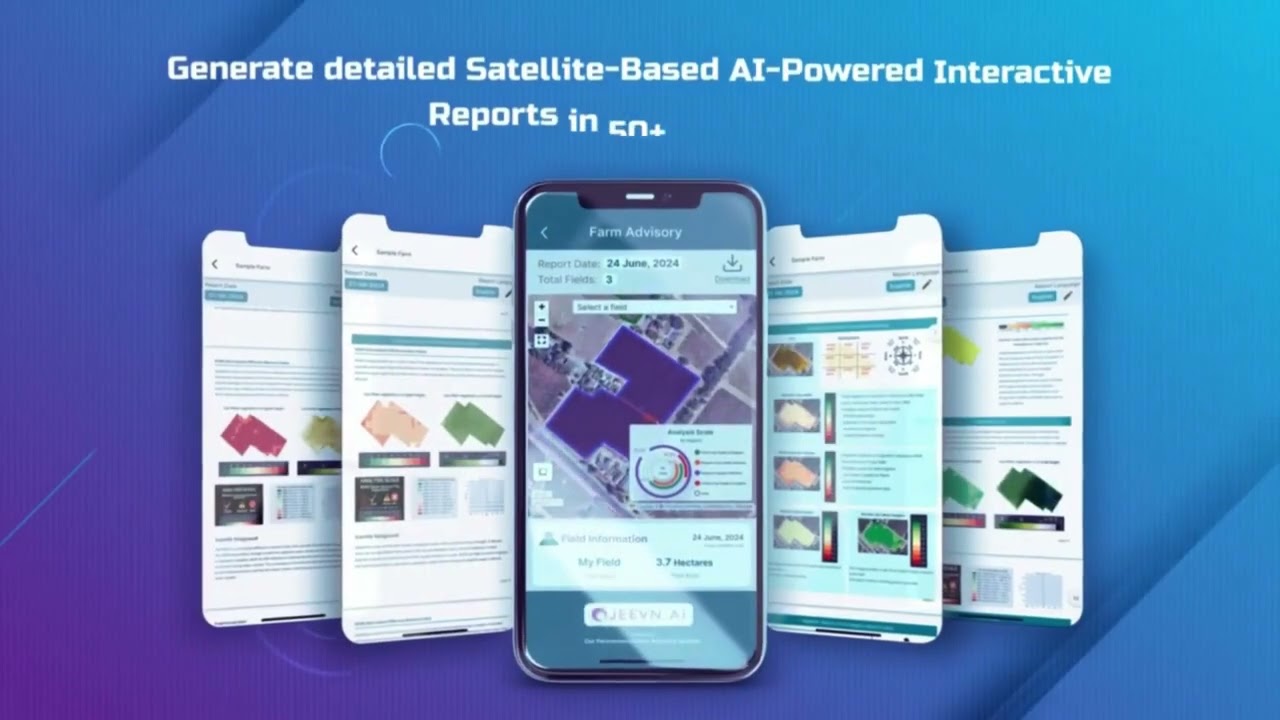
- JEEVN AI Advisory System: Our AI engine integrates satellite data, real-time weather forecasts, and ontologically structured agronomic knowledge to offer custom, actionable strategies for farmers, businesses, and governments.
-
Blockchain-Based Traceability: Ensures food and resource security throughout the agricultural supply chain.
Discover our Traceability Solutions →
-
Fleet & Resource Management: Optimize fleet logistics, machinery movement, and input application for sustainable, cost-effective farming.
Explore Fleet Management Tools →
-
Environmental Impact Monitoring: Real-time analytics for carbon emissions in agriculture, helping businesses move towards their sustainability goals.
Learn about Carbon Footprinting Analytics →
Our business model makes high-tech, AI/ontologies-driven satellite insights both affordable and accessible to individual users, businesses, and governments. Platforms are cloud-based, mobile, and API-integrated, supporting scalable and collaborative farm management worldwide.

The Future: Edge AI, IoT & Real-Time Environmental Monitoring in 2025
The integration of ontologies and AI in cooperative smart farming ecosystems is rapidly evolving thanks to advances in edge computing and the Internet of Things (IoT). In 2025, the ability to process data locally—from remote sensors, weather stations, and satellite feeds—means:
- Real-time decision support at the farm field, with recommendations delivered in seconds—eliminating latency and enabling adaptive management.
- Lower energy consumption since data doesn’t always need to travel to a central cloud for analysis.
- Enhanced privacy and security of sensitive agricultural data.
- Decentralized collaboration among farms and cooperatives, building collective intelligence with minimal infrastructure.
This bold frontier will drive a paradigm shift—towards truly environmentally conscious, responsive, and sustainable agriculture ecosystems.
Explainable Artificial Intelligence in Cooperative Smart Farming Systems
Farming is ultimately a human endeavor: for sustainable transformations to take root, explainable AI is crucial. Ontology-based AI frameworks now offer:
- Transparent, interpretable recommendations that farmers can understand, validate, and refine.
- Embedded sustainability metrics—integrating environmental regulations and stewardship goals within operational workflows.
- Continuous, collaborative feedback so that systems learn and evolve with user experience and field outcomes.
This trust-building approach fosters higher adoption and further enhances the positive artificial intelligence environmental impact in agriculture by 2025 and beyond.
Farmonaut Digital Access & API Links
Ready to leverage the power of AI and ontologies for your crop, soil, and environmental management goals? Explore our digital platforms:



-
Try the Farmonaut Satellite Data API for direct integration with your agriculture or resource management software.
-
Explore Farmonaut API Developer Docs for onboarding and technical guides
-
Large-scale Farm Management: Our scalable platform is designed for agricultural businesses and agencies to monitor, manage, and benchmark resource efficiency and sustainability KPIs across multiple regions.
-
Learn how satellite-based verification enables sustainable crop loans and insurance solutions.
-
Crop, Plantation & Forest Advisory: Get AI-powered, site-specific advice for your land or agroforestry project.
Farmonaut Subscription Plans
Farmonaut provides affordable subscription options to make satellite, AI, and ontological insights accessible for everyone in agriculture—from individual growers to large organizations. Choose the solution that suits your scale and sustainability goals.
Frequently Asked Questions
What are ontologies and why are they important in smart farming?
Ontologies are structured frameworks that define entities and relationships in a knowledge domain—such as crops, soil, weather, and management practices in agriculture. By using ontologies, AI systems can reason over complex data, ensure interoperability between devices, and provide actionable, precision insights—key drivers of sustainability and innovation in smart farming.
How does artificial intelligence environmental impact differ in AI-powered versus traditional farming?
AI-powered farming equipped with ontologies leads to improved resource efficiency (e.g., water and fertilizer savings), early disease/pest detection, and less environmental runoff—culminating in lower emissions and healthier ecological balance. Traditional farming often lacks this real-time data integration, resulting in waste and environmental degradation.
What environmental benefits do cooperative smart farming ecosystems offer?
Cooperative ecosystems promote knowledge sharing, robust risk management, landscape-scale biodiversity, and collaborative decision-making—all fostering resilience and amplifying positive environmental impacts across regions.
How does Farmonaut support sustainable agriculture?
We provide tools leveraging satellite monitoring, AI, blockchain, and ontological reasoning to help users optimize farm management, track environmental impact, and report on sustainability goals in real time—all accessible from web or mobile platforms.
Is Farmonaut only for large farms or can individuals benefit?
Our solutions scale for everyone—individual farmers, businesses, and government projects. We design cost-effective packages and subscription models to democratize access to the power of AI and ontologies.
Conclusion: A Sustainable Future Powered by Ontologies & AI in Agriculture
The integration of ontologies and artificial intelligence systems for the cooperative smart farming ecosystem is more than just a technological advancement—it’s revolutionizing the definition of sustainable farming in 2025 and beyond. These systems enable us to optimize resource use, boost productivity, and protect ecosystem health, all while providing the precision, reasoning capacity, and collaborative intelligence necessary to meet the world’s food and environmental challenges.
With tools like those offered by Farmonaut, the promise of AI-powered, environmentally conscious agriculture is now within reach for all. By combining actionable insights, scalable solutions, and transparent monitoring, we are leading the charge in a new era of data-driven environmental stewardship—creating farming ecosystems where productivity and sustainability are not at odds, but are unified goals, enabled through innovation.

 Abhishta Agri
 SP Farms
 Indosistim Teknologi
 Liquify Digital
 CU Foods
 BeyondTech Global
 Rouge VC
 AgroGreen Dynamics
 AgroRisk
 Oath Inc
 Reddane Farming
 Esri North East Africa
 Cresol
 MDCV UK
 Zerella Group
 Etech Consulting Madagascar
 Vestlandsforsking
 Delicio
