

Automated Farming Systems 2025: Revolutionizing Grain & Rice
Table of Contents
- Top Trivia: The State of Automation in Grain & Rice Processing 2025
- Introduction: Transforming Agriculture With Automated Systems
- Market Overview: Why 2025 Is a Critical Year
- Automated Grain Receiving for Farms
- Automated Rice Farming: Precision at Scale
- Automated Farming Machinery: Modernizing Agriculture
- Automated Plant Growing Systems & Controlled Environment Agriculture
- Technology Comparison: Traditional vs. Automated Systems
- Advanced Farm Management With Satellite Technology
- Leading Automated Farming Companies in 2025
- Future Outlook: What’s Next for Automated Systems?
- Farmonaut: Satellite, API, & App Solutions
- FAQ: Automated Farming Systems 2025
- Conclusion: Embracing a Data-Driven Agricultural Future
“By 2025, automated systems are projected to handle over 60% of global grain and rice processing tasks.”
Introduction: Transforming Agriculture With Automated Systems
The agricultural sector is undergoing a transformational shift as we move into 2025 and beyond. Automated farming systems—ranging from automated grain receiving for farms and automated rice farming to sophisticated, AI-enabled farming machinery—are driving a revolution that is redefining food production across the globe.
As global populations climb and the implications of climate change deepen, the need to optimize resource usage, reduce labor dependencies, and improve sustainability becomes ever more critical. In this comprehensive blog, we’ll explore:
- How AI, robotics, sensors, and smart machinery are revolutionizing every step from grain receiving to rice cropping
- The role of cloud, automation, and real-time monitoring systems in precision agriculture
- The rise of leading automated farming companies powering this revolution
- The transformative impact of satellite-driven technologies—like those provided by Farmonaut—on modern agricultural management and decision-support
- How data, IoT, and blockchain are ensuring transparency, traceability, and better access to financing
Whether you’re a farmer looking to enhance yield with minimum resources, or an agri-business leader committed to long-term sustainability, the automation trend is no longer optional—it’s essential.
Market Overview: Why 2025 Is a Critical Year for Automated Farming Systems
The drive towards increased automation is not just a response to rising labor costs and challenging climatic conditions; it also reflects the integration of AI, robotics, and GPS-enabled machinery into agriculture. In Asia and other large grain and rice-producing regions, automation is helping address the complexities of scale, disease, water management, and distribution. As environmental regulations become stricter, technologies that can monitor, control, and optimize resource consumption will dominate the agri-tech landscape.
Some of the forces fueling this technological shift include:
- Escalating global demand for staple grains like rice and wheat
- Increasing labor shortages and the push toward reducing dependency on manual operations
- Heightened risks associated with traditional grain receiving and rice farming methods—from contamination to weighing inaccuracies
- The pressure to adopt sustainable and verified carbon footprinting and supply chain processes



Automated Grain Receiving for Farms: Efficiency at Every Step
Grain receiving is a critical phase in agricultural production. The transition from traditional methods, which rely heavily on manual labor and are prone to delays, contamination risks, and weighing inaccuracies, to automated systems represents a vital step in reducing losses and streamlining farm operations.
How Do Automated Grain Receiving Systems Work?
- Automated systems employ a combination of smart sensors, robotics, and AI to automatically weigh, sort, and sample arriving grains.
- Advanced sensors detect contamination or deviations from desired grain quality in real-time, ensuring only the best grains enter storage.
- Systems are further integrated with farm management software for real-time inventory updates, traceability, and quality control.
- Automated data logging allows farmers to make informed decisions about storage, blending, and distribution quickly, minimizing post-harvest losses.
The core benefits include:
- Efficiency: Processes that once took hours or days can now be completed in minutes with greater accuracy.
- Consistency: Automated sorting and weighing reduce human error, increasing inventory accuracy and quality consistency.
- Loss Reduction: Minimizing manual handling reduces grain damage, pest exposure, and waste.
- Seamless Integration: All data flows into central farm management systems for quick review and streamlined reporting.

By 2025, these automated grain receiving systems are expected to be mainstream, handling not just the weighing and sorting but also using advanced robotics for conveyor automation and AI for quality grading. Such advancements are pivotal in large regions like Asia, where logistics and handling scale are critical for optimal operation and profitability.
Automated Rice Farming: Precision at Scale
Nowhere is the impact of automation more evident than in rice farming, especially across Asia and other staple-growing regions. Traditional rice cultivation is labor-intensive and highly dependent on timely planting, precise water management, and pest control.
Automated rice farming leverages drone technology for seeding and crop monitoring, robotic planters for precision seed placement, and AI-driven irrigation and fertilizer systems. All these innovations are aimed at helping conserve water, reduce labor costs, and enhance yield by enabling farmers to respond instantly to changing field conditions.
“AI-powered machinery can increase rice farming efficiency by up to 40% compared to traditional methods.”
Ground-Breaking Technologies in Automated Rice Farming
- Drones for Seeding and Monitoring: Automated drones can evenly distribute rice seeds, reducing gaps, and perform remote monitoring to detect water stress or disease symptoms early.
- Robotic Planters and Tractors: Equipped with GPS and advanced sensors, automated tractors and robotic planters achieve exceptional uniformity in paddy preparation and seed placement, optimizing germination rates.
- Automated Irrigation Management: AI-powered irrigation systems ensure precise water delivery, adjusting flow based on soil moisture, crop phase, and weather forecasts.
- Pest and Infestation Detection: Automated image recognition systems identify early signs of pest problems, triggering targeted spraying to minimize both pesticide use and environmental impact.
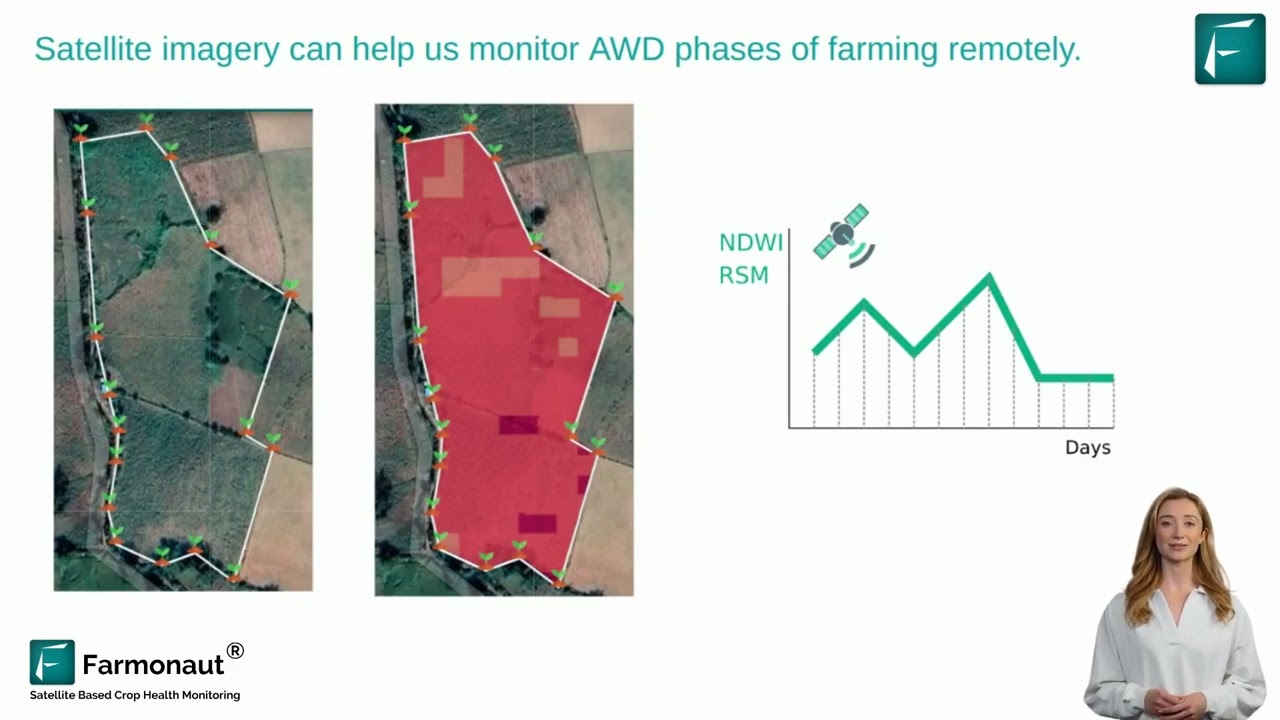
The ability to detect pest infestations and resource stresses in real-time, and intervene promptly with minimal manual input, has been transformative for regions like India, China, and Indonesia—countries on the frontline of feeding billions. Automated rice farming is no longer a future vision—it is a staple of critical crop production worldwide in 2025.

Looking for advanced tools to optimize rice cultivation or diversified agroforestry? Our Crop Plantation Forest Advisory platform offers tailored, satellite-driven insights for improving yield and reducing losses across multiple staple crops.
Automated Farming Machinery: The Backbone of Modern Agriculture
Automation in farm machinery is no longer optional but rather the backbone of successful modern agriculture. Combine harvesters, automated planters, and precision sprayers—now equipped with GPS, real-time sensors, and AI-powered control systems—operate 24/7, optimizing production from land preparation through to crop harvesting and processing.
Technologies Behind Automated Farming Machinery
- Precision Guidance: With IoT-enabled GPS systems, tractors and harvesters follow optimized paths, minimizing overlap, fuel consumption, and soil compaction.
- Data-Driven Fertilizer and Pesticide Application: Machine learning models process multi-season field and soil data to tailor chemical applications, reducing waste and promoting environmental sustainability.
- 24/7 Autonomous Operations: Automated machinery can be scheduled or remotely controlled, ensuring critical farming phases—like rice harvesting or grain sowing—happen exactly when needed.
- Fleet and Resource Management: Advanced fleet management platforms help agricultural businesses track equipment, monitor fuel and maintenance needs, and optimize logistics to reduce operational costs.
- Real-Time Monitoring: Integrated sensors provide up-to-the-minute information about soil conditions, crop health, and machinery status, enabling proactive interventions that boost productivity.
The integration of blockchain-based traceability—as offered by our traceability suite—with automated machinery data logs is empowering producers in 2025 to prove product authenticity and build consumer trust.

Such advanced, data-integrated automated farming machinery is what enables today’s farms to increase yield, reduce input usage, and operate at maximum efficiency—even in challenging climatic scenarios.
Managing large-scale automated farm operations? Our Large Scale Farm Management app brings all your field, machinery, and resource data together for simple, powerful oversight.
Automated Plant Growing Systems & Controlled Environment Agriculture
Beyond open fields, automated plant growing systems are now powering the next evolution of controlled environment agriculture (CEA), including vertical farms and greenhouse operations. By leveraging climate control, robotics, and AI-driven system management, these facilities provide year-round, rapid crop production with minimum environmental footprint.
- Robotic Handling: Automated arms and conveyors move seedlings, harvest mature plants, and manage stacking in high-density vertical systems.
- Sensors & AI-driven Control: Real-time monitoring allows precise control of light, temperature, humidity, and nutrient flow, ensuring every crop’s exact growth needs are met regardless of external weather or seasons.
- Resource Optimization: Water and nutrients are recycled wherever possible, drastically reducing consumption compared to traditional open-field agriculture.
- Automated Disease & Stress Detection: Computer vision algorithms spot early signs of disease or suboptimal growth conditions, prompting interventions before problems escalate.
For countries and regions facing extreme climates or urban land constraints, these automated plant growing systems are essential to ensuring food security in 2025 and beyond.
Want to track your environmental impact and promote sustainable farming? Our carbon footprinting tools make regulatory compliance and eco-certification easy for modern agricultural operations.
Technology Comparison: Traditional vs. Automated Farming Systems
Below is a comparison of key automated farming systems and their traditional counterparts, illustrating advances in efficiency, cost, and technological innovation.
| System/Technology | Application | Year Mainstream Adoption | Efficiency Improvement (%) | Cost Reduction (%) | Notable Innovations |
|---|---|---|---|---|---|
| Traditional Grain Receiving | Grain Handling | Before 2020 | Base | Base | Manual labor, Mechanical scales |
| Automated Grain Receiving System | Grain Handling | 2023–2025 | +35% | +25% | AI, Sensors, Robotics, IoT Integration |
| Manual Rice Sowing & Monitoring | Rice Farming | Before 2020 | Base | Base | Animal Labor, Hand Broadcasting |
| Drone Seeding & Crop Monitoring | Rice Farming | 2023–2025 | +40% | +20% | Drones, AI-Driven Sensors |
| Robotic Rice Planters | Rice Farming | 2024–2025 | +42% | +30% | GPS, Robotics, Imaging Systems |
| Manual Irrigation | Crop Irrigation | Before 2020 | Base | Base | Hand Pumps, Canal Flow |
| AI-Powered Irrigation | Crop Irrigation | 2024–2025 | +50% | +40% | AI, Remote Sensors, IoT, Real-Time Climate Data |
| Automated Plant Growing System | CEA & Vertical Farming | 2025 | +60% | +35% | Robotics, Automated Climate & Nutrient Control, AI Image Analysis |
Advanced Farm Management With Satellite Technology
While automation drives efficiency on the ground, satellite technology is equally revolutionizing farm management at scale. As a leading provider, Farmonaut focuses on ensuring real-time, high-precision data delivery to all stakeholders in agriculture.
- Satellite-Based Monitoring: Using multispectral images, our services bring field-level insights into crop health, soil condition, and vegetation analysis (NDVI), supporting both quick and strategic decisions in crop production and logistical planning.
- AI-Powered Advisory: Jeevn AI analyzes field satellite data to deliver actionable recommendations—from irrigation timing to pest management—boosting yield and minimizing losses in all regions (including Asia’s rice heartlands).
- Blockchain Traceability: With seamless data authentication for every operational phase, our platform ensures trustworthy, secure supply chains—vital for export markets and sustainability certifications.
- Fleet Management: On top of automated machinery, optimized fleet management tools track movement, maintenance, and resource consumption, lowering costs and improving oversight.
- Environmental Impact Monitoring: Our carbon footprinting module enables full compliance with growing climate regulations and the creation of transparent, eco-conscious supply chains.

Our API and developer documentation:
- Farmonaut API—for direct integration with your management systems or custom dashboards.
- Developer Docs—for building applications that leverage satellite imagery, weather, and more.
Farmonaut Subscription Plans for 2025
Access all of Farmonaut’s advanced monitoring and advisory features with flexible, affordable subscription plans. Scale from individual fields to widespread agribusiness and government-level projects.
Leading Automated Farming Companies in 2025
The revolution in automated farming systems is being driven by a vibrant landscape of automated farming companies. These range from start-ups specializing in crop-specific robots to established firms offering all-in-one AI-driven management systems.
- Autonomous Tractor Manufacturers: Offering GPS-equipped, sensor-laden tractors that can seed, weed, and harvest automatically, operating efficiently across large and small farms alike.
- Precise Planter and Drone Companies: Deploying fleets of seed drones and robotic planters for high-density, optimized crop establishment.
- IoT and AI Developers: Providing cloud-based decision support tools—integrated with field, weather, and market data—for end-to-end farm automation and precise resource control.
- Climate-Tech Platform Developers: Building scalable digital infrastructure for environmental data tracking (like our carbon footprinting suite) and risk management.
In 2025, companies are focused not just on creating autonomous hardware but on ensuring seamless software integration, real-time cloud monitoring, and AI-driven analytics—bringing together every aspect of modern farming for ultimate productivity and sustainability.

Future Outlook: What’s Next for Automated Systems?
As we look to the future, the integration of automated machinery with AI, big data, and blockchain will continue to redefine farming. Some anticipated trends:
- Remote Control and Real-Time Adaptation: Farmers and managers will be able to monitor and control operations remotely via mobile apps and cloud interfaces—perfect for large-scale or distributed farms.
- Machine Learning-Driven Recommendations: Systematic data analysis, incorporating soil health, weather, and historical yield, will lead to smarter automated decisions for when, how, and where to plant, irrigate, or harvest.
- Full-Chain Traceability: Blockchain-enabled platforms—like our traceability module—will ensure every phase from seed to storage is transparent and verified, unlocking value in domestic and international markets.
- Financing & Insurance Automation: Satellite-verified data (see our Crop Loan & Insurance page) will make financing fast, fraud-proof, and accessible for all sizes of agricultural operations.
The ultimate goal: A global ecosystem of resilient, productive, data-driven farms—capable of feeding our planet sustainably, no matter what challenges 2025 and the coming decades may bring.
Farmonaut: Satellite, API, & App Solutions for Automated Farms
As automated farming systems reshape grain and rice production, precision, efficiency, and sustainability are no longer optional—they are essential. Farmonaut’s mission is to make advanced satellite, AI, and real-time data solutions affordable and accessible to every grower, business, and government globally.
- Real-Time Crop Monitoring: Multispectral data and NDVI analysis help spot issues before they affect yield—enabling preventive, rather than reactive, management.
- Smart Advisory With Jeevn AI: AI-driven recommendations—combining satellite, weather, and historical crop data—guide critical decisions from planting to pest control.
- Blockchain Traceability: Authenticate every operational phase and build trusted, compliant supply chains using our secure platform.
- Instant Access, Seamless Integration: Our cloud apps and APIs integrate seamlessly with existing farm management systems.
- Fleet Management, Crop Plantation Insights, Large Scale Farm Admin Tools, Carbon Footprinting, and Product Traceability are all available under one modular platform.
- For developers, our API and API Docs allow you to build custom dashboards, reporting, or analytics tools for automated, next-gen agri-businesses.
Start transforming your agricultural operations—in the field and from space:
FAQ: Automated Farming Systems 2025
-
Q: What is the main advantage of automated grain receiving for farms in 2025?
A: Automated grain receiving provides faster, more accurate weighing, sorting, and quality assessment, reducing human error and contamination risks while enabling real-time inventory control and efficient distribution. -
Q: How does automated rice farming increase efficiency and yield?
A: Automated rice farming uses AI-powered drones, robotic planters, and smart irrigation systems to optimize seeding, monitor fields remotely, ensure precise water management, and detect pests early, thereby enhancing both efficiency and yield. -
Q: What role do sensors and AI play in automated farming machinery?
A: Sensors continuously gather data on soil, crop, and environmental conditions, while AI analyzes this data to control autonomous machinery actions—ensuring precise application of resources and timely interventions. -
Q: Can small farms benefit from automation?
A: Yes! Modular automated solutions and affordable satellite-based monitoring platforms like Farmonaut’s make it possible for small and medium-scale farmers globally to optimize yields and resource usage. -
Q: How does Farmonaut ensure sustainability and traceability?
A: By integrating blockchain traceability, carbon footprinting, and continuous environmental monitoring, we ensure transparent, eco-friendly, and accountable agricultural supply chains. -
Q: Is automated plant growing system only suitable for urban or vertical farms?
A: Not at all. While widely used in vertical and urban farms, automated systems for lighting, nutrition, and disease control are increasingly adopted in greenhouses and even traditional fields for better crop management.
Conclusion: Embracing a Data-Driven Agricultural Future
2025 marks a defining moment in the global agriculture sector. Automated grain receiving for farms, advanced rice farming systems, and next-generation machinery have propelled food production into a new era—transforming the way we plant, grow, monitor, and distribute staple grains and rice. Automation is not just boosting productivity; it is reducing labor dependency, optimizing resource use, and unlocking a future of resilience and sustainability.
As technologies like AI, robotics, sensors, and satellite-driven analytics become integral to every aspect of farming, the collaboration between advanced platforms—such as the solutions we provide at Farmonaut—and the world’s farmers will drive agricultural progress, food security, and environmental stewardship for generations to come.
Ready to revolutionize your farm? Experience the future—start with satellite insights and automation today.
Discussion
Questions, corrections or field experience? Share them below. First-time comments are reviewed before they appear, and your email is never published.
No comments yet. Be the first to add a question or your experience.

 CGIAR
CGIAR Hayleys Agriculture
 Linx Agritech
 Adinet
 Save Your Soils
 GalaxEye Space
 Grandstream Algérie
 XOS Realty
 Geospatial Lab Africa
 Agro La Gándara
 HIPSAC
 ZOL Zimbabwe
 Juligerm
 AdBio
AdBio MISE Maroc
 NWNS
NWNS Red August Group
 Farm Inc
 WeMe Global
 Licence holder · Niger · Gold










