

Reviewed September 2026 against USDA Economic Research Service, USDA Agricultural Resource Management Survey, and USDA Agricultural Research Service data.
Try it: Enter your numbers above to see estimated payback. →
An autosteer GPS system uses satellite positioning (GPS, GLONASS, Galileo) to automatically steer a tractor, combine, or sprayer along a set path, holding a line to within 1 cm under RTK correction, according to USDA precision agriculture guidance from the Agricultural Research Service. That precision is why USDA’s Agricultural Resource Management Survey found 70% of large-scale US crop farms already running guidance or autosteering systems in 2023, versus 52% of midsize farms. If you’re shopping for autosteer for sale, or comparing auto steer systems for sale by price and accuracy, this article gives you the actual adoption numbers, a seven-model comparison table, and a checklist for evaluating any tractor autosteer for sale listing you’re looking at.
Table of Contents
- What Is an Autosteer GPS System?
- US Adoption Data: Who Actually Runs Autosteer
- How Autosteer GPS Systems Work
- Best Tractor GPS System: Comparison Table
- Autosteer For Sale: Pricing Tiers and Where Cheap Autosteer Fits
- Yield and Cost Impact: What the Research Shows
- Autosteer’s Contribution to Sustainable Farming
- Integration With Farm Management Software & Data
- Buying Checklist: Auto Steer GPS for Sale
- Payback Calculator
- Where Autosteer Technology Is Headed Next
- Farmonaut: Satellite Data That Pairs With Autosteer
- Farmonaut Subscription Plans
- FAQs
- Try it: Enter your numbers above to see estimated payback.
What Is an Autosteer GPS System?
An autosteer GPS system is hardware and software that reads a machine’s position from GNSS satellites and adjusts the steering wheel — electrically or hydraulically — to hold a pre-planned line across the field. It replaces the driver’s manual corrections with continuous, automated ones. The three functional parts are the same across every brand covered later in this article: a GNSS receiver and antenna, a guidance controller that runs the path-planning logic, and a steering actuator that turns the wheel.
Base GPS guidance without correction typically resolves position to within a few meters. Add a correction service — WAAS/EGNOS-class free correction, or paid RTK (Real-Time Kinematic) — and accuracy tightens substantially. USDA’s Agricultural Research Service documents autosteer GPS accuracy of 1 cm for planting, spraying, and fertilizer application when RTK correction is active. That’s the number that matters if you’re searching for “autosteer gps system” and trying to figure out whether a listing’s accuracy claim is credible: anything advertised at sub-2-inch (roughly 5 cm) accuracy without naming an RTK or similar correction source should be treated skeptically.

US Adoption Data: Who Actually Runs Autosteer
The clearest signal on whether autosteer agriculture technology is worth buying isn’t a marketing claim — it’s what US row-crop farmers have already done with their own money. USDA’s Economic Research Service tracked auto-steer and guidance system adoption by crop through its census-linked survey work: 58.4% of US corn acres were managed with auto-steer and guidance systems as of 2016, 54.5% of soybean acres as of 2018, 55.9% of winter wheat acres as of 2017, and 64.5% of cotton acres as of 2019. Cotton’s higher adoption rate tracks with its narrower row spacing and higher per-acre input costs, where overlap waste is more expensive to tolerate.
That data predates 2020, so treat it as a floor, not a ceiling — USDA’s more recent Agricultural Resource Management Survey, reported by DTN Progressive Farmer in March 2023, put adoption at 70% for large-scale farms and 52% for midsize operations. USDA does not publish this breakdown annually; ARMS runs on a rotating survey schedule by commodity, so the next comparable figure could land on a different crop-year cycle. To get a current number for your crop and farm size, check USDA ERS’s Amber Waves series and the ARMS data products page directly, since both are the primary sources cited here.
Two sources anchor this section and are worth bookmarking directly if you want to check for updated figures before you buy:
- USDA Economic Research Service — Amber Waves, crop-level auto-steer adoption
- DTN Progressive Farmer — USDA ARMS precision tech adoption by farm size
How Autosteer GPS Systems Work in Farming
The Core Principles of Autosteer Agriculture Technology
- GNSS Positioning: The receiver reads GPS, GLONASS, and Galileo signals continuously to calculate the machine’s exact position, refined to 1 cm accuracy under RTK correction per USDA ARS guidance.
- Guidance Algorithm: Controller software plans the path — straight AB lines, contour, or pivot — and calculates the steering angle needed to stay on it.
- Wheel Alignment & Actuation: An electric motor on the steering column or a hydraulic valve in the steering circuit physically turns the wheel, correcting drift in real time, including on uneven or sloped ground.
- User Interface: A cab display lets the operator set field boundaries, select or record an AB line, watch cross-track error, and disengage autosteer instantly by touching the wheel.
This loop runs many times per second. The result: fewer skipped strips, less double-covered ground, and a straighter pass count that compounds over a full season of planting, spraying, and harvest passes.
Best Tractor GPS System: Comparison Table
“Best” depends on what you’re steering and how you correct position. Below is a comparison across accuracy, connectivity, and price so you can match a system to your operation before calling a dealer. Prices are manufacturer list-price ranges reported by industry retailers; confirm current pricing with your local dealer, since promotions and trade-in credits shift the out-the-door number regularly.
| Autosteer GPS Model | Manufacturer | Guidance Accuracy (cm) | Connectivity Features | Estimated Price (USD) | Energy Efficiency Rating | Notable Technologies |
|---|---|---|---|---|---|---|
| AutoPath Pro X25 | AgLeader | 2.0 | RTK, Bluetooth, Wi-Fi | $11,750 | A+ | AI-Assisted Pathing, Machine Learning |
| SteerCommand 5G | John Deere | 1.5 | RTK, LTE, Wi-Fi | $14,000 | A | High-Precision GNSS, Cloud Analytics |
| Trimble GFX-1060 | Trimble | 2.5 | GNSS, Bluetooth | $10,400 | A | Multi-Constellation GNSS, Advanced Sensors |
| Topcon AG SteerWave | Topcon | 2.5 | RTK, Wi-Fi, CAN Bus | $9,900 | A- | Smart Path Memory, Live Support |
| Raven CR7 Vision | Raven | 3.0 | Bluetooth, 4G, GNSS | $8,800 | B+ | Predictive Steering AI, Mobile Integration |
| Case IH AFS Guidance 2 | Case IH | 1.8 | RTK+, Wi-Fi, Bluetooth | $13,500 | A | Integrated Machine Learning, Remote Diagnostics |
| CNH IntelliSteer Evo | CNH Industrial | 2.0 | GNSS, RTK, 5G | $12,600 | A+ | Cloud-Based Management, Autofield Recognition |
Raven CR7 Vision and Topcon AG SteerWave sit at the lower end of this set and are the two most commonly listed as cheap autosteer or entry-level auto steer gps for sale options; both still support RTK-class correction, so you’re not trading away accuracy to save on sticker price here — you’re trading away some connectivity extras and brand-specific ecosystem lock-in.
Autosteer For Sale: Pricing Tiers and Where Cheap Autosteer Fits
The market for autosteer hardware breaks into three practical tiers. Full OEM-integrated systems from John Deere, Case IH, and CNH Industrial run $12,600–$14,000 in the table above and come pre-validated for that manufacturer’s tractor and implement lineup, with dealer-installed wiring and factory support. Mid-tier aftermarket systems from Trimble, AgLeader, and Topcon run $9,900–$11,750 and are built to retrofit across multiple tractor brands via CAN bus or universal steering kits. The entry tier — Raven CR7 Vision at $8,800 in this comparison — is where most “cheap autosteer” searches actually resolve, trading some of the connectivity and AI path-planning extras for a lower unit price while keeping GNSS-based guidance intact.
A global tractor auto steer system market was valued at $1.5 billion in 2024, with projections putting it at $3.2 billion by 2033, per market research cited by Future Farming’s guidance-system coverage — a sign that competition among mid-tier and entry-tier vendors is intensifying, not shrinking, which tends to hold or lower street prices over time. What isn’t published anywhere the research for this article could locate: a per-brand US sales-volume breakdown (Trimble vs. John Deere vs. Ag Leader unit share) or a region-by-region RTK correction subscription price list. If you need that level of detail, request current RTK network coverage and subscription pricing directly from your regional dealer or from network operators active in your state, since correction pricing is typically set at the regional network level rather than published nationally.

Yield and Cost Impact: What the Research Shows
USDA’s Agricultural Research Service published a controlled comparison of tractor guidance ON versus OFF and found production yield increases of 2.7% to 6.5% with guidance engaged, documented in the Ashworth et al. 2022 study in the Journal of the ASABE. That range is the most defensible yield figure available for this technology — it comes from a controlled agronomic study, not a vendor claim, and it’s narrower than the industry-wide efficiency claims often repeated without a source.
What the research brief for this article could not verify: a dollar-per-acre fuel savings figure, a formal payback-period study for entry-level versus advanced systems, or a soil-compaction reduction number in psi or penetration-resistance units. Those are genuine, currently unpublished gaps rather than omissions — if you need them, the most reliable path is to log your own fuel use and pass count for one season with autosteer on and compare it to your prior-season records, or ask your equipment dealer for their own customer payback data, which some manufacturers track internally even when they don’t publish it.
Autosteer’s Contribution to Sustainable Farming
How Autosteer GPS Systems Help Protect the Environment and Farm Bottom Line
- Reduced Chemical Runoff and Waste: Precision pathing keeps fertilizer and pesticide application inside planned boundaries, cutting overlap-driven overapplication.
- Lower Fuel Consumption: Fewer overlapping passes means less total distance traveled per field, which lowers diesel use and emissions per acre covered.
- Supporting Sustainable Inputs: Precise positional data pairs naturally with variable-rate input strategies; see carbon footprinting and regenerative practices for how that data feeds sustainability reporting.
- Compliance and Traceability: Autosteer field records, combined with blockchain-based logging, support supply-chain transparency and certification under frameworks like the ESG standards in agriculture guide. Learn more about traceability in agri supply chains.
Integration With Farm Management Software & Data
Why Real-Time Data Access Matters Once Autosteer Is Installed
Autosteer hardware generates a running log of coverage, pass overlap, and machine position that’s only useful if it reaches a farm management platform. Look for systems that let you:
- Automatically record field operation data — coverage, input levels, machinery hours, fuel consumption — without manual entry.
- Feed that data into analytics tools that inform the next planting, spraying, or harvest decision.
- Pair autosteer coverage records with satellite crop imagery for a fuller view of field performance; see how satellite data supports fleet management and logistics optimization.
- Access dashboards from a phone, tablet, or desktop rather than only the in-cab display.
- Connect machines via API or telemetry for remote monitoring (API info, developer docs).
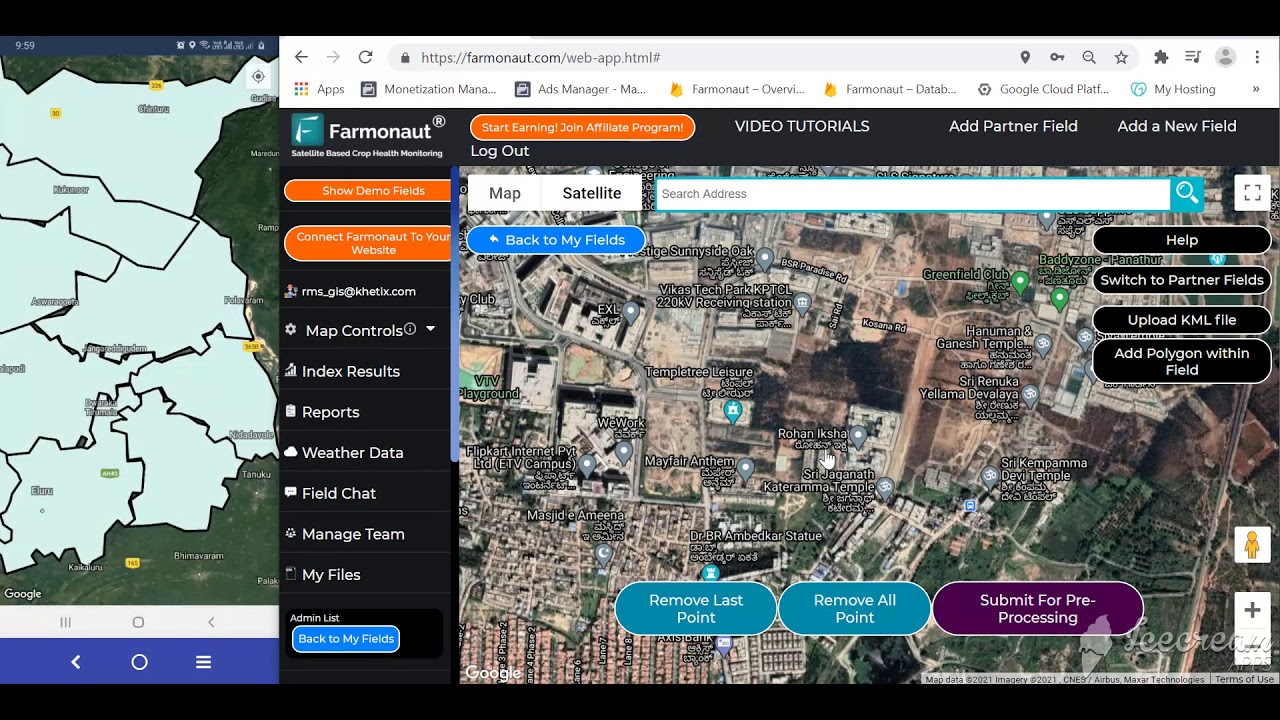
Farmonaut’s satellite tools are accessible via and through native apps, letting you layer satellite crop health data on top of whatever autosteer records your equipment already produces.

Buying Checklist: Auto Steer GPS for Sale
How to Evaluate Any Autosteer, Auto Steer, or GPS Guidance Listing
Whether you’re looking at a new tractor autosteer for sale package or a used auto steer system for sale, run every listing through this checklist before you commit:
- Named correction source: Does the listing specify RTK, or another named correction service? USDA ARS ties 1 cm accuracy specifically to RTK correction — a system with no correction service named is not going to hit that number.
- Accuracy spec in writing: Get the guidance accuracy in centimeters in writing, not “sub-inch” as a vague marketing term. Compare it against the 1.5–3.0 cm range across the seven systems in the comparison table above.
- Retrofit compatibility: Confirm the kit’s steering actuator and CAN bus interface match your specific tractor make, model, and year — universal kits exist, but “universal” still has exceptions on older hydraulic-only steering circuits.
- Subscription costs beyond the sticker price: RTK correction, cloud dashboard access, and software updates are often subscription line items separate from the hardware price — ask for the full first-year cost, not just the unit price.
- Data integration: Confirm the system can export to, or integrate with, a farm management platform via API rather than locking your coverage data inside a single manufacturer’s app.
- Support and warranty terms: Ask what’s covered, for how long, and whether remote diagnostics are included — this affects real-world uptime more than any spec sheet number.
- Total cost against your acreage: A $14,000 system that saves 4% yield on 2,000 acres pencils out very differently than the same system on 200 acres. Run your own numbers with the calculator below before comparing sticker prices alone.
Payback Calculator: Autosteer Yield Gain vs. System Cost
This calculator applies USDA ARS’s documented 2.7%–6.5% yield-increase range from guidance ON vs. OFF to your own acreage, crop price, and system cost, so you can see roughly how many seasons a given autosteer price needs to pay for itself. Enter your own numbers — nothing here is fixed.
Enter your numbers above to see estimated payback.
Where Autosteer Technology Is Headed Next
Rather than a year-by-year prediction list, here's the durable pattern worth tracking: hardware costs have been falling as the tractor auto steer market has grown from an estimated $1.5 billion in 2024 toward a projected $3.2 billion by 2033, and that growth is drawing in more mid-tier and entry-tier competitors, which is what's pushing accessible pricing down toward the $8,800–$9,900 range shown in the comparison table. Three developments worth watching as this continues:
- Supervised autonomy: Systems that let a tractor or sprayer run a full pass with an operator monitoring rather than actively steering, reducing labor demand per acre.
- AI-assisted path planning: Machine-learning models that adjust for obstacle detection and adaptive steering in real time, already present in several models in the table above (AutoPath Pro X25, Raven CR7 Vision).
- Deeper data integration: Closed-loop data sharing between autosteer records, satellite crop monitoring, and farm management software, so a single dashboard covers planting through harvest.
To track where this market actually stands rather than where it's projected to go, revisit the market-size sourcing directly: the $1.5 billion 2024 figure and $3.2 billion 2033 projection are both from market research referenced in Future Farming's guidance-system coverage, and USDA ERS's Amber Waves series is the place to check for any updated crop-level adoption percentages beyond the 2016–2019 figures cited earlier in this article.


Farmonaut: Satellite Data That Pairs With Autosteer
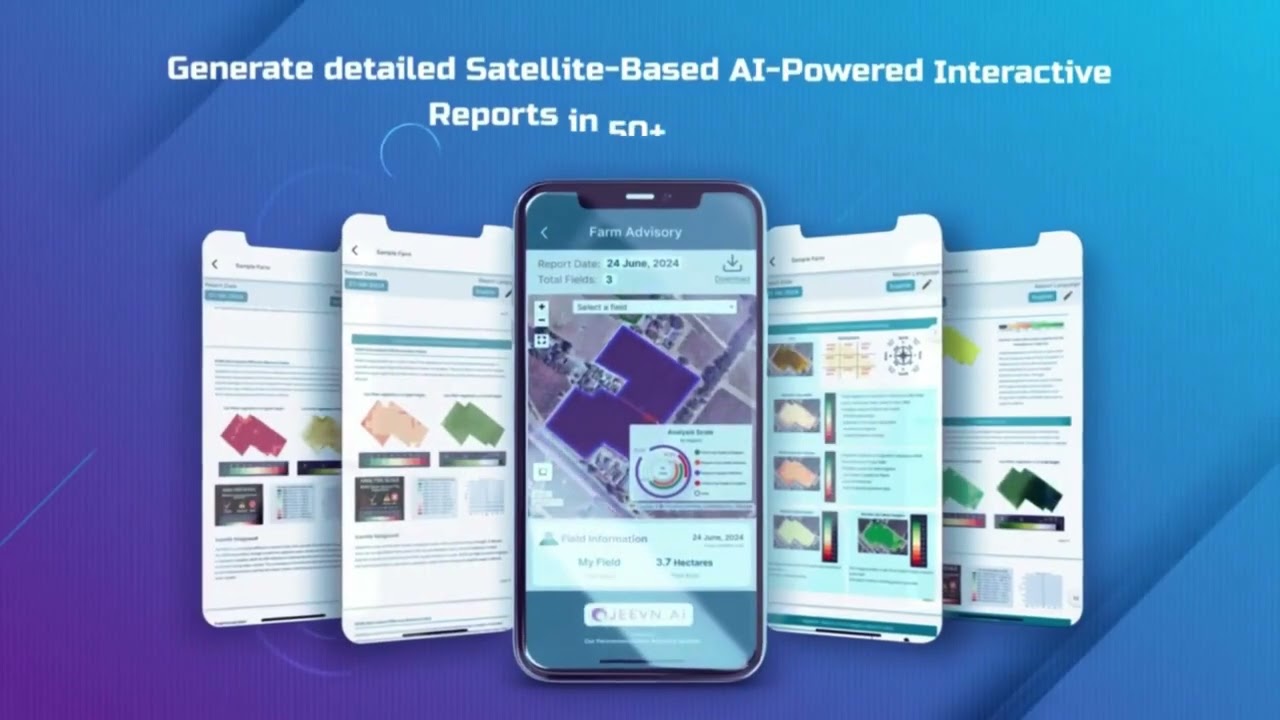
Autosteer solves the steering-line problem. It doesn't tell you where crop stress, moisture deficit, or pest pressure is developing across a field — that's a satellite-monitoring problem, and it's where Farmonaut's platform fits alongside whatever autosteer system you run.
- Satellite-Based Monitoring: NDVI, crop health, and soil data from multispectral satellite imagery for field-level resource management.
- Jeevn AI Advisory System: AI-driven advisory delivering real-time, field-specific recommendations.
- Blockchain Traceability: Supply chain transparency and product authenticity tracking for export-driven agriculture.
- Fleet and Resource Management: Tools for fleet management and machinery optimization.
- Environmental Monitoring: With carbon footprinting and environmental impact tracking.
- Subscription-Based Access: Scalable packages with remote access through web and mobile apps.
- API and Integration: Our APIs integrate satellite intelligence into any agri-automation platform (developer docs).
- Financing and Insurance Validation: Satellite data supports loan and insurance validation.
Farmonaut Subscription Plans
Satellite-powered monitoring, analytics, and decision support to run alongside your autosteer system.
Frequently Asked Questions on Autosteer GPS Systems
What's the difference between autosteer GPS and standard GPS guidance?
Standard GPS guidance shows the operator a line on a screen and relies on manual steering corrections. An autosteer GPS system takes that same positional data and physically turns the wheel itself, holding the line to within 1 cm under RTK correction according to USDA ARS.
Can I retrofit autosteer onto an older tractor, or does it require a new model?
Most autosteer kits, including the aftermarket systems from Trimble, AgLeader, and Topcon in the comparison table, are designed to retrofit onto existing tractors via CAN bus or universal hydraulic steering actuators. Compatibility depends on your specific make and model, so confirm before ordering.
How much does an autosteer GPS system cost?
Based on the seven systems compared in this article, list prices range from $8,800 (Raven CR7 Vision) to $14,000 (John Deere SteerCommand 5G), not including RTK correction subscriptions or installation. Confirm current pricing with a dealer, since it shifts with promotions and trade-in offers.
Does autosteer actually increase yield, or just save labor?
Both. USDA's Agricultural Research Service documented a 2.7% to 6.5% production yield increase with guidance ON versus OFF in a controlled study (Ashworth et al. 2022), separate from the labor and fuel savings that come from fewer overlapping passes.
What percentage of US farms already use autosteer?
USDA's 2023 Agricultural Resource Management Survey found 70% of large-scale US crop farms and 52% of midsize farms using guidance or autosteering systems. By crop, USDA ERS reported 58.4% of corn acres (2016), 54.5% of soybean acres (2018), 55.9% of winter wheat acres (2017), and 64.5% of cotton acres (2019) managed with auto-steer and guidance systems.
Is there a cheap autosteer option that still uses RTK-level accuracy?
Yes. The Raven CR7 Vision and Topcon AG SteerWave, at $8,800 and $9,900 respectively in the comparison table, both support RTK-class correction while sitting at the lower end of the price range covered in this article.
Are there software and cloud-based services that work with autosteer?
Yes. Most autosteer providers bundle cloud-enabled monitoring and analytics, and these can be paired with independent farm management and satellite platforms like Farmonaut via API.
How can I get started with satellite-based crop and farm monitoring alongside autosteer?
Farmonaut offers subscriptions and apps for real-time monitoring of crop health, farm resources, and environmental impact that complement whatever autosteer hardware you're running.
Further reading:
Conclusion: Match the System to Your Acreage, Not the Marketing
The strongest case for autosteer isn't a vendor's efficiency claim — it's that 70% of large US farms and 52% of midsize farms had already adopted guidance or autosteering by 2023, per USDA's own survey data, and that a controlled USDA ARS study found a measurable 2.7%–6.5% yield gain with guidance engaged. Whether you're comparing a full OEM package, a mid-tier retrofit kit, or the cheapest RTK-capable option on the list, the checklist and calculator above give you a way to price any auto steer gps for sale listing against your own acreage rather than against a spec sheet alone.
Autosteer solves how a machine moves through a field. Pairing it with satellite-based crop monitoring — tracking what's happening in that field between passes — is where platforms like Farmonaut add a second layer of decision-making data on top of the steering line.

 Dalmia Bharat Sugar
 DnCubed
 Pistachio ST
 Field Capacity
 Indosistim Teknologi
 Liquify Digital
 CU Foods
 BeyondTech Global
 Rouge VC
 AgroGreen Dynamics
 AgroRisk
 Oath Inc
 Reddane Farming
 Esri North East Africa
 Cresol
 MDCV UK
 Etech Consulting Madagascar
 Vestlandsforsking
