

Blockchain in Agriculture: What It Actually Does for IoT
Reviewed February 2026 against Markets and Markets, Credence Research, and Cosmos Network data.
Try it: Run your own numbers →
Blockchain in agriculture means recording farm and supply-chain events — sensor readings, harvest dates, shipments, certifications — on a decentralized, tamper-proof ledger instead of a spreadsheet or a single company’s database. The global blockchain in agriculture and food market was sized at $509.96 million in 2025 and is projected to reach $1.48 billion in 2026, according to Markets and Markets. Longer-range, Credence Research puts the market at $5,625 million by 2032. This piece explains what that money is actually buying, which blockchain networks fit agricultural IoT, and where the technology still falls short of the hype.
Table of Contents
- What Blockchain in Agriculture Actually Means
- Why Pair Blockchain With IoT Sensors
- Chain-Agnostic and Quantum-Resistant Networks for Farm IoT
- Seven Places Blockchain and IoT Meet on a Farm
- Comparison: Where Each Application Stands Today
- Traceability ROI Calculator
- Farmonaut’s Satellite and Blockchain Stack
- Practical Considerations Before You Adopt
- Frequently Asked Questions
- Get Started with Farmonaut
- Try it: Run your own numbers
What Blockchain in Agriculture Actually Means
Strip away the marketing language and blockchain in agriculture is a specific technical choice: instead of one company’s database holding the record of what happened to a crop or a shipment, that record is distributed across a network, cryptographically linked block-to-block, and hard to alter after the fact without every participant noticing. IoT sensors — soil probes, GPS trackers, cold-chain temperature loggers — are the thing that actually writes the data onto that ledger. Blockchain doesn’t sense anything; it just makes the sensor’s output harder to fake or quietly edit later.
That distinction matters because a lot of “blockchain agriculture” coverage conflates the ledger with the sensors, the AI, and the app on top. Farmonaut’s own XRPL partnership announcement reports that blockchain-powered Farm Management Units improved traceability by 70% in field deployments logged during 2025 — a figure worth naming precisely because most vendor claims in this space aren’t sourced at all.
On the finance side, one industry survey found that 16% of US agricultural producers reported owning or having previously owned digital currencies as of the 2024–2025 survey window, per the same Markets and Markets report cited above. That’s a small but non-trivial base of US farm operators already comfortable with the underlying technology stack that blockchain agriculture tools are built on.

Why Pair Blockchain With IoT Sensors
Five things blockchain adds when it’s layered under an IoT deployment, without the vendor gloss:
- ✔ Data-Driven Farming: IoT sensors continuously monitor soil moisture, weather, and crop health indicators. Blockchain doesn’t improve the sensor’s accuracy — it timestamps and locks the readings so nobody can retroactively edit an irrigation log after an insurance claim is filed.
- ✔ Immutability & Trust: Once a block is confirmed, changing it means rewriting every subsequent block across the network — a deliberate, expensive process, not an accidental one. That’s what makes the record usable as an audit trail.
- ✔ Automated Processes: Smart contracts execute payments or insurance payouts automatically once a defined sensor condition is met, cutting the manual claims-processing step out entirely.
- ✔ Carbon and Sustainability Accounting: The global carbon credit trading market moved roughly $1.5 billion annually as of 2025, per Farmonaut’s XRPL analysis — and blockchain-verified emissions data combined with climate-smart practices carries a documented 20-40% emission reduction potential for the underlying farm operations, from the same source.
- ✔ Supply Chain Visibility: Every handoff — farm gate, processor, distributor, retailer — gets its own block, so a dispute over where contamination or spoilage occurred has a paper trail instead of finger-pointing.
Chain-Agnostic and Quantum-Resistant Networks for Farm IoT
A specific, narrower question shows up in search: which blockchain networks are actually chain-agnostic and quantum-resistant enough to be worth building agricultural IoT infrastructure on. The two criteria matter for different reasons, and they don’t automatically come together.
Chain-agnostic means a network’s data or tokens can move across other blockchains without a full migration. The Cosmos Network blog reports that 115+ blockchain networks were live on the Inter-Blockchain Communication (IBC) protocol as of the 2026 reporting period — meaning a farm sensor network built on any IBC-connected chain can interoperate with 115+ others without a rebuild. That’s the practical meaning of “chain-agnostic” for an agri-IoT deployment: your traceability data isn’t locked into one vendor’s chain.
Polkadot is frequently named in the same conversation for its own interoperability model (parachains sharing pooled security), and it has been tightening its own token issuance — a 53.6% reduction in annual DOT issuance took effect in March 2026, according to the Polkadot Foundation, which affects the network’s long-term economics for anyone building on it, though issuance policy isn’t itself a measure of interoperability.
Quantum-resistant is the weaker-supported half of the query. Academic work — notably a framework published on arXiv for UAV-assisted smart agriculture using post-quantum cryptography — describes how quantum-resilient signature schemes (like Crystals-Dilithium) could be layered onto agricultural blockchain systems. But as of this review, there is no published production deployment timeline or vendor roadmap that puts a real farm operation on a quantum-resistant chain today. If you’re evaluating vendors on this specific claim, ask for their cryptographic scheme by name and check whether it’s a post-quantum algorithm (Dilithium, Falcon, SPHINCS+) or standard elliptic-curve cryptography relabeled as “future-proof” — the difference is easy to verify and vendors who can’t name their scheme usually don’t have one.
Farmonaut and Blockchain Laboratories
Farmonaut’s blockchain work is documented directly in its XRPL partnership announcement, which lays out the Farm Management Unit traceability gains and carbon-credit use cases referenced throughout this article. That announcement — not a third-party blog — is the primary source for Farmonaut’s specific blockchain agriculture claims, and it’s the page to check first for any update to those figures.
Seven Places Blockchain and IoT Meet on a Farm
These are the actual integration points where blockchain and IoT sensors combine in agricultural operations today, ordered from field-level to enterprise-level.
1. Smart Sensors for Crop and Soil Health
IoT sensors measuring soil moisture, pH, nutrients, temperature, and humidity feed data directly into blockchain-based agriculture management platforms. The value isn’t the sensor reading itself — it’s the tamper-proof timestamp that lets a certifier verify pesticide usage and harvest dates without trusting the farm’s own paperwork.
- 🌱 Key Benefit: Real-time, tamper-proof monitoring supports organic and sustainability certification audits with a verifiable data trail instead of self-reported logs.
- ⚠ Risk: Requires reliable connectivity and consistent sensor calibration — a mis-calibrated sensor writes a permanently wrong record just as easily as a correct one.
2. Automated Irrigation Verified on Blockchain
Smart irrigation systems use soil and weather data from IoT sensors, with actions verified on blockchain. When sensor data shows insufficient soil moisture, the system activates remotely and the event is logged immutably — useful for water-rights compliance in states with metered allocations, and for organic certification audits that require proof of input timing.
- 💧 Key Benefit: Water applications are logged and verified on blockchain, creating an audit trail for regulators.
- ⚡ Efficiency: Smart contracts trigger irrigation from sensor thresholds instead of a manual check.



3. Remote Crop Monitoring With AI-Based Advisories
Satellite-based multispectral imagery combined with on-field IoT sensors gives continuous monitoring of vegetation health and soil status. AI advisory systems log recommendations, actions, and harvest dates on blockchain, creating a defensible record for insurance and certification reviews.
- 🛰️ Key Benefit: AI-driven irrigation, fertilization, and harvest recommendations are recorded for audit and certification purposes.
- 📈 Example: Satellite imagery detects drought stress, AI recommends irrigation, the action executes, and the sensor logs the event — blockchain verifies the sequence end to end.

4. End-to-End Supply Chain Traceability
Blockchain paired with IoT tracking devices — GPS, RFID tags — documents every stage of a product’s journey: harvest, storage, shipment, retail delivery. Every event is recorded so distributors, suppliers, and consumers can verify origin, quality, and handling conditions.
- 🌎 Transparency: Origin, certifications, and storage/transport conditions become independently verifiable rather than vendor-claimed.
- 🔎 Example Use Case: A honey jar’s journey — from source beehive to store shelf — is traceable via a QR code linked to its blockchain record.
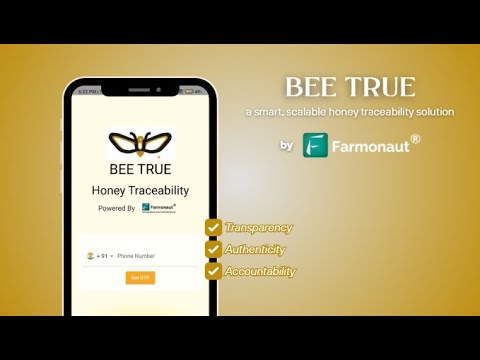
Ready to provide full product transparency? See how Farmonaut’s Product Traceability Solution can boost consumer trust and regulatory compliance for your brand.
5. Blockchain-Secured Agri-Inputs and Compliance
Adulteration and fraud in seeds, fertilizers, and pesticides are ongoing risks in global agriculture. IoT-enabled packaging paired with blockchain gives tamper-proof records of a product’s origin, batch, and supply journey, so regulators and buyers can verify authenticity instantly rather than relying on paper certificates.
- 🚜 Key Benefit: Verified provenance helps farmers avoid counterfeit agri-inputs.
- 🛡️ Compliance: Blockchain records support real-time audit trails for regulatory and organic-certification review.

6. Automated Lending, Crop Insurance, and Payments
IoT data combined with blockchain smart contracts lets insurers automate claims and payouts based on immutable sensor data — drought, flood, or pest events — instead of a manual loss adjuster visit. Lenders can extend credit against verified farm data with less paperwork.
- 💵 Key Benefit: Payments and claims execute automatically once a defined sensor threshold is met.
- 📲 Example: Satellite and sensor data detect a crop-loss event, a claim is submitted automatically, and a blockchain-secured payment is triggered.
Interested in streamlining your financial process? Discover Farmonaut’s Crop Loan & Insurance Verification—reduce risk and improve access to credit for agriculture.

7. Fleet, Logistics, and Environmental Impact Monitoring
IoT-enabled GPS devices log agricultural vehicle movements, cold-chain trucks, and machinery use, feeding location, condition, and activity data into a blockchain record. Carbon footprint and environmental-impact tracking layer on top, supporting compliance reporting.
- 🚚 Supply Chain Visibility: Track and verify storage/transport conditions and optimize fleet utilization.
- 🌎 Sustainability: Automatic reporting supports emissions tracking against environmental certification requirements.
For large operations and logistics teams, Farmonaut’s Fleet Management Tools integrate with blockchain records, offering route optimization, cost tracking, and audit trails.
Comparison: Where Each Application Stands Today
An AI-generated summary can tell you blockchain “improves traceability.” It can’t tell you which application is closest to production-ready versus still mostly pilots. Here’s the honest breakdown, based on the sourced figures above and the current gaps in published data.
| Application | Blockchain’s Role | Evidence Base | Maturity |
|---|---|---|---|
| Smart Crop & Soil Sensors | Immutable logging of field data for audits and certification | No published USDA/NASS adoption rate; vendor case studies only | Early — pilot to commercial |
| Automated Irrigation | Smart-contract-triggered water logging for compliance | No standardized cost-savings metric published | Early — pilot |
| Remote Crop Monitoring & AI | Traceable logging of AI advisories and actions | Farmonaut FMU: 70% traceability improvement (2025) | Commercial — named vendor deployments |
| Supply Chain Traceability | IoT-tagged tracking of produce from farm to retail | $509.96M global market size (2025), MarketsandMarkets | Commercial — largest single market segment |
| Agri-Input Authentication | Tamper-proof origin/batch records | No standardized fraud-reduction metric published | Early — pilot |
| Lending, Insurance & Payments | Smart-contract-triggered claims from sensor data | 16% of US producers report digital-currency ownership | Early to mid — growing US base |
| Fleet, Logistics & Carbon Tracking | GPS/emissions data logged for ESG compliance | $1.5B annual global carbon credit trading volume (2025) | Mid — tied to active carbon markets |
Where the table above says “no published metric,” that’s deliberate — the Markets and Markets and Credence Research reports cited throughout this piece don’t break out per-application adoption percentages by farm count, and neither USDA/NASS in the United States nor ABARES in Australia currently publish a blockchain-specific adoption survey. If you need that number for your own operation or region, the closest available substitute is the 16% digital-currency-ownership figure above, or a direct pilot with a named vendor where the traceability or ROI outcome is disclosed, as Farmonaut has done with its 70% FMU figure.
Traceability ROI Calculator
Use your own farm’s numbers to estimate what a blockchain-verified traceability programme could be worth, based on the 70% traceability-improvement figure Farmonaut reported for its Farm Management Units and the current global carbon credit market rate.
Run your own numbers
Assumptions: The 3% default price premium and $30/tonne carbon price are illustrative starting points, not published benchmarks — replace them with your buyer's actual premium and the current carbon credit spot price before using this for a real decision. This calculator excludes implementation costs (sensor hardware, platform fees, integration labor), which vary by vendor and farm complexity and aren't part of this estimate.
Farmonaut's Satellite and Blockchain Stack
Farmonaut's platform combines satellite-based monitoring, AI-powered advisories, and blockchain-based traceability into one system, aimed at making the technology accessible to individual farmers as well as agribusinesses and governments.
- 📊 Satellite Imagery: Multispectral and NDVI data identify crop health status and soil conditions.
- 🤖 Jeevn AI Advisory: Forecasting, growth recommendations, and actionable intelligence via web, app, and API.
- 🔗 Blockchain Traceability: Input, harvest, and logistics records logged to support food safety and combat fraud.
- 🚚 Fleet & Resource Management: Tools for logistics optimization, remote machinery management, and asset tracking.
- ♻️ Environmental Impact: Carbon footprint and resource tracking for sustainability reporting.
Learn about Farmonaut's Carbon Footprinting Solutions—relevant to meeting agri-environmental reporting norms in export markets.
API & Integration
Integrate Farmonaut insights into your own platforms via the API portal or the Developer Docs.
Practical Considerations Before You Adopt
The 70% traceability improvement Farmonaut reports is specific to its own Farm Management Unit deployments — treat vendor-specific figures as vendor-specific, not industry-wide, unless a source says otherwise.
Confirm secure firmware update paths for any IoT sensor you deploy — this protects the integrity of every downstream blockchain record.
Assuming blockchain presence alone guarantees trust. True traceability requires verified IoT data feeding the chain and strict user access controls around it.
Regulatory pressure for blockchain-enabled audit trails is opening new insurance and finance markets, particularly for climate-exposed crops in export-oriented regions.
Choosing Between Blockchain-IoT Integration Vendors
If you're evaluating a "blockchain IoT integration" service rather than building in-house, three questions cut through most of the marketing: which chain does the vendor actually write to (and is it chain-agnostic, per the Cosmos IBC standard above, or locked to one network); what specific figure backs their traceability or efficiency claim (a named deployment like Farmonaut's 70% FMU figure, or an unsourced round number); and what happens to your data if the vendor's blockchain integration is discontinued. None of these questions require deep technical knowledge to ask, and a vendor who can't answer them clearly is telling you something.
- 🔍 Choose scalable solutions that support integration with multiple device types and data formats.
- 🔗 Select platforms offering API access for custom applications and data pipelines, such as Farmonaut's developer docs linked above.
- ⏰ Plan for ongoing device maintenance and calibration — this is the actual failure point in most blockchain-IoT deployments, not the blockchain layer itself.
- 🛡️ Focus on cybersecurity for the IoT network layer — a compromised sensor still writes fraudulent data onto an otherwise secure chain.
Get Started with Farmonaut's Blockchain-Driven Solutions
Access Farmonaut's satellite, IoT, and blockchain tools via web, Android, or iOS.
Frequently Asked Questions
- What is blockchain in agriculture, and how is it used?
- Blockchain in agriculture is a decentralized, tamper-proof digital ledger that records transactions and events across the agri-food supply chain. The global market for this technology was $509.96 million in 2025, projected to reach $1.48 billion in 2026, per Markets and Markets.
- Which IoT devices are most commonly deployed alongside agricultural blockchain?
- Soil moisture sensors, weather stations, GPS trackers, RFID tags, remote cameras, and machinery telematics units are the common IoT hardware layer. These collect the data that blockchain then timestamps and locks.
- Which blockchain networks are chain-agnostic for agricultural IoT?
- Networks connected to the Cosmos Inter-Blockchain Communication (IBC) protocol — 115+ live networks as of 2026 — offer chain-agnostic interoperability, meaning data can move across chains without a full platform migration. Check the current live-chain count directly with Cosmos before committing, since the number changes as networks join.
- Is there a production-ready quantum-resistant blockchain for agriculture?
- Not yet, as of this review. Academic frameworks for post-quantum cryptography in agricultural IoT exist in published research, but no vendor has a disclosed production deployment timeline. Ask any vendor claiming "quantum-resistant" to name their cryptographic scheme.
- How does blockchain agriculture improve food safety?
- A product's full history — origin, handling, logistics — is documented on-chain. Any attempt to alter or mislabel a record is exposed because it would require rewriting every subsequent block, making tampering both detectable and costly.
- Does Farmonaut have a blockchain laboratories partnership?
- Farmonaut's documented blockchain partnership is with XRPL, covering Farm Management Unit traceability and carbon-credit use cases, detailed in the official announcement.
- How do I get started with API integration or custom farm solutions?
- Explore the Farmonaut API platform and review the developer documentation for integration with your own systems.
Conclusion
Blockchain in agriculture isn't a single product — it's a ledger layer that makes IoT sensor data, supply-chain events, and carbon accounting harder to fake after the fact. The market backing it was $509.96 million in 2025 and is projected to reach $1.48 billion in 2026, with longer-range estimates from Credence Research putting it at $5,625 million by 2032. The durable way to evaluate any vendor's claim in this space — Farmonaut's included — is the same three questions in the section above: which chain, what sourced figure, and what happens to your data if the integration ends. Those questions don't expire when this year's market numbers do.
Discussion
Questions, corrections or field experience? Share them below. First-time comments are reviewed before they appear, and your email is never published.
No comments yet. Be the first to add a question or your experience.

 Krishi GK
 Geno
 Hayleys Agriculture
 Linx Agritech
 Adinet
 Save Your Soils
 Grandstream Algérie
 XOS Realty
 Geospatial Lab Africa
 Agro La Gándara
 HIPSAC
 ZOL Zimbabwe
 Juligerm
 AdBio
 MISE Maroc
 NWNS

 Licence holder · Niger · Gold










