

Cutting Edge Technology in Agriculture: 7 Innovations 2025
“Over 70% of farms worldwide will adopt precision robotics by 2025, transforming agricultural practices globally.”
As we stand on the threshold of a new era in agriculture, the sector is witnessing a profound transformation driven by cutting edge technology in agriculture. In 2025 and beyond, innovations in robotics, sustainability strategies, and precision-driven methodologies are revolutionizing the way we produce food, manage our soil and water resources, and secure the health of our planet.
With challenges like climate change, population growth, and resource scarcity looming ever larger, adopting cutting edge agriculture technology is more crucial than ever. This comprehensive guide unveils the 7 most significant breakthroughs shaping the future of farming.
Let’s explore how these advanced technologies are enabling exponential growth in crop yields while fostering sustainable, environmentally friendly practices for farms worldwide.
Table of Contents
- Introduction: The Evolution of Agriculture
- 1. Precision Farming & Smart Sensors
- 2. Satellite & AI-Powered Crop Monitoring
- 3. Robotics and Autonomous Machines
- 4. Drone-Based Irrigation and Application Systems
- 5. Vertical Farming & Controlled Environment Agriculture
- 6. Biotechnology and CRISPR Gene Editing
- 7. Regenerative Practices and Smart Resource Management
- Comparative Features and Impact Table
- Future Outlook: Farming in 2025 and Beyond
- FAQs on Cutting Edge Agriculture Technology
- Conclusion
Introduction: The Evolution of Agriculture through Cutting Edge Technology
Agriculture has always been a cornerstone of human civilization. As we advance into the heart of 2025, the sector is undergoing a profound transformation—driven by a convergence of technologies such as satellite imagery, artificial intelligence (AI), robotics, IoT sensors, and biotechnology.
The challenges the world now faces—climate change, growing population, food insecurity, resource scarcity, and environmental degradation—require agriculture to be not just more productive, but dramatically smarter, more sustainable, and resilient. The term “cutting edge agriculture” today encapsulates a range of sophisticated tools and methods that allow us to monitor, manage, and optimize almost every aspect of farming, reshaping the fabric of traditional practices.
The result? An explosion in innovative approaches—from AI-guided satellite monitoring to robotic harvesters, vertical farms, and gene-edited crops—that are transforming farms into high-tech, data-driven powerhouses optimized for both productivity and sustainability.

1. Precision Farming & Smart Sensors: The Backbone of Cutting Edge Agriculture Technology in 2025
Let’s start with the technology that’s revolutionizing agricultural productivity and sustainability at its very core: Precision Farming.
What is Precision Farming?
Precision farming refers to a data-driven approach that leverages satellite imagery, IoT sensors, and drones to gather real-time measurements about crop health, soil moisture, nutrient levels, and pest presence. This information is processed by sophisticated AI algorithms to enable farmers to apply inputs—like water, fertilizers, and pesticides—only where they’re needed, and in the exact required amounts.
Key Characteristics of Precision Agriculture in 2025:
- Integration of multispectral satellite imagery with in-field IoT sensors and drones, embedding technology throughout the farm.
- Continuous monitoring and instant analysis of factors such as crop stress, pest outbreaks, and soil nutrient deficiencies.
- Automated recommendations for optimal irrigation, fertilization, and pesticide application.
- Advanced analytics delivering a Terabyte-scale data process for every field to maximize both efficiency and yield.
The impact of these systems cannot be overstated:
- They significantly reduce input waste (fertilizers, water, pesticides).
- They boost crop yield by ensuring maximum plant health and growth.
- They reduce the environmental impact of farming, supporting sustainability goals.
“Smart sensors in agriculture are projected to increase crop yield predictability by up to 40% in 2025.”
A perfect example of how cutting edge technology in agriculture is reshaping the industry.

Our  and advanced APIs (API, API Docs) empower users to access precision farming insights, manage crop health, and optimize resources from any connected device. Farmers and agribusinesses can monitor vast fields, trigger AI-powered alerts, and seamlessly integrate real-time data into their workflow.
Interested in advanced monitoring features? Learn about carbon footprinting technology for sustainable agriculture, or explore how large scale farm management solutions are reshaping agribusiness operations.
2. Satellite & AI-Powered Crop Monitoring: The Eyes and Brain of Edge Agriculture
Satellite technology has soared in accessibility and analytical power—in 2025, edge agriculture means seeing your entire operation in real time from space. When paired with AI, these systems offer:
- Proactive disease and pest detection based on color and reflectance analysis from multispectral and hyperspectral satellite images.
- Automated irrigational advice by accurately measuring evapotranspiration and soil moisture from above.
- Mapping of soil variations for smarter variable-rate input applications, saving resources and maximizing output.
- Seasonal forecasting for yield, weather trends, and risk management.
AI systems now process terabytes of satellite data, monitoring fields and crops with pinpoint accuracy. By embedding intelligence at every stage—from planting to harvesting—farmers can make data-backed decisions and respond instantly to threats or opportunities.
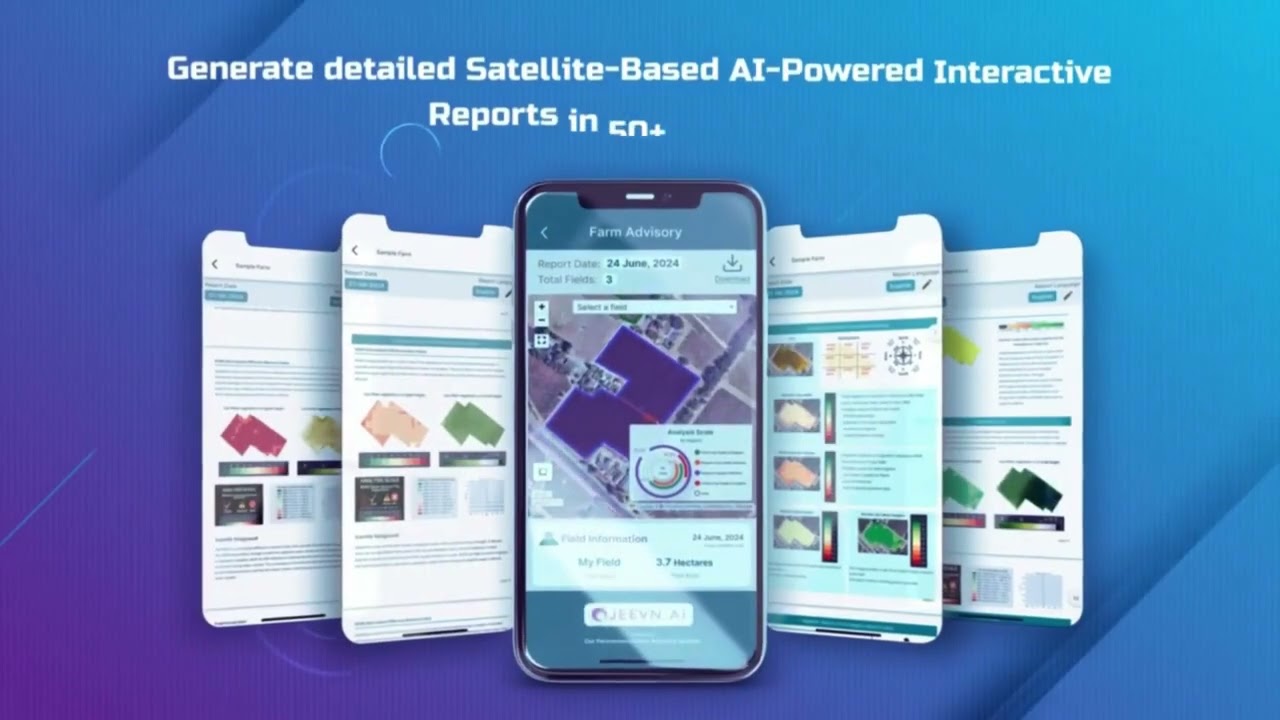
Our brings satellite-based crop monitoring to everyone—not just large enterprises or governments, but smallholder farmers and agricultural consultants, all benefit from actionable, science-backed insights on crop health and input management.
Farmonaut also powers AI-based advisory systems and blockchain-driven traceability for agricultural products, bringing transparency, reliability, and security to supply chains worldwide—key for food safety and consumer trust as supply chains globalize and regulations tighten.

3. Robotics and Autonomous Machines: Redefining Cutting in Agriculture
Probably the most visible leap in cutting edge agriculture technology for 2025 is the surge in robotics and automation. Where traditional farming relied heavily on manual labor, especially for laborious tasks like weeding, pruning, and harvesting, today’s farms are deploying fleets of advanced robots:
- Autonomous tractors and planters that follow GPS-guided paths, precisely sowing seeds and minimizing soil compaction.
- Robotic harvesters equipped with AI vision systems for fruit, vegetable, and grain picking—24/7, fatigue-free.
- Pruning and trimming robots that identify and cut back plants at optimal growth stages for maximum health and yield.
- Automated weeding machines that selectively remove unwanted plants, reducing herbicide dependence.
This new age of machine-driven cutting in agriculture is crucial both for increasing productivity and for addressing ongoing labor shortages, especially in regions where the farming population is aging and rural workforce availability is declining.

With sensors, vision modules, and autonomous decision-making, these robots enable precision cutting, pruning, planting, and harvesting in even the most challenging environments and crops.
For businesses managing large fleets of these smart machines, our fleet management solution offers deep insights, safety features, and logistics tracking—ensuring operational continuity and resource allocation at scale.
4. Drone-Based Irrigation & Application Systems: Precision at its Peak
Drones have shifted from simple imaging tools to frontline vehicles for direct intervention and application in agriculture. In 2025, drone innovations include:
- Variable-rate irrigation: Drones equipped with precision sprayers deliver water directly to areas where crops need it most, significantly reducing waste.
- Targeted pesticide/fertilizer application: By mapping and scanning fields, drones apply inputs only where necessary, minimizing environmental runoff.
- Emergency response: Drones can quickly cover vast areas to treat diseases, pests, or nutritional deficiencies before they spread.
These innovative systems are a game-changer, especially in large or fragmented fields where traditional machinery is inefficient or impractical.

For maximizing the value from these advanced tools, large farm management platforms can integrate drone data with real-time satellite analytics, supporting a 360-degree view of field operations and agronomic performance.
5. Vertical Farming & Controlled Environment Agriculture: Urban Edge for Global Food Security
A paradigm shift in agriculture for 2025 is the explosive rise of vertical farming and Controlled Environment Agriculture (CEA). These innovative systems:
- Stack plants in vertical layers indoors, maximizing land use and productivity per square meter.
- Control every aspect of growth: temperature, humidity, light (with LED optimization), CO2 concentration, and nutrients—year-round, regardless of climate or weather.
- Reduce water use by up to 90%, using recirculated hydroponic or aeroponic systems.
- Place fresh food production right next to cities, reducing transport emissions and boosting local food security.
Key edge in agriculture for 2025: Enabling densely populated regions to grow fresh produce sustainably, mitigating the threat of supply chain disruptions and reducing the agricultural land footprint.

Farmonaut’s real-time carbon footprinting and resource monitoring solutions empower modern CEA operators to track sustainability performance, optimize resource flows, and report on progress for ESG and compliance.
6. Biotechnology and CRISPR: Engineering Resilient, High-Performance Crops
Biotechnology has become a linchpin in cutting edge agriculture technology, particularly through advances in gene editing and CRISPR:
- Developing crop varieties with enhanced resistance to drought, disease, and pests—protecting yields against climate-related and biological threats.
- Engineering crops for improved nutrition and extended shelf life, reducing post-harvest losses.
- Biofortification: Enriching food with key micronutrients for improved public health outcomes.
- Reducing input requirements through increased nutrient-use efficiency, allowing for minimal yet effective fertilization.
In 2025, CRISPR gene-editing is no longer just an experimental method, but a mainstream agricultural tool that enables rapid crop improvement cycles, delivering traits tailored to specific climate challenges and market demands.
AI, advanced analytics, and satellite imagery often complement biotechnology by:
- Pinpointing genetic weaknesses in real time.
- Monitoring trait performance across vast fields and growing seasons.
7. Regenerative Practices & Smart Resource Management: Restoring the Earth as We Farm
Among the most meaningful innovations of cutting edge agriculture is the adoption of regenerative and resource-optimizing practices:
- Minimal tillage “cutting” equipment that protects soil health, enhances carbon sequestration, and improves water infiltration.
- Biofertilizers and microbial inoculants (such as mycorrhizal fungi) engineered to foster soil fertility and crop resilience naturally.
- Real-time carbon monitoring and environmental impact assessment via satellites and sensors to demonstrate sustainable outcomes.
- Dynamic resource management platforms integrating equipment, field, and climate data to optimize the entire farm ecosystem.
- Supporting crop loan and insurance through satellite-driven verification, ensuring risk is measured based on science.

Our environmental impact monitoring services, such as satellite-guided carbon footprinting, are making it possible for farmers and agribusinesses to report sustainability outcomes for ESG programs and next-gen market incentives.
Comparative Features and Impact Table: 7 Cutting Edge Innovations in Agriculture for 2025
| Innovation Name | Description | Estimated Year of Widespread Adoption | Impact on Crop Yield (Est. % Increase) | Sustainability Contribution | Example Use Case / Region |
|---|---|---|---|---|---|
| Precision Farming with Smart Sensors | IoT sensors, real-time data, and satellite-guided inputs. | 2023–2025 | Up to 25% | 30% water savings, 20% fertilizer reduction | USA, Europe, India |
| AI & Satellite Crop Monitoring | AI-driven analysis of multispectral satellite images for crop management. | 2024–2025 | 15–22% | Improved input efficiency, lower carbon footprint | Brazil, Australia, Sub-Saharan Africa |
| Autonomous Robotics & Automation | Robotic tractors, harvesters, and planters operating 24/7. | 2025 | 15–30% | Reduced fuel use, lower labor demand | USA Midwest, Japan, Europe |
| Drone-Based Irrigation & Input Application | Drones for targeted spraying of water, fertilizers, and pesticides. | 2024–2026 | 12–18% | 40% pesticide reduction, 50% water use efficiency | China, India, South America |
| Vertical Farming & CEA | Indoor multilevel crop production with LED, hydroponics, full climate control. | 2024–2027 | 35–50% | Up to 90% water savings, minimal land footprint | Urban centers of Europe, North America, Asia |
| Biotechnology (CRISPR Gene Editing) | Genome editing for pest/disease resistance, climate adaptation, and nutrition. | 2025–2027 | 18–28% | Greater resilience, reduced chemical input | Global (Rice, Maize, Soybean belts) |
| Regenerative & Smart Resource Management | Minimal tillage, biofertilizers, satellite-guided carbon and resource tracking. | 2023–2026 | 10–20% | Sequesters carbon; improves soil/aset health | USA, EU, Latin America |
Future Outlook: Cutting Edge Agriculture Technology in 2025 and Beyond
The horizon for cutting edge technology in agriculture is incredibly bright. As we look towards 2025 and beyond:
- These innovations will be standard practice rather than exceptions within major global farming regions.
- The integration of AI, robotics, satellite analytics, and resource monitoring will allow for truly “autonomous farms”, with systems self-optimizing every aspect from seed to supply chain.
- The focus on sustainability—through regenerative methods, carbon footprinting, and environmental metrics—ensures that future growth is environmentally friendly and ethically aligned.
- The next leap: blockchain-based traceability will bring radical transparency for consumers on the safety, sustainability, and origins of their food—creating a virtuous circle of trust, quality, and accountability in the global supply chain. Learn more about traceability solutions here.
With access to these tools expanding rapidly through platforms like ours, even individual smallholders gain the power to participate in the data-driven, precision revolution.


With Farmonaut’s low-cost, scalable platform, we are committed to democratizing cutting edge technology in agriculture worldwide. Our mission is to make data-driven insights and sustainability tracking affordable, accessible, and actionable—from smallholder farms in India to industrial agribusinesses throughout North America, Africa, and Europe.
FAQs on Cutting Edge Agriculture Technology in 2025
- Q: What is the biggest advantage of cutting edge technology in agriculture in 2025?
A: Accelerated boost in productivity and sustainability: Real-time data and precision tools ensure higher crop yields with lower inputs—protecting soils and water, while reducing the sector’s carbon and environmental impact. - Q: How do robotics and AI literally “cut” labor demand in modern agriculture?
A: Autonomous robots take over repetitive, labor-intensive tasks like harvesting, weeding, and pruning, operating 24/7. AI automates decision-making, further minimizing the need for manual intervention. - Q: Can small-scale or family-run farms benefit from these technologies?
A: Absolutely—with affordable satellite and AI-powered platforms, anyone from an individual farmer to a large corporation can monitor crops, reduce risks, and implement precision farming methods. - Q: What role does biotechnology play in food security for 2025?
A: Through gene editing (e.g., CRISPR), we can develop crops that survive drought, resist pests, and meet specific health and nutrition goals, directly addressing both food security risks and quality of nutrition in diets globally. - Q: What is Farmonaut’s core value for farmers and agri-businesses?
A: Farmonaut delivers actionable, real-time data for crop and resource management, AI-driven advisories, blockchain-backed traceability, and compliance-ready sustainability reports, accessible via user-friendly apps and APIs. We empower our users to lead in the cutting-edge agricultural revolution, regardless of farm size or geography. - Q: How does cutting edge agriculture technology contribute to climate mitigation?
A: Through carbon monitoring, resource optimization, soil regeneration, and more efficient use of fertilizers, cutting edge technology minimizes emissions and helps agricultural systems sequester carbon.
Conclusion: Embracing the Edge – Revolutionizing Farming in 2025
The future of agriculture is being written today—by farmers, innovators, scientists, and platform providers. Cutting edge agriculture technology is not just a buzzword in 2025 but the engine of global food security, environmental stewardship, and rural economic renewal.
By integrating precision farming, satellite & AI monitoring, robotics, drones, vertical systems, biotechnology, and regenerative practices:
- We are ensuring maximum yield with minimal cost and environmental footprint.
- We are reshaping practices to suit 21st-century climate and population challenges.
- We are delivering safe, traceable, and nutritious food to a growing world.
For every stakeholder in the sector—from farmers and agribusinesses to governments and technology companies—the call to action is clear: embrace the revolution, adopt these tools, and become part of a future where agriculture is smarter, sustainable, and limitless in its potential.

 Croptimum
 Dalmia Bharat Sugar
 DnCubed
 Pistachio ST
 Field Capacity
 Indosistim Teknologi
 Liquify Digital
 CU Foods
 BeyondTech Global
 Rouge VC
 AgroGreen Dynamics
 AgroRisk
 Oath Inc
 Reddane Farming
 Esri North East Africa
 Cresol
 MDCV UK
 Etech Consulting Madagascar
 Vestlandsforsking
