

Drones in Farming and Agriculture: 7 Innovations for 2025
“By 2025, over 30% of large farms worldwide are projected to use drones for crop health monitoring.”



Introduction: The Rise of Drones in Agriculture
Drones in farming and agriculture have firmly established themselves as transformative tools in modern agriculture by 2025. They are driving efficiency, sustainability, and precision across farms worldwide, revolutionizing traditional practices and enabling farmers to optimize resource use, improve crop health monitoring, and increase yields in an environmentally sustainable manner.
Drones—also known as unmanned aerial vehicles (UAVs)—are equipped with advanced sensors, high-resolution cameras, multispectral and thermal imaging, and GPS technology. These capabilities allow farmers to capture detailed, real-time data over vast agricultural parcels swiftly and cost-effectively—a leap forward from manual scouting and even satellite imaging alone.
One of the core applications today is precision agriculture. By enabling detailed, area-specific monitoring and tailored farming practices within fields, drones empower us to combat yield loss, environmental impacts, and waste, meeting the critical challenges of modern agriculture in 2025 and beyond.
Why Drones Are Transformative in 2025
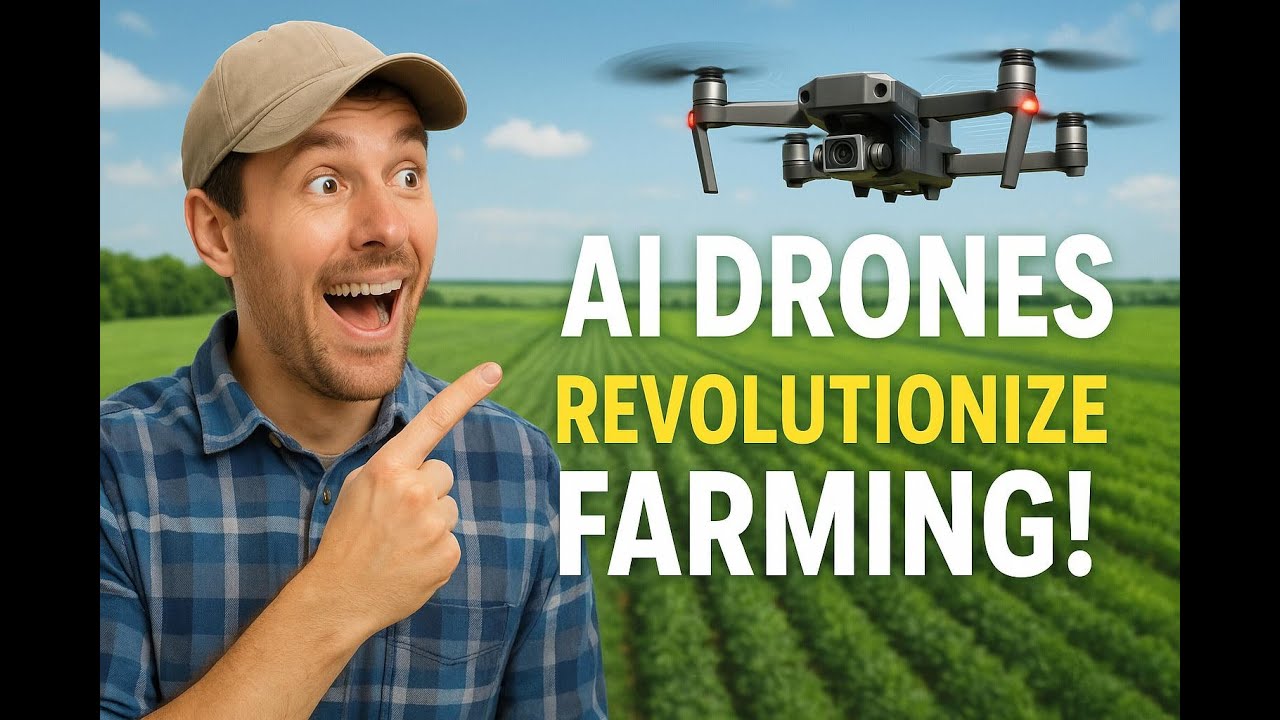
The integration of drones in farming and agriculture is a defining feature of 2025. As agriculture faces mounting pressure to increase yields, optimize input use, and improve sustainability, drones bridge the information gap with actionable aerial intelligence. By delivering precision data on soil health, crop stress, water requirements, and pest or disease outbreaks, drones enable rapid, informed decisions at field level and beyond.
- Efficiency: Drone and agriculture practices drastically reduce manual scouting time while boosting the accuracy of field interventions.
- Sustainability: By allowing targeted application of water, fertilizers, and pesticides, drones help reduce waste and chemical runoff, protecting ecosystems and ensuring regulatory compliance.
- Cost-effectiveness: Drones lower operational costs compared to traditional ground equipment, even enabling detailed monitoring in remote areas previously inaccessible or financially prohibitive.
“Seven new drone innovations are set to revolutionize agricultural practices and data collection by 2025.”
Comparative Innovations Summary Table
For clarity and quick reference, the following table summarizes the 7 most impactful drone innovations in agriculture for 2025, their estimated benefits, use cases, and projected efficiency gains:
| Drone Innovation | Estimated Benefit (2025) | Primary Use Case | Potential Efficiency Gain (%) |
|---|---|---|---|
| Crop Health Monitoring & Mapping | 20% increase in average crop yields | Real-time multispectral imaging & data analysis | 30–50% |
| Precision Spraying | 25% reduction in chemical use | Targeted application of fertilizers, herbicides, pesticides | 40–60% |
| Soil and Field Analysis | 30% improvement in soil management accuracy | Automated soil health/texture assessment | 35–45% |
| Autonomous Seeding & Planting | 15% faster planting in remote/difficult areas | Direct seeding, cover cropping, reforestation | 30–50% |
| Pest/Disease Detection | 20% reduction in crop losses | Early outbreak identification, actionable alerts | 35–55% |
| AI-Driven Swarm/Fleet Drones | 2x increase in area covered per flight | Simultaneous data collection & interventions at scale | 50–70% |
| Environmental Monitoring & Regenerative Practices | 40% more precise environmental impact tracking | Soil erosion, carbon impact, water use, ecosystem recovery | 30–45% |
The 7 Key Innovations of Drones in Farming and Agriculture (2025)
1. Precision Crop Health Monitoring and Mapping: Aerial Data for Better Yields
One of the core applications of drones in farming and agriculture today is precision crop health monitoring. Drones equipped with multispectral cameras and advanced sensors fly above fields, capturing detailed imagery and thermal data at key crop growth stages.

These unmanned aerial vehicles (UAVs):
- Identify stressed plants not yet showing symptoms to the naked eye
- Reveal variations in soil moisture and nutrient levels within and across fields
- Provide real-time alerts for early intervention against pests, diseases, or deficiencies
- Enable precision agriculture by generating actionable maps for targeted input application
This data-driven approach lets farmers precisely target irrigation, fertilization, or pesticide spraying where and when it’s needed, reducing input waste and boosting yields while supporting sustainability goals.

2. Smart Precision Spraying: Targeted Input Delivery for Sustainability
Drones farming in 2025 goes far beyond data capture. With technological advancements, drones equipped with automated spraying systems now conduct precision application of fertilizers, herbicides, and pesticides over large fields in record time.
Key benefits of smart spraying drones include:
- Targeted delivery: Applying chemicals only to problem areas identified by previous aerial monitoring
- Reduced runoff: Limiting chemical pollution in surrounding ecosystems
- Preventing soil compaction: Replacing bulky ground equipment with light UAVs that preserve soil health
- Labor savings: Automating otherwise manual, labor-intensive operations
In remote or hilly regions, drone spraying is often the only practical means for timely field treatment.

3. Advanced Soil and Field Analysis
Assessing soil health and field condition has traditionally required costly, time-consuming lab testing or broad satellite snapshots. In 2025, drones in farming and agriculture provide high-resolution, timely data on crucial soil parameters—texture, organic matter, compaction, moisture levels, and nutrient deficiencies—via specialized imaging and sensors.
Applications:
- Creating spatial soil fertility maps to enable tailored input recommendations
- Pinpointing areas with drainage or salinity problems
- Tracking changes in soil structure, erosion, and compaction season after season
Outcomes: Enhanced soil management, higher productivity, and reduced input waste help support both economic and environmental goals.
4. Autonomous Seeding and Planting: Addressing Labor Shortages & Increasing Diversity
2025 sees the widespread adoption of drone-based seeding and planting in agriculture. Unmanned aerial vehicles equipped with precision seed dispensers are being deployed to plant cover crops, restore degraded land, and accelerate reforestation projects, especially in remote or hazardous areas inaccessible to ground equipment.
- Reducing labor demands for initial plantings
- Enabling rapid planting over large, difficult terrains
- Improving seed distribution and germination rates by avoiding soil compaction associated with heavy machinery
This approach is crucial for regenerative agricultural practices, biodiversity enhancement, and sustainable soil management.
5. Real-Time Pest and Disease Outbreak Detection
One of the biggest threats to crop yields remains pest infestations and disease outbreaks. With drones farming in 2025, advanced imaging and AI algorithms detect early symptomology, often before human scouts could locate the problem.
Capabilities:
- Analyzing subtle changes in leaf color, texture, or temperature via multispectral and thermal imaging
- Deploying real-time alerts to prompt field teams for rapid, localized intervention
- Preventing mass outbreaks that would otherwise devastate fields and yields
Early warning reduces the scale and cost of required treatment, minimizes crop loss, and limits harmful chemical use.

Integrate satellite-driven, real-time agricultural data into your workflow through Farmonaut’s powerful API.
Access the API Developer Docs for seamless setup and customization of field monitoring solutions.
6. AI-Driven Swarm and Fleet Drones: Revolutionizing Scale and Efficiency
AI-powered drone swarms are a revolutionary advancement. By 2025, coordinated fleets of drones autonomously cover immense areas, simultaneously conducting crop monitoring, spot spraying, and data collection.
Key features:
- Autonomous coordination: AI algorithms direct large numbers of drones to divide areas, avoid overlap, and self-adjust to field conditions
- Edge computing: Onboard processing enables real-time decision-making and immediate corrective actions
- 5G connectivity: Streaming huge data volumes directly to farm operation centers for rapid response
With such automation, farms increase oversight, drastically cut response times, and reduce personnel requirements, especially during critical crop stages.
7. Environmental Sustainability and Regenerative Agriculture
By integrating drones with sustainability-focused farming practices, we are enabling the future of agriculture where productivity and environmental stewardship coexist. Drones in farming and agriculture now accurately track and report on:
- Soil erosion patterns and nutrient cycling
- Carbon footprint and emissions at the field level
- Water use efficiency to promote conservation
- Biodiversity and regeneration metrics for healthy ecosystems
These capabilities are vital for regenerative agriculture, which focuses on rebuilding soil, restoring biodiversity, and enhancing ecosystem services while maintaining or increasing crop yields.


Drone Integration in Smart Farming Ecosystems
Smart farming in 2025 is defined by the seamless integration of drones, satellites, IoT devices, and AI-driven analytics. Data gathered from aerial vehicles is rapidly combined with soil sensors, automated irrigation systems, and predictive algorithms on digital platforms—enabling truly data-driven decision making for farmers of all scales.
Farmers using such systems can:
- Remotely monitor crop health and field conditions
- Automate input prescriptions and task scheduling based on real-time data
- Track progress on sustainability goals (water savings, soil health, biodiversity restoration)
- Optimize resource allocation to maximize yields and reduce environmental impacts
Farm management apps and dashboards have become indispensable, with satellite and drone insights at the core.
Farmonaut: Empowering Agriculture with Satellite and Drone Insights
As the adoption of drones in farming and agriculture accelerates in 2025, satellite-powered platforms like Farmonaut are essential for maximizing the benefits of this technology. At Farmonaut, we are dedicated to making advanced satellite insights affordable and accessible for farmers, agribusinesses, and governments globally.
- Real-time Crop Monitoring: Our platform leverages multispectral satellite imagery (NDVI, soil health, moisture) to provide actionable insights at scale, complementing drone-collected data for agricultural operations of any size.
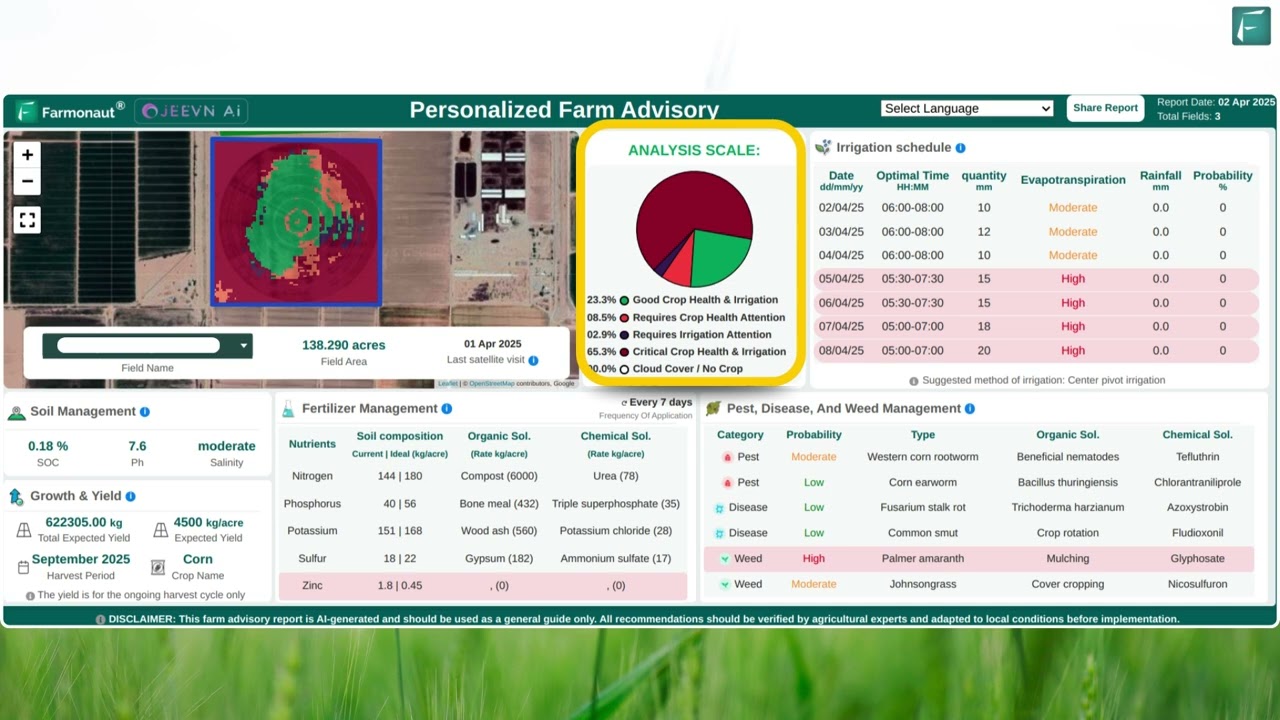
- AI-Powered Advisory: The Jeevn AI Advisory System, available in our app, delivers weather and crop recommendations based on field-specific conditions detected by drones and satellites.
- Blockchain Traceability: Solutions like product traceability allow users to follow crops from planting to sale, confirming data authenticity and minimizing fraud throughout the supply chain.
- Environmental Impact: Our carbon footprinting and impact monitoring tools support climate-smart and regenerative practices by generating reports and recommendations.
- Fleet and Resource Management: With fleet management tools, users can track vehicle/machinery deployments during drone, satellite, or ground tasks, reducing costs and enhancing safety.
These services are all accessible via our web and mobile apps or through robust API integration.
Our mission at Farmonaut is to empower sustainable decisions—combining the strengths of drone technology with the global, continuous reach of satellites to support the next generation of precision agriculture worldwide.
Start Using Farmonaut’s Satellite Solutions Today
Barriers and Challenges in Drone and Agriculture Integration
Despite their remarkable potential, drones in farming and agriculture face several challenges that must be addressed for mainstream adoption:
- Regulatory Hurdles: Flying drones requires compliance with evolving airspace and privacy laws. Regulations can vary by country and region, impacting accessibility, especially for smallholder farmers.
- Initial Investment: Quality UAVs and analytical systems can be costly upfront. However, ongoing innovations and subscription models like Farmonaut’s are helping reduce these costs.
- Farm Operator Training: Users require training to operate, maintain, and interpret drone data effectively—emphasizing the importance of partner apps and advisory systems.
- Data Management Complexity: The vast amount of imagery and analytical data generated requires robust platforms for storage, integration, and actionable interpretation.
- Connectivity Limitations: Rural and remote areas may lack the high-speed connectivity needed to transmit large data files, although 5G and edge computing are rapidly expanding.
Innovative digital platforms, government support, and educational initiatives are quickly overcoming many of these barriers, making drone-powered agriculture increasingly accessible and effective.
Future Trends in Drones Farming: Beyond 2025
Looking ahead, drone and agriculture integration is set to expand rapidly beyond 2025. Key trends include:
- Greater Autonomy: Fully autonomous field drones will handle seamless data collection, prescription map generation, and field interventions with limited human input.
- Deeper AI Integration: Machine learning will enhance real-time analysis, offering predictive insights into crop performance and ecosystem health at even higher resolutions.
- Holistic Farm Ecosystem Links: Drones, satellites, IoT sensors, and autonomous ground vehicles will be managed through unified, intelligent farm management systems.
- Expanding Application Scope: Beyond crops, drones will play roles in monitoring livestock, managing water bodies, and supporting infrastructure maintenance across the agricultural landscape.
- Environmental Compliance: Drones will help farmers demonstrate sustainable practices for certifications, carbon markets, and traceability initiatives.
As technology evolves and becomes more cost-effective, even smaller and resource-limited farms will incorporate drones, revolutionizing food production and environmental stewardship worldwide.
Conclusion: Drones and Agriculture Revolution in 2025
Drones in farming and agriculture have become indispensable tools for achieving precision, efficiency, and sustainability in 2025. The seven innovations explored herein—ranging from crop health monitoring to smart spraying, advanced soil analysis, and environmental tracking—demonstrate how unmanned aerial vehicles are revolutionizing traditional agricultural practices across the globe.
With rising global food demand, climate variability, and sustainability imperatives, agricultural drones are not just cutting-edge—they are a practical necessity. Their integration with satellite data, AI analytics, and connected farm management platforms will drive the next great leap in productivity and environmental responsibility.
Farmers, agribusiness leaders, and policymakers must embrace this transformative shift to realize the full potential of digital agriculture. Platforms like Farmonaut stand ready to provide the data, insights, and tools needed for a brighter, more sustainable farming future.
Ready to transform your operations? Explore Farmonaut’s satellite and drone-enabled solutions today.
Frequently Asked Questions (FAQ) on Drones in Farming and Agriculture
Q1. What is the main advantage of using drones in farming and agriculture?
The primary benefit is precision data collection and targeted intervention. Drones allow farmers to monitor crops in fine detail, quickly identify stress, pests, or diseases, and apply water or chemicals only where needed—saving cost and reducing environmental impact.
Q2. Are drone operations suitable for all farm sizes?
Yes. With affordable UAV systems and accessible satellite-driven platforms like Farmonaut, both large and small farms can benefit, enhancing efficiency for diverse field sizes and resource conditions.
Q3. What are the limitations or challenges to drone adoption in agriculture?
The main challenges include upfront investment, regulatory compliance, training needs, and data management complexity. However, ongoing reduction in costs and improved app-based solutions are making drone technologies increasingly accessible.
Q4. How do drones integrate with other smart farm technologies?
Drones combine with satellites, IoT sensors, and AI software to provide comprehensive, real-time data for optimizing every operation, from planting to harvesting, on modern smart farms.
Q5. What types of data can drones collect for agriculture?
Drones in farming and agriculture capture high-resolution visual, multispectral, and thermal imagery, as well as environmental sensor data (temperature, humidity, gas levels), supporting a wide range of field analyses.
Q6. Where can I find resources to get started with satellite and drone-powered agricultural monitoring?
Begin with the Farmonaut app (available on web, Android, and iOS) or integrate solutions via API and Developer Docs.
Embrace drones in farming and agriculture to drive the next frontier of precision, sustainability, and productivity!
Discussion
Questions, corrections or field experience? Share them below. First-time comments are reviewed before they appear, and your email is never published.
No comments yet. Be the first to add a question or your experience.

 Lunar Edge IT
 FieldZero
 Indico Company
 Kubota
 FFBS
FFBS Jontra
 Kalustyan
 Tucor
Tucor Geno
Geno Hayleys Agriculture
 Linx Agritech
 Adinet
 Save Your Soils
 Licence holder · Niger · Gold










