

Precision Agriculture with Drones: 2026 Game Changer
Meta Description: Precision agriculture with drones is revolutionizing farming in 2026, optimizing yields and sustainability with advanced sensors and software. Discover how the latest precision technologies are transforming global agriculture.
“By 2026, global precision agriculture drone market is projected to surpass $7 billion in value.”
Introduction: Precision Agriculture with Drones in 2026
Precision agriculture with drones has truly become a game changer for the agricultural industry in 2026. As we step further into a technology-driven decade, adoption of precision agriculture sensors, advanced software, and unmanned aerial vehicles accelerates worldwide. Leading precision agriculture companies and innovative platforms are enabling farmers—from small holdings to vast agribusinesses—to transition from broad, traditional methods to data-driven, zone-specific, and sustainable approaches.
Precision farming is no longer science fiction: it’s the present reality. Today, comprehensive platforms integrate drones, sensors, and sophisticated analytics software to offer insights on soil health, crop conditions, irrigation, pest management, and nutrient stress. The result? Higher yields, improved resource use, minimal environmental impact, and unique growth opportunities for the global agricultural landscape.
Primary Focus Keyword: Precision agriculture with drones
“Over 75% of large farms plan to implement data-driven drone technology by 2025 for optimized operations.”
The Revolution of Modern Farming
The core of 21st-century agriculture is transformation. The integration of advanced technologies with age-old farming techniques is redefining every stage of the agricultural lifecycle. Through innovations like precision agriculture software, soil sensors, robust farm management platforms, and unmanned drones, the modern farmer’s toolkit has expanded faster in 2025–2026 than in any prior period.
- ✔ Resource Efficiency: Precise application of water, fertilizers, and crop protection reduces costs and environmental impact.
- 📊 Actionable Analytics: Real-time, high-resolution data enables swift reactions to conditional changes.
- ⚠ Early Stress Detection: Detecting crop stress, disease, or pest issues early limits productivity loss.
- ✔ Scalability: Both smallholder and large-scale farmers can access scalable cloud-based software solutions.
- 📊 Input Optimization: Drone and sensor insights optimize input costs and boost yield efficiency.
In 2026, the fusion of drones, precision agriculture sensors, and data platforms is making sustainable farming the rule rather than the exception.

Drones Elevating Precision Agriculture
Drones have become the cornerstone of precision agriculture in 2026. Their ability to collect aerial imagery and comprehensive data across vast farmlands offers unprecedented insight into crop health, soil conditions, irrigation patterns, pest infestations, and nutrient deficiencies.
How Are Drones Revolutionizing the Modern Farm?
- ✔ Speed & Coverage: Survey large fields in minutes with high accuracy.
- 📊 Multi-Sensor Payloads: Equipped with multispectral and thermal cameras, drones provide detailed aerial data on vegetation vigor, water stress, and soil moisture.
- ✔ Early Detection: Detect disease outbreaks, pest infestations, or stress before they spread, **enabling timely interventions**.
- 📊 Cost Reduction: Automated drone data reduces manual field scouting and saves on input use.
- ✔ Precision Application: Spraying drones accurately target specific areas for pesticides, nutrients, or water.
In the 2026 market, precision agriculture companies have launched drones that are now rugged, weather-resistant, and user-friendly, integrating seamlessly with cloud-based farm management systems. This makes high-tech monitoring accessible even to smaller operations.

Key Insight
Comparison Table: Traditional Farming vs. Precision Agriculture with Drones
| Farming Method | Estimated Input Cost Reduction (%) | Yield Improvement (%) | Resource Efficiency (Water/Fertilizer/Labor) |
Data Collection Frequency | Environmental Impact (CO₂ Emissions Reduction) |
|---|---|---|---|---|---|
| Traditional Farming | 0–5% | 0–5% | Low Manual, less optimized |
Monthly/Occasional | Minimal (~0–2% reduction) |
| Precision Agriculture with Drones | 10–20% | 15–30% | High Automated & optimized |
Daily/Real-Time | Significant (10–25% reduction) |
This table demonstrates why drones matter for agriculture in 2026: quantifiable savings, increased yields, efficient resource use, frequent data, and measurable sustainability gains.
Precision Agriculture Sensors: The Eyes and Ears of the Farm
While aerial drones give us wide-ranging insights, precision agriculture sensors embedded throughout the field serve as the eyes and ears of the modern farm. These sensors, from those measuring soil moisture, pH, and nutrient content to weather stations analyzing microclimate conditions, play an essential role in continuous, ground-level data collection.
- ✔ Direct Measurements: Soil and crop sensors offer real-time feedback on moisture, nutrient, and health status.
- 📊 Automated Irrigation: Integrating sensors enables precise irrigation schedules, reducing overwatering and waste.
- ✔ Early Warning Systems: Environmental and disease sensors alert farmers to weather risks and outbreaks ahead of time.
- ⚠ Potential Limitation: Sensor networks require upkeep and initial installation costs, but deliver exceptional long-term value.
John Deere Precision Agriculture: Sensor-Driven Machinery
Leaders like John Deere have pioneered integrating precision agriculture sensors into farming machinery. Their equipment features automatic, in-field sensor feedback to adjust seed depth, fertilizer rates, and application speed as tractors, planters, and harvesters operate. This tight feedback loop maximizes precision and minimizes waste, while John Deere precision ag software connects machinery data to centralized dashboards.

Visual List: Types of Precision Agriculture Sensors
- Soil Moisture Sensors – Monitor water content for precise irrigation
- Nutrient Sensors – Detect deficiencies and guide fertilization
- Weather Stations – Track microclimate and anticipate weather events
- PH Sensors – Guide lime and amendment applications
- Canopy Sensors – Assess plant health and growth patterns
Pro Tip
Advanced Software and Analytics: The Brain Behind Precision Farming
The sophistication of precision agriculture software is the difference between raw data and actionable insight. Today, farm management platforms consolidate inputs from drones, sensors, and machinery, harmonizing thousands of data points into clean, intuitive dashboards.
State-of-the-art analytics engines, featuring AI and machine learning, identify patterns invisible to the naked eye. They alert us to emerging disease threats, simulate the effect of input changes, and guide real-time management decisions.
What Does Precision Agriculture Software Enable in 2026?
- 📊 Yield Mapping: Visual analysis of productivity variability across every zone of a field.
- ✔ Input Zoning: Customize seeds, fertilizer, and water applications based on digital field prescriptions.
- 📊 Predictive Analytics: Machine learning forecasts potential outcomes—like disease risk, water shortage, or nutrient needs.
- ✔ Mobile Access: Data, alerts, and recommendations in the palm of your hand for on-the-go decisions.
- 📊 Integration: Connects seamlessly to industry-leading equipment like John Deere’s tractors and precision ag platforms.

John Deere Precision Ag Software: A Benchmark for the Industry
The John Deere precision agriculture suite exemplifies modern platform interoperability. Their centralized dashboard combines inputs from machinery sensors, field weather data, aerial drone insights, and GIS mapping. As a result, the John Deere ecosystem enables real-time adjustments to yield maps, crop health indices, soil variability, and more.
- Automatic Alerts: For disease, drought, or stress events
- Data-Driven Recommendations: For each field zone, not just the whole farm
- Supply Chain Optimization: Manage inventory and logistics based on in-field data
- Custom Scenario Simulation: See the effects of changing input strategies before you commit

Investor Note
Common Mistake
Farmonaut: Affordable Satellite-Based Insights for Precision Agriculture
At Farmonaut, we support the next wave of precision agriculture by making satellite-driven insights accessible and affordable for farmers, businesses, and governments globally. Our mission is to empower users with real-time, multispectral data to optimize crop health, resource management, and sustainability.
Our  Web system, available on Android (
 ) and iOS (
 ), provides seamless tools for satellite-based monitoring, AI advisory, and blockchain traceability—designed to complement drone and sensor strategies.
- ✔ Satellite Imagery: Multispectral NDVI, crop health, and soil condition monitoring direct from space
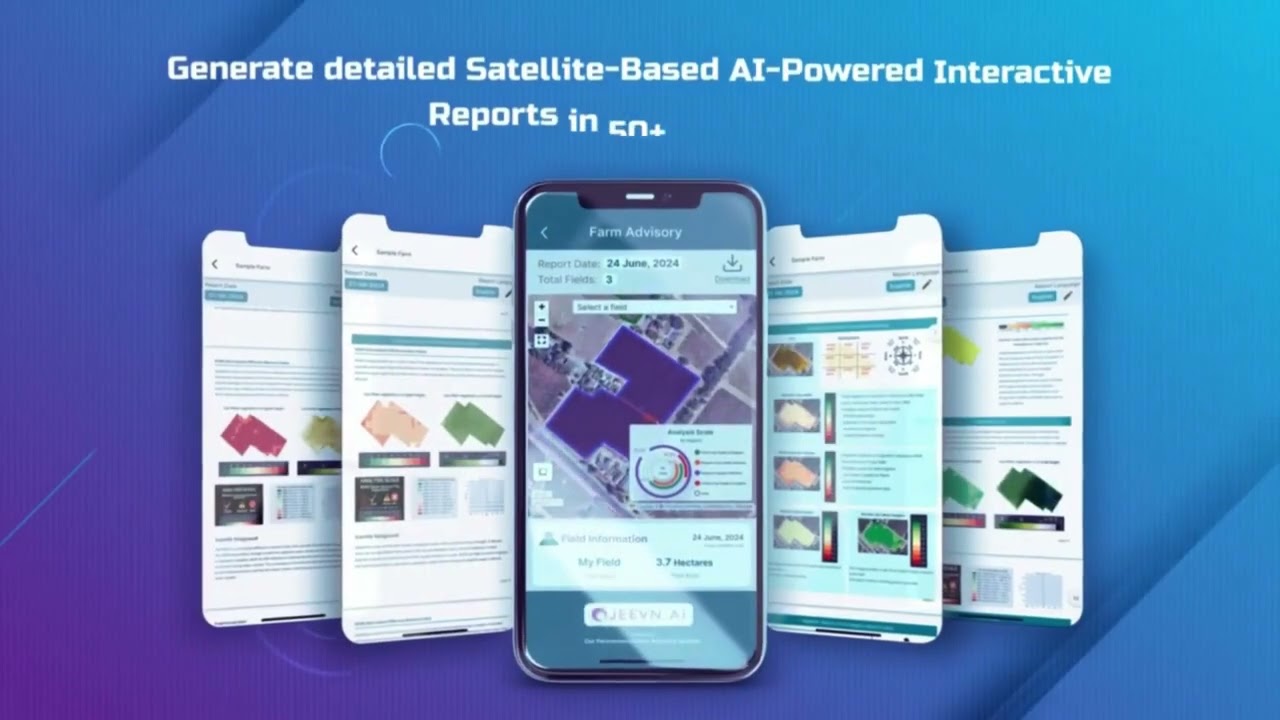
- 📊 AI Advisory: Automated insights, pest and disease alerts, and personalized recommendations with Jeevn AI
- ✔ Blockchain Traceability: Transparency for supply chains; view traceability at Product Traceability Solutions
- 📊 Environmental Monitoring: Real-time carbon footprint tracking for sustainable farming and regulatory compliance
- ✔ Fleet and Resource Management: Optimize machinery and equipment resources with live satellite data
- 📊 API Access: Developers and businesses can integrate Farmonaut data via API (Developer Docs)
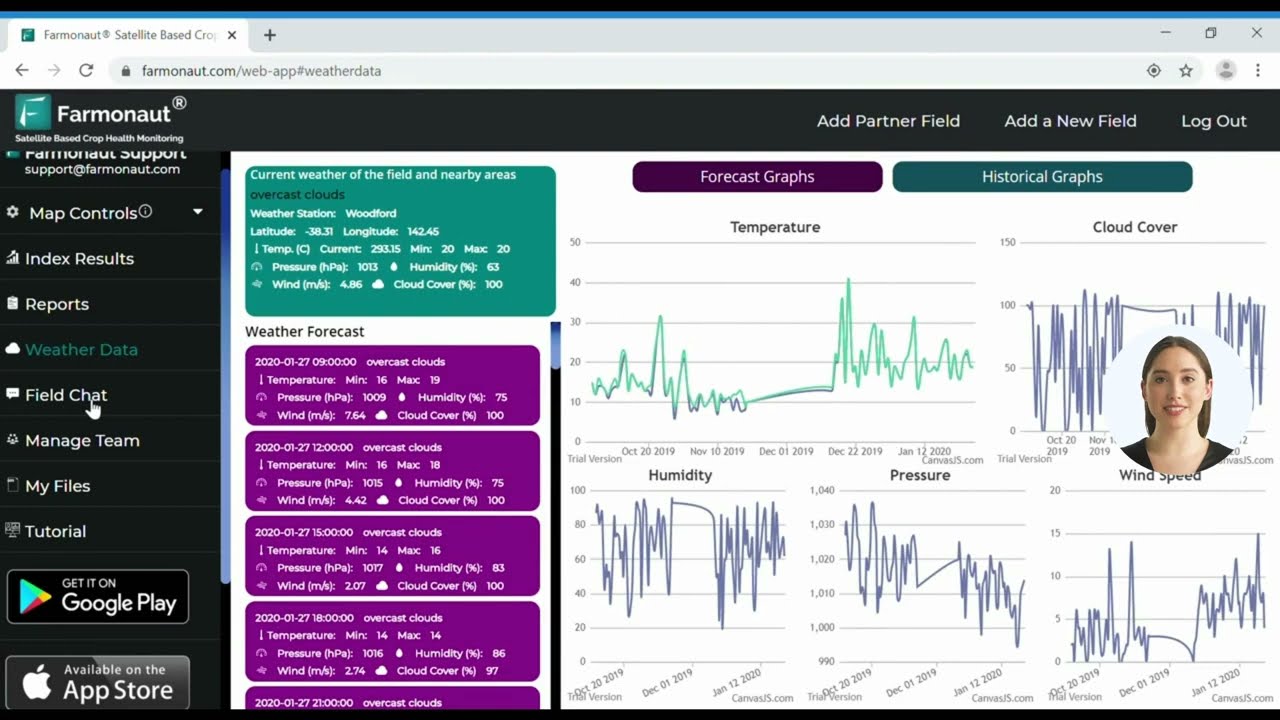
Our modular platform is designed for scalability across large-scale farms and flexible enough for smaller operations.
Farmonaut Value Box

Visual List: Farmonaut Platform Features
- Satellite imagery-based health assessment (NDVI, NDWI, NDSI, EVI, VARI, FCVI, true color, and more)
- Customizable crop insurance and loan verification (see Crop Loan & Insurance)
- Blockchain-enabled traceable harvest and supply chain records
- Fleet/farm machinery monitoring for cost and labor reduction
- Real-time environmental regulation compliance and carbon emission monitoring
Try our Farmonaut App today—for real-time satellite-aided farm management, available on web, Android, and iOS.
Sustainability & Economic Benefits of Precision Agriculture
Why do precision agriculture with drones and sensors matter for the world, not just for individual farms? Environmental challenges, skyrocketing input costs, and regulatory pressures are transforming precision from a “nice-to-have” to an operational necessity.
- ✔ Sustainability Gains: Targeted application of water, fertilizer, and crop protection reduces runoff and GHG emissions.
- 📊 Economic Efficiency: Reduced fuel, input, and labor costs deliver measurable ROI.
- ✔ Yield Increase: Area-specific management boosts total output (15–30% typical improvement).
- 📊 Reduced Losses: Early detection of pests, diseases, and stress scenarios prevents significant harvest losses.
In addition, compliance with carbon reporting, traceability, and insurance verification becomes easier with modern platforms like ours, all while supporting regenerative and climate-smart agriculture.
Callout Box: Common Limitation
Key Highlight
Integration, AI, and the Future Outlook 2026 & Beyond
Looking ahead, the biggest strides in precision agriculture with drones will come from the seamless integration of all digital platforms—sensors, software, drone analytics, satellites, and in-field machinery. Interoperability, standard data formats, and shared API frameworks enable industry-wide innovation.
- ✔ AI-Driven Automation: Drones, autonomous tractors, and robotic sprayers use field analytics to act automatically.
- 📊 Cloud-Based Collaboration: Farmers, agronomists, and supply chains interact in real time, anywhere on the globe.
- ✔ Expanded Data Accessibility: More affordable, frequent, high-res imagery from satellites and drones will become the norm.
- ⚠ Privacy & Security: More data means greater responsibility for data management, privacy, and cybersecurity.
- ✔ New Business Models: Platforms like Farmonaut support subscription-based, API-integrated, and developer-friendly ecosystems for next-gen users.
In 2026 and beyond, precision agriculture with drones will anchor the world’s most productive, profitable, and sustainable food systems. Connected ecosystems powered by Farmonaut and like-minded companies will enable effortless integration of satellite, aerial, and sensor insights.
Embrace the future—make your farm or agribusiness ready for next-generation challenges with affordable precision agriculture, tailored for every operation size, everywhere on the planet.
FAQs about Precision Agriculture with Drones
What is precision agriculture with drones?
Precision agriculture with drones involves using unmanned aerial vehicles equipped with advanced sensors and cameras to collect high-resolution data on crop health, soil conditions, irrigation patterns, and more. These aerial insights enable farmers to make data-driven decisions for resource efficiency, improved yields, and sustainability.
How do drones improve farm productivity?
Drones rapidly map large areas, identify issues earlier than ground scouting, and allow targeted interventions. They reduce human labor needs, help minimize input waste, and deliver accurate field-level information critical for increasing productivity.
Can smallholder farmers benefit from drones and sensors?
Absolutely. The availability of affordable drone services, sensor kits, and platforms like our Farmonaut app has democratized access. Even small farms can benefit from actionable insights, cost savings, and increased yields that precision technologies deliver.
Which companies are leading in precision agriculture technology?
Major industry leaders include John Deere for integrated sensors and machinery, as well as innovative data and analytics companies, and platforms like Farmonaut for satellite and multispectral crop health monitoring.
How do I access Farmonaut’s precision agriculture services?
You can download our app for Android (here), iOS (here), or use our web platform. Developers and businesses can also access our API for deeper integration.
How is sustainability ensured with precision agriculture?
Precision agriculture optimizes the use of resources by applying water, fertilizer, and crop protection only where and when needed, drastically reducing waste and negative environmental impact. Technologies like blockchain and carbon monitoring enhance transparency and sustainability reporting.
Conclusion
As we march through 2026 and beyond, precision agriculture with drones stands as a central pillar of global farming innovation. Modern agriculture continues to be revolutionized by the convergence of drones, precision agriculture sensors, and advanced analytics software. The benefits—higher yields, optimized resources, minimized losses, and unparalleled sustainability—are transforming the industry.
Platforms like Farmonaut bring these tools to the fields—affordably, scalably, and globally. Now, every grower, farm manager, and agricultural policymaker can rely on rich, real-time insights that power effective decision-making and future-proof operations.
Step into the future of farming—embrace the practical, positive force of precision agriculture with drones and advanced sensors for 2026 and beyond.
Explore more about our precision agriculture platform, visit our carbon footprint tracking solution, or dive into our Developer API for seamless integration.
Your era of data-driven, sustainable agriculture starts here.
Discussion
Questions, corrections or field experience? Share them below. First-time comments are reviewed before they appear, and your email is never published.
No comments yet. Be the first to add a question or your experience.

 Sun Palm Australia
 Grandstream Algérie
 XOS Realty
 Geospatial Lab Africa
 KhetiBuddy
 Agro La Gándara
 HIPSAC
 ZOL Zimbabwe
 Juligerm
 AdBio
AdBio MISE Maroc
 NWNS
NWNS Red August Group
 Farm Inc
 WeMe Global
 Agrotoken
 Blue BearX
 Insignito
 Croptimum
 DnCubed
