

Horticulture Automation: 7 Shocking Farming Breakthroughs
Table of Contents
- Introduction: The New Era of Horticulture Automation
- Understanding Horticulture Automation & Its Importance
- 7 Shocking Horticulture Automation Breakthroughs
- Horticulture Automation Breakthroughs at a Glance
- Key Benefits of Horticulture Automation
- Challenges in Horticulture Automation
- Smart Solutions by Farmonaut for Precision and Sustainability
- The Future: How Automation is Reshaping Horticulture
- FAQs: Horticulture Automation & Technology
- Conclusion



Introduction: The New Era of Horticulture Automation
As we journey into the future of agriculture, one thing stands clear—horticulture automation is rapidly transforming farming as we know it. Advanced systems powered by AI, robotics, sensor networks, and intelligent automation are unlocking new heights in crop efficiency, quality, and sustainability. Manual labor is being supplemented—and in some tasks, replaced—by autonomous machines, making farming more productive, precise, and sustainable.
In this comprehensive blog, we explore seven shocking horticulture automation breakthroughs. We’ll show how AI-driven technologies and robotic advancements are boosting resource management, solving labor shortages, and bringing data-driven decision-making to the field and greenhouse. We’ll draw on industry knowledge and best practices, including state-of-the-art solutions from Farmonaut, to highlight both the benefits and the challenges facing the evolving horticultural industry.
Understanding Horticulture Automation & Its Importance
Horticulture automation is the integration of advanced technologies such as robotics, artificial intelligence (AI), and sensor systems into horticultural practices. This convergence aims to enhance efficiency, productivity, and sustainability in farming. The industry faces mounting challenges: unpredictable climate, labor shortages, resource waste, and the drive for consistent crop quality.
Let’s examine why automation is pivotal for modern horticulture:
- It addresses labor shortages by undertaking repetitive or physically demanding tasks efficiently and autonomously.
- It optimizes resources like water and nutrients, improving plant growth while minimizing costs and environmental impacts.
- It ensures precision and uniformity, supporting sustainable horticultural practices by reducing errors and waste.
- By integrating data analytics, it enables data-driven farming and better decision-making.
Horticultural automation is more than a technological evolution; it’s a necessity for the survival and prosperity of the agricultural sector.
Control Systems in Horticulture: From Thermostats to Climate Computers
Most automation in horticulture is not a robot. It is the control system that runs a greenhouse or nursery. Growers usually move through four levels of control, as set out by Greenhouse Management:
- Thermostats and timers. Each heater, fan or valve has its own switch. Cheap, but the devices can work against each other.
- Step controllers. One electronic unit replaces several thermostats and runs heating and cooling in stages. It can also handle vents, alarms, lighting and irrigation (Farm Energy, Extension).
- Zone computers. A controller that manages several growing zones, each with its own set points.
- Integrated climate computers. One system reads indoor and outdoor sensors and coordinates heating, vents, shade and thermal curtains, CO2, fogging and irrigation under shared logic (Greenhouse Management magazine).
An integrated system is where the other automation in this article connects. Irrigation, lighting and sensor data feed the same controller, so the grower sets targets rather than switching equipment by hand. For a small house, a step controller is often enough. Larger ranges with several crops usually justify an integrated computer, because each zone can run its own climate strategy.
7 Shocking Horticulture Automation Breakthroughs
Now, let’s dive into the heart of modern horticulture automation. Below, we unravel seven automation breakthroughs—each one revolutionizing how crops are grown, managed, and harvested.
1. Automated Crop Harvesting: Robots Redefining the Harvest
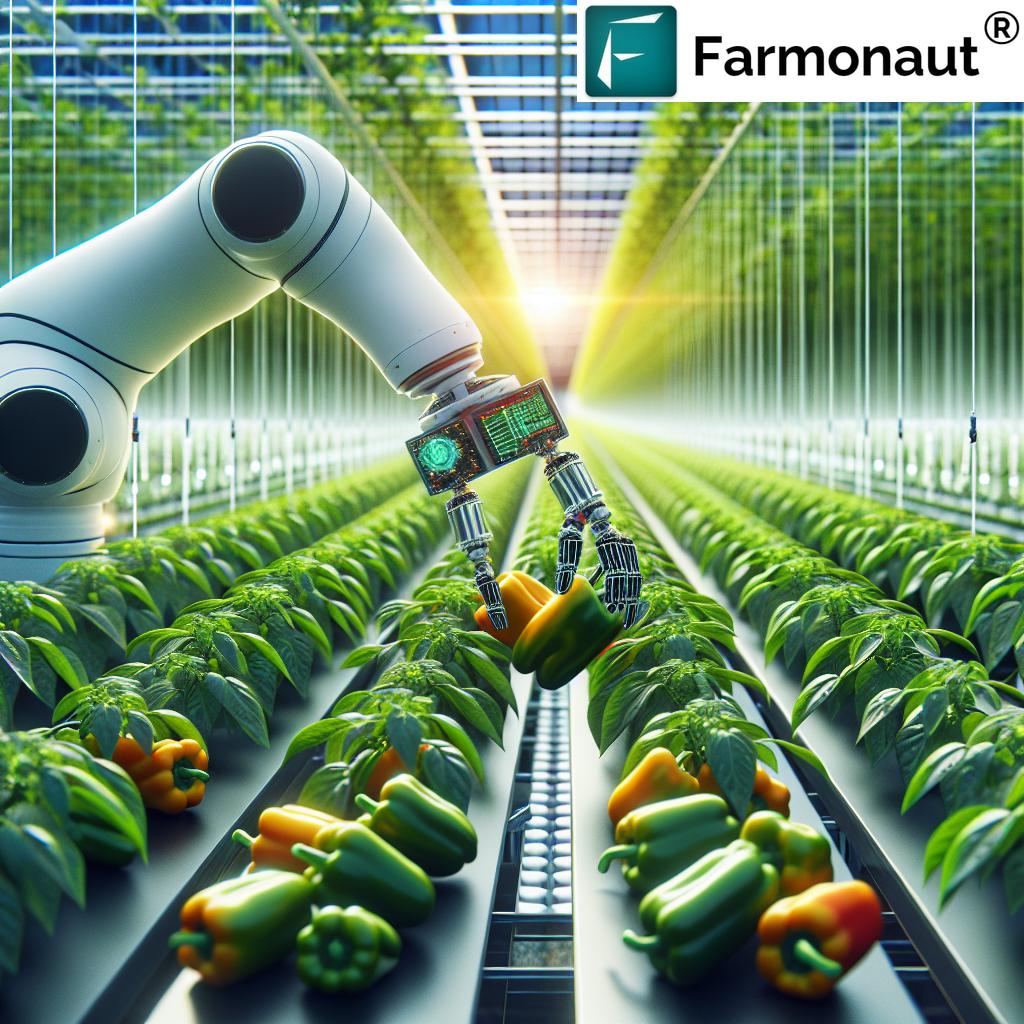
One of the most visually impressive breakthroughs in horticulture automation has been the rise of robotics in agriculture—especially within automated crop harvesting.
How Does It Work?
- Robots equipped with vision algorithms and specialized end-effectors identify, grasp, and detach produce—like sweet peppers—with remarkable accuracy.
- These autonomous systems utilize sensors and AI to recognize maturity and avoid damaging both fruits and plants.
- The aim? To reduce labor costs, boost precision, and increase the speed of the harvest compared to manual labor.
Why Is This Shocking?
Harvest robots are still in early commercial use, and their speed varies widely by crop and system. Their main appeal is covering picking work when seasonal labour is hard to find.
The integration of these systems is driving significant gains for farmers who face labor shortages and rising operating costs.
Learn more about how robots are transforming harvesting in protected environments and large farms with the latest research.
2. Automated Weeding Solutions: Chemical-Free Precision
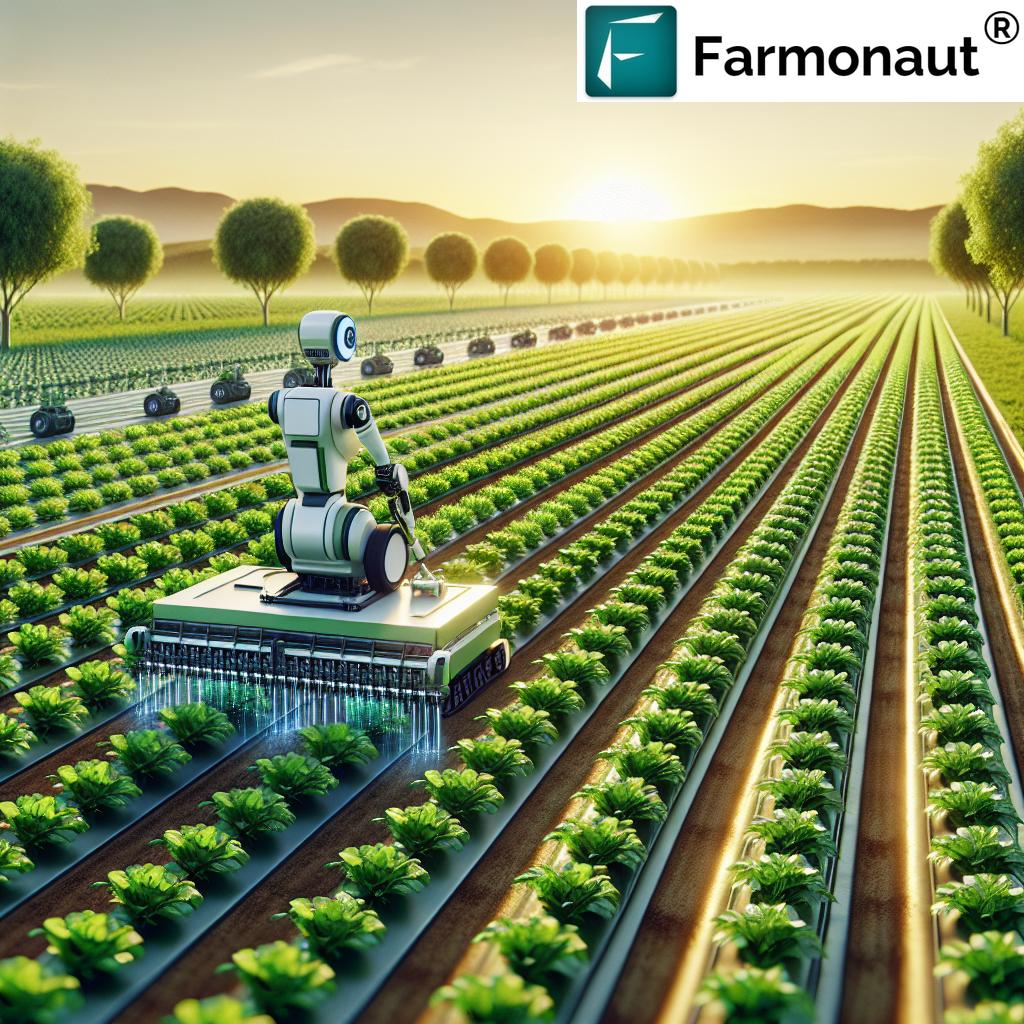
Weeding is labor-intensive and often involves the heavy use of herbicides. But automated weeding solutions are changing the game:
- AI-powered robots employ computer vision to identify and remove weeds without disturbing the crop or soil.
- Companies have introduced mechanical weeders that operate autonomously, greatly reducing dependency on manual labor.
- These robots also help minimize herbicide usage and, as a result, have a positive environmental impact by reducing chemical runoff into water sources.
For instance, FarmWise built the Vulcan intra-row weeder. After the startup wound down in April 2025, salad processor Taylor Farms acquired its business (Taylor Farms). [Learn more here.]
3. Robotics in Pollination: Ensuring Resilient Crop Yields
Natural pollinators such as bees are essential to horticulture, but environmental factors and disease can render them scarce. Automated pollination is now a vital solution in controlled environments like greenhouses and vertical farms:
- Robotic pollinators utilize technologies such as air-jets and ultrasonic waves to mimic natural pollination processes, ensuring effective pollination even when natural agents are absent.
- These automated systems can increase crop yield consistency and improve fruit quality by ensuring uniform pollination.
- AI in horticulture enables these robots to adapt pollination strategies based on real-time crop and flower data.
The innovation is especially critical for high-value crops grown in greenhouses.
[Discover more from recent research.]
4. Precision Irrigation Systems: Smarter Water, Healthier Plants
In a world confronting water scarcity, precision irrigation systems are revolutionizing resource management in horticulture:
- Drip irrigation and sensor-based irrigation systems deliver water and nutrients directly to plant roots using real-time soil moisture data.
- This method conserves water, ensures optimal plant growth, and minimizes wastage of both water and nutrients.
- When integrated with AI, these systems enable automated real-time adjustments, further reducing resource use and operational costs.
Discover how technology guides sustainable horticulture and furthers automation-driven efficiency.
To monitor soil moisture, you can leverage Farmonaut’s real-time satellite-based crop monitoring app—available on web, Android, and iOS.
5. AI in Horticulture Management: Intelligent Crop Care
The use of AI in horticulture is central to the automation revolution. AI and machine learning algorithms facilitate:
- Real-time monitoring of plant health, using spectral data from satellites and drones.
- Predictive analytics to anticipate disease, nutrient deficiencies, or irrigation needs.
- Automated advisories—like those provided by Farmonaut’s Jeevn AI Advisory System—to guide farmers in daily crop management.
- Dynamic adaptation to changing environmental or crop conditions, reducing need for manual intervention.
The sophistication of AI-driven horticultural practices improves yield prediction accuracy, quality, and overall resource optimization.
Explore more on how AI augments automation and sustainability in detail at this blog.
6. Data-Driven Farming & Sensor Integration: Making Smarter Decisions
Modern automation in horticulture would not be possible without a foundation in data-driven farming and sensor integration:
- Sensor networks monitor temperature, humidity, soil moisture, light, and nutrient levels across fields and controlled environments.
- These systems autonomously collect, transmit, and analyze data, allowing farmers to make more informed decisions.
- Automation technologies perform repetitive tasks based on this data, thus increasing efficiency and reducing the margin for human error.
For robust crop health monitoring at scale, Farmonaut provides solutions that turn satellite and sensor data into actionable insights—making precision agriculture accessible globally.
Explore Farmonaut’s API for custom solutions and system integrations:
Farmonaut API |
API Developer Docs.
7. Modular and Open-Source Robotic Systems: Customizable Automation for All
The next breakthrough is the introduction of modular automation systems and open-source robotic platforms:
- Modular systems like the Modular Automated Crop Array Online System (MACARONS), an open-hardware plant transport system for vertical farms (University of Cambridge repository), allow growers to configure automation according to their specific needs—lowering the entry barrier to adoption.
- Open-source codebases and scalable hardware make it easier for smaller growers to harness automation and data-driven farming practices.
- These solutions can be customized for vertical farming, greenhouses, and diverse horticultural crops.
Want to dig deeper into modular robotic automation? Read the research.
Key Benefits of Horticulture Automation
What advantages do automation, AI, and robotics bring to horticultural operations?
-
Labor Efficiency & Cost Reduction:
- Automated systems perform repetitive tasks 24/7, minimizing labor costs and solving shortages.
- Farmers can focus on more complex management activities while automation handles time-consuming chores.
-
Resource Optimization:
- Precision in water, fertilizer, and nutrient application reduces waste and drives environmental sustainability.
- Automated systems also support carbon footprinting—helping growers measure, manage, and reduce emissions efficiently.
-
Enhanced Crop Yield & Quality:
- Consistent, data-driven practices result in higher yields and better quality produce.
- Automated harvesting systems improve post-harvest handling and reduce losses.
-
Sustainability & Reduced Environmental Impact:
- Automation and AI enable sustainable horticulture practices—minimizing chemical use, conserving water, and supporting ecosystem health.
- Traceability solutions like blockchain-based product traceability promote transparency from farm to table, building consumer trust and reducing fraud.
-
Data-Driven Decision Making:
- Access to real-time data allows for proactive management—for irrigation, fertilization, pest control, and more.
- This enhances productivity and reduces risk.
For a holistic approach, Farmonaut’s platform combines these benefits through satellite monitoring, AI advisories, fleet/resource management, and large-scale farm monitoring tools.
Challenges in Horticulture Automation
While the promise of automation is vast, several challenges must be addressed to ensure broad adoption in the horticultural industry:
-
High Initial Investment:
- The upfront cost of automated systems can be substantial, often deterring small-scale farmers. Finding ways to make automation affordable is key.
-
Technical Complexity:
- Operating and maintaining advanced equipment requires expertise and ongoing training.
- This skills gap can be reduced with user-friendly platforms and customized support.
-
Adaptability Issues:
- Automated robots may struggle with site-specific variability—different environments, crop types, and farm layouts require flexible designs.
-
Data Privacy Concerns:
- With more data collection and online integration, farmers need assurance about data ownership and privacy.
Despite these issues, advancing modular systems and subscription-based models—like those from Farmonaut—make automation more accessible.
Smart Solutions by Farmonaut for Precision and Sustainability
Choosing the right automation partner is critical. Farmonaut stands out with its innovative agricultural technology platform that democratizes access to precision tools:
-
Satellite-Based Crop Monitoring:
Farmonaut leverages multispectral satellite imagery for continuous crop health monitoring, detecting changes in vegetation, soil moisture, and overall crop status. Farmers see actionable insights for improved irrigation, fertilizer optimization, and pest management.
Try Farmonaut Web & Mobile App -
AI-Driven Advisory (Jeevn AI):
Providing real-time crop management recommendations fueled by satellite and weather data, the Jeevn AI system empowers precision at every decision point—improving productivity at scale. -
Blockchain-Based Traceability:
Farmonaut’s blockchain-based traceability tools track a product’s journey across the supply chain, fostering consumer trust and transparency and aiding in food safety compliance. -
Resource & Fleet Management Tools:
Farmonaut simplifies fleet and machinery usage for agribusinesses—lowering costs while improving machinery safety and operational oversight.
Explore Fleet Management Solutions
-
Carbon Footprinting and Sustainability:
Precise carbon accounting helps farmers and organizations to measure, monitor, and reduce environmental impact. Track your carbon footprint with Farmonaut. -
Access to Financing:
Farmonaut supports crop loan and insurance verification through satellite-backed data, improving financial accessibility for farmers while reducing institutional risk.
Most importantly, Farmonaut’s advanced systems are affordable, scalable, and user-friendly—empowering everyone from individual growers to large-scale agribusinesses.
Do you want to power up your farm? Try the Farmonaut platform now.
The Future: How Automation is Reshaping Horticulture
We are on the cusp of a revolution—a future where horticulture automation is seamless, adaptable, and universally accessible. Here’s what lies ahead:
-
Open, Modular, and Scalable Automation:
Expect more open-source systems, modular designs, and plug-and-play automation options, enabling cost-effective solutions for operations of any size. -
Smarter AI and Machine Learning:
Automation systems will continuously learn and adapt, handling increasing complexity—from predicting diseases to real-time resource balancing. -
Sustainability at the Core:
Every step will be designed with environmental stewardship in mind: from optimizing resource usage to minimizing emissions. Farmers will meet both production and sustainability targets. -
Affordability and Wider Adoption:
Subscription-based models and remote access tools (like those from Farmonaut) will lower the cost bar—placing advanced automation within everyone’s reach.
The evolution of agricultural technology will keep breaking boundaries, ensuring food security and sustainable practices for generations to come.
FAQs: Horticulture Automation & Technology
1. What is horticulture automation?
Horticulture automation is the integration of advanced systems—including robotics, AI, and sensors—into crop, greenhouse, and plant management to make farming more efficient, productive, and sustainable.
2. What are the biggest benefits of automation in horticulture?
- Reduces labor costs by automating repetitive or physically demanding tasks.
- Increases efficiency and consistency of field operations.
- Optimizes resource use for water, fertilizers, and energy.
- Supports sustainability through better data and environmental management.
3. What are major challenges in adopting horticulture automation?
- High upfront investment costs for automated equipment.
- Need for technical expertise and ongoing support.
- Adapting systems to diverse crop types and growing conditions.
- Data privacy and control over information generated by smart devices.
4. How does Farmonaut empower horticulture automation?
Farmonaut provides real-time crop health monitoring via satellite, AI-based advisory, resource and fleet management tools, and blockchain-enabled traceability—making precision automation affordable and effective for all scales.
5. Can small farmers use horticulture automation?
Yes. With subscription models, modular solutions, and easy-to-use online platforms like Farmonaut’s, small and medium farmers can leverage automation for yield growth, efficiency, and sustainability—without major capital investment.
6. Where can I get started with precision automation on my farm?
Start by using Farmonaut’s app—get crop health insights, resource management, and AI-driven advisories to optimize your operations from day one.
Conclusion
Horticulture automation is not just the future—it’s happening right now. With robotics in agriculture, AI in horticulture, and sensor-driven systems, we are witnessing a technological revolution in the fields and greenhouses that feed the world. These breakthroughs reduce labor dependency, maximize efficiency and crop quality, and accelerate sustainability.
Industry leaders like Farmonaut are transforming the promise of automation into affordable, data-rich solutions for everyone—empowering traditional and modern farmers alike, globally.
Are you ready to join this revolution?
Experience precision agriculture, real-time monitoring, and sustainable farming—all in one platform.
Want to integrate your digital farm with powerful data APIs? Explore:
Farmonaut API |
API Developer Docs
For those seeking advanced tools in carbon management, loan/insurance verification, or traceability, check out:
- Carbon Footprinting
- Blockchain-based Product Traceability
- Crop Loan and Insurance Verification
- Fleet & Resource Management
- Large-scale Farm Management Suite
Let’s embrace the power of modern horticulture automation—for smarter, more resilient, and sustainable farming!

 Pixxel
 Sapoznick Farms
 Agrotoken
 Blue BearX
 Insignito
 Croptimum
 DnCubed
 Field Capacity
 Indosistim Teknologi
 Liquify Digital
 CU Foods
 BeyondTech Global
 Rouge VC
 AgroGreen Dynamics
 AgroRisk
 Oath Inc
 Reddane Farming
 Esri North East Africa
