

Industry 4.0 in Agriculture: 7 Game-Changing Benefits
“By 2025, over 75% of farms worldwide are expected to adopt at least one Industry 4.0 technology.”



Table of Contents
- Introduction to Industry 4.0 in Agriculture
- What is Agriculture 4.0? The Evolution Mirroring Industry 4.0
- 7 Game-Changing Benefits of Industry 4.0 in Agriculture
- Comparative Benefits Table: Tech & Impact
- Key Insights & Pro Tips
- Platforms, Tools & Adoption Strategies
- Workforce & Agriculture Industry Jobs in the Digital Era
- Frequently Asked Questions
- Farmonaut Subscription Plans
Introduction to Industry 4.0 in Agriculture
The intersection of technology and agriculture has rapidly evolved in the past decade. Industry 4.0 in agriculture—often called Agriculture 4.0—is transforming how food, fiber, and bioenergy are produced, managed, and distributed. As our global population approaches 9 billion and climate variability becomes a daily reality, digital innovation is not a luxury but a necessity. Data, connectivity, sensing, and automation are now at the heart of farming, forestry, and related value chains.
Modern systems for precision farming employ a spectrum of integrated technologies: IoT sensor networks, cloud-based platforms, artificial intelligence, automation, and robotics. These components—tailored specifically for the agro-ecosystem—enable highly granular data capture, intelligent analytics, and real-time management across the landscape.
Let’s explore the agriculture 4.0 definition, understand why this digital revolution is essential, and discover the seven groundbreaking benefits currently reshaping the future of sustainable farming, from soil to supply chain.
What is Agriculture 4.0? The Evolution Mirroring Industry 4.0
Agriculture 4.0 refers to the integration of digital technologies and data-driven approaches into farming, forestry, and all related supply chains to optimize productivity, sustainability, resilience, and quality. This evolution mirrors Industry 4.0 principles—such as interconnected devices, intelligent systems, automation, and real-time decision support—but adapts these for the unique challenges and opportunities of agriculture.
- ✔ Granularity: Every plant, animal, or square meter of land can be monitored for soil, moisture, nutrient levels, and crop health by sensors deployed across fields, greenhouses, and livestock facilities.
- 📊 Analytics & AI: Data flows to the cloud, where AI models parse it to predict irrigation schedules, pest and disease risk, planting windows, and optimal harvest timing.
- ⚙ Automation: Autonomous machinery, tractors, robots, and drones carry out tasks with pin-point accuracy.
- ⛓ Supply Chain Traceability: Blockchain ensures transparency, product integrity, and verification across production lines and value chains.
- 🌱 Resource Optimization: Precision applications of inputs—such as fertilizers, pesticides, and water—reduce waste, cost, and environmental impact.
The result is a resilient, efficient, and sustainable production ecosystem—one that maximizes yields and minimizes resource use.

7 Game-Changing Benefits of Industry 4.0 in Agriculture
The transformational impact of Industry 4.0 in agriculture arises from interconnected innovations. Below, we break down the seven most significant technology-driven benefits that are redefining productivity, sustainability, and risk management across farms, forests, and future food systems.
- Real-Time Data and Sensor Networks
- Artificial Intelligence-Driven Decision Making
- Automation and Autonomous Machinery
- Robotics for Precision Operations
- Drone Technology and Remote Sensing
- Precision Irrigation and Resource Management
- Digital Twins and Smart Supply Chains
1. Real-Time Data and Sensor Networks
At the heart of Agriculture 4.0 is the ability to deploy dense sensor networks across every operational surface: fields, greenhouses, livestock facilities, forests, and post-harvest handling lines. These IoT sensors continuously collect real-time information about soil moisture, nutrient and pH levels, temperature, microclimates, crop vigor (vegetation health), and even animal well-being.
- 📊 Data Granularity: Every few meters of a field or greenhouse can be mapped with detailed environmental and biological measurements.
- 🔗 Connectivity: Data flows seamlessly to cloud-based platforms via cellular, LoRaWAN, or satellite links for instant analysis and dashboarding.
- 🌐 Interoperability: Platforms integrate with third-party weather services, soil test kits, and farm equipment.
This web of sensors underpins data-driven management of inputs, enabling evidence-based decisions and quick response to environmental dynamics.

2. Artificial Intelligence-Driven Decision Making
The industry 4.0 in agriculture transition is defined by the move from descriptive to predictive analytics. AI algorithms and advanced models process incoming data to optimize everything from planting windows and crop rotations to yield forecasts and optimal harvest timing.
- 🤖 AI Insights: Models can predict pest and disease outbreaks before symptoms are visible, guiding targeted interventions.
- 🧠 Resource Allocation: Algorithms recommend the exact quantity, timing, and placement of fertilizers, irrigation, and crop protection products for maximum return and minimum risk.
- 📅 Adaptive Scheduling: Weather, market, and growth models inform dynamic, responsive farm management plans.
AI-powered advisory systems, such as Farmonaut’s Jeevn AI, have become vital digital partners for farmers, business analysts, and decision-makers across agricultural supply chains.
Farmonaut’s API
allows real-time access to satellite data, crop health monitoring, and AI insights within enterprise or custom applications.
“Precision agriculture can reduce fertilizer use by up to 20% through advanced automation and data-driven decision-making.”
3. Automation and Autonomous Machinery
Automation is fundamentally changing the nature of farm operations. Autonomous tractors, robotic planters, weeding robots, and automated sprayers execute management tasks with minimal human input. Equipment uses GPS, on-board AI, and machine-to-machine coordination to operate at high frequency and accuracy.
- 🚜 Tractors & Harvesters: Can work day and night, reducing labor requirements; reducing costs and increasing harvest consistency.
- 🤝 Machine Coordination: Remote management platforms allow a single operator to oversee multiple machines across large landscapes.
- 📦 Handling Lines: Automated sorting, grading, and packaging improve post-harvest handling and traceability.
Learn more about crops and infrastructure monitoring at our
Large Scale Farm Management
product page.
This revolution in farm machinery underpins operational efficiency and unlocks consistent year-round operation.

4. Robotics for Precision Operations
Robotics provides surgical precision in input application and crop management. Modern robotic weeders or targeted sprayers employ machine vision to distinguish between crop and weed or healthy vs. diseased plants. This reduces chemical use and environmental impact.
- 🤖 Weeding & Spraying Robots: Identify and treat only affected plants, maximizing efficacy while minimizing waste.
- 🔎 Quality Control: Automated inspection robots in post-harvest lines detect flaws, rot, or contamination for better food safety and product quality.
- 🦾 Harvesting Robots: Precisely pick vegetables or fruit with minimal bruising or damage.
Robotics, especially when paired with remote-controlled and AI-guided operations, advance productivity, reduce physical labor, and enhance uniformity across agricultural landscapes.

- 🦾 Enhanced Precision: Only affected plants are treated, reducing chemical inputs.
- 💸 Cost Efficiency: Lower labor costs and resource wastage result in higher profits.
- 🕒 Time Savings: Automated operations free workers for higher value tasks.
5. Drone Technology and Remote Sensing
Drones, equipped with multispectral cameras, are increasingly deployed across fields, forests, and plantations for aerial surveillance, crop health assessment, plant counting, and damage quantification. Remote sensing via satellite, such as that provided by Farmonaut, offers continuous landscape-scale insights for crop monitoring, soil mapping, biomass production tracking, and forest management.
- 🌾 Early Warning: Spot pest, disease, moisture stress, or nutrient deficiencies before yield is impacted.
- 📐 Large-Scale Scouting: Rapidly assess hundreds of hectares, prioritizing on-ground interventions.
Integrate our
Carbon Footprinting
solutions to measure and manage your agriculture operations’ environmental impact! - 🛰 Forest Surveillance: Monitor forest health, track illegal encroachment, and guide biomass production and land reclamation.
Remote sensing
and
AI-based aerial analytics
ensure that modern farming is not just productive—but environmentally responsible.

6. Precision Irrigation and Resource Management
Precision irrigation platforms combine soil moisture sensors, real-time evapotranspiration data, and AI-driven scheduling tools to apply exactly the right amount of water at the right time.
- 💧 Water-Use Efficiency: Irrigation is tailored to each field’s microclimates, subzones, and crop stages.
- ⚡ Input Optimization: Combined use of soil, nutrient, and weather data minimizes excessive application of water, fertilizers, and pesticides.
- 🌍 Climate Resilience: Data-driven irrigation strategies buffer farms against droughts, extreme rainfall, and shifting growing seasons.
Such precise management enhances yields, cuts costs, and drastically lowers the risk of environmental degradation, particularly for regions prone to water scarcity. Explore our
Crop Loan & Insurance
solutions that rely on real-time monitoring for risk evaluation.
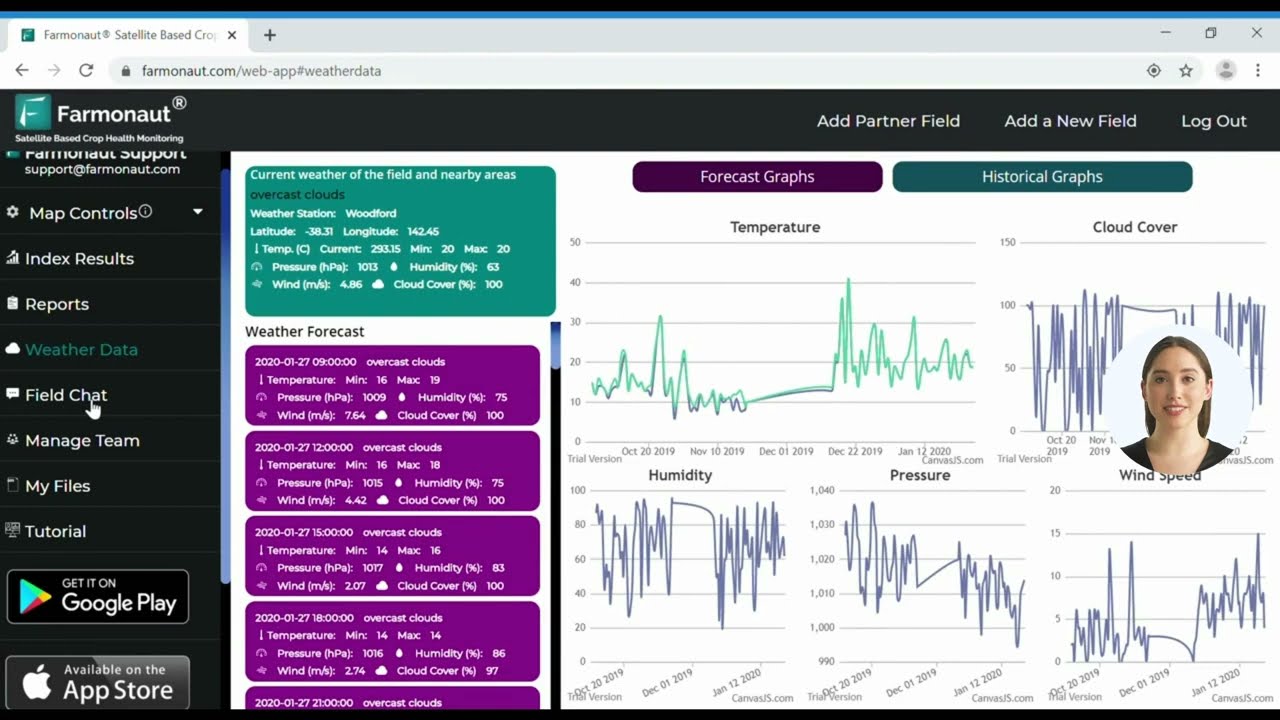
- ⏱ Precise Schedules: Automated, data-driven irrigation plans for each field segment.
- 🌡 Climate Adaptive: Continuous adjustment to local and seasonal variables.
- 🌱 Soil Health: Avoids overwatering & runoff, preserving topsoil structure.
7. Digital Twins and Smart Supply Chains
Digital twins are virtual models of geographic plots (fields, forests) or entire value chains, continuously updated by real-world data from sensors, IoT devices, and remote sensing. These platforms enable scenario planning—simulating crop rotations, irrigation strategies, or supply disruptions to optimize for productivity, cost, environmental impact, and biodiversity.
- 🖥 Scenario Modeling: Virtually test management decisions before implementation to minimize risk and maximize ROI.
- 🔎 Chain Traceability: Digital records, including blockchain verification, document every input, operation, and movement for food safety, regulatory compliance, and consumer trust.
- 🚚 Smart Logistics: Automated fleet and resource management solutions ensure timely harvest, cold-chain integration, and market delivery with minimal waste or spoilage.
Enhance traceability and transparency on your farm or forestry project using Farmonaut’s
Product Traceability
tools.
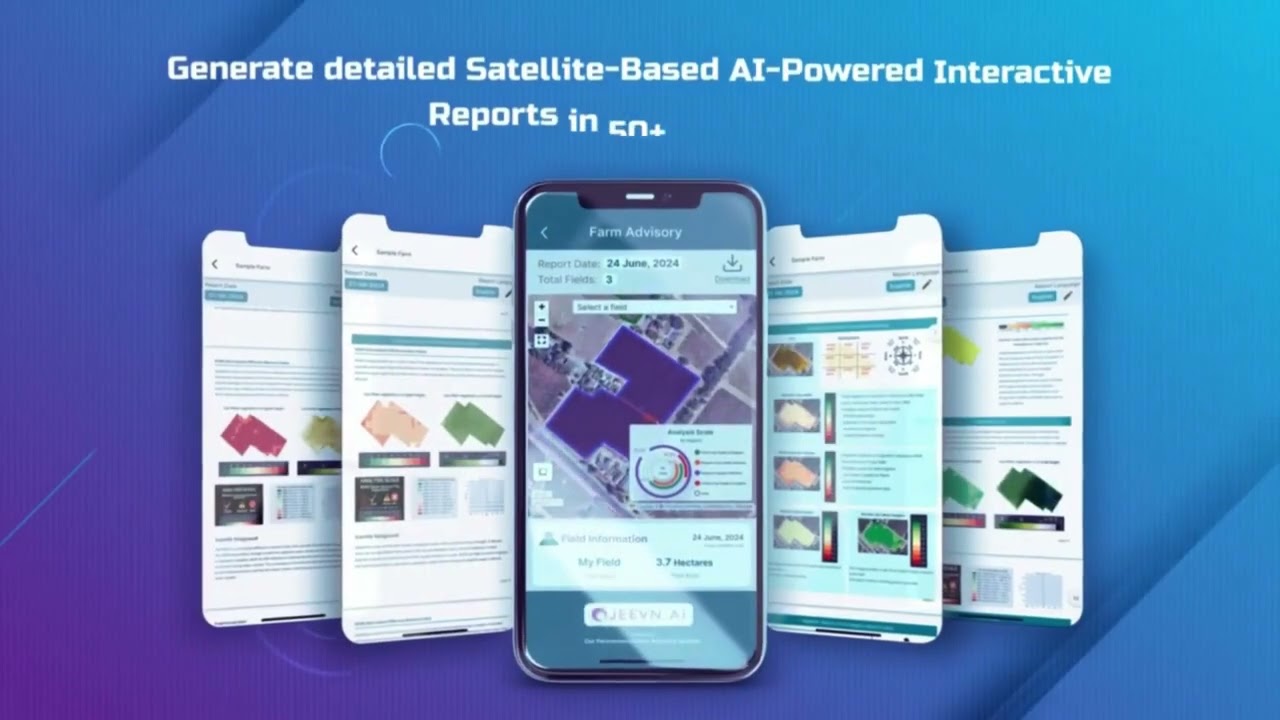
Comparative Benefits Table: Industry 4.0 Technologies & Impact
Key Insights, Pro Tips & Investor Notes
🔑 Key Insight
Real-time sensor data, when integrated with AI-driven analytics, multiplies the value of each digital investment—unlocking next-level precision and sustainability for farms and forests alike.
💡 Pro Tip
Start small with high-ROI applications (like precision irrigation or satellite crop monitoring) and integrate more advanced technologies as training, capacity, and returns grow.
⚠ Common Mistake
Overlooking data interoperability can lead to disjointed systems and wasted investment. Always select platforms and technologies that work seamlessly among existing equipment and tools.
📈 Investor Note
The agriculture industry’s digital transformation is fueling a surge in agriculture industry jobs for developers, analysts, technicians, and data scientists.
🌱 Sustainability Spotlight
Platforms such as
Farmonaut enable carbon footprint monitoring, helping growers reduce emissions and verify climate-smart practices for export and compliance markets.
Discover our
Carbon Footprinting
service.
Platforms, Tools & Adoption Strategies for Agriculture 4.0
Implementing industry 4.0 in agriculture is a journey. Adoption strategies should prioritize areas of high value and clear ROI—for most, this begins with precision irrigation, soil mapping, and data-driven crop disease detection.
- 📱 Mobile & Web Platforms: Modern systems, such as Farmonaut’s Web & Mobile Apps, offer real-time monitoring and AI-based advisory for all levels of operation.
- 🌐 API Integration: Developers and businesses can incorporate satellite and sensor insights directly into their custom software with the Farmonaut API and developer documentation.
- ⚡ Blockchain Traceability: Tamper-proof supply chain documentation—enhancing product quality, transparency, and compliance.
- 🛰 Satellite Monitoring: Obtain continuous, large-scale insights for soil, vegetation, water cycle, and infrastructure status. This streamlines not only agriculture, but also forestry and even mining-adjacent land management.
Learn about our fleet management solutions for agricultural and mining equipment.
- 🏦 Financial Tools: Satellite-based verification expedites crop loan and insurance approvals, reducing risk and fraud.

Workforce & Agriculture Industry Jobs in the Digital Era
The rise of agriculture 4.0 is creating new job opportunities—and changing traditional roles across the agricultural sector. Data scientists, developers, field technicians, and AI analysts are now as critical as equipment operators and agronomists. Key emerging agriculture industry jobs include:
- 📈 Data Analysts & Scientists: Translate sensor and satellite data into actionable insights, optimizing yields and sustainability.
- 🔧 Field Equipment Technicians: Install, calibrate, and maintain autonomous machinery, sensor arrays, and on-farm IoT.
- 💡 AI Model Developers: Build and refine models for disease risk prediction, resource optimization, and harvest timing.
- 👨💻 Platforms & Software Developers: Develop and optimize web/mobile farm management systems and integrate supply chain tools.
- 👩🌾 Strategic Farm Operators: Oversee adaptive management using data dashboards and remote control interfaces.
Continuous training and education are essential for safe, effective operation and long-term adoption of automation and smart farming platforms.
Five Pillars of Industry 4.0 Impact in Agriculture
- ✔ Optimized Productivity: Data-driven decision-making maximizes yields and returns, even under climate uncertainty.
- ✔ Resource Efficiency: Sensors and automation cut input waste (fertilizer, water, chemicals) by up to 20%.
- ✔ Sustainability Advancements: Advanced monitoring and analytics enable climate-smart, biodiversity-friendly practices.
- ✔ Supply Chain Transparency: Technologies like blockchain foster traceability, authenticity, and trust.
- ✔ Resilient Operations: Digital twins and scenario modeling reduce risk, buffer shocks, and steady supply amid global volatility.
Frequently Asked Questions
What is Industry 4.0 in Agriculture?
Industry 4.0 in agriculture—also called Agriculture 4.0—refers to the integration of digital technologies (IoT, AI, automation, data analytics, robotics, and remote sensing) across all levels of farming, forestry, and related supply chains to enable real-time, data-driven management, precision input use, sustainability, and resilience.
What technologies are commonly used in Agriculture 4.0?
IoT sensors and networks, AI-driven analytics, robotics, autonomous machinery, drones, remote sensing, blockchain, digital twins, and advanced farm management platforms are key technologies powering Agriculture 4.0.
How does Industry 4.0 in agriculture impact sustainability?
By enabling data-guided efficiency, minimizing chemical and water use, optimizing logistics, and speeding adoption of climate-smart management, Agriculture 4.0 reduces environmental impact, preserves biodiversity, and supports sustainable practices at scale.
What new jobs and skills are needed for digital agriculture?
As agriculture digitizes, demand grows for data scientists, AI developers, field technicians, agribusiness analysts, remote pilots, and system integrators—requiring ongoing upskilling and interdisciplinary training.
How do I get started with Agriculture 4.0 technologies?
Begin with high-impact yet straightforward tools, such as precision irrigation, soil sensing, or remote crop monitoring. Use scalable platforms like Farmonaut for satellite and AI insights, and gradually introduce automation, analytics, and traceability as experience and needs evolve.
Farmonaut Subscription Plans
Conclusion: Transforming Agriculture for a Data-Driven Future
Industry 4.0 in agriculture is more than a technological upgrade—it is a fundamental shift in how we optimize productivity, boost precision, and guarantee sustainability in modern food, fiber, and resource systems. Through a seamless web of sensing, analytics, automation, and intelligent management, Agriculture 4.0 empowers farms, forests, and supply chains to adapt, thrive, and steward our planet for generations to come.
At Farmonaut, we are committed to making satellite-driven insights, real-time monitoring, and AI-powered advisory affordable and accessible across agriculture, forestry, and related industries. Whether you manage a small farm, a forestry operation, or a sprawling commercial enterprise, you can unlock the game-changing benefits of Agriculture 4.0 with our web, mobile, and API-based platforms.

 Drift-Sense
 NWNS
NWNS Hydenmet
 Dirks Bros Farms
 Red August Group
 Farm Inc
 WeMe Global
 Agrotoken
 Blue BearX
 Insignito
 Croptimum
 DnCubed
 Field Capacity
 Indosistim Teknologi
 Liquify Digital
 CU Foods
 BeyondTech Global
 Rouge VC
