

John Deere Precision Agriculture: 2026’s Top Innovations
Meta Summary: Discover how John Deere precision agriculture transforms farming and forestry with advanced tractors, integrated data-driven systems, and satellite-enabled platforms, all designed to boost yield, reduce input costs, and enable sustainable farming for 2026 and beyond.
“John Deere’s precision ag tech can reduce fertilizer use by up to 20% while maintaining crop yields.”
- 1. Redefining the Future of Precision Agriculture (2026 & Beyond)
- 2. How John Deere Precision Agriculture Works
- 3. John Deere Precision Agriculture: Key Innovations for 2026
- 4. 2026 Precision Agriculture Technologies: Comparison Table
- 5. Autonomous and Data-Driven Machine Systems
- 6. Satellite & Sensor Integration in Farming & Forestry
- 7. Farm Management and Fleet Optimization in 2026
- 8. Sustainable Intensification: Precision and Ecosystem Health
- 9. Infrastructure and Modular Machinery for Evolving Farming Needs
- 10. Safety, Training, and Operator Support
- 11. Visual Lists – Key Benefits & Future Trends
- 12. Farmonaut Satellite Technology in Modern Agriculture
- 13. Frequently Asked Questions (FAQ)
Redefining the Future of Precision Agriculture (2026 & Beyond)
The agricultural world is evolving at an unprecedented pace. As we enter 2026, John Deere precision agriculture is at the forefront of this transformation, redefining how we think about farming, forestry, and land-management operations. These advancements directly address the pressing realities of maximizing yield, minimizing input costs, and promoting sustainability across every hectare, acre, and plot.
The core strength of John Deere agriculture lies in leveraging precision data to enable actionable field decisions, uniquely tailoring solutions to exact crop, forestry, and operational needs.
Why the “Precision Revolution”? The demand to “do more with less”—higher yield per drop of water, per pound of fertilizer, and per hour of operator input—demands a radical evolution in both technology and agronomic practice. John Deere’s integrated platforms offer the most advanced tractor, suite, sensor, and autonomous machine innovations ever deployed at scale, turning raw field data into impactful, timely decisions.

Farmonaut Web System Tutorial: Monitor Crops via Satellite & AI
How John Deere Precision Agriculture Works
At its heart, John Deere precision agriculture blends cutting-edge satellite and field data, in-soil sensors, VRT (Variable Rate Technology), cloud platforms, and machine learning in a seamless ecosystem. Modern John Deere tractors and implements not only “do” the work, but monitor, adjust, and optimize every action based on live and predictive data streams.
- ✔ Real-time mapping of field variability, weed and pest pressures, and soil health indicators
- 📊 Integrated displays that synchronize with Deere’s suite of machinery and cloud platforms for actionable recommendations
- ⚡ Autonomous and semi-autonomous guidance systems reduce operator fatigue, enable 24/7 work, and minimize overlap or skips in applications
- 📶 Robust remote diagnostics and over-the-air updates keep machines current with the latest agronomic intelligence and regulatory standards
- 🌱 Variable-rate seeding, fertilizer, and pesticide application maximizes yield while minimizing environmental impact and input costs
For larger operations and mixed-use facilities, integrating John Deere fleet telematics with data-driven field recommendations is crucial for optimal results—real-time communication ensures each tractor, planter, and harvester delivers precise input control per zone and per crop.
John Deere Precision Agriculture: Key Innovations for 2026
The innovation cycle is at its fastest pace in decades. In 2026, Deere’s precision agriculture solutions encompass a broad array of technologies and methods dedicated to maximizing yield, reducing inputs, and promoting sustainable, data-driven operations. Key innovations include:
By 2026, precision ag and telematics markets for John Deere agriculture are projected to grow exponentially as regulatory requirements, carbon accounting, and input cost pressures reshape the global food, forage, and forestry supply chain landscape.
- 🌾 AI-driven seeding and fertilizer prescription using sub-meter field variability data
- ☁ Machine learning powered pest and weather forecasts to schedule operations with pinpoint accuracy
- 🚜 Autonomous tractors and implements capable of around-the-clock, operator-free activity
- 📱 Connected displays and mobile solutions for on-the-go farm oversight
- 🔗 Standardized machine protocols ensuring seamless integration and data flow across the John Deere ecosystem
- 🛰️ Satellite-guided guidance and in-field sensors with variable-rate application support
“Advanced data-driven tractors in 2026 can plant seeds with centimeter-level accuracy, optimizing every square meter of farmland.”

JEEVN AI: Smart Farming with Satellite & AI Insights
2026 Precision Agriculture Technologies: Comparison Table
Autonomous and Data-Driven Machine Systems
John Deere farm tractors and implements in 2026 are engineered for maximum modularity, interoperability, and fleet connectivity. Here’s how these core advances work together:
- Autonomous Guidance – Camera, satellite, and LIDAR-supported navigation allows tractors, harvesters, and sprayers to work without direct operator input, including night operations and sensitive or inaccessible sites.
- Remote Diagnostics & Updates – Intelligent telematics enables in-field, cloud-based troubleshooting, reducing downtime and ensuring machines are always up-to-date with current agronomic recommendations.
- Cross-platform Data Flow – Implements, planters, and tillage machines communicate via standardized protocols, sharing real-time field data to maximize operational efficiency and yield.
- Fleet Optimization – Automated scheduling and dispatching keep every machine operating at peak productivity, lowering labor costs and minimizing resource redundancy across large or multi-use operations.

Satellite Soil Moisture Monitoring 2025 – AI Remote‑Sensing for Precision Agriculture
Overlooking software updates and interoperability requirements can lead to missed efficiency gains or compatibility gaps—ensure all John Deere farm tractors, implements, and data platforms remain fully integrated for 2026’s rapidly evolving digital agriculture.
Satellite & Sensor Integration in Farming & Forestry
Integration of satellite data, in-soil sensors, and cloud-based learning systems forms the new backbone of John Deere precision agriculture.
In forestry, the John Deere forestry tractor and related equipment are designed to deliver productivity, safety, and reduced environmental impact, even in the most difficult terrain and woodland management challenges.
- ✔ Field Mapping & Soil Moisture Monitoring: Satellite-aided mapping identifies microclimates, moisture variability, and soil instability across large tracts of crop and timber land.
- 📊 Site Quality and Seedling Placement: In forestry and reforestation, guidance systems ensure that seedling planting matches site slope, soil moisture, and anticipated weather patterns.
- 🌱 Precision Thinning, Selective Logging & Timber Harvest Tracking: Deere’s guided steering and load-sensing hydraulics minimize soil disturbance and enable safer, more productive woodland operations.
- ⚡ Operator Performance & Harvest Planning Tools: Integrated software provides performance tracking and regulatory compliance for every hectare logged or restored.
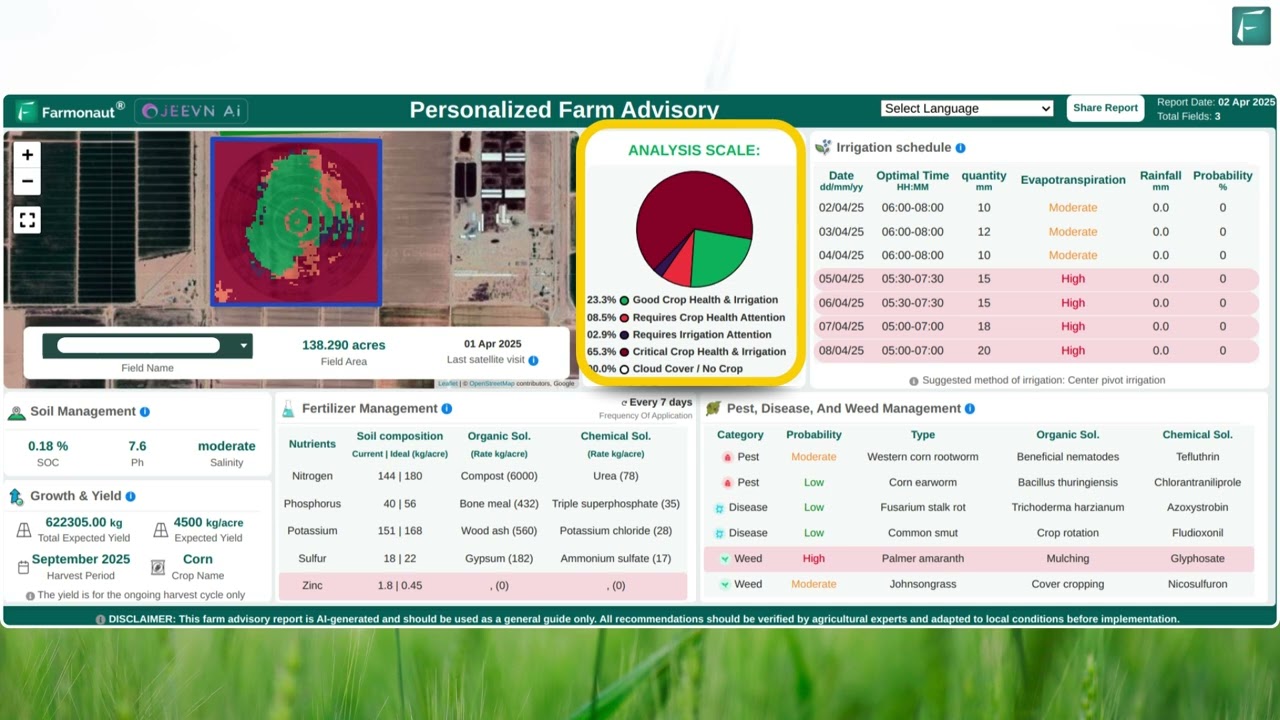
JEEVN AI: The Future of Smart Farming with Satellite & AI Insights
Field variability—when mapped at high resolution using satellite data and sensors—unlocks zone-based management, enabling every drop of water and dose of fertilizer or pesticide to be precisely tailored per square meter.
- ✔ Integrated Displays allow farmers, managers, and forestry operators to track conditions, yields, and machinery status—all from one cloud-connected dashboard.
- 📶 Seamless Data Flow between machine, operator, and central platform guarantees that decisions are made using the most current and relevant information available.

2025 Veg Equipment Boom 🌱 Smart Farming, AI Telematics & $2.3B Market Powered by Farmonaut
Neglecting in-soil sensors or only using visual field scouting can result in missed yield potential and delayed response to moisture or nutrient stress. Combined remote sensing and ground sensors are vital for optimizing every pass with John Deere machinery.
Farm Management and Fleet Optimization in 2026
The 2026 landscape in farming and forestry is one of platform unification. John Deere’s suite of equipment integrates seamlessly with digital management tools to empower:
- 📊 Real-Time Fleet Coordination – Each tractor, spreader, and harvester communicates precise position and prescription coverage, reducing overlap and input waste.
- 👷 Operator Monitoring and Training – Skill gaps are minimized, while AR and simulation systems streamline onboarding for complex, modern machine systems.
- 🌱 Scenario Planning – “Digital twins” of your fields simulate how variable rates, seed or fertilizer blends, and weather risks impact yield and input needs—before wheels hit the soil.
- 🚛 Logistics and Maintenance Automation – Predictive wear monitoring and just-in-time service alerts cut downtime and extend the productive life of rugged Deere machines.
- 🌐 Cloud-Based Decision Making – All operational data is centralized, giving farm managers and forestry operators instant access to actionable reports on field conditions, operator performance, and input allocations.
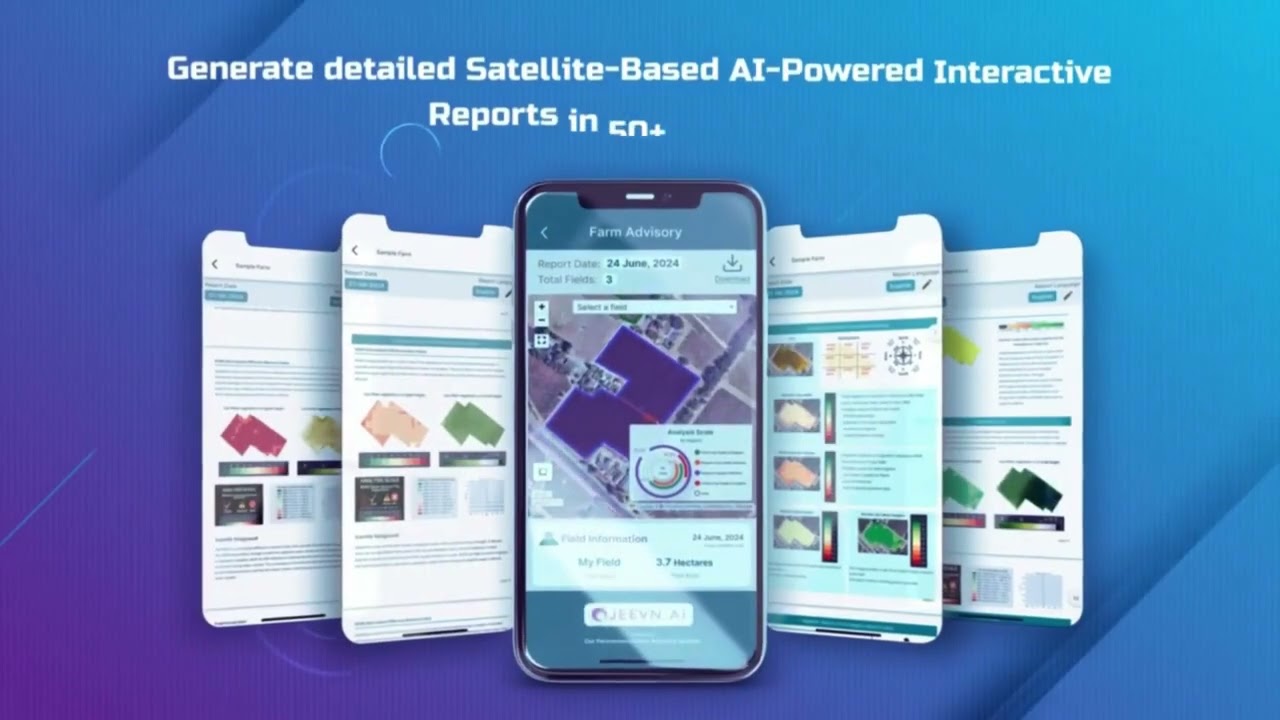
Farmonaut – Revolutionizing Farming with Satellite-Based Crop Health Monitoring
Sustainable Intensification: Precision and Ecosystem Health
The North Star guiding John Deere’s future of farming is sustainable intensification: producing more with fewer inputs while rebuilding soil health, supporting biodiversity, and enabling carbon-smart practices across the agricultural and forestry sectors.
- 🌱 Advanced analytics predict pest pressure and optimize application timing to minimize impact on beneficial species and reduce unnecessary pesticide use.
- 🌾 Data-driven crop rotations enhance soil structure and reduce erosion risk, supporting productive yield per hectare year after year.
- 🌍 Carbon accounting tools and certification enable growers to participate in emerging climate and sustainability markets.
- 🌧 Field-scale weather forecasts and modeling reduce risk and improve operational decision making for every planting, spray, and harvest window.

Smart Farming Future : Precision Tech & AI: Boosting Harvests, Enhancing Sustainability
On-farm digital twins and scenario planning tools empower growers to visualize the impact of every decision—yield, input cost, and environmental footprint—before they act, maximizing both profit and sustainability.

Farmonaut® Satellite Based Crop Health Monitoring
Infrastructure and Modular Machinery for Evolving Farming Needs
As farming and forestry infrastructure faces challenges from climate variability, resource pressure, and market volatility, John Deere offers robust, modular machinery designed for rugged conditions and evolving digital requirements.
- ✔ Edge Computing and Telematics provide reliable performance for operations even in dust, humidity, or remote locations.
- 🌐 Over-the-Air Updates mean all equipment is regulatory-compliant and ready for new agronomic prescriptions instantly—no downtime for manual upgrades.
- ⚒ Low-Impact Land Reclamation – For mining-adjacent or restoration tasks, Deere solutions minimize disturbance and accurately monitor reclamation progress.
- 💡 Interoperable Machinery allows cross-brand or legacy integration—John Deere 2026 solutions are designed to evolve alongside every aspect of your operation.
Mining and rural infrastructure operators: Rugged, remotely monitored John Deere machines paired with real-time satellite assessment—such as Farmonaut’s fleet and resource management tools—deliver measurable reductions in operational risk, input use, and regulatory noncompliance.
Safety, Training, and Operator Support
Safety is foundational in the next generation of John Deere farm tractors and forestry equipment. Technologies now include:
- ✔ Operator-Assist Technologies provide real-time alerts on machine status, obstacles, and field hazards.
- 🎮 AR & VR Simulation Training accelerates skills development for new and seasonal staff, minimizing risk even for complex operations.
- 📱 Field Condition Monitoring – Cloud-based insights feed directly to machine dashboards, highlighting areas of concern before issues escalate.
- 🛠 Remote Support and Diagnostics ensure machine health, maximizing uptime and protecting both operators and assets from accident or damage.



Explore how Farmonaut’s platform delivers actionable satellite insights, crop and soil monitoring, carbon tracking, and more—wherever you are and on any device.
API Developer Docs – Integrate the world’s most advanced satellite-driven field monitoring into any agmachinery stack, ERP, or dashboard platform.
Always leverage operator-assist tools and up-to-date AR training for new field crew or seasonal staff—it’s one of the fastest ways to reduce incidents, equipment downtime, and operational risk in fast-paced, modern agricultural operations.
Visual Lists – Key Benefits & Future Trends
- ✔ Maximized yield per hectare and per crop
- 📊 Reduced fertilizer and water input costs via zone-based applications
- ⚠ Lowered risk of regulatory fines through real-time compliance tracking
- ♻ Improved sustainability certifications and carbon offset access
- 🔒 Enhanced supply chain traceability using blockchain-based record systems
- Field-Centric Management: Every input, harvest, and operational step is tailored to actual field conditions
- Data Unified Across Devices: From tractor cab to remote office, all decisions draw on one source of actionable truth
- Operator Support 24/7: Machines and staff achieve continuous uptime across the growing season
- Scenario Modeling & Digital Twins: Test “what-if” before investing in field action or capital upgrades
5 Essential Success Factors in 2026 Precision Agriculture (with icons)
- ✔️ Precision Data Integration – Combine satellite, in-soil sensors, machine data, and weather analytics
- 🚜 Autonomous and Semi-Autonomous Machinery – Always deploy for labor-limited or 24/7 operations
- 🛰️ Zone-Based Input Control – VRT on every operation maximizes ROI everywhere on the farm
- 🔁 Operator Training and AR Tools – Fast, cost-effective onboarding for all new users
- 🌱 Continuous Sustainability Auditing – Real-time feedback on carbon, water, and biodiversity metrics
Farmonaut Satellite Technology in Modern Agriculture
As a pioneer in satellite-driven solutions, Farmonaut delivers a comprehensive platform for monitoring crop health, field variability, and resource allocation at both small and large scales. We use a blend of multispectral satellite imagery, AI-driven analytics, and blockchain traceability to empower better decision-making in agriculture, mining, forestry, and infrastructure.
Our systems support users around the globe with:
- ✔ Real-time vegetation health mapping (NDVI, moisture, and nutrient stress)
- 📊 Automated environmental impact and carbon footprint monitoring
- 🚛 Fleet and logistics optimization for agricultural machinery and equipment
- 🔗 Blockchain-based supply chain verification for authenticity and compliance
- 🛰 Advanced advisory tools (Jeevn AI) providing custom strategies per field, season, and crop
Our solutions are available through web, Android, and iOS apps, and directly via API—enabling seamless integration into your existing John Deere and third-party dashboard infrastructure.
Adopting a satellite-first monitoring mindset ensures that all field, forestry, mining, and infrastructure stakeholders benefit from unified, cost-effective, and scalable data—regardless of operation size or location.
Frequently Asked Questions (FAQ)
What makes John Deere precision agriculture stand out in 2026?
John Deere precision agriculture combines autonomous equipment, integrated sensor and satellite data, variable rate input application, and a cloud-based machine ecosystem for actionable decision-making at every scale—ensuring maximum yield and operational efficiency.
How does data flow from the field to the cloud in Deere’s 2026 suite?
Every John Deere tractor, harvester, and implement is equipped with telematics and standardized communication protocols. Data is collected in real time, synced to on-board displays, and uploaded to the cloud for operator, manager, and advisor access—supporting remote diagnostics, over-the-air updates, and cross-fleet coordination.
What kinds of operations can benefit most from these technologies?
A wide spectrum—from crop farms and livestock facilities to forestry, woodland management, mining-adjacent agriculture, and rural infrastructure operations. The scalability and modularity of John Deere solutions ensure robust performance for any operation size or focus.
How can Farmonaut enhance John Deere equipment use?
Farmonaut’s satellite-based insights, real-time monitoring, and AI-driven recommendations give users deeper field visibility, enhance crop and soil management, streamline logistics, and enable transparent traceability—all while supporting sustainability goals and regulatory compliance for John Deere-equipped operations.
Can these systems help with sustainable certification and access to green markets?
Yes. Both John Deere’s platform and Farmonaut’s solutions provide carbon accounting, traceability, and sustainability metrics required for modern certification schemes and green market access. Digital twins and analytics forecast long-term impact and ROI for informed, environmentally responsible decisions.
Do I need an advanced tech background to use precision agriculture tools?
No. Modern displays, apps, and AR/VR training systems are designed for intuitive operation. Onboarding is further simplified by online support, mobile interfaces, and operator-assist features across the John Deere and Farmonaut platforms.
Where can I access these digital tools and solutions?
The Farmonaut platform is available as a web app, Android, and iOS application, and also via API for integration into existing operations. John Deere’s equipment and cloud solutions are directly accessible through your local dealer and authorized partners. Experience seamless digital agriculture—start here.
Precision agriculture is not just about maximizing profit per field—it’s at the heart of future-ready, resilient, and transparent food, fiber, and timber supply chains. Stakeholders investing in data-driven, modular, and carbon-accounted machinery and digital platforms are best positioned for success in the evolving agricultural landscape.
Conclusion: The Precision Future is Now
As 2026 unfolds, the combined force of John Deere precision agriculture and cutting-edge satellite and digital tools helps farmers, forestry operators, and land managers achieve the long-awaited promise of “doing more with less.” The future is interconnected, precise, sustainable—and it starts with data-driven decisions, robust machinery, and platforms designed to scale with your operation, no matter the challenge.
Stay at the cutting edge—monitor your lands, optimize every resource, and embrace the transformative power of precision agriculture for the next generation.

 Etherspace Network
 Teledarbas
 Wild Oak Farm
 SFX
SFX BACF Africa
 Doodlakine
 Exurbia Geospatial
 FieldZero
 Indico Company
 Kubota
 FFBS
FFBS Jontra
 Tucor
Tucor
