

Reviewed August 2026 against USDA Economic Research Service, USDA National Agricultural Statistics Service, and IMARC Group market data.
Try it: Run your own numbers →
Agricultural Monitoring Systems: AI-Driven Economic Optimization
Agricultural monitoring systems — sensor networks, satellite imagery, and AI analytics layered onto a farm’s existing operation — are already mainstream on large US crop farms: 70% used guidance autosteering and 68% used yield monitors and yield maps in 2023, according to the USDA Economic Research Service. The economic case rests on a narrower set of documented numbers than most articles admit, and this piece sticks to those: adoption rates by farm size, irrigated-acreage totals, market growth figures, and the research-and-development return that underwrites public investment in the technology. Where a number genuinely is not published — a per-acre cost, a measured yield lift on a specific crop — we say so and point to where you can generate it for your own operation.
One of the more common uses of that analytics layer is explained in how AI predicts crop yields.
“Kallenberg Agricultural Monitoring Systems” does not correspond to a documented commercial product in USDA, NASS, or market-research coverage of US agricultural technology. If you encountered that name in a specific context — a regional dealer, a proprietary internal system, an academic paper — treat it as a local or niche reference rather than an industry-standard platform, and evaluate it against the adoption and cost benchmarks below rather than against generic marketing claims.



How Many US Farms Actually Use Agricultural Monitoring Systems?
The clearest public benchmark for agricultural monitoring adoption in the United States comes from the USDA Economic Research Service’s 2023 farm technology survey. On large-scale crop farms, 70% used guidance autosteering systems for tractors and harvesters, and 68% used yield monitors, yield maps, and soil maps. On midsize farms, autosteering adoption dropped to 52% — a 18-percentage-point gap that tracks capital availability more than technical need, since the underlying sensors and software work at any acreage. Read the full breakdown at the USDA Economic Research Service Charts of Note, which the agency updates periodically as new Agricultural Resource Management Survey data comes in — check that page directly for the adoption percentages current when you’re reading this, since 2023 is the most recent published cycle as of this review.
On the machinery-uptime side of monitoring, 40.46% of US farms used sensors to track machine conditions and flag downtime risk, per North America precision agriculture market analysis. That figure sits apart from the ERS crop-monitoring numbers because it measures equipment telemetry rather than field or soil sensing — a distinct adoption curve worth tracking separately if you’re benchmarking a specific investment category.
None of this data breaks out soil moisture sensors as their own adoption category; the ERS survey groups them inside broader “yield monitors, yield maps, and soil maps” reporting. If your decision hinges specifically on soil moisture sensor penetration, the ERS Charts of Note series and the underlying Agricultural Resource Management Survey microdata are the sources to query for that cut.
Agricultural Monitoring Systems: Economic Aspects and Decision-Making Optimization
The economic argument for monitoring systems is a decision-making argument first and a cost-savings argument second: the sensor or satellite feed only pays for itself if it changes what a farm manager does differently than they would have from visual inspection alone. That distinction matters because USDA NASS survey work on irrigation decision-making found that 75–80% of US farmers currently decide irrigation timing primarily by visual crop inspection rather than instrumented data — see the USDA NASS Farm and Ranch Irrigation Survey program for the underlying methodology and the current survey cycle’s results. That gap — three-quarters of farmers still using eyes over instruments for a decision monitoring systems are built to improve — is the single largest addressable market inside the economic-aspects question, larger than any efficiency percentage claimed for farms that have already adopted the technology.
On research economics specifically, the USDA Economic Research Service’s review of public agricultural R&D found annual returns of 20–60% on that investment — a range wide enough to reflect real variation across research categories and time horizons, not an estimation error. See USDA Economic Research Service, Economic Returns to Public Agricultural Research for the study’s scope and methodology. That figure describes public R&D funding returns, not the ROI an individual farm should expect from buying a monitoring subscription — treat it as evidence that the underlying science is sound, not as a stand-in for your own capital-budgeting math.
What the research base does not currently publish: a per-acre installation cost for monitoring hardware in the US, a measured yield-improvement percentage for corn, wheat, or soybeans specifically attributable to monitoring adoption, or a dollar ROI figure for a representative farm operation. Any article quoting a precise “X% yield gain” or “$Y per acre saved” for monitoring systems broadly is citing a modeled estimate, not a USDA-published statistic — ask for the underlying source before trusting it. The honest answer for your own operation is to run a controlled comparison: monitor a subset of fields for one full season against your existing practice, and calculate your own before/after input cost and yield delta.

Agricultural Curtain Systems and Environmental Control Monitoring
Agricultural curtain systems — retractable side-wall and roof curtains used in high-tunnel greenhouses, livestock barns, and poultry houses to regulate airflow, temperature, and light — are a distinct equipment category from open-field crop monitoring, but the two increasingly run on the same sensor-and-controller logic. A curtain system paired with a monitoring layer uses temperature, humidity, and wind sensors to trigger automated opening and closing rather than manual winch operation, which is the same real-time-data-over-manual-observation shift documented for open-field sensing above. Because curtain automation is an environmental-control application rather than a row-crop yield application, it is not separately broken out in the USDA ERS or NASS datasets cited in this article — if you are evaluating a curtain-system retrofit, get its energy and labor savings quoted directly from the equipment manufacturer or your state’s Cooperative Extension livestock or controlled-environment agriculture program, rather than assuming open-field monitoring percentages apply.
Where curtain systems and satellite-based monitoring genuinely overlap is in structure siting and microclimate assessment: multispectral imagery can flag drainage, shading, and airflow patterns across a property before a curtain-equipped structure is built or expanded, informing where automated environmental control delivers the most value.
Abundant Agricultural Systems: Scaling Monitoring Across Farm Size
“Abundant agricultural systems” — read here as monitoring infrastructure that scales from a single field to a full multi-site operation without requiring a different platform at each tier — is best evidenced by the same ERS farm-size breakdown already cited: 70% adoption on large farms against 52% on midsize farms for autosteering shows the technology is not tier-locked, but capital and integration cost still gate midsize and smaller operations more than large ones. The market growth backing that expansion is documented independently: the North American precision agriculture market was valued at $2.64 billion in 2024, with a projected compound annual growth rate of 13.5% from 2025 through 2033, per IMARC Group’s North America precision agriculture market report. That CAGR describes an industry-wide forecast for the stated period, not a guarantee for any individual technology vendor or product line — confirm the report’s current edition before citing the figure past its stated forecast window, since IMARC and MarketDataForecast both publish updated projections as new fiscal-year data becomes available.
Precision Irrigation: Where the Documented Savings Are
Irrigation is the sub-category with the most specific US government data behind it. The USDA National Agricultural Statistics Service’s 2023 Irrigation and Water Management Survey counted 212,714 US farms with irrigated acreage, covering a total of 53.1 million irrigated acres and 81 million acre-feet of irrigation water applied. Those three figures, published at USDA NASS’s 2023 Irrigation and Water Management Survey release, are the baseline against which any water-savings claim for precision irrigation should be measured — NASS republishes this survey annually each October, so check that release schedule directly for the count current when you’re reading this.
Against that baseline, industry ROI analysis of smart-farming deployments puts potential water savings from precision irrigation systems at up to 30% — a figure describing achievable reduction under optimized sensor-driven scheduling, not an average across all current adopters. Applied against the 81-million-acre-foot 2023 national total, even partial adoption of that saving rate represents a meaningful volume, though NASS does not publish a national dollar value for water saved, so translate the percentage into your own water cost and acre-feet usage to get a figure specific to your operation. Given that 75–80% of farmers still time irrigation by visual inspection rather than instrumentation, the 30% savings ceiling is realized only once a farm actually switches decision-making to sensor data — buying hardware without changing the scheduling decision captures none of it.

Comparison Table: Monitoring Technology by Farm Size and Function
| Metric | Large-Scale Farms | Midsize Farms | Source, Period |
|---|---|---|---|
| Guidance autosteering adoption | 70% | 52% | USDA ERS, 2023 |
| Yield monitors / yield maps / soil maps | 68% | Not separately published | USDA ERS, 2023 |
| Machine-condition sensors (downtime prevention) | 40.46% of US farms overall | North America Precision Agriculture Market analysis | |
| Irrigation decisions by visual inspection (not sensors) | 75–80% of US farmers | USDA NASS irrigation decision-making study | |
Read this table as a gap map rather than a scoreboard: every row where midsize adoption trails large-farm adoption, or where the majority of farmers still rely on visual inspection over instruments, is where a monitoring investment has the most unclaimed value left on the table — not where it has already been optimized.
Irrigation Water-Savings Calculator
Use your own acreage, water cost, and current irrigation method to estimate the water and cost impact of moving to sensor-driven scheduling, using the 30% savings ceiling reported for precision irrigation systems and the national per-farm acre-foot average from the 2023 NASS survey as reference points you can override.
Run your own numbers
Compliance, Traceability, and Market Access
Adoption of monitoring systems is driven by market and regulatory pressure toward documented, low-impact production as much as by direct cost savings. US buyers and export markets increasingly expect auditable evidence of input use and environmental practice, and digital monitoring records are what make that evidence producible on demand rather than reconstructed after the fact.
- Reduced inputs, lower emissions: Precision-targeted fertilizer, water, and crop-protection chemical use cuts both cost and the greenhouse gas and runoff footprint tied to over-application.
- Data-driven certification: Continuous monitoring records give auditors verifiable evidence for environmental certification programs, which can open premium and export markets.
- Traceability: Digital farm-to-buyer records build the kind of trust that manual paper logs cannot substantiate under audit.
- Try it: Run your own numbers
For blockchain-based traceability and environmental monitoring specifically, see our Traceability Solutions and Carbon Footprinting pages for how satellite data supports compliance documentation.
Supply Chain, Insurance, and Financing Outcomes
The economic reach of monitoring data extends past the field into financing and risk transfer. Verified, auditable crop-condition data changes how lenders and insurers price risk, and how supply chains time harvest against demand.
- Crop insurance and loans: Third-party-verifiable data on crop growth and health helps lenders and insurers confirm claims and offer terms based on documented conditions rather than self-reported estimates. See our Crop Loan and Insurance page for how satellite monitoring supports this.
- Reducing uncertainty: Granular field data lowers risk exposure for insurers and lenders, which can translate into lower costs for the underlying policy or loan.
- Regulatory compliance: Automated, timestamped compliance reporting reduces the labor and error risk of manual recordkeeping against local and export requirements.
- Market timing: Yield and maturity data feeding into harvest and logistics planning helps align supply with buyer demand windows.

For fleet and resource management across multiple sites, see our Fleet Management page.

Integration and Scalability
The direction of travel for agricultural monitoring is toward tighter integration between field sensors, satellite imagery, AI analysis, and the machinery that acts on that analysis — not toward any single breakthrough device. That trajectory is consistent with the ERS adoption data already cited: autosteering and yield-mapping are already majority technologies on large farms, and the next adoption wave is about connecting those existing tools rather than introducing new hardware categories.
- Real-time IoT networks: Sensors on machinery, irrigation infrastructure, and field probes feed centralized dashboards with minimal manual data entry.
- Autonomous equipment: Tractors, sprayers, and drones that already use autosteering (70% of large farms, per ERS) are the installed base most of this next integration wave builds on.
- Multi-layer data fusion: Soil data, nutrient sensors, weather forecasts, and satellite imagery combining into a single decision layer rather than separate reports.
- Modularity: Systems that scale from a single field to enterprise-level operations without a platform change, addressing the midsize-farm adoption gap documented above.
For large-scale, multi-site farm management tools, see our Large Scale Farm Management page.

How Farmonaut Fits Into This
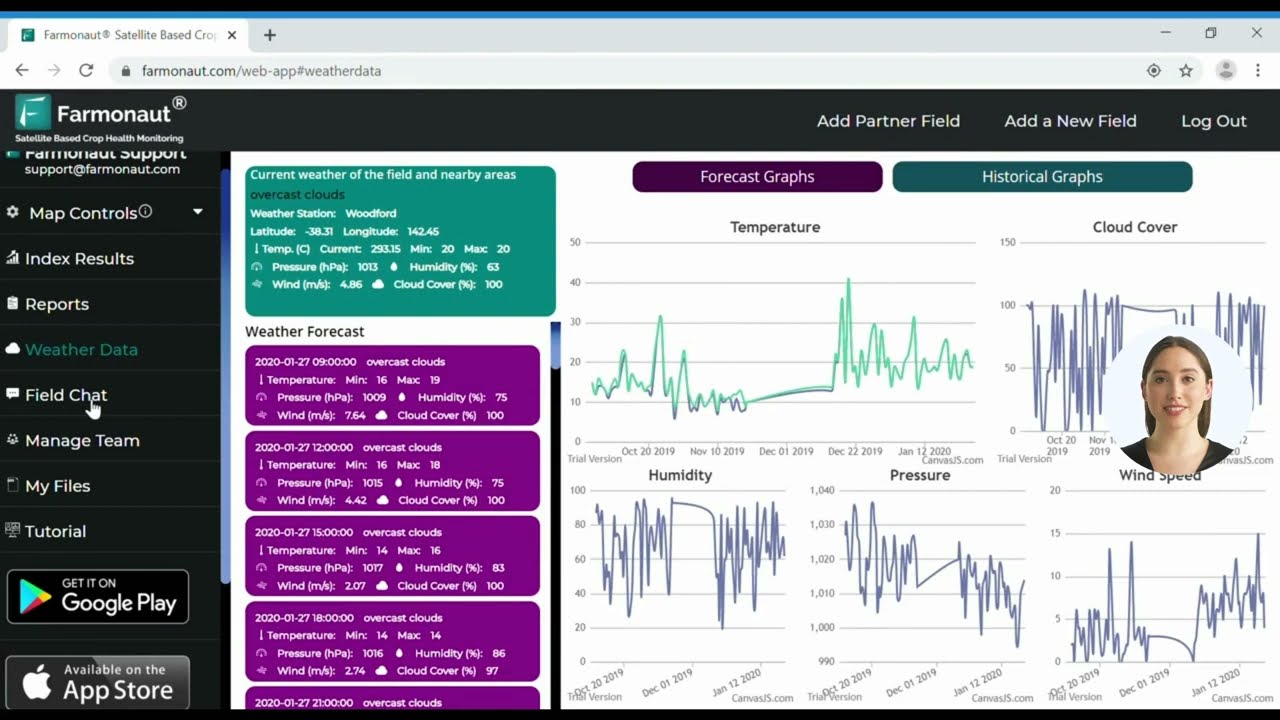
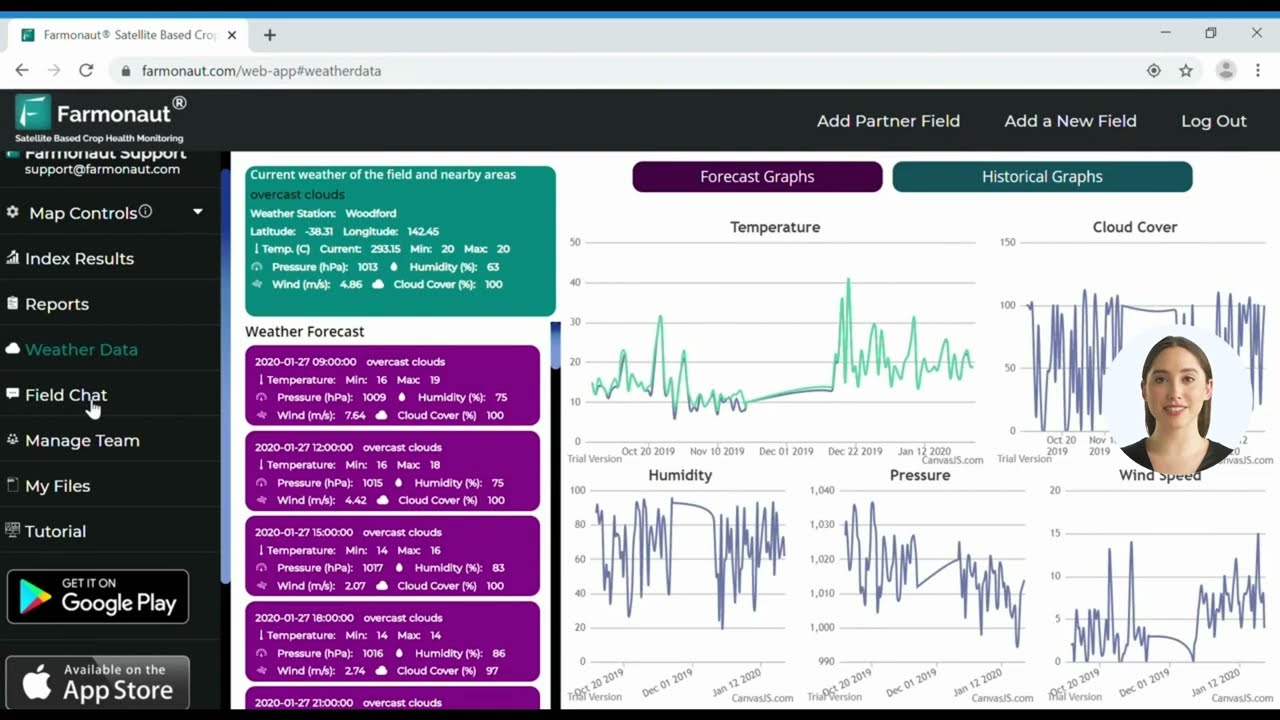
Farmonaut's own platform sits inside the categories documented above: satellite-based field monitoring, AI-driven advisory, and blockchain traceability, accessible through web, Android, and iOS.
- Satellite-based monitoring: Multispectral imagery for crop health and soil condition tracking, aimed at the same decision-timing gap the NASS irrigation survey documents (75–80% of farmers still deciding by visual inspection).
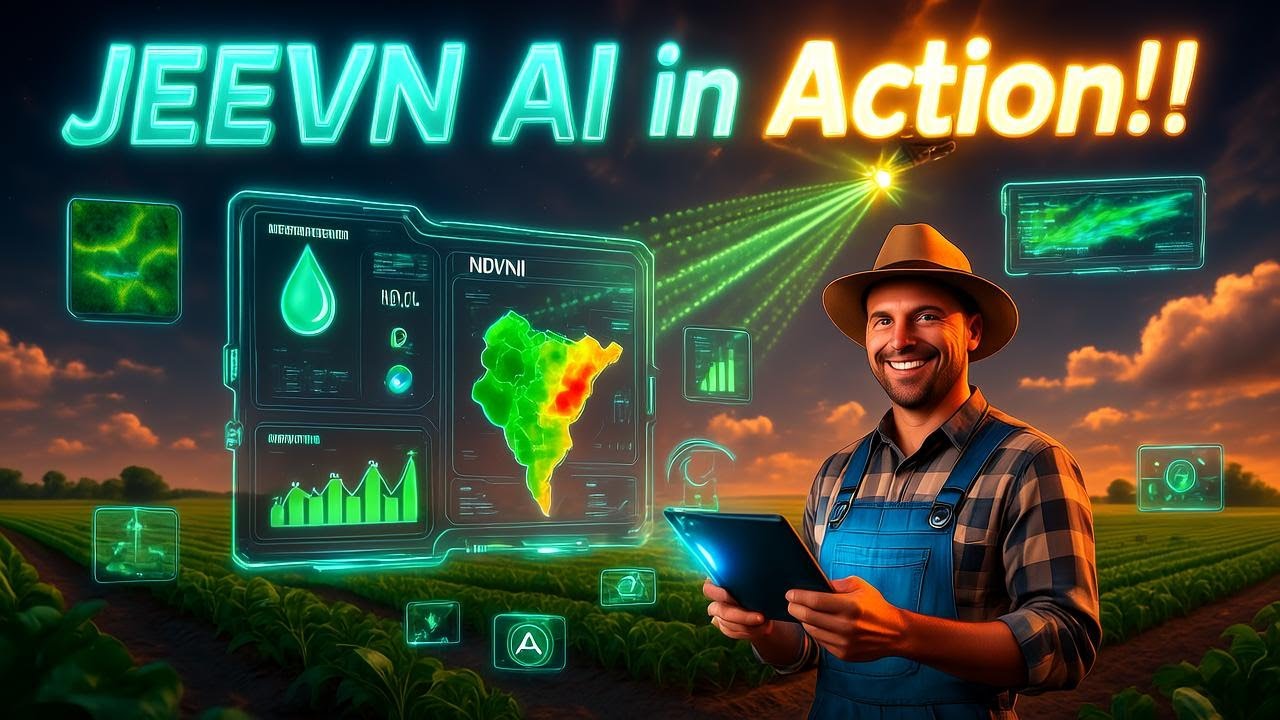
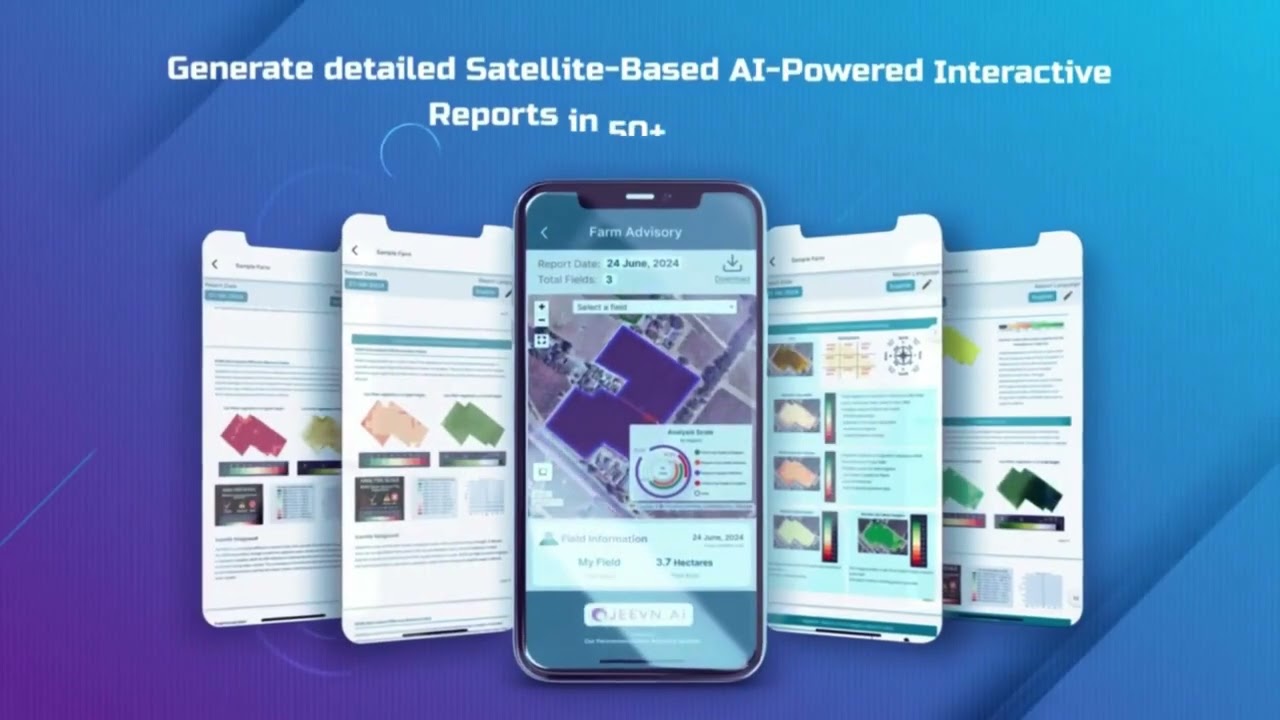
- AI-powered advisories: The Jeevn AI Advisory System delivers recommendations on irrigation timing and resource use, based on field-specific data rather than generic scheduling.
- Blockchain traceability: Field-to-buyer transparency in support of the certification and compliance uses described above.
- API and app access: Available on Android, iOS, and the web.
Our API and developer documentation support integrating satellite-based monitoring into custom software and existing precision agriculture systems.
Our carbon footprinting, traceability, and crop insurance tools connect monitoring data to compliance, buyer trust, and financing access.
For plantation and forestry advisory, see our Crop Plantation & Forest Advisory App.

Frequently Asked Questions
What are the documented economic benefits of agricultural monitoring systems?
The documented figures are adoption rates (70% of large US farms use autosteering, 68% use yield monitors and maps, per USDA ERS 2023) and irrigation savings potential (up to 30% water reduction from precision scheduling). A precise dollar ROI or per-acre yield gain is not published in USDA or NASS data; calculate it for your own operation with a season-long side-by-side comparison.
How does AI factor into agricultural monitoring systems?
AI models process continuous sensor and satellite data to flag disease risk, estimate yield, and recommend input timing — shifting decisions away from the visual-inspection method that 75–80% of US farmers currently rely on for irrigation timing, per USDA NASS survey work.
What are agricultural curtain systems, and are they part of monitoring systems?
Agricultural curtain systems are automated ventilation curtains used in greenhouses and livestock structures. They intersect with monitoring technology when paired with temperature and airflow sensors for automated control, but adoption and savings data for curtain systems is not part of the USDA ERS or NASS row-crop monitoring datasets — check with your equipment manufacturer or state Cooperative Extension for figures specific to controlled-environment agriculture.
How do these systems contribute to sustainability and compliance?
By enabling precision input application, monitoring systems reduce excess fertilizer, water, and crop-protection chemical use, and produce the auditable digital records that certification programs and export buyers increasingly require.
Can Farmonaut solutions be integrated with other systems?
Yes. Our API lets agribusinesses and developers embed satellite analytics, AI advisories, and resource-management data into existing workflows.
Are monitoring systems only viable for large operations?
No, though adoption data shows a real gap: 70% of large US farms use autosteering versus 52% of midsize farms, per USDA ERS. The technology scales technically to any farm size; the gap tracks capital access and integration cost, not a functional limit.
Where can I find current pricing for Farmonaut's plans?
See the pricing table above, or visit our website for subscription packages sized to different farm operations.
How do monitoring systems affect insurance and financing terms?
Reliable, third-party-verifiable data on crop growth and risk supports more favorable loan and insurance terms by reducing the uncertainty and fraud risk that lenders and insurers otherwise price into their terms.
Are Farmonaut apps available for Android and iOS?
Yes — see the download links near the top of this article for the Android and iOS apps.


Further reading:
Conclusion: Where the Real Numbers Point
The strongest case for agricultural monitoring systems in the US is not a single headline percentage — it's the gap between adoption on large farms (70% autosteering, 68% yield mapping, per USDA ERS 2023) and adoption on midsize farms (52% autosteering), combined with the fact that 75–80% of US farmers still time irrigation by visual inspection rather than sensor data, per USDA NASS. Those two gaps, not a marketing claim about "up to 23% cost reduction," are what should drive an adoption decision: the technology already works at scale on large operations, the water-savings ceiling (up to 30%) is real and documented, and the market is growing at a projected 13.5% CAGR through 2033 on a $2.64 billion 2024 base, per IMARC Group. What is not yet published — per-acre installation cost, crop-specific yield lift, dollar ROI for a representative farm — is exactly what you should measure directly on your own fields before committing capital, using a controlled side-by-side comparison as the durable method that outlives any single year's figures.
Ready to move from visual inspection to sensor-based decisions? Explore Farmonaut's satellite-based monitoring and advisory tools to build your own before-and-after comparison.

 FFBS
FFBS Jontra
 Yaduka Agrotech
 Kalustyan
 Tucor
Tucor Geno
Geno Hayleys Agriculture
 Linx Agritech
 Adinet
 Save Your Soils
 Grandstream Algérie
 XOS Realty
 Geospatial Lab Africa
 Agro La Gándara
 HIPSAC
 ZOL Zimbabwe
 Juligerm
