

Modern Sugarcane Farming Methods & Tools for 2026: Boosting Yields, Sustainability & Resilience
Sugarcane farming: modern methods, tools, and sustainable practices for 2025 – discover how the latest sugarcane farming methods, precision agriculture tools, and climate-smart solutions are revolutionizing agriculture of sugarcane. Explore how technology and innovation are making fields more productive, resilient, and environmentally responsible across tropical and subtropical regions.
Introduction: 2025 Sugarcane Farming Landscape
Sugarcane farming remains a cornerstone of agriculture in tropical and subtropical regions, powering not only worlds of sugar and bioenergy supply but also sustaining rural economies and livelihoods. As we enter 2026, key advances in sugarcane farming methods are aimed at maximizing yield, improving soil and environmental health, and building climate resilience, all while keeping input use efficient and sustainable.
Modern sugarcane farming methods leverage data-driven decision-making, advanced mechanization, and sustainable agronomic practices. Stakeholders across the supply chain—from farm businesses to local communities—are increasingly adopting precision tools such as GPS-guided planters, soil moisture sensors, and satellite mapping systems for better management and optimization.
Over the following sections, we’ll explore comprehensive cultivation methods, farm management strategies, must-have sugarcane farming tools, as well as the climate-smart, resilient practices likely to define the agricultural landscape in 2025, 2026, and beyond.
Site Selection & Soil Preparation for Sugarcane Farming Methods
Choosing the best site and preparing the soil remain the foundation for high-performing sugarcane crops. Modern sugarcane farming methods begin with careful site selection and soil preparation to promote optimal nutrient uptake, crop vigor, and strong disease resistance.
- ✔ Choose loamy soils with good drainage for robust root growth.
- 🔎 Test pH: Maintain a pH of 5.5–6.5 for maximum nutrient availability.
- 🍃 Incorporate organic matter (compost/green manure) to boost soil structure and microbial activity.
- 🚜 Adopt perennial cropping perspective: Graded land and raised beds help conserve moisture, especially on sloped land prone to erosion.
- 🧪 Soil testing guides: Customize fertilizer plans, micronutrient needs, and lime application to correct acidity and optimize uptake.
Proper land preparation sets the stage for sustained sugarcane health. Employing raised beds, certified residue management, and maintaining a perennial crop base addresses both traditional challenges and modern sustainability requirements in agriculture of sugarcane.
Planting Material, Varieties & Cropping Cycles in Modern Sugarcane Farming
Key to boosting yield and resilience in 2026 is selecting certified seed cane with top germination rates, vigor, and disease resistance. Using clean planting material drastically minimizes pathogen and pest buildup, setting the stage for healthy, high-yield fields.
- 🧬 Certified seed material: Minimizes pest/pathogen risk and ensures even growth.
- 🔥 Heat and drought tolerant varieties: Adapted for local regions and climate extremes.
- 🌱 Trait selection: Focus on sucrose yield, fiber content (for bioenergy), mineral quality.
- 📅 Variety staggering: Planting mixed varieties extends harvest window and spreads risk.
The best performing sugarcane farming methods align variety selection with rotation schedules and field biosecurity. In multi-cropping regions, staggering planting dates and using a diverse genetic portfolio supports strong, continuous output across variable climate years.

Field Layout, Ratoon Systems & Farm Management
Field layout is critical for maximizing efficiency and supporting mechanization in both traditional plantations and forestry-adjacent units. Contour planting on slopes helps reduce erosion, supports drainage, and improves harvester access—a core principle in sustainable sugarcane farming methods.
- 🌀 Contour planting: Limits soil loss, especially in hilly or heavy rainfall regions.
- 🚜 Wide row spacing: Allows entry for mechanical harvesters and improves air flow.
- 💧 Integrated drainage: Raised beds/conduits prevent waterlogging and root disease.
- 🔃 Ratoon cycles: Effective stubble management and pruning stimulate new tillers and ensure stable yields in successive years.
Adopting a perennial perspective—managing ratoon cycles carefully, and aligning field structure for efficient traffic and mechanical harvest—ensures long-term sugarcane field productivity and sustainable labor usage.
Water Management: Smart Irrigation & Scheduling
Water is a defining input in sugarcane farming, with drip irrigation and smart scheduling now central to modern management practices. Efficient irrigation methods—such as center pivot and monitored sprinkler systems—are widely adopted in water-scarce fields, ensuring minimal resource use and optimal moisture zones for root health.

Moisture scheduling is radically improved by leveraging automatic soil sensors and remote sensing data, enabling ultra-efficient, crop-specific irrigation even across large or fragmented plantations.
- 💧 Drip irrigation: Delivers water precisely to the root zone, reduces evaporation losses.
- 🌦 Evapotranspiration (ET) monitoring: Adjusts water delivery based on weather & field data.
- 🔎 Soil moisture sensors: Fine-tunes irrigation to real-time crop needs.
- 🛰 Remote sensing & AI scheduling: Reduces labor, resource use, and makes water management precise.
Fertilization & Soil Health in Sugarcane Farming
Fertilizer management is built on soil testing, crop-specific nutrient plans, and staged applications. Top sugarcane farming methods in 2025 emphasize nutrient efficiency and sustained soil health.
- 🧪 Soil testing: Determines NPK and micronutrient requirements; critical for cost-effective application.
- 💯 Split fertilizer applications: Align with crop growth stages to reduce losses and maximize uptake efficiency.
- 🔄 Stabilized/slow-release formulations: Minimize nitrogen volatilization and soil leaching.
- 🌿 Organic matter enhancement: Cover cropping (legumes/grasses), compost, and mulching support microbial activity and robust soil structure.
Smart fertilization reduces input waste, improves cane mineral content, and boosts resilience to environmental stress in both local and global contexts.

- 🧑🔬 Tissue testing: Detects deficiencies early to prevent yield cuts.
- 🌱 Green manure crops: Supply nitrogen, organic matter, and root exudates.
- 🕰 Fertigation: Ties fertilizer to irrigation for precision delivery—as enabled by drip and center pivot systems.
Integrated Pest & Disease Management: Protecting Your Cane Crop
Integrated pest management (IPM) is vital for minimizing chemical use, reducing environmental impact, and maintaining effective control over insects, diseases, weeds, and nematodes in sugarcane fields. Modern methods combine genetics, biologicals, rotation, and digital monitoring for best outcomes.
- 🦟 Scout early with pheromone traps and satellite mapping: Allowing detection before outbreaks escalate.
- 🧬 Resistant cane varieties: Target red rot, smut, and major sugarcane pathogens.
- 🐞 Biological controls: Encourage beneficial insects and use biopesticides to limit pest buildup.
- 🔄 Rotational management: Staggered planting and fallow cycles reduce host continuity for major pests.
A digitally integrated IPM system supports sustainable agriculture of sugarcane by reducing risks of resistance while also protecting long-term productivity.
Harvesting, Mechanization & Post-Harvest Care
Mechanization is now central to competitive sugarcane farming, especially in large fields and agriculture-adjacent forestry units. Modern sugarcane farming tools—such as self-propelled cane harvesters and >20-tonne collection wagons—dramatically reduce labor bottlenecks and post-harvest losses.
- 🤖 Mechanical harvesters: Cut, clean, and load cane efficiently for rapid transport to mills.
- 🛤 Pre-harvest mowing & stubble management: Optimizes harvester performance, boosts ratoon vigor, and reduces old disease carryover.
- ⏱ Rapid post-harvest delivery: Prevents sucrose degradation and minimizes field-to-mill time.
- 🌦 Harvest timing: Aligns with rainfall/surface moisture to protect soil structure and reduce compaction.
For small and medium farms, targeted mechanization—including portable planters, efficient wagons, and tillers—enables productivity without overwhelming labor requirements.
Processing, Residue Management & Circular Economy
In-field and cooperative processing facilities optimize chain efficiency, reducing transport emissions and post-harvest losses. Management of byproducts and residues—including cane tops, straw, and bagasse—has transitioned from burning toward integrated circular economy use.
- 🔄 Residue as mulch or compost: Returns nutrients, conserves moisture, and suppresses weeds.
- ⚡ Bagasse for bioenergy: Powers mills, reduces fossil fuel dependence, and cuts carbon impact.
- 🚫 Field burning reduction: Improves air quality and preserves soil carbon.
By optimizing residue use, the modern agriculture sugarcane sector reduces waste, promotes input efficiency, and closes nutrient loops in support of both profit and planet.
Climate Resilience & Sustainable Sugarcane Farming Methods
Climate-smart agriculture is rapidly becoming the standard across sugarcane fields in 2026. It emphasizes genetic, agronomic, and digital resilience for sustainable, long-term productivity.
- 🌾 Drought-tolerant and heat-resistant cane varieties: Protect yield against climate stress.
- 🌳 Agroforestry integration: Windbreaks and shade crops stabilize microclimates and support biodiversity.
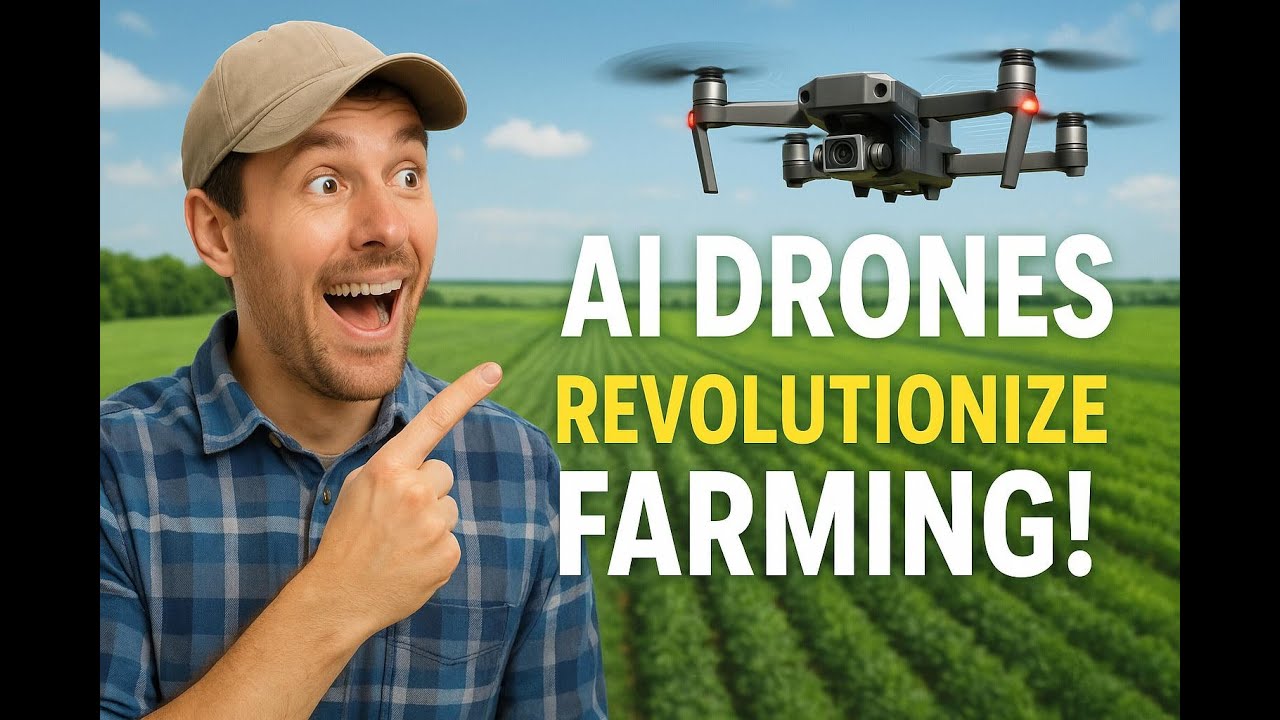
- 🛰 Precision farming: Satellite data, drone mapping, and AI modeling inform timely, data-driven interventions.
- 🪱 Soil carbon enhancement: Practices like cover cropping and organic amendments improve resilience against extreme rainfall and heat spells.
Circular economy approaches—turning residue and byproducts into valuable energy or soil amendments—advance the environmental and economic sustainability of sugarcane supply chains globally.
Comparative Table: Modern Sugarcane Farming Methods & Tools (2025 & Beyond)
| Farming Method/Tool | Purpose | Estimated Yield Increase (%) | Soil Health Impact (1-5) | Climate Resilience (1-5) | 2025 Readiness |
|---|---|---|---|---|---|
| Drone Monitoring | Pest, disease, and crop vigor monitoring | 7–12 | 4 | 4 | High |
| Smart Irrigation (Drip, ET-Scheduling) | Water optimization, moisture stress reduction | 15–20 | 5 | 5 | High |
| AI Soil Sensors | Soil nutrient, organic matter and moisture monitoring | 8–15 | 5 | 4 | Medium |
| Satellite Mapping (Farmonaut App/Platform) | Large-scale monitoring, input allocation, resource optimization | 10–18 | 4 | 5 | High |
| Certified Seed Planting | Promote even germination, reduce disease risk | 6–14 | 5 | 4 | High |
| Precision Fertilization (Split/AI) | Nutrient efficiency, minimize runoff/losses | 8–16 | 5 | 4 | High |
| Mechanical Harvesting | Reduce labor, improve timely harvest | 9–13 | 3 | 4 | High |
| Agroforestry Integration | Climate stabilization, mixed cropping | 6–10 | 5 | 5 | Medium |




Unlock the full potential of agriculture sugarcane supply chains with traceability and real-time monitoring—empower your farm or agribusiness with transparent, credible, and sustainable production data using Farmonaut’s Traceability Platform.
Farmonaut: Satellite Tech for Smarter Sugarcane Farming
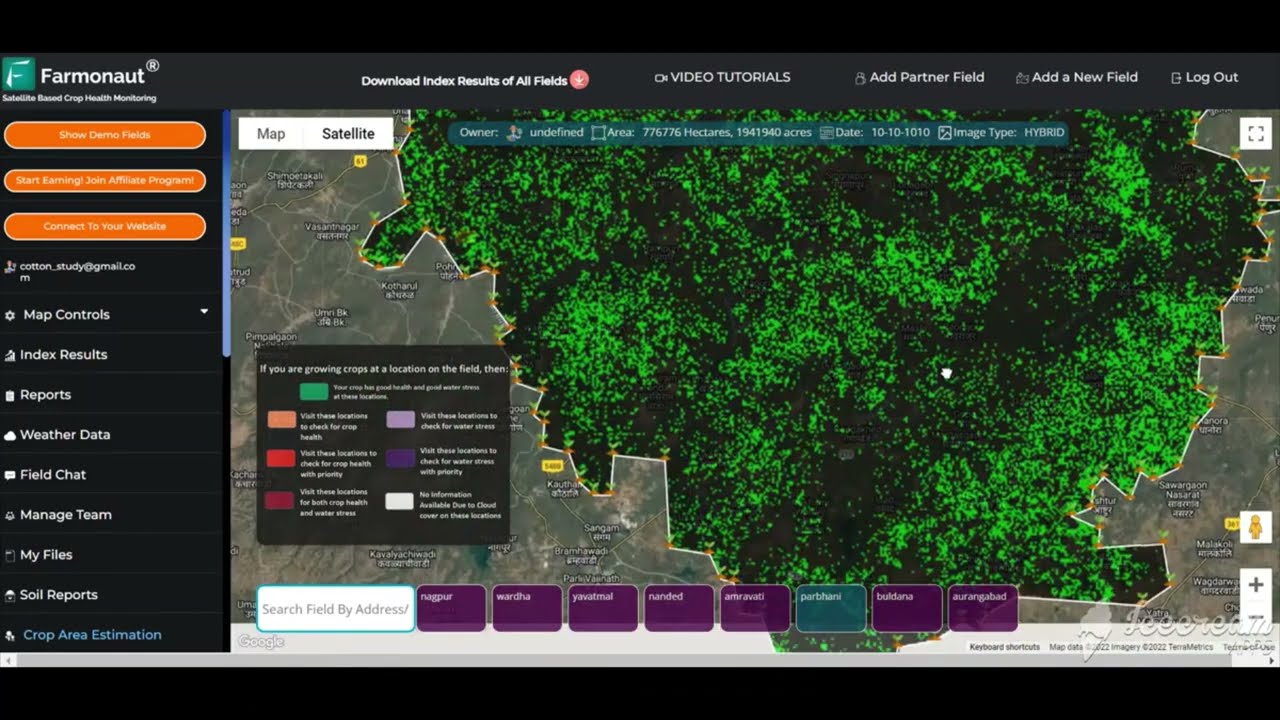
As a global, pioneering satellite technology solution provider, we at Farmonaut empower sugarcane farmers, agri-professionals, businesses, and governments with cutting-edge, AI-based monitoring, blockchain-driven traceability, and sustainability analytics. Our platforms—available on web, Android, and iOS—integrate real-time satellite data and field-level insights for every stage of sugarcane production.
- 📡 Field & plot health monitoring: NDVI (Normalized Difference Vegetation Index) maps show crop vigor, stress, and growth anomalies.
- 🌩 Resource & irrigation optimization: Real-time weather and moisture models improve input efficiency.
- 🗂 Blockchain-based traceability: Track every field’s journey for regulatory compliance and consumer trust.
- 🛠 Fleet and logistics management: Optimize movement of machinery and harvested cane.
- 🌎 Environmental impact tracking: Carbon/emission monitoring for supply chain responsibility.
Our user-friendly subscription model puts affordable, satellite-powered farm management, planning, and advisory tools into the hands of every sugarcane grower, from individual farmers to large estates and government-level strategists.
Multi-sectoral benefits include efficient farm management (see: Farmonaut’s Large Scale Farm Management App), resource and fleet management (Fleet Management Platform), and satellite-backed loan and insurance verification (Crop Loan and Insurance Solutions).
We are committed to supporting sustainable agriculture of sugarcane, reducing losses, promoting integrated management, and making climate-resilient, efficient farming universally accessible.
- ✔ Sustainable yield: Reliable, climate-smart output every season
- 📊 Input efficiency: Optimize fertilizer, water, and labor with data-led practices
- ⚠ Risk reduction: Early detection and response for pests, drought, and disease
- 🌱 Improved soil health: Practices and precision tools to boost microbial activity and carbon
- 🌍 Environmental responsibility: Traceable, low-impact sugar and bioenergy supply chains
FAQs: Modern Sugarcane Farming Methods for 2026
A: High-yield, climate-smart techniques include use of certified heat/drought-tolerant varieties, precision soil/ moisture monitoring, smart drip irrigation, split fertilizer application, integrated pest management, mechanical harvesting, and circular residue use.
A: They enable field-wide monitoring for crop vigor, pest, water, and soil health; automate input scheduling for maximum efficiency; aid in yield forecasting; and support compliance and traceability in supply chains.
A: Drought-smart varieties, moisture sensors tied to smart irrigation, precise organic matter management, and field layout solutions (like raised beds, windbreaks) all support farm resilience. Digital tools, including those offered by Farmonaut, are also instrumental.
A: Organic matter enhancement, cover cropping, integrated pest management, smart water use, and eliminating open field burning in favor of composting or bioenergy use (bagasse) all reduce environmental impact.
A: You can use Farmonaut’s apps and platform to monitor vegetation, moisture, and field health. For enterprise or large-scale uses, API access is also available for direct integration.
Summary: Toward Resilient, Profitable & Sustainable Sugarcane Fields
Modern sugarcane farming methods for 2026 stand on the pillars of technology, sustainable intensification, and data-driven management. With certified planting material, efficient irrigation systems, precision fertilization, mechanized harvesting, and carbon-smart residue management, fields yield more while reducing input waste and environmental risk. Integrating digital tools—like those from Farmonaut—not only boosts efficiency and resilience, but also enhances transparency, financing, and compliance across agriculture sugarcane supply chains.
The outlook for global sugarcane production is clear: adapt with innovation, manage with precision, and grow for sustainability—wherever you farm, whatever the climate.

 SFX
SFX BACF Africa
 Nivia
Nivia Doodlakine
 Exurbia Geospatial
 FieldZero
 Indico Company
 Kubota
 FFBS
FFBS Jontra
 Tucor
Tucor Hayleys Agriculture
