

Rice Farming 2026: Innovations & Challenges for Rice Farmers
Rice Farming in 2025: Innovations, Challenges, and Opportunities
“Precision agriculture in 2025 increased rice yields by up to 20%, revolutionizing food security for millions of farmers globally.”
Table of Contents
- 1. The Global Landscape: Rice Farming as a Staple Practice
- 2. Challenges Facing Rice Farmers in 2025 and Beyond
- 3. Transformative Trends in Rice Farming: Mechanization and Precision Tools
- 4. Breaking Down Modern, Sustainable Rice Farming Practices
- 5. Comparison Table of Key Rice Farming Innovations (2025) and Their Impact
- 6. Evolving Market Dynamics and New Opportunities
- 7. How We at Farmonaut Support Rice Innovation
- 8. Useful Farmonaut Product & Service Links
- 9. Rice Farming 2026 FAQ
The Global Landscape: Rice Farming as a Staple Practice
Rice farming remains a critical backbone of global food security, providing daily nourishment to over half the world’s population. From the vast paddies of Asia’s river deltas to smallholder plots in Africa and Latin America, rice forms the bedrock of diets and livelihoods across continents. The demand for rice crop continues to rise, particularly as Asia, Africa, and parts of Latin America experience population growth and urbanization.
Wet rice farming, often referred to as paddy rice farming, is characterized by the cultivation of rice in flooded fields. This traditional method helps suppress weeds and certain pests while ensuring a steady water supply to the crop. However, the system is highly water-intensive, making it vulnerable to climate change, shifting weather patterns, and mounting water scarcity.
As we move further into 2025 and 2026, the global dynamics of rice farming are being shaped by:
- The impacts of climate change on flooded fields and water resources.
- Growing technological adoption (mechanization, precision agriculture).
- Shifting market patterns and consumer demands.
- Efforts to increase environmental sustainability and profitability.

Challenges Facing Rice Farmers in 2025 and Beyond
Rice farmers face a complex set of challenges as the decade progresses. These issues are driven not only by climatic conditions but also by economic and social factors in the rural zones of Asia, Africa, and Latin America. Understanding the hurdles is essential to grasping why innovative practices are necessary.
-
Water Scarcity:
The wet rice farming system’s reliance on an ample water supply is becoming problematic as many regions experience water stress and erratic rainfall. Examples include declining river volumes in northeast India and recurring drought patterns in sub-Saharan Africa. -
Climate Change Impacts:
Increasing temperatures, unpredictable weather, and shifting growing conditions disrupt planting schedules and yields. -
Pest and Disease Pressure:
Pests and diseases thrive in flooded fields, leading to higher input costs and crop losses. -
High Input Costs:
Rising fertilizers and fuel prices weigh heavily on margins, making profitability harder for small and medium-scale farmers. -
Labor Shortages:
Migration to urban centers causes skilled labor shortages, forcing higher mechanization or higher labor costs. -
Market Volatility and Access:
Fluctuating market prices, export restrictions, and issues accessing stable markets create uncertainty for producers. -
Smallholder Challenges:
Small farmers often lack financial access, timely credit, crop insurance, or modern tools, trapping them in older, less profitable systems.

Transformative Trends in Rice Farming: Mechanization & Precision Tools
Technological innovations in the 2025 landscape are rapidly transforming rice farming. Mechanization and precision agriculture are no longer exclusive to large-scale operations in emerging economies. Thanks to lower farming tractor price points, advances in technology, and subsidies, small and medium farmers benefit as well.
Mechanization Eases Labor Constraints & Boosts Productivity
Automated tractors and harvesters, GPS-guided planting, and tailored wetland machinery are making inroads even in rural Asia and Africa. Mechanization enables:
- Reduced drudgery and labor dependency
- Timely farm operations for maximized rice crop yield
- Precision input management – from seed to fertilizer to water
Price competition, local manufacturing, and government subsidies are making advanced farming systems more accessible. For example, the average farming tractor price suitable for flooded paddy fields in India has decreased due to domestic manufacturing, allowing more rice farmers to mechanize harvesting and planting tasks.
“Adoption of new mechanization cut average rice harvesting time by nearly 40% compared to traditional methods in 2025.”
Automated systems are also reducing post-harvest losses and standardizing grain quality, which leads to better market prices.
Precision Agriculture: GPS, Drones, and Digital Tools
Precision agriculture deploys GPS-based equipment, drone imagery, sensors, satellite data, and data analytics to optimize input use and maximize yield. These trends are revolutionizing wet rice management in fields by:
- Enabling site-specific application of water, fertilizers, and pesticides
- Early detection of crop diseases and pest outbreaks
- Reducing input usage and environmental impacts
- Supporting data-driven decisions that increase overall productivity
Below, learn how precision technologies are changing rice farming by watching this insightful video:

Tools like drone spraying, satellite-based crop health monitoring, and digital irrigation scheduling empower farmers to adjust practices promptly and precisely, avoiding excessive use of chemicals or water.

Streamline your field operations and monitor crop health using Farmonaut Satellite Based Crop Health Monitoring on web or mobile app.



Further explore the cutting edge of satellite crop monitoring in rice fields with this video:

Economics of Mechanization: Understanding Farming Tractor Price and Accessibility
The calculation of farming tractor price in emerging regions now factors in:
- Subsidies provided by governments or NGOs
- Growth in local manufacturing to minimize import costs
- Financial innovations such as micro-leasing or pay-as-you-use models
These measures are making advanced mechanized solutions viable for an increasing number of small and medium rice farmers, particularly across Asia and Africa.
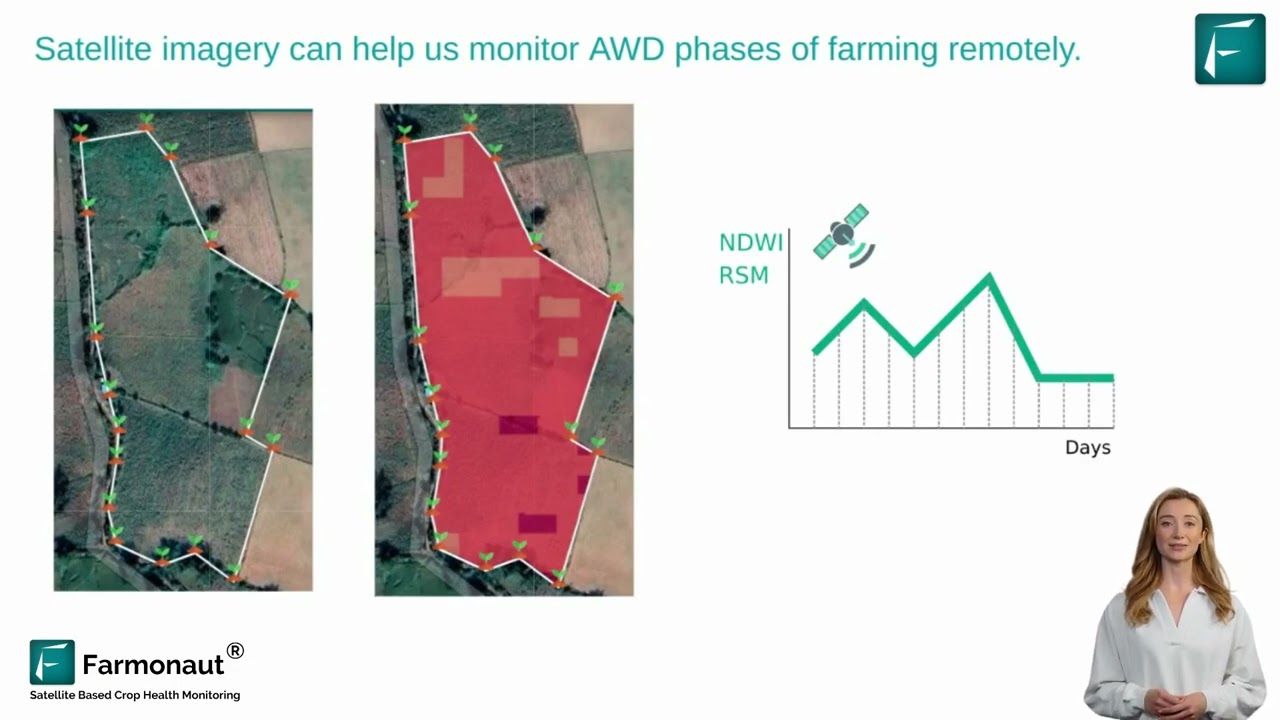
Interested in automating alternate wetting and drying phases for your fields?
See what’s next for agri-business in this market-changing video:

Breaking Down Modern, Sustainable Practices in Wet Rice Farming
The next wave in rice farming is driven by sustainability—essential for meeting environmental guidelines, market demands, and ensuring rural livelihoods long-term. Wet rice farming has traditionally been energy- and water-intensive, but modern practices are now reducing input usage while protecting yields.
Alternate Wetting and Drying (AWD) Irrigation Systems
One of the most impactful innovations is AWD (Alternate Wetting & Drying). This technique involves periodically draining paddy fields rather than keeping them continuously flooded. AWD can:
- Reduce water usage by up to 30% without loss of yield (& environmental stress).
- Lower methane emissions (major GHG in paddy systems).
- Improve oxygenation for plant roots.
Automated AWD sensors, sometimes monitored by satellite or IoT devices, help optimize irrigation cycles.
See AWD in action and its dramatic water savings in field operations:

Climate-Resilient and High-Yield Rice Varieties
Crop breeding in the last decade produced a suite of varieties that are:
- More resistant to drought, flooding, and shifting climatic patterns
- Better able to manage pests and diseases endemic to wet systems
- Enriched for micronutrients (e.g., zinc, iron), supporting food security and health
Scientific investment in modern breeding and gene editing (for instance, CRISPR) is producing strains that meet the evolving demands of markets in Asia, Africa, and Latin America.
Integrated Pest and Disease Management (IPM)
IPM approaches—blending biological controls, resistant varieties, and precision pesticide application—minimize chemical loads while:
- Suppressing pests without harming beneficial insects.
- Slowing resistance build-up.
- Meeting global food safety and export standards.
Learn about innovative organic approaches to disease management in rice:

Sustainable Fertilizer and Soil Management Strategies
Moving away from chemical dependency, rice farmers are adopting:
- Organic fertilizers and compost-based amendments
- Nitrogen-use efficient varieties
- Soil health monitoring and tailored nutrient management
The result: an environmental boost combined with compliance to high-value market standards, particularly important for export-oriented or specialty rice.
Interested in sustainable subsidy frameworks for traditional rice farming? Watch:

Reducing Methane Emissions from Paddy Cultivation
Paddy fields remain a significant source of methane emissions. Water management techniques (like AWD), intermittent draining, and cover cropping can curb greenhouse gas releases. With carbon footprinting and sustainability reporting gaining traction globally, accountability in emissions now influences access to premium markets and export licenses.
Explore Farmonaut’s Carbon Footprinting service — it leverages satellite technology to help monitor and reduce your rice farming carbon emissions, optimize input use, and comply with environmental regulations.
Fleet and Resource Management for Large-Scale Operations
For those who manage large rice paddies or operate multiple sites across rural Asia or Africa, Fleet Management Solutions help optimize machinery use and lower fuel consumption, reducing both environmental impact and operational cost.

Learn how game-changing AI drones contribute to sustainability and efficiency in modern rice farming:

Comparison Table of Key Rice Farming Innovations (2025) and Their Estimated Impact
To summarize the innovations transforming wet rice farming, refer to the table below for a high-level comparison of leading technologies, their effects on yield, cost, and environmental impact across Asia, Africa, and Latin America.
| Innovation/Technology | Description | Est. Yield Increase (%) | Est. Cost Reduction (%) | Environmental Impact | Potential Adoption Rate (%) |
|---|---|---|---|---|---|
| Autonomous Rice Planters & Harvesters | GPS-equipped, automated mean machines for precise planting & efficient harvesting. | 10–25 | 15–30 | Medium | 45–60 |
| AWD (Alternate Wetting & Drying) Irrigation | Sensor-guided, periodic drainage reduces water use and methane emissions. | 0–8 | 20–35 | High | 60–70 |
| Drone-Based Crop Monitoring | High-resolution imagery for early pest, disease, and water management. | 10–16 | 10–20 | Medium | 50–55 |
| Climate-Resilient Rice Varieties | Genetically improved for drought/flood resistance and higher nutrient value. | 8–18 | <5 | Medium | 70–75 |
| Blockchain Product Traceability | End-to-end tracking for authenticity, export readiness, and trust. | 0 | 5–10 | High | 20–30 |
| Satellite-Based Crop Health Monitoring | Remote analysis of crop vigor, soil moisture, and stress via satellite images. | 10–20 | 5–15 | High | 50–65 |
| Organic Fertilizer & IPM Adoption | Integrated approach mixing organic nutrients and targeted pest management. | 6–12 | 8–14 | High | 35–45 |
Evolving Market Dynamics and New Opportunities in Rice Farming
Rice market patterns are shifting as urbanization and global dietary preferences evolve. Rice farmers now encounter opportunities to diversify into aromatic, specialty, and nutritionally enhanced varieties. These can command premium prices and respond to emerging health-conscious consumer segments.
Market Access and Local Self-sufficiency
The experience of supply chain disruptions in recent years exposed vulnerabilities, spurring renewed investment in local rice production and infrastructure. Many nations now prioritize self-sufficiency goals, investing in:
- Modern irrigation and storage facilities
- Transport corridors from field to urban market
- Market information systems and transparent digital traceability
For trusted, blockchain-powered traceability—ensuring product authenticity for premium buyers—consider Farmonaut’s Product Traceability service for rice and other agri-commodities.
Financial Access: Loans, Insurance, and Satellite Verification
Farmers’ ability to invest in new technologies is often hampered by lack of access to credit and risk management tools.
With satellite-based crop verification, financial institutions can streamline their loan and insurance processes, reduce fraud, and better serve smallholders. Explore Farmonaut’s Crop Loan & Insurance solutions for a detailed look at how remote verification supports finance in rice cultivation.
Adaptation for Smallholders and Women Farmers
Smallholders and women-led farms are increasingly supported by inclusive innovations—from mobile advisory apps to cooperative mechanization hubs—that lower barriers for entry into modern, profitable rice production.
Rice Subsidies and Governmental Support
Subsidies for irrigation, seed, and equipment remain critical—yet governments are shifting to smarter, targeted frameworks that reward sustainability and precision rather than blanket input support. Watch how these policies are evolving:
Tech for Operational Efficiency in Large-Scale Farms
With operations covering hundreds or thousands of hectares, large paddy rice managers benefit from integrated large scale farm management software.
Explore Farmonaut’s large-scale management system designed for paddy and mixed-crop holdings.

How We at Farmonaut Support Rice Innovation: Satellite, AI & Blockchain Solutions
At Farmonaut, our mission is to empower rice farmers across Asia, Africa, Latin America, and beyond by making advanced satellite and AI-driven solutions affordable and accessible. We believe transformative agriculture is only possible if everyone—not just large companies—can access leading-edge insights at a reasonable cost.
-
Satellite Monitoring for Wet Rice Fields:
Using multispectral satellite images, we track vegetation health (like NDVI), identify disease outbreaks, and monitor soil and moisture conditions across massive paddy areas. -
AI & Jeevn-based Advisory for Decision Support:
Our Jeevn AI advisory system delivers tailored recommendations, weather forecasts, and action plans. It analyzes your crop’s satellite history to suggest water scheduling, fertilizer optimization, and pest/disease interventions. -
Blockchain-Enabled Traceability:
Trace your rice from field to market, ensure compliance, and build trust with buyers using our secure, blockchain traceability tools. -
Environmental Impact Monitoring and Carbon Footprinting:
Monitor and report your environmental impact—including methane emissions for paddy rice—using real satellite data, essential for sustainability or market accreditation. -
Scalable Tools for All Users:
Whether you’re a smallholder, cooperative, or commercial grower, manage everything from your smartphone, via API, or on the web.
Our subscription-based platform can be accessed from anywhere, at any scale, with:
To integrate Farmonaut’s data into your own systems, or to power your own apps, use our API and view our API Docs.
For government or enterprise clients—leverage our scalable technology for oversight of rice production, rural development, or carbon tracking at scale.
Useful Farmonaut Product & Service Links for Rice Farmers
-
Satellite Crop Health Monitoring: Access real-time field imagery and advisories via the Farmonaut App.
Try it online or on mobile. -
Carbon Footprinting for Sustainable Operations:
Monitor and minimize rice farming emissions using satellite data. -
Blockchain-Based Traceability:
Track rice from paddy to market for quality-conscious buyers. -
Fleet & Resource Management:
Efficiently operate tractors and harvesters on large or multi-location paddy fields. -
Crop Loan & Insurance Satellite Verification:
Speed up financing and insurance claims with field-verified satellite reports. -
API Integration for Developers:
Use our API for real-time satellite data.
Read the Developer Docs. -
Large Scale Farm Management Software:
Centralize management for enterprise rice farms.
Rice Farming 2026 FAQ
What is the most significant trend in rice farming for 2026?
The most impactful trend is the widespread adoption of mechanization and precision agriculture technologies, enabling reductions in water use, higher productivity, and improved resilience to climatic variability.
How does Alternate Wetting and Drying (AWD) irrigation benefit rice farmers?
AWD irrigation reduces water usage by up to 30% without impacting yield, while lowering methane emissions and input costs, making rice farming more sustainable and profitable.
Are new rice varieties necessary for modern wet rice farming?
Yes, climate-resilient and high-yield rice varieties are essential for adapting to unpredictable weather and ensuring food security, particularly in regions facing drought, flooding, or new pest pressures.
Can smallholders benefit from precision agriculture?
Absolutely. GPS-enabled tools, satellite crop health monitoring, and affordable mechanization are now tailored for small and medium rice farmers, helping them increase yield while reducing labor and input costs.
What is the role of blockchain in rice farming?
Blockchain enables full traceability from paddy to plate, ensuring that rice meets quality, safety, and sustainability standards required by premium and export markets.
How can I get started with Farmonaut’s technology?
You can use the Farmonaut App for satellite crop monitoring, soil and water advisory, or integrate with your own systems via our API and developer documentation.
Conclusion: The Future of Rice Farming — Navigating Innovation & Challenge
Rice farming stands at a historic crossroads in 2026. The confluence of mechanization, precision agriculture, and sustainable practices is rapidly reshaping the way rice is cultivated worldwide. Facing mounting challenges from climate change, water scarcity, and fluctuating markets, farmers have begun to embrace innovations that were once accessible only to large operators.
The global adoption of AWD, drone-based monitoring, and climate-smart varieties is not only boosting yields but making rice farming more environmentally stable and economically viable. With the support of affordable, scalable satellite-driven services like those we offer at Farmonaut, the path to productive, profitable, and sustainable rice production is open to everyone.
As rice remains a staple food for over half the world, our collective efforts will ensure that wet rice farming—from Asia’s deltas to the valleys of Latin America and uplands of Africa—can continue thriving for generations, meeting the needs of a growing, urbanizing, and health-conscious population.

 ITC
ITC Dirks Bros Farms
 Red August Group
 Farm Inc
 WeMe Global
 Agrotoken
 Blue BearX
 Insignito
 Croptimum
 DnCubed
 Field Capacity
 Indosistim Teknologi
 Liquify Digital
 CU Foods
 BeyondTech Global
 Rouge VC
 AgroGreen Dynamics
