

NDVI Scale Explained: 7 Powerful Ways to Boost Crop Health
“NDVI values range from -1 to +1, with healthy crops typically scoring between 0.2 and 0.8.”
- Understanding NDVI: The Basics Behind Vegetation Vigor
- NDVI Scale: Interpreting Values & Vegetation Health
- NDVI Value Interpretation Table
- NDVI in Agriculture: 7 Powerful Ways to Boost Crop Health
- How Farmonaut Empowers Precision Agriculture
- NDVI Applications in Forestry
- Limitations of NDVI & Advanced Vegetation Indices
- Farmonaut Product Solutions for Modern Agriculture
- Expert Videos: Satellite Data Use for Farming
- Frequently Asked Questions
- Farmonaut Subscription Options
- Conclusion: NDVI’s Lasting Impact on Sustainable Farming
In today’s data-driven world, remote sensing in agriculture stands at the forefront of innovation. Among the most transformative technologies is the Normalized Difference Vegetation Index (NDVI), a pivotal metric that enables stakeholders to monitor, assess, and enhance crop health and productivity like never before. By analyzing NDVI-derived values from satellite imagery for farmers, we gain actionable insights to detect plant stress, predict yield, optimize resource management, and promote sustainable farming practices globally.
This comprehensive guide explains exactly how NDVI works, decodes its value ranges, highlights seven powerful applications in precision agriculture techniques, and shows how NDVI-driven data is revolutionizing both farming and forestry. Whether you’re a farmer, agribusiness, policy-maker, or environmental steward, understanding NDVI offers you a path to informed decision-making and greater sustainability.
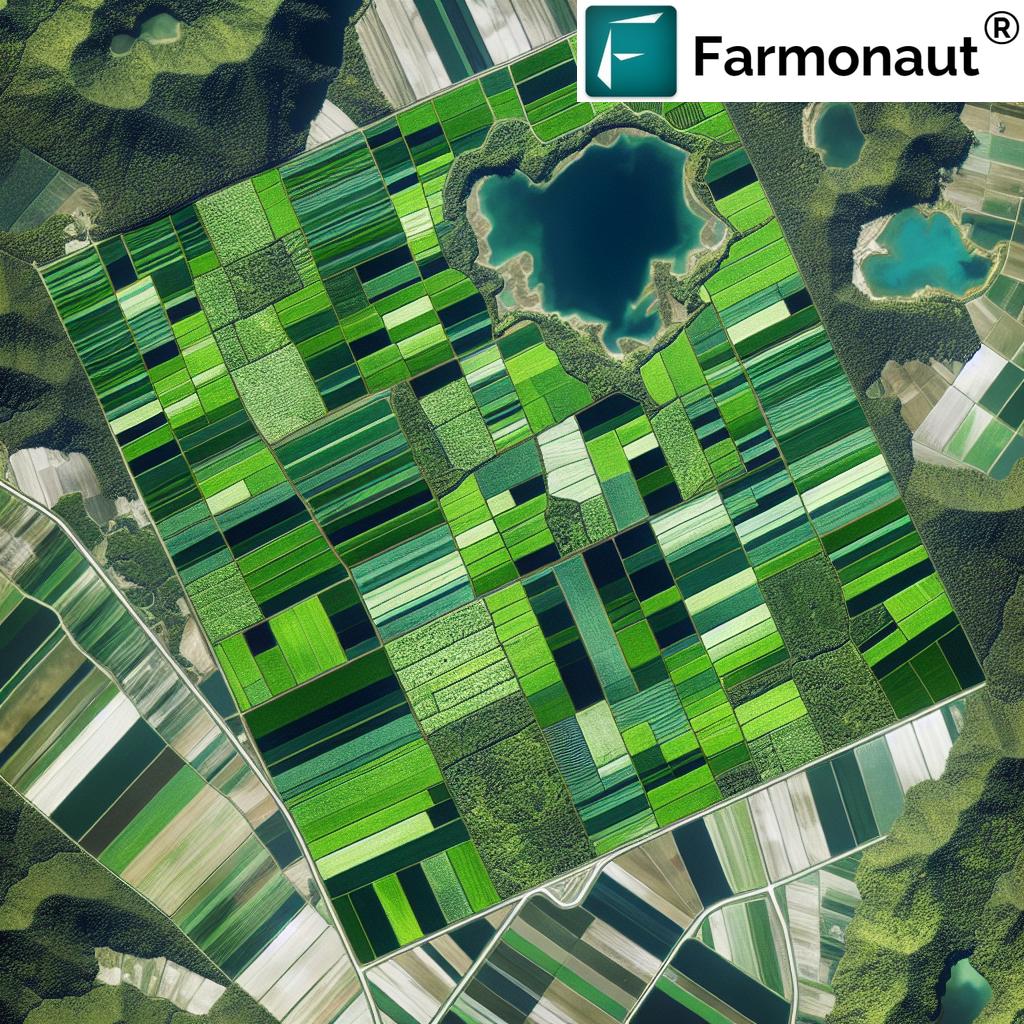
Understanding NDVI: The Basics Behind Vegetation Vigor
NDVI (Normalized Difference Vegetation Index) is the cornerstone of vegetation health monitoring thanks to its ability to convert raw remote sensing data into clear indicators of plant health. NDVI essentially quantifies the biological vigor of crops, forests, and ecosystems by measuring the reflected light from vegetation in the visible (red) and near-infrared (NIR) spectra.
How Does NDVI Work?
Plants reflect and absorb different wavelengths of light based on their health and structure:
- The red portion of the spectrum is absorbed by chlorophyll during photosynthesis.
- The near-infrared (NIR) portion is reflected by the internal structure of healthy leaves.
By comparing the difference in reflectance between NIR and red light, we obtain the NDVI value:
NDVI = (NIR – Red) / (NIR + Red)Where:
NIR = Reflectance in the near-infrared band
Red = Reflectance in the red band
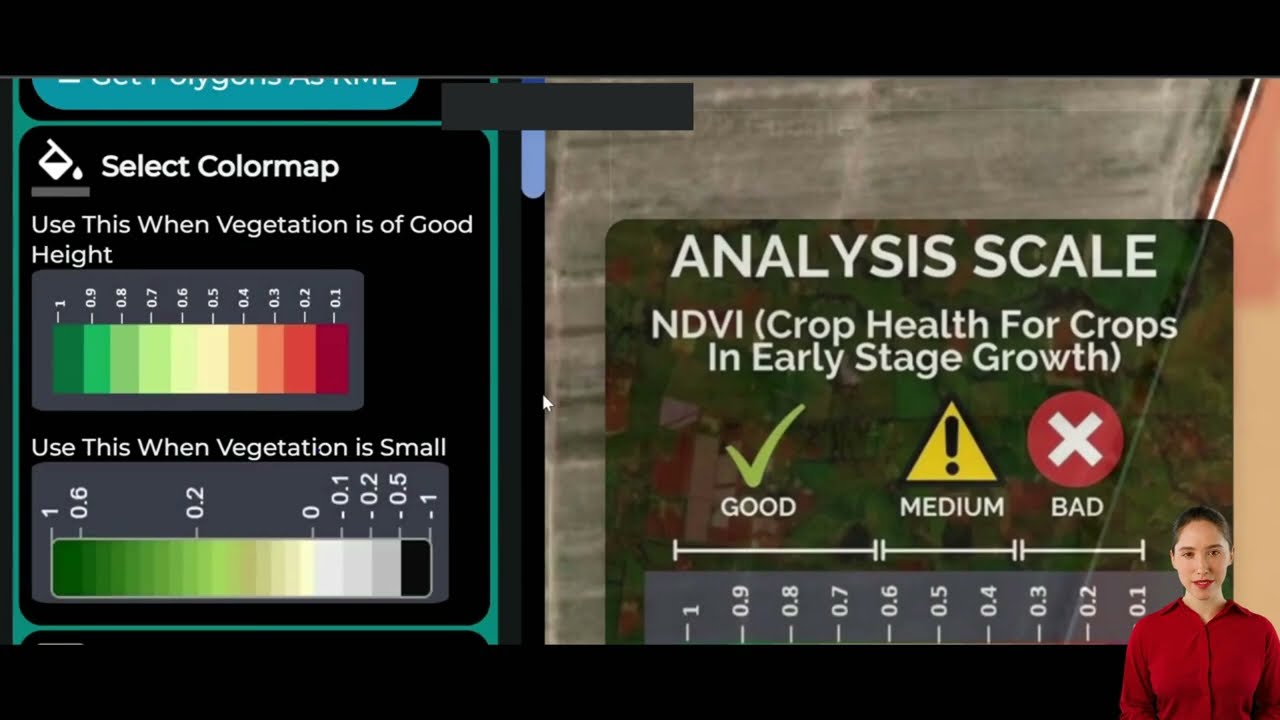
The resulting numerical NDVI value usually ranges from -1 to +1, instantly revealing much about plant or ecosystem health.
What Do NDVI Values Indicate?
- Negative NDVI values (-1 to 0): Indicate water bodies, clouds, snow, or non-vegetative surfaces.
- Low positive NDVI values (0.2-0.5): Signify sparse vegetation such as grasslands, shrubs, or stressed plants.
- High positive NDVI values (0.6-1.0): Representative of dense, healthy vegetation including forests and thriving crop fields.
This simple, yet powerful metric is derived from satellites and airborne sensors, captured regularly across vast landscapes, providing invaluable data to stakeholders and supporting informed decisions in both agriculture and forestry.
“Remote sensing can monitor crop health across fields up to 100 times faster than traditional ground surveys.”
NDVI Scale: Interpreting Values & Vegetation Health
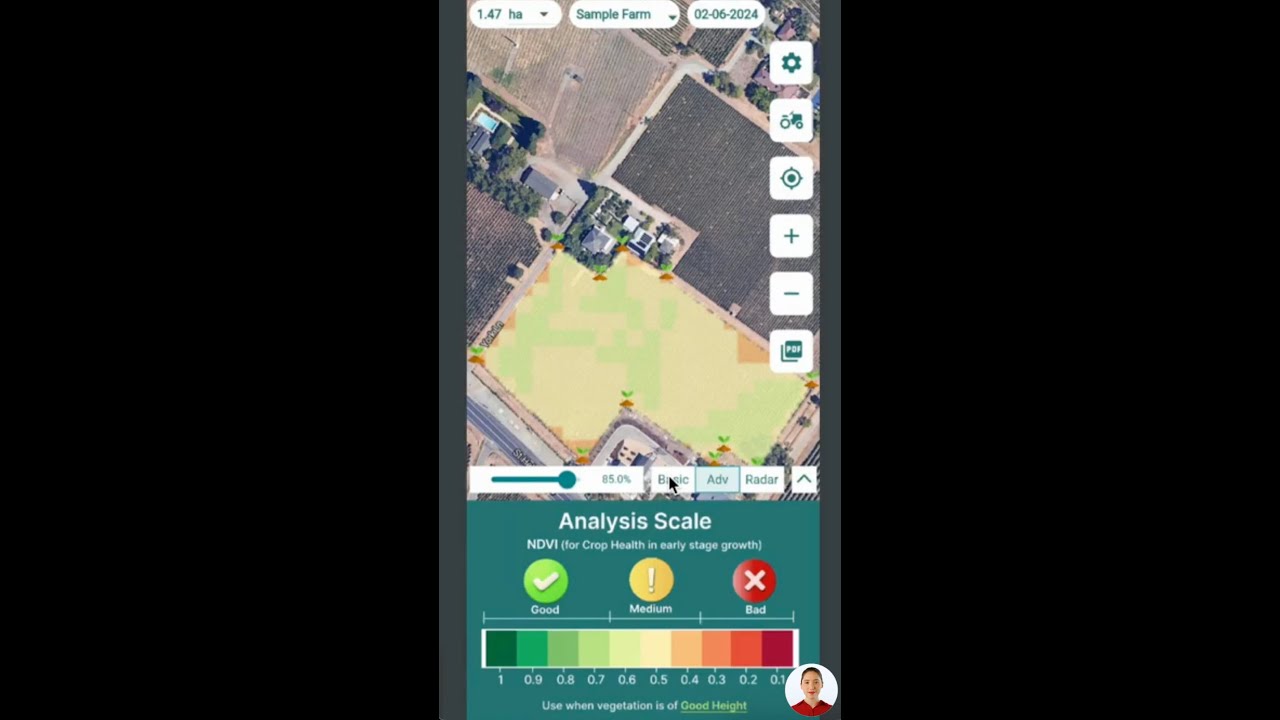
The NDVI scale enables us to translate remote sensing data into actionable insights about crop and ecosystem health. Understanding NDVI value ranges is critical for determining early stress in plants, identifying areas needing intervention, and optimizing farm management practices.
- Negative NDVI Values: (-1 to 0) – Typically indicate water bodies, snow, clouds, or non-vegetative surfaces (reflects little to no NIR).
- Low NDVI Values: (0.1–0.2) – Bare soil or extremely sparse vegetation.
- Mid NDVI Values: (0.2–0.5) – Sparse vegetation or grasslands/areas under environmental stress (disease, drought, nutrient deficiency).
- High NDVI Values: (0.6–0.9) – Dense, healthy vegetation (rapid growth, forests, flourishing crops).
Satellite imagery for farmers leverages these NDVI readings so that interventions can be targeted toward specific areas, reducing waste, minimizing input costs, and enhancing overall farm productivity.

NDVI Value Interpretation Table
| NDVI Value Range | Vegetation Health Status | Interpretation | Recommended Action |
|---|---|---|---|
| -1 to 0.1 | No Vegetation | Water bodies, snow, clouds, or bare soil; little or no plant cover. | No crop action needed; monitor for flooding or erosion risks. |
| 0.1 to 0.2 | Very Sparse | Very little vegetation; may indicate planting failure or extreme stress. | Conduct field scouting; reassess sowing and soil conditions. |
| 0.2 to 0.3 | Poor | Sparse crop, early signs of stress or low-density stand. | Confirm emergence, review irrigation, check for pests/disease. |
| 0.3 to 0.5 | Moderate | Establishing growth; some environmental or nutrient stress may exist. | Targeted nutrient, water, and pest management interventions. |
| 0.5 to 0.7 | Good | Healthy, established crops; limited stress. | Maintain crop monitoring and routine management. |
| 0.7 to 0.9 | High / Excellent | Dense, vigorous vegetation; optimal photosynthesis. | Monitor for late-season disease or excess growth. |
NDVI in Agriculture: 7 Powerful Ways to Boost Crop Health
With remote sensing in agriculture, NDVI-based monitoring opens up a world of possibilities for modern farmers, agribusinesses, and agricultural professionals. Let’s dive into the top seven actionable uses of NDVI to enhance productivity, sustainability, and decision-making in crop and farm management.
1. Regular Crop Health Monitoring and Early Stress Detection
NDVI assessments are conducted periodically throughout the crop growth cycle. By tracking NDVI values over time and comparing current data to previous seasons or expected growth patterns, farmers can detect early signs of stress, disease, or pest infestations long before visible symptoms occur.
- Enables targeted interventions: Only areas with low NDVI require investigation, which reduces blanket treatments and minimizes costs.
- Prevents yield losses: Immediate action prevents stress from spreading across the field, limiting crop losses and improving outcomes.
- Supports sustainability: By reducing unnecessary pesticide/fertilizer use, you help preserve local ecosystems.
Platforms like Farmonaut provide real-time NDVI crop health mapping on mobile and web, empowering farmers to act fast.
2. Crop Yield Prediction Using NDVI Patterns
Consistent NDVI monitoring through the growing season is one of the most reliable proxies for estimating potential crop yields. High and sustained NDVI values signal vigorous crop biomass accumulation, which directly correlates with yield.
- Better planning: Data-driven crop yield prediction helps guide harvest scheduling, market planning, and resource allocation.
- Early warnings: Falling NDVI indicates developing stress that, if addressed promptly, can help recover yields.
For advanced large-scale yield estimation across regions, governments and cooperatives can benefit from Farmonaut’s Agro-Admin Solution.
3. Irrigation Management with NDVI
Irrigation management is one of the highest-cost and most critical decisions for any farmer. NDVI data highlights areas of varying water availability and plant water stress, guiding farmers to optimize irrigation practices for the best crop outcome.
- Prevents over- or under-watering: Targeted irrigation reduces water waste, lowers energy bills, and improves plant health.
- Saves water resources: Essential for regions facing increasing drought and water scarcity.
- Supports sustainability: By matching irrigation to site-specific crop needs, both productivity and resource use are optimized.
Farmonaut lets users overlay historical and live NDVI with soil moisture data for the most effective irrigation planning, right from their phone or browser.



4. Precision Fertilizer Application Guided by NDVI
Uneven crop growth is often due to nutrient deficiencies in specific field areas. NDVI mapping precisely pinpoints spots with lower NDVI where crops need intervention:
- Apply fertilizer only where needed: Saves money, reduces environmental runoff, and strengthens nutrient-use efficiency.
- Prevents overfertilization: Healthy (high-NDVI) areas are left untouched, protecting the ecosystem and ensuring compliance with environmental regulations.
Farmonaut’s real-time NDVI, together with AI-based advisory, gives optimal recommendations for every field section.
5. Disease Detection in Crops & Early Pest Infestation Monitoring
NDVI is exceptionally sensitive to visible and invisible plant stress caused by pests or disease. Robust disease detection in crops is made possible by analyzing NDVI patterns over time:
- Pinpoint hot spots: Maps of declining NDVI highlight where pest scouting and fungicide application is urgently needed.
- Track intervention effectiveness: By monitoring NDVI after treatment, you can confirm recovery or take additional steps.
- Reduce crop loss: Early warning and intervention (when NDVI first drops) is essential for minimizing damage.
See how precision agriculture techniques and NDVI combine for robust crop protection with satellite-based crop verification for insurance.
6. Planning Targeted Interventions and Variable Rate Input Application
Rather than treating whole fields uniformly, NDVI-based zone mapping enables various field management strategies:
- Variable-rate seeding or fertilizing according to specific NDVI zones for higher efficiency
- Spot spraying for weeds or pests; reduces chemical and fuel use
- Saves time, money, and environmental impact
Remote sensing in agriculture makes these precision actions easy to implement—even for smallholders—when combined with GPS-enabled equipment and NDVI data providers like Farmonaut.
7. Crop Growth Stage Tracking and Seasonality Analysis
NDVI curves help farmers and agronomists monitor crop development from planting to harvest. These curves can be compared year-on-year, field-by-field, or against crop models to:
- Measure rates of emergence, canopy closure, peak biomass, and senescence
- Diagnose growth lag due to cold, drought, or soil sub-optimalities
- Forecast harvest time and yield more accurately
This also aids governments in region-wide crop area and yield estimation.
Learn more about Farmonaut’s Satellite Imagery API and the Developer Documentation for integrating this analysis into third-party systems.
How Farmonaut Empowers Precision Agriculture with NDVI
Farmonaut is a leading agricultural technology solutions provider that helps every stakeholder in the ecosystem—farmers, agribusinesses, governments, NGOs, and researchers—harness the full power of NDVI and advanced remote sensing technologies.
Our Key Technologies and Benefits:
- Satellite-Based Crop Health Monitoring: Receive real-time, high-frequency NDVI maps, vegetation health status, soil moisture, and other vital indices—right from your phone, desktop, or API integration.
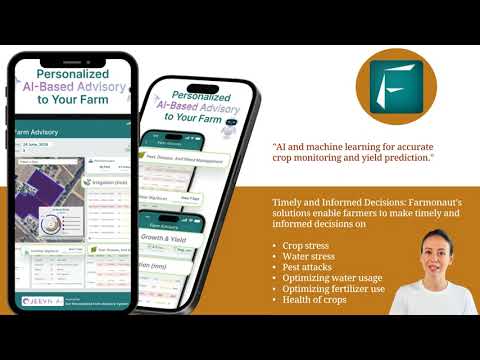
- AI-Based Jeevn Advisory: Our platform delivers real-time, data-driven advice on irrigation management, nutrient optimization, and pest/disease alerts.
- Blockchain Traceability: Create transparent, fraud-resistant food and fiber supply chains with Product Traceability Solutions.
- Carbon Footprinting and Sustainability: Monitor and reduce your farm or agribusiness’s carbon emissions with Farmonaut’s carbon footprint tracking tool.
- Fleet and Large-Scale Resource Management: Monitor fleets and plan region-wide field operations using our fleet management solution and Agro-Admin App.
Our modular subscription options mean you can scale Farmonaut’s solutions as your operation grows—from a smallholder plot to large-scale regional management.
NDVI Applications in Forestry
Beyond crops, NDVI is indispensable in forestry for sustainable management and ecosystem vitality. Top applications include:
Forest Health Assessment Using NDVI
Foresters utilize NDVI to monitor forest health, quickly detecting disease outbreaks, pest infestations, storm damage, or other environmental influences. Early detection enables quick interventions, supports biodiversity, and helps prevent forest decline.
Estimating Forest Biomass and Carbon Sequestration
The dense, high NDVI of mature forests correlates to greater biomass and potential for carbon sequestration. Sustainable forestry and environmental management efforts rely on these estimates for carbon accounting and climate change policies.
Fire Risk Assessment Using NDVI
Dry, stressed vegetation is reflected in dropping NDVI values, indicating increased fire risk. This information is critical for enabling proactive fire management strategies, resource prepositioning, and damage mitigation.
Agroforestry professionals and foresters can use Farmonaut’s crop plantation & forest advisory to unlock deeper, actionable insights.
Limitations of NDVI & Advanced Vegetation Indices
While NDVI is a game-changer, it’s important to acknowledge its limitations so that decision-makers can deploy it wisely and mitigate potential inaccuracies:
- Saturation in Dense Vegetation: In tropical forests or very lush crops, NDVI values can max out or “saturate,” making it hard to see differences above a certain green canopy density.
- Soil Background Influence: For crops just emerging or with wide row spacing, soil reflection can affect the NDVI reading, potentially leading to misinterpretation of plant health.
- Atmospheric Interference: Clouds, haze, or changing sunlight angles can alter the apparent reflectance, impacting the accuracy of NDVI data.
- Temporal Limitations: Overcast or rapid weather shifts can limit image availability or cause artefacts in the data.
Advancements and Alternatives: NDVI versus Other Vegetation Indices
To further improve accuracy, researchers and technology providers have developed alternative or complementary indices—a vital aspect of vegetation indices comparison:
- Enhanced Vegetation Index (EVI): Provides better sensitivity to high biomass regions, and corrects for some atmospheric influences and soil background.
- Soil-Adjusted Vegetation Index (SAVI): Tailored for sparse vegetation areas; accounts for the influence of bare soil on reflectance readings.
- Atmospherically Resistant Vegetation Index (ARVI): Minimizes atmospheric distortions, offering improved sensitivity in changing weather conditions.
NDVI remains a preferred, quick, and scalable metric, but these advanced indices can make a meaningful difference, especially in complex or challenging environments.
Farmonaut’s analytics include NDVI and other major indices for complete clarity in vegetation health monitoring.
Farmonaut Product Solutions for Modern Agriculture
Whether your goal is traceability, carbon tracking, resource management or region-wide yield estimation, Farmonaut delivers scalable digital solutions for every stakeholder:
- Carbon Footprinting for Agribusinesses – Track and optimize your carbon emissions and environmental impact in real-time.
- Blockchain-Based Product Traceability – Ensure transparent, secure supply chains with end-to-end tracking.
- Satellite Verification for Crop Loans & Insurance – Lower fraud, increase eligibility, and gain peace of mind for both farmers and lenders.
- Fleet & Resource Management Tools – Reduce operational costs, optimize machinery deployments for large properties.
- Agro-Admin Platform for Administrators – Oversee large-scale or multi-farm operations with ease, utilizing all available NDVI & remote sensing technology.
- Crop Plantation & Forest Advisory – Actionable, AI-powered insights for crop management and forestry professionals.
Expert Videos: Satellite Data Use for Farming
Frequently Asked Questions (FAQ)
What is NDVI, and how does it help farmers?
NDVI (Normalized Difference Vegetation Index) is a value calculated from satellite or drone imagery that assesses vegetation health by measuring the difference between near-infrared and red light reflectance. For farmers, NDVI provides early detection of crop stress, disease, and pest infestations, enabling precise interventions and better resource management.
Is NDVI useful for small farms, or only for large agribusinesses?
NDVI is valuable for farms of all sizes. Platforms like Farmonaut democratize access to satellite imagery and NDVI analytics for smallholders and large enterprises alike, enhancing crop health monitoring and informed decision-making for every farmer.
Can NDVI data be integrated into existing farm management platforms?
Yes. Farmonaut offers API and developer documentation that makes it easy to integrate NDVI and related vegetation indices into any farm management system or agritech app.
How frequently can NDVI data be updated?
With modern satellites and Farmonaut’s solutions, NDVI data can be updated as frequently as every 2-5 days, depending on imagery availability and atmospheric conditions. This allows for near real-time crop monitoring throughout the growing season.
Are there alternatives to NDVI for vegetation health monitoring?
Yes, such as EVI (Enhanced Vegetation Index), SAVI (Soil-Adjusted Vegetation Index), and ARVI (Atmospherically Resistant Vegetation Index). These indices offer improvements in specific scenarios, like areas with dense vegetation or challenging atmospheric conditions.
Can NDVI distinguish between different types of stress (nutrient, water, disease)?
NDVI primarily indicates that a plant is under stress but does not specify the exact cause. Ground truthing and further analytics (like correlation with weather, soil or pest data) are needed to identify the precise stress agent.
How secure and transparent is my farm’s data with Farmonaut?
Farmonaut leverages blockchain technology for traceability, ensuring transparency, security, and trust for all users and stakeholders in the data lifecycle.
Farmonaut Subscription Options
Farmonaut’s subscription plans are designed for flexibility, scalability, and affordability for farmers, agribusinesses, cooperatives, and government bodies worldwide.
Conclusion: NDVI’s Lasting Impact on Sustainable Farming
The NDVI scale has revolutionized vegetation health monitoring and precision agriculture techniques worldwide. From empowering farmers to make informed decisions and boosting crop yield prediction, to protecting forests and supporting food security, NDVI’s legacy continues to grow through digital innovation and data-driven insight.
While no technology is without limitation, evolving remote sensing platforms and advanced indices like EVI, SAVI, and ARVI are pushing the boundaries of what’s possible in modern agriculture and forestry. By embracing these tools and partnering with platforms such as Farmonaut, every stakeholder—from individual farmers to governments—can unlock new levels of productivity, sustainability, and profitability.
Explore your own NDVI-driven journey with Farmonaut’s range of digital solutions, available for web, iOS, Android, or API. Reach new heights of yield, efficiency, and environmental stewardship—one informed decision at a time.
For more resources, NDVI analytics, or to start your own farm’s digital transformation, visit our official website.

 Coromandel International
 Hayleys Agriculture
 Linx Agritech
 Adinet
 Save Your Soils
 GalaxEye Space
 Grandstream Algérie
 XOS Realty
 Geospatial Lab Africa
 Agro La Gándara
 HIPSAC
 ZOL Zimbabwe
 Juligerm
 AdBio
AdBio MISE Maroc
 NWNS
NWNS Red August Group
 Farm Inc
 WeMe Global
