

Agriculture Emissions UK: Cut Farming Greenhouse Gas
“UK agriculture contributes about 10% of the nation’s total greenhouse gas emissions annually.”
Introduction to Agriculture Emissions in the UK
The United Kingdom has set an ambitious goal: reach net zero greenhouse gas emissions by 2050. Within this commitment, agriculture emissions UK remain a significant contributor—accounting for approximately 10-12% of the nation’s total greenhouse gas emissions, based on recent assessments. While often overshadowed by the energy and transport sectors, agriculture’s persistent emissions present both a challenge and an opportunity in the context of climate change.
With growing concerns over the climate emergency, the drive to reduce farming emissions is not only about carbon accounting, but also about ensuring food security, supporting the rural economy, and protecting the environment for current and future generations. Activities such as corn farming, livestock management, fertilizer application, and forestry management contribute directly and indirectly to the emissions profile of the sector.
The urgent priority is clear: by 2025 and beyond, UK farmers, policymakers, and the sector as a whole must rethink emissions, adopt sustainable practices, and leverage tools—like satellite-driven analytics—to cut greenhouse gases while maintaining productivity.

Understanding Farming Greenhouse Gas Emissions in the UK
Farming greenhouse gas emissions are primarily composed of three gases: methane (CH4), nitrous oxide (N2O), and carbon dioxide (CO2). Each has distinct sources and global warming potential:
- Methane (CH4): Largely a byproduct of enteric fermentation in ruminant animals (most notably cattle and sheep, which dominate UK livestock farming), and from manure management.
- Nitrous Oxide (N2O): Arises mainly from soil management, particularly the application of synthetic and organic fertilizers and manure.
- Carbon Dioxide (CO2): Emitted from fossil fuel use on farms (e.g., machinery, heating greenhouses), and from soil carbon loss due to intensive cultivation.
The combination of these gases shapes the UK’s agricultural emissions profile. Disentangling their sources and impacts is crucial for targeted reduction strategies. Scientific consensus holds that mitigating methane and nitrous oxide emissions can have an outsized impact on short-to-medium-term climate change because they are far more potent than CO2 over 20- and 100-year periods.
Agriculture Emissions UK: Key Sources and Sector Insight
In the context of agriculture emissions UK, several sub-sectors contribute disproportionately to total emissions:
- Livestock: Responsible for a significant share of agricultural methane, especially from cattle (dairy and beef) and sheep.
- Corn Farming Emissions: Due to increasing demand for livestock feed and bioenergy, corn cultivation contributes notably through fertilizer use, soil disturbance, and fuel consumption during planting and harvesting.
- Forestry Management: Managed woodlands operated by the UK Forestry Commission create carbon sinks, offsetting emissions and contributing to biodiversity and climate resilience.
Let’s breakdown these main sources:
- Livestock & Manure Management: The UK’s large cattle and sheep populations produce substantial methane, both via enteric fermentation and manure handling.
- Fertilizer Application: Both synthetic and organic fertilizers contribute to high nitrous oxide emissions, given the emission potential (N2O has a GWP of 298x CO2 over 100 years).
- Corn & Arable Crop Farming: Corn farming emissions contribute through fertilizer inputs, tillage, and fossil fuel use.
Trivia:
“Sustainable corn farming can reduce greenhouse gas emissions by up to 30% compared to conventional methods.”
- Forestry: While not a net emitter, effective management by the UK Forestry Commission helps stitch together agricultural mitigation efforts through sequestration.
Corn Farming Emissions: Impacts and Opportunities
Although corn farming is less extensive in the UK than in large agricultural countries like the US, its role is growing. Factors driving this growth include demand for livestock feed, diversification of arable practices, and the bioenergy sector’s expansion.
Corn farming emissions flow from several sources:
- Nitrogen-based Fertilizer Application: Direct N2O emissions, as well as indirect losses via nitrate leaching and ammonia volatilization.
- Soil Disturbance: Ploughing and tillage release soil-bound CO2 and may disrupt soil carbon stocks.
- Fuel Consumption: Use of fossil fuels for planting, crop protection, irrigation, and harvesting.
- Crop Residue Management: Inappropriate management (e.g., burning) releases additional gases.
These factors make improved nutrient management and innovative cultivation techniques absolutely critical for mitigation. As R&D accelerates towards 2025, opportunities abound to cut corn farming emissions by shifting towards precision agriculture, better fertilizer technologies, and integrating sustainable cover crops and rotations.

Comparative Emissions Summary Table
| Activity/Source | Estimated Annual Emissions (MtCO2e) |
Key Emission Drivers | Potential Reduction Strategies |
|---|---|---|---|
| Livestock (Cattle & Sheep) | ~23.5 | Methane (enteric fermentation), manure management | Diet modification, anaerobic digestion, improved manure management, rotational grazing |
| Corn Farming | ~1.5 | Fertilizer use, N2O emissions, soil disturbance, fossil fuel for machinery | Precision fertilization, cover crops, reduced tillage, slow-release fertilizers |
| Other Arable Crops | ~5.0 | Fertilizer application, soil carbon loss, energy use | Integrated crop rotation, optimized fertilizer timing, soil cover, minimum till |
| Agricultural Fossil Fuel Use | ~2.0 | Farm vehicles, production/processing equipment | Electric tractors, renewable energy adoption, efficiency upgrades |
| Forestry Management (UK Forestry Commission) |
Net -5.0 (sink) | Forest growth and management, carbon sequestration | Afforestation, improved forest management, agroforestry |
Strategies to Reduce Farming Emissions by 2025
Core Practices for Agriculture Emissions UK Reduction
To reduce farming emissions and meet tightening targets for 2025, the UK is actively deploying innovative and evidence-based strategies. These practices span fertilizer optimization, emission capture, energy transition, and carbon sequestration through forestry and agroforestry. Let’s explore each in detail:
-
Improved Nutrient Management
- Optimizing fertilizer application with precision agriculture technologies—such as GPS-guided spreaders, soil nutrient mapping, and drone-based monitoring—can minimize excess nitrogen use, reducing nitrous oxide emissions while protecting yields.
- Farmers are increasingly deploying precision tools and data analytics (like those accessible through Farmonaut’s satellite technology) for smarter decision-making and maximized input efficiency.
-
Low-Emission Fertilizers & Inhibitors
- Adoption of nitrification inhibitors and slow-release fertilizers can limit rapid nitrogen loss from soils, a chief contributor to N2O emissions.
- This reduces greenhouse gas output and can boost fertilizer use efficiency.
-
Cover Crops and Extended Rotations
- Incorporating nitrogen-fixing legumes and cover crops between main crop cycles improves soil health, reduces the need for synthetic fertilizers, limits erosion, and enhances carbon sequestration.
- Cover cropping, a cornerstone of regenerative agriculture, helps in soil carbon build-up and supports biodiversity.
-
Methane Reduction in Livestock Systems
- Dietary supplements and innovative feed additives are being explored to curb enteric fermentation emissions.
- Manure management improvements, such as anaerobic digestion, not only mitigate methane but also generate renewable biogas, providing alternative energy for farms.
-
Agroforestry & Carbon Sinks
- Integrating trees and shrubs into farmland (agroforestry) creates carbon sinks, improves biodiversity, shelters animals, and enhances drought resilience.
- These systems, promoted and supported by the UK Forestry Commission, are gaining traction as they deliver both productivity and climate resilience.
-
Farm Energy Transition
- Switching to electric and hybrid machinery, alongside the installation of solar panels, wind, or biogas plants, is slashing fossil fuel emissions from agriculture.
- Government incentives are growing to support energy transition efforts on UK farms.

Innovative Practices: Sustainability and Technology
- Monitoring Soil Carbon and Nutrient Flows: Satellite-driven soil mapping platforms allow regular, large-scale monitoring of carbon stocks and nutrient flows, aiding timely, data-driven interventions.
- Data-Driven Decision Support Systems: Integration of AI-powered advisories, such as those on Farmonaut’s Carbon Footprinting platform, can analyze and predict the emissions impact of different farm practices, supporting smarter, sustainable choices.
- Crop Traceability & Supply Chain Assurance: With tools like Farmonaut’s Traceability Solution, farms can document their eco-friendly farming journey, enhancing supply chain transparency and consumer trust.
- Insurance & Lending Integration: Satellite-based, data-driven claims verification (see Farmonaut Crop Loan and Insurance) streamlines access to insurance and capital for farms pursuing sustainability upgrades.

Role of the UK Forestry Commission and Forestry Management
The UK Forestry Commission is pivotal in the nation’s fight against agricultural greenhouse gas emissions. Woodlands, covering around 13% of the nation’s land area, operate as essential carbon sinks, absorbing atmospheric CO2 and contributing directly to the UK’s net zero ambitions.
- Reforestation and Afforestation: Strategic planting efforts increase overall carbon sequestration, while also reversing land degradation.
- Sustainable Forest Management: The Commission’s work ensures long-term forest health, maximizing the landscapes’ resilience to climate change.
- Agroforestry Integration: Encouraging the planting of trees on farmland (shelterbelts, buffer strips) not only sequesters carbon, but also provides windbreaks, improves biodiversity, and enhances water management.
- Local Economic Support: Forestry operations sustain rural jobs and promote production of sustainable woodfuels, supporting decarbonization across rural industries.
Critically, forestry initiatives complement farm-based greenhouse gas reduction strategies, multiplying their impact as the UK progresses towards 2025 targets and beyond.

How Farmonaut Enables Sustainable & Eco-Friendly Agriculture
At Farmonaut, we are redefining how farmers, businesses, and governments approach sustainable agriculture emissions monitoring and reduction in the UK and worldwide. Our mission is to democratize satellite-based insights, making precision resource management, carbon footprint tracking, and strategic advisory accessible at every scale.
- Real-Time Monitoring: Our multispectral satellite imagery provides rapid, field-level insights into crop health, soil moisture, and land cover, supporting optimizing fertilizer application and reducing excess nitrogen use.
- AI-Based Advisory Systems: Our Jeevn AI delivers tailored recommendations for emissions reductions, weather adaptation, and sustainable practices for farms of all sizes.
- Blockchain Traceability: By securing every step in the agricultural supply chain, Farmonaut’s platform fosters trust and enables proof of sustainable, low-emission practices to consumers and supply partners.



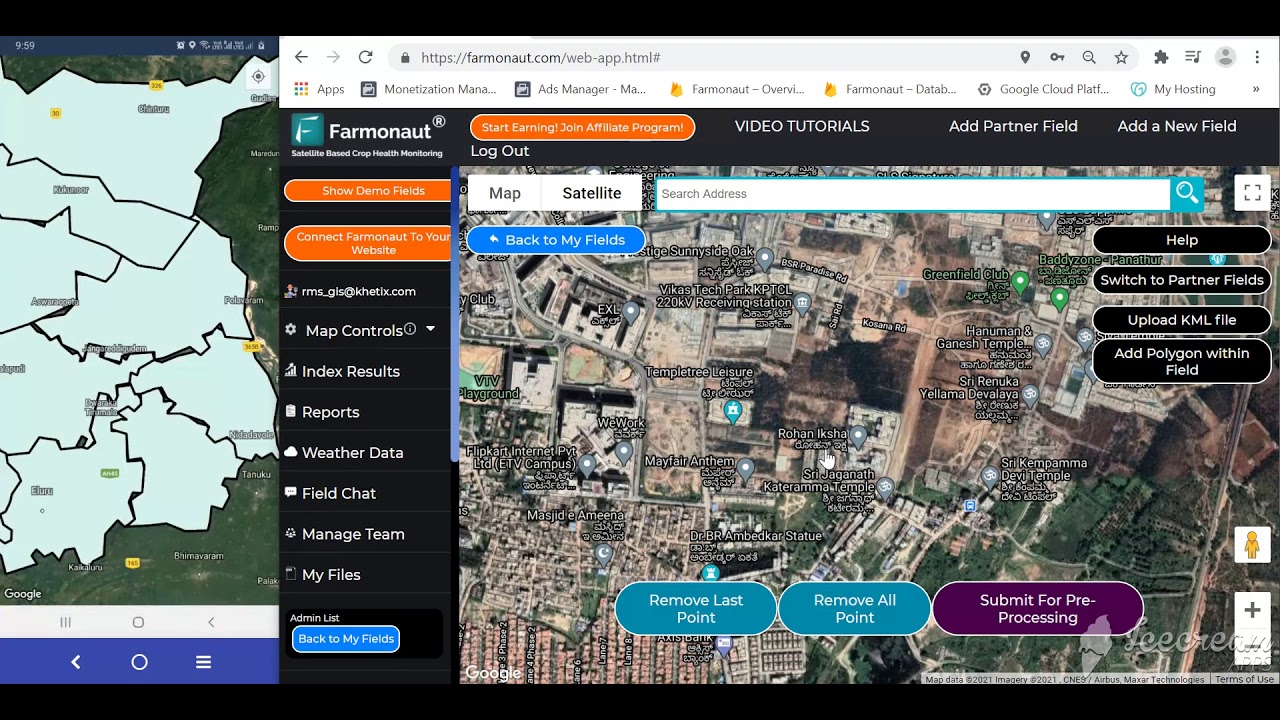
- Environmental Impact Monitoring: Our platform includes carbon footprint estimation and reporting tools (learn more here), empowering farms and policymakers to measure and manage their emissions with precision.
- API & Integration: For developers and agri-businesses seeking seamless integrations, Farmonaut API and developer documentation offer unparalleled access to remote sensing and emissions analytics.
- Fleet Management: Farms looking to optimize logistics and cut carbon waste in transport and machinery can explore our Fleet Management solution.
- Large Scale Farm Management: Multi-farm or estate-wide emissions can be tracked centrally using our Large Scale Farm Management Dashboard.
- Crop Plantation & Forestry Advisory: For agroforestry and woodland expansion, Farmonaut’s crop and forest advisory tools support landholders in afforestation and sustainable management efforts.
By harnessing these innovations, we at Farmonaut empower stakeholders across the agricultural value chain to achieve real, verifiable emission reductions—directly supporting UK net-zero commitments for 2025 and beyond.
Frequently Asked Questions (FAQ)
What percentage of the United Kingdom’s total greenhouse gases come from agriculture?
UK agriculture accounts for around 11-12% of total greenhouse gas emissions, according to recent government assessments.
What are the most significant sources of emissions in UK agriculture?
The most significant sources are methane (CH4) from livestock (especially cattle and sheep), nitrous oxide (N2O) from fertilizer and manure management, and carbon dioxide (CO2) from fossil fuel use, with corn farming and arable agriculture also contributing via fertilizer and soil disturbance.
How is the UK working to reduce agriculture emissions by 2025?
The UK government and stakeholders are adopting nutrient management technologies (precision farming, inhibitors), integrating cover crops and agroforestry, supporting methane-reducing livestock practices, transitioning to renewable energy on farms, and leveraging data-driven tools like those from Farmonaut for emissions tracking and smart decision making.
How does forestry and the UK Forestry Commission affect the sector’s net emissions?
The UK Forestry Commission increases the landscape’s capacity to absorb CO2 through afforestation and sustainable woodland management. Forestry acts as a carbon sink and is critical for balancing the sector’s emissions profile, especially when combined with agroforestry on farmland.
What role does corn farming play in UK agricultural emissions?
Corn farming emissions stem chiefly from synthetic and organic fertilizer application (causing N2O emissions), soil disturbance from tillage, and fossil fuel use in operations. However, transitioning to sustainable practices—precision inputs, low-till, and crop rotation—can cut corn emissions by up to 30% compared to conventional farming approaches.
How can I monitor and reduce my farm’s greenhouse gas emissions?
Utilize satellite-based monitoring platforms (like Farmonaut’s), adopt precision agriculture tools, implement improved nutrient and manure management practices, switch to renewable energy sources, and join afforestation or agroforestry programs to optimize both productivity and sustainability.

Conclusion & Next Steps to 2025
The clock is ticking for the UK agricultural sector to deliver meaningful cuts in greenhouse gas emissions—and to do so while maintaining food production and rural livelihoods. As we approach 2025, it’s clear that integrated approaches, prioritizing innovation, data-driven management, ecosystem stewardship, and technology adoption, will be key to achieving both sustainability and profitability.
- Livestock, arable, and corn farmers must continue adopting climate-smart practices: precision nutrient use, lower emission fertilizers, energy transition, cover cropping, improved manure and methane management, and responsible forestry integration.
- The UK Forestry Commission’s stewardship of woodlands and encouragement of agroforestry provides essential carbon removal capacity, delivers ecosystem co-benefits, and supports rural incomes.
- Stakeholders and policy-makers must foster supportive regulation, incentives, and investment in technologies—from satellite analytics to digital traceability tools—which unlock scalable climate mitigation at the farm and landscape level.
Together, implementing these strategies will ensure that agricultural emissions UK are brought under control, securing a resilient, low-carbon future for food production, rural communities, and the nation as a whole.

For actionable remote sensing, AI advisory, blockchain traceability, and carbon management solutions in UK farming, access our Farmonaut platform, or review our API features and developer documentation for integration opportunities.

 ITC
ITC Dirks Bros Farms
 Red August Group
 Farm Inc
 WeMe Global
 Agrotoken
 Blue BearX
 Insignito
 Croptimum
 DnCubed
 Field Capacity
 Indosistim Teknologi
 Liquify Digital
 CU Foods
 BeyondTech Global
 Rouge VC
 AgroGreen Dynamics
