

Agriculture in South Dakota: 2025 Essential Trends
Meta description: Agriculture in South Dakota 2025: A data-driven overview of the state’s east–west landscape, production, technology adoption, climate risks, and markets—using maps, metrics, and tools for resilient planning.
South Dakota’s agricultural identity is defined by a clear east–west division. In 2025, the agriculture of South Dakota continues to reflect this geographic and climatic gradient: the glaciated, relatively flat eastern third supports intensive row-crop production—corn, soybeans, and sugar beets—while central and western counties are dominated by cattle ranching, hay, small grains, and sunflowers. The Black Hills and associated forested hills provide limited but important timber and recreation economy activity. A South Dakota agriculture map shows cropland concentrated along the James, Big Sioux, and Missouri River basins; rangeland and pasture occupy drier counties to the west. This blog delivers a neutral, data-driven overview of agriculture in South Dakota for 2025 and beyond, with practical insights on production, technology uptake, climate variability, infrastructure, and markets.
Keywords focus: agriculture in south dakota, agriculture of south dakota, farming in south dakota, farming south dakota, south dakota agriculture map
“2025 map spotlights 6 drivers: eastern corn, soybeans, livestock, precision tech, climate, and market forces.”



Agriculture in South Dakota 2025: Overview
In 2025, agriculture in South Dakota remains anchored in two pillars: row crops and livestock. Corn and soybeans dominate acreage in the eastern third, driving feed, biofuel, and processing activity. Cattle are the marquee enterprise in the west, with cow–calf operations, backgrounding, and forage-based systems shaping land use across rangeland and pasture. Niche sectors such as organic vegetables, hemp, specialty grains, and sunflowers are expanding in select counties, often at the ecotone between the central and western plains.
The state benefits from an integrated system of grain elevators, rail links, ethanol facilities, and processors that move harvests to domestic uses and export terminals. After 2020, technology adoption accelerated: GPS-guided tractors, drones, satellite imagery, and variable-rate seeding and fertilization now support input efficiency and stronger environmental outcomes. Farmers increasingly use geospatial maps, layers, and field-level data to manage soils, drainage, crop rotations, and risk. These shifts are essential under growing climate variability—warmer averages and uneven precipitation raise the stakes for timing, conservation programs, and infrastructure.

Note on terminology: We use the phrases “agriculture in south dakota,” “agriculture of south dakota,” “farming in south dakota,” “farming south dakota,” and “south dakota agriculture map” in line with 2025 search intent and local planning needs.
The East–Central–West Landscape and Map Patterns
South Dakota’s agricultural identity is defined by a clear regional division. The glaciated, relatively flat third in the east supports intensive row-crop production on deep, fertile soils. A south dakota agriculture map shows the pattern of cropland concentrated along the James, Big Sioux, and Missouri River basins. Moving along the gradient into the central plains, the land transitions into rolling mixed-grass prairies that favor both small grains and cattle. In the western region, rangeland and pasture dominate, occupying drier counties where moisture limits row crops and risk tolerance guides rotations.
The Black Hills and associated forested hills in the far west provide limited but important timber and recreation economy opportunities. Although their agricultural footprint is smaller, these landscapes influence water sources, wildlife habitat, and tourism-related markets that indirectly support agriculture.
- East: High-yield potential for corn and soybeans; tile drainage and precision input management are common.
- Central: Diversified systems with wheat, sunflowers, hay, and cattle; variable rainfall drives flexible rotations.
- West: Cow–calf and backgrounding systems; forage and range management are key; small grains in favorable pockets.

Production Pillars: Row Crops and Livestock
Row crops remain the first pillar: Corn and soybeans dominate acreage in the eastern and parts of the central counties. Corn drives the feed and biofuel supply chain; the state hosts ethanol facilities, integrated with elevators and rail links that move grain harvests to domestic processors and export terminals. Soybeans support local crush capacity, feed, and international markets. Sugar beets appear in localized rotations, while sunflowers and wheat expand in areas with lighter soils and lower rainfall risk.
Livestock remains the second pillar: Cattle are the marquee enterprise in the west and portions of the central plains. Cow–calf operations, backgrounding, and feedlots are supported by hay, pasture, and silage forage systems. Hogs and poultry contribute in specialized pockets, particularly near grain supply. Niche markets—organic vegetables, hemp, and specialty grains—are expanding in select counties where proximity to consumers, water, and specialty processors aligns.
- Key 2025 trend: More on-farm storage capacity enables responsive marketing—holding grain through price swings or quality-specific sales.
- Crop–livestock linkages: Manure as a nutrient source complements variable-rate plans in row-crop fields.
- Risk spreading: Wheat and sunflowers diversify rotations and spread weather and market risk, especially in central and western zones.

Technology Uptake and Precision Agriculture
Technology uptake accelerated after 2020 and remains strong in 2025. Precision tools—GPS-guided tractors, variable-rate seeding and fertilization, drones, and field sensors—improve input efficiency and environmental outcomes. Producers are increasingly integrating geospatial layers and maps to manage soils, drainage, and crop rotations. The extension network at South Dakota State University and private agritech providers support adoption by offering agronomic guidance and digital platforms.
As a satellite technology company, we at Farmonaut provide real-time monitoring and AI-based advisory to complement local decision-making. We bring multispectral imagery for NDVI crop health, soil moisture indicators, and environmental impact tracking into simple, affordable tools that scale from small operations to large enterprises. For farming in south dakota and farming south dakota users, these capabilities align with variable-rate planning, planter calibration, and in-season scouting.
- Web and Mobile Access: Farmonaut App makes satellite-driven insights accessible on Android, iOS, and web, enabling quick field checks and alert management.
- API Integrations: Developers can integrate field data and satellite feeds into management systems via the Farmonaut API and API Developer Docs.
- Large-Scale Operations: Large-Scale Farm Management tools help consolidate multi-farm oversight, resource tracking, and reporting.
- Traceability and Compliance: For grain and livestock supply chains seeking transparency, Traceability solutions enable blockchain-based records that verify origin and practices.
- Carbon Readiness: To participate in climate markets, Carbon Footprinting tools quantify emissions and sequestration for farms adopting no-till and cover crops.
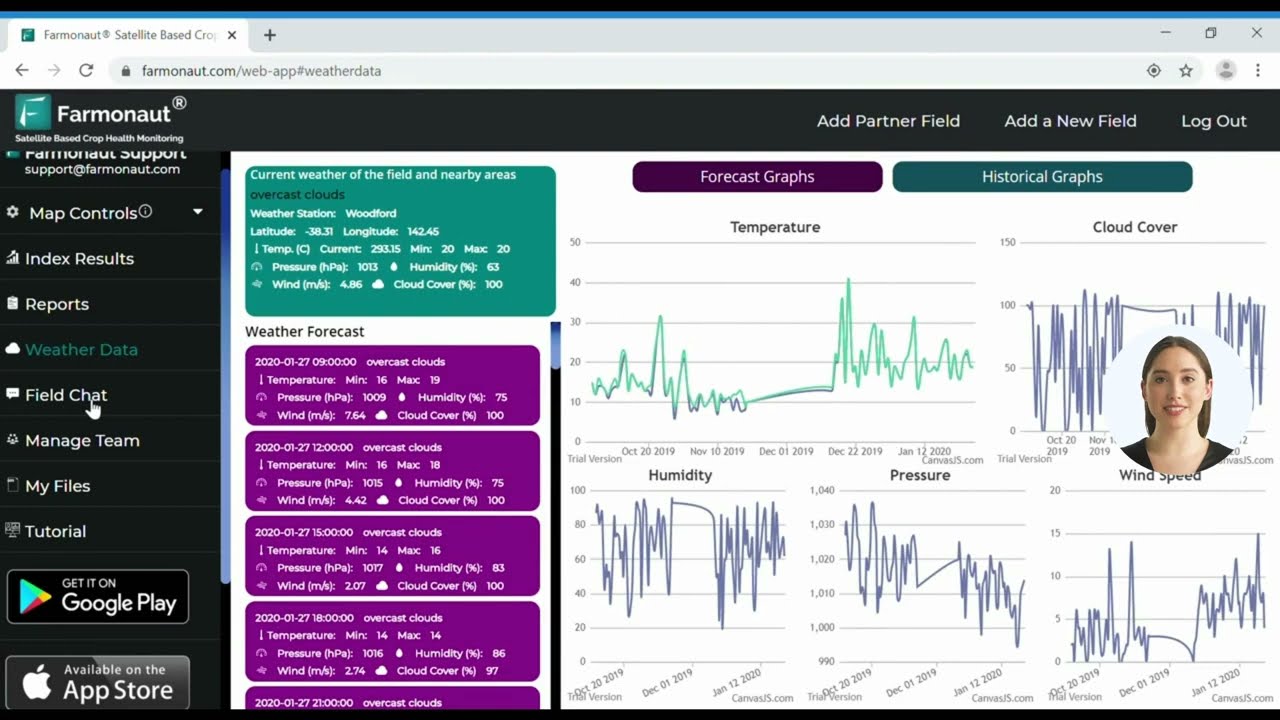

Why precision matters for the state’s east–west gradient
- East: Optimize high-yield systems with VRT seeding and nitrogen timing tied to soil and weather models.
- Central: Support diversified rotations and in-season adjustments based on rainfall and pest pressure.
- West: Monitor forage condition, range biomass, and stock rates to align with drier climates.

Climate Variability and Conservation Programs
Climate variability is the defining risk in 2025. Warmer average temperatures, altered precipitation timing, and more frequent extremes—drought interspersed with intense rainfall—challenge planting windows and harvest schedules. The eastern and central zones encounter excess moisture in spring, then intermittent summer dryness; the west faces longer dry spells and flash drought concerns. In response, conservation programs such as CRP and EQIP remain key for erosion control, habitat, and water quality.
Regenerative practices are gaining traction statewide. No-till, cover crops, diversified rotations, and residue management enhance soil structure, organic matter, and infiltration—critical to protect topsoil and maintain yields. In the east, cover crop blends can support spring planting by stabilizing soil between row-crop harvests and early-season rainfall. In the central and west, targeted cover crops after small-grain harvests can hold moisture and suppress weeds.
- Soil health: Improving aggregation and organic matter increases water-holding capacity and reduces runoff.
- Grazing integration: Cover crops can provide forage “bridge feed” while cycling nutrients back to cropland.
- Carbon markets: Fields under long-term no-till and diversified covers can access new revenue streams with proper measurement and verification.

To streamline participation in ecosystem-service payments, we offer carbon footprinting analytics that help quantify emissions and sequestration with satellite-informed baselines. While these voluntary markets include paperwork and permanence considerations, transparent metrics can help farmers assess whether participation aligns with their rotations and input plans.
“Two dominant row crops—corn and soybeans—anchor South Dakota’s eastern belt in 2025 trend analysis.”
Water, Drainage, and Infrastructure
Water resources are regionally constrained. The eastern region relies on surface water and shallow groundwater, with tile drainage as a common tool to improve trafficability and root-zone conditions. Parts of the west tap the Ogallala Aquifer system; sustainable use and monitoring are priorities. Across the state, strategic infrastructure investments—modernized drainage, on-farm storage, rural roads, and rail—are key to handling variable harvests and linking fields to markets.
- Drainage design: High-resolution elevation and soil maps guide outlet sizing and wet-spot mitigation without over-draining.
- Irrigation choices: Where available in the central and west, selective irrigation supports forage reliability during dry spells.
- Transport efficiency: Better roads and rail links reduce damage risk and widen marketing windows.
We help farmers track soil moisture and water indices with satellite analytics. See field conditions with the Farmonaut API or check live layers in the Farmonaut App. For mixed fleets during planting and harvest, Fleet Management provides location and utilization insights to coordinate equipment across counties and cut idle time.
Drainage and soil: balancing productivity with conservation
Strategic drainage brings benefits in the east—earlier planting, less compaction, reduced root stress—but must be balanced against downstream flooding and habitat protection. Planning based on maps, topography, hydrology, and soil carbon goals reduces unintended impacts and supports long-term sustainability. Cover crops and reduced tillage can further buffer storm pulses and improve infiltration.
Markets, Policy, and Farm Economics in 2025
Global demand for protein and biofuels supports prices, while input costs and labor availability pressure margins. Corn and soybeans benefit from feed and renewable fuel standards; cattle prices reflect domestic beef demand and export conditions. However, fertilizer, fuel, and parts costs remain higher than pre-2020 levels. Interest rates affect carry strategies for grain and the economics of machinery upgrades.
- Biofuel nexus: Ethanol blending and renewable diesel interest maintain demand for corn and soybean oil.
- Export exposure: International trade flows and logistics influence basis across the east and central corridors.
- Domestic processors: Local crush and feedlots temper volatility and offer alternative delivery points.
New revenue streams emerge from ecosystem services such as carbon and nutrient credits. Producers are weighing eligibility criteria, verification costs, and contract terms against agronomic fit and permanence. We offer Traceability for supply chain transparency and Crop Loan & Insurance verification services to help financial institutions and growers reduce fraud and streamline documentation using satellite evidence.
Risk management themes
- Storage and timing: On-farm bins support basis improvement and moisture management.
- Diversified rotations: Wheat and sunflowers distribute weather and market risks in central and west.
- Data-informed decisions: Field-level weather and satellite indices inform planting and harvest logistics.
Pests, Labor, and Risk Management
With a shifting climate, pest and disease profiles also shift. Warmer winters can affect overwintering survival for certain insects; erratic spring moisture influences seedling disease risks. Integrated pest management (IPM) focuses on scouting, threshold-based decisions, and resistant varieties. Biologicals and rotation changes are part of the toolset, alongside seed treatments in wetter eastern fields.
Labor constraints continue to push mechanization. Producers are investing in automation in planting, spraying, and harvest operations. In cattle systems, animal handling upgrades improve safety and labor efficiency. Training and data literacy matter across operations—knowing how to interpret imagery, yield maps, and machine diagnostics is vital for 2025 competitiveness.
- Scouting modernization: Drones and satellites enable rapid field checks and crop stress detection.
- Decision support: We provide Jeevn AI advisory to translate imagery and weather into actionable guidance—timing passes, optimizing inputs, and flagging outliers.
- Compliance and reporting: Digital records facilitate conservation program participation and audit readiness.
Regional Commodity–Technology–Climate Matrix: South Dakota Agriculture 2025
This matrix summarizes the east/central/west patterns with estimated metrics to support 2025 trend analysis. Click column headers to sort. Values are ranges where appropriate and reflect statewide context. They are indicative and may change with weather, markets, and management choices.
| Region / Commodity | 2025 Estimated Planted Acres or Inventory | Estimated Yield/Production | Share of State Output (%) | Precision Ag Adoption (% farms using VRT, drones, satellite) | Irrigation vs Rainfed (%) | Climate Risk Index (1–5) | Input Cost Index (2024=100) | Price Outlook 2025 (est.) | YoY Change 2024→2025 (%) | Notes/Drivers |
|---|---|---|---|---|---|---|---|---|---|---|
| East – Corn | ~2.2–2.6 million acres | Yield ~170–190 bu/ac | ~55–60 | ~55–65 | Irrig ~5–10 / Rainfed ~90–95 | 3 (flood in spring; summer dry) | ~108–114 | $4.20–$5.10/bu | -1 to +2 | Tile drainage; ethanol demand; storage builds |
| East – Soybeans | ~1.7–2.0 million acres | Yield ~45–55 bu/ac | ~50–55 | ~50–60 | Irrig ~3–7 / Rainfed ~93–97 | 3 | ~104–110 | $11.20–$13.20/bu | 0 to +3 | Renewable diesel and crush capacity support |
| Central – Wheat | ~0.8–1.0 million acres | Yield ~45–60 bu/ac (spring/winter) | ~35–40 | ~40–50 | Irrig ~5–10 / Rainfed ~90–95 | 3–4 (drought variability) | ~100–108 | $5.70–$7.10/bu | -2 to +2 | Rotation with sunflowers; residue for moisture |
| Central – Cattle/Hogs | Cattle ~3.8–4.3 million head; Hogs ~1.1–1.4 million | Beef: calf/cow and backgrounding | ~40–45 | ~30–45 | Mostly rainfed forage; limited irrigation | 3–4 (forage drought) | ~102–110 | Beef $170–$200/cwt (fed); Hogs $70–$95/cwt | 0 to +4 | Forage management; manure nutrients; labor needs |
| West – Wheat/Small Grains | ~0.6–0.8 million acres | Yield ~30–45 bu/ac | ~20–25 | ~25–35 | Irrig ~2–5 / Rainfed ~95–98 | 4 (drought-prone) | ~98–106 | $5.50–$7.00/bu | -3 to +1 | Moisture-limited; rotation with hay/forage |
| West – Cattle | Cattle ~2.0–2.5 million head | Cow–calf and range-based systems | ~45–50 | ~25–35 | Rainfed rangeland; limited wells | 4–5 (forage & water risk) | ~100–108 | $170–$200/cwt (fed) | -1 to +3 | Stocking rates tied to rainfall; infrastructure access |
| Statewide Totals (Benchmark) | Row crops ~5.0–6.0M ac; Cattle ~6.0–7.0M head | Corn ~170–190; Soy ~45–55; Wheat ~35–60 | 100 | ~35–55 (by region) | Irrig ~3–10 / Rainfed ~90–97 | 3–4 | ~100–112 | Varies by commodity | -3 to +4 | Weather timing, input prices, logistics, policy |
Sources: Industry reports, SDSU Extension insights, market observations, and regional practices (estimates). For planning only; update quarterly.
Conclusion, Tools, and FAQ
In 2025, agriculture in south dakota is resilient yet adapting. The landscape spans intensive cropland in the east to cattle-driven livestock systems in the west. Technology adoption, conservation practices, and targeted infrastructure investments are essential to navigate climate variability, market cycles, and labor challenges. Interactive maps, county-level data, and practical extension tools guide farmers and policymakers toward climate-smart plans.
We encourage producers, ag retailers, lenders, and county planners to explore the following tools and services designed for 2025 decisions:
- Farmonaut App — Real-time satellite crop monitoring, weather layers, and alerts to streamline scouting and planning.
- Farmonaut API — Integrate NDVI, soil moisture signals, and field boundaries into your own systems; see the API Developer Docs.
- Large-Scale Farm Management — Manage multi-farm operations, teams, and reporting from one dashboard.
- Fleet Management — Improve machinery utilization for planting, harvest, and hauling across counties.
- Traceability — Create verifiable supply chain records for grains and livestock products.
- Carbon Footprinting — Measure emissions/sequestration to evaluate climate-market opportunities.
- Crop Loan & Insurance — Satellite-enabled verification to reduce fraud and accelerate decisions.
FAQ: South Dakota Agriculture 2025
What does the south dakota agriculture map show about 2025 production?
The map shows cropland concentrated in the eastern counties along the James, Big Sioux, and Missouri River basins, where corn and soybeans lead. The central mixed-grass region blends small grains, sunflowers, and cattle. The west is dominated by rangeland, pasture, and cattle operations.
Which two pillars remain central to production in 2025?
Row crops (especially corn and soybeans) and livestock (cattle, with regional hogs and poultry) remain the two pillars anchoring South Dakota production.
How are technology and precision agriculture impacting farmers?
Precision tools—VRT, drones, satellite imagery—improve input efficiency, yield stability, and environmental outcomes. Farmers increasingly use maps and data layers for planting timing, fertilization, drainage, and scouting. We provide these insights via web and mobile apps and the API.
What conservation practices are gaining traction?
No-till, cover crops, diversified rotations, and residue retention build soil resilience, reduce erosion, and improve water management. CRP and EQIP remain programs supporting habitat and resource protection.
How should producers think about water and drainage?
Design drainage to enhance trafficability and root-zone oxygen while protecting downstream areas. In central and west regions, irrigation is limited and strategic; moisture monitoring helps time grazing and silage harvests.
Where do new revenue opportunities come from?
Ecosystem services such as carbon and nutrient credits. Producers should evaluate contract terms, measurement requirements, and agronomic fit. We support decisions with carbon footprinting and traceability.
Is Farmonaut a marketplace or input seller?
No. We are a satellite technology company providing monitoring, advisory, traceability, and resource management tools—not a marketplace, manufacturer, input seller, or regulator.
Practical 2025 Planning Checklist
- Use field-level maps to refine planting dates and drainage hotspots.
- Adopt VRT for seeding and fertilization to improve efficiency.
- Integrate cover crops to enhance soil structure and water capture.
- Leverage on-farm storage to time grain sales.
- Evaluate carbon or traceability opportunities that match your rotations.
- Strengthen scouting with drones and satellite imagery for pests and stress.
- Optimize equipment use with fleet tools.
Disclaimer: All estimates herein are for informational purposes in 2025 and may not reflect real-time values. Always consult your agronomist, accountant, and market advisors.
County-Level Nuances and 2025 Outlook
While statewide patterns are clear, county-level choices reflect microclimates, soils, and logistics. Eastern counties near the Big Sioux corridor often plan corn-on-corn where residue and drainage allow reliable planting. Central counties with rolling prairies pivot between wheat, sunflowers, and hay based on moisture forecasts. Western ranching communities focus on stocking rates, water reliability, and winter feed strategy, with small grains planted where slope, soil depth, and rainfall align.
- Infrastructure proximity: Access to elevators, rail sidings, and processing facilities influences crop marketing and basis.
- Soil texture: Fine-textured soils in the east benefit from tile drains; coarser central soils favor conservation tillage to reduce evaporation.
- Forage systems: Alfalfa and grass mixes stabilize feed supplies in years with erratic precipitation.
The role of extension, data, and planning tools
In 2025, local extension expertise and private technology insights converge. County meetings, digital dashboards, and satellite alerts help producers balance yield goals, environmental outcomes, and cost control. We enable decision-makers with real-time layers and advisory, accessible through the app and API, with options for multi-tenant oversight in large-scale farm management.
Sustainability Pathways for 2025 and Beyond
South Dakota’s path forward blends productivity with stewardship. Reduced tillage preserves moisture and structure in both corn–soy rotations and small-grain systems. Cover crops expand into shoulder seasons where temperatures permit. In cattle country, rotational grazing enhances range condition and biodiversity. Producers evaluate carbon and water indicators to align with buyers’ climate goals and potential incentive payments.
- Verification: We support environmental claims with satellite-backed evidence that can feed into traceability and reporting.
- Risk pooling: Diversifying acres across corn, soybeans, wheat, and sunflowers spreads weather and market risks.
- Water-smart rotations: Rotations that retain residue reduce wind and water erosion and stabilize spring fieldwork.
Workforce and education
As automation grows, skills in data interpretation, machine sensors, and remote diagnostics are in demand. Young producers entering the sector bring fluency with apps and analytics, while seasoned operators combine experience with precision tools to refine timing and placement. Safety and efficiency improvements in livestock handling and equipment operations remain a priority in 2025.
Putting It All Together: 2025 Action Steps
- Align maps, soils, and drainage to set realistic hybrid/variety placements.
- Adopt VRT for high-return nutrients; refine rates using imagery-guided zones.
- Build a cover crop plan that fits harvest windows and spring workload.
- Enhance storage and logistics to gain flexibility in marketing.
- Use satellite indices for moisture and vigor to schedule scouting and inputs.
- Monitor forage condition across west and central ranges; adjust stocking accordingly.
- Evaluate carbon and traceability opportunities that match rotations and record-keeping capacity.
For producers considering timber-adjacent opportunities in the black Hills, the forested hills provide a niche economy in recreation and wood products—complementary, yet not core to statewide grain and cattle. Local climate and slope constraints require careful land stewardship to avoid erosion and habitat fragmentation.
Essential Links for 2025 Planning
- Farmonaut App: Monitor fields, alerts, and weather layers across the east, central, and west.
- Farmonaut API: Streamline integrations for imagery and weather; see the Developer Docs.
- Fleet Management: Coordinate planting and harvest across fields and counties.
- Carbon Footprinting: Quantify emissions and sequestration to evaluate carbon-market fit.
- Traceability: Verify practices in grain and livestock supply chains.
- Crop Loan & Insurance: Satellite-supported verification for financing.
This 2025 guide is designed for growers, advisors, agribusinesses, and local officials who need a concise, map-driven understanding of patterns across east, central, and west South Dakota. It aligns with industry trends, practical tools, and climate-smart planning principles.

 NWNS
NWNS Hydenmet
 Dirks Bros Farms
 Red August Group
 Farm Inc
 WeMe Global
 Agrotoken
 Blue BearX
 Insignito
 Croptimum
 DnCubed
 Field Capacity
 Indosistim Teknologi
 Liquify Digital
 CU Foods
 BeyondTech Global
 Rouge VC
