

States With Most Farmland 2026: Powerful U.S. Land Insights
“Texas leads the U.S. with over 127 million acres of farmland projected in 2026, dominating national agricultural land use.”
“Iowa is expected to maintain the highest percentage of cropland per state, with over 85% of its land dedicated to crops.”
📋 Table of Contents
- Introduction: The Powerful Gravity of U.S. Farmland in 2026
- Major Factors Defining the States With Most Farmland
- Top States With Most Farmland: 2025–2026 Outlook
- Comparative State Farmland Statistics Table
- Region-by-Region Farmland Trends and Agricultural Insights
- Agricultural Infrastructure & Technology Adoption Trends
- Land Use, Forestry, and Mineral Rights: Key Implications
- How Satellite Data From Farmonaut Powers Farmland Insight
- Callout Highlights — Essentials for 2026
- Frequently Asked Questions (FAQ)
- Conclusion: Takeaways for a Resilient Future
Introduction: The Powerful Gravity of U.S. Farmland in 2026
States with most farmland remain a decisive indicator of agricultural dominance and rural economic health in the United States. As we look forward to 2026, understanding which state has the most farmland involves much more than tallying acres. It’s about evaluating total land area actually in use for cropland, grazing, and mixed farming systems—and recognizing how infrastructure, crop rotations, climate, and regional access tilt the balance of agricultural power.
Looking beyond acreage, the world’s most productive farmland considers output rather than sheer size.
In this comprehensive snapshot, we’ll explore the states with the most farmland based on their managed acreage, specialization in corn, soybean, cotton, wheat, and beef; reveal their methods for resilient production; and analyze how modern technologies such as satellite insights from Farmonaut are shaping the future of land planning, utility, and sustainability. Whether you’re a precision agriculture expert, policy planner, or farming enthusiast, these land insights will help you understand current and future trends driving the U.S. agricultural landscape.
Why Focus on “States With Most Farmland”?
- Economic Gravity: The answer to which state has the most farmland indicates where crop production, animal grazing, and rural employment are likely to concentrate.
- Supply Chain Backbone: Large, arable tracts are crucial for feeding national grain, protein, and fiber markets, as well as for supporting biofuel and processing industries.
- Infrastructure Planning: Knowledge of land dominance informs the layout of irrigation, transportation, utilities, and business investments in rural and peri-urban zones.
- Environmental Decisions: States with abundant cropland are at the center of debates on soil health, conservation, and mineral rights.




“The ranking of states with the most farmland is best measured by acres under production, access to irrigation, and agri-infrastructure density—not just raw acreage.”
Major Factors Defining the States With Most Farmland
The relevance of farmland for agriculture in 2025 and beyond is shaped by several strategic factors. These define the practical center of gravity for “which state has the most farmland” and help identify the top states for diversified, resilient, and extensible production systems.
-
🌱 Soil Fertility: Expansive, arable soils
boost utilization rate and crop yields. -
🌦️ Climate Windows: Favorable growing
seasons support double-cropping and mixed systems. - 💧 Irrigation Access: High irrigation and water storage infrastructure stabilize yields.
- ⚙️ Agri-Infrastructure: Storage, processing, cooperatives, and grain handling facilities maximize the value chain.
- ✔ Region and Climate: States in the Midwest and Great Plains often dominate due to climate suitability and historic investment.
- 📊 Cropland Density: High cropland-to-total land ratios boost agricultural dominance (ex. Iowa).
- ⚠ Irrigation Networks: Resilience to drought cycles depends on access to irrigation (such as in Texas and California).
- 💲 Value Chains: Extensively managed tracts support not just farming but also forestry, grazing, and minerals.
- 🛠️ Modernization: Robust adoption of satellite monitoring, AI, and precision tech is a difference-maker in the 2025–2026 period.

“Assuming the state with the largest total acreage automatically leads in farm output. True dominance comes from high utilization rates and robust crop infrastructure.”
Top States With Most Farmland: 2025–2026 Outlook
The states with the most farmland are a fascinating mix of size, crop specialization, climate resiliency, and historical investment in farming infrastructure. Below, we detail why certain states repeatedly top the rankings, drawing on their unique agricultural “center of gravity.”
Texas: The Powerhouse for Extensive Land and Mixed Systems
- Area & Utility: Texas, with over 127 million acres of farmland projected for 2026, ranks #1 for total managed land.
- Production Focus: Dominates U.S. cattle, cotton, hay and has dispersed row crops in both eastern and western regions.
- Infrastructure: High reliance on irrigation networks (especially in the High Plains and valleys), making it resilient but exposed to drought cycles.
- Ecosystem: Large base enables flexibility—hosting grazing, mixed farming systems, feed, and fiber value chains.

Iowa: Champion of Cropland Density and Intensive Cultivation
- Area & Utility: Although smaller in raw acreage compared to Texas, Iowa has over 85% of state land in cropland—highest percentage nationally.
- Production Focus: Must-see for corn and soybean output, Iowa’s intensely managed land supports robust and efficient supply chains.
- Infrastructure: Excellent access to processing facilities, grain storage, co-ops, and advanced farm machinery.
- Missions: Corn/soybean rotations, dairy, and animal agriculture maximize crop value and soil nutrient cycling.
Minnesota, Nebraska, Illinois: Strongholds of the Corn Belt
- Land Use: Minnesota, Nebraska, and Illinois consistently rank near the top in total farmland and are pillars of the Upper Midwest.
- Cropland: Strongest for corn-soybean rotations (in Illinois and Minnesota), and mixed row crops in Nebraska.
- Infrastructure: Boast a long history of modernization: seed, input, and cooperative ecosystems; grain dryers; advanced storage.
- Markets: Connect to both biofuel (ethanol) and animal agriculture markets, maximizing land utility.
-
🌽
Corn Belt Giants
Illinois, Iowa, Minnesota—
leaders in corn and soybean. -
🐄
Cattle & Grazing
Texas, Nebraska—
animal agriculture engines. -
🌾
Wheat & Sorghum
Kansas, South Dakota—
grain and feed base.
Kansas and South Dakota: Dominating Wheat, Sorghum, and Livestock
- Land Extent: Kansas has over 45 million acres of farmland; South Dakota manages vast tracts across the Plains.
- Production Focus: Wheat, sorghum, and beef cattle are primary in 2026.
- Irrigation: Western regions rely on aquifers and surface networks to stabilize output.
- Supply Chains: Connects to major grain, feed, and renewable energy pipelines.
California and the Pacific Northwest: Powerhouse of High-Value Specialty Crops
- Land Use: Not leading in raw acreage, but California manages the nation’s highest-value cropland, focusing on vegetables, fruits, nuts (almonds, pistachios), and wine grapes.
- Production Efficiency: Intensive irrigation, advanced pest/disease controls, and year-round climate windows.
- Infrastructure: Complex water rights, storage systems, high-tech machinery, and advanced supply chains.
- Western Role: Washington and Oregon add significant regional value in fruits, hops, berries.
“Premium cropland in California yields the highest per-acre agricultural value nationwide, despite its relatively limited total acreage.”
Comparative State Farmland Statistics Table
To help visualize differences, explore this table ranking the top U.S. states by farmland area, cropland intensity, and infrastructure for 2025–2026. Use this resource for direct, data-driven cross-state comparisons.
| State Name | Estimated Farmland Area (million acres, 2025) |
Estimated Cropland Area (million acres, 2025) |
% State Land as Farmland | Top Crops | Ag. Infrastructure Index (0–100) |
|---|---|---|---|---|---|
| Texas | 127.1 | 24.7 | ~79% | Cattle, Cotton, Wheat, Corn, Sorghum | 89 |
| Iowa | 30.6 | 26.1 | ~85% | Corn, Soybeans, Hay | 97 |
| Nebraska | 44.6 | 19.5 | ~88% | Corn, Soybeans, Cattle, Wheat | 92 |
| Kansas | 45.7 | 21.9 | ~87% | Wheat, Sorghum, Corn, Cattle | 90 |
| California | 25.5 | 9.9 | ~52% | Vegetables, Fruits, Nuts, Winegrapes, Cotton | 98 |
| Illinois | 27.1 | 23.8 | ~78% | Corn, Soybeans, Wheat | 96 |
| Minnesota | 26.2 | 19.2 | ~62% | Corn, Soybeans, Wheat, Sugarbeets | 92 |
| South Dakota | 29.6 | 13.6 | ~76% | Wheat, Corn, Soybeans, Cattle | 89 |
“Texas leads the U.S. with over 127 million acres of farmland projected in 2026, dominating national agricultural land use.”
“Iowa is expected to maintain the highest percentage of cropland per state, with over 85% of its land dedicated to crops.”
“For actionable and affordable satellite monitoring, Farmonaut’s web and mobile apps enable real-time tracking of farm, crop, and grazing land in all major states—helping maximize your rural land’s output and resilience.” Try our Large Scale Farm Management System for regional land oversight.”
Region-by-Region Farmland Trends and Agricultural Insights
Let’s take a closer look at how climate, soil, history, and modernization put different states at the forefront of U.S. agricultural land utilization as we move into 2026.
Midwest (Corn & Soybean Core)
- States: Iowa, Illinois, Minnesota, Nebraska—consistently among the states with the most farmland by cropland density.
- Farm Profile: Small-to-medium family operations; high adoption of precision ag and satellite imagery.
- Crop Dominance: Corn-soybean rotations sustain yield and profitability year-to-year.
- Infrastructure: Advanced storage, processing plants, ethanol and animal ag supply chains.

Great Plains (Wheat, Cattle, & Mixed Systems)
- States: Kansas, Nebraska, South Dakota, Texas (western and Panhandle counties).
- Farm Profile: Often large-scale, extensible operations covering thousands of acres.
- Crops & Livestock: Dependence on wheat, sorghum, corn, and cattle with mixed grazing/crop rotation.
- Utility: Farms double as mineral and renewable energy (wind/solar) sites.
West Coast & Pacific Northwest (Specialty High-Value Production)
- States: California, Washington, Oregon.
- Farm Profile: Fewer total acres but high-value crops—premium fruits, nuts, vineyards, and vegetables.
- Irrigation: Heavily reliant on advanced irrigation tech and year-round climate management.
- Infrastructure: Significant investment in agri-tech and logistics due to complex supply chain demands.
“Nebraska’s groundwater irrigation infrastructure plays a crucial role in boosting both crop and grazing land output, demonstrating how infrastructure investment impacts the states with the most farmland.”
Agricultural Infrastructure & Technology Adoption Trends
The states with the most farmland are continually evolving, introducing infrastructure innovations that maximize land utility, crop value, and provide resilience against changing climatic conditions. Key focal points in 2026:
- 🏗️ Grain Handling: Advanced co-ops, dryers, and storage optimize row crop cycles in the Midwest.
- 🔄 Livestock Integration: Mixed operations that combine crop and animal agriculture for soil and resource efficiency (esp. in Texas, Nebraska).
- 🚜 Machinery & Precision Tech: Real-time monitoring with satellite data, AI, and fleet management improves farm operations.
- 💧 Irrigation Modernization: Pivot and smart controller systems expand viable cropland in arid states like California and Kansas.
- 🛰️ Crop Health Monitoring: Platforms like Farmonaut provide detailed satellite-based field insights and automation.
For sustainable, traceable, and certified supply chains, learn about our blockchain-based Traceability solutions—great for agri-businesses needing ultimate transparency.
Need carbon footprinting tools? Visit Farmonaut Carbon Footprinting for state-of-the-art emission tracking in agriculture and beyond.

Land Use, Forestry, and Mineral Rights: Key Implications
States with most farmland are not just agricultural engines; they also affect national forestry, mineral exploration, and infrastructure planning decisions.
- 🌳 Forestry: While cropland can dominate, forest tracts on peripheries remain vital for erosion control and bio-diversity (often in Upper Midwest, Pacific Northwest).
- ⛏️ Minerals: Large-scale farms frequently overlap with mineral and energy resources; managing surface rights is key to balancing farm production and responsible extraction.
- 🚚 Infrastructure Corridors: Availability of open, managed land supports building and maintaining highways, irrigation, rural broadband, and pipelines indispensable for rural economies.
- 🌾 Agroforestry: Increasing adoption of mixed use planning integrates orchards, shelter belts, and habitat corridors for dual farm–conservation missions.
Interested in satellite-backed land monitoring for mining? Explore our Mining and Insurance Verification tools for environmental compliance and secure investment decisions.
For fleet management, remote resource and vehicle optimization, check out Farmonaut’s Fleet Solutions—ideal for servicing large, dispersed farms and supply chains!
How Satellite Data From Farmonaut Powers Farmland Insight
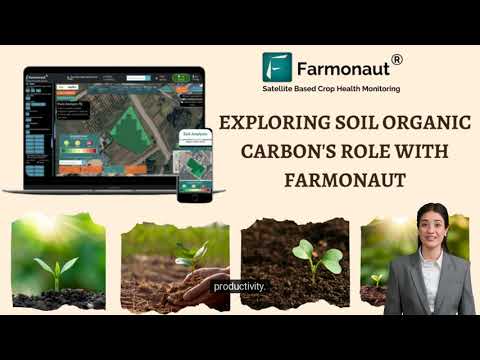
To make smarter land management and agricultural planning decisions, access to affordable, up-to-the-minute satellite data and AI-driven analytics is essential in 2026. That’s where our Farmonaut platform stands out.
- 💡 Satellite-Based Monitoring: Track crop health, water stress, and land use changes across Texas, Iowa, Nebraska, Kansas, California, and more—all in real time.
- 🤖 Jeevn AI Advisory System: Receive actionable insights on climate, weather, and cultivation strategies tailored to large and small farm operations.
- 🔗 Blockchain Traceability: Build resilient, transparent supply chains for your crops, minerals, or forestry products.
- 🛡️ Environmental Impact: Monitor carbon and resource management for sustainability compliance.
Whether you manage 10 acres in rural Iowa or 1,000 acres in the Texas Panhandle, Farmonaut enables precise, scalable, and region-specific management—with apps, APIs, and developer tools.
For crop forest and plantation advisory on a state and regional basis, explore our Crop Plantation Forest Advisory app module—empowering landowners in all major farmland states.
“Affordable satellite insights from Farmonaut let decision-makers—from farmers to financial institutions—precisely monitor, plan, and verify land use wherever the states with the most farmland are located.”
Callout Highlights — Essentials for 2026
- 💼 Texas will retain dominance in total farmland under management, making it a bellwether for both grazing and mixed-farming strategies in the U.S.
- 🌽 Iowa will continue as the corn/soybean state with the highest cropland intensity, serving as a model for efficient, sustainable row-crop systems.
- 🛰️ Satellites and AI in agriculture (Farmonaut) will be core to decision-making on both micro (field) and macro (regional) levels.
- 🔥 Competitive edge is increasingly determined by infrastructure investment—irrigation, storage, logistics, and renewable energy integration.
- 📈 Mineral, forestry, and land use planning are converging—requiring integrated satellite-backed approaches for policy and operational success.
Frequently Asked Questions (FAQ)
Which state has the most farmland in 2026?
Texas leads the nation with over 127 million acres of farmland projected in 2026. This state stands out for its large area, mixed production systems, extensive grazing lands, and resilient irrigation networks.
What state has the highest percentage of cropland vs. total area?
Iowa is expected to have over 85% of its land devoted to cropland—no other state has a higher cropland density!
Are large farmland states the most productive?
Not necessarily. Productivity depends on utilization rates, infrastructure, crop specializations, and technology adoption. While Texas leads by land area, states like Iowa, Illinois, and California often top yield/value per acre.
How does infrastructure affect farmland value?
Premium value goes to land with strong irrigation, storage, and processing infrastructure. States that modernize rapidly, integrating satellite and AI tools, gain a global competitive advantage.
How can Farmonaut help manage large farmland operations?
- ✔ Real-time satellite monitoring for crop health, irrigation planning, and yield forecasting.
- 📊 AI-based advisory for climate, soil, and operational decisions.
- 🔗 Blockchain for traceability and resource certification.
- 🚚 Fleet and logistics management for expansive, multi-state farm businesses.
Can Farmonaut be integrated into existing business platforms?
Absolutely. We provide robust APIs and developer documentation for seamless workflow and system integration.
Are satellite tools expensive or difficult to use?
Not with Farmonaut. Our apps and APIs make advanced satellite tech affordable and user-friendly for all—farmers, agribusinesses, miners, and governments alike.
Conclusion: Takeaways for a Resilient Future in American Agriculture
The fundamental question—which state has the most farmland?—yields powerful insight for agriculture, rural economies, and strategic investors as we look ahead to 2026 and beyond.
- ✔ Texas represents the vast, extensible model where grazing, mixed crops, and land availability build a powerhouse for agri-supply chains.
- 📈 Iowa defines the intensive, high-value cropland model, proving that efficient, tech-driven cultivation can produce maximum output regardless of land area.
- 📊 Infrastructure, resilience, and technology adoption will continue to set leading states apart. Modern monitoring and management tools—like those from Farmonaut—enable landowners to maximize value, comply with environmental standards, and withstand market or climate volatility.
- 🔄 The interplay between agriculture, forestry, and minerals means tomorrow’s top farmland states must plan for multifunctional, sustainable land use—supported by real-time data and intelligent analytics.
With changes in climate, economics, and policy on the horizon, success will go to those who use data-centric, operationally smart, and resilient strategies—backed by the best technology and local knowledge. Our mission at Farmonaut is to empower you with these solutions at every scale, in every state—so your land always delivers its highest potential.
Ready to explore, manage, and maximize your land in the states with most farmland?
Download our free apps, try our API, or start with Farmonaut now.
Discussion
Questions, corrections or field experience? Share them below. First-time comments are reviewed before they appear, and your email is never published.
No comments yet. Be the first to add a question or your experience.

 FFBS
FFBS Jontra
 Yaduka Agrotech
 Kalustyan
 Tucor
Tucor Geno
Geno Hayleys Agriculture
 Linx Agritech
 Adinet
 Save Your Soils
 Grandstream Algérie
 XOS Realty
 Geospatial Lab Africa
 Agro La Gándara
 HIPSAC
 ZOL Zimbabwe
 Juligerm
 Licence holder · Niger · Gold










