

Gold royalties · Investor guide
Gold Royalty Investments: 7 Options, Income and Risks
Most gold royalty investments are made through listed companies such as Wheaton Precious Metals, Franco-Nevada and Royal Gold, the three largest by revenue (Stock Analysis, 5 November 2026). Funds and private royalties are the other routes.
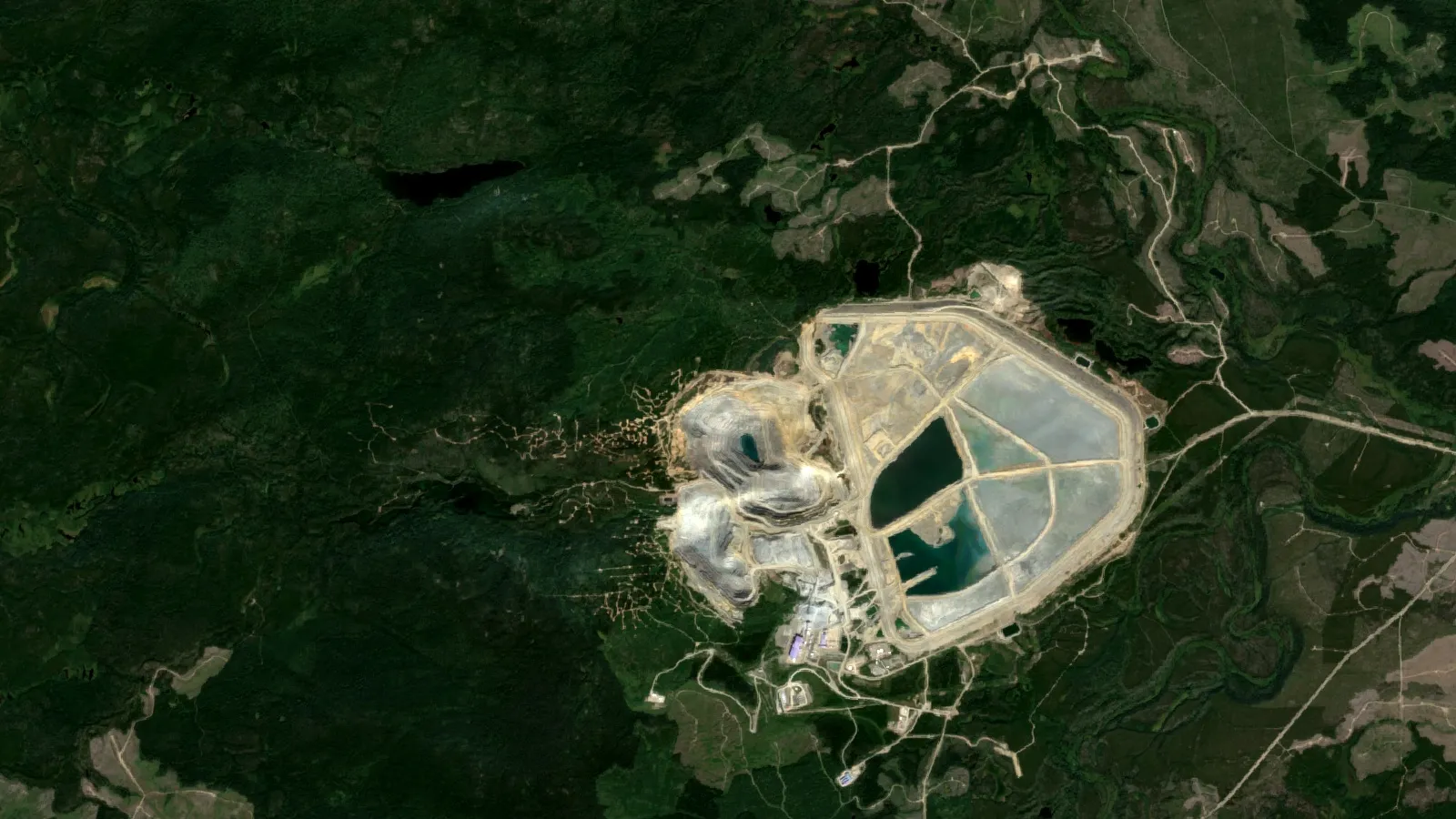
Key takeaways
- A royalty pays a share of mine revenue; a stream buys a share of the metal at a low fixed price (Centerra, 2025).
- Wheaton, Franco-Nevada and Royal Gold had TTM revenue of US$3.17B, US$2.30B and US$1.75B (Stock Analysis, 5 Nov 2026).
- Wheaton’s Q3 2026 revenue was US$772M, 51% from gold (company release, 5 Nov 2026).
- Funds such as GOAU hold royalty firms alongside miners, with a 0.60% expense ratio (Stock Analysis, Nov 2026).
- Royalties avoid mine costs but not gold price, output or government risk.
In this article
- What gold royalty investments actually are
- How the money reaches an investor
- The 7 listed gold royalty companies compared
- Other ways to make gold royalty investments
- Royalty versus stream versus mining shares
- Risks of gold royalty investments
- How to compare gold royalty companies yourself
- Royalty income calculator
- Frequently asked questions
Gold royalty investments give you a share of gold mine revenue without running a mine. For most people the practical route is a listed royalty or streaming company: Wheaton Precious Metals, Franco-Nevada and Royal Gold are the three largest, with US$3.17 billion, US$2.30 billion and US$1.75 billion of trailing twelve-month revenue on Stock Analysis data checked on 5 November 2026. Smaller options include Triple Flag, OR Royalties, Elemental Royalty and Gold Royalty Corp, plus funds that hold a basket of them, and private royalties bought directly from a mine owner.
This guide compares the seven listed options side by side, explains how the money reaches you, sets out the risks with real examples, and gives a calculator that turns a royalty rate into dollars. Every figure carries a date. Nothing here is a recommendation to buy or sell.
What gold royalty investments actually are
A royalty company pays a mining company cash up front. In return it receives a percentage of the mine’s future revenue or output for as long as the agreement runs, which is often the life of the mine. The most common form is a net smelter return (NSR) royalty: a percentage of what the mine is paid for its metal after smelting, refining and transport charges are taken off. The royalty holder pays nothing more after the first payment and does not pay to run the mine.
A stream works a little differently. The streaming company pays up front, then keeps paying a fixed low price, or a set percentage of the market price, for each ounce it takes. It sells that metal at the market price and keeps the difference. Under Royal Gold’s agreement on Mount Milligan in British Columbia, for example, Royal Gold buys 35% of the gold and 18.75% of the copper produced at the mine, paying US$435 per ounce of gold and 15% of the spot copper price (Centerra Gold, 2025 MD&A). You can read more about that operation in our Mount Milligan mine guide.
Do not confuse these private royalties with government royalties. A state royalty is a tax on minerals, set by law. Queensland, for example, publishes its own sliding royalty rates for gold and other minerals (Queensland Revenue Office, mineral royalty rates). A government royalty cannot be bought by investors; a private NSR royalty can.
Two more terms appear in every company report. GEOs (gold equivalent ounces) convert silver, copper and other metals into ounces of gold at market prices, so companies with mixed portfolios can report one number. TTM revenue means revenue over the last four reported quarters.
▶ How gold moves from rock to refined metal, the production every royalty depends on · 5:27
How the money reaches an investor
When you buy shares in a royalty company, you own a slice of a portfolio of these agreements. Cash flows in three steps:
Chart
Average US gold price, the main driver of royalty income
US$ per troy ounce, annual average
- The operating mine produces and sells gold.
- The mine pays its royalty percentage in cash, or delivers stream ounces that the royalty company sells.
- The royalty company pays its small overheads, any tax and debt costs, then pays part of what is left as dividends and spends the rest on new royalties.
Because the costs of digging, processing and building sit with the operator, royalty companies employ very few people. Stock Analysis lists 44 employees at Wheaton, 39 at Royal Gold and 38 at Franco-Nevada (November 2026). That small cost base is the main reason investors look at the model, but it does not remove risk. If a mine produces less, or stops, the payment falls with it.
The price of gold drives most of the change from year to year. The US Geological Survey puts the average gold price at about US$3,300 per troy ounce in 2025, up from US$2,388 in 2024 and US$1,801 in 2021 (USGS, Mineral Commodity Summaries 2026: Gold). For the daily benchmark price, see the LBMA gold price.
The 7 listed gold royalty companies compared
How we chose: we took listed companies whose main business is buying precious metal royalties and streams, that hold gold as a large part of their income or portfolio, and that most investors can buy on a North American exchange. We then sorted them by TTM revenue from Stock Analysis, checked on 4-5 November 2026. Market value sits beside revenue because the two orders differ. A fuller ten-company ranking is in our top 10 gold royalty companies list.
Chart
Trailing twelve-month revenue of seven gold royalty companies
US$ millions, checked 4-5 November 2026
| Company (ticker) | Main listing | TTM revenue (US$) | Market value | Best known for |
|---|---|---|---|---|
| Wheaton Precious Metals (WPM) | NYSE, TSX, LSE | $3.17B | US$59.77B | Largest; gold and silver streams |
| Franco-Nevada (FNV) | NYSE, TSX | $2.30B | US$46.76B | Royalties and streams, some energy |
| Royal Gold (RGLD) | Nasdaq | $1.75B | US$20.85B | Enlarged by buying Sandstorm Gold |
| Triple Flag Precious Metals (TFPM) | NYSE, TSX | $501.8M | US$6.21B | Ravenswood gold stream, Australia |
| OR Royalties (OR) | NYSE, TSX | $362.7M | US$6.44B | Canadian Malartic royalty, Quebec |
| Elemental Royalty (ELE) | TSX Venture | $100.9M | C$1.39B | 260+ royalties after EMX merger |
| Gold Royalty Corp (GROY) | NYSE American | $28.7M | US$669.6M | 250+ royalties, many not yet paying |
Two cautions. TTM totals depend on when each company last reported, and Wheaton, Franco-Nevada and OR Royalties released third-quarter results between 5 and 11 November, after the check date. Elemental reports in US dollars but its market value is quoted in Canadian dollars. Sandstorm Gold is missing because Royal Gold bought it on 20 October 2025, and the company once called Osisko Gold Royalties now trades as OR Royalties.
1. Wheaton Precious Metals: largest by revenue
Wheaton is mainly a streaming company. Its third-quarter 2026 revenue was US$772 million, of which 51% came from gold and 46% from silver, and nine-month revenue reached a record US$2.6 billion (Wheaton, results release, 5 November 2026). It realised about US$4,273 per ounce of gold in the quarter and declared a quarterly dividend of US$0.195 per share. Best for: the largest, most liquid name. Watch: about half its income is silver, so it is not a pure gold holding.
2. Franco-Nevada: the broadest mix
Franco-Nevada holds both royalties and streams. Its year-to-date revenue to 30 September 2026 was US$1,780.9 million, up 45%, and precious metals made up 86% of that revenue (Franco-Nevada, Q3 2026 release on SEC Form 6-K). Best for: wide spread across many mines and the Americas. Watch: Cobre Panama in Panama, once a large contributor, remains halted by a government decision.
3. Royal Gold: enlarged by acquisition
Royal Gold, based in Denver, closed its purchase of Sandstorm Gold and Horizon Copper on 20 October 2025, adding many gold interests. Its Mount Milligan stream is one of its best-known assets. Best for: a US-listed company with a long dividend record. Watch: income from the newly added assets will take time to show in full-year figures.
4. Triple Flag Precious Metals: growing mid-size
Triple Flag agreed a US$440 million gold stream on the Ravenswood mine in Queensland in June 2026 and reported first deliveries from it in its third-quarter revenue update in October. Best for: a mid-size company with a stated growth plan. Watch: a smaller portfolio, so one mine carries more weight.
5. OR Royalties: one very large royalty
OR Royalties’ main asset is a 3-5% NSR royalty on the Canadian Malartic complex, operated by Agnico Eagle in Quebec. It reported preliminary third-quarter 2026 deliveries of 20,237 GEOs and revenue of US$90.2 million. Best for: exposure to a single large gold operation in Canada. Watch: that concentration cuts both ways.
6. Elemental Royalty: breadth at small size
Elemental Altus and EMX completed their merger on 13 November 2025. The combined company describes more than 260 royalties, about 20 producing, with Caserones, Karlawinda and Timok as anchor assets. Best for: a wide portfolio at a smaller scale. Watch: more of the portfolio is copper and early-stage ground than at the larger names.
7. Gold Royalty Corp: many interests, early income
Gold Royalty lists more than 250 royalties and streams, including an interest in the Cote Gold mine in Ontario. Its 2025 revenue was US$15.61 million against US$10.10 million in 2024 (Stock Analysis). Best for: following a portfolio where many assets have yet to pay. Watch: a high asset count does not mean high income today.
Other ways to make gold royalty investments
Single shares are not the only route. There are three others, each with a different trade-off.
Chart
Royalty companies’ weight in the GOAU fund
% of fund holdings
Funds that hold royalty companies
Some gold-mining funds give royalty companies a large weight. The U.S. Global GO GOLD and Precious Metal Miners ETF (GOAU), for example, held Royal Gold at 11.23%, Franco-Nevada at 10.70%, Wheaton at 9.60% and Triple Flag at 4.23% of its 33 holdings, with a 0.60% expense ratio and about US$172 million of assets (Stock Analysis, checked 5 November 2026). A fund spreads risk across companies, but you pay a yearly fee and also own miners that do run their own operations. Read the fund’s holdings list before assuming it is a royalty fund.
Buying a private royalty directly
Larger investors and family offices sometimes buy an NSR royalty straight from a mine owner or from a prospector who kept one when selling a claim. The upside is a direct claim on a single property; the downsides are no daily market to sell into, legal costs, and the need to value the mine yourself. Valuers in Canada work to the CIMVal standards, which set the accepted approaches (CIM, CIMVal valuation standards). Our guide on how to buy mining royalties goes through that process step by step.
Selling a royalty if you own the licence
Licence and claim owners sit on the other side of these deals. Selling a royalty or stream raises money without issuing new shares, but it reduces what the project keeps for its whole life. Before you negotiate, it helps to know the rate, the deductions and what the ground may hold. Our guides on selling mineral royalties and the net smelter return royalty explain the terms. Satellite mapping of alteration and structure can help an owner show where the targets are before a buyer visits; Farmonaut provides that kind of screening for mining licence areas.
Royalty versus stream versus mining shares
| Feature | NSR royalty | Stream | Gold miner share |
|---|---|---|---|
| Up-front payment to the mine | Yes | Yes | Not applicable |
| Ongoing payment per ounce | None | Fixed price or % of spot | Not applicable |
| Pays mine operating costs | No | No | Yes |
| Pays for new mine building | No | No (beyond the deposit) | Yes |
| Benefit from extra reserves found later | Usually yes, if inside the royalty area | Usually yes | Yes |
| Main risks | Price, output, operator | Price, output, operator | Price, costs, building, operator |
The practical difference is cost exposure. When fuel, labour and equipment become more expensive, a miner’s margin shrinks, while a royalty on revenue keeps its full percentage. For a single listed list with tickers, see our publicly traded royalty companies page, and for longer-term trends see gold streaming and royalty company trends.
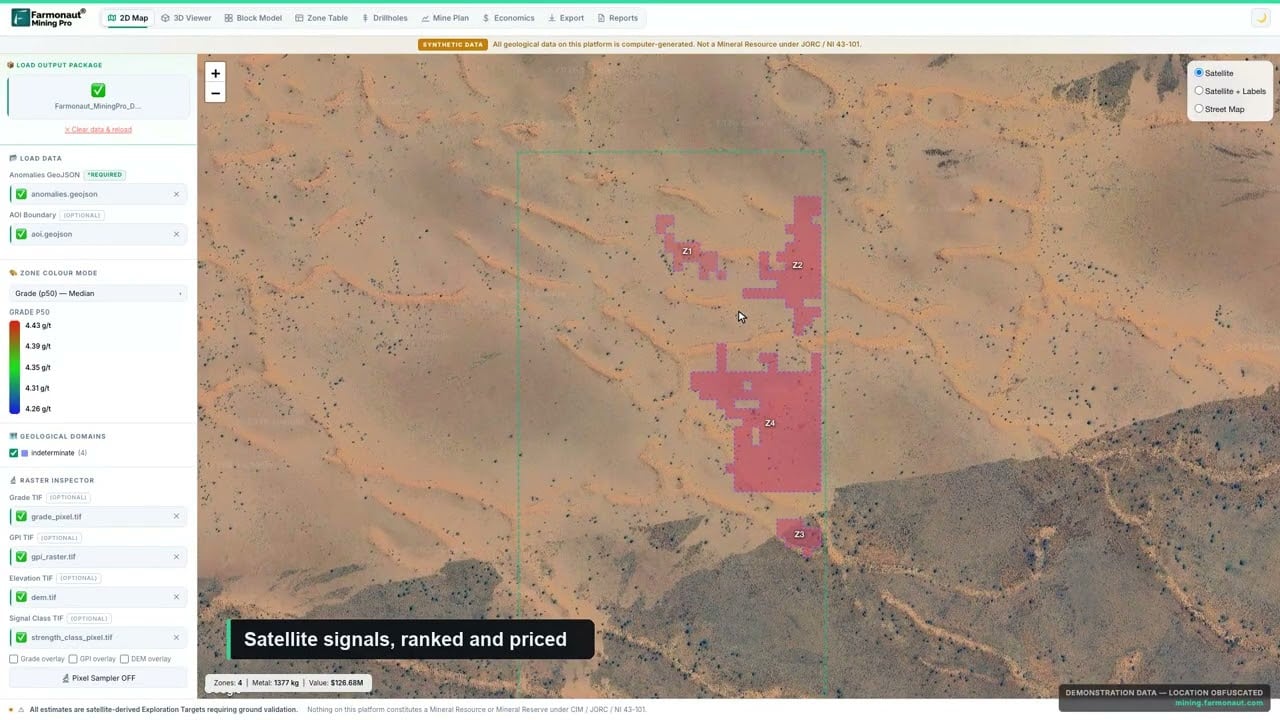
▶ What Farmonaut Mining Pro shows licence owners about their ground · 4:56
Risks of gold royalty investments
- Gold price. Revenue falls when the price falls, even if nothing changes at the mine. When the gold price falls, every royalty and stream on every mine pays less at the same moment; Wheaton’s third-quarter 2026 revenue rose mainly because its average realised price was 36% higher than a year earlier.
- Mine output. Strikes, outages and lower grades cut payments. Wheaton’s November 2026 release cited labour disputes at San Dimas and Stillwater and an outage that delayed the Hemlo ramp-up.
- Government action. Cobre Panama shows that a large asset can stop paying because of a government decision.
- Concentration. Smaller companies often depend on one or two mines.
- Valuation. Royalty companies often trade at high multiples of revenue, so share prices can fall even when income rises.
- Currency and listing. Many report in US dollars but trade in Canadian dollars, and some smaller names trade thinly.
How to compare gold royalty companies yourself
- Read the latest quarterly release and management report on the company site, SEC EDGAR or SEDAR+. Only these give revenue by metal and by asset.
- Find the gold share of revenue. Wheaton gave 51% for its third quarter of 2026; some companies give only a precious metals share.
- Compare revenue with GEOs sold. If revenue rose and GEOs did not, the gain came from price, not from new production.
- List the top five assets and check each mine is operating. A royalty on a halted mine pays nothing.
- Look at where the mines are, and how many are in development rather than producing.
- Check debt, cash and dividend history in the balance sheet.
- Divide market value by TTM revenue as a first check of what the market is paying, then read analysts’ net asset value work with care, since it rests on their own assumptions.
Royalty income calculator
Royalty income follows simple arithmetic: ounces sold times price times the royalty rate, less any agreed deductions. A stream takes a share of the ounces and subtracts what the holder pays per ounce. Enter a mine’s figures from the operator’s latest report to compare the two on the same mine.
Calculator
What does a royalty or stream on one mine earn each year?
Enter a mine’s figures from the operator’s latest report.
- Mine gold revenue (US$): $800,000,000
- Stream ounces received: 10,000
- Stream margin (US$/yr): $35,500,000
Example values only, not a benchmark or forecast. Gold price is an input: example, use today’s price. Deductions stand in for smelting, refining and transport charges. Ignores tax, by-products and changes in output.
Frequently asked questions
What are gold royalty investments?
They are investments that pay you a share of gold mine revenue or output without owning or running the mine. Most people make them by buying shares in a listed royalty or streaming company; some buy private royalties directly.
Which are the largest gold royalty companies?
By trailing twelve-month revenue checked on 5 November 2026, Wheaton Precious Metals (US$3.17 billion), Franco-Nevada (US$2.30 billion) and Royal Gold (US$1.75 billion) are the three largest (Stock Analysis).
Are gold royalty stocks safer than gold miners?
They avoid mine operating and building costs, which removes one large risk. They still carry gold price risk, output risk at each mine and valuation risk, so their share prices can and do fall.
Do gold royalty companies pay dividends?
The larger ones do. Wheaton declared US$0.195 per share for its third quarter of 2026, for example. Check each company’s latest release for current amounts.
What is the difference between a royalty and a stream?
A royalty pays a percentage of revenue with no further payment. A stream gives the right to buy a share of the metal at a low fixed or percentage price after an up-front payment.
Is there an ETF for gold royalty companies?
There is no large fund that holds only gold royalty companies. Some gold-mining funds, such as GOAU, give them large weights; in November 2026 its four biggest royalty holdings made up about 36% of the fund.
Can I buy a royalty on a single gold mine?
Yes, privately, from a mine owner or a prior claim holder. It needs a legal agreement, a valuation and capital, and it cannot be sold quickly.
How is a gold royalty valued?
Usually by estimating future production and price, applying the royalty rate, and discounting the cash flows to today. Market comparisons and past transactions are also used under the CIMVal standards.
What happened to Sandstorm Gold and Osisko Gold Royalties?
Royal Gold bought Sandstorm Gold on 20 October 2025. Osisko Gold Royalties changed its name to OR Royalties in 2025.
What is the best gold royalty investment for long-term growth?
No single answer fits everyone. Larger companies offer breadth and dividends; smaller ones depend more on new mines starting up. Compare them with the checklist above and take personal advice before investing.
More from Farmonaut: agro admin app, carbon footprinting, crop loan and insurance, farmonaut satellite weather api developer docs, fleet management, product traceability.
This page is for information only. It is not investment advice. The order shows company size, not expected returns.
Farmonaut mining
Screen a project area from space
Licence owners and investors can request a quote for satellite exploration screening of a project area before fieldwork or royalty talks.
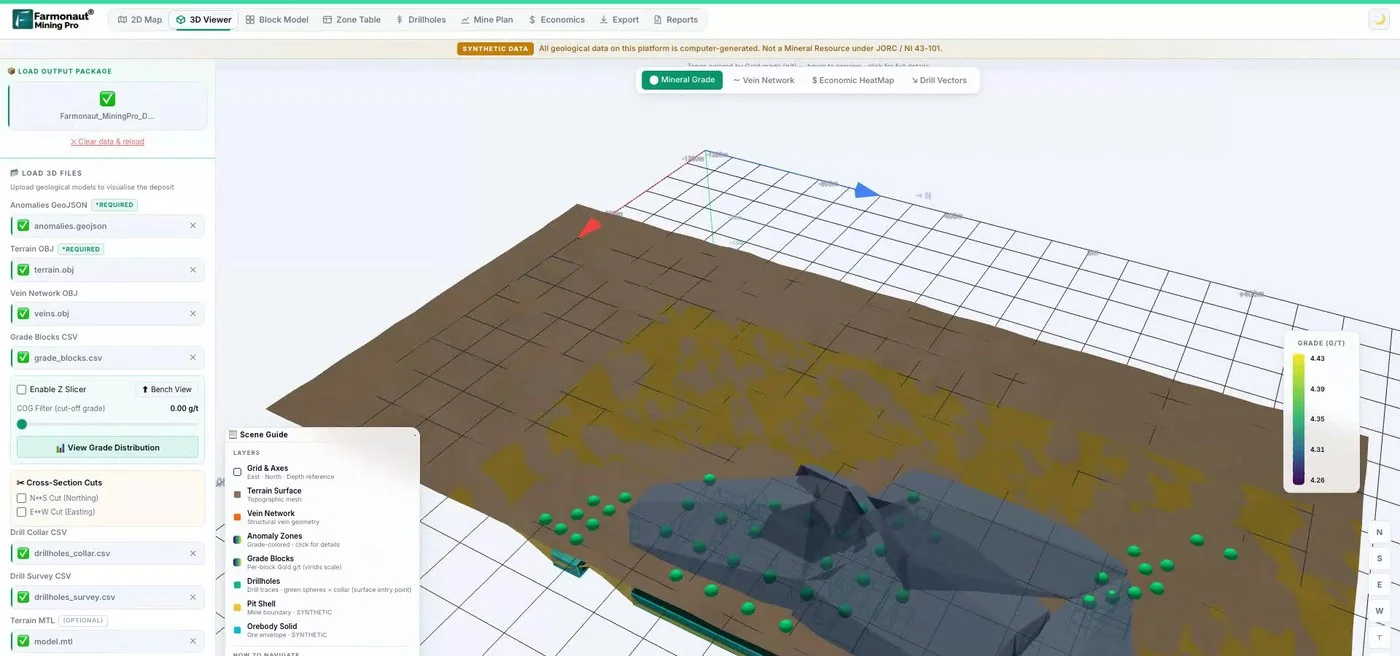
Mining Pro sample view, synthetic data
Keep reading
Sources
- Stock Analysis, Wheaton Precious Metals (checked November 2026): stockanalysis.com
- Stock Analysis, Franco-Nevada (checked November 2026): stockanalysis.com
- Stock Analysis, Royal Gold (checked November 2026): stockanalysis.com
- Stock Analysis, Triple Flag (checked November 2026): stockanalysis.com
- Stock Analysis, OR Royalties (checked November 2026): stockanalysis.com
- Stock Analysis, Elemental Royalty (checked November 2026): stockanalysis.com
- Stock Analysis, Gold Royalty Corp (checked November 2026): stockanalysis.com
- Stock Analysis, GOAU ETF holdings (checked November 2026): stockanalysis.com
- Wheaton Precious Metals, Q3 2026 results (5 November 2026): finviz.com
- Franco-Nevada, Q3 2026 release, SEC Form 6-K (11 November 2026): sec.gov
- Royal Gold, Sandstorm and Horizon closing, SEC Form 8-K exhibit (2025): sec.gov
- Centerra Gold, Q4 2025 MD&A: s205.q4cdn.com
- Triple Flag, Ravenswood stream release (June 2026): bnnbloomberg.ca
- Triple Flag, Q3 2026 revenue release: bnnbloomberg.ca
- OR Royalties, preliminary Q3 2026 GEO deliveries: bnnbloomberg.ca
- Elemental Altus and EMX, completion of merger (2025): newsfilecorp.com
- USGS, Mineral Commodity Summaries 2026: Gold: pubs.usgs.gov
- LBMA, precious metal prices: lbma.org.uk
- Queensland Revenue Office, mineral royalty rates: qro.qld.gov.au
- CIM, CIMVal valuation standards: cimmes.org
Discussion
Questions, corrections or field experience? Share them below. First-time comments are reviewed before they appear, and your email is never published.
No comments yet. Be the first to add a question or your experience.

 SG Gold Mining LLC
 VRV Global Pte Ltd
 Omsri International FZE
 G.I.T.T.
 Jaunita Erss Ltd
 Almosi SARL
 SRK Consulting
 Berks Gold Limited
 Mwerezi Minerals Company Limited
 Mining SARL
 SenGold Invest SAS
 Sean Mining Limited
 NTS Group (Pty) Ltd
 Mine4Africa
 Lithspo Minerals Limited
 Tintina Mining Group

 Licence holder · Nigeria · Gold + lithium
 Client · Somalia · Gold










