

Agriculture Land Use 2025: Sustainable Proven Strategies
“By 2025, sustainable strategies could increase agricultural land productivity by up to 30% while preserving vital ecosystems.”
Table of Contents
- Summary: Optimizing Land Use for Agriculture in 2025
- The Importance of Land Use in Agriculture
- Current Trends and Challenges in Agriculture Land Use
- Sustainable Land Use Strategies in Agriculture for 2025
- Comparison Table of Sustainable Land Use Strategies 2025
- Technology and Policy Synergy: The Future of Agriculture and Land Use
- Optimizing Land Use for Agriculture: 2025 and Beyond
- Farmonaut’s Role in Sustainable Agriculture Land Use
- FAQ: Sustainable Land Use for Agriculture in 2025



Summary: Optimizing Land Use for Agriculture in 2025 – A Sustainable Path Forward
In 2025, agriculture land use stands at a historic crossroads, where feeding a growing global population, sustaining rural economies, and protecting the environment must be balanced with increasing resource limitations and climate change impacts. Effective, sustainable land use for agriculture and livestock is critical for securing our food supply, conserving vital natural resources, and ensuring rural economic development.
This comprehensive guide explores current challenges, key strategies, and technology-driven solutions, such as precision agriculture, conservation practices, agroforestry, and policy innovation. We’ll examine how integrated approaches and advanced systems—bolstered by platforms like Farmonaut—can help farmers, policymakers, and organizations optimize land use in agriculture for 2025 and beyond, supporting the UN Sustainable Development Goals (SDGs), especially SDG 2 (Zero Hunger) and SDG 15 (Life on Land).
The Importance of Land Use in Agriculture
Land use for agriculture refers to how we manage and modify environments to cultivate crops and raise livestock. Agricultural activities utilize nearly 40% of the world’s land surface—making agriculture the single largest global consumer of arable land. The importance is clear: food security, environmental sustainability, and rural economic growth depend on how wisely we use and preserve our arable lands.
- Food production: Efficient land use in agriculture maximizes crop and livestock output to meet rising food demand for a global population projected to surpass 8 billion by 2025.
- Environmental protection: Natural ecosystems (forests, wetlands, grasslands) provide crucial ecosystem services (like water filtration, biodiversity protection, and carbon sequestration). Sustainable land use ensures these are conserved and not irreversibly converted to farmland.
- Soil and water conservation: Healthy soils and effective water cycles underpin productivity, climate resilience, and the health of agricultural systems.
- Biodiversity preservation: Diverse cropping systems, organic farming, and reduced chemical use protect native species, improve ecosystem health, and help buffer against pest outbreaks.
- Rural development: Smart land allocation supports thriving rural communities, economic stability, and more equitable access to resources.
Current Trends and Challenges in Agriculture Land Use
By 2025, land use agriculture faces critical challenges at global, regional, and local scales. These include compounding pressures—population growth, climate change, ongoing land degradation, unsustainable practices, and the challenge of balancing expanding urban areas with fertile agricultural zones.
1. Population Growth and Food Demand
Global food demand is projected to rise by 60% by 2025 (current United Nations projections). Population growth pushes farmers and policymakers to intensify the use of available agricultural land, squeezing more productivity from each hectare and integrating more technology into traditional farming methods.
- The next decade will see demand for crops, livestock products, and other agriculture and land use outputs skyrocket.
- This pushes for yield optimization, often at the risk of over-exploiting the land, unless sustainable strategies are adopted.
2. Climate Change Impacts and Yield Pressures
Climate change is becoming more pronounced each year. Rising temperatures, altered rainfall patterns, and extreme weather events (droughts, floods, hurricanes) are increasingly straining agricultural lands, causing potentially lower yields and sometimes forcing the abandonment of marginal lands or conversion of natural habitats to farmland.
- Farmers must adapt to shifting seasons and unpredictable weather, requiring more flexible and resilient cropping systems.
- Building resilience into agricultural land use is essential for future food security.
3. Land Degradation, Soil Health, and Unsustainable Practices
Decades of unsustainable land use in agriculture have degraded huge swathes of valuable farmland through erosion, nutrient depletion, salinization, and chemical build-up.
Monocropping, over-tilling, and excessive use of agrochemicals compromise soil health and reduce long-term productivity—posing a grave threat to global food security.
4. Urbanization, Competing Land Uses, and Land Allocation
Rapidly expanding urban areas increasingly encroach on productive agricultural zones, leading to a tug of war over land allocation. With urbanization and infrastructure development, prime arable lands are often converted to non-agricultural uses, fragmenting the rural landscape.
- This competition between urban expansion, conservation, and agriculture fuels policy debates about optimal land use allocation.
- Spatial planning and zoning are now critical in balancing the needs of food production, housing, business, and conservation.
“Global food demand is projected to rise 60% by 2025, making sustainable land use crucial for environmental protection.”
Sustainable Land Use Strategies in Agriculture for 2025
Faced with multiple pressures, the path forward requires adopting effective, sustainable, and integrated agricultural strategies that optimize land use, boost productivity, and safeguard natural systems. Below we highlight some of the most promising approaches projected to shape land use agriculture in 2025 and beyond.
Precision Agriculture: Optimizing Every Inch
Precision agriculture uses satellite imagery, drones, IoT sensors, and machine learning to target resources exactly where they’re needed. This minimizes waste, reduces environmental impact, and increases yield with fewer inputs. Technologies for precision agriculture include:
-
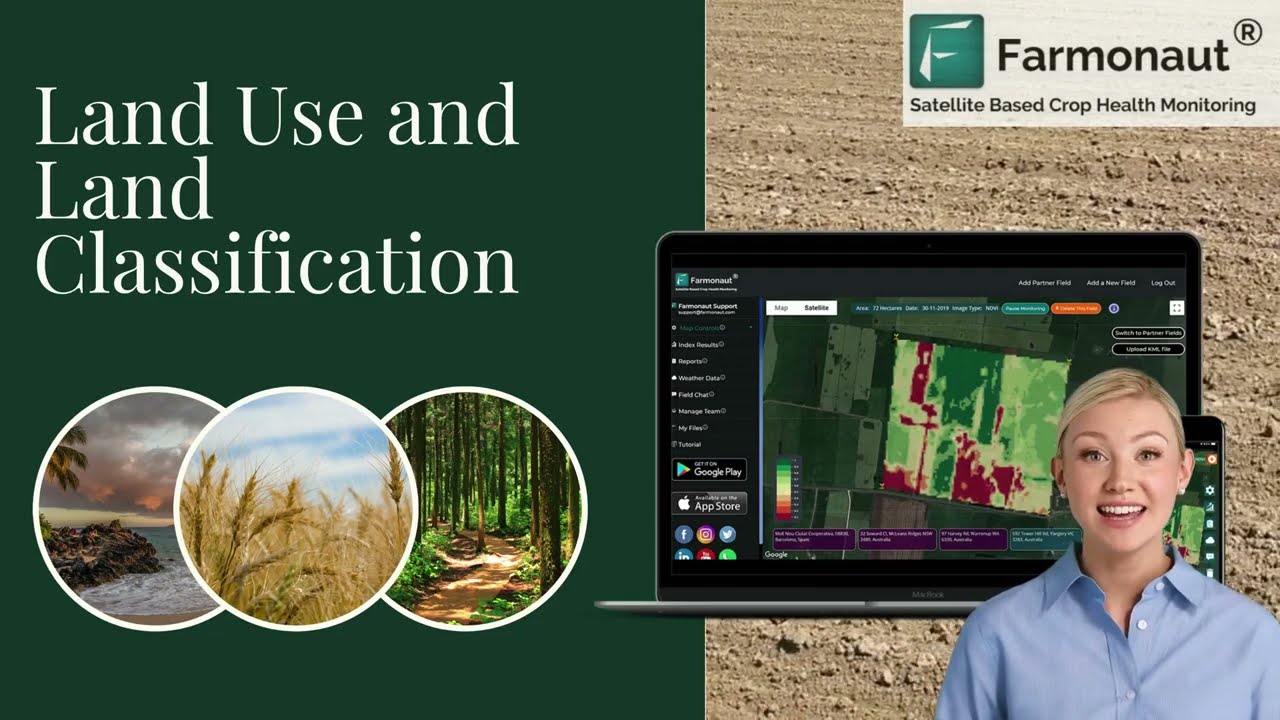
Satellite-based monitoring and NDVI (try with Farmonaut’s crop monitoring tools):
- Track crop health, soil moisture, nutrient levels and stress with high-frequency, real-time satellite data.
- Optimize irrigation, fertilizer, and pesticide application for each plot.
- AI-based advisory platforms: Automated, hyperlocal recommendations reduce guesswork for farmers, helping them make faster and more informed decisions.
- Farm machinery automation: GPS-guided tractors and variable-rate applicators ensure resources are never wasted.
Farmonaut’s carbon footprint monitoring tracks real-time environmental impact, empowering stakeholders to align farming methods with sustainability goals.
Agroforestry and Integrated Land Use Systems
Agroforestry involves integrating trees, shrubs, and other perennial plants with crops and livestock on the same land. Integrated systems improve:
- Land productivity: Complementary root systems utilize water and nutrients more efficiently, boosting total yield per hectare.
- Biodiversity and habitat quality: Trees act as windbreaks, protect soils, encourage wildlife, and sequester carbon.
- Resilience to climate change: Mixed land use buffers against extreme weather and supports year-round farm income.

Conservation Agriculture: Building Soil Health and Crop Resilience
Conservation agriculture refers to a suite of practices that maintain or improve soil structure and health while reducing erosion and nutrient loss. Key techniques for 2025 include:
- No-till or reduced-till farming: Leaves crop residues on the surface, minimizing soil disturbance.
- Crop rotation: Alternating crops to break pest/disease cycles, restore nutrients, and improve yields.
- Cover cropping: Growing plants like clovers or legumes between main crops to fix nitrogen, suppress weeds, and add organic matter.
These practices increase productivity over the long term, cut greenhouse gas emissions, and help mitigate climate change impacts by rebuilding healthy soils and water retaining capacity.
Read more about improving productivity and carbon sequestration via blockchain traceability in agriculture—ensuring transparent supply chains and environmental stewardship.
Land-Use Planning, GIS, and Zoning
Policy-driven spatial planning—using Geographic Information Systems (GIS)—helps us balance agricultural, urban, and conservation priorities. This is increasingly critical as fertile zones become more contested due to urbanization and competing land uses.
- Accurate mapping enables the identification of degraded or marginal lands for targeted rehabilitation.
- Informs policy on where new infrastructure should be developed without sacrificing key food production regions.
- Supports strategic zoning for long-term sustainability and resilience.
Try advanced land-use, yield, and soil health monitoring tools available in Farmonaut’s large-scale farm management solutions for agricultural planners and institutions.
Rehabilitation of Degraded Lands
Worldwide, over 33% of farmland is moderately or severely degraded. Strategies for 2025 focus on:
- Organic amendments: Using compost, manure, and cover crops to restore soil structure and fertility.
- Contour farming and terracing: Reduces surface runoff and soil erosion on slopes.
- Afforestation and reforestation: Sequester carbon, rebuild biodiversity, and protect ecosystem services like clean water and air.
Reducing Inputs and Waste Through Smart Practices
- Water use efficiency: Drip irrigation and adaptive scheduling boost output per unit of water—crucial in the wake of increasingly frequent droughts.
- Fertilizer and chemical reduction: Targeting application only to zones that truly need it cuts costs, pollution, and helps restore soil health.
Empowering Farmers and Landholders with Technology
Farmers and rural communities will need access to affordable technology to thrive. Platforms like Farmonaut, delivering satellite-driven insights and AI advisories, play a vital role in democratizing sustainability—and are increasingly being adopted for crop loan and insurance verification, improving financial security for agricultural stakeholders.
Comparison Table of Sustainable Land Use Strategies (2025 Projections)
| Strategy Name | Description | Estimated Adoption Rate by 2025 (%) | Potential Yield Increase (%) | Resource Conservation Impact (Water/Soil % Saved) | Environmental Benefit (Score 1-5) |
|---|---|---|---|---|---|
| Precision Agriculture | Satellite and AI-driven data for targeted resource application, maximizing productivity and minimizing waste. | 45 | 15-30 | 25% less fertilizer/pesticide, 25% less water | 5 |
| Conservation Tillage | Reduced soil disturbance to minimize erosion, preserve structure, and sustain yields. | 50 | 5-10 | 15% less soil loss, 10% more organic matter | 4 |
| Crop Rotation | Alternating different crops to restore nutrients, disrupt pests, and optimize yields. | 55 | 10-15 | 10% less irrigation, 5% better nutrient use | 4 |
| Agroforestry | Combining trees and crops/livestock for improved productivity, microclimate, and carbon sequestration. | 30 | 5-20 | 30% more biodiversity, 15% less erosion | 5 |
| Rehabilitation of Degraded Land | Restoring productivity on marginal/degraded soils via organic methods and reforestation. | 20 | 10-25 | Improved organic matter by 20% | 5 |
| Integrated Resource Management | Combination of water, nutrient, and land-use planning for systems optimization. | 35 | 10-20 | Efficient water/land allocation by 20% | 4 |
| Regenerative Agriculture | Practices enhancing soil regeneration, carbon capture, and biodiversity. | 15 | 5-25 | Carbon sequestration: up to 1-2 t/ha/year | 5 |
Technology and Policy Synergy: The Future of Agriculture and Land Use
The next era of sustainable agriculture land use will be determined by how smartly we integrate technology, data, and effective policy frameworks. This synergy is vital for ensuring that sustainable strategies go beyond small-scale demonstrations and are adopted at global scales.
-
Policy Incentives:
- Subsidies to encourage conservation agriculture, agroforestry, and regenerative practices.
- Land tenure and land rights reforms to empower farmers and improve access to agricultural finance and insurance.
-
Digital Platforms and Smart Apps:
- Farmonaut offers real-time environmental impact tracking and AI-based recommendations to support day-to-day land management, crop planning, and resource optimization.
- APIs and developer tools (see Farmonaut API) enable businesses and institutions to build customized solutions and integrate satellite insights into their own platforms. Explore more via Farmonaut API Documentation.
- Fleet management tools help agricultural businesses optimize logistics, vehicle usage, and monitor large and remote lands efficiently.
-
Advanced Cropping Systems:
- New crop varieties—drought-, pest-, and heat-resistant—are critical for withstanding the impacts of climate change and sustaining productivity.
- Integrated systems design for maximum biodiversity and minimal risk.
Accessing and managing these solutions is easier than ever via Farmonaut’s multi-platform web and mobile apps—tailored for farmers, agribusinesses, institutions, and government agencies worldwide.
Optimizing Land Use for Agriculture: 2025 and Beyond
Looking to 2025, optimizing agriculture land use is central to global food security, rural development, and environmental sustainability. In practice, this requires:
- Balancing productivity with conservation: We must produce more food with fewer inputs and less land without threatening biodiversity or natural resources.
- Ensuring economic viability: Sustainable methods must also support farm and rural livelihoods by stabilizing yields, reducing input costs, and improving market access.
- Mitigating and adapting to climate change: Agriculture should be both resilient to climate impacts and contribute to mitigation by capturing carbon and avoiding ecosystem destruction.
- Empowering all stakeholders: Smallholders, women, and youth, as well as agricultural entrepreneurs, must have fair access to data, finance, and markets.
Farmonaut’s real-time satellite insights and AI platforms are accessible, affordable tools to empower both smallholders and large operators. From crop and plantation monitoring to resource traceability, the technology suite is designed to promote effective, equitable, and sustainable agriculture land use globally.
Farmonaut’s Role in Sustainable Agriculture Land Use
At Farmonaut, we are dedicated to making satellite-driven insights affordable and accessible for users, businesses, and governments around the world.
- Our platform integrates multispectral satellite imagery, AI advisory systems, and blockchain traceability for comprehensive monitoring, planning, and analysis. This ensures agriculture land use decisions are data-driven and sustainable.
- We offer environmental impact monitoring, providing real-time data for regulatory compliance, carbon accounting, and ecosystem protection.
- Our APIs enable developers and businesses to build advanced agricultural applications, while flexible subscription models make cutting-edge solutions affordable for users of all sizes.
Farmonaut is not an online marketplace, an input manufacturer, or regulatory body—our focus is providing direct value through precise, neutral, and actionable technology for all stakeholders in global agriculture and land use.
FAQ: Sustainable Land Use for Agriculture in 2025
What is land use agriculture?
Land use agriculture refers to the practices and management strategies farmers, communities, and governments use to allocate land for the cultivation of crops and the raising of livestock. It encompasses planning, maintenance, and modification of environments for the purpose of sustainable food and resource production.
Why is sustainable land use in agriculture important in 2025?
Sustainable land use ensures food security for the projected 8+ billion world population, protects critical ecosystems, keeps soil and water resources healthy, and helps mitigate and adapt to climate change impacts while supporting rural economies.
What are the main challenges facing agriculture land use today?
The top challenges are population growth increasing food demand, climate change stress, ongoing land degradation, soil and water resource depletion, and competition from urbanization and alternative land uses.
Which sustainable land use strategies should be prioritized by 2025?
Strategies with high impact and scalability include precision agriculture, conservation tillage, diverse crop rotations, agroforestry, degraded land rehabilitation, and integrated resource management—empowered by technology and policy innovation.
How does technology help in optimizing land use for agriculture?
Technology such as satellites, sensors, and AI platforms deliver precise data to optimize input use, monitor environmental indicators, boost yields, reduce resource waste, enhance transparency, and aid spatial/zoning decisions for land allocation.
How can smallholder farmers benefit from sustainable land use solutions?
Smallholder farmers can increase yield, cut input costs, and improve resilience to climate and market shocks. Platforms such as Farmonaut make advanced monitoring and advisory tools accessible even on a small scale.
Where can I find developer APIs or more advanced solutions for agricultural land use?
Farmonaut provides robust APIs and developer documentation for integration, monitoring, and analytics at scale.
Conclusion: Toward a Sustainable, Data-Driven Path Forward
In summary, as the global challenge of food security, environmental preservation, and rural economic development remains central in 2025, optimizing land use for agriculture through sustainable, integrated strategies—supported by modern technology—will be the key to our shared future.
Empowering all farmers and agricultural institutions with actionable data, advanced analytics, and smart resource management tools will maximize productivity, conserve our precious natural resources, and help us meet the ever-growing demands of our world. The future of agriculture and land use lies in science-driven planning, inclusive technology adoption, and an unwavering commitment to sustainability for generations to come.
Discussion
Questions, corrections or field experience? Share them below. First-time comments are reviewed before they appear, and your email is never published.
No comments yet. Be the first to add a question or your experience.

 Tres Valles
 LACOS Geoinformation
 Pulsar Supernova
 Magrifly
 LatConnect 60
 Disease Free Life
 WebsEdge
 Blickwinkel
 Agricultural Credit Policy Council
 MCSOD
MCSOD Marei Nursery
 eKGIS
eKGIS Mostas Tech
 Andex
Andex FCF India
 Unifrutti Gulf
 Deluxe Conseil
 WICO
WICO
