

Agritech Mobile Apps: Top 7 Agriculture Mobile App Trends Revolutionizing Farming in 2025 & Beyond
“In 2023, over 70% of new agritech apps integrated AI-powered crop monitoring features.”
“The global agritech app market grew by 16% annually, driven by data-driven farm management solutions.”
Introduction
The agritech mobile app landscape has become a cornerstone in the transformation of modern agriculture. With the world’s population surpassing 8 billion and global food demand growing rapidly, farmers are facing unprecedented pressure. Climate variability, water scarcity, and resource constraints threaten sustainability and productivity, demanding innovative solutions.
In 2025 and beyond, agriculture mobile app development is at the heart of this revolution, driving efficiency, sustainability, and profitability across the entire sector. These specialized software tools are designed to assist farmers directly on their smartphones, offering real-time data, science-backed advice, transparent market information, precision crop management tools, and much more.
The integration of AI, IoT sensors, satellite imagery, big data analytics, and intelligent automation has redefined what’s possible in digital farming. From detecting the early signs of crop disease outbreaks to empowering even smallholder farmers with data-driven operations management, these platforms are now essential.
In this comprehensive blog, we explore the top 7 agriculture mobile app trends dominating 2025. We’ll provide practical insights, examples, a comparative table for quick understanding, and a closer look at Farmonaut—a leading satellite-driven platform advancing the sector. Let’s dive into how agritech mobile apps are revolutionizing farming.
Why Are Agritech Mobile Apps Essential in 2025?
Agriculture faces an era marked by increasing global food demand, climate change, and resource constraints. Farmers must manage rapidly shifting conditions, address pest infestations, optimize inputs amidst rising costs, and stay profitable while meeting tighter environmental regulations.
Here’s where agritech mobile apps become vital:
- Data-Driven Decision-Making: These apps provide real-time, actionable data on fields, crops, soil, and climate—helping farmers manage operations more efficiently.
- Precision Management: AI-driven monitoring tools can detect early signs of disease, pest outbreaks, and nutrient deficiencies—even across hundreds of hectares—enabling targeted interventions.
- Resource Optimization: With IoT-enabled sensors streaming real-time information, farmers can optimize irrigation and fertilization, conserving water while reducing input costs.
- Market Access and Trade: Market price integrations and buyer connections allow growers to directly access competitive markets, increasing transparency and profitability.
- Inclusion & Accessibility: User-centric designs, multilingual and voice interfaces, and offline functionality make advanced tech accessible—even in remote, rural areas.
- Sustainability: Reduced overuse of chemicals, measured resource application, and direct feedback on environmental impacts enable more sustainable practices and improve soil and water quality.
Let’s examine the seven dominant trends—and how they’re revolutionizing agriculture via agritech mobile apps in 2025 and beyond.
Comparative Table: Top 7 Trends in Agriculture Mobile App Development
| Trend Name | Brief Description | Key Technologies | Estimated Adoption Rate (2026+) | Main Benefits for Farmers | Example Applications or Use Cases |
|---|---|---|---|---|---|
| AI-Enabled Crop Health Monitoring | Real-time detection of crop diseases, pests, nutrient issues via satellite, drone, and AI. | AI, Satellite Imagery, ML, Drones | 77% | Improved yields, reduced losses, targeted interventions, less chemical overuse. | Detecting early blight in tomatoes, automated pest outbreak alerts, NDVI mapping. |
| IoT-Driven Soil and Water Management | Continuous monitoring of soil moisture, pH, temperature, and nutrients via IoT sensors and mobile. | IoT, Sensors, Data Analytics, Mobile Integration | 65% | Optimized irrigation, water conservation, reduced input costs, better scheduling. | Precision irrigation planning, soil health dashboards, drought mitigation. |
| Hyperlocal Weather Forecasting & Risk Advisory | AI-based weather models deliver field-specific forecasts, disease/pest outbreak alerts. | AI, Big Data, ML, Weather Sensors | 72% | Reduced crop failures, improved planning, risk mitigation, fewer losses. | Localized rain prediction, automated pest warnings before outbreaks. |
| Smart Farm Management & Decision Support | All-in-one platforms: financial, labor, inventory, compliance, and advisory in one place. | Software, AI, Cloud, Data Analytics | 85% | Streamlined operations, increased transparency, efficient resource management. | Farm record keeping, multilingual advisories, personalized dashboards. |
| Real-Time Market Access & Transparent Trade | Live price discovery, demand analysis, direct buyer-seller connectivity for better returns. | APIs, Data Integrations, Mobile | 54% | Higher incomes, access to wider markets, direct trade, better price transparency. | Commodity price alerts, e-auctions, input supplier listings. |
| User-Centric Design & Multilingual/Voice Interfaces | Accessible, inclusive platforms using simplified flows, voice commands, virtual agents. | AI/ML, UX/UI, Edge Computing | 67% | Higher adoption, rural inclusivity, reduction in digital divide, smooth use offline. | Voice-driven crop advisories, offline farm record management. |
| Augmented Reality (AR) & Virtual Reality (VR) Integration | Immersive farm training, 3D crop visualization, virtual equipment demos. | AR/VR, Mobile, AI | 28% (rapid growth expected) | Better learning, quick troubleshooting, user engagement, remote support. | Simulated irrigation setup, virtual scouting, interactive learning modules. |
1. AI-Enabled Crop Health Monitoring via Agritech Mobile Apps
AI-enabled crop health monitoring stands as a transformative trend for fields of every size. Satellite imagery, drones, and AI models are leveraged to detect early signs of pest infestations, nutrient deficiencies, and disease outbreaks. The mobile app processes the data and sends actionable alerts to farmers—helping them respond faster, reduce losses, and optimize input application.
- Real-time Detection: Apps analyze satellite-based NDVI (Normalized Difference Vegetation Index) and multispectral data for signs of crop stress related to pests, diseases, or nutrient deficiency.
- Automated Alerts: Timely notifications allow growers to act on targeted pesticide applications and localized fertilization, promoting sustainable practices and higher yields.
- Reduced Chemical Overuse: By addressing only the affected areas, these apps reduce overuse of chemicals, further preserving soil and water quality.
- Integration with Drones: Combining drone-collected imagery with app-based AI provides even more granular maps for real-time decision making.
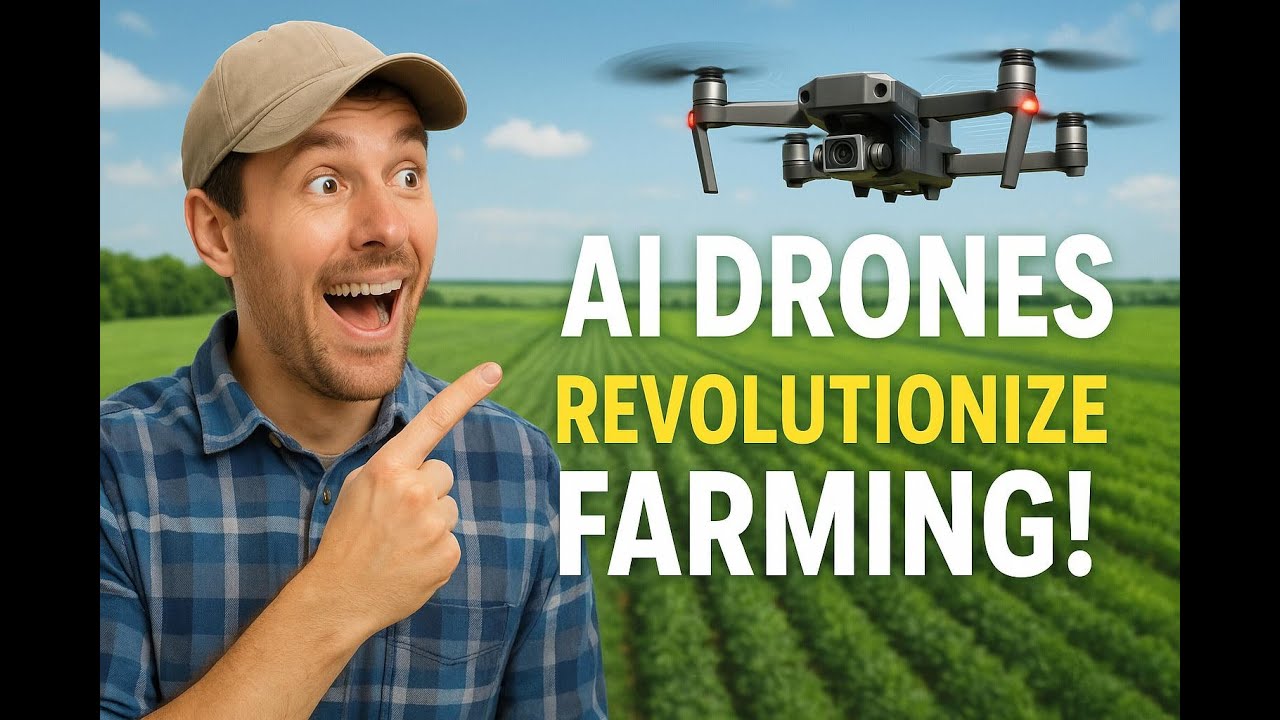
Want to learn more about real-time crop health monitoring with satellite-based tools? Explore Farmonaut’s large-scale farm management solutions here.
This trend is foundational for productivity, resource savings, and sustainability. In fact, over 77% of modern agritech mobile apps now provide such sophisticated AI-enabled health insights.
Satellite-Powered Monitoring – Farmonaut’s Approach
At Farmonaut, we leverage a combination of satellite imagery, AI, and machine learning to analyze vegetation health, detect deficiencies earlier, and empower our users with near real-time feedback, accessible on both Farmonaut Mobile  and Web Apps. Our API integration also allows others to embed these insights within their platforms.

2. IoT-Driven Soil and Water Management in Mobile Agriculture Apps
IoT-enabled soil and water management is revolutionizing how farmers interact with their land. By integrating IoT sensors into agriculture mobile apps, farmers can continuously monitor soil moisture, temperature, pH, and nutrient levels—crucial factors for yield optimization and resource stewardship.
- Granular Data: Sensors distributed across fields provide real-time, hyperlocal data on soil health parameters, synced directly to the user’s smartphone.
- Precise Irrigation: With exact insights, irrigation scheduling becomes data-driven, helping to conserve water and manage usage during drought or supply limitations.
- Input Optimization: When linked to fertilizer application scheduling, farmers can adjust nutrient delivery for better crop health and minimized runoff.
- Cost Savings: By applying inputs only where conditions call for them, costs are reduced, and environmental impacts are lower.

Integrating such sensor data with satellite intelligence, platforms like ours enable users to make informed decisions—a core feature in carbon footprinting and sustainability tracking solutions. Connected apps mean soil information is always at farmers’ fingertips.
Supporting Sustainable Water Use & Reduced Input Costs
Mobile apps with IoT integration empower farms of any scale to adapt to unpredictable climate, easily optimize irrigation and fertilization routines, and boost yields while preserving natural resources.
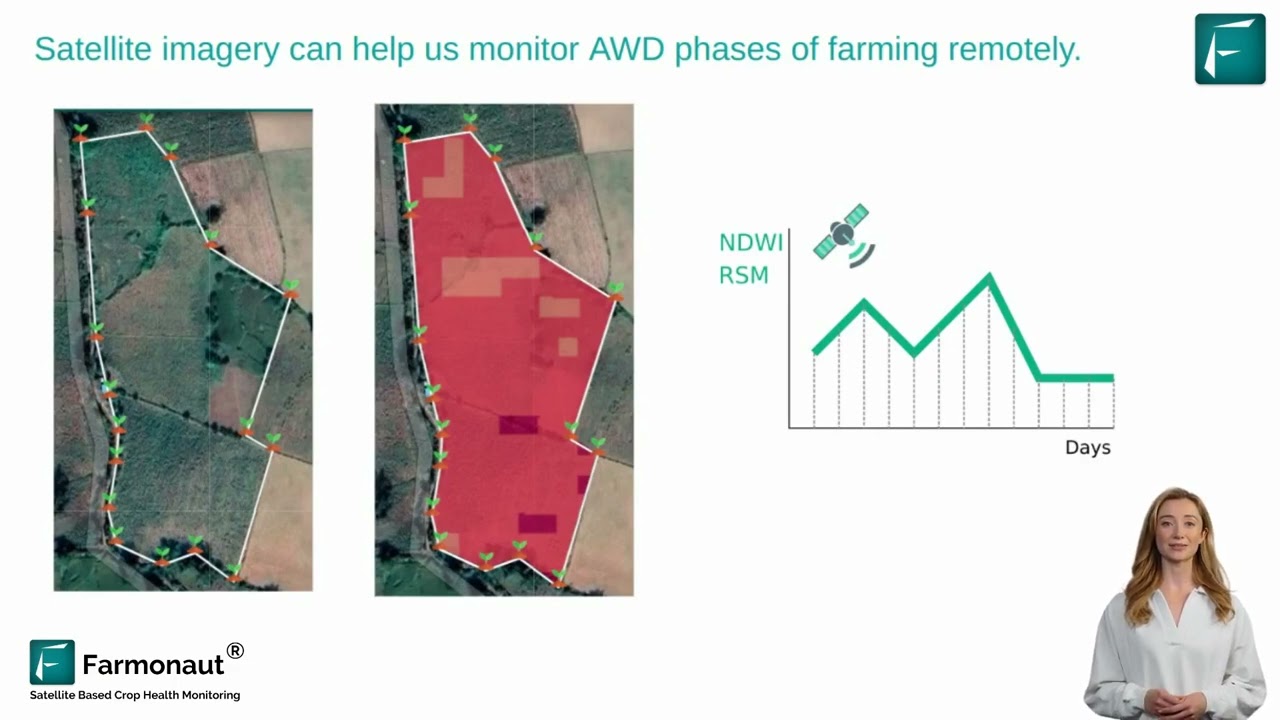
Satellite-based verification tools for loans and insurance are increasingly reliant on this granular, sensor-driven dataset, creating trust and opening new financing for farmers.
3. Hyperlocal Weather Forecasting & Risk Advisory through Mobile Apps
Farming has always been weather-dependent. In 2025, hyperlocal weather forecasts powered by AI and big data analytics offer revolutionary risk mitigation. Agritech mobile apps are now capable of leveraging AI models trained on decades of weather patterns and current satellite data to predict field-specific conditions—from rainfall onset to frost risk.
- AI-Driven Weather Intelligence: Algorithms process both live and historical weather data, producing hyperlocal outlooks—far more accurate than traditional sources.
- Crop-Specific Risk Models: Some apps incorporate models that trigger pest and disease outbreak alerts based on forecasted humidity, temperature, and wind patterns.
- Proactive Action Planning: Field-level recommendations help farmers time sowing, spraying, harvesting, and irrigation with minimal guesswork.
- Yield Protection: Growers facing climate variability can make backup or diversity plans, reducing the impact of crop failures.
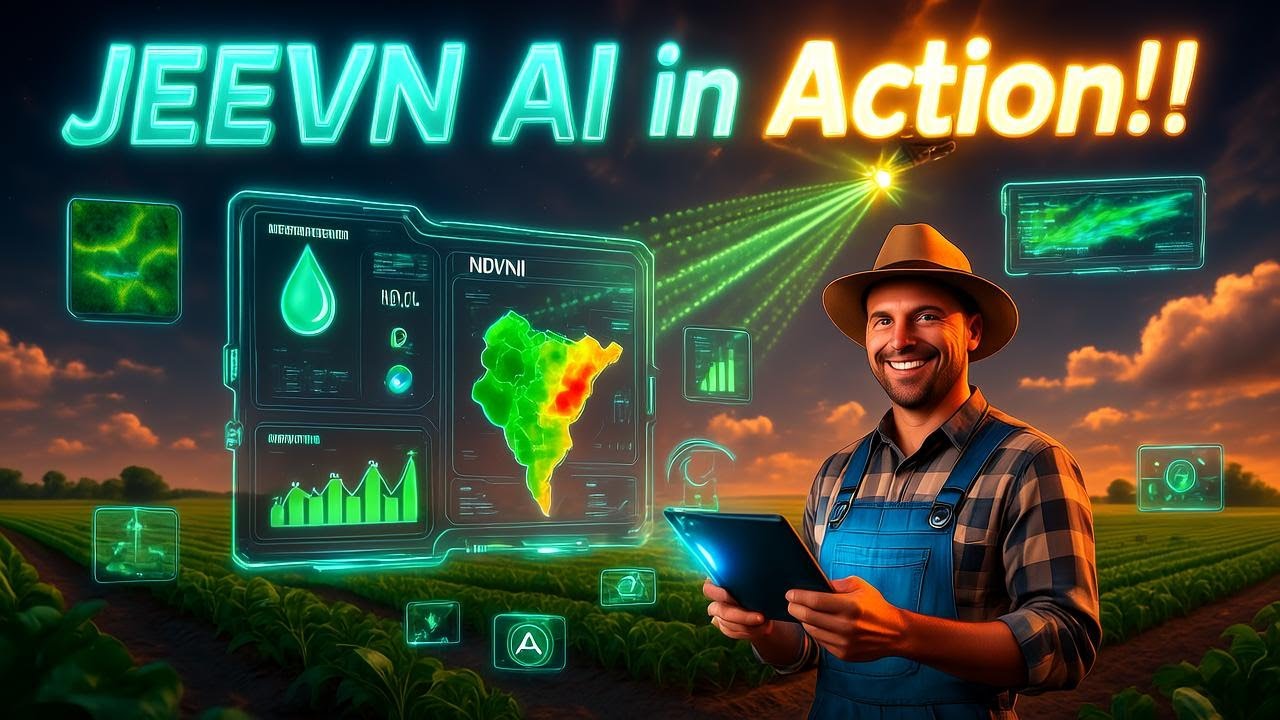
At Farmonaut, our Jeevn AI Advisory System delivers dynamic weather and risk insights, helping users across multiple sectors respond to changing conditions swiftly via mobile and browser apps.
4. Smart Farm Management and Decision Support via Unified Platforms
Modern agriculture mobile apps are no longer just information tools—they are all-in-one management platforms. Farmers can track financials, manage labor, monitor inventory levels, and access compliance checklists, all within a single interface.
- Integration of Daily Operations: Task lists, expense/income records, procurement, inventory, and HR features simplify the management of complex operations, especially for cooperatives and large-scale farms.
- In-built Advisory Services: Crop-specific best practice recommendations, pest management, and periodic alerts help inform every decision.
- Compliance & Sustainability Reporting: Apps now support easy-to-complete compliance reporting for environmental standards, audited supply chains, and sustainability programs.
- Offline Capabilities: For rural or disconnected areas, many apps sync data offline and update automatically when connectivity is restored.
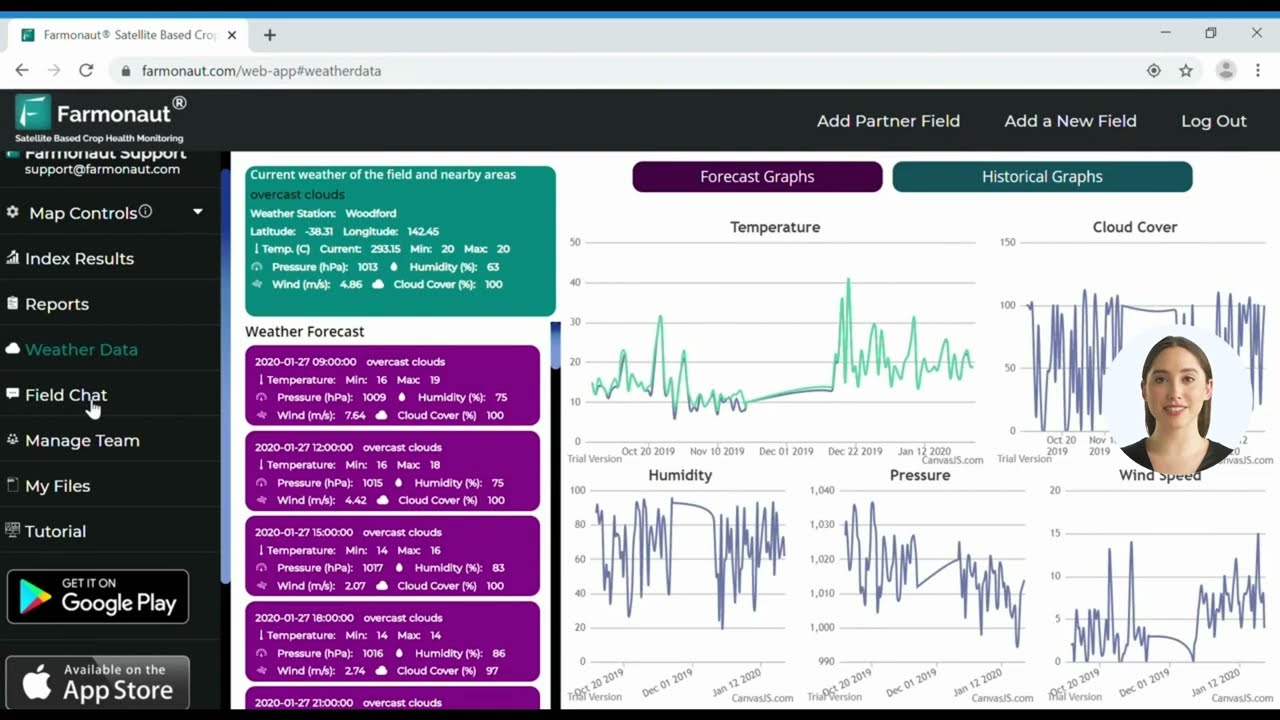
Holistic management approaches are now widely adopted, with platforms like Farmonaut offering large-scale farm management tools that scale from individual users to entire agribusinesses.
Fleet and resource management modules integrated into apps improve efficiency for input delivery, machine usage, and field operations planning—crucial as agri-logistics become increasingly digital.
“In 2023, over 70% of new agritech apps integrated AI-powered crop monitoring features.”
“The global agritech app market grew by 16% annually, driven by data-driven farm management solutions.”
5. Real-Time Market Access and Transparent Trade via Mobile
Direct market access and transparent price discovery are among the most desired features for farmers, especially in emerging and developing economies. Agriculture mobile apps now provide:
- Live Commodity Prices & Trend Analysis: Farmers access up-to-the-minute prices for major crops and livestock, allowing for better bargaining and market timing.
- Demand-Side Intelligence: Real-time insights into what buyers are looking for, enabling targeted production planning.
- Buyer & Input Supplier Integration: Direct chat, listing, and deal-making tools foster true peer-to-peer trade, bypassing traditional middlemen.
- Traceability & Certification: Some platforms embed blockchain-based traceability solutions, reassuring buyers, and facilitating certifications.


Such integrations are pivotal, as around 54% of farmers worldwide (2025+) rely on mobile trading tools for at least part of their operations. Transparency and direct access are no longer optional—they are competitive necessities.
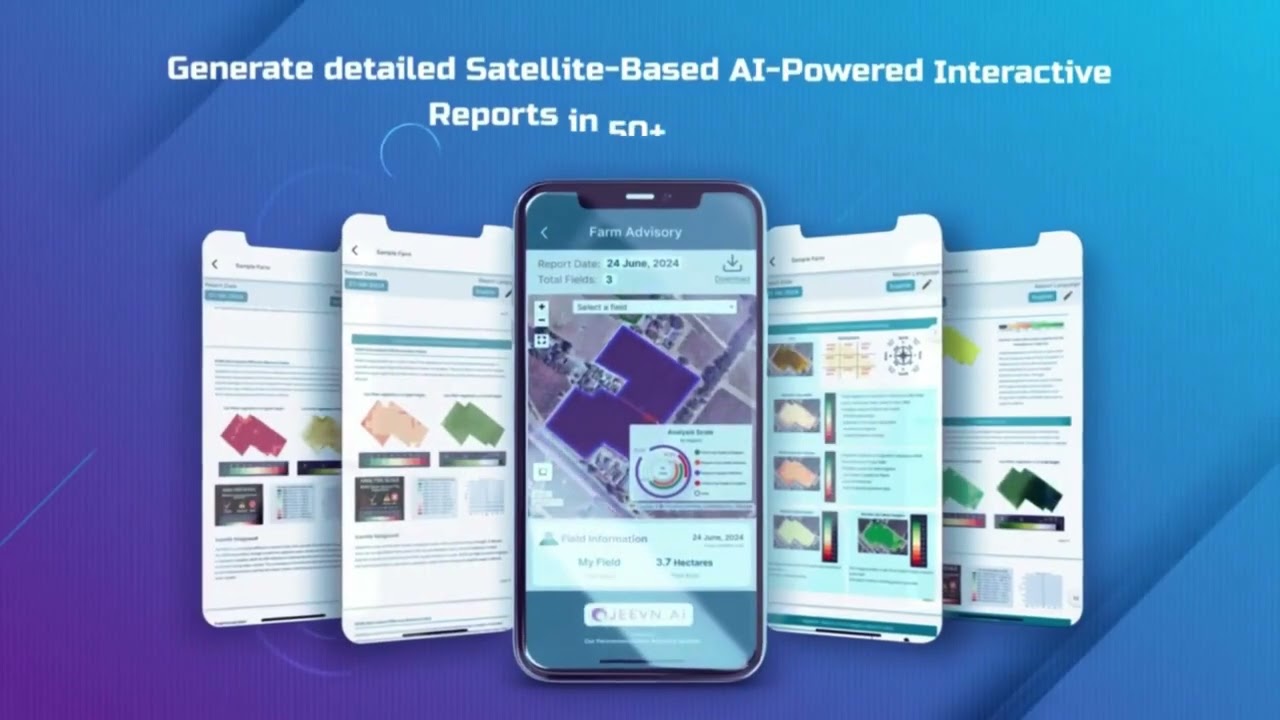
6. User-Centric Design, Multilingual & Voice Innovations in Agritech Apps
One of the main barriers to mobile technology adoption in rural farming areas is complexity. To overcome this, 2025’s most effective agritech mobile apps prioritize user-centric design, including:
- Multilingual Interfaces: Supporting multiple regional languages to ensure accessibility for non-English speakers.
- Voice-Based Interactions: AI-driven chatbots and voice assistants guide users through features—even for those with low literacy levels.
- Offline Functionality: Where internet is patchy, apps operate offline, syncing automatically when connection is restored—leveraging edge computing.
- Intuitive Design Principles: Visual-first navigation, clear icons, and customizable dashboards improve usability for all age groups.
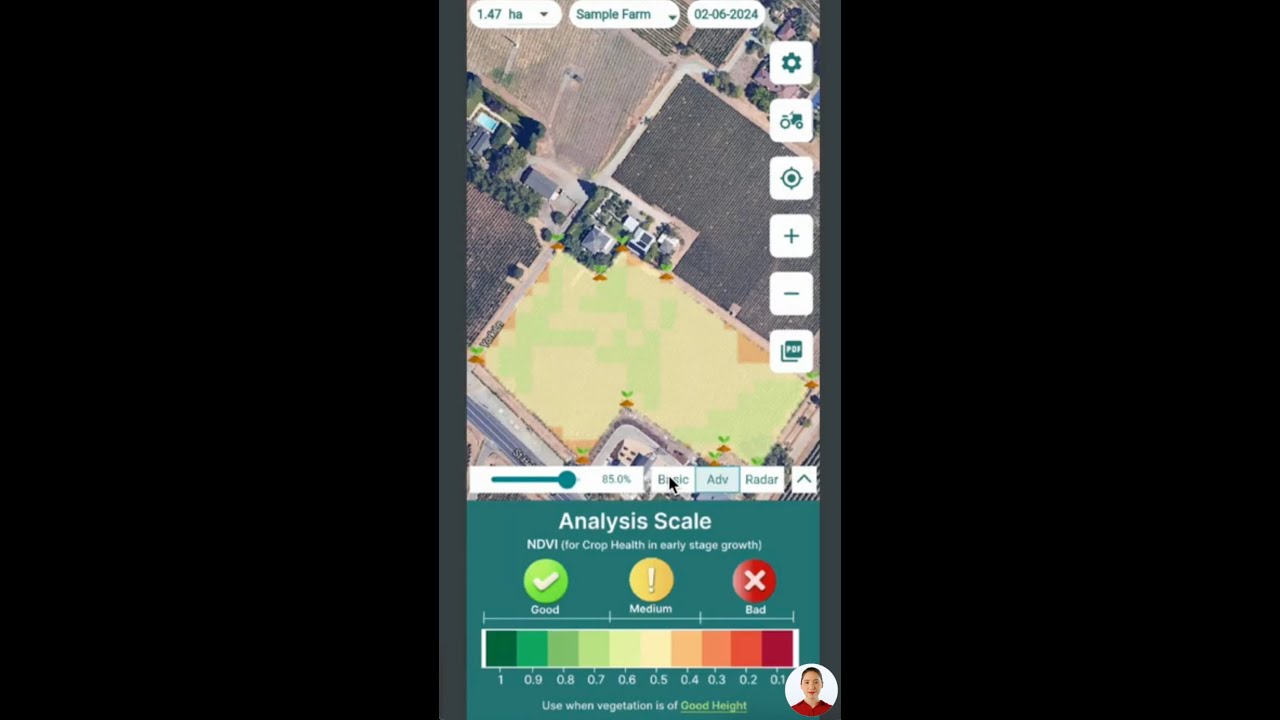
We at Farmonaut have always prioritized mobile and web apps with simple, accessible interfaces that empower every user—including smallholder farmers and government agencies.
Find our apps easily on both Google Play and App Store.
7. Augmented Reality (AR) & Virtual Reality (VR) — The Next Leap in Mobile Farming
While still emerging, AR and VR integration in agriculture mobile app development is redefining training, equipment maintenance, and extension services. The applications of these immersive technologies include:
- AR Training Modules: Visual overlays guide new machinery setups, disease identification, or correct pruning techniques.
- Field Scouting: AR-powered mobile cameras can diagnose plant diseases or growth problems by overlaying known patterns onto real-world crops.
- VR Simulation: Virtual reality modules provide machinery operation training, climate simulation for planning, and remote troubleshooting sessions.
- High Engagement: These tools drive deeper understanding and long-term adoption of modern practices, even among less tech-savvy users.
AR and VR are expected to see rapid adoption post-2025, quickly becoming standard for training and support as development costs drop and mobile hardware advances.
Farmonaut: Empowering the Future of Agritech Mobile Apps
The trends above reflect a global shift—but how do they come together in real platforms today? At Farmonaut, we integrate satellite imagery, AI, machine learning, and blockchain into easy-to-use mobile and browser apps that support farmers, agribusinesses, governments, and enterprises.
- Satellite-Driven Insights: From crop health monitoring (NDVI), soil moisture, to environmental impact, our platform brings remote sensing directly to your devices without expensive hardware.
- AI-Based Advisory: Jeevn AI delivers actionable advice, risk assessments, and weather forecasts using the latest data and tailored models—empowering farmers to make smarter, data-backed decisions instantly.
- Blockchain for Traceability: We provide product traceability systems that secure the supply chain at every stage, building trust and reducing fraud.
- Fleet and Resource Management: Our fleet management solutions help optimize input delivery, machine use, and logistics costs.
- Environmental Impact Tracking: With features like carbon footprinting, users can meet sustainability goals while boosting productivity.
- Financing Support: Our data-driven crop monitoring and verification streamline crop loan and insurance processes for both farmers and banks, reducing risks.
Our modular and scalable platform ensures affordability, accessibility, and efficiency for farms of any scale, anywhere in the world.
Access Our App
Ready to empower your farm and agribusiness operation for 2026 and beyond? Discover our API and developer documentation for next-generation satellite, weather, and crop data integration.
FAQ – Agriculture Mobile Apps, 2025 & Beyond
Q1: What makes agritech mobile apps vital for farmers in 2025 and after?
Agritech mobile apps provide farmers with instant access to real-time data covering crop health, soil status, weather forecasts, financials, and marketplace conditions. Their main advantages are enhanced decision-making, resource savings, risk mitigation, increased yields, and direct market participation.
Q2: Are these apps only for large, commercial farms?
No. The best agriculture mobile app development now emphasizes inclusivity and scalability. Smallholder and large-scale farmers alike benefit from user-friendly features, multilingual support, and affordable subscription options.
Q3: How secure and reliable is the data from these apps?
Leading platforms utilize blockchain-based traceability and rigorous AI data validation. This ensures data integrity, privacy, and transparency—critical when decisions (or financial products) are based on app insights.
Q4: Can these mobile apps work offline for rural farmers?
Yes, many agritech mobile apps today—such as those built by Farmonaut—incorporate offline mode and edge computing, allowing field data collection and management without a constant internet connection.
Q5: What are the core technologies enabling these advances?
AI, machine learning, satellite imagery, IoT sensors, big data analytics, blockchain, and AR/VR collectively drive the sector’s innovation and are at the root of all seven trends covered above.
Q6: How do Farmonaut’s tools support climate resilience and sustainability?
Through integrated environmental impact monitoring, carbon footprint analytics, and precision advisory, Farmonaut helps its users adapt to climate change, conserve resources, and meet regulatory or certification standards.
Conclusion & Next Steps for Smarter Agriculture
In 2025 and beyond, agritech mobile apps are reshaping the very fabric of agriculture. These apps empower farmers, boost productivity, conserve vital resources, and enhance transparency throughout the sector. The seven trends we’ve explored—AI-driven crop monitoring, IoT-powered soil management, hyperlocal forecasts, holistic management platforms, direct market access, user-centric design, and immersive AR/VR—set the pace for a smarter, more sustainable future.
As we move forward, platforms like Farmonaut will continue to lead, integrating satellite, AI, blockchain, and IoT innovations in highly accessible mobile and web apps—putting science-backed tools at every farmer’s fingertips. Whether you manage a smallholding or a multinational agribusiness, the right agriculture mobile app can maximize your efficiency, profitability, and resilience.
Are you ready to embrace the technology and transform your farm for 2026 and beyond?
Explore, innovate, and thrive. The mobile agritech revolution is here, and it’s transforming every field, everywhere.
Discussion
Questions, corrections or field experience? Share them below. First-time comments are reviewed before they appear, and your email is never published.
No comments yet. Be the first to add a question or your experience.

 Rouge VC
 Yutz Automation
 AgroGreen Dynamics
 Leher
Leher AgroRisk
 Oath Inc
 Reddane Farming
 Esri North East Africa
 Cresol
 Atur Kuliner
 MDCV UK
 Zerella Group
 Etech Consulting Madagascar
 Vestlandsforsking
 Delicio
 WB Dev
 Sama Premium
 Prochecker
 Tres Valles
 LACOS Geoinformation
 Magrifly
 LatConnect 60
 Blickwinkel
 Exploration consultancy · South Africa · Gold
 Licence holder · Niger · Gold










