

Agriculture Land for Lease: 7 Powerful Benefits for 2026



Summary: Understanding Agricultural Land Lease in 2026
Understanding Agricultural Land Lease in 2026: Opportunities and Challenges
In 2026, the concept of agriculture land for lease is a pivotal force reshaping modern farming practices, rural development, and sustainability globally. With mounting pressure on land resources due to a rising population, urbanization, and climate change, agricultural land leasing provides innovative strategies for farmers, investors, and policymakers. This article explores agricultural land for lease—including its benefits, lease types, challenges, legal nuances, and emerging technology trends—helping individuals and agribusinesses unlock new opportunities in sustainable rural growth.
The Growing Importance of Agricultural Land Leasing
As global food demand climbs and arable land availability declines, agriculture land for lease remains a practical and sustainable solution for both new and experienced entrants in farming. In 2026, it continues to address two critical issues:
- Land Scarcity: Leasing grants access to fertile patches without the huge capital required for land acquisition, energizing young farmers, agribusinesses, and enterprises.
- Underutilized Assets: Landowners—including absentee landlords or professionals in other fields—often prefer leasing to maintain ownership and generate passive income.
This dynamic creates a symbiotic relationship between landowners and tenants. Leasing supports agricultural productivity, innovation, and flexible resource management, allowing adaptation to new technologies and climate-resilient practices.

How Agriculture Land Lease Supports Food Security and Rural Growth
Agriculture land lease mechanisms empower not only farmers, but also rural communities, by unlocking new opportunities for agricultural diversification, job creation, and sustainable development. In India, Southeast Asia, and parts of Africa, as well as advanced markets in Europe and North America, agricultural leasing programs are fueling rural growth and agricultural modernization.
- Agricultural leases provide capital efficiency, allowing tenants to invest in modern equipment, sustainable practices, and technology upgrades instead of tying funds to land acquisition.
- Flexible lease terms support adaptation to market trends and agro-climatic changes.
- By making underutilized lands productive, leasing supports food security and economic empowerment for marginalized groups and smallholders.
Types of Agriculture Land Lease Arrangements in 2026
Choosing the right lease agreement is critical for success. There are several types of agricultural land lease agreements that remain prevalent and evolving in 2026:
- Fixed-Term Leases: Spanning 1–5 years, these suits annual and short-cycle crops, horticulture, and farmers seeking moderate commitments.
- Long-Term Leases: Extending beyond 10 years, ideal for perennial crops, agroforestry, and sustainable land management investment.
- Sharecropping/Crop-Sharing Leases: Rent is a share of produce, aligning farmer and landowner incentives, often adopted in regions with variable yields.
- Flexible Leases: Agreements with periodic reviews, adapting to market price shifts or climatic conditions—supporting risk sharing and adaptive management.
These lease arrangements impact risk sharing, investment incentives, land stewardship, and rural economic stability. They offer adaptability in a highly dynamic agricultural environment.

7 Powerful Benefits of Agricultural Land for Lease
Agricultural land lease arrangements provide a wide array of advantages crucial for sustainable, modern, and productive farming by 2026. Here are seven transformative benefits:
-
1. Captial Efficiency and Faster Access to Land
Leasing allows farmers and agribusinesses to start or scale operations without the substantial capital outlay required for land acquisition. This efficiency directs precious resources towards improved crop management, mechanization, and digital innovation.
-
2. Flexibility in Cropping, Scale, and Management
Agriculture land for lease offers diverse lease tenure options, supporting quick adaptation to shifting market trends or climate variabilities. Farmers can experiment with niche crops, rotate cultivation, or expand/reduce scale with minimal long-term risk.
-
3. Land Use Optimization & Maximized Agricultural Productivity
Leasing revitalizes underutilized or fallow land plots, increasing local and global food production. It fosters rural employment and social inclusion while decreasing pressure on natural ecosystems (limiting new deforestation).
-
4. Promotion of Sustainability and Environmental Stewardship
Sustainable lease frameworks incentivize longer-term, responsible land management. Tenants are encouraged to implement soil improvement, cover cropping, reduced tillage, and agroforestry, yielding positive impacts for soil health and biodiversity.
-
5. Economic Empowerment of Smallholders & Marginalized Groups
Land leasing expands opportunities for women, youth, and disadvantaged rural populations. By democratizing land access, leasing reduces inequalities in agricultural participation and income generation.
-
6. Innovation & Access to Technology
Lease agreements can unlock the adoption of modern farming technologies, such as satellite-based crop monitoring and blockchain traceability (explore Farmonaut’s traceability solutions for secure agri supply chains). These tools boost productivity, transparency, and data-driven farm management.
-
7. Risk Diversification for Landowners and Tenants
Leasing offers risk sharing and diversified income streams, especially with sharecropping and flexible arrangements. Landowners enjoy steady returns without direct involvement, while tenants secure productive land without large upfront costs.


Benefits Comparison Table: Agriculture Land for Lease in 2026
| Benefit | Estimated Value/Impact by 2026 | Environmental Benefit | Potential Challenge |
|---|---|---|---|
| Access to Modern Technology | 45–65% of new entrants in 2026 adopt satellite monitoring and AI-driven tools via leasing | +22% improved monitoring drives targeted input use, reducing waste and resource depletion | Initial learning curve for tech; digital divide in rural areas |
| Improved Crop Diversity | Diversification rates up by 30% in regions with flexible lease terms | Enhances biodiversity, natural pest control, and ecosystem resilience | Requires market linkage for non-traditional crops |
| Land Use Optimization | +28% conversion rate of underutilized/fallow lands to arable plots | Decreases pressure for farmland expansion, reduces habitat loss | Due diligence needed for land suitability |
| Capital Efficiency | Investment shifted—up to 30% increase in agro machinery and input allocation | Promotes efficient resource use—less waste, more productivity | Potential instability with short-term leases |
| Sustainability Promotion | 17–19% more tenants use crop rotation and reduced tillage | Soil erosion cut by 11%, increased carbon sequestration via agroforestry | Only possible with secure, longer-term tenure |
| Economic Empowerment | Income boost for smallholders: +25% on average (regions with leasing schemes) | Reduces rural-urban migration & social disparities | Need for clear legal rights and transparent contracts |
| Risk Diversification | Up to 40% more landlords/tenants use mixed leases for steady income | Buffer for climate and market shocks; stabilizes livelihoods | Complexity in negotiations, especially in emerging markets |

Key Challenges & Considerations in Agriculture Land Leasing
While agriculture land leasing brings significant opportunities, it also presents tangible challenges for farmers, landowners, and rural policy stakeholders in 2026:
- Legal Frameworks: Inconsistent or outdated land tenure laws can create disputes, threaten tenants’ security, or deter necessary investments in land improvement.
- Lease Agreement Complexity: Fair, transparent lease agreements require legal expertise and local knowledge, often lacking in rural or developing regions.
- Investment Disincentives: Short-term leases may discourage capital allocation to soil health, water management, and sustainability upgrades since benefits accrue over years.
- Land Quality Issues: Without robust due diligence, tenants risk acquiring degraded land (e.g., poor soil, water access constraints).
- Social & Environmental Impact: Large-scale leasing by conglomerates can lead to land concentration, marginalization of local farmers, and ecosystem risks if not regulated.
Other Considerations for Sustainable Agricultural Leasing
- Ensuring gender and youth inclusivity in lease contracts
- Designing “green lease clauses” to mandate sustainable farming practices by tenants
- Supporting contracts with digital record-keeping, blockchain, and transparent data—such as Farmonaut’s traceability products designed for agriculture supply chain transparency

Emerging Trends in Agriculture Land Lease (2025–2026+)
The landscape of agriculture land for lease and agricultural land for lease continues to evolve rapidly, driven by technological innovation, climate priorities, and policy reforms:
-
Digitized Lease Platforms: Lease transactions and management are becoming increasingly digitized, boosting transparency and access for rural farmers. Platforms supported by blockchain and remote verification reduce fraud and improve access to loans and subsidies.
- For developers or agri-software providers, Farmonaut’s Satellite & Weather Data API enables secure integration of satellite-driven insights into lease monitoring, compliance, and management tools.
- Green Lease Clauses: Sustainability mandates are written into many modern lease contracts, requiring soil conservation, cover crops, and responsible fertilizer/pesticide management.
- Policy Support and Legal Reforms: Governments in 2026 are formalizing land leasing laws and incentives, particularly in Asia, Africa, and the Americas, to stimulate rural development while protecting farmer rights.
-
Agroforestry and Mixed Land Use: Leasing arrangements of 10+ years increasingly allow tenants to integrate tree crops, silvopasture, and habitat corridors, which improve carbon sequestration, soil health, and climate adaptation.
- Interested in improving agroforestry project traceability and carbon impact? See Farmonaut’s carbon footprinting solutions for agriculture.
-
Financial Services Expansion: Land leasing markets are supporting rural development by unlocking credit and crop insurance when land tenure rights are verifiable.
- Discover how Farmonaut’s satellite-powered crop loan and insurance verification tools streamline access to agri-financing for leasing farmers.
By 2026, these transformative shifts make agriculture land leasing more accessible, transparent, and sustainable, while positioning it as the foundation for digital, green, and equitable food systems worldwide.
How Farmonaut Supports Sustainable Agriculture Leasing
As a leader in satellite technology and agricultural data intelligence, we at Farmonaut support the next generation of agricultural land for lease initiatives. Our satellite-driven tools and AI advisory systems empower all stakeholders in the lease process—farmers, landowners, businesses, and government agencies—to make faster, wiser, and greener decisions.
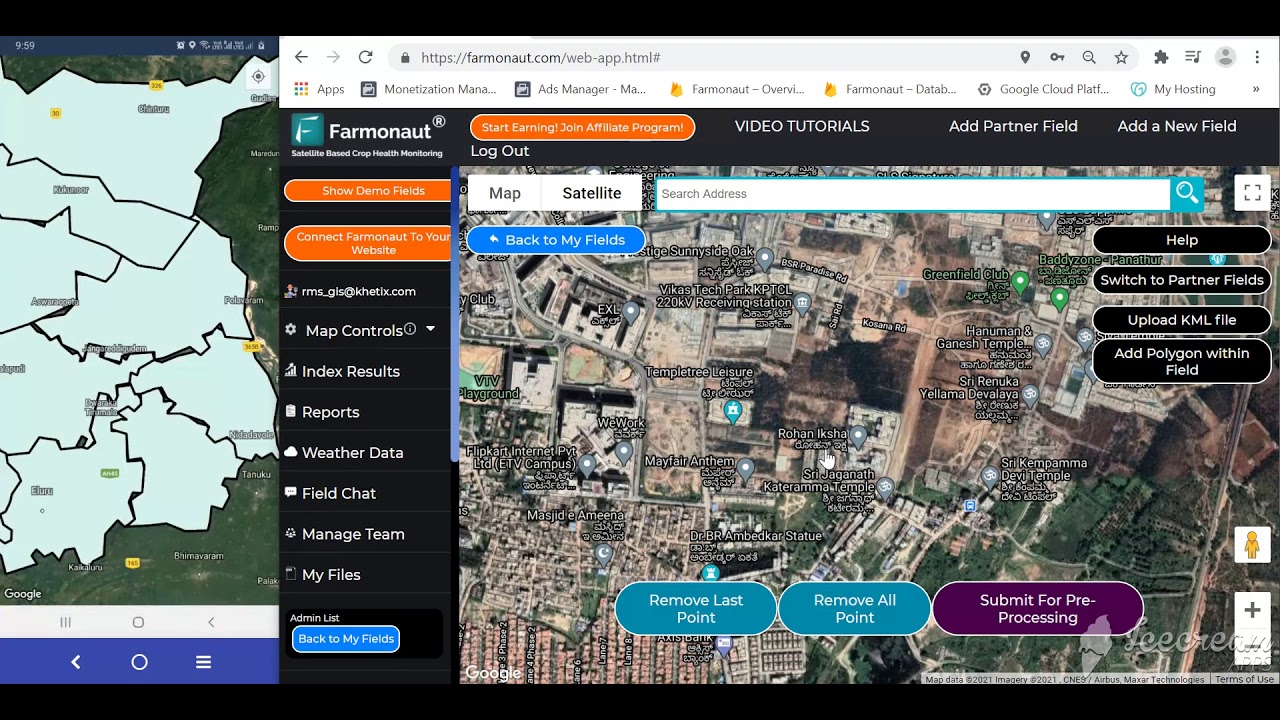
- Real-Time Monitoring: Our platform provides seamless field mapping, crop monitoring (including NDVI, soil moisture, and crop health scores) for leased fields of any size, anywhere in the world.
- AI-Driven Advisory: The Jeevn AI System delivers tailored guidance on soil management, crop selection, field operations, and environmental stewardship—reducing risk and boosting profits on leased land.
- Traceability & Compliance: Blockchain-based record-keeping ensures transparent agreements, helps validate sustainability compliance, and secures supply chain data for agricultural exports.
- Resource & Fleet Management: For lessees managing machinery or logistics, our fleet management solutions optimize vehicle usage, reduce costs, and ensure safe, sustainable transportation on leased or owned fields.
- Environmental Impact Tracking: Carbon footprinting in agriculture is simplified and made affordable, helping leased farms comply with ever-stricter environmental policies.
- Large-Scale Farm & Lease Management: For government or agribusiness lease schemes, our agro-admin digital platform streamlines large farm, plantation, and forest advisory operations with secure satellite interface.
Our apps are available across web, iOS, and Android, ensuring anyone—from smallholder lessees to multi-thousand-acre operators—can benefit from affordable remote sensing and actionable data.
Frequently Asked Questions (FAQs): Agriculture Land Lease & Leasing Advantages
Q1. What is agriculture land for lease and how does it work in 2026?
A: It’s an agreement between landowners and tenants, giving tenants the right to use and farm arable plots in exchange for rent or a share of the harvest. Leasing structures vary (fixed-term, long-term, sharecropping, etc.), offering flexibility and risk-sharing benefits. In 2026, digital technologies like remote monitoring and blockchain contract authentication improve transparency and security for all parties.
Q2. What are the main advantages of agricultural land lease vs land ownership?
A: Leasing lets farmers access fertile plots without large capital investments, supporting rapid scaling and flexibility. It enables experimentation with crops, sustainable land management, and improved rural livelihoods, all while preserving landowner rights and generating steady income for landlords.
Q3. Are there risks or downsides to agricultural land for lease?
A: Short-term leases may discourage investment in land improvement or sustainable practices. Legal ambiguity, lack of transparent contracts, or environmental neglect can lead to disputes and reduced productivity. However, clear legal frameworks, digital record-keeping, and green lease clauses can mitigate most risks.
Q4. Can technology help make leased farming more sustainable?
A: Absolutely. Satellite data, AI-based advisory, and secure digital records enable better resource management, compliance tracking, and real-time decisions for both landowners and tenants. Technology adoption is expected to rise sharply by 2026, supporting climate-smart, sustainable agriculture.
Q5. How can Farmonaut’s services assist with agricultural land leasing?
A: We provide satellite-based monitoring, AI-driven crop and soil advisory, blockchain traceability, and environmental tracking solutions for leased farmlands. Our tools help farmers maximize productivity, ensure sustainability, and validate compliance—empowering users from small plots to vast agribusiness holdings.
Conclusion: Future Opportunities for Sustainable Agricultural Land Leasing
In conclusion, agricultural land for lease remains a cornerstone of sustainable, inclusive, and modern farming in 2026 and beyond. From empowering new entrants and smallholders to modernizing rural economies and strengthening global food security, the benefits are immense when supported by robust legal frameworks, innovative technologies, and well-structured agreements.
Farmers and landowners who embrace digital solutions, sustainability standards, and flexible leasing models are best placed to thrive in an era of increasing resource constraints, climate volatility, and market dynamism. Whether for agroforestry, crop diversification, rural development, or resilience against environmental risks, agriculture land leasing offers a future-focused strategy with lasting impacts.
Ready to power your farm or lease management with next-generation technology and insights? Get started with the Farmonaut App today and unlock your path towards efficient, green, and profitable agriculture.

 AgriSevak
 CU Foods
 BeyondTech Global
 Rouge VC
 Yutz Automation
 AgroGreen Dynamics
 AgroRisk
 Oath Inc
 Reddane Farming
 Esri North East Africa
 Cresol
 Atur Kuliner
 MDCV UK
 Zerella Group
 Etech Consulting Madagascar
 Vestlandsforsking
 Delicio
 WB Dev
 Sama Premium
 Prochecker
 Tres Valles
 LACOS Geoinformation
 Magrifly
 LatConnect 60
