

Deforestation Solutions 2025: Reforestation Solution
Meta Description: Explore innovative reforestation solution and deforestation solutions 2025, including agroforestry, technology, and community conservation for reversing forest loss and promoting sustainable ecosystem restoration.
Table of Contents
- Summary: Deforestation Solutions in 2025
- Deforestation & Reforestation Trivia
- Understanding the Drivers of Deforestation and Solutions for 2025
- Reforestation Solution & Agroforestry: Core Solutions for 2025
- Technological Innovations for Sustainable Forest Conservation
- Community Engagement & Indigenous Leadership in Forest Restoration
- Policy Frameworks & International Cooperation: Building Effective Solutions
- Comparative Table: Innovative Deforestation Solutions 2025
- How We at Farmonaut Empower Reforestation Solution in 2025
- Reforestation Impact Trivia
- Practical Steps Forward: What Are Solutions for Deforestation in 2025?
- Conclusion: Reversing Forest Loss by 2025 and Beyond
- Frequently Asked Questions (FAQ)
- Farmonaut Product Links
- Farmonaut Subscriptions
Summary: Deforestation Solutions in 2025 – Innovative Approaches to Reversing Forest Loss
Deforestation remains one of the most pressing environmental challenges of the 21st century, contributing significantly to biodiversity loss, climate change, and the disruption of essential ecosystem services. As we approach 2025, the urgency for a robust solution to deforestation has intensified—especially with increasing demand for agricultural land, timber, and infrastructure development.
Solutions for deforestation in 2025 require a multifaceted approach: combining innovation, technology, policy reforms, community engagement, and ecological restoration such as reforestation solution and agroforestry practices. In this comprehensive guide, we explore the key drivers of deforestation, discuss the most promising solutions, explain technological advances, highlight the role of indigenous communities, and provide a comparative analysis of impact—all focused on sustainable forest recovery and preservation.
Deforestation & Reforestation Trivia
“By 2025, innovative reforestation can potentially restore up to 350 million hectares of degraded forest worldwide.”
Understanding the Drivers of Deforestation and Solutions for 2025
To effectively address deforestation in 2025 and beyond, understanding the drivers and root causes is essential. Solutions to deforestation must tackle the underlying issues across regions and ecosystems to create lasting, sustainable change.
Primary Causes of Deforestation
- Agriculture: Slash-and-burn farming, shifting cultivation, and cattle ranching remain the leading drivers of deforestation globally.
Expanding agricultural land puts immense pressure on forest cover, especially in the Amazon and Southeast Asia. - Logging: Both legal and illegal logging for timber, paper, and fuel drive significant forest loss. Unsustainable practices and weak enforcement exacerbate the problem.
- Infrastructure Development: Roads, dams, and urban expansion fragment forest ecosystems and increase accessibility for further deforestation.
- Mining: Extraction of minerals, metals, and fossil fuels heavily contributes to local and regional deforestation, particularly in tropical nations.
- Climate Change: Rising temperatures and erratic weather worsen forest vulnerability, making trees more prone to pests and wildfires. Climate-induced degradation is an indirect but increasingly important driver.
These drivers are intensified by increased global demand for agricultural commodities, timber, and infrastructure development. Addressing them requires an integrated approach—one that combines technological innovation, community engagement, policy reform, and restoration efforts.
Keyword Focus: Deforestation solutions 2025, solutions for deforestation, solution to deforestation, innovate reforestation solution, restoration, forest, agriculture, logging, illegal, expansion, ecological, restore.
Reforestation Solution & Agroforestry: Core Solutions for Deforestation in 2025
A reforestation solution is at the heart of all major efforts to combat deforestation in the 21st century. But in 2025, restoring tree cover goes far beyond planting trees—it’s about restoring entire ecosystems, supporting biodiversity, and making forests resilient to climate change. Agroforestry offers a sustainable method to integrate trees into farming and livestock systems, reducing the need for clearing additional forest land and supporting both livelihoods and conservation.

Modern Reforestation Solution: Essential Features in 2025
- Sophisticated Practices: Today’s reforestation methods are science-driven and focus on restoring native species, soil health, and ecosystem services, going far beyond merely increasing tree cover.
- Innovations in Planting: The use of drones for seed dispersal and **AI-driven site selection** is enabling more precise and large-scale restoration efforts.
- Resilience: Selectively planting fast-growing, climate-adapted tree species promotes resilience and increases carbon sequestration in diverse conditions.
- Restoration of Entire Ecosystems: Combining trees with sustainable understory plants supports pollinators, birds, and mammals, which are essential for resilience and ecological balance.
Agroforestry: Blending Conservation with Agricultural Productivity
Agroforestry, a widely used sustainable farming practice, integrates trees with crops and livestock on the same land. The benefits are numerous:
- Dual Benefit: Increases tree cover while supporting farmers’ incomes and food production.
- Reduces Expanding Land Clearance: By intensifying production on existing agricultural lands, there is less need to clear additional forests.
- Restores Soil Health & Productivity: Tree roots prevent erosion, improve soil fertility, and regulate water cycles—critical for maintaining ecosystem services.
- Supports Biodiversity: Agroforestry systems offer habitats for birds, insects, and other biodiversity.
Especially in regions like the Amazon, West Africa, and Southeast Asia, governments and NGOs now focus on agroforestry models as a major solution for deforestation.
Want guidance on forest restoration or agroforestry? Access Farmonaut’s Crop Plantation & Forest Advisory Services for satellite-aided insights on tree planting, site selection, and sustainable land management.
Technological Innovations for Sustainable Forest Conservation
Technological innovation is revolutionizing how we tackle deforestation in 2025. From satellites and AI to blockchain, modern tools allow for precise tracking, smarter planning, and effective enforcement of conservation policies.
Satellite & Remote Sensing Technologies
- Real-Time Monitoring: Remote sensing with satellite imagery now provides real-time data on forest cover, illegal logging, and changing land uses.
- Farmonaut Carbon Footprinting helps map carbon sequestration and monitor emissions at scale—a crucial step for climate mitigation.
- Geographic Information Systems (GIS): GIS tools focus efforts on priority areas, guiding restoration with ecological and social data.
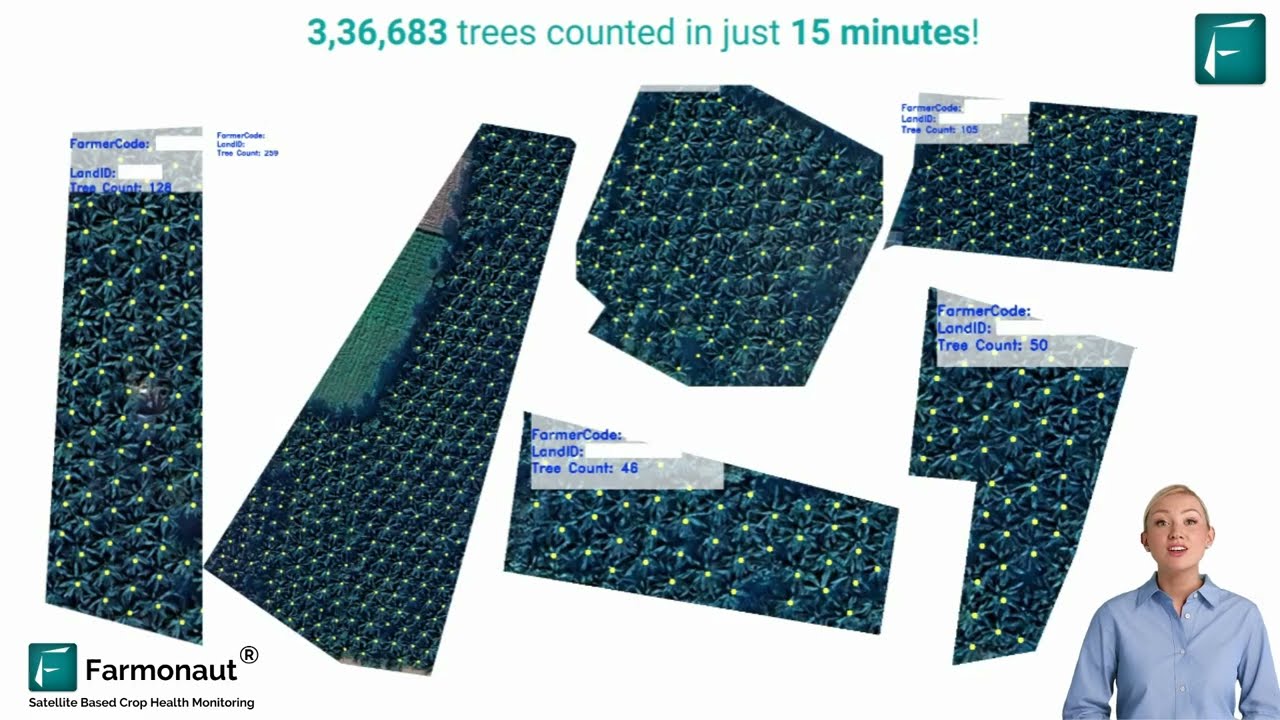
- Tree Detection: AI-powered satellite analysis now allows for automated tree counting and health assessments.
AI & Blockchain
- AI-based Advisory: Artificial Intelligence powers smarter decision-making, offering predictive insights on tree survival, pest outbreaks, and landscape restoration.
- Farmonaut Fleet & Resource Management lets businesses minimize emissions and optimize logistics, supporting efficient restoration efforts.
- Blockchain Traceability: Transparent supply chains are now possible with blockchain, allowing consumers and authorities to verify the legality of timber and agricultural products.
Check out Farmonaut’s Traceability Solutions for ensuring sustainable and legal forestry sourcing.
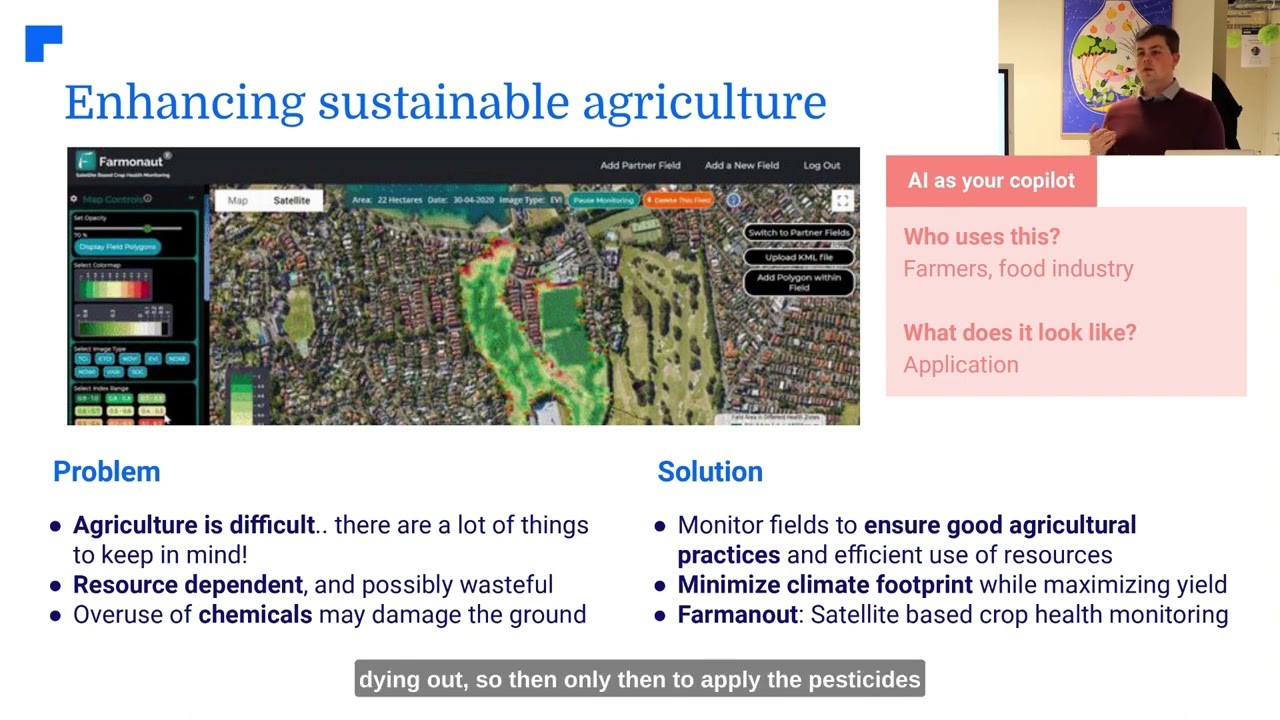
Businesses, NGOs, and governments can integrate real-time monitoring data into their management platforms using the Farmonaut Satellite Monitoring API. See the API Developer Docs for streamlined integration.
Drone-Based Reforestation
- Drones for Seed Dispersal: Drones are now extensively used for rapidly planting trees in hard-to-reach or degraded areas, increasing efficiency and lowering costs.
- Precision Restoration: AI-guided drones can distribute the right tree species to the most suitable locations, boosting ecosystem success rates.

Community Engagement & Indigenous Leadership in Forest Restoration
Lasting solutions for deforestation and reforestation rely on the empowerment of local communities and indigenous peoples. These stewards of the land possess invaluable ecological knowledge and proven practices for harmonious, sustainable management.
Participatory Conservation Models
- Community-Driven Forest Management: In 2025, more regions are adopting participatory models, granting communities legal and economic incentives to protect forests.
- Payment for Ecosystem Services (PES): Landowners can earn income by maintaining forest cover, making conservation financially viable.
Role of Indigenous Knowledge
- Integrating Traditional Wisdom: Indigenous stewardship includes fire management, sustainable harvesting, and protection of sacred groves—proven solutions to halt and even reverse forest degradation.
- Blending Science & Tradition: Modern programs are now combining local practices with advanced ecological restoration, creating solutions that are both effective and culturally grounded.
Policy Frameworks & International Cooperation: Building Effective Solutions for Deforestation
Robust policy frameworks, cross-border cooperation, and committed governance form the foundation of any effective solution to deforestation in 2025. With increasing international awareness, many nations and industries are implementing multifaceted strategies to halt and reverse forest loss.
Key Policy Initiatives
- Zero-Deforestation Commitments: Many commodity producers (e.g., palm oil, soy, timber) are now required to follow no-deforestation sourcing policies.
- Legal Reforms: Stricter enforcement of land use and forest protection laws help countries address illegal logging and speculative land clearing.
- REDD+ and International Agreements: The United Nations’ REDD+ (Reducing Emissions from Deforestation and Forest Degradation) program continues to support developing nations with funding and technical expertise for conservation.
- Blockchain Traceability: Emerging blockchain solutions (such as those available via Farmonaut Traceability) increase transparency for forest-derived products, deterring illegal and unsustainable trade.
International cooperation is also driving the creation of deforestation-free supply chains, placing accountability on global businesses to ensure that only sustainable products reach the market.

Data from advanced platforms like Farmonaut Large Scale Farm Management supports governments and businesses in tracking, verifying, and scaling sustainable land practices at a landscape level.
Comparative Table: Innovative Reforestation and Deforestation Solutions 2025
Below is a comparative analysis of key solutions for deforestation, showing estimated environmental and community impacts by 2025:
| Solution | Estimated Area Restored by 2025 (hectares) | Estimated Carbon Sequestration (tons CO₂/year) | Community Impact (Low/Medium/High) | Sustainability Score (1-5) |
|---|---|---|---|---|
| Agroforestry | 70,000,000 | 600,000,000 | High | 5 |
| Drone-based Planting | 40,000,000 | 250,000,000 | Medium | 4 |
| Satellite Monitoring & AI-Based Enforcement | 30,000,000 (enabling force) | 200,000,000 | Medium | 5 |
| Community Conservation Programs | 50,000,000 | 350,000,000 | High | 5 |
This table highlights that integrating technology and community practices gives the greatest sustainability for reversing forest degradation by 2025.
How We at Farmonaut Empower Reforestation Solution in 2025
At Farmonaut, we believe that technological innovation can drive large-scale, cost-effective solutions for deforestation by making advanced monitoring, advisory, and traceability tools accessible worldwide. Our platform offers:
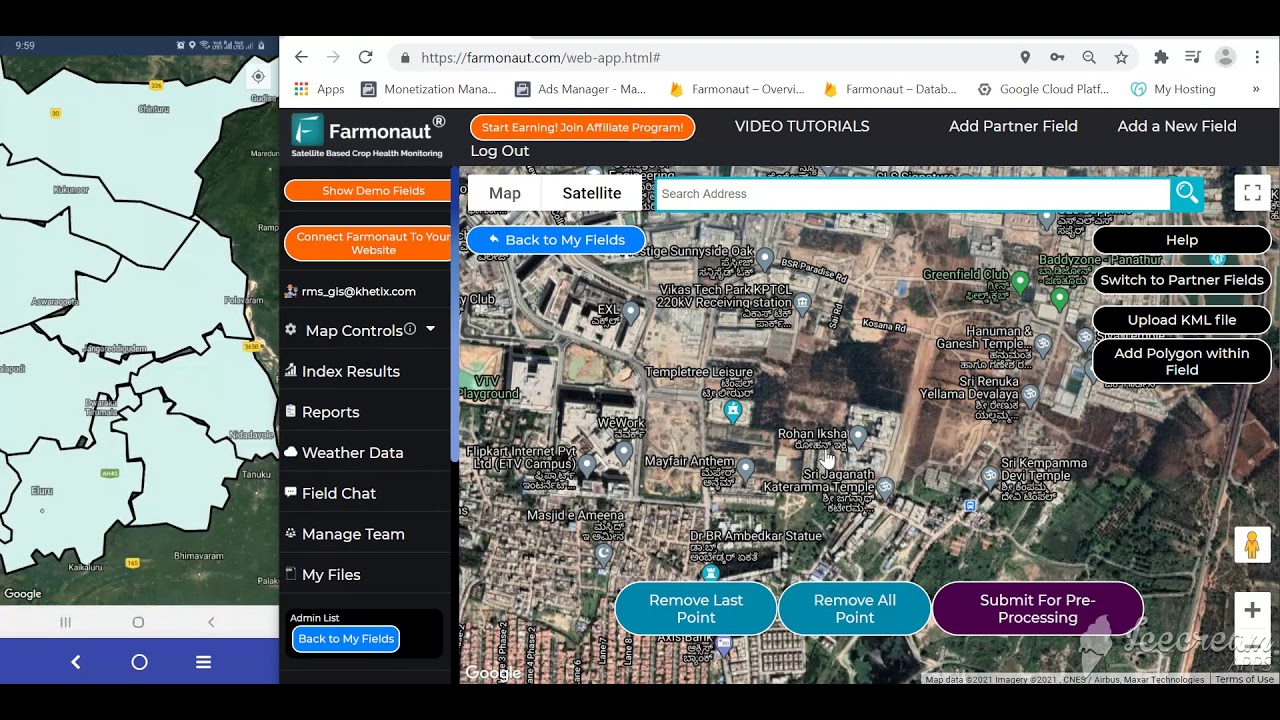
- Satellite-Based Monitoring: Our multispectral satellite imagery and real-time updates enable accurate assessment of forest cover loss, illegal logging detection, and tree health checks for large and small parcels of land.
- Large Scale Farm Management: A comprehensive dashboard for real-time management, mapping, and reporting on reforestation projects and agroforestry systems.
- AI-based Advisory (Jeevn AI): Smart algorithms provide practical insights for seed selection, planting times, and sustainable land use—helping governments, businesses, and farmers with targeted intervention.
- Blockchain-Based Traceability: Our traceability solutions ensure the legality and sustainability of forest-derived products like timber and palm oil, actively deterring illegal logging and export.
- Fleet & Resource Management: Optimizing logistics and reducing operational footprints for restoration projects is easier with our integrated management tools.
- Environmental Impact Monitoring & Carbon Footprinting: Our tools enable businesses and policymakers to measure their actual contribution to climate change mitigation.

Reforestation Impact Trivia
“Globally, agroforestry practices could boost tree cover by 10% on agricultural lands by 2025.”
Practical Steps Forward: What Are Solutions for Deforestation in 2025?
Turning the tide on deforestation in 2025 is possible—if all stakeholders mobilize around reforestation solution and sustainable practices. Here’s what different groups can do:
For Governments & Policymakers
- Strengthen legal frameworks to address illegal logging and enforce zero-deforestation commitments.
- Integrate satellite monitoring and AI for rapid detection of forest loss.
- Support payment for ecosystem services and community ownership schemes for restoring ecological balance.
- Promote agroforestry and sustainable intensification to reduce pressure on forest lands.
For Businesses & Forest Product Industries
- Adopt supply chain traceability tools to guarantee your products are deforestation-free.
- Invest in drone-based revegetation or reforestation technologies to support large-scale ecosystem restoration.
- Leverage platforms like Farmonaut Traceability for transparent product sourcing.
- Work toward carbon-neutral operations using carbon footprinting analytics for compliance and climate gains—see our Carbon Footprinting Solution.
For Communities, NGOs & Individuals
- Engage in community conservation and educational programs to raise awareness about sustainable land use.
- Promote traditional and innovative restoration techniques, combining indigenous knowledge and modern science.
- Monitor restoration progress and forest loss in partnership with technology platforms like Farmonaut for transparency.
- Support or join global campaigns for reforestation and agroforestry to amplify collective impact.



Conclusion: Reversing Forest Loss by 2025 and Beyond
In 2025, the landscape of deforestation solutions is more dynamic and promising than ever. By combining modern reforestation solution methods, sustainable agroforestry, technological innovation, community engagement, indigenous wisdom, and robust policy reforms, we can restore forest ecosystems, bolster biodiversity, and secure ecosystem services for the future.
One large-scale case, with its methods on the ground, is examined in Amazon reforestation in practice.
The path is clear: a multifaceted approach—grounded in technology, community, and proactive policy—can halt forest loss and build lasting ecological resilience. To explore how you can participate, leverage the Farmonaut Satellite & AI Platform via web, app, or API for your region’s next reforestation or conservation project.
Frequently Asked Questions (FAQ)
What are the most effective solutions for deforestation in 2025?
The most effective solutions are science-driven reforestation, agroforestry, satellite monitoring, AI-based management, community conservation, legal reforms, and blockchain traceability for sustainable supply chains.
How does technological innovation help reverse forest loss?
Technologies like satellites, AI, and drones enable real-time monitoring, targeted seed planting, predictive analytics, and greater transparency—allowing governments and organizations to respond quickly and optimize restoration efforts.
Why is community engagement important in reforestation solution?
Local and indigenous communities possess direct stewardship, traditional knowledge, and a vested interest in preserving their environment. Including them leads to culturally appropriate, sustainable, and effective biodiversity recovery.
What role does agroforestry play in sustainable farming and conservation?
Agroforestry integrates trees into farms, enhancing soil, water, crop yields, climate resilience, and wildlife habitat while reducing pressure on natural forests—offering a win-win for livelihoods and conservation.
Can Farmonaut help with project monitoring and reporting?
Yes, Farmonaut’s platform delivers real-time satellite monitoring, AI advisory, environmental impact tracking, and blockchain-based traceability for comprehensive and affordable project management.
Farmonaut Subscriptions
To unlock advanced monitoring, advisory, API integration, and blockchain traceability tools for your organization or restoration project, explore Farmonaut’s flexible, affordable subscription options:
Start Your Deforestation Solution Journey
Ready to join the movement and make an impact in 2025? Access Farmonaut’s platform by web app, Android, or iOS. For custom integration, see our Satellite Monitoring API and Developer Docs. Together, we can reverse forest loss and build resilient ecosystems for the 21st century.

 Reddane Farming
 Esri North East Africa
 Farmer Amigo
 Cresol
 Atur Kuliner
 MDCV UK
 Zerella Group
 Etech Consulting Madagascar
 Vestlandsforsking
 Agritein
 Delicio
 WB Dev
 Sama Premium
 Prochecker
 Tres Valles
 LACOS Geoinformation
 Magrifly
 LatConnect 60
 Blickwinkel
 Agricultural Credit Policy Council
