

Farmland Auction Results 2025: Trends & Insights
Summary: Understanding Farmland Auctions – Insights into Agricultural Land Sales in 2025
In 2025, farmland auction results have become a pivotal metric in the global agricultural sector. As the world grapples with increasing demand for sustainable food production, evolving climate patterns, and rapid technological advancement, understanding auction outcomes helps industry participants make informed decisions about land ownership, investment opportunities, and farming efficiency. This article explores the dynamic landscape of agricultural land auctions, investigates the key factors influencing auction pricing and results, and uncovers actionable insights for those looking to invest, expand, or transition in the agricultural real estate market.
“In 2025, average farmland auction prices rose by 12% compared to 2024, reflecting strong investor demand.”
What Are Farmland Auctions?
Farmland auctions are public sales where agricultural land is sold to the highest bidder. This process, conducted by government agencies, private companies, or landowners looking to sell property, offers a uniquely transparent and competitive platform.
- Unlike traditional real estate sales, farmland auctions guarantee market-driven pricing and enable buyers to openly compete for desired plots.
- Listings typically include comprehensive data on soil quality, boundaries, infrastructure, and agricultural history.
- Auctions may take place in-person or be conducted entirely online, increasing accessibility through remote bidding features.
Auction results for farmland reflect real-time economic and environmental conditions, making these events a rich source of insights for sellers, buyers, investors, and policymakers. In 2025, the auction process is not just a sales mechanism—it’s a barometer for market health and trends in the agricultural sector.
The Growing Importance of Farmland Auctions in 2025
The importance of farmland auctions has grown notably in 2025 for several reasons:
- Land scarcity and rising global demand for food and bioenergy have made the acquisition of productive farmland highly competitive.
- The search for “farmland auctions near me” is at an all-time high as farmers and agribusiness investors monitor auctions for expansion and diversification opportunities.
- Digital auction platforms have revolutionized the market—buyers can now participate in auctions remotely, with real-time data and transparent bidding.
- Remote accessibility increases competition and drives up prices for the best farmland.
- Institutions, including trusts and funds, are now key participants in agricultural land auction processes, heightening the need to stay competitive and informed.
As both private investors and traditional farmers seek to secure agricultural land, the auction sector is becoming a crucial pillar in determining ownership, investment direction, and the efficiency of food production systems worldwide.

Key Factors Affecting Farmland Auction Results
The results of farmland auctions are influenced by a tapestry of interconnected factors. To understand farmland auction dynamics in 2025, let’s break down the essential elements shaping outcomes and auction pricing:
-
Soil Quality & Land Productivity
- Soil fertility, available water resources, and records of crop yields play a decisive role in pricing agricultural land at auction.
- Parcels with superior soil attributes and proven productivity attract higher bids and greater competition among buyers.
-
Location and Infrastructure
- Proximity to transportation networks, markets, and irrigation facilities can significantly increase sale prices.
- Farmland near urban or export gateways is increasingly desirable in a globalized market.
-
Regulatory & Environmental Factors
- Zoning regulations, land-use policies, taxes, and available subsidies influence what can be done with the land—shaping competitive bidding.
- Regions with supportive agricultural policy or streamlined land transfer processes usually see higher auction participation.
-
Market Trends, Demand, and Commodity Prices
- Rising commodity prices, increased food demand, or a shift toward bioenergy crops push up the value (and auction results) for farmland.
- Market cycles can create windows of opportunity that both sellers and buyers must strategically navigate.
-
Climate Risk and Sustainable Practices
- Buyers increasingly value land with climate-resilient features or established sustainable farming practices such as carbon offsetting or efficient irrigation.
- Environmental risks, such as drought or flood history, are closely analyzed and often impact pricing outcomes.
-
Technological Advancements
- Technology-driven monitoring via platforms like Farmonaut enables sophisticated assessments of crop health, soil quality, and land productivity before anytime auction participation.
- These tools drive more informed and competitive bidding, elevating confidence among buyers and sellers alike.

The Auction Process: What Sellers and Buyers Should Expect
Selling and buying farmland through auctions in 2025 involves a series of clear, structured steps:
- Promotion and Listings: Auctioneers promote available land with detailed online listings covering soil analysis, prior yields, boundary maps, and water access details.
- Due Diligence: Buyers are expected to perform detailed due diligence—reviewing all documentation, checking for encumbrances or title issues, and visiting the property if necessary.
- Pre-Auction Preparation: Both sellers and buyers typically consult legal advisors, secure pre-approvals for financing, and set clear expectations for pricing and terms.
- Bidding Process: The auction may be in-person or digital. During the session, competitive bidding is encouraged until the highest bidder secures the sale. Modern auctions often feature live remote participation.
- Sale Completion: The highest bidder and seller finalize paperwork and transfer ownership in compliance with local regulations.
“Over 60% of agricultural land auctions in 2025 saw competitive bidding from both local and institutional buyers.”

Advantages of Buying Farmland Through Auctions
Farmland auctions offer distinct benefits to both buyers and sellers compared to traditional land transaction methods:
- Market-Driven Pricing: Auction results for farmland reflect real-time demand, delivering fair market value for both parties.
- Speed and Efficiency: The auction process is usually far quicker than private sales—enabling swift transfer of land ownership, which is vital in dynamic agricultural markets.
- Transparency: Bidding and sale terms are out in the open, reducing the risk of hidden negotiations or non-market pricing.
- Competitive Environment: Competitive bidding often leads to higher sale prices for the seller and clear guidance for buyers on what the market is willing to pay.
- Wider Participation: Remote and digital auction platforms ensure that buyers from local, national, and even global markets can readily take part, increasing market liquidity.
- Certainty of Sale: At auction, the property is sold to the highest bidder, reducing uncertainty and minimizing protracted negotiations.
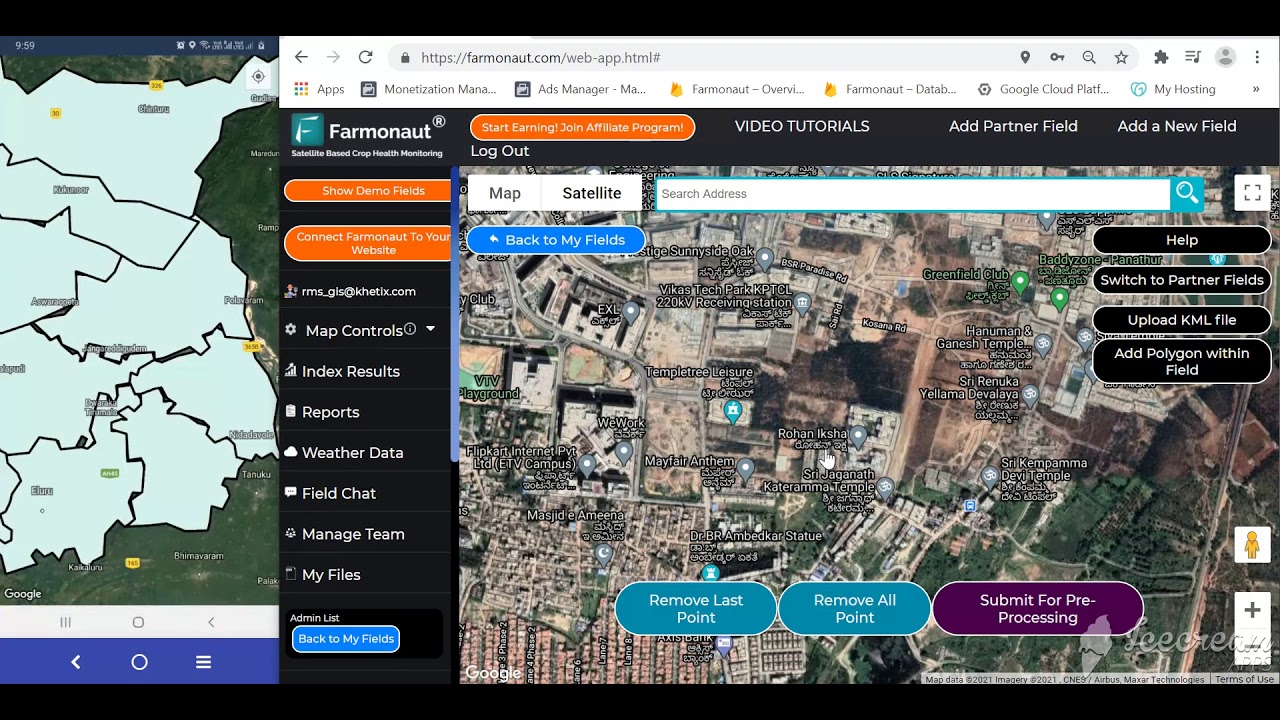
How to Find and Participate in Farmland Auctions Near You
With the digital revolution, finding and joining farmland auctions near you has never been easier:
-
Research Auction Listings
- Monitor auction listings via agricultural real estate firms, government agency portals, and specialized auction websites.
- Set up alerts or subscribe to updates for keywords including “farmland auctions near me” or “agricultural land auction”.
-
Due Diligence & Pre-Auction Preparation
- Analyze soil reports, check water rights, and review environmental data (which can be efficiently gathered via satellite monitoring platforms like Farmonaut).
- Arrange finance in advance, securing pre-approvals for farm loan or investment credit as needed.
-
Participate in Auctions
- Choose between in-person or remote auctions—the latter is increasingly common in 2025.
- Familiarize yourself with each platform’s rules, bidding procedures, and registration requirements.
- Engage in competitive bidding while keeping your investment criteria and budget in focus.
-
Closure and Ownership Transfer
- After winning the bid, finalize paperwork, ensure due diligence is complete, and organize transfer of ownership according to local laws.
Being proactive, prepared, and informed is crucial for success in the evolving farmland auction market.



Unlock real-time agricultural insights, monitor your land remotely, and get the competitive edge in every agricultural land auction.
Try Farmonaut on mobile or web today!
For developers or agribusinesses wanting to integrate satellite insights for land assessment or auction preparation, use our Satellite API or explore the API Developer Documentation.
Auction Results Comparison Table: Farmland Trends Across Regions in 2025
To help buyers, sellers, and investors quickly understand the 2025 auction results for farmland by region, here’s a comprehensive table comparing core metrics. These trends demonstrate the complex interplay of demand, local conditions, and investment opportunities:
| Region/State | Number of Auctions (Est.) | Average Price per Acre (Est.) | Price Change YoY (%) | Demand Trend | Key Influencing Factors |
|---|---|---|---|---|---|
| Midwest (USA) | 350+ | $8,500 | +11% | Rising | Soil Quality, Crop Yields, Proximity to Grain Markets |
| Ontario (Canada) | 100+ | $12,700 | +14% | Rising | Location, Water Availability, Urban Expansion |
| Iowa (USA) | 210 | $9,900 | +13% | Rising | Fertility, Infrastructure, Corn & Soybean Demand |
| Punjab (India) | 85 | ₹2,12,000 | +15% | Rising | Irrigation, Policy Support, Rice & Wheat Suitability |
| Queensland (Australia) | 70 | A$6,500 | +10% | Stable | Climate, Sustainability Practices, Export Demand |
| Western Europe | 150+ | €10,400 | +9% | Stable | Sustainability, Policy, CAP Subsidies |
| Texas (USA) | 180 | $5,200 | +6% | Stable | Livestock, Infrastructure, Water Rights |
| PEI (Canada) | 40 | $4,900 | +8% | Stable | Climate, Potato Suitability, Local Housing Pressure |
Interpretation: 2025 shows widespread price appreciation for farmland auctions, influenced by local crop suitability, regulatory support, and passionate bidding from both local and institutional buyers. Regions rich in water, near major markets, or with sustainable practices continue to see the most significant auction price gains.

Farmland Auctions 2025: Market Trends, Investor Insights & Opportunities
As agricultural land increasingly becomes an essential commodity, monitoring auction results for farmland offers a window into market trends and emerging investment opportunities:
- Institutional Investor Surge: There’s an ongoing rise in institutional investment (funds, trusts, corporates) participating in farmland auctions, intensifying competition and often pushing up prices.
- Sustainability Premium: Demand for land using sustainable and carbon-footprinted practices attracts a noticeable premium at auction, as buyers value long-term resilience and alignment with ESG criteria.
- Regional Price Disparity: Auction results reflect not just global trends but highly localized factors such as crop history, water rights, and regulatory regimes, resulting in notable regional price differences.
- Urban Pressure: Land parcels near rapidly expanding urban centers see increased speculative bids, creating opportunities for short-term gains but also raising long-term strategic challenges for agriculture.
- Digital Auction Growth: The seamless digital auction process is now standard. Over 80% of major transactions in 2025 occur online, aided by robust platforms, blockchain traceability, and open access to critical auction data.
- Policy-Driven Dynamics: Changes in government subsidies, environmental zoning, and credit policy sharply influence both demand and auction pricing—rewarding those who stay informed and adaptive.
Farmers and investors seeking expansion, improved production, or solid assets benefit by tracking these trends, aligning purchase timing, and leveraging digital tools for traceable, data-backed investments.

Advanced Farmland Insights: Satellite Technology & Farmonaut
As auctions grow ever more data-driven, satellite imagery, AI, and blockchain are redefining the farmland investment landscape in 2025:
- Real-time Land Monitoring: Farmonaut empowers users (from farmers to institutional investors) to assess soil health, previous crop yields, water availability, and environmental risks before auctions—enabling smarter, lower-risk investments.
- AI-Based Advisory: Our Jeevn AI system provides tailored recommendations for land suitability and farming strategies, improving investment efficiency and maximizing auction outcomes with data-backed certainty.
- Blockchain-Based Traceability: Farmonaut offers full transparency in land and crop history, vital when evaluating property pre-auction or verifying environmental practices (traceability module details).
- Fleet & Resource Monitoring: We provide robust satellite-based logistics tools for ongoing land management post-auction (Fleet Management solution).
- Environmental Impact: Our environmental monitoring and carbon footprinting tools help buyers verify that land meets regulatory and market expectations for sustainability—an increasing driver of auction value.
- Scalability for All Users: Whether you’re a smallholder or responsible for large-scale farm management, our platform is modular and supports operations of any size.
- Financial Access: To help buyers and sellers access capital to participate in farmland auctions, Farmonaut supports loan and insurance verification via satellite-based data (details).
- Accessible API and App: Our solutions and API are available for quick integration into auction research, due diligence, or ongoing real estate analytics.
Explore all Farmonaut services, subscribe, and get ahead in farmland bidding with data-backed confidence.

Frequently Asked Questions (FAQ) — Farmland Auction Results 2025
What factors most influence agricultural land auction prices in 2025?
Prices are shaped by soil productivity, water access, location and infrastructure, regulatory or environmental policies, local market demand, the sustainability profile of the land, and competition (both local and institutional). Auction results also reflect the impact of technology—buyers increasingly use satellite and AI insights to perform data-driven bidding.
How do farmland auctions differ from private sales?
Auctions are transparent, time-bound, and competitive, with the land typically going to the highest bidder. This ensures real market value and enables faster transaction timelines versus private, negotiated sales.
Are digital and remote auctions secure?
Yes, most reputable platforms utilize secure login, compliance KYC, and, in some cases, blockchain-based verification for land title and transaction transparency, bolstering trust among participants.
How can I prepare to participate in a farmland auction?
Perform thorough research (soil, water availability, crop suitability), arrange finances, register with the auction platform, and review due diligence materials—using advanced tools like Farmonaut for satellite-driven property assessment.
What are some future trends in farmland auctions?
Expect increasing focus on sustainability, data-driven assessments (like NDVI or environmental monitoring), wider global participation through online platforms, and growing premiums for properties with resilient, climate-smart practices.
How do I access satellite-based farmland monitoring or due diligence tools before auctions?
Download the Farmonaut mobile or web app, or access advanced analytics via our API solutions.

Conclusion: Farmland Auctions, Market Intelligence, and Your Next Move
In 2025, the farmland auction ecosystem stands as a model of transparency, competitiveness, and market alignment—pivotal for sellers, investors, and farmers alike. Today’s auction results for farmland offer far more than pricing—they provide deep insight into the environmental, economic, and technological forces shaping agricultural real estate worldwide.
Staying ahead means understanding auction dynamics, monitoring key factors, acting on actionable data, and leveraging innovative technology for due diligence and decision-making. Whether seeking ownership, investment, expansion, or sustainable production, grasping the forces influencing auctions and staying informed about current and emerging trends is critical.
With platforms like Farmonaut, unprecedented access to satellite monitoring, AI-powered recommendations, blockchain traceability, and resource management tools are at your fingertips—granting everyone from family farmers to institutional buyers a competitive, sustainable, and profitable future in agricultural auctions.
Ready to Leverage Smart Insights for Your Next Farmland Auction?
Start with Farmonaut Apps or integrate our API in your auction prep. Unlock growth, sustainability, & profitability with the latest innovation in land intelligence.

 Godrej Agrovet
 Hayleys Agriculture
 Linx Agritech
 Adinet
 Save Your Soils
 GalaxEye Space
 Grandstream Algérie
 XOS Realty
 Geospatial Lab Africa
 Agro La Gándara
 HIPSAC
 ZOL Zimbabwe
 Juligerm
 AdBio
AdBio MISE Maroc
 NWNS
NWNS Red August Group
 Farm Inc
 WeMe Global
