

Vertical Farming: 7 Benefits That Will Shock You
Meta Description: Vertical farming is revolutionizing urban food production by leveraging hydroponic systems and controlled environment agriculture. Discover 7 shocking benefits that make this high-efficiency farming system the future of sustainable agriculture.
“Vertical farming can use up to 95% less water than traditional agriculture, revolutionizing urban food production efficiency.”
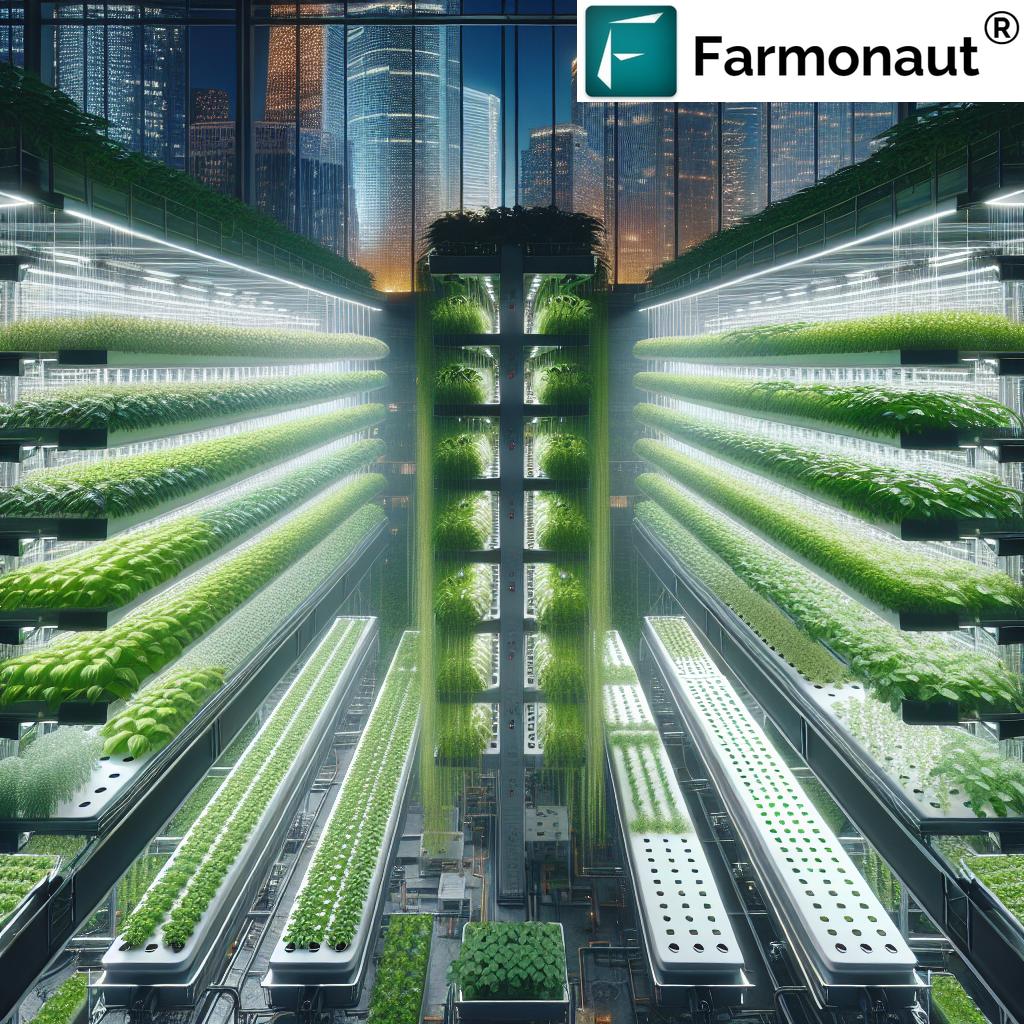
In an era where sustainable urban agriculture is no longer a luxury but a necessity, vertical farming emerges as an innovative agricultural practice that is transforming the way we grow, produce, and consume food. This method takes agriculture to new heights—literally—by cultivating crops in vertically stacked layers within controlled environments. With advanced hydroponic systems and aeroponics technology, we are witnessing the dawn of high efficiency farming systems that promise not only increased yield, but also profound benefits for our cities and planet.
In this comprehensive guide, we will explore the seven most shocking vertical farming advantages and delve deep into the technological, economic, and environmental factors behind the vertical farming revolution. Join us as we examine the intersection of cutting-edge technology and agriculture, the historical roots, today’s challenges, future outlooks, and how companies like Farmonaut are supporting the new wave of sustainable, data-driven food production.
“Hydroponic systems in vertical farms can yield crops up to 10 times more per square foot than conventional farming.”
Historical Context & Evolution: How Vertical Farming Began
To truly appreciate the significance of vertical farming, we must revisit its roots. The concept has evolved over time, shaped by humanity’s enduring quest to optimize crop production within limited spaces and under changing environmental challenges.
Early Innovations: From Greenhouses to Hydroponicums
Indoor hydroponics and greenhouse technologies set the stage for vertical agriculture. As early as the mid-20th century, scientists began experimenting with hydroponic methods, allowing plants to grow with their roots immersed in nutrient-rich solutions rather than soil. Alongside, greenhouses enabled more control over climate conditions like temperature, humidity, and light.
- The development of hydroponicums led to the integration of crop cultivation within building systems, laying the foundation for modern indoor vertical farms.
- Influential architects like Ken Yeang promoted bioclimatic skyscrapers—structures designed to combine living spaces with food production, integrating vertical farms within urban landscapes.
- These evolutionary steps not only increased crop yield, but also improved resource efficiency, paving the way for today’s innovative agricultural practice.
Technological Foundations: Hydroponics, Aeroponics, Aquaponics
What sets vertical farming apart from traditional agriculture is its reliance on cutting-edge technologies in controlled environments. The key pillars include:
- Hydroponics: This system involves growing plants without soil by circulating nutrient-rich water around plant roots, dramatically reducing the need for water and fertilizer. Hydroponic systems support high-density crop production and enable indoor farms to exist even in the heart of urban areas.
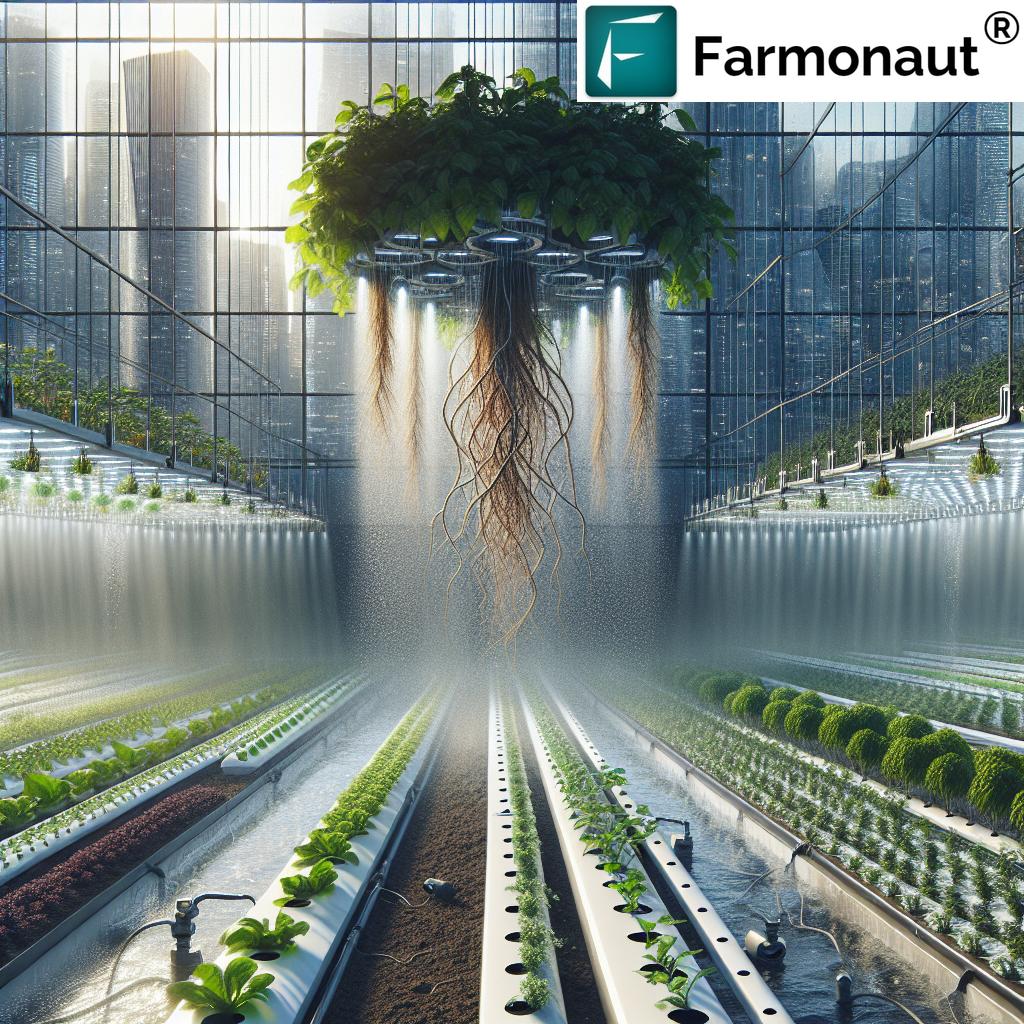
- Aeroponics: With aeroponics technology, plants are suspended in air and receive nutrients delivered as a fine mist. This method further improves efficiency, as roots absorb nutrients and oxygen more readily while using even less water.
- Aquaponics: Aquaponics integrates hydroponics with aquaculture (fish farming). Fish raise waste that acts as nutrients for plants, which in turn help to filter and clean the water for the fish—a beautifully circular system.
These systems rely on state-of-the-art LED lighting, automated climate control, and real-time monitoring to optimize plant growth conditions. By maintaining precise temperature, humidity, CO₂, and nutrient levels, vertical farms can produce fresh crops all year without the need for seasonal change.


Comparative Table: Vertical vs Traditional Farming – The 7 Benefits
| Benefit | Vertical Farming (Estimated Value) | Traditional Farming (Estimated Value) | Explanation/Impact |
|---|---|---|---|
| Water Use Efficiency | Up to 95% less water used | High water consumption | Water is recycled in hydroponics/aeroponics; minimal evaporation |
| Land Savings | 10x more yield per square foot | Low yield per square foot | Vertical stacking maximizes production in urban settings |
| Crop Yield | Year-round, 5–15 crop cycles/year | 1–2 crop cycles/year | Controlled conditions allow continual production |
| Pesticide Reduction | Up to 100% reduction | Routine chemical use | Isolated, clean environments curb pests/disease |
| Urban Freshness | Produce grown next to consumer | Long-distance transport | Ultra-fresh produce; less spoilage |
| Resource Use | Automated optimization; less input waste | Manual, often excessive input use | AI/data-driven decision making increases efficiency |
| Year-Round Production | Not tied to seasons or climate | Season/weather reliant | Consistent supply, better food security |
The 7 Vertical Farming Benefits That Will Shock You
Let’s take a close look at the vertical farming advantages that make this innovative agricultural practice a compelling solution for cities and consumers worldwide.
-
1. Unmatched Water Conservation
- Vertical farms use up to 95% less water compared to traditional farming methods.
- Hydroponic systems recycle water and deliver precise nutrients directly to each plant.
- Evaporation and run-off are almost eliminated, making these systems ideal for regions facing water scarcity.
-
2. Maximized Space Efficiency & Crop Density
- Vertical stacking of layers allows urban farms to produce crops in unused warehouses, rooftops, or buildings.
- Indoor vertical farms can yield up to 10 times more crops per square foot compared to soil-based agriculture.
- This translates into greater food output from much smaller footprints—a major win for urban food production.
-
3. Year-Round Crop Cultivation
- Controlled environment agriculture liberates food production from the unpredictability of seasons and local climate.
- Crops can be produced continuously—sometimes as many as 15 harvests/year—ensuring a steady, reliable supply for local consumers.
- LED lighting, temperature, and humidity control allow for consistent plant growth throughout the year.
-
4. Dramatic Reduction or Elimination of Pesticide Use
- Vertical farms operate in clean, sealed controlled indoor environments.
- Pests and diseases are largely kept out, greatly reducing or even negating the need for chemical pesticides.
- This means safer, healthier crops for consumers and the environment.
-
5. Urban Freshness & Reduced Food Miles
- Vertical farming brings food production directly into the heart of cities.
- Local supply minimizes transportation, dramatically reducing fossil fuel use and spoilage.
- Consumers benefit from fresher produce that retains more nutrients and “just-picked” taste.
-
6. Resource Efficiency Through Automation & Data
- Automated monitoring and data-driven management (Farmonaut’s large-scale farm management tools) enable optimal use of resources – water, nutrients, lighting, and more.
- Precise algorithms adjust inputs based on real-time plant health, reducing operational costs and minimizing waste.
- Efficiency increases, and environmental impact reduces.
-
7. Reliable, Resilient Production Even in Harsh Climates
- Indoor vertical farms are immune to climate and weather extremes—droughts, floods, frosts, and storms no longer threaten crops.
- Year-round cultivation means consistent food security for population centers, even as the global climate becomes more unpredictable.
- These advances support public health, urban planning goals, and resilient supply chains.
“Hydroponic systems in vertical farms can yield crops up to 10 times more per square foot than conventional farming.”
Innovation in Urban Food Production: Why It Matters Now
The rapid urbanization of our society presents new challenges and opportunities for food production. By 2050, nearly 70% of the world’s population will live in cities. To supply these mega-cities, we must rethink agriculture—and vertical farming rises as a viable, sustainable solution.
- Traditional farming is limited by access to arable land, climate, and resource constraints.
-
Sustainable urban agriculture through vertical farms enables:
- Minimized ecological footprint
- Emission reduction (Measure vertical farm carbon impact)
- Fast logistics and fresher food
- Hydroponics, aeroponics, and aquaponics systems, in partnership with advanced data analytics and automated robotics, are helping us rewrite the agricultural rulebook.
For those aiming to ensure traceability and food safety, integrating blockchain-based solutions can add value to your production, enabling complete supply chain transparency.
Farmonaut: Pioneering Data-Driven, Sustainable Farming
As we innovate around how we grow food indoors, leveraging technology is crucial for maximizing efficiency and sustainability. Here, platforms like Farmonaut play a pivotal role.
Leading-Edge Crop Monitoring & Precision Agriculture
Farmonaut offers satellite-based, AI-powered solutions tailored for both traditional and high-tech vertical farms.
With real-time crop health monitoring, data-driven decisions are at your fingertips, empowering you to:
- Reduce costs via targeted water and nutrient use
- Increase output by monitoring plant health and stress (Optimized resource management)
- Ensure sustainability by tracking carbon footprints and optimizing for lower emissions (Farmonaut’s carbon monitoring tool)
Farmonaut Apps & Services



- API Integration: For developers building their own farm monitoring solutions, Farmonaut’s real-time satellite data API and developer documentation make connecting simple and powerful.
- Fleet Management: Managing a fleet for urban food delivery or on-site logistics? Farmonaut’s fleet and resource platform helps reduce costs and enhance safety.
- Crop Loan & Insurance: Access financial support and lower risk in urban agriculture with satellite-based crop verification for loans/insurance.
Farmonaut’s subscription model is ideal for both individual growers and large enterprises, providing access to scalable, affordable technology—no expensive hardware required!
Challenges & Criticisms: Addressing the Roadblocks in Vertical Farming
While the advantages of vertical farming are transformative, there are several hurdles we must consider as we move toward widespread adoption of indoor high efficiency farming systems.
-
1. Energy Costs & Sustainability
- Artificial lighting (especially LEDs for plant growth) and climate control systems (temperature, humidity, CO₂) can drive up operational costs significantly.
- Unless powered by renewables, these energy demands may offset other environmental benefits.
-
2. Initial Investment Barriers
- Capital costs are substantially higher than for most traditional farms due to the need for high-tech infrastructure, automation, and climate control.
- Economic viability hinges on optimizing plant density, velocity, and market targeting.
-
3. Technical Expertise Requirements
- Vertical farming requires expertise in horticulture, engineering, data management, and plant science.
- Managing controlled environment systems is complex, with a steep learning curve.
-
4. Economic Uncertainty
- Profitability remains a challenge as high operational costs can outweigh savings from land, water, or input reductions.
- Some companies have struggled with financial sustainability—especially those overestimating market size or underestimating costs.
-
5. Crop Diversity Limitations
- While leafy greens, herbs, and strawberries (such as those grown by Jersey-based Oishii) thrive indoors, staple grains and some fruits remain challenging or uneconomic to produce in these systems.
Innovators in the space continue to seek solutions, from integrating renewable energy and AI-driven controls to exploring crop genetics tailored for indoor growth.
Notable Examples and Developments in Vertical Agriculture
- AeroFarms (Newark, New Jersey): A pioneer of large-scale aeroponic vertical farms, AeroFarms produces leafy greens sustainably with high water efficiency.
- Oishii (New Jersey): Famed for producing consistently high-quality strawberries year-round through vertical farming innovations.
- Lufa Farms (Montreal, Canada): Masters of rooftop greenhouses, bringing ultra-fresh produce to city consumers.
- Plenty: Expanding globally, harnessing vertical technology to produce healthy crops in high-impact climates.
These companies demonstrate the versatility and promise of high-tech urban food production systems, while also highlighting the need to address the economic and operational challenges as the industry matures.
The Future of Vertical Farming: Where Are We Headed?
As urbanization and climate change intensify, we anticipate a future where vertical farming becomes an essential piece of the global food system puzzle. Here’s what’s next:
- AI & Machine Learning: Automation will power more efficient space/light/nutrient allocation, reduce labor costs, and optimize plant performance.
- Integration of Renewable Energy: Solar/wind power will be key for offsetting the substantial energy loads required for indoor farming (energy costs are a leading barrier).
- Urban Design Synergy: Bioclimatic architecture may see skyscrapers and residential buildings incorporating farms as part of their core function—improving both food security and city air quality.
- Scalability & Accessibility: Costs will decrease as technology matures, making high efficiency farming systems more accessible for communities large and small.
- Supply Chain Transparency: Blockchain-enabled traceability—as offered by Farmonaut’s end-to-end traceability solution—will help ensure food safety, consumer trust, and premium product value.
- Sustainability as Standard: Carbon tracking and resource optimization will become industry standards (see Farmonaut’s carbon footprinting platform).
Vertical farming is poised to play a major role in providing year-round crop cultivation, reducing food miles, and supporting sustainable urban agriculture for a rapidly urbanizing world.
FAQ: Frequently Asked Questions about Vertical Farming
What is vertical farming, and how does it differ from traditional farming?
Vertical farming involves cultivating plants in vertically stacked layers within controlled indoor environments, often using soilless hydroponic, aeroponic, or aquaponic techniques. This approach contrasts with traditional farming, where crops grow in open fields susceptible to weather, pests, and soil degradation.
Is vertical farming more environmentally friendly?
Yes, when managed with efficient technology, vertical farming can dramatically reduce water use, pesticide reliance, and carbon emissions from long-distance transportation. Yet, its environmental impact depends on energy sources and system design.
What types of plants grow best in vertical farms?
Leafy greens, herbs, microgreens, and some small fruits such as strawberries excel in hydroponic/aeroponic indoor systems. Current research seeks to expand viable crop options to include root vegetables and grains.
Are vertical farms profitable?
Profitability depends on operational efficiency, crop selection, energy costs, and market demand. Many early ventures have struggled with high capital/operational costs, but technological advances are making vertical farms increasingly competitive in select urban markets.
How can Farmonaut help vertical farmers?
Farmonaut empowers vertical farmers through AI-based advisories, satellite-driven crop health monitoring, resource optimization, developer APIs, and sustainability tracking (carbon/traceability management).
Farmonaut Subscription Options
Start optimizing your indoor or vertical agricultural practice today with affordable subscriptions from Farmonaut – designed for individual growers, cooperatives, large agribusinesses, and government bodies. Choose the plan that fits your scale and get instant access to advanced data, monitoring, and resource management tools. No expensive hardware required!
Conclusion: Vertical Farming — Revolutionizing Our Food Future
Vertical farming represents a bold step forward in our quest for sustainable, resilient urban food production. By leveraging hydroponic systems, advanced technologies, and controlled environment agriculture, we can unlock year-round, efficient, and eco-friendly crop cultivation in cities globally.
- Year-round crop cultivation and all-weather resilience are transforming how we approach healthy food supply.
- Data-driven platforms like Farmonaut are accelerating the adoption of innovative, resource-optimizing agricultural practices—improving productivity, traceability, and sustainability for smallholders and enterprises alike.
- To maximize the vertical farming advantages, addressing energy, economic, and technical challenges with continued innovation is crucial.
By focusing on science-backed solutions, technology integration, and environmental responsibility, the future of agriculture will not only nourish our cities, but set new standards for sustainability and efficiency worldwide.
Discussion
Questions, corrections or field experience? Share them below. First-time comments are reviewed before they appear, and your email is never published.
No comments yet. Be the first to add a question or your experience.

 Sayaji Group
 eKGIS
eKGIS Mostas Tech
 Native Seeds
 Andex
Andex FCF India
 Unifrutti Gulf
 Deluxe Conseil
 TVS Electronics
 BW Pipelines
 WICO
WICO Chimera Innovation
 SkyHarvest
 Polaris Digitech
 Licence holder · Niger · Gold










